
Changan Kaicheng Ruixing M80 Export Buying Guide
Buy a Changan Kaicheng Ruixing M80 for export with guidance on trims, petrol and CNG options, pricing, MOQ, shipping, compliance, and inspection.
At a glance
- The Ruixing M80 combines passenger-MPV and van layouts in a compact, serviceable package.
- Documented variants cover 1.5L 4G15S petrol, 1.6L DAM16KR Comfort, and selected CNG configurations.
- Rear-hinged doors, lift-up rear access, and seating choices make configuration matching essential.
- Used vehicles require VIN, condition, fuel-system, and import-document checks before commitment.
- Live listings supply current per-unit pricing, MOQ, and availability; landed cost must be calculated separately.
Why the Changan Kaicheng Ruixing M80 matters for export markets
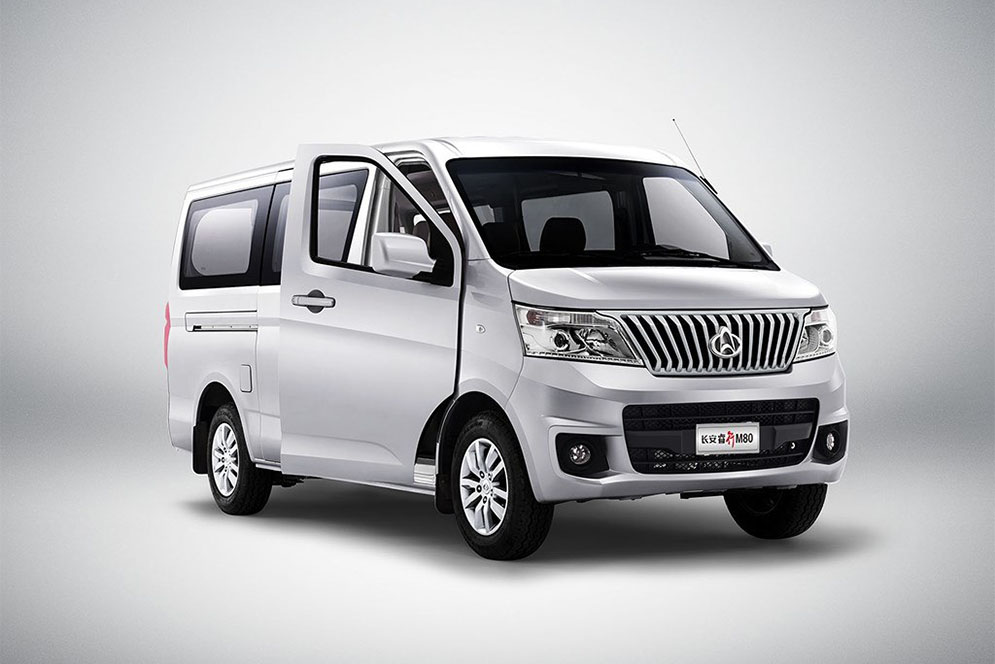
The Ruixing M80 occupies the practical middle ground between a compact passenger MPV and a light commercial van. Its useful attributes are straightforward: multiple seating and rear-door arrangements, 1.5-litre petrol configurations, a 1.6-litre option, and selected CNG versions. That mix gives export buyers options for staff transport, customer shuttles, site services, or light cargo duty without a much larger vehicle. It is relevant where the operating priority is usable space and straightforward access rather than premium styling or long-distance refinement. For dealers, it can also serve as an entry-level fleet proposition with lower acquisition complexity than larger vans.
Demand for this class comes from practical fleet economics rather than image-led buying. Importers serving urban distribution, construction trades, hotels, airports, and local delivery networks often need a vehicle that can carry people or goods while remaining manageable in narrow streets and parking areas. The M80's van-like layouts, including back-hinged rear doors and a lift-up rear door, can improve loading access compared with a conventional liftback. Overseas buyers should still test the chosen body against payload, loading aperture, ventilation, and local driving conditions before committing to a trim or conversion plan.
For overseas channels, the strongest selling proposition is configuration discipline. The same model name can refer to a two-seat base van, four-seat derivative, five-seat closed-body vehicle, passenger-oriented comfort version, flat-roof cargo van, or flat-top liftback. That breadth helps an importer match a vehicle to a precise duty cycle, but it also makes careless catalogue purchasing risky. Export decisions should be based on the complete rear-access, seating, glazing, HVAC, fuel, and emissions description for each unit, not merely on the Ruixing M80 badge and its engine family or a broad export catalogue.
- Van and passenger layouts
- Petrol and CNG options
- 1.5L and 1.6L variants
Model range, trims and powertrain variants: how the lineup is structured and how to choose
The model range is best read as a ladder built around configuration rather than a premium specification set. Most versions use the 1.5L 4G15S engine family, ranging from base van and base two- or four-seat derivatives through standard, classic, and comfort treatments. The 1.6L Comfort four-seat derivative is identified with the DAM16KR code. A closed-body 1.5L manual five-seat listing shows that the model has been marketed as a passenger carrier. Because equipment and legal category can change within a model year, the trim label must be translated into a written equipment list.
Body access is the branch in the range. Rear-hinged doors and semi-blind rear windows suit commercial users who need loading and secure separation between cargo and occupants. The four-seat lift-up rear-door and flat-top liftback formats can be suited where passenger access, visibility, or a lower rear roof profile matters. The two-seat base version may reduce complexity for pure utility work, while five-seat closed-body and comfort versions address executive transport or family-style shuttle use. Confirm whether the rear opening is glazed, how the second row is arranged, and which panels are body-colored before ordering.
Fuel choice can reshape the operating case. The range includes CNG comfort and restyled comfort van versions alongside petrol models, which may suit fleets with reliable compressed-natural-gas refuelling and an approved installation network. CNG suitability should be judged by tank certification, fuel-system condition, conversion documentation, service access, and local permitting rather than by the CNG badge alone. For petrol buyers, the recurring 1.5L 4G15S family anchors the range, while the 1.6L DAM16KR option may merit consideration where the destination formally accepts that specification and its supporting documentation for import clearance.
- 1.5L 4G15S core
- 1.6L DAM16KR option
- CNG infrastructure matters
New vs used Changan Kaicheng Ruixing M80: how export inventory is structured and how buyers choose
Export inventory should be read at unit level because used Ruixing M80 vehicles require individual evaluation. A dealer or fleet buyer should not assume that all units share the same condition, registration history, emission treatment, or remaining mechanical life. The vehicle description may identify a production year, engine, seating count, rear-door format, and comfort level, but those fields still need documentary verification. Use the live inventory page to separate used examples from any new stock, then open the individual record for photographs, service information, ownership status, and complete seller disclosures.
A used M80 can make sense where the buyer prioritizes lower entry cost, availability of a proven configuration, and a route into the local repair network. The trade-offs are depreciation and uncertainty: age-related repairs, wear, accident history, and regulatory eligibility may offset the apparent saving. A new vehicle, when available, can offer cleaner ownership, current equipment, and more straightforward warranty support, but its acquisition and shipping costs will differ. Neither status automatically guarantees suitability. The correct comparison is total operating cost over the planned holding period, adjusted for downtime and residual value.
For a used unit, pre-purchase inspection should be tied to the vehicle's role. Check the VIN and title against the seller record, verify odometer consistency, inspect the engine and transmission for leaks or noise, and examine the chassis, roof, load floor, and rear doors for corrosion and structural repairs. On a passenger derivative, test seat mounts, restraints, ventilation, glazing, and air conditioning. On a CNG van, request tank and conversion records, pressure-system checks, and lawful installation for the target market. The inspection should also confirm that steering side and road-legal equipment match the destination.
- Document every used unit
- Compare total ownership cost
- Inspect structure and systems
How export pricing works: the factors behind a live listing price, and how to read one
An export listing price is the starting figure for one vehicle, not automatically the landed cost of putting that vehicle into service. The ask reflects the trim, production year, engine and fuel choice, seating and body configuration, mileage, exterior and interior condition, repair history, ownership status, and the seller's terms. It can also move with the seller, negotiation position, inventory age, and currency assumptions. Read the price field together with the unit title and photographs: an M80 may differ in rear access, HVAC, condition, or documentation, all of which affect value.
Variables sit outside the seller's vehicle price. Exchange-rate movement affects conversion into the buyer's currency; freight depends on origin and destination ports, route, transport mode, secured or loose loading, and shipment size; and the Incoterm decides which party bears transport, insurance, export handling, and risk transfer. Import duty, value-added tax, customs brokerage, port charges, inspection, registration, financing, and warranty work are destination-specific. Obtain a pro-forma or quotation that separates vehicle cost, inland transport, international freight, insurance, taxes, and agent fees. That breakdown is the reliable basis for comparing vehicles with different terms.
To read a live ChinaCarDirect listing, begin with the model and trim phrase, then confirm the vehicle's status, production year, engine code, fuel, transmission, seating, and rear-door arrangement. Next check whether the displayed amount is an asking price, promotional price, or deposit and whether the exporter's location changes inland logistics. Ask for the VIN, photographs, condition report, and a written quotation for the intended destination. The live listings remain the authoritative place for current per-unit pricing, MOQ, availability, and seller contact details; archived market ranges or general guides cannot substitute for that binding offer.
- Compare full descriptions
- Separate landed-cost items
- Use live binding figures
MOQ, ordering and payment: single units vs consolidating a container
The minimum order quantity is a supplier and listing term, not a property of the Ruixing M80. Some sellers may accept a single-unit purchase, while others set a model-specific minimum, a mixed-model minimum, or a shipping-unit requirement. Read the MOQ shown on the live unit and confirm it in the quotation or pro-forma invoice. Establish whether the minimum applies per trim, per production batch, or across several models. A container buyer should not assume copies of one listing will be available or that the same condition and year can be supplied.
Buying for a trial fleet and consolidating a container are different procurement strategies. A single-unit order reduces exposure and can test payload, driving impression, parts support, and resale before scaling. A wholesale container order can reduce unit freight and handling costs, but it exposes the buyer to inventory, quality, and cash-flow risk if vehicles are committed too early. A middle path is a mixed batch with several body and fuel configurations, provided the seller accepts mixed-model quantities and can document each VIN separately. Align the purchase plan with actual sales demand, not with a nominal container volume.
Ordering mechanics should be designed to protect both sides. The buyer should nominate the exact vehicle or agreed production specification, place a deposit against the written pro-forma invoice, inspect or approve evidence before the balance payment, and use a payment method with clear refund and release conditions. The document should state the vehicle price, MOQ, deposit, balance trigger, currency, Incoterm, port, lead-time basis, inspection standard, documentation package, and treatment of a failed delivery or transit claim. Avoid relying on informal promises about which unit will be loaded; request VIN-level allocation in the final contract.
- Confirm listing-specific MOQ
- Test before scaling
- Contract every payment term
Shipping, homologation and market compliance caveats: LHD/RHD and import rules by country
Freight planning starts with the unit selected, not with the model name. Dimensions, weight, roof and body configuration, and whether the vehicle is self-propelled determine the loading method and securement requirements. The forwarder should confirm whether the order will travel as a secured vehicle, consolidated cargo, roll-on/roll-off, or another approved mode, and should calculate origin handling, inland haulage, terminal charges, freight, insurance, and destination fees. Transit time depends on route, sailing or service frequency, port congestion, customs clearance, and documentation readiness, so no listing should be sold as a guaranteed delivery date.
Steering configuration is a market-specific sourcing decision. The M80's availability in left- or right-hand-drive form must be checked for the specific unit and destination rather than inferred from the model family. A right-hand-drive conversion may alter the approved specification, cost, residual value, and service arrangements, and it should not be assumed to satisfy local type approval. Buyers should also consider whether the destination fleet is right- or left-hand drive and whether local operators can source switchgear, HVAC controls, lighting, and service procedures. If the needed steering side is not confirmed, exclude that vehicle from the landed-cost comparison.
Import and road use are controlled by the destination country, not by the China VI wording on a listing. The importer may need a VIN verification, customs declaration, proof of ownership, customs valuation, a certificate of conformity or approval, emissions compliance, safety and lighting checks, passenger or goods-vehicle classification, and local registration. Tax treatment can change when the same body is configured for passengers rather than cargo. CNG vehicles can face additional rules for tank approval, gas-system inspection, refuelling access, and operator training. Obtain a written import opinion from a customs broker before committing funds, and make final payment conditional on agreed documents and inspection.
- Verify steering configuration
- Check destination homologation
- Budget local registration
Who should buy the Ruixing M80 — and who should pick a different vehicle
The Ruixing M80 is a candidate for importers and fleet operators whose duty is compact, repeatable, and cost-conscious. It can suit urban delivery, mobile trades, hotel and staff transport, short-distance shuttle work, and light commercial operations where a van body simplifies loading. The two-, four-, and five-seat versions allow a buyer to avoid carrying unused seating, while the 1.5L petrol core provides a consistent engine family for parts planning. A buyer should still verify payload and loading dimensions against the operation. The vehicle's value lies in adaptable utility, not in being a substitute for every van or MPV.
CNG versions can be especially relevant to operators with dependable access to compressed natural gas, such as settled urban routes with an established fuelling network. They may support fuel-cost or emissions objectives where those priorities justify the extra system complexity. The business case must include cylinder inspection, qualified maintenance, conversion records, station compatibility, and local legal approval. A petrol version is usually operationally simpler for dispersed or variable routes, provided the buyer accepts its fuel and performance characteristics. For fleet tenders, compare total cost per kilometre rather than choosing CNG solely because the listing title displays it.
Different vehicle classes are better when the operating requirement is specialized. Choose a larger cargo van when payload, load volume, tie-down provisions, or heavy-duty durability dominate; a passenger MPV when a higher-grade cabin, longer-distance comfort, and a conventional tailgate are priorities; or an electric or hybrid model when zero-emission operation, charging access, or fleet emissions rules outweigh this model's petrol and CNG architecture. Buyers needing modern crash-safety ratings, advanced driver assistance, abundant nationwide parts, or a long factory-supported warranty should check those criteria rather than accepting a used commercial van as the lowest-cost solution. Local homologation can further narrow the realistic alternatives.
- Suited to light urban fleets
- CNG needs reliable refuelling
- Choose alternatives for heavy duty
Main rivals and how the Ruixing M80 compares
Closest alternatives come from the same Chinese compact MPV and light-van ecosystem, but each emphasizes a different buying question. The Wuling Rongguang is a direct small-van comparison for buyers focused on commercial utility and destination parts support. The Chery Karry K50 represents a compact MPV alternative where passenger use, styling, and seating presentation matter more than van-style cargo access. The Dongfeng Xiaokang K01 is relevant for operators comparing a simple microvan-derived layout with service access. These are useful benchmarks, but local versions, engine choices, emissions rules, and homologation can differ, so compare the exact imported derivative rather than a generic domestic trim.
Against the Wuling Rongguang, the M80's distinguishing choice is its documented mix of rear-hinged van, lift-up rear-door, liftback, seating, and CNG configurations for commercial buyers comparing body utility. Against the Chery Karry K50, it may appeal more to a commercial buyer who values a rear cargo opening and flexible seating over a passenger-car-style presentation. Against the Dongfeng Xiaokang K01, the deciding factors are condition, after-sales support, parts access, and availability of the precise body in the buyer's market. None of these rivals should be chosen solely on a headline price.
A structured comparison should score each candidate on the same commercial variables: usable seats, load-bay access, payload, engine and fuel availability, maintenance familiarity, safety and emissions approval, parts lead time, warranty support, and total landed cost. The Ruixing M80 deserves shortlisting when its available configuration solves a clear need and its documentation supports entry into the target market. It becomes the weaker choice if the operation requires a newer architecture, heavier-duty running gear, a stronger warranty, or parts coverage that cannot be demonstrated. The right comparison is therefore the best compliant vehicle for the route, not simply the lowest purchase quote.
- Wuling Rongguang: van benchmark
- Chery Karry K50: MPV benchmark
- Dongfeng Xiaokang K01: utility benchmark
Live Changan Kaicheng Ruixing M80 export inventory
View all listings →Real units currently on ChinaCarDirect with per-unit asking prices and MOQ. Availability updates live from the catalogue.
Used CHANGAN KAICHENG Ruixing M80 2018 1.5L Base Model Van Semi-Blind Window Flat Roof Rear-Hinged Doors 4G15S
Used CHANGAN KAICHENG Ruixing M80 2018 1.5L Base Model Van Semi-Blind Window Flat Roof Rear-Hinged Doors 4G15S
Used CHANGAN KAICHENG Ruixing M80 2014 1.5L Base Version (4-Seater) 4G15S
How to buy a Changan Kaicheng Ruixing M80 from China
-
1
Define duty and configuration
Set the passenger count, cargo needs, route length, fuel access, rear-opening preference, and destination market before selecting a trim. Treat payload and dimensions as verification items rather than assumptions.
-
2
Screen live unit records
Open the live Ruixing M80 listings and filter by body, seating, engine, fuel, condition, and vehicle status. Use title fields as screening clues, then inspect the complete unit record.
-
3
Verify identity and documents
Request the VIN, ownership or registration record, engine and fuel-system details, service history, and photographs. For CNG vehicles, also request tank and conversion documentation.
-
4
Request a destination-specific quotation
Ask for a pro-forma invoice separating vehicle cost, inland transport, international freight, insurance, taxes, customs work, and destination charges. Confirm the Incoterm and responsible parties in writing.
-
5
Confirm MOQ and payment milestones
Verify the listing-specific MOQ, deposit, balance trigger, currency, production basis, and refund conditions. If consolidating a container, document each agreed vehicle by VIN or production specification.
-
6
Inspect before final approval
Use an independent inspection for a used vehicle, covering structure, engine, transmission, brakes, rear access, passenger equipment, and fuel system. Approve the balance only after agreed evidence and the inspection are satisfactory.
-
7
Book freight and clear customs
Confirm loading method, securement, insurance, shipping milestones, and export documents with the forwarder. Use a local customs broker to verify classification, taxes, homologation, registration, and the required LHD or RHD specification.
Ruixing M80 vs rivals
| Wuling Rongguang | The Wuling Rongguang is a direct compact-van benchmark for buyers prioritizing commercial utility and established parts familiarity. The M80 can be more distinctive where rear-hinged or lift-up access, different seating layouts, or a CNG derivative matches the operation, but the exact local versions determine parts support and homologation. |
|---|---|
| Chery Karry K50 | The Chery Karry K50 is a passenger-oriented compact MPV alternative for buyers prioritizing cabin presentation and conventional MPV use. The M80 may suit cargo-oriented operators better because some versions provide van-style rear access and more seating or body choices, while used condition and destination approval remain decisive. |
| Dongfeng Xiaokang K01 | The Dongfeng Xiaokang K01 is a utility-led microvan alternative for short-distance commercial work. The M80 lists 1.5L and 1.6L variants, including CNG configurations, so choose according to fuel access, body layout, parts availability, and compliant condition rather than assuming one model is always cheaper. |
Frequently asked questions
How is export pricing determined for the Changan Kaicheng Ruixing M80?
A live asking price reflects the specific unit's year, trim, engine, fuel, seating or body configuration, condition, mileage, repair history, ownership status, and seller terms. Exchange rates, freight, insurance, customs, taxes, and the Incoterm affect the landed total but are not always embedded in the displayed vehicle price. Review the live Ruixing M80 listings for the current per-unit figure, then request a destination-specific pro-forma invoice.
Which engine and powertrain options are available?
The documented range includes 1.5L 4G15S petrol versions, a 1.6L DAM16KR Comfort four-seat version, and CNG comfort van derivatives. A closed-body five-seat listing is manual; other transmissions and drivetrains should be confirmed on the live unit page. Because these are combustion-powered versions, fuel use and range depend on engine condition, vehicle mass, route, and fuel availability rather than a battery rating.
Is a new or used Ruixing M80 better for export?
A used vehicle can lower entry cost and provide a proven configuration, but the buyer accepts more condition and history risk. New stock, when available, may offer cleaner ownership, current equipment, and clearer warranty support, but its purchase and logistics profile differs. Compare total operating cost, expected downtime, parts availability, and destination eligibility rather than choosing from status alone.
How does MOQ work when ordering from China?
MOQ is set by the seller and may apply to one model, one trim, a mixed shipment, or a shipping unit. A listing may accept single-unit purchases, but this must be checked on the live unit and repeated in the pro-forma invoice. Consolidating several vehicles can improve freight efficiency, yet it increases inventory and cash-flow exposure, so request VIN-level allocation and written terms.
What factors determine shipping time and cost?
Origin and destination locations, route, carrier service, port handling, freight mode, vehicle dimensions and weight, insurance, customs clearance, and document readiness all affect the result. The forwarder should confirm the loading method, securement, chargeable weight or vehicle dimensions, destination charges, and expected sailing or inland milestones. Transit time should be treated as an estimate tied to the booked service rather than a fixed promise.
How are spare parts ordered for the M80?
Use the VIN, engine code, trim, body configuration, and any supplier part number when requesting parts, because visually similar van variants may not share every component. Distinguish routine service items from scarce body, rear-door, glass, HVAC, and CNG-system parts, and ask the supplier to confirm part interchange before dispatch. For fleet buyers, a small agreed spare-parts list and local distributor support can reduce downtime.
Is right-hand-drive Ruixing M80 availability assured?
No: steering configuration must be checked for each unit and destination rather than inferred from the model name. Some markets may require a right-hand-drive version or an approved conversion, but conversion cost, safety, type approval, and warranty effects vary. Obtain the actual steering-side evidence and local broker or authority confirmation before including the vehicle in a landed-cost calculation.
How do I order a Ruixing M80 from China?
Start with the live Ruixing M80 listings, compare complete unit descriptions, and shortlist by body, seating, engine, fuel, condition, and steering side. Send an RFQ for the selected VIN or requested production specification, then obtain a written pro-forma invoice covering price, MOQ, payment milestones, inspection, documents, Incoterm, and shipping. Release the balance only after the agreed evidence and inspection are satisfactory, and use a customs broker to clear the vehicle in the destination market.
Ready to source the Changan Kaicheng Ruixing M80?
Request current Ruixing M80 unit quotations, MOQ, inspection options, and a destination-specific shipping plan through the ChinaCarDirect RFQ desk.
Request a quote