
Changan Kaicheng Ruixing M90 Export Buying Guide for Dealers
Buy a Changan Kaicheng Ruixing M90 from China with expert guidance on 2.0L trims, export pricing, MOQ, shipping, compliance and rivals for dealers.
At a glance
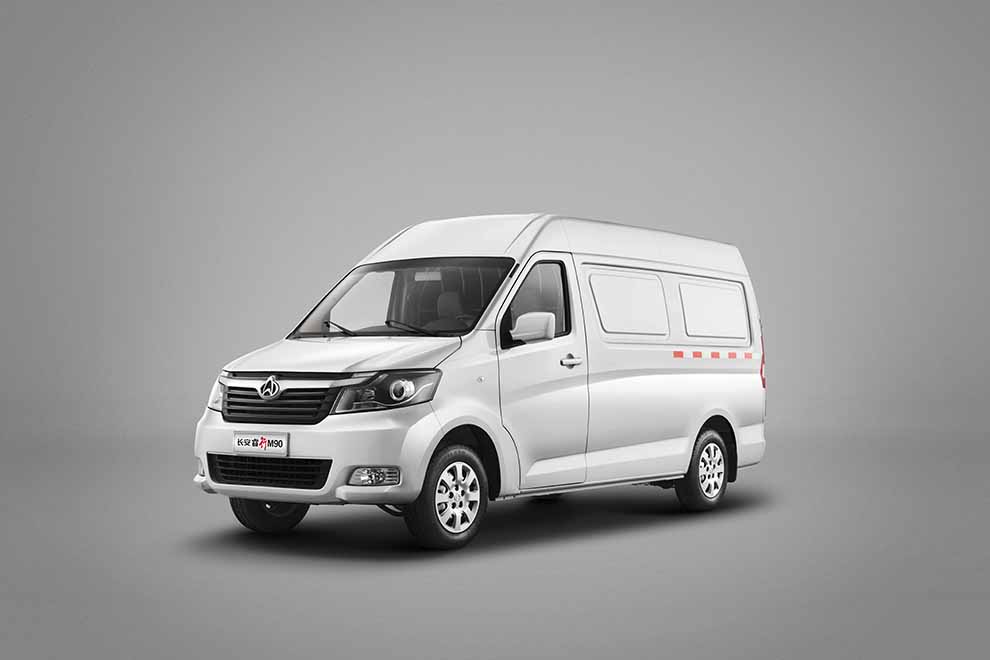
- The Changan Kaicheng Ruixing M90 is a practical Chinese compact six-seat MPV suited to shuttle, taxi, hospitality and fleet duties where access and carrying capacity matter.
- The versions represented for export include 2.0L gasoline engines with 4G94S or LJ481Q6 codes, plus hatchback, liftgate, high-roof and dual-door configurations.
- Used examples can suit budget operators, but condition, mileage, service history and remaining life require individual inspection.
- Live export prices move with model year, trim, engine, condition, mileage, options, exchange rates, freight and the agreed Incoterm.
- Single-unit purchases may suit small buyers, while container buyers should confirm MOQ, documents, payment milestones, inspection and destination compliance before committing.
Why the Changan Kaicheng Ruixing M90 matters for export markets
The Changan Kaicheng Ruixing M90 occupies a practical corner of the Chinese MPV market: a compact, six-seat people carrier designed around access, passenger space and straightforward utility. For overseas dealers, its relevance is not tied to luxury branding but to moving people or light loads in one vehicle. That positioning can suit shuttle operators, airport transfers, hotel transport, taxi businesses and fleets seeking lower acquisition cost than larger MPVs. Its appeal is strongest where buyers value configuration and running practicality more than prestige, advanced driver assistance or a new-vehicle warranty.
Export demand for this type of vehicle is driven by needs rather than fashion. Six-seat layouts can work for passenger businesses, while high-roof and dual-door versions may make frequent stops, narrow entrances and tight loading schedules easier to manage. The Ruixing M90 can therefore appeal to importers in transport markets and to used-vehicle dealers serving customers who need a functional MPV at a manageable total cost. This logic also applies where a six-seat vehicle is easier to park and operate than a van, especially across changing road conditions and parking spaces.
Buyers should still approach the model as a market-specific import product, not a universally plug-and-play global vehicle. Local rules on emissions, safety, vehicle age, steering configuration, insurance and registration can determine whether a Chinese example is viable. The export decision is therefore to compare the Ruixing M90 with locally approved alternatives on landed cost, passenger utility, parts support and resale prospects, rather than judging only by catalogue price. That discipline is especially important for used imports, where condition, documentation and adaptation can materially affect both regulatory compliance and operator downtime.
- Six-seat passenger-carrier utility.
- Varied roof and access layouts.
- Landed cost and compliance matter.
Model range, trims and powertrain variants: how the lineup is structured and how to choose
The M90 range is structured less around one global specification than around body and equipment variants. Across the export naming, the visible editions include Value, Value-Added, Comfort and Standard versions, together with six-seat hatchback, flat-top liftgate and high-roof formats. Door arrangements also differ: some labels specify double doors or dual-swing doors, while others leave the opening arrangement unstated. Buyers should match access needs to the vehicle rather than assume every M90 shares one body. Roof height and rear opening can change standing room, luggage usability and loading, particularly in fleet duty.
Two engine designations appear in the M90 versions offered for export: the 2.0L 4G94S and the 2.0L LJ481Q6. Those codes help identify the powertrain family for parts and documentation checks, but a code alone does not establish output, fuel economy, transmission details or condition. Overseas buyers should request the vehicle identification number, engine plate, emissions label, service records and photographs before comparing versions, because trim labels can otherwise make differently equipped cars look deceptively similar. Confirm whether any aftermarket electrical, cooling or exhaust work has been performed during its operating life.
Choosing a version starts with the operating scenario. A shuttle buyer may prioritize a flat-top liftgate, frequent-stop access and seat flexibility; a roof-height customer may need the high-roof body for luggage or standing space; a standard hatchback may be easier to source and repackage for a market. Check drivetrain, gearbox, equipment, condition and regulatory specification in the live listing, because the trim name is a starting point and should never replace a VIN-level inspection. For fleet procurement, written confirmation of the specification is more valuable than a broad model description.
- Value, Comfort and Standard trims.
- 4G94S or LJ481Q6 engines.
- Hatchback, liftgate or high-roof.
New vs used Changan Kaicheng Ruixing M90: how export inventory is structured and how buyers choose
The export market for the Ruixing M90 is best understood as a vehicle-by-vehicle pool in which age, mileage, trim and condition can differ. Used examples are central to Chinese MPV export channels, while factory-new availability depends on the supplier and destination program. A buyer searching to buy a Changan Kaicheng Ruixing M90 from China should therefore filter by condition and model year, compare every candidate independently, and treat the inventory page as the only reliable source for present new or used availability. That avoids drawing conclusions from a broad model description.
Used M90s can make economic sense where the buyer needs a proven six-seat layout but does not require factory-new depreciation, latest styling or a manufacturer warranty. The trade-off is uncertainty: mileage alone does not reveal accident repairs, suspension wear, engine condition, paint history or the quality of previous fleet maintenance. A buyer should treat the lowest asking price as only one part of the decision and compare inspection findings, repair potential and expected downtime against the likely cost of owning a newer alternative in the destination market over time.
A factory-new vehicle can simplify initial specification matching and may provide clearer warranty and support arrangements, but availability is not continuous and the buyer should not assume a new unit can be exported into any market without certification. For used units, commission an independent inspection covering engine start-up, fluids, brakes, tyres, steering, suspension, body structure, electrical systems, emissions equipment and access mechanisms. Repair history should be supported by invoices or photographs wherever possible, especially for commercial vehicles that may have worked under sustained load and high passenger turnover rates.
- Filter by condition and specification.
- Used cars need inspection.
- New-car support varies by supplier.
How export pricing works: the factors behind a live listing price, and how to read one
An export price for a Ruixing M90 is not a fixed wholesale rate; it is the seller's asking price for one described vehicle at a stated moment. The vehicle-side variables include model year, edition, engine code, roof and door configuration, mileage, service and repair history, paint condition, equipment, and whether the seller is describing an outright vehicle price or a price that still needs export preparation. Currency movements can also alter the amount payable by an overseas buyer even when the underlying vehicle is unchanged in the buyer's currency.
Logistics can be just as important as the vehicle itself. A live quote may or may not include export packing, inland transport, port charges, documentation, marine insurance, freight, duty, taxes and destination delivery. Incoterms determine where responsibility transfers, so compare offers on the same basis: one seller's FOB-style price is not directly equivalent to a delivered quote covering freight and clearance. Ask for every charge identified as mandatory, optional or payable in the destination country, and obtain an estimate for port, inland haulage and customs handling before paying a deposit.
To read a live listing, start with the exact vehicle identity and condition, then confirm what the stated price includes. Compare similar M90 configurations rather than averaging unrelated examples, and convert each quote into a delivered, duty-paid figure where possible. Add expected registration, insurance, local preparation, RHD conversion where required and parts stocking to the total ownership calculation. Exact price, availability and the applicable MOQ are shown on the current unit listing, so request a written quotation before treating any displayed amount as binding for your destination and Incoterm.
- Age, trim and condition affect price.
- Compare one Incoterm and freight basis.
- Check live price, availability and MOQ.
MOQ, ordering and payment: single units vs consolidating a container
MOQ determines how many vehicles a seller will release in one transaction, and it should never be inferred from a model-level page. A small dealer or operator may prefer to purchase one M90 for a trial order or pilot fleet, while a distributor can improve freight economics by consolidating several units. The correct route depends on the seller's terms: use the unit-level MOQ shown in the live inventory, ask the supplier directly, and obtain confirmation in the quotation and pro forma invoice before reserving vehicles or transferring any deposit.
Ordering mechanics should be staged to protect both sides. A workflow is to select the exact vehicle or specification, request a pro forma invoice, verify ownership and export documents, agree a deposit, complete an inspection or inspection waiver, pay the balance against release evidence, and then authorize shipment. Some sellers offer a stock or production order instead, where final configuration, lead time and the point at which the price becomes binding must be stated. Buyers should avoid bank transfers based only on a chat message or a generic model description.
Container consolidation creates a distinct risk profile. All units should match the buyer's specification and destination rules; the buyer should define how mixed units are valued, inspected and allocated if one vehicle fails inspection. Confirm the shipping scope, cargo limits, insurance, payment schedule, cancellation terms and who bears delay or demurrage. For single-unit orders, the emphasis shifts toward identity, condition, document completeness and prompt release; for several units, consistency, batch inspection and unit-level records become more important. Obligations should be written into the purchase contract rather than left to informal understandings.
- Confirm listing-specific MOQ.
- Use a pro forma invoice.
- Balance follows inspection and release.
Shipping, homologation and market compliance caveats: LHD/RHD and import rules by country
Steering configuration is the first practical export check. Chinese-market examples are commonly supplied in left-hand-drive form, while some destination markets require right-hand drive or accept both only under defined conditions. RHD conversion can involve substantial cost and may affect availability, delivery time, warranty assumptions and suitability for local inspection. Buyers should ask for the steering configuration shown in the live listing and involve the importer or local conversion specialist before paying, rather than assuming a conversion can be completed immediately after shipment with suitable tools, parts and testing capacity.
Market compliance is determined by the destination authority, not by the vehicle's Chinese origin or listing status. Depending on the country, importers may face age limits, emissions or roadworthiness requirements, type-approval rules, customs valuation, duties, taxes, inspection standards and local registration procedures. A used M90 may need documentary proof of ownership, customs clearance evidence, a valid inspection certificate or modifications. Obtain a written import assessment from a licensed local broker before committing, and keep the original homologation documents with the vehicle file until the vehicle is registered and released.
Shipping should begin only after identity, condition, export documents and destination readiness are reconciled. Ask whether the seller provides a condition report, photographs, maintenance invoices, keys, spare equipment and a valid export or customs document, then inspect the actual unit where practical. Select sea, roll-on/roll-off, container or other transport only after confirming dimensions, weight, securing points, route, cargo limitations and insurance. The freight quote should state the loading port, destination port or terminal, Incoterm, transit assumptions, and which charges can change after booking before the vehicle leaves the origin.
- Confirm LHD or RHD.
- Check local approval rules.
- Match documents before loading.
Who should buy the Ruixing M90 — and who should pick a different vehicle
The Ruixing M90 fits buyers who have a clear need for a six-seat MPV and can manage the compliance and support realities of importing a Chinese vehicle. It is relevant to shuttle and airport operators, hotels, tour or transfer businesses, taxi fleets, local distributors and used-vehicle retailers serving practical buyers. Its strongest advantages are the range of access and roof configurations, access to Chinese parts identification and sourcing, and the possibility of acquiring useful equipment without moving into a larger and more expensive MPV class in the destination market.
It is a weaker choice for a buyer who prioritizes the latest passive safety technology, extensive driver assistance, strong resale prestige, advanced electric efficiency or a long factory warranty. Some markets and fleet contracts also require newer emissions standards, particular crash-test evidence, seven- or eight-seat capacity, or a proven local service network that an imported used model may not satisfy. Buyers seeking a premium family MPV should compare newer domestic or international alternatives, while those focused on low operating cost should include electrified models in the total-cost calculation carefully.
The right threshold is based on task fit and total ownership, not simply on whether a unit is inexpensive to acquire. For a commercial user, downtime, parts lead time, fuel use, insurance, inspections and residual value may outweigh purchase price. For a private buyer, comfort, safety equipment, cabin flexibility and registration status deserve equal weight. Because the M90's strongest opportunities often involve used cars, a pre-purchase inspection and a country-specific import assessment should be treated as mandatory parts of the buying decision rather than optional extras.
- Useful for passenger fleets.
- Six seats and flexible access.
- Modern safety may rule it out.
Main rivals and how the Ruixing M90 compares
Three Chinese compact MPVs form a sensible comparison set: the Dongfeng Forthing Lingzhi M5, the FAW Bestune Xenia, also known in some markets as the Senya Xenia, and the JAC Refine M3. They compete for the same broad customers—small family transport businesses, budget fleet operators and importers seeking a multi-seat vehicle from China. The comparison should focus on actual body layout, seating, access, engine specification, parts compatibility and local approval, because shared MPV positioning does not make every model mechanically or commercially equivalent in the specific destination market.
The Forthing Lingzhi M5 is the closest conceptual challenger because it also targets compact, value-oriented passenger and light-commercial use. The FAW Bestune Xenia is useful when comparing alternative access and seating solutions, while the JAC Refine M3 provides another budget MPV benchmark with a different dealer and parts ecosystem. Against these rivals, the Ruixing M90's dual-door, high-roof and liftgate choices can be decisive for frequent-stop operators; however, buyers should compare the selected variant, not generalize from model names or assume equal import availability in each market.
No single rival wins without the buyer's priorities. The Lingzhi M5 may be preferable where a buyer wants a different local service network; the Bestune Xenia may suit a different loading or access preference; and the Refine M3 may offer a more suitable configuration for a particular importer. The Ruixing M90 remains compelling when a compatible six-seat body, useful access hardware and a used purchase case outweigh newer-model benefits. A final decision should combine a vehicle-level inspection with landed-cost and compliance analysis for the destination rather than brochure claims.
- Lingzhi M5, Xenia and Refine M3.
- Compare access, seating and roof.
- Check support and parts.
Live Changan Kaicheng Ruixing M90 export inventory
View all listings →Real units currently on ChinaCarDirect with per-unit asking prices and MOQ. Availability updates live from the catalogue.
Used CHANGAN KAICHENG Ruixing M90 2018 2.0L Comfort Version Flat-Top Bi-Door 6-Seater 4G94S
Used CHANGAN KAICHENG Ruixing M90 2018 2.0L Value-Added High-Roof Double-Door 6-Seater 4G94S
Used CHANGAN KAICHENG Ruixing M90 2017 2.0L Value Edition 6-Seater Hatchback 4G94S
Used CHANGAN KAICHENG Ruixing M90 2018 2.0L Standard Version High-Roof Double-Door 6-Seater 4G94S
How to buy a Changan Kaicheng Ruixing M90 from China
-
1
Define the operating requirement
Confirm whether the vehicle is for passenger transport, private use or light commercial duty. Prioritize the required seating, roof height, rear access, luggage capacity and destination before selecting a trim.
-
2
Filter and shortlist live units
Use the live Ruixing M90 inventory to filter by condition, model year, trim, engine code and body configuration. Review every candidate separately because mileage, condition and equipment can differ within the same trim.
-
3
Verify identity and documents
Request the VIN, engine and chassis numbers, ownership records, service history, photographs, equipment list and available export documents. Reconcile these details with the listing and the seller's identity before payment.
-
4
Request a landed quotation
Ask for the vehicle price, packing, inland transport, port charges, freight, insurance, duties, taxes and destination delivery under one clearly stated Incoterm. Request a written quote identifying every included and excluded charge.
-
5
Confirm MOQ and payment terms
Confirm the MOQ for the exact listing and put the vehicle identity, delivery scope and payment milestones in a pro forma invoice. Tie the balance payment to satisfactory inspection and verifiable release evidence.
-
6
Inspect before release
Commission an independent inspection covering the powertrain, fluids, brakes, tyres, suspension, body, electrical systems, emissions equipment and access mechanisms. Approve any corrective work and final photographs before authorizing shipment.
-
7
Book freight and complete import clearance
Confirm the loading method, route, cargo limits, securing requirements, marine insurance and destination terminal. Coordinate RHD conversion if needed, and obtain local approval for homologation, customs, taxes, inspection and registration.
Ruixing M90 vs rivals
| Dongfeng Forthing Lingzhi M5 | The Lingzhi M5 is a close Chinese compact-MPV alternative for family and light-commercial use. Choose it where its local dealer and parts network suit the destination better; choose the Ruixing M90 when an available six-seat configuration and its high-roof or door-access options are the priority. |
|---|---|
| FAW Bestune Xenia | The Bestune Xenia, also sold as the Senya Xenia in some markets, competes in the budget multi-seat segment. Compare the exact body, seating, engine, load access and approval status, as shared positioning does not guarantee equivalent equipment or parts support. |
| JAC Refine M3 | The JAC Refine M3 is another relevant budget MPV for importers and small fleets. It may be a better fit when its configuration or local support network aligns with the market; the M90 is more compelling when an available variant delivers the required access and seating more directly. |
Frequently asked questions
What engine and powertrain does the Ruixing M90 use?
The export versions represented for the Ruixing M90 use 2.0L gasoline engines. Depending on the car, the engine designation is 4G94S or LJ481Q6; confirm the exact code, transmission and condition from the unit documents because the trim name alone is not enough.
How is the Changan Kaicheng Ruixing M90 export price determined?
Export pricing is determined per vehicle by model year, trim, engine code, body configuration, mileage, condition, service or repair history, options, exchange rates and the seller's cost base. Freight, insurance, port charges, taxes, duties and the chosen Incoterm can either be included or shown separately. Review the live Ruixing M90 listings for the current unit price, availability and applicable MOQ, then request a written quote for your destination.
Should I buy a new or used Ruixing M90?
Used units can suit budget buyers because depreciation has already occurred, but they carry more uncertainty over wear, repairs, remaining life and warranty. A new vehicle can simplify specification matching and support, but availability is not continuous and it still has to meet destination rules. Inspect each used candidate and compare both cases on landed and operating costs.
What is the MOQ for an M90 order?
MOQ is set by the seller for the exact listing or purchase program, not by the model name. Some exporters will release one vehicle, while others require batches for container loading, and the current unit listing shows the applicable requirement. Confirm it in the quotation and pro forma invoice before paying a deposit.
How long does shipping take and what affects cost?
Shipping time and cost depend on origin and destination ports, transport method, route, vehicle dimensions and weight, securing requirements, cargo limits, documentation and insurance. A quote should identify the Incoterm, loading and destination terminals, included charges and any variable port or handling costs. Current freight and any lead time should be confirmed when the booking is quoted.
Are spare parts available for the Changan Kaicheng Ruixing M90?
Parts can be identified using the exact model, engine code, trim and VIN, but availability and cross-border lead times depend on the supplier and part category. Ask the seller for the correct engine and chassis references before ordering safety-critical, wear or electrical items. For fleet use, maintain a practical stock of filters, belts, brakes and other consumables only after confirming compatibility.
Is right-hand-drive Ruixing M90 availability for export?
RHD availability depends on the individual vehicle, seller and destination market; Chinese examples are commonly LHD. Do not assume a listing can be converted without cost or delay, and confirm whether conversion is performed before shipment or locally. A local importer should assess roadworthiness, insurance, registration and inspection requirements after any steering conversion.
How do I order a Ruixing M90 from China?
Start with the live Ruixing M90 listings, select the exact car or required specification, and request a vehicle-specific quote and pro forma invoice. Verify ownership, condition, engine code, service records and export documents, agree the inspection and payment milestones, then authorize freight and customs clearance. Use the ChinaCarDirect RFQ process to state the destination, configuration, quantity and required Incoterm.
Ready to source the Changan Kaicheng Ruixing M90?
Request a vehicle-specific Ruixing M90 export quote for your destination, configuration and operating requirements.
Request a quote