
Changan Kuayue Xing V5 Export Buying Guide for Dealers
Buy Changan Kuayue Xing V5 from China with guidance on trims, powertrains, used-unit checks, export pricing, MOQ, shipping and market compliance.
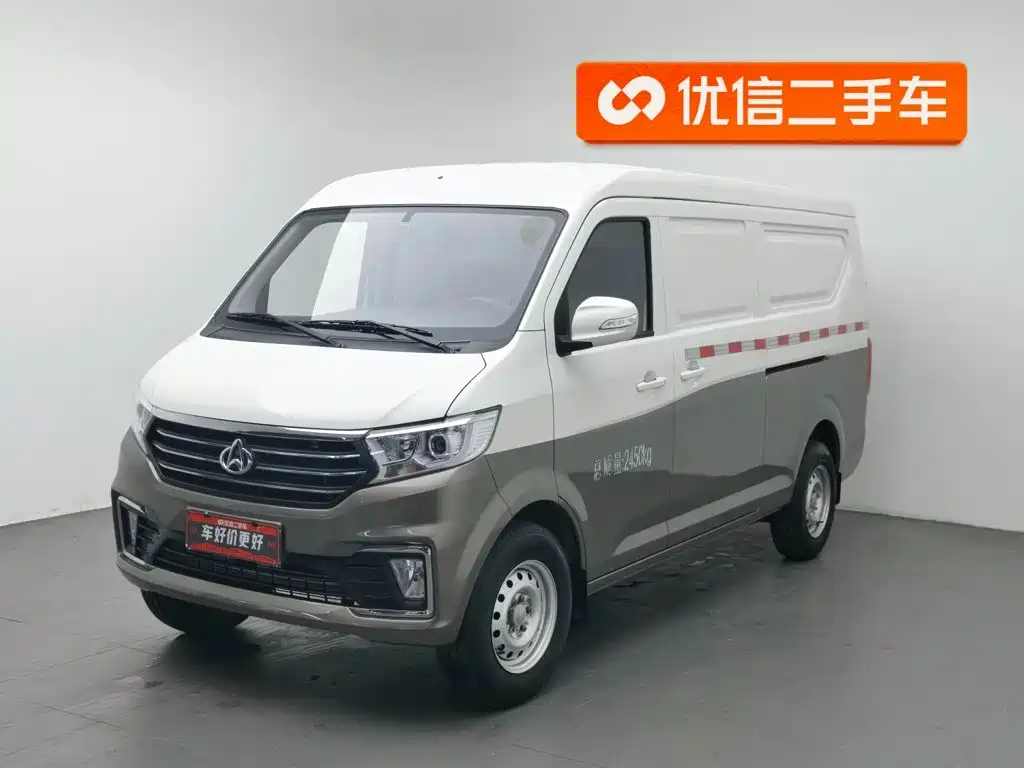
At a glance
- A compact MPV format is intended for passenger transport, family use and light-fleet operations.
- Multiple seating layouts support private, shuttle and executive-transport requirements.
- Separate petrol and battery-electric routes suit buyers with different fuel and charging infrastructure.
- New and used sourcing channels present different condition, warranty and capital-commitment trade-offs.
- Live listings provide the binding unit price, MOQ, documents and availability for each vehicle.
Why the Changan Kuayue Xing V5 matters for export markets
The Changan Kuayue Xing V5 is relevant to overseas buyers because it combines a people-carrier layout with several powertrain and seating choices. Within the compact MPV segment, its appeal comes from carrying passengers and luggage without moving into a large van or premium people carrier. Export listings show 1.5-litre and 1.6-litre petrol versions alongside battery-electric examples, giving importers different routes for private, shuttle, commercial and family-fleet use. The result is a versatile platform rather than one narrowly defined export product. For export markets, flexibility matters because regulations, fuel preferences and fleet economics differ by country.
Demand for this format is strongest where buyers need a combination of passenger capacity, interior practicality and manageable vehicle size. Importers can use five- or seven-seat configurations, while hotels, airport transfer operators, executive shuttles and community transport operators may prefer six-seat or luxury seven-seat derivatives. Unlike a sedan, an MPV can adapt more easily to occupancy; unlike a full-size van, it should be easier to manage in tight roads and parking environments. Local preferences still determine the case. Compare seating need, duty cycle and local conditions before selecting a derivative.
The Xing V5 should not be judged only by its catalogue flexibility. Export success depends on whether a particular derivative can be registered, serviced and resold in the destination market, and on whether spare-parts support follows the chosen powertrain. A buyer should therefore treat model-year, trim, seating, engine or battery specification, and equipment as separate decision points. Current unit-level details and photographs should be reviewed through the live Xing V5 inventory before a commercial commitment is made. Comparing like-for-like quotations is more useful than assuming that all listings represent the same vehicle.
- Five-, six- and seven-seat layouts appear.
- Petrol and battery-electric routes exist.
- Registration and parts support determine viability.
Model range, trims and powertrain variants: how the lineup is structured and how to choose
The export-facing lineup is understood through three choices: energy source, seating capacity and trim. Petrol listings include 1.5-litre versions identified by the JL473QH code and 1.6-litre versions identified by DAM16KR. Names such as Comfort, Deluxe, Enjoyment, Luxury and Fortune-Attracting indicate different equipment positioning, while 5–7-seater, six-seater and luxury seven-seat labels describe body configurations. These labels should be translated against the seller’s photographs and specification sheet rather than treated as a universal equipment list. Identifiers are particularly useful for avoiding an accidental mismatch between the quoted and delivered vehicle at handover.
Choosing a petrol example starts with operating cost, familiarity and towing or load priorities. A buyer can compare the 1.5-litre and 1.6-litre derivatives, but should request the transmission, drivetrain, fuel consumption, service intervals and market-specific emissions information because these details are not safely inferred from a powertrain code alone. An EV listing supports a different route, potentially reducing local fuel use while avoiding engine maintenance. Its advantage still depends on verified battery capacity, rated range, charging method and local electricity access. All four figures should be confirmed for the exact unit.
Seating choice should follow occupancy rather than the highest trim name. A five- or seven-seat passenger vehicle may suit mixed private and light-fleet use, while a six-seat unit can serve shuttle or executive-transport duties with a more flexible middle row. The luxury seven-seat passenger van with Lingdian system represents a higher-feature, EV-linked offering in the available naming structure. Before ordering, confirm seat count, seat-folding options, luggage capacity, air-conditioning equipment and whether the stated features are fitted to the exact vehicle being sold. Photos alone may not reveal every trim-level difference.
- JL473QH and DAM16KR denote key variants.
- EV battery, range and charging need confirmation.
- Match seating to occupancy, not trim name.
New vs used Changan Kuayue Xing V5: how export inventory is structured and how buyers choose
Export supply for the Xing V5 can include new vehicles and used examples, so importers should regard the marketplace as a mixed sourcing channel rather than a single factory programme. A new unit offers a more standardised starting point for specification, finish and warranty discussions. A used unit can make sense where a buyer wants a known configuration at a lower initial capital commitment, provided condition and running costs are assessed properly. The balance between categories can change over time, making live inventory the only reliable place to confirm current availability.
For a used Xing V5, the listing title is only the start of inspection. Buyers should compare model year, petrol variant code, EV or petrol powertrain, trim, seat count, mileage, exterior condition, interior wear, tyres, service history and the completeness of tools and documents. For an EV, add battery state of health, charging-port compatibility, reported driving range and evidence of battery-related maintenance. For a petrol vehicle, check cold starts, fluid condition, engine noise and whether maintenance records support the stated mileage. Request photographs of underbody, battery area and service stamps.
New-versus-used selection should be based on total operating economics, not purchase price alone. New stock may simplify specification and after-sales setup, while used stock can reduce the initial outlay and offer a configuration already familiar to a local fleet. Used vehicles transfer more condition risk, possible deferred maintenance and uncertain battery wear; new vehicles can still differ in delivered specification. Whichever route is chosen, secure a written condition report, exact VIN or vehicle identity, title status, warranty position and a photographed handover inspection before release from the supplier.
- New units simplify specification and warranty planning.
- Used units need condition and battery checks.
- Inspect every unit before final payment.
How export pricing works: the factors behind a live listing price, and how to read one
An export price is the output of several variables, not a fixed model-level rate. The vehicle’s year, trim, engine or battery version, mileage, condition, ownership history and available equipment all affect the amount a seller will accept. Currency movements, inland transport, export handling, insurance, freight, destination charges and the selected Incoterm can change the final commercial figure. ChinaCarDirect displays the current price against each live unit, so buyers should use the inventory record—not a remembered figure—as the starting point for a binding quote. Ask for written price validity.
Reading a listing price correctly means separating the vehicle amount from the landed cost. Confirm whether the quoted basis is EXW, FOB, CIF or another Incoterm, and list every item included or excluded. Destination taxes, customs clearance, port charges, inland delivery, insurance, inspection, registration and dealer margin may sit outside the displayed vehicle figure. Obtain an all-in budget using the destination port and delivery address. This prevents two apparently inexpensive units from producing different procurement outcomes after transport and compliance costs are added and clarifies which supplier bears each risk.
Negotiation should use comparable vehicles. Match year, trim, seating, powertrain, condition and mileage band before asking for a better unit price, then negotiate commercial terms that may carry more value: payment milestones, document preparation, inspection rights, loading arrangement and delivery terms. Ask how long a quotation remains valid and what event triggers a price revision. A wholesale negotiation is therefore not just a discount discussion; it is the creation of a complete, repeatable export package. Review live listings for the current unit price and submit the selected vehicle for a quotation.
- Match year, trim, powertrain and condition.
- Confirm Incoterms and landed-cost exclusions.
- Request quote validity and payment milestones.
MOQ, ordering and payment: single units vs consolidating a container
MOQ should be confirmed on the selected listing and in the written quotation. It may apply to a single SKU, trim, colour or production batch rather than to the Xing V5 model as a whole. A buyer needing one vehicle should ask whether the unit can be released individually and whether the seller permits mixed-model consolidation. Importers with several vehicles can seek a pooled order, but every pooled unit must have the same homologation and documentation status. No universal MOQ should be assumed from a catalogue page without written confirmation.
Container consolidation can improve shipment efficiency, but should not dictate specification. Grouping similar petrol units may simplify parts planning and registration, while mixing petrol and EV vehicles can complicate cargo handling, documentation and insurance. Capacity is also only one constraint: weight distribution, lashing, battery-specific transport procedures and delivery schedules all matter. Before paying a deposit, ask for a packing list showing each VIN, model code, trim and seat layout. Confirm that the proposed consolidation will not delay the entire order if one unit is missing or does not meet inspection requirements.
The safest ordering sequence is specification lock, written commercial terms, inspection, payment and release against verified documents. Start with a vehicle request that identifies the SKU, model year, trim, powertrain, seating, condition, destination and preferred Incoterm. The seller should then confirm matching photographs, identification documents, export eligibility and a quote with a stated validity period. Agree deposit and balance milestones, naming the event that triggers each payment. For a trial shipment, an individual-unit purchase can be evaluated before scaling; for larger orders, use the same inspection standard on every unit.
- MOQ may apply per SKU, trim or colour.
- Single-unit releases need seller confirmation.
- Use a VIN-level packing list.
Shipping, homologation and market compliance caveats: LHD/RHD and import rules by country
Steering configuration is an early screening criterion. The Xing V5 is encountered in left-hand-drive and right-hand-drive contexts around the world, but a seller cannot safely assume that a Chinese-market unit is suitable for every destination. Buyers in right-hand-drive countries should request a genuine RHD example or a documented conversion, with confirmation of steering, controls, lighting, instruments and safety equipment. A conversion may affect price, warranty, parts availability and resale value, so it should be treated as a separate engineering and compliance workstream rather than a last-minute alteration. Confirm it before shipment.
Import rules are market-specific, and the exporter’s description is not a substitute for local approval. Depending on the country, a buyer may need type approval, emissions compliance, VIN verification, customs classification, age restrictions for used vehicles, local taxes, inspection and registration. An EV may face rules or utility conditions not applicable to a petrol model. Engage an import specialist or the transport authority before committing, and ask for the documents the supplier can provide. The importer remains responsible for confirming that the exact configuration is legal for the intended use.
Shipping time and cost should be planned as variables, not promises. Transit depends on origin and destination ports, sailing or air schedules, carrier space, customs clearance, inland transport and the inspection process. Freight also changes with vehicle dimensions, weight, fuel, destination, season and container requirements; an EV may require additional handling and documentation because of its battery. Use the agreed Incoterm to identify responsibility, insure the cargo appropriately, inspect and photograph vehicles before loading, and verify export documents against the final consignment. Allow contingency for port congestion and customs queries.
- Confirm RHD status before payment.
- Type approval and registration remain buyer-led.
- Battery transport may add documentation.
Who should buy the Xing V5 — and who should pick a different vehicle
The Xing V5 is best suited to buyers who prioritise flexible occupancy and a practical people-carrier format over the styling or road presence of an SUV. It can fit a dealer’s mixed portfolio as an operating-cost-focused shuttle, hotel or airport-transfer vehicle, a family MPV, an executive fleet, or a light commercial operator needing more seats than a saloon. The 1.5-litre, 1.6-litre and EV routes let an importer match the model to local fuel and charging conditions. The strongest case is a duty cycle where passenger capacity and interior flexibility are recurring business needs.
A different vehicle is more appropriate when one requirement dominates. Buyers needing residual-value data, mature parts access, heavy-duty payload, off-road capability, a seven-seat SUV format, or a long-range EV with verified charging and range should widen the comparison set. This also applies if rules exclude the exact configuration. Rather than forcing the Xing V5 into a use it may not satisfy, compare total landed cost, downtime, insurance class, registration and resale prospects. A vehicle that is cheaper to purchase can still be costly if parts are imported or utilisation is low.
Best practice is to test the proposition before scaling it. Start with one unit or a pilot where commercially possible, define the route and passenger load, and measure fuel or electricity use, maintenance, downtime and customer acceptance. Keep a parts list for the chosen engine or battery version, confirm workshop access in the destination market, and document checks. If the pilot performs well, the importer can repeat the specification and inspection process with pooled orders. If it does not, the evidence shows whether the problem is model, configuration, compliance or operating plan.
- Suits shuttles, families and light fleets.
- Weak fit for heavy payload or off-road use.
- Pilot before fleet scaling.
Main rivals and how the Xing V5 compares
The Xing V5 should be compared with vehicles that solve the same job: carrying five to seven occupants in a compact MPV or small van while remaining practical for private or light-fleet use. Maxus M5 is the closest domestic-brand comparison because it occupies the Chinese multi-seat people-carrier market and offers petrol and electric routes. Mitsubishi Xpander is an international alternative for buyers seeking a compact MPV with crossover-derived styling and multi-seat layouts. JAC Refine M3 is another direct Chinese compact-MPV alternative for importers comparing multi-seat variants and ownership factors in detail.
The comparison should prioritise the same checkpoints used for the Xing V5: exact seating layout, usable luggage space, engine or battery specification, safety and emissions equipment, serviceability, parts access and homologation. Do not compare only catalogue seating or purchase price. The Maxus M5 requires the same close inspection because domestic-brand familiarity does not remove compliance work. The Xpander may appeal where regional dealer familiarity and crossover-style presentation are priorities, while the JAC Refine M3 offers another Chinese MPV route that merits direct specification and parts comparison and an aftersales audit.
No rival is universally best because suitability depends on market and mission. The Xing V5 is credible when an importer wants a configurable MPV with petrol and electric sourcing routes and will build its own parts and compliance plan. Maxus M5 buyers should compare product maturity and aftersales support directly. Xpander or Refine M3 buyers may gain familiarity in some markets but should test whether that benefit outweighs size, price or cargo compromises. Include local dealer reach and residual demand. Score landed cost, derivative availability, downtime and resale before placing a fleet order.
- Maxus M5 is the closest Chinese comparison.
- Xpander targets compact multi-seat MPV buyers.
- Refine M3 offers a direct Chinese MPV alternative.
Live Changan Kuayue Xing V5 export inventory
View all listings →Real units currently on ChinaCarDirect with per-unit asking prices and MOQ. Availability updates live from the catalogue.
Changan Kuayue Kuayuexing V5 2021 1.6L Fortune Comfort Edition DAM16KR
How to buy a Changan Kuayue Xing V5 from China
-
1
Define the operating requirement
Set the passenger load, daily distance, route conditions, fuel or charging access, destination and expected service life before selecting a vehicle.
-
2
Shortlist the exact configuration
Compare seating layout, petrol or EV powertrain, trim, model year and identified equipment. Do not treat different Xing V5 listings as interchangeable.
-
3
Review the live unit listing
Open current Xing V5 inventory and review the SKU, photographs, condition, mileage where applicable, documentation status and seller description.
-
4
Request a landed quotation
Specify the destination and preferred Incoterm, then request a written quote separating the vehicle price from freight, insurance, handling, tax and clearance costs.
-
5
Confirm compliance and parts support
Check local type approval, emissions and registration rules with an import specialist. Obtain the engine, battery, trim and parts identifiers needed for maintenance planning.
-
6
Lock the order and inspection terms
Confirm the MOQ, quote validity, deposit and balance milestones, inspection standard, document schedule and cancellation or substitution process in writing.
-
7
Arrange shipment or consolidation
For one vehicle, request individual release and transport booking. For several units, approve a VIN-level packing list, consolidation plan, lashing requirements and insurance arrangements.
Xing V5 vs rivals
| Maxus M5 | The closest domestic-brand peer in the Chinese compact MPV segment, with petrol and electric routes that require the same homologation and parts planning. Choose it when its exact derivative offers a better local service case than the Xing V5. |
|---|---|
| Mitsubishi Xpander | A compact MPV alternative with a crossover-derived format and multi-seat layouts for buyers who prioritise regional familiarity. It may serve importers better where Xing V5-specific parts access and residual-value evidence are weak. |
| JAC Refine M3 | A direct Chinese compact-MPV rival that merits a side-by-side review of seating, powertrain, equipment and parts access. It is particularly relevant for importers already familiar with JAC vehicles and aftersales channels. |
Frequently asked questions
How is the Changan Kuayue Xing V5 export price determined?
The price reflects the selected unit’s year, trim, powertrain, mileage or condition, equipment, exchange rate, freight, insurance, destination charges and Incoterm. Review the current per-unit price in the live ChinaCarDirect inventory, then request a formal quotation that states inclusions, exclusions and validity.
What powertrain, engine and range options are available?
The export range includes petrol derivatives identified by 1.5 L JL473QH and 1.6 L DAM16KR codes, plus battery-electric listings. Exact EV battery capacity, motor output, rated range and charging connection are not safely inferred from the model name; check the current unit listing and seller specification.
Should buyers choose a new or used Xing V5?
New units generally offer a more standardised specification and easier warranty planning, while used units can reduce the initial capital commitment but transfer more condition and maintenance risk. Compare the exact vehicle, operating cost, documentation, service history and expected resale rather than choosing from the label alone.
How does MOQ work when buying from China?
MOQ is set by the seller or SKU and can differ between listings. A buyer needing one vehicle should request individual release, while fleet buyers can ask about consolidation where all units share the required homologation. The selected listing and formal quotation must state the binding requirement.
What affects Xing V5 shipping time and cost?
Origin and destination ports, carrier schedules, vessel space, customs clearance, inland delivery, vehicle dimensions, weight, fuel type and the chosen Incoterm all affect the shipment. An EV may also require battery-specific handling and documentation, so no universal transit time or freight charge should be assumed.
How are spare parts arranged for an exported Xing V5?
Parts planning should follow the exact petrol variant code or EV system, with part numbers confirmed against the delivered vehicle before shipment. Ask the supplier for diagrams, packaging details, replacement lead times and the local distributor or workshop that will support ongoing maintenance.
Is right-hand-drive Xing V5 availability possible?
RHD availability cannot be inferred from the model name. Buyers should review current listings and ask the seller to confirm whether a unit is factory RHD or has a documented conversion, including confirmation of local safety compliance. Treat a conversion as a separate cost and resale consideration.
How do I order a Changan Kuayue Xing V5 from China?
Choose a specific live listing, send the required specification and destination with your RFQ, and obtain written terms for MOQ, price, payment, inspection and documentation. Verify the vehicle identity and handover condition before final payment, then use the agreed Incoterm to arrange transport and clearance.
Ready to source the Changan Kuayue Xing V5?
Send your preferred Xing V5 specification and destination to ChinaCarDirect for a current unit price, MOQ and export quote.
Request a quote