
Changan Qiyuan A07 Export Buying Guide
Buy a Changan Qiyuan A07 from China with clear guidance on trims, electric and range-extender options, export pricing, MOQ, shipping and compliance.
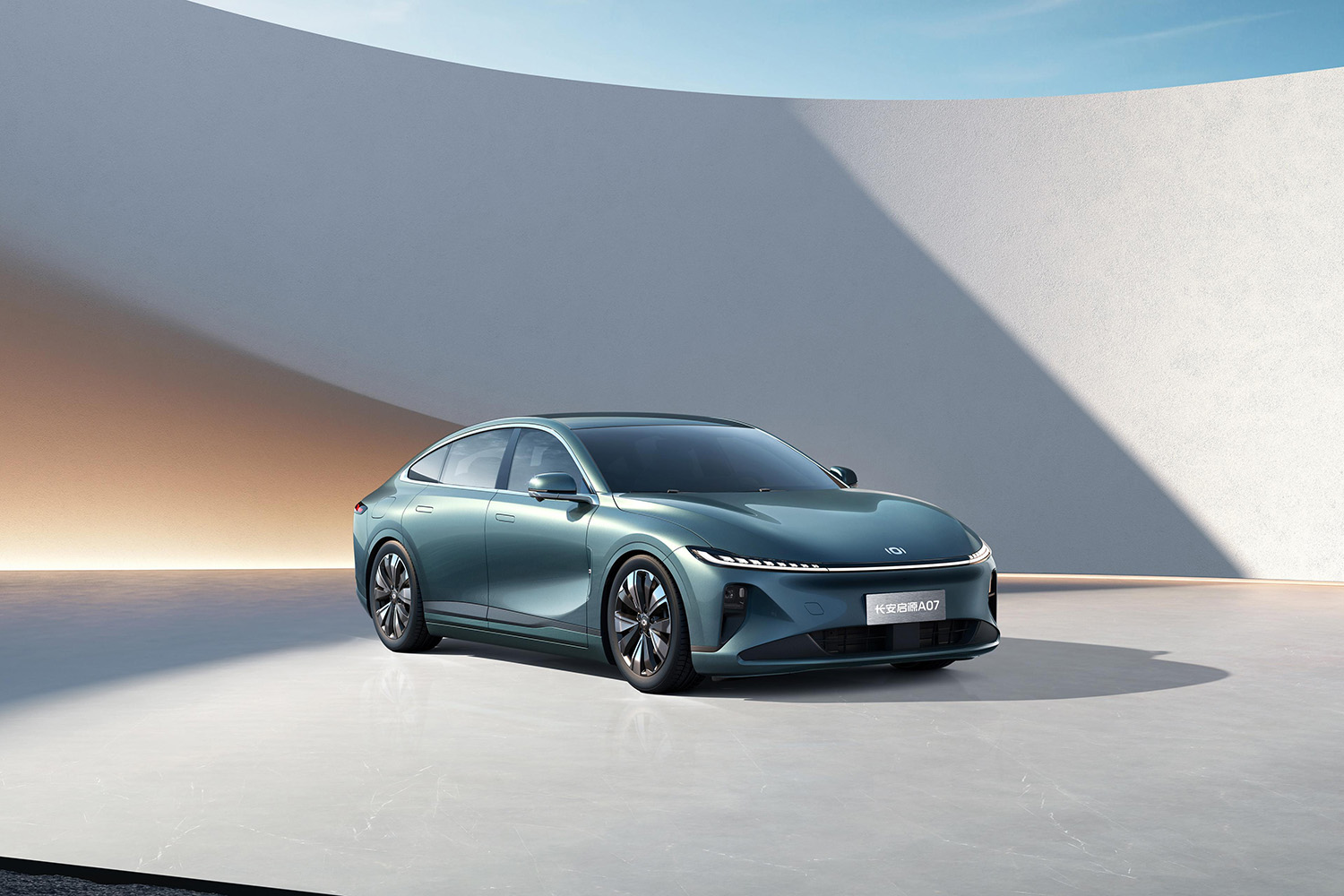
At a glance
- The A07 is an electric-focused sedan offered in pure-electric and range-extender forms for export buyers.
- BEV trims carry 515, 625 and 710 range labels, while range-extender trims use 200 and 230 designations.
- Powertrain choice should follow route length, charging access, payload and climate, not the badge alone.
- Export quotes must be compared by model year, trim, condition, destination and Incoterm.
- Live A07 listings provide the current per-unit price, availability, seller MOQ and inquiry terms.
Why the Changan Qiyuan A07 matters for export markets
The Changan Qiyuan A07 is relevant to overseas buyers because it combines an electric-focused sedan format with both pure-electric and range-extender choices. That gives importers a way to serve markets at different stages of charging-network development rather than committing every vehicle to one operating model. Its appeal is strongest for dealers and fleet buyers looking for a modern Chinese alternative to familiar electrified sedans, provided they can validate local homologation, after-sales support and real-world suitability before placing a bulk order. It can also serve as a controlled pilot for an importer comparing operating costs.
Export demand for the A07 should be understood through use cases rather than a single global sales claim. In cities with dependable charging, the longer-range pure-electric versions can suit company cars, ride-hailing and retail customers who value low-emission driving. Where long-distance coverage is uncertain, the range-extender versions offer a different proposition by combining electric driving with a combustion-based generator. Fleets should compare route length, daily utilization, depot charging and driver familiarity before selecting either architecture. Availability varies by country, so verify charging, driving-side and tax compatibility before importing a specific configuration.
The A07 is therefore most attractive to buyers who can turn trim-level differences into a disciplined fleet policy. The lineup includes 515, 625 and 710 range designations for pure-electric versions, plus 200 and 230 range-extender designations, allowing a distributor to segment stock by duty cycle. Before comparing units, check the live A07 inventory for the exact model year, battery specification, equipment list and seller terms, then ask a vehicle specialist to confirm anything not shown in the photographs or description. Written confirmation reduces the risk of comparing materially different vehicles under similar listing names.
- Match powertrain to charging.
- Use trim labels carefully.
- Validate homologation early.
Model range, trims and powertrain variants: how the lineup is structured and how to choose
Start with the powertrain, then use the range label to narrow the shortlist. The A07 model family includes several pure-electric editions identified by 515, 625 and 710 range labels, covering Air, Pro, Max, Elite, Premium, Deluxe, Flagship and Luxury positions in different combinations. Edition names such as Delicious and Blue Whale are also used. Because the exact hierarchy can change between model years, do not infer equipment or hierarchy from a badge alone; compare the seller’s full specification sheet. Request battery, motor, charging and equipment details in writing for the intended market.
The range-extender branch is equally important because it is not simply a smaller battery version of the BEV. Listings include 200 Pro, 200 Max, Extended Range 200 Pro and a 230 Premium designation. A range extender generally drives the wheels electrically while using an engine as a generator, so the buyer should ask whether a quoted figure is electric-only, combined driving range or another test-cycle value. Treat the 200 and 230 labels as trim identifiers until the underlying test standard and local homologated figure are documented. Verify charging and fuel-use claims.
A practical choice follows from operating demand. The 515-labelled cars are the simplest starting point where daily routes are short and charging is dependable; the 625 and 710 labels indicate progressively longer-range positioning, although the buyer should verify the test cycle and usable rather than headline distance. The 200 and 230 range-extender choices may make more sense when electric-only daily driving is the priority but long routes still need an additional energy source. Terrain, temperature, payload and charging speed can narrow the decision more than cosmetic trim names and optional equipment.
- BEV: 515, 625, 710.
- Range-extender: 200, 230.
- Confirm test cycle.
New vs used Changan Qiyuan A07: how export inventory is structured and how buyers choose
Export buyers should separate model choice from condition choice. A factory-new A07 gives the clearest chain from factory configuration to delivery, avoids the need to infer a prior vehicle’s history and allows mileage, equipment and warranty terms to be documented at the point of sale. It also suits a new distributor building a consistent retail range. The trade-off is depreciation and exposure to specification choices that may not match the destination market, so new does not remove the need for homologation or demand planning. Inspection shifts residual risk before delivery.
A used A07 can make sense for a dealer seeking a lower acquisition commitment, a test vehicle, or a price benchmark against new stock. Its value depends less on the badge and more on verifiable condition: service history, accident repair, battery state of health for an EV, engine and generator service for a range extender, software status, tyre and brake wear, and the remaining warranty. Ask for VIN and history records, inspect in person where possible, and have an independent specialist review the high-voltage system and charging function before committing to the transaction.
Current A07 supply should be read from the live listings rather than a remembered stock summary, because availability changes as vehicles are allocated or sold. Compare condition labels carefully: a unit described as new should be supported by production and dispatch documents, while a used unit should disclose registration history, owners, odometer reading and known damage. For fleet procurement, calculate the total cost of each route—purchase price, financing, freight, insurance, charging, maintenance and expected residual value—rather than using acquisition cost alone. Check per-unit condition directly in the live A07 search.
- New: clearer history.
- Used: inspect condition.
- Compare total cost.
How export pricing works: the factors behind a live listing price, and how to read one
An export listing price is only one layer of the buying equation. At vehicle level, model year, trim, powertrain, range or battery version, options, production condition, mileage for used units and market demand can all affect the quoted amount. At transaction level, the currency exchange rate, sea or air freight, marine insurance, terminal and documentation charges, destination taxes, registration fees and the selected Incoterm determine the landed commitment. Compare only like-for-like vehicles, and state the destination and delivery term before treating one quote as competitive. Otherwise, savings can reappear as freight or compliance cost.
To read a live quote correctly, separate the vehicle amount from charges that may sit outside it. Check whether the seller is quoting ex-works, FOB, CIF or another term, and confirm what is included: export documentation, battery declaration, charger or cable, basic tools, warranty, inland transport and loading supervision. A listing photograph cannot reveal every option or defect, so request a VIN or chassis number, option list, tyre and paint condition, and a current production or registration document. For used vehicles, request an odometer statement, condition report and service history.
The most reliable price guide is a written, destination-specific quotation with a validity period. Ask the seller to state the exchange-rate basis, freight assumption, insurance, payment milestones, document set, lead time and Incoterm on the same document. Recalculate the comparison when exchange rates or sailing schedules change, and include the cost of local charging installation or warranty registration where relevant. Exact price and availability are shown per unit in the live inventory on ChinaCarDirect, while an RFQ allows a buyer to ask for an apples-to-apples export quote for the selected destination and trim.
- Compare like-for-like trims.
- Separate landed costs.
- Request written quotes.
MOQ, ordering and payment: single units vs consolidating a container
Minimum order quantity is a commercial term that must be checked on the specific listing or in the seller’s written quotation; do not assume it from the model name or a wholesale buyer’s expectations. A single-unit purchase can make sense for a dealer testing demand, a company filling a small fleet need or an importer securing a demonstrator. It lowers capital exposure, but freight, insurance, documentation and destination charges are spread across fewer vehicles. The economics must be compared with the margin and residual value of that particular unit.
Consolidating several units or mixing trims can improve freight efficiency and give a dealer stronger purchasing leverage, but it also converts the order into an inventory-planning exercise. The buyer must define the destination sales mix, expected registration timetable, storage capacity and cash-flow ceiling before committing. Combining a 515 BEV, a longer-range BEV and a range extender may serve a broader customer base, yet it can slow sell-through if local demand does not match the allocation. Ask the seller to hold stock only after the unit mix and release schedule are documented.
A workable ordering sequence is: select a live unit, send an RFQ, obtain a pro forma invoice, approve the locked specification, pay through the agreed verified method, complete inspection and document checks, and then release the shipment. Deposits and balances should match the seller’s stated milestones and contract terms. Keep the signed sale contract, identity and payment evidence, export documents, inspection record and shipping instructions together. A ChinaCarDirect RFQ is the appropriate place to ask whether one-unit ordering is available for the chosen listing or what minimum quantity the seller will accept.
- Check listing MOQ.
- Pilot or consolidate stock.
- Lock contract terms.
Shipping, homologation and market compliance caveats: LHD/RHD and import rules by country
Shipping begins with the delivery term, not the vehicle price. A buyer may compare RoRo, container or air options where practical, with the carrier, port, route, season, dimensions, weight, battery handling and customs workload all affecting cost and timing. Electric vehicles require the seller or freight forwarder to confirm the correct battery declaration and dangerous-goods handling. Ask who books the vessel, insures the vehicle, handles export clearance, delivers to the terminal and assists with destination import documents; responsibilities should be explicit in the quotation. A booking does not confirm local clearance.
Driving-side configuration is a critical sourcing check. Do not assume a Chinese-market car will be left-hand drive or that a right-hand-drive conversion will be acceptable for registration. Confirm the steering-wheel position, accelerator and lighting arrangements, door and mirror equipment, charging connector, and whether the vehicle was factory-configured for the intended market. A factory RHD example may be easier to homologate than a converted vehicle, but neither is automatically approved. The live listing and seller should identify the configuration, and the destination authority or homologation specialist should confirm acceptance before payment.
Local compliance can extend well beyond customs clearance. Depending on the country, an importer may need vehicle type approval, emissions or powertrain rules, battery and charging provisions, safety and EMC checks, software or cybersecurity requirements, local warranty registration, and payment of duty, VAT or other taxes. A range extender may face a different regulatory treatment from a BEV, and the relevance of each rule varies by market. Use a local vehicle-import specialist to build a compliance checklist, confirm VIN-linked documents and ask the insurer to cover the intended vehicle configuration.
- Confirm driving side.
- Check battery documents.
- Use local homologation advice.
Who should buy the A07 — and who should pick a different vehicle
The A07 fits buyers who can manage an electrified vehicle commercially and who value choice within one model family. A dealer can offer a shorter-range BEV for urban customers, a longer-range BEV for higher-mileage users and a range extender for customers who want electric daily driving with additional route flexibility. Fleets with controlled routes or depot charging may also reduce operational uncertainty. The deciding question is not whether one version is universally best, but whether the importer can match the right configuration to each duty cycle and support it after delivery.
Choose a different vehicle if your market prioritizes a long-established resale brand, minimal homologation work, standardized parts availability or a charging ecosystem with which your staff are already familiar. The A07 may also be a poor organizational fit for a buyer unable to verify high-voltage service support, maintain import documentation or absorb the uncertainty of a newer export model. Fleets with very high daily mileage should not rely on trim-name range alone; they need a route-specific energy calculation, verified charging times and realistic residual-value assumptions before placing a sizable order.
For a prudent first purchase, treat one unit as a pilot only if it will generate useful information rather than become orphaned stock. Compare the actual route load, charging access, service response and likely customer acceptance, then document a total-cost model. If the A07 meets the duty cycle but the destination lacks a clear approval path, postpone rather than solve regulatory uncertainty through informal conversions. Conversely, a distributor with approvals, a parts plan and a target segment may gain more from the A07’s trim breadth than from a familiar model with limited stock.
- Best for mixed fleets.
- Pilot uncertain support.
- Reject unclear compliance.
Main rivals and how the A07 compares
The closest comparisons depend on whether the buyer values the A07’s range hierarchy, electrified powertrain flexibility or its export cost position. Deepal SL03 is a useful direct comparison because it is also a Chinese-built electric-focused sedan with pure-electric and range-extender versions in some markets. BYD Seal is generally larger and more premium, providing a more established brand and premium-feature comparison but a different dealer and residual-value proposition. GAC Aion S is closer to a compact electric-sedan brief and may appeal where space and acquisition efficiency matter more than the A07’s wider range-banded lineup.
Against the Deepal SL03, the A07 should be judged on homologation, service reach and the exact energy configuration rather than on badge or headline range. Against the BYD Seal, it may offer a more accessible Chinese-sedan proposition, but buyers should not assume equivalent brand recognition, equipment or resale support. Against the Aion S, the A07 can suit importers wanting more differentiated BEV range choices and a range-extender option, while the Aion S may fit a narrower BEV-only fleet strategy. Test-drive, document and warranty comparisons should be included in the RFQ.
The right rival depends on the market and the sales channel. A retail dealer may value the A07’s model-family breadth against the Aion S, while an executive-fleet buyer may compare it with the BYD Seal on comfort, refinement and expected resale. A distributor seeking both BEV and range-extender options should include the Deepal SL03 in the same quote. None of these comparisons removes the need for a destination-specific total-cost review: a rival’s lower sticker price can be offset by certification, charging adaptation, parts planning or slower inventory turnover in the destination market.
- SL03: closest rival.
- Seal: premium alternative.
- Aion S: compact option.
Live Changan Qiyuan A07 export inventory
View all listings →Real units currently on ChinaCarDirect with per-unit asking prices and MOQ. Availability updates live from the catalogue.
Changan Qiyuan Changan Qiyuan A07 2025 Blue Whale Pure Electric 625 Luxury
Changan Qiyuan Changan Qiyuan A07 2025 Blue Whale Pure Electric 625 Luxury
How to buy a Changan Qiyuan A07 from China
-
1
Define the operating case
Record daily distance, charging access, route temperature, payload and local charging connector. Decide whether a pure-electric or range-extender A07 is the primary fit before reviewing trims.
-
2
Shortlist live A07 units
Use the live A07 inventory to compare the exact model year, range label, trim name, condition and seller terms. Treat each listing as a starting point and request missing documents or images.
-
3
Verify every specification
Ask for the VIN or chassis number, battery capacity, motor and charging data, equipment list, odometer status, production or registration documents and export eligibility. Do not infer missing specifications from trim names.
-
4
Check homologation and driving side
Have a local importer or homologation adviser confirm registration, safety, EMC, battery, emissions or range-extender rules as applicable. Verify factory RHD or LHD configuration and charging compatibility before contracting.
-
5
Request comparable export quotes
Send the destination, trim, quantity and preferred Incoterm to each seller. Require a written quote separating vehicle cost, freight, insurance, documentation, taxes if quoted and payment milestones.
-
6
Confirm MOQ and contract terms
Ask whether one-unit ordering is accepted or what minimum applies to a mixed container. Put the binding MOQ, specification, quote validity, refund terms and payment schedule into the sale contract.
-
7
Inspect before shipment release
Use an independent inspection for the selected vehicle and verify export documents, VIN, condition, battery or range-extender systems, charger inclusion and loading arrangements. Release payment and freight only after discrepancies are resolved.
A07 vs rivals
| Deepal SL03 | A close Chinese-built sedan comparison with pure-electric and range-extender versions in some markets. The A07’s wider trim and range-label hierarchy is attractive for segmentation, while homologation and service reach should determine the commercial fit. |
|---|---|
| BYD Seal | A generally larger, more premium BEV sedan with stronger brand recognition in many markets. The A07 offers a different cost-positioning proposition, but buyers should compare equipment, charging, warranty and residual-value support rather than assume equivalence. |
| GAC Aion S | A compact BEV sedan alternative that may suit fleets focused on one electric configuration. The A07 offers more range labels and a range-extender option, but requires broader stock, homologation and support planning. |
Frequently asked questions
How is export pricing determined for the Changan Qiyuan A07?
An A07 export quote is driven by model year, trim, powertrain, range or battery version, options, condition, exchange rates, freight, insurance, destination charges and the chosen Incoterm. Current per-unit prices and availability must be checked in the live A07 inventory; request a written quote for the exact vehicle and destination because a listing amount alone is not a landed cost.
Which powertrains and range versions are available?
The A07 is offered as a pure-electric sedan and with range-extender variants. BEV trims carry 515, 625 or 710 km range labels, while range-extender trims use 200 or 230 km; confirm the applicable test cycle, battery and local homologated figures in the specific listing.
Should I buy a new or used Changan Qiyuan A07?
A new A07 provides a known configuration and mileage, with warranty terms that should still be confirmed in writing. A used unit can reduce acquisition exposure but requires scrutiny of battery condition, service history, damage, remaining support and whether that configuration is currently available.
How does MOQ work for an A07 order?
MOQ is set by the seller and listing, not by a universal model rule. Ask whether one unit can be ordered and whether the quoted minimum changes for a mixed container; the binding minimum should appear in the seller’s written quotation and live listing.
What determines shipping time and cost?
Shipping time and cost depend on transport mode, route, port and terminal handling, season, unit dimensions and weight, battery documentation, customs work and the Incoterm. A booking estimate is not a fixed arrival promise; ask the forwarder for a current schedule and responsibility matrix.
How are spare parts and service handled?
Spare-parts planning should use the exact model year, powertrain and trim because battery, electronic and range-extender components may not be interchangeable. Confirm seller support, regional parts channels, diagnostic access and warranty procedure before ordering, and ask for a written method covering parts availability and lead time.
Is a right-hand-drive Changan Qiyuan A07 available?
Right-hand-drive availability depends on the source batch and destination market. Use the live listings to identify factory-configured RHD vehicles and have the seller document that configuration; do not assume a conversion will pass local registration, charging or safety checks.
How do I order a Changan Qiyuan A07 from China?
Start in the live A07 search, choose a candidate and send an RFQ specifying the destination, powertrain, range label, trim, quantity and Incoterm. After the seller confirms the unit, specification, documents, MOQ, payment milestones and freight plan, complete inspection before releasing the shipment.
Ready to source the Changan Qiyuan A07?
Send a Changan Qiyuan A07 RFQ with your destination, preferred powertrain, trim and required quantity for a current written quote.
Request a quote