
Changan Qiyuan E07 Export Buying Guide for Overseas Dealers
Export buying guide for the Changan Qiyuan E07, covering 39 kWh range-extender and 90 kWh battery-electric trims, pricing, MOQ, shipping and compliance.
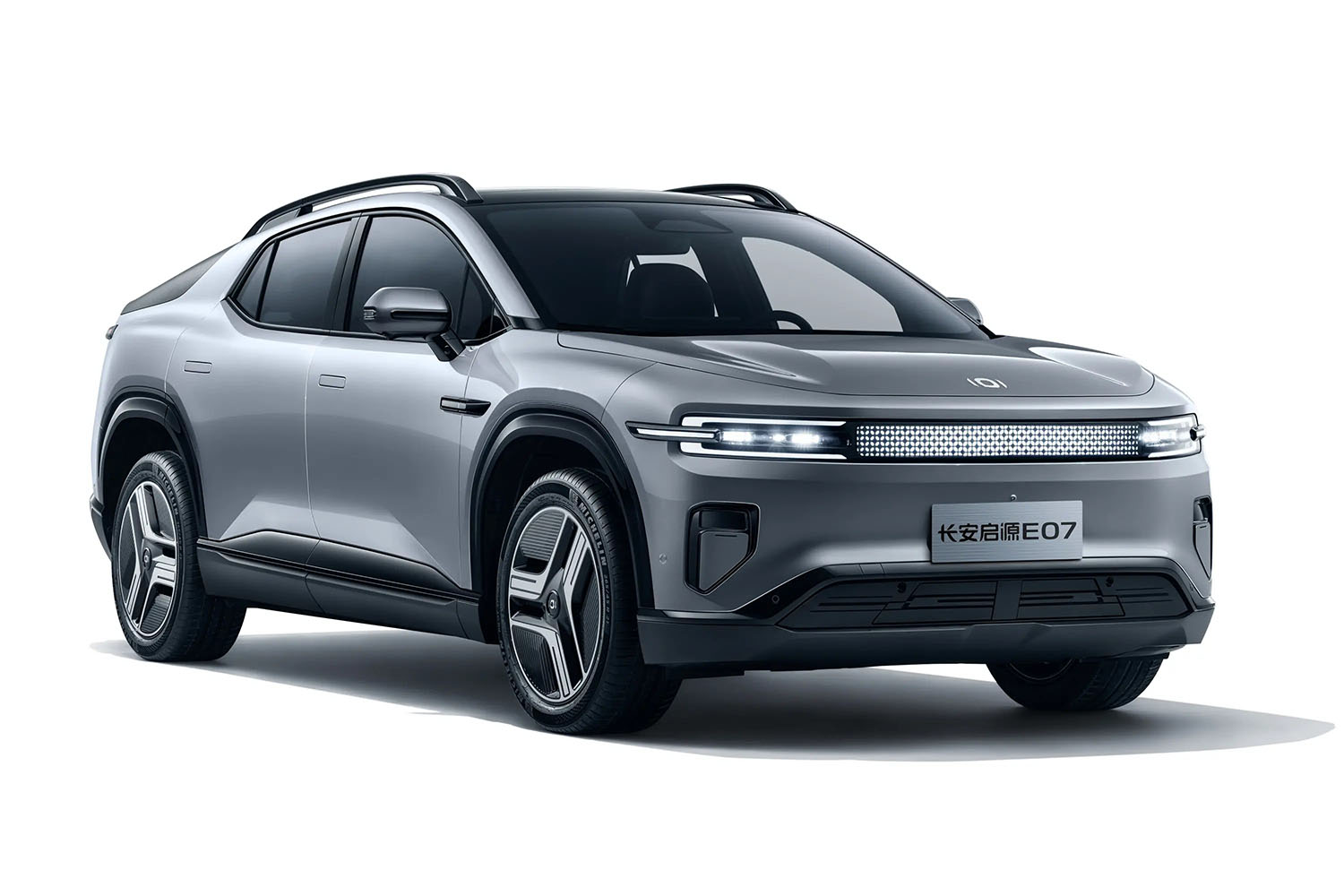
At a glance
- The E07 offers both a 39 kWh range-extender line and a 90 kWh pure-electric line for export buyers.
- Range-extender editions are offered in 2WD and 4WD forms, while the listed pure-electric editions use AWD.
- Choose the powertrain around charging access, route length, terrain and service capability—not the trim badge alone.
- New vehicles suit programme consistency, while used examples require battery, mileage, warranty and provenance checks.
- Use ChinaCarDirect live listings for current per-unit pricing, MOQ and availability, then request an itemised RFQ.
Why the Changan Qiyuan E07 matters for export markets
The Changan Qiyuan E07 is relevant to export buyers because it combines a premium SUV format with two energy paths: a range-extender model for routes with uneven charging access and a battery-electric model for operators ready to build charging around daily use. That flexibility matters in markets where a single national charging network cannot be assumed. Instead of forcing every importer into one EV assumption, the E07 lineup lets a dealer match the powertrain to local infrastructure, route length and customer demand. For fleet and premium retail programmes, it also provides a platform on which importer, homologation and after-sales planning can be discussed before a purchase order is placed.
Interest in Chinese electrified SUVs is driven less by novelty than by the combination of battery capacity, intelligent-driving equipment and powertrain flexibility. The E07 appears in extended-range and pure-electric editions, including 39 kWh range-extender configurations and 90 kWh battery-electric configurations. Labels such as Intelligent Driving, Ultra High Performance and Ultimate indicate different market positioning, but overseas buyers should treat them as trim identifiers until the exact equipment list for the unit being considered has been verified. Local regulation can also change which functions are legal, supported or useful after homologation on public roads.
For overseas buyers, the E07 matters most as a flexible import candidate rather than as an automatic fit for every market. A distributor can develop a pure-EV branch around dependable charging and a range-extender branch around longer routes, but that strategy still depends on duties, certification, service coverage and realistic residual values. The prudent first step is therefore to compare the E07 with vehicles already supported in the destination, then request the live listing and a written landed-cost proposal for the precise edition before committing inventory or promotional funds.
- Two powertrain paths suit different charging conditions.
- 39 kWh range-extender versions support longer routes.
- 90 kWh pure-electric versions target regular EV use.
Model range, trims and powertrain variants: how the lineup is structured and how to choose
When reviewing Changan Qiyuan E07 specifications, the main decision is energy architecture. Extended Range editions use a 39 kWh traction battery and are offered with two- or four-wheel drive depending on the trim. In this configuration, electric driving supports normal daily use, while the range-extender system is intended to provide additional distance when charging or refuelling constraints make a pure-EV trip impractical. Buyers should confirm the system details rather than infer them from the “EV” badge alone. The 2WD range-extender edition and the 4WD performance edition also serve different route and traction priorities.
Pure Electric editions use a 90 kWh battery and are shown with all-wheel drive. The E07’s naming distinguishes Ultimate, Max Intelligent Driving and Ultra High Performance versions, which may reflect different equipment, software and positioning. For an export buyer, that makes the trim sheet more important than headline battery capacity: motor output, rated range, charging interface, assistance features, warranty and local compatibility must all be matched to the destination market and operating model. A larger pack does not remove the need to model charging time, payload, local electricity use and residual risk.
Choose between the 39 kWh and 90 kWh branches by working from real duty cycles. A company with controlled overnight charging may favour the battery-electric E07 for routine mileage and predictable energy replenishment. A distributor covering mixed urban and long-distance routes, or a region with uneven public charging, may prefer the range-extender option. Then test the decision against local electricity prices, charger access, terrain, towing needs, service capability and import rules; those operational facts usually matter more than the edition name before any unit is committed to the vehicle.
- Range-extender: 39 kWh, with 2WD or 4WD.
- Pure-electric: 90 kWh, with AWD.
- Compare full equipment lists, not only edition names.
New vs used Changan Qiyuan E07: how export inventory is structured and how buyers choose
Export supply can include factory-new vehicles and, when a listing becomes available, previously registered or used examples. The E07’s new-stock structure spans range-extender and pure-electric editions, while the used market should be assessed unit by unit rather than assumed to mirror the new catalogue. New vehicles generally offer clearer provenance and a more direct relationship with factory configuration; used vehicles require additional scrutiny of age, mileage, ownership, battery condition and service history. The correct source can change by destination because export channels, local used-car rules and importer programmes differ materially.
New is usually the cleaner choice for a dealer building an official range, a fleet programme requiring consistent configuration, or a buyer seeking warranty alignment. It also allows the importer to specify drivetrain, edition, colour and options before shipment rather than accept an existing vehicle. The trade-off is that the buyer carries model-year depreciation and potentially higher capital committed to a single unit. Used E07 vehicles can reduce that initial exposure, but only if battery health and mechanical condition are independently assessed rather than inferred from odometer readings or photographs.
For a used vehicle, ask for the VIN, production or registration dates, exact trim, odometer record, battery warranty terms and evidence of maintenance. Inspect how the vehicle has been used: charging history, long idle periods, accident repairs or aftermarket electronics can all affect future value and support. Because a used unit may carry a different warranty position or market history, describe it as a separate purchase with its own condition report, valuation and delivery terms—not simply a cheaper version of the new E07 in the destination market today.
- New units suit consistent factory programmes.
- Used units require VIN, service and battery checks.
- Treat age, mileage and warranty as separate risks.
How export pricing works: the factors behind a live listing price, and how to read one
An export price is not one fixed manufacturer number. It is built from the selected vehicle’s model year, exact trim, battery and powertrain version, drivetrain, production date, colour or option status, and the seller’s commercial terms. For the E07, moving between the 39 kWh range-extender branch, the 90 kWh pure-electric branch, 2WD and 4WD configurations, or equipment-focused editions changes the underlying vehicle and therefore the quote. A buyer comparing two live listings should confirm that they are like-for-like before drawing any broad market conclusion from them.
Condition and logistics then sit on top of the vehicle value. A used unit carries mileage, age, ownership history and repair risk; a new unit may carry factory incentives or programme terms. The delivered cost also reflects exchange-rate movement, inland transport, export handling, marine or RoRo freight, insurance, destination port charges, customs duties, taxes and the selected Incoterm. Some quotations are ex-works and others include ocean freight or a port-to-door service, so comparing the displayed amounts without checking inclusions can be misleading for an importer with a fixed budget and deadline.
To read a live Changan Qiyuan E07 export price guide, open the current E07 listings on ChinaCarDirect and inspect the unit-level details: year, full trim name, battery version, drivetrain, condition, mileage where applicable, MOQ, seller location and stated shipping terms. Treat the displayed amount as the starting point for that particular unit, not the landed cost in your country. Ask for a written quotation that separates vehicle price, payment milestones, documentation, freight, insurance and destination charges, and confirm its validity period before sending funds through the verified seller channel or RFQ.
- Start with the exact unit and full trim.
- Add freight, insurance, tax and Incoterm costs.
- Request an itemised, time-bound written quote.
MOQ, ordering and payment: single units vs consolidating a container
MOQ means the minimum quantity a seller requires for that transaction, and it can differ between an individual vehicle, a mixed batch and a production order. Some live E07 offers may accept one unit, while a seller focused on wholesale movement may impose a trim-specific minimum or require several units of the same configuration. The quantity shown beside a listing is therefore more useful than a general assumption about Changan Qiyuan policy. Confirm the minimum, permitted model-year mix, colour flexibility and whether the quoted price changes with quantity in writing.
For buyers seeking to buy a Changan Qiyuan E07 from China, a single-unit purchase gives an importer flexibility to test demand, colours, software acceptance and local service economics before scaling. Consolidating with another buyer can spread freight across more vehicles and materially improve unit economics. However, combining vehicles introduces coordination risk: they may have different production dates, trims, documents or delivery schedules, and the receiving party must accept each specification. Ask the seller to provide a consolidated packing list and a single freight quotation that clearly identifies every included vehicle.
Ordering mechanics should be settled in a contract before deposit. The agreement should identify the exact vehicle or agreed batch, price basis, MOQ, deposit and balance triggers, Incoterm, documentation, inspection, shipment deadline, insurance and dispute terms. Payment should go only to the contracted seller through a verified business channel, with the vehicle description and refund conditions attached to the receipt. A clear milestone structure—payment against inspection and shipping documents—reduces avoidable risk, but the correct milestones still depend on the seller and route, including any local banking requirements for the buyer.
- Check MOQ on each selected live listing.
- Single-unit buying supports market testing.
- Consolidation requires matched specifications and documents.
Shipping, homologation and market compliance caveats: LHD/RHD and import rules by country
Shipping begins only after the vehicle, documents, destination and Incoterm are aligned. An SUV may move by container, flat rack or RoRo depending on carrier availability and commercial terms, so do not assume one method from the trim alone. Compare routes by port, sailing schedule, handling frequency, insurance and the risk of damage or delay. The E07’s exact dimensions, weight and shipping configuration should be taken from the live unit or manufacturer documentation; a dealer should also confirm roof, underbody and vehicle-securing requirements before reserving space or paying a deposit.
Steering configuration is a commercial and regulatory checkpoint. Many China-origin vehicles are supplied in left-hand-drive form, and the E07 listings should not be assumed to include a factory right-hand-drive conversion. If your market expects RHD, ask the seller for the build specification and confirm whether a compliant conversion is offered; an aftermarket steering conversion can affect homologation, warranty, controls and residual value. Some importers use LHD vehicles lawfully in certain jurisdictions, but local registration rules, insurance practices and customer preference still govern whether that configuration is commercially sensible for the buyer.
Before shipment, determine whether the destination requires individual vehicle approval, type approval, emissions rules for the range-extender configuration, battery and charging safety, electromagnetic compliance, radio approval, software or cybersecurity provisions, and registration taxes. Local rules may also limit which driver-assistance functions can be marketed or used. Import duties and incentives can depend on powertrain, battery, local production and vehicle age, so consult the destination authority or a specialist broker. Homologation, shipping and customs are separate workstreams; approval in one does not guarantee clearance in another or payment of all duties.
- Confirm LHD or RHD before contracting.
- Check destination homologation and import duties.
- Confirm dimensions, securing and insurance before booking.
Who should buy the E07 — and who should pick a different vehicle
The E07 is a strong candidate for an importer or premium buyer who wants SUV packaging, advanced technology and a choice between pure EV and range-extender operation. It also suits buyers whose operating territory includes weak charging coverage, long transfers or terrain-sensitive routes, where the 2WD and 4WD range-extender configurations provide different priorities. For business use, the E07 may fit executive fleets, mobility operators or mixed urban-regional routes, provided charging, software, servicing and residual-value plans are built into the business case rather than treated as a generic car import alone.
A different vehicle may suit buyers who require a smaller, easier-to-ship package, a highly standardized fleet specification with extensive local service, or a pure-EV architecture without an internal-combustion range extender. It may also make sense for buyers whose market rewards an established local brand more than a new import proposition. Dealers should compare total operating cost, parts availability, insurance, charging contracts and remarketing support rather than choosing on battery capacity alone. The strongest case for the E07 is operational fit, not simply the largest catalogue label in the short term.
A used E07 requires a more cautious decision than a new one. It may make sense where the buyer accepts an earlier production year, a known mileage profile and the possibility of replacing wear items, provided battery diagnostics and a mechanic’s inspection support the price. It is less suitable when fleet uptime, warranty certainty or uniform resale specification is the priority. For any used purchase, verify that the battery warranty remains transferable, the service history is credible and replacement parts can be obtained for the exact trim before contract signature.
- Best for buyers wanting EV and range-extender choice.
- Consider alternatives for smaller fleets or local-only brands.
- Used purchases need stronger due diligence.
Main rivals and how the E07 compares
The Li Auto L7 is the closest conceptual rival because it also combines range-extender and battery-electric SUV options for premium-family and business use. Like the E07, it asks buyers to compare routine electric driving with the operating flexibility of an extended-range system. The practical decision is less about brochure hierarchy and more about destination support, homologation, software maturity, service network, spare-parts access and resale prospects. Neither brand’s overseas proposition is complete without those local services, so compare what can be supported in the destination rather than assuming China-market ownership transfers directly.
The XPeng G9 is a closer all-electric comparison: it competes for buyers who want a large smart SUV and place technology at the centre of ownership. The E07 gives that buyer an additional 39 kWh range-extender choice, which can reduce dependence on public charging, while its 90 kWh pure-electric versions allow a direct BEV comparison. Against the NIO ES6, the E07 may appeal to buyers seeking a broader range-extender option, whereas the ES6 is a more purely BEV-oriented proposition. Exact suitability still depends on approved equipment and local service coverage.
Procurement teams should compare the rivals with the same worksheet: use case, charging assumptions, approved driver-assistance features, safety and battery evidence, warranty, parts, logistics, duties and expected resale. The E07’s distinguishing purchase case is not one specification that wins every category; it is the ability to choose between a 39 kWh range-extender branch and a 90 kWh all-wheel-drive BEV branch within one model family. That breadth can simplify range planning, but only if the selected edition is compliant, serviceable and financially justified in the destination market before any bulk ordering.
- Li Auto L7: closest range-extender/BEV family rival.
- XPeng G9: technology-led all-electric comparison.
- NIO ES6: premium BEV alternative without EREV.
Live Changan Qiyuan E07 export inventory
View all listings →Real units currently on ChinaCarDirect with per-unit asking prices and MOQ. Availability updates live from the catalogue.
Changan Qiyuan Changan Qiyuan E07 2025 Extended Range 4WD 39kWh Ultra Performance Edition
Changan Qiyuan Changan Qiyuan E07 2025 Extended Range 4WD 39kWh Ultra Performance Edition
Changan Qiyuan Changan Qiyuan E07 2026 All-Electric AWD 90kWh Ultimate Edition
Changan Qiyuan Changan Qiyuan E07 2025 Range Extender 2WD 39kWh Max Smart Driving Edition
How to buy a Changan Qiyuan E07 from China
-
1
Define the operating requirement
Record route length, charging access, terrain, annual volume and destination rules before selecting a version.
-
2
Compare live units
Review the live E07 listings by full trim, battery, drivetrain, year, condition and seller location rather than assuming all editions are equivalent.
-
3
Check market compliance
Request the exact vehicle documents and written confirmation on local homologation, emissions, battery safety, charging, software and RHD/LHD requirements.
-
4
Request an itemised landed quote
State the destination, quantity and Incoterm. Ask for vehicle price, freight, insurance, port charges, taxes, documentation and quote-validity period as separate lines.
-
5
Lock MOQ and payment terms
Confirm the minimum quantity, permitted trim and model-year mix, deposit, balance triggers, inspection, refund conditions and delivery deadline in the contract.
-
6
Inspect before release
Use an independent pre-shipment inspection covering condition, battery report, VIN, options, software, securing points and damage records, then resolve discrepancies before release.
-
7
Ship and clear
Book the agreed transport method, verify insurance and export documents, then coordinate customs clearance, port handling, delivery and local registration support.
E07 vs rivals
| Li Auto L7 | A close powertrain-format rival that also spans range-extender and battery-electric SUVs. Choose between the two based on destination homologation, local service, parts and software support rather than on range figures alone. |
|---|---|
| XPeng G9 | A close smart-EV-SUV rival for buyers prioritising a pure BEV architecture and technology-focused ownership. The E07 adds a range-extender option that may suit buyers with uneven charging access. |
| NIO ES6 | A premium BEV alternative without a range-extender branch. The E07 may fit buyers prioritising its 90 kWh battery options or extended-range flexibility, while the ES6 may appeal where its supported equipment and service network are stronger. |
Frequently asked questions
How is the Changan Qiyuan E07 export price determined?
The export price starts with the exact unit’s year, trim, powertrain and battery, drivetrain, condition and options. Freight, insurance, exchange rates, taxes, port charges and Incoterm then change the delivered total, so an ex-works amount is not a landed cost. Review the current live listings for the per-unit asking price, then request an itemised RFQ with a validity period.
Which powertrains and battery versions are available?
The E07 is offered in range-extender and pure-electric forms. Range-extender editions use a 39 kWh battery with 2WD or 4WD depending on trim; listed pure-electric editions use a 90 kWh battery with AWD. Verify motor output, certified range, charging interface and charging rate on the exact live listing.
Should I buy a new or used Changan Qiyuan E07?
New E07 units provide clearer factory configuration and easier programme consistency, while used units may reduce initial capital but add age, mileage, battery-health and warranty risk. A used purchase should be supported by VIN checks, service records, battery diagnostics and an independent inspection. Choose used only when those risks are documented and reflected in the valuation.
What is the MOQ for an E07 export order?
MOQ is set by the seller and transaction, not by a universal E07 rule. Some live offers may permit one vehicle, while other batch or same-trim orders may require more. Check the MOQ on the selected listing and have the permitted model-year, trim and colour mix confirmed in the purchase contract.
What affects E07 shipping time and cost?
Shipping time and cost depend on origin and destination ports, carrier schedule, vessel or RoRo space, handling method, insurance, customs clearance and the Incoterm. SUV dimensions, weight and vehicle-securing requirements should be confirmed before booking. Seasonal congestion and port disruptions can change timing, so build contingency into launch and fleet schedules.
Can overseas buyers obtain E07 spare parts?
Parts support depends on the seller, exact trim and destination service network. Before ordering, request battery, charging-module, thermal-management, body, driver-assistance hardware and service-tool availability for the E07, together with warranty procedures. A supplier that can document parts references and diagnostic support reduces long-term workshop risk.
Is a right-hand-drive Changan Qiyuan E07 available?
Do not assume an E07 listing includes right-hand drive. Many China-origin vehicles are left-hand drive, and factory RHD availability may be limited or unavailable. Ask for the build specification and any proposed conversion, then confirm steering, homologation, warranty, insurance and registration implications in the destination country.
How do I order a Changan Qiyuan E07 from China?
Start with the live E07 inventory, choose the powertrain and trim, then send an RFQ with your destination, Incoterm, quantity, colour and timeline. The supplier should confirm the unit or batch, MOQ, itemised price, payment milestones, documentation and inspection requirements. Do not pay a deposit until the seller identity, contract and refund terms are verified.
Ready to source the Changan Qiyuan E07?
Send your destination, required powertrain, quantity and Incoterm to request a current Changan Qiyuan E07 quotation.
Request a quote