
Changan Qiyuan Q05 Export Buying Guide for Dealers
Changan Qiyuan Q05 export buying guide covering trims, electric variants, pricing logic, MOQ, shipping, homologation and rival options for overseas dealers.
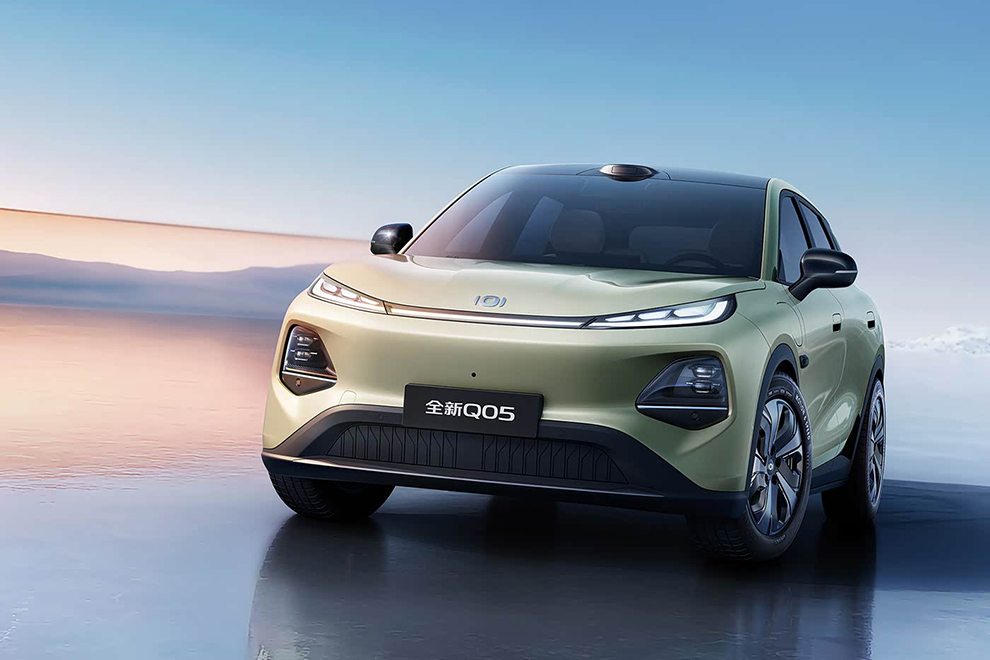
At a glance
- The Q05 is a compact electric SUV suited to urban distribution and fleet use where charging and service support are in place.
- The range includes explicit Pure Electric grades plus CATL- and CALB-identified editions, so every 125 designation needs configuration-level verification.
- Buyers should compare certified range, battery capacity, charging, dimensions and equipment under one destination-market specification.
- Factory-new units simplify trim matching, while used units require battery-health, repair-history and warranty checks.
- Current per-unit pricing, MOQ and availability must be taken from live Q05 listings and confirmed in the final quotation.
Why the Changan Qiyuan Q05 matters for export markets
The Q05 matters to overseas buyers because it combines a compact-SUV format with an electric product line that is easier to evaluate against urban and fleet requirements than an undifferentiated catalogue of sedans. Its value proposition is not a single headline specification; it is the combination of manageable packaging, different equipment grades and battery-supplier choices. For distributors building an affordable EV range, that gives room to match the vehicle to fleet duty rather than force every buyer into one configuration and a coherent family for parts and after-sales support systems.
In export markets served by Chinese vehicle suppliers, the Q05 is relevant wherever buyers want the higher seating and loading flexibility of an SUV without moving into a large, costly premium class. Its appeal is strongest for urban distributors, ride-hailing or municipal pilots, and company fleets that can exploit predictable charging routines. It should not be presented as universally suitable: road quality, climate, charging networks, residual-value expectations and local service capability can determine whether a small EV is more useful than a hybrid or combustion alternative in the destination country.
The export case also depends on disciplined variant control. Names visible in the range include Pure Electric Low-End, Pure Electric Base and a high-configuration Pure Electric model, while separate 125-branded editions reference CATL or CALB. Those labels help identify configuration branches but do not replace a verified specification sheet. A buyer should establish certified range, battery capacity, charging method, steering side and equipment before making a volume commitment. This turns the Q05 from a general catalogue entry into a vehicle that can be compared on total operating suitability rather than specification alone.
- Compact urban-SUV positioning.
- Pure Electric trim ladder.
- CATL/CALB variants need verification.
Model range, trims and powertrain variants: how the lineup is structured and how to choose
The Q05 lineup is clearest when separated by powertrain label, equipment grade and battery supplier rather than treated as one generic model. The explicitly named Pure Electric branches cover low-end, base and high-configuration vehicles, providing a straightforward way to compare entry equipment against a richer derivative. A pure-electric model uses battery power and electric propulsion rather than a conventional engine and stepped gearbox, but that designation alone does not reveal output, axle layout or charging capability. The 125 Navigator CATL and 125 Surpass CALB editions form another visible naming group whose exact configuration must be documented.
If the buyer has confirmed a Pure Electric derivative, obtain official battery capacity, motor output, certified range and charging details before comparing performance. Match homologated range to the longest duty cycle, including detours, climate load and driver behaviour. Review usable fleet capacity separately because payload, speed, temperature and repeated fast charging can reduce delivered efficiency. For a 125-named edition, ask whether it is a pure EV, range-extender or another derivative, and request the powertrain diagram rather than inferring from its name alone before any approval or deposit commitment is made.
Equipment decisions should follow the operating brief, not the prestige wording attached to a trim. Fleet buyers may prioritise durability, air conditioning, charging provisions, cargo utility and warranty documentation, while private distributors may care more about cabin features and visual equipment. The high-configuration Pure Electric derivative may suit a showroom or higher-spec fleet, but only a line-by-line equipment sheet can show what is actually included. Optional equipment, paint, wheels and dealer-installed accessories can change both suitability and the final commercial quote, so ask for the signed vehicle specification before reserving funds.
- Confirm powertrain first.
- Verify each 125 label.
- Match equipment to fleet duty.
New vs used Changan Qiyuan Q05: how export inventory is structured and how buyers choose
For export purchasing, the distinction between new and used is primarily a distinction in risk allocation. A new vehicle normally offers a more coherent factory specification, known delivery condition and clearer warranty path, although production timing, transport damage and homologation still require inspection. A used Q05 can make sense when a buyer values a known operating history, lower acquisition cost or an immediate fleet deployment, but it introduces questions about battery health, prior repair work, remaining manufacturer coverage and whether the software and hardware match the advertised trim being purchased.
Export inventory should be read at unit level rather than inferred from a model family. Live marketplace entries can group several vehicles under one model, with each listing potentially carrying a different production year, trim, battery identifier, mileage, condition, equipment level and seller location. The same displayed model name therefore does not guarantee that two units are interchangeable. Compare the unique SKU or VIN, production month, odometer or delivery mileage, condition notes and photographs. For any used unit, request a battery state-of-health report and evidence of inspection rather than accepting a generic used-vehicle description.
The best route depends on the buyer's risk tolerance and delivery timetable. A dealer stocking several trims for resale will normally favour factory-new examples because specification, colour and condition are easier to standardise; a fleet needing vehicles for a defined launch window may accept a used unit after a technical review. Neither route should be chosen from the words “new” or “used” alone. Confirm whether the vehicle is unregistered, whether transport or dealer plates exist, how warranty transfers, and whether local registration will accept the unit in the intended configuration.
- New units ease trim matching.
- Used units need battery checks.
- Check age, mileage and VIN.
How export pricing works: the factors behind a live listing price, and how to read one
An export quote is not simply a domestic catalogue amount translated into another currency. The vehicle-side factors include production year, trim, battery version or supplier, equipment, condition, mileage, colour and any agreed accessories. The transaction-side factors include the exchange rate applied, commission, payment timing, inspection, documentation, insurance, freight, port handling, destination charges and taxes. The Incoterm is particularly important: it determines which party arranges carriage, bears risk at each stage and is responsible for insurance. Compare only like-for-like commercial scopes. A lower listed vehicle figure can produce a higher landed cost.
When reading a live ChinaCarDirect listing, begin with the vehicle identity and then work through the commercial terms. Confirm the exact trim, model year, battery identifier, condition, mileage, VIN or SKU, and whether the displayed amount is a vehicle-only figure or includes any stated service. Next check the currency, exchange-rate basis, tax status, documentation scope and Incoterm. Freight must be quoted separately or explicitly included, with the destination, port pair, vehicle count and date used for the quote. This prevents an apparently favourable vehicle line from being compared with a fully landed offer.
Pricing should be refreshed at quotation and again before payment because exchange rates, sailing schedules, port charges and production capacity can move independently of the vehicle. Treat the live per-unit amount on the Q05 listings as the source for current commercial figures, not an archived guide or a representative vehicle with a different specification. Exact price, MOQ and availability are shown per unit in the live ChinaCarDirect inventory. If the quotation is intended for a container programme, ask the supplier to show the arithmetic from each unit price to the consolidated vehicle, freight, insurance, duty and destination-cost estimate. This makes negotiations and approval easier.
- Compare equal trims and Incoterms.
- Separate vehicle and landed costs.
- Verify live per-unit quotes.
MOQ, ordering and payment: single units vs consolidating a container
MOQ is a commercial condition, not an inherent property of the Q05, so it must be checked on the seller and listing rather than assumed from a model-level article. Wholesale export programmes may allow one-vehicle orders, while others set a minimum for a model, trim group or production allocation. Consolidated container buying can improve freight efficiency, but it introduces colour, specification and timing coordination that must be settled before release. Ask what quantity applies to the quoted vehicle, whether mixed SKUs count together, and whether the minimum changes with a deposit or a larger booking.
A single-unit purchase still requires a written order record. It should identify the exact vehicle or production specification, colour, destination, Incoterm, payment milestones, inspection standard, delivery window and treatment of discrepancies. For a container order, create a SKU-level sheet showing each VIN when assigned, trim, battery identifier, options and expected ready date. Do not mix an ex-works vehicle price with ocean freight, destination charges or import duty. The supplier should confirm who books the vessel, provides export documents, arranges pre-delivery inspection and handles exceptions such as damage or a failed inspection.
Payment controls should follow the risk, not simply mirror a convenient sequence. A common structure is a deposit to reserve a production slot or vehicle, balance after inspection or against shipping documents, and release through a verified banking channel. Verify the beneficiary name, invoice data, refund terms and bank charges, and understand who bears the cost if the vehicle fails inspection or cannot meet the agreed specification. Never rely on informal side promises to substitute for the sales contract, and ask whether the deposit is refundable before promising a delivery date.
- Confirm listing-specific MOQ.
- Record VIN, trim and ready date.
- Use verified payment milestones.
Shipping, homologation and market compliance caveats: LHD/RHD and import rules by country
Vehicle export begins with destination-market approval, not with the shipping booking. First establish whether the vehicle is configured for left- or right-hand drive and whether that configuration is accepted for registration. Ask for the VIN, homologation documents, emissions and safety approvals, lighting, tyre and equipment compliance, and any market-specific requirements for charging, batteries, software or connected services. A Chinese-market vehicle may need local certification, modification or a different regional variant. In the EU, UK, Gulf and ASEAN markets, responsible authorities may require different evidence, equipment or testing even within a region. The importer should confirm the approval route before funds are committed.
Charging compatibility is a frequent source of export problems. Confirm the connector standard, AC charging method, DC fast-charge capability, required voltage and frequency, and whether onboard equipment is supplied. If the listing does not state these items, obtain the manufacturer's configuration sheet instead of assuming that a Chinese plug or protocol will work in the destination market. Verify battery safety documentation and the carrier's requirements for lithium-battery vehicles. Range certification is destination-specific, so do not use a domestic cycle figure as a compliance value or make a delivery promise based on it.
Freight planning should begin after configuration and paperwork are aligned. Depending on vehicle size and available equipment, a specialist vehicle carrier or suitable container may be proposed, but actual dimensions and the loading plan must confirm what can be accepted. Ro-ro shipping, containerisation and the destination port can change cost, routing time and handling exposure. Obtain the bill of lading or carrier receipt, export declaration, VIN documentation, insurance terms and any required certificate. Inspect the vehicle before release, photograph its condition and charging state, and record transit damage under the agreed claims process.
- Confirm LHD/RHD and homologation.
- Verify charging and voltage.
- Match carrier to dimensions.
Who should buy the Q05 — and who should pick a different vehicle
The Q05 is most logical for a buyer who has confirmed that a compact electric SUV suits the operating environment and can manage its charging requirements. It can be attractive to urban distributors, ride-hailing operators, corporate fleets and importers seeking several equipment levels within one model family. The strongest candidates will compare the exact battery version and certified range, not merely the top trim name, and will have a local plan for servicing, replacement parts, software support and accident repair. Those capabilities matter more than brochure hierarchy once the vehicle reaches daily use.
The Q05 may be a poor fit for routes with unreliable charging, very high payloads, extreme-temperature duties without battery precautions, or a requirement for a proven towing and off-road package. Buyers needing immediate long-distance transport without charging planning may prefer a combustion or range-extended alternative. It can also be wrong when local approval depends on a regional version the seller cannot document, or when duty, insurance, servicing and residual-value assumptions weaken the business case. A purchase should survive a route-specific total-cost analysis, not a generic EV comparison for the intended operating market.
A staged approach reduces risk for first-time importers. Start with a properly documented pilot order or limited allocation, establish parts supply and workshop procedures, and measure real energy consumption locally. Review downtime, insurance claims, tyre wear and customer acceptance before expanding. A fleet buyer may prioritise availability and total cost, while a dealer may focus on residual demand, trim mix and standardisation; each needs a different vehicle allocation. If the Q05 cannot be supported by the local service network, a more established rival may be safer despite a less attractive specification sheet.
Main rivals and how the Q05 compares
The closest comparison depends on body size, price positioning and homologated powertrain, so compare like-for-like rather than assume every small Chinese EV is interchangeable. The BYD Yuan Plus, sold as the Atto 3 in many markets, is a mainstream compact electric SUV benchmark with a strong international name. Its brand familiarity can reduce market-entry friction. The Q05 may appeal where a different sourcing structure or equipment ladder is useful, but buyers should compare the exact Yuan Plus derivative, charging provision, warranty and service support in the destination market.
The Leapmotor B10 is a direct value-oriented compact-SUV comparison, with the decision turning on exact range, charging, dimensions, equipment and after-sales reach. It can be relevant to fleet buyers assessing a Chinese-brand alternative to mainstream incumbents, but a low acquisition quote alone does not settle the case. The Q05 should be compared on landed cost, battery warranty, software support, parts lead time and residual assumptions. If one brand has a stronger local workshop network, that advantage may outweigh a modest specification difference for a dealer or fleet operator in that country.
The Dongfeng eBox 007 is a close Chinese-market compact electric SUV comparison, particularly for value-focused fleet programmes. Its export variant, charging equipment and service footprint must be checked by country rather than inferred from the home-market model. Against the eBox 007, the Q05's equipment hierarchy and documented trim structure may be the deciding factor for buyers carrying equipment or serving mixed urban routes. The final choice should follow certified range, usable cargo, safety equipment, homologation and lifecycle support—not styling alone for the actual destination market and operating profile being imported.
Live Changan Qiyuan Q05 export inventory
View all listings →Real units currently on ChinaCarDirect with per-unit asking prices and MOQ. Availability updates live from the catalogue.
Changan Qiyuan Changan Qiyuan Q05 2024 Deluxe Edition 125 Surpass CALB
How to buy a Changan Qiyuan Q05 from China
-
1
Define the operating requirement
Set the route, payload, charging pattern, climate, steering-side preference and local registration market before selecting a powertrain or trim. Obtain the official configuration sheet for any 125-named edition.
-
2
Shortlist the live inventory
Review the live Q05 listings and compare the exact trim, battery identifier, VIN or SKU, production date, condition, equipment, dimensions and photographs. Do not assume two vehicles under the same model name are interchangeable.
-
3
Request comparable quotations
Ask each seller for an itemized quote under the same Incoterm, currency, destination and documentation scope. Separate the vehicle amount from freight, insurance, port charges, taxes and destination expenses.
-
4
Complete destination-market approval
Use a local compliance specialist to check LHD/RHD suitability, type approval, emissions, safety, lighting, charging, voltage and import procedures. Confirm that the exact configuration can be registered before paying a non-refundable balance.
-
5
Inspect the vehicle
Agree a pre-delivery inspection covering exterior panels, tyres, charging equipment, mileage, software and warning messages. For a used vehicle, also request battery state-of-health, repair-history and warranty-transfer evidence.
-
6
Place a written order
Record the listing-specific MOQ, exact SKU, colour, Incoterm, deposit, balance trigger, refund terms, inspection standard and ready date. Verify the beneficiary details and keep all payment instructions tied to the contract.
-
7
Arrange shipping and delivery
Confirm the loading method from verified dimensions, select the appropriate carrier, and agree insurance and document responsibilities. Complete a pre-shipment inspection and an arrival inspection before final release.
Q05 vs rivals
| BYD Yuan Plus / Atto 3 | The Yuan Plus is a mainstream compact electric SUV benchmark whose international brand familiarity can reduce dealer and customer acquisition friction. Choose it where service coverage and resale recognition dominate; choose the Q05 when its documented configuration and sourcing terms better fit the fleet brief. |
|---|---|
| Leapmotor B10 | The B10 is a close value-oriented compact-SUV alternative, making it especially relevant to fleet buyers comparing Chinese EV programmes. The decision should be based on certified range, charging, dimensions, battery warranty, software support and local workshop strength rather than vehicle price alone. |
| Dongfeng eBox 007 | The eBox 007 competes directly in the Chinese compact electric SUV segment and is relevant to value-focused distributors. Compare the actual export variant, equipment, charging system and after-sales footprint; the Q05 may be preferable where its trim hierarchy and documentation better suit the intended operation. |
Frequently asked questions
How is Changan Qiyuan Q05 export pricing determined?
Export pricing combines vehicle configuration and condition with exchange rates, freight, insurance, documentation, port charges, taxes and the selected Incoterm. A lower vehicle figure can therefore produce a higher landed cost. Exact price, MOQ and availability are shown per unit in the live ChinaCarDirect inventory, while the binding commercial terms should appear in a written quotation.
Which Q05 powertrain and range should an overseas buyer choose?
The visible range includes Low-End, Base and high-configuration Pure Electric trims, along with 125 Navigator CATL and 125 Surpass CALB editions. The Pure Electric designation confirms a battery-electric branch, but the 125 label alone does not establish battery capacity, certified range or the architecture of another edition. Obtain the official configuration sheet and destination-certified figures before choosing.
Is a new or used Changan Qiyuan Q05 better for export?
A new Q05 generally offers more predictable factory configuration, condition and warranty documentation. A used vehicle may suit a buyer prioritising known operating history or faster deployment, but it requires battery-health, repair, mileage, software and warranty checks. Select the route that matches the buyer's risk tolerance and delivery timetable.
What is the MOQ for Changan Qiyuan Q05 exports?
MOQ is set by the seller and individual listing rather than being a universal model rule. It may depend on trim, production allocation or a wholesale booking, and a single-unit request should be checked directly. Review the live listing and obtain the applicable quantity and mixed-SKU conditions in writing before placing the order.
What factors affect Q05 shipping time and cost?
Shipping cost and timing depend on verified vehicle dimensions and weight, selected carrier or container option, origin and destination ports, sailing availability, port handling, documentation, insurance and battery-transport requirements. Transit time also changes with routing and consolidation. Ask for a shipment-specific quotation because a generic freight figure will not be binding.
How are spare parts supplied for an exported Q05?
Parts support depends on the destination-country Changan network, model year, trim and whether the required components are held locally or supplied from China. Before ordering, request a parts list, warranty process, catalogue reference, indicative lead time and technical-support contact. This is particularly important for fleet buyers planning vehicles for continuous operation.
Is a right-hand-drive Changan Qiyuan Q05 available?
Do not assume that a Chinese-market Q05 is configured for right-hand drive; steering configuration depends on the source variant. Request the VIN, photos and official configuration, then confirm whether the vehicle can be registered unchanged in the destination country. Any steering conversion must also satisfy local safety and homologation rules.
How do I order a Changan Qiyuan Q05 from China?
Start with the live Q05 listings, shortlist an exact vehicle or production specification, and request a destination-specific itemized quotation. Complete homologation checks before committing funds, place the order under a written contract with agreed payment milestones, and require inspection before release. Finally, confirm the carrier, insurance, export documents and arrival inspection procedure.
Ready to source the Changan Qiyuan Q05?
Request a current Q05 quotation with a trim-by-trim specification, landed-cost breakdown and shipment-ready documentation.
Request a quote