
Changan Cs35 Export Buying Guide for Dealers and Fleets
Plan a Changan Cs35 export purchase with clear guidance on trims, new versus used vehicles, live pricing factors, MOQ, shipping, compliance and rivals.

At a glance
- Changan Cs35 is a compact crossover aimed at value-focused dealers and fleet operators.
- The family includes 1.6-litre petrol configurations with manual or automatic transmissions and selected 1.4-litre turbo/DCT variants.
- Standard CS35 and CS35 PLUS units need separate VIN, trim, equipment and dimensions checks.
- New and used purchases trade predictable condition against acquisition cost, wear and maintenance risk.
- Export pricing must be assessed with MOQ, Incoterm, freight, insurance, compliance and destination charges.
Why the Changan Cs35 matters for export markets
The Changan CS35 matters to export buyers because it occupies a practical middle ground: compact crossover packaging, a conventional petrol powertrain and equipment-focused trims at the value end of the segment. It is not positioned as a luxury vehicle or a performance model. For overseas dealers and fleet operators, that logic is useful where affordability, manageable operating costs and straightforward servicing matter more than the latest digital cockpit or hybrid efficiency. The model's export relevance comes from making an SUV-shaped product commercially accessible rather than from a single headline specification.
Demand for this type of vehicle tends to come from three channels: buyers trading up from a saloon, ride-hailing or fleets prioritising straightforward operation, and dealers serving price-sensitive markets. The CS35's compact dimensions, if confirmed for the generation, make it easier to consider for city use than a larger SUV. Automatic versions can reduce driver workload in dense traffic, while manual variants may suit buyers with lower acquisition budgets. Those are use-case advantages, not guarantees of commercial success; local fuel prices, road conditions, insurance and residual-value expectations determine whether the proposition works.
Global demand should not be treated as uniform. In markets with established Japanese or Korean brand loyalty, the CS35 competes on value and specification rather than badge equity; in newer import categories, it can provide a recognisable Chinese alternative. The buyer should examine whether local mechanics work with Changan components and whether spare-part lead times are acceptable for the fleet. A model that is inexpensive to acquire can still be costly to maintain if parts are unavailable. That operating question matters more than treating export popularity as a blanket endorsement.
- Compact crossover value proposition.
- Petrol fleet use cases.
- Parts support is critical.
Model range, trims and powertrain variants: how the lineup is structured and how to choose
The CS35 range should be read as a family rather than one interchangeable badge. Export listings can include the standard CS35 and the visually related CS35 PLUS, so buyers must verify body variant, model code and equipment on each unit. The common 1.6-litre petrol configuration is paired with manual or automatic transmissions, depending on trim. Other family variants reference CVT, DCT and a 1.4-litre turbo engine with Blue Whale NE branding. These labels describe mechanical and equipment tiers, but they do not guarantee identical dimensions, equipment or regulatory status across export destinations.
Trim names separate comfort and marketing packages from the basic mechanical proposition. In the range represented for export, labels include Luxury, Auto Luxury, YueLian Upgrade, Smooth Connect, ChangLian Manual and CVT Elite. A manual car may appeal to a buyer seeking straightforward operation and a lower entry point, while a conventional automatic, CVT or DCT changes the driving character and may carry a price difference. Compare trim plus transmission, not the words “automatic” or “elite” alone. Ask for the original Chinese specification sheet and photograph the VIN-linked trim plate before ordering.
Powertrain selection should follow duty cycle. A 1.6-litre model is the straightforward choice for general transport, where predictable fuel servicing and broad familiarity matter. The 1.4-litre turbo/DCT combination may suit buyers who prefer a more modern powertrain, but they should confirm engine output, gearbox behaviour, cooling equipment and parts support on the exact vehicle rather than infer them from the trim badge. This is not a battery-electric model, so there is no battery capacity or charging range to compare; fuel economy depends on the engine, transmission, condition, load and local test standards.
- Verify CS35 versus CS35 PLUS.
- Match trim to transmission.
- Confirm VIN-linked specifications.
New vs used Changan Cs35: how export inventory is structured and how buyers choose
Export inventory for this model is typically split between newer, low-use or ex-demo vehicles and older units from the used-car channel. “New” does not automatically mean factory-fresh: registration status, production date, prior use and dealer reconditioning all affect the description. A used CS35 can be attractive when the buyer wants established depreciation, a known unit history or a lower acquisition commitment. The key is to buy a vehicle rather than a label, using the VIN, registration documents, service records, inspection photographs and a pre-shipment check to establish its real condition.
A newer vehicle generally offers predictable wear, modern equipment and a clearer warranty path if supported, but confirm whether the warranty is valid outside China. An older CS35 may deliver better value for a low-mileage fleet if its service record is strong and replacement parts are readily available. Conversely, age raises the importance of tyres, brakes, suspension, fluids, battery health where fitted, corrosion and proof of periodic inspection. A low purchase figure can be offset by maintenance, so total ownership should include a reserve for early-life repairs and unplanned downtime.
The best choice depends on holding period and local market. A dealer planning rapid resale may prefer a younger, well-presented vehicle with consistent specification. A fleet operator focused on acquisition cost may accept an older unit after inspection, especially if the model and transmission are known in that market. For test-and-learn imports, one inspected used vehicle can be less risky than a mixed batch. Whatever the route, request production date, odometer reading and photos at four corners, underbody, cabin and instrument cluster. Verify that documented mileage and visible wear are consistent.
- New status needs documentation.
- Used units need inspection.
- Total cost beats headline price.
How export pricing works: the factors behind a live listing price, and how to read one
A live Changan Cs35 export price is not a fixed catalogue amount. It moves with model year, CS35 versus CS35 PLUS body variant, engine, transmission, trim, mileage, condition, equipment, ownership status and units selected. Petrol versus hybrid versions should never be compared as if equivalent, and a used vehicle should be adjusted for inspection findings rather than ranked only by asking price. The live listing is the starting reference for the vehicle, while landed cost also depends on currency movement, freight, insurance, handling, destination charges and the Incoterm. Separate vehicle price from logistics and taxes.
To read a listing properly, confirm the model and trim, then check whether the amount is vehicle-only, an export price or an estimate. Compare like with like: body, gearbox, fuel type, emission label, condition and service history. For a used unit, ask whether the seller has corrected the price for repairs, repainting, wear or missing equipment. For a mixed container, request vehicle amounts and the charge per unit so transport cost is not hidden inside a per-vehicle figure. Currency, payment terms and when freight becomes payable should be stated.
The most useful quote is itemised: unit price, Incoterm, named port or handover place, payment schedule, documentation scope, inspection cost, inland transport, marine or consolidated cargo charges, insurance and destination charges the seller will handle. A buyer can then model total ownership rather than reacting to the lowest headline number. Exchange-rate movements and vessel or container availability can alter a quote before shipment, so require validity dates and written confirmation. Check exact current prices and availability on the live Cs35 listings on ChinaCarDirect, where each unit is shown with its own details.
- Compare like-for-like vehicles.
- Separate vehicle and freight costs.
- Request itemised written quotes.
MOQ, ordering and payment: single units vs consolidating a container
MOQ means the minimum quantity a seller will accept for a particular quotation; it is not automatically the same across every Changan Cs35 offer. For an individual vehicle, a listing may permit a one-unit purchase, subject to the seller's terms, while a container programme may require a larger allocation and may be priced differently. Buyers should read the MOQ field on each live listing and confirm it directly with the supplier. Never assume that a single-vehicle platform order automatically includes the same documentation, warranty or freight arrangement as a bulk consignment.
Single-unit purchasing suits a dealer testing demand, a fleet buying a replacement or an importer wanting a particular year, trim and condition. The order moves through unit selection, confirmation, payment terms, document preparation and release for shipping. Consolidation can improve freight efficiency and supplier negotiation, but increases picking, inspection and allocation complexity: one damaged vehicle or delayed document can affect the group. For a mixed container, agree inspection criteria, replacement rights and payment milestones per unit rather than relying on blanket approval. Attach serial numbers, photographs and specifications to every file.
Payment should be milestone-based and tied to events: order confirmation, pre-shipment inspection, document readiness and shipment or release, according to platform and seller terms. Ask whether escrow is available, who is the contracting seller, and when the balance becomes non-refundable. Bank-transfer, card or platform-payment charges belong in the comparison. For a larger consolidation, consider whether the deposit covers only a few units or the entire batch, and how the supplier handles a failed inspection. A pro forma invoice and transport plan should reconcile each vehicle, fee and milestone before funds are released.
- Confirm MOQ per listing.
- Consolidation raises allocation risk.
- Use milestone-based payments.
Shipping, homologation and market compliance caveats: LHD/RHD and import rules by country
Export logistics begin with destination configuration. A Chinese-market CS35 may be left-hand drive, and export units may be right-hand drive; confirm steering position for every listing rather than infer it from the model name. Local rules may prohibit an imported vehicle in the wrong configuration or require conversion and inspection before registration. Import age, engine capacity, emissions, safety equipment, VIN, customs classification and documents can affect clearance. China IV and China V labels in trim names describe Chinese emissions categories and are not automatic approval for Europe or another destination's regime.
Homologation demonstrates that a vehicle variant complies with the destination market's type-approval and registration requirements. Depending on the country, checks may cover emissions, lighting, braking, noise, cybersecurity, software updates or mandatory safety equipment. A listing road-ready in China is not necessarily eligible for unrestricted registration elsewhere. Obtain a local assessment before paying, especially for a non-EV model entering a market with strict carbon, emissions or used-vehicle age rules. After-sales training, diagnostic access and warranty support also matter because unsupported vehicles are difficult to maintain, rather than relying on similarity or a listing photograph.
Shipping method should match quantity and urgency. Ro-ro vessels suit wheeled vehicles; a container may suit a small consolidated batch; and a specialist carrier can serve smaller consignments. Cost and timing depend on ports, vessel space, consolidation, customs clearance, haulage, handling, insurance and route. None can be guaranteed from the listing alone. Sea freight may be slower than road or air, while air freight offers speed at higher cost. Obtain a quote with chargeable dimensions, free-time allowances, port charges and a dispatch window, and keep keys and documents under controlled release.
- Confirm LHD or RHD.
- China IV/V is not homologation.
- Match carrier to consignment size.
Who should buy the Cs35 — and who should pick a different vehicle
The CS35 is a candidate for a dealer or fleet buyer seeking a compact, petrol-powered crossover with manual or automatic transmissions. It suits paved urban and regional roads where lower acquisition cost matters, especially when the organisation can maintain its servicing discipline. A used example can work for a replacement cycle, provided inspection and parts planning are rigorous. The model is less compelling for buyers whose brief depends on electric range, rapid charging, premium refinement, heavy towing or off-road capability; those requirements call for a different powertrain or vehicle class.
Before ordering, define the operating envelope: distance, load, congestion, passengers, luggage volume, road surface, fuel availability and emissions rules. If journeys are short and speeds are low, a manual variant may keep acquisition and operating costs under control. If the fleet has many drivers or stop-start use, an automatic may improve consistency and reduce workload. Check boot practicality and rear-seat comfort in the body variant, because the standard CS35 and CS35 PLUS should not be assumed to offer the same cabin or cargo space. Confirm dimensions against parking and fleet-category rules.
Do not buy the CS35 merely because a listing looks inexpensive. It may be a poor fit where aftersales coverage is weak, spare-part lead times are long, residual-value expectations are dominated by established brands, or imported used vehicles face restrictive age testing. Fleet managers should compare fuel availability, technician familiarity and expected downtime against alternatives before committing. For a first import, choosing a well-documented vehicle with transparent condition matters more than chasing the newest or highest-equipped trim. A product search can reveal a closer match for premium, electric or seven-seat requirements.
- Best for compact urban fleets.
- Weak for premium or EV briefs.
- Check local service coverage.
Main rivals and how the Cs35 compares
The closest alternatives vary by market, but buyers should compare the CS35 with compact crossovers aimed at the same value-conscious buyer. The JAC JS3 is a close Chinese-export alternative in size, positioning and sourcing logic. Hyundai Venue and Kia Stonic are also relevant because they pair small-SUV packaging with efficient petrol powertrains, although their destination specifications, brand equity and support networks differ. The right benchmark is not the badge or brochure range; it is the locally registered CS35 variant in that market, including gearbox, safety equipment, warranty and all-in cost.
Against the JAC JS3, the Cs35 should win or lose on exact equipment, engine and gearbox choice, documentation quality, parts access and the seller's ability to support the destination market; the brand name alone is not a meaningful advantage. A Venue or Stonic may be stronger choices where established local service networks, finance, residual values and consumer familiarity outweigh a modest acquisition saving. Whichever alternative is considered, test-drive equivalent trims if possible, compare destination-relevant safety information, and calculate registration, insurance, servicing and fuel assumptions rather than comparing showroom labels alone.
The CS35 can be the fit when the buyer prioritises a compact SUV, accepts petrol power and has a plan for parts and documentation. The JAC JS3 may offer a sourcing relationship or equipment match, while the Venue or Stonic may be safer choices where their after-sales network and residual market are stronger. This is a framework, not a ranking, because tariffs, rules, currency and stock change the equation. Obtain quotations for the CS35 and alternatives, then compare landed cost, warranty coverage, service access and downtime over the ownership period.
- JS3 is the closest Chinese rival.
- Venue and Stonic add mainstream benchmarks.
- Compare landed cost and downtime.
Live Changan Cs35 export inventory
View all listings →Real units currently on ChinaCarDirect with per-unit asking prices and MOQ. Availability updates live from the catalogue.
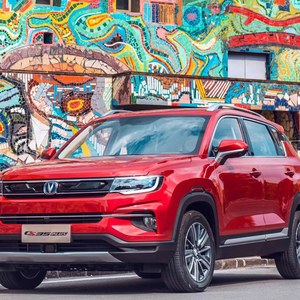
Changan Changan CS35 PLUS 2018 1.6L Automatic Smooth Connect China V

How to buy a Changan Cs35 from China
-
1
Define the destination and operating brief
Record the destination country, steering requirement, passenger and load needs, fuel availability, road conditions and applicable emissions or import rules. This prevents a visually suitable Cs35 from becoming an unregistered or unsuitable vehicle.
-
2
Shortlist matching live units
Search the live Cs35 inventory by body variant, engine, transmission, trim, condition and model year. Compare equivalent vehicles rather than mixing standard CS35, CS35 PLUS and different powertrain listings.
-
3
Verify identity, documents and condition
Request the VIN, registration documents, production date, odometer reading, service history and detailed photographs. Match every document and trim description to the unit being purchased.
-
4
Request an itemised export quotation
Ask for the vehicle price, MOQ, Incoterm, handover place, payment schedule, documentation scope, inspection cost, freight, insurance and destination charges. Require current validity dates and written confirmation.
-
5
Confirm MOQ and payment milestones
Confirm whether the order covers an individual vehicle or a consolidated allocation, and which payment method and escrow arrangements are available. Tie released funds to inspection, document readiness and shipment milestones.
-
6
Approve pre-shipment inspection
Use an independent or agreed inspector to verify the VIN, odometer, engine and transmission, tyres, brakes, fluids, bodywork, equipment, keys and visible damage. Preserve dated photographs and the signed inspection report with the contract.
-
7
Book transport and prepare customs clearance
Compare the carrier and route using confirmed dimensions, destination port, insurance and handling charges. Provide complete export and homologation documents to the freight forwarder and destination customs broker.
Cs35 vs rivals
| JAC JS3 | The JAC JS3 is the closest Chinese-export benchmark for a value-focused compact SUV. Compare the exact engine, gearbox, equipment, parts support and destination compliance rather than assuming equivalent quality or price. |
|---|---|
| Hyundai Venue | The Hyundai Venue is a mainstream subcompact-SUV alternative in markets where its dealer network and brand familiarity are stronger. The CS35 may appeal where Chinese sourcing offers more equipment or availability, but landed cost and resale prospects must be compared. |
| Kia Stonic | The Kia Stonic is another petrol small-SUV alternative with different brand, powertrain and equipment choices by market. Choose it where local support and residual demand outweigh the Cs35's sourcing advantages; otherwise compare closely matched trims. |
Frequently asked questions
How is Changan Cs35 export pricing determined, and where is the live price?
The live vehicle price reflects model year, body variant, engine and transmission, trim, condition, mileage, ownership status and order quantity. Exchange rates, freight, insurance, handling, destination charges and the selected Incoterm can change the landed total. Check the current price and per-unit availability on the live ChinaCarDirect Cs35 listings and request an itemised written quote before paying.
What engine and range options are available on the Cs35?
The Cs35 family represented for export is petrol-powered, with 1.6-litre manual and automatic versions and selected 1.4-litre turbo/DCT versions. There is no battery capacity, charging range or electric range to compare on these vehicles. Confirm the exact engine and gearbox on the VIN-linked listing because trim names alone are insufficient.
Should overseas buyers choose a new or used Changan Cs35?
Newer vehicles generally reduce initial wear uncertainty and may carry clearer warranty terms, but status must be verified and the warranty's geographic coverage confirmed. Used units can reduce acquisition cost and suit short replacement cycles, provided inspection, service history and parts availability are strong. Evaluate total ownership and likely downtime rather than using new and used labels alone.
What is the MOQ for Changan Cs35 exports?
MOQ is set for each listing or seller, so read the live listing and obtain written confirmation before selecting units. A single vehicle may be available where the listing permits one-unit orders, while a container allocation may carry a different MOQ and commercial structure. Consolidation should not be assumed to include the same terms as an individual purchase.
How long does Cs35 shipping take, and what affects the cost?
Shipping time and cost depend on origin and destination ports, vessel space, consolidation method, customs clearance, inland haulage, handling, insurance and the chosen carrier. Sea transport is generally suited to larger consignments, while specialist vehicle or air options can change speed and cost materially. Obtain a current booking quotation and realistic dispatch window.
Are spare parts available for the Changan Cs35?
Parts availability depends on the exact CS35 generation, trim, component identifiers and the seller's access to Changan supply. Buyers should request a model-specific parts list, realistic lead times and confirmation of local technical support before shipment. A sensible parts reserve may be prudent for fleet use where local stock is thin.
Is right-hand-drive Changan Cs35 availability available for export?
Steering configuration is not uniform across the Cs35 export market, so confirm whether each unit is LHD or RHD in the live listing. RHD availability may be limited, and a conversion can affect cost, documentation and homologation. Import and registration rules in the destination country determine whether the configuration is accepted.
How do I order a Changan Cs35 from China?
Start with live Cs35 inventory, select a candidate unit and submit an RFQ with the destination, trim, condition and Incoterm requirements. Confirm MOQ, payment milestones, documents, inspection and freight in writing before funds are released. After pre-shipment approval, the vehicle can move through booking, export preparation and destination customs clearance.
Ready to source the Changan Cs35?
Request a tailored Changan Cs35 export quote with current unit pricing, specification checks and shipping options.
Request a quote