
Chery Explore 06 Export Buying Guide for Dealers
Buy a Chery Explore 06 from China with clear guidance on 1.6T and C-DM variants, export pricing, MOQ, shipping, compliance and importer checks.
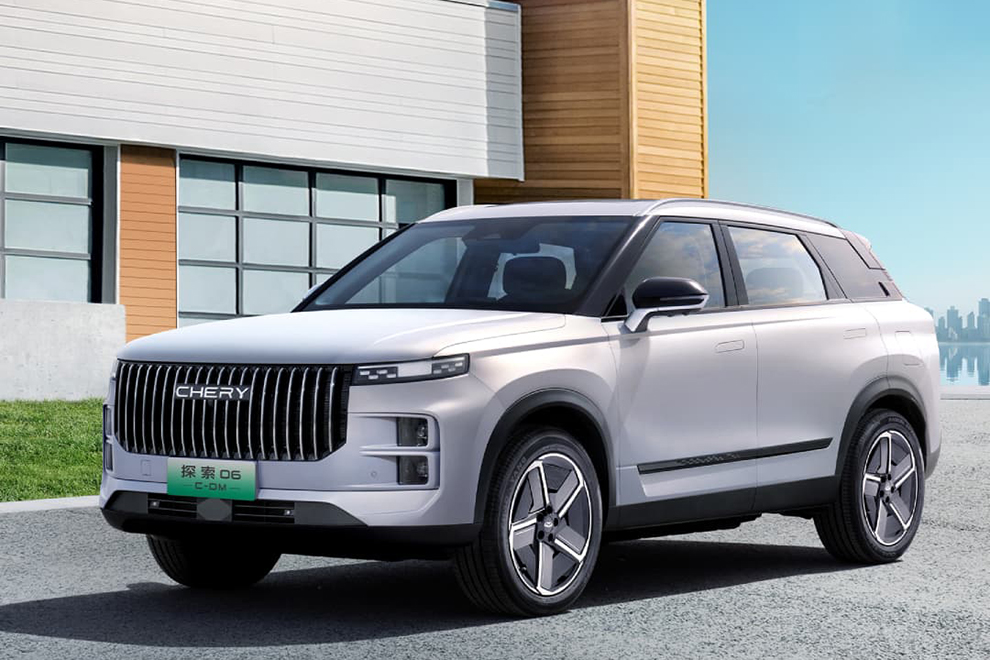
At a glance
- The Explore 06 is positioned as a compact SUV for dealers and fleet buyers seeking 1.6T gasoline and C-DM plug-in hybrid options.
- Urban and YOYE editions provide distinct equipment and drivetrain propositions for different customer bases.
- Two-wheel-drive vehicles may suit cost-focused urban fleets, while four-wheel-drive units require a closer operating-cost review.
- Used units can reduce acquisition cost, but inspection evidence and C-DM battery condition become critical purchase checks.
- Current per-unit prices, condition and availability are shown on ChinaCarDirect's live Explore 06 listings.
Why the Chery Explore 06 matters for export markets
The Explore 06 belongs in the compact SUV part of the export market: a body style that combines manageable dimensions for city use with the seating height and cargo flexibility expected by dealers and fleet operators. Its 1.6T and C-DM naming shows a useful choice between conventional combustion and electrified powertrains. That breadth matters overseas, where fuel networks, charging access, duty treatment and corporate policy differ greatly from one country to the next. For an importer, the question is therefore not simply which version is newest, but which powertrain and duty structure make the fleet economical to operate.
That makes the model relevant to several export missions. A dealer can use the trim ladder to serve urban customers with two-wheel drive, offer a four-wheel-drive YOYE derivative for mixed-road buyers, or develop a C-DM line where plug-in hybrid demand is credible. Fleet operators can evaluate the same choices against duty cycles: daily mileage, charging access, loading requirements and the number of vehicles needed for local launch support. None of those decisions should rely on model imagery alone. The export case must be demonstrated by documents and operating economics.
Global demand for this class is driven less by a single universal trend than by the search for a versatile vehicle at a manageable acquisition cost. Compact SUVs are easy to place in urban and regional networks, while powertrain choice lets buyers adapt to local energy conditions. For the Explore 06, the practical question is whether its positioning, equipment and drivetrain match the destination after taxes, homologation and support are included. Review the Chery brand range first, then compare the live Explore 06 inventory against competing models on a landed-cost basis.
- Compact-SUV format for mixed urban use
- 1.6T and C-DM powertrain pathways
- Urban, Luxury and YOYE positioning
- Compare destination-level operating costs
Model range, trims and powertrain variants: how the lineup is structured and how to choose
The lineup is organized around named editions rather than one generic specification. “Urban Edition” vehicles are listed with 1.6T two-wheel-drive powertrains and Comfort or Luxury grades, while “YOYE Edition” names point toward an adventure-oriented range that includes Explore Wild and Explore Boundary descriptions, including four-wheel-drive entries. “Luxury Model” also appears with C-DM. These labels are useful for commercial segmentation, but a buyer should treat the exact vehicle description and live listing as the controlling specification rather than assuming every edition shares the same equipment without a written trim sheet.
The powertrain decision starts with the vehicle’s operating environment. The 1.6T versions are gasoline-powered turbocharged models, offered in the named range with two-wheel drive or, in selected YOYE derivatives, four-wheel drive. C-DM identifies Chery’s plug-in hybrid family, so these units combine an internal-combustion engine with an electric drivetrain and an externally rechargeable battery. Battery capacity, electric-only range, charging rate and combined-cycle figures are not safely inferred from the edition name; they must be checked against the homologation sheet for the exact car being purchased.
A sound selection starts with drivetrain, then equipment and operating profile. Two-wheel drive is generally the simpler proposition for urban duty and tighter fleet cost control; four-wheel drive adds a capability proposition that must be weighed against acquisition cost, tire use, fuel consumption and maintenance exposure. Luxury, Comfort, Wild and Boundary grades should be compared by included equipment, condition and total operating requirement, not by badge alone. For C-DM, ask whether workplace charging, overnight parking and realistic electric driving make the hybrid proposition useful rather than merely adding battery-related acquisition cost.
- Match drive layout to routine roads
- Treat C-DM as a charging-dependent system
- Compare grades by equipment sheet
- Confirm range figures per variant
New vs used Chery Explore 06: how export inventory is structured and how buyers choose
Export inventory for a model can include vehicles at different stages of the ownership cycle, so the correct starting point is the status of the specific unit rather than a general expectation of new stock. Used vehicles may be ex-fleet, ex-company or privately registered examples, while demonstrator and newly registered units can present a different condition profile. The live listing should identify which description applies. Buyers should never infer condition from the model year alone, because registration date, service history and use can tell more about the likely condition than the badge suggests.
A used Explore 06 can make sense when the buyer values a lower acquisition outlay, a known registration history or an immediate unit more than factory-new cosmetics and a full new-vehicle warranty. The trade-offs are equally important: wear may be concentrated on the suspension, tyres, brakes or body, while the remaining life of infotainment, electronics and high-voltage components in a C-DM car may be uncertain. Mileage alone does not prove condition. Obtain inspection photographs, service records, an odometer statement and evidence of battery health for an electrified variant.
New or effectively new units suit dealers that need standardized presentation, a defined warranty route or a model-year campaign, and fleet buyers that want every vehicle configured consistently. The advantages are straightforward, but the buyer should still confirm paint condition, delivery mileage, production timing and the warranty’s territorial coverage. For any used purchase, build a repair allowance into the landed-cost model and prioritize missing service evidence, unresolved warning messages, uneven panels or damaged wheels as reasons to pause. The best unit is the one whose documented condition matches the planned resale price and duty cycle.
- Read condition and status per unit
- Verify mileage and service evidence
- Check C-DM battery health records
- Budget condition repairs before shipment
How export pricing works: the factors behind a live listing price, and how to read one
An export price is the result of several linked variables, not a fixed market value for the model name. The vehicle’s year, exact edition, drivetrain, C-DM or 1.6T configuration, mileage, condition, paintwork, options and remaining factory or battery warranty can materially change what a seller will accept. Currency movements also alter the conversion. On top of the vehicle, freight method, origin port, destination port, insurance, Incoterm and any export documentation can be included or left outside the displayed figure. Always ask which costs the live quote includes before comparing offers.
Read a listing as a set of commercial terms rather than as a guaranteed delivered price. Establish whether the amount is an FOB export price, a port-to-port charge or a broader landed estimate, and identify the currency, validity period, payment method and release conditions. Then calculate the destination cost separately: ocean or roll-on/roll-off freight, marine insurance, port charges, customs valuation, duty, taxes, registration and inland delivery. A cheaper vehicle can produce a higher landed cost if it carries repairs, a larger battery-related risk or a less favorable shipping term.
The most reliable comparison starts with several like-for-like live units, then applies the same cost assumptions to each. Separate acquisition price from destination charges and retain the quoted warranty, inspection and documentation conditions. For a used C-DM vehicle, a battery-health report can materially affect the risk premium; for any vehicle, an inspection cost may erase a narrow acquisition-price advantage. Sellers should provide the basis for changes rather than treating the first displayed figure as final. Current binding figures are available on each live Explore 06 listing, while a written quote is preferable once the destination and Incoterm are fixed.
- Compare identical editions and drive layouts
- Separate vehicle cost from freight
- Confirm currency, Incoterm and validity
- Use live listings for binding figures
MOQ, ordering and payment: single units vs consolidating a container
There is no universal MOQ that should be assumed for every Explore 06 transaction. Some live vehicle offers are positioned for individual-unit purchase, while sellers and freight consolidators may set minimums for a dedicated container or mixed-load program. The commercial unit may therefore be one vehicle, a group allocation or a full container, and the applicable terms belong in the quotation. Confirm MOQ, deposit, production or release timing, and the consequences of adding or removing units before placing funds or accepting final shipping documents as applicable under the contract.
A single-vehicle order is useful for testing a model, validating trim appeal or serving a small fleet, but it usually gives the buyer less control over freight consolidation. A mixed container can reduce per-unit logistics cost by combining several compatible vehicles, yet it introduces allocation, damage and resale-timing risk. A full-container commitment offers stronger freight economics only when sell-through is credible; otherwise carrying costs can outweigh the saving. Compare the all-in margin, expected holding period and downside exposure, not merely the freight rate quoted per vehicle.
Payment structure should follow the sequence of value transfer. A common sequence is an agreed deposit, inspection or release, balance payment, and then release against original title and export documents, but actual terms vary by seller and transaction type. Use a written contract that identifies the exact vehicle or allocation rule, inspection standard, refund triggers, document set and bank charges. Verify the seller entity and beneficiary account independently. For container purchases, specify how deposit, balance and freight are reconciled so that a shipping delay does not create ambiguity over ownership.
- Confirm MOQ in the written quote
- Match container size to sell-through
- Tie final payment to documents
- Verify seller and beneficiary details
Shipping, homologation and market compliance caveats: LHD/RHD and import rules by country
Transport planning begins with the vehicle’s dimensions, weight, routing and battery-related shipping requirements, all of which should be confirmed from the exact unit’s documents. Compact SUVs are commonly moved by roll-on/roll-off vessel or container, but the correct method depends on origin handling, carrier rules and destination infrastructure. Freight quotations move with vessel space, season, port congestion, fuel surcharges, inland haulage and customs work. The buyer should specify the destination and Incoterm early, because loading method and document requirements affect both cost and delivery planning and risk.
Left-hand-drive and right-hand-drive availability is a market-specific sourcing question, not something to assume from the Chinese vehicle name. Confirm the steering configuration, pedal and display arrangement, lighting, mirrors and equipment for the destination before ordering. Some importers require RHD from the factory, while others accept LHD subject to local rules; aftermarket conversion can affect safety, warranty and parts planning. Import approval may also cover emissions standards, cybersecurity and software rules, radio approval, VIN and type approval, customs classification, duties, taxes and local registration. Requirements differ by country and powertrain.
Compliance work should be completed before the vehicle is committed to a sailing. Confirm that the seller can provide the model, VIN, ownership, customs and technical documents needed for the destination broker, and check whether the variant is eligible for the intended registration category. For C-DM units, also align charging equipment and any tax treatment with the actual homologated configuration. A pre-shipment inspection should cover fluids, tyres, brakes, suspension, body condition, warning systems, software, battery condition where accessible, and the match between listed equipment and the physical car. These checks protect the importer from discovering a compliance or condition issue after freight has been paid.
- Confirm LHD or RHD before ordering
- Check destination approval in advance
- Match customs documents to the VIN
- Inspect before freight is committed
Who should buy the Explore 06 — and who should pick a different vehicle
The Explore 06 fits a buyer who wants a compact SUV, values the choice between 1.6T and C-DM, and can support the selected vehicle through local parts, maintenance and compliance arrangements. Dealers may find its mix of Urban, Luxury and YOYE positioning useful for building a broader retail ladder. Fleet buyers can use two-wheel drive for predictable urban running, four-wheel drive where road conditions justify it, and C-DM where charging is dependable and energy use is strategically important. The case is strongest when the model is matched to a documented operating environment.
It is a weaker choice for a buyer whose priorities are outside that proposition. A pure zero-emission requirement, a market with no viable charging pattern, or a fleet needing guaranteed local parts coverage may point elsewhere. Buyers who need a specific towing limit, very low cargo-loading height, seven-seat packaging, or a fully established local service network should verify those requirements rather than infer them from the compact-SUV label. Heavy-duty users should also check gross vehicle weight, payload, roof or towing limits and the effect of added accessories on real-world capability.
Used inventory broadens the opportunity for budget-led buyers, but only if condition risk is priced correctly. A dealer can accept a depreciated unit for immediate resale or fleet placement, while a buyer with in-house refurbishment capability may extract better value from a vehicle needing cosmetic or wear work. Conversely, a business that cannot absorb repairs, inspection delays or uncertain battery condition may prefer a newer or differently positioned model. Before choosing, build a total-cost worksheet covering acquisition, inspection, repairs, finance, freight, duty, insurance, charging or fuel, resale timing and warranty. A lower purchase price is valuable only when the whole worksheet improves.
- Best for mixed urban and regional fleets
- Requires local parts and service support
- C-DM needs dependable charging access
- Used units suit risk-aware buyers
Main rivals and how the Explore 06 compares
The closest comparison depends on body size, powertrain, destination and aftersales support, but three useful benchmarks are the Hyundai Tucson, Toyota Corolla Cross and Haval Jolion. The Tucson offers a broad compact-SUV proposition and, depending on market, multiple powertrain paths, making it a strong benchmark for dealer customers who prioritize range of choice. The Corolla Cross leans toward global familiarity and electrified efficiency, so it can appeal where brand confidence and fuel economy outweigh the desire for a distinctive Chinese import package. The Haval Jolion is another direct value-oriented rival with a similar Chinese manufacturing and export proposition, making it a practical comparison for buyers focused on equipment and drivetrain choice.
Against the Tucson, the Explore 06 should win on value only if its purchase-and-ownership package is genuinely stronger after freight, tax, parts planning and resale support are included; the Tucson’s wider market familiarity may reduce commercial risk in some countries. Against the Corolla Cross, the Explore 06 may provide more contemporary Chinese-SUV styling and a broader trim narrative, while the Corolla Cross benefits from established global recognition and hybrid-led positioning. The Jolion is often the more direct price-led rival: compare engine, drive system, equipment, warranty and service access rather than assuming the badges imply equivalent value.
A disciplined final comparison should place each candidate on the same sheet with the same assumptions: vehicle price, trim equipment, drive layout, energy system, warranty, inspection, freight, duty, insurance, expected fuel or charging cost, parts availability and expected holding period. Include realistic resale assumptions rather than treating the acquisition discount as profit. The Explore 06 is most competitive when its documented configuration, local readiness and landed cost align with the buyer’s customers. If a rival offers easier homologation, stronger service coverage or lower operating risk at a similar total outlay, it may be the more sensible fleet choice.
- Tucson: broader global benchmark
- Corolla Cross: hybrid-led alternative
- Jolion: closest value-oriented rival
- Compare on landed ownership cost
Live Chery Explore 06 export inventory
View all listings →Real units currently on ChinaCarDirect with per-unit asking prices and MOQ. Availability updates live from the catalogue.
How to buy a Chery Explore 06 from China
-
1
Define the target configuration
Set the destination, budget, body-use case, preferred powertrain, drive layout and steering configuration before comparing individual vehicles.
-
2
Shortlist matching live units
Review the live Explore 06 listings by year, edition, drivetrain, powertrain, condition and mileage. Use each listing’s current per-unit price and availability rather than a model-wide estimate.
-
3
Request a written quotation
Ask the seller to state the vehicle price, currency, Incoterm, freight inclusions, payment schedule, warranty, inspection standard and export-document set in writing.
-
4
Complete market compliance checks
Confirm the VIN, steering configuration, customs classification, duty treatment and destination-specific approval for the exact variant before committing to shipment.
-
5
Inspect the selected vehicle
Review bodywork, mileage, service records, tyres, fluids, warning systems and equipment against the listing. For a used C-DM vehicle, request battery-health and diagnostic evidence.
-
6
Execute the purchase contract
Record the exact vehicle or allocation rule, refund conditions, MOQ, deposit, balance-payment trigger and document-transfer obligations. Verify the seller and beneficiary details independently.
-
7
Arrange shipping and customs clearance
Select the transport method and Incoterm, nominate the freight forwarder, confirm marine insurance and provide the required original documents for destination clearance.
Explore 06 vs rivals
| Hyundai Tucson | The Tucson is a widely recognized compact-SUV benchmark with market-dependent powertrain breadth and stronger brand familiarity in some regions. The Explore 06 becomes more compelling when its documented equipment and landed ownership cost offer a better commercial package. |
|---|---|
| Toyota Corolla Cross | The Corolla Cross is a globally familiar, hybrid-focused compact crossover that may reduce customer-acquisition risk in conservative markets. The Explore 06 offers a broader Chinese-SUV trim story and may suit importers seeking a different product proposition. |
| Haval Jolion | The Jolion is a close value-oriented competitor with Chinese manufacturing and export-market positioning. Buyers should compare engine, drive system, equipment, warranty and local service access on a like-for-like basis. |
Frequently asked questions
How is the export price of a Chery Explore 06 determined?
The live price reflects variables such as year, edition, powertrain, drivetrain, mileage, condition, options and currency conditions. Confirm whether freight, insurance, duty and other destination charges are included, because the Incoterm may leave them outside the displayed amount. The binding vehicle figures appear on each live Explore 06 listing, with a written RFQ recommended for final destination-specific terms.
What engine and electric range does the Explore 06 have?
The named internal-combustion editions use a 1.6T turbocharged gasoline engine and can be offered with two-wheel or four-wheel drive. C-DM versions are plug-in hybrids, but battery capacity, electric-only range and charging specifications must be confirmed for the exact variant rather than inferred from the edition name.
Should an importer choose a new or used Explore 06?
New or effectively new vehicles suit standardized fleet launches, defined warranty needs and presentation-sensitive retail programs. Used vehicles can lower acquisition cost and provide immediate availability, but buyers should examine service history, body condition, wear, diagnostics and C-DM battery evidence before accepting the apparent saving.
How does MOQ work for an Explore 06 purchase?
There is no universal MOQ applicable to every transaction. Some live offers permit an individual vehicle, while dedicated-container or consolidated-freight programs may apply different minimums and allocation rules. The quotation and contract should state the applicable MOQ, deposit, inspection process and consequences of changing the vehicle quantity.
What determines shipping time and cost for the Explore 06?
Shipping cost and timing depend on the vehicle dimensions and weight, origin and destination ports, transport method, vessel space, port congestion, fuel surcharges, inland delivery, insurance and customs clearance. A destination-specific freight quote is more useful than a general estimate because the Incoterm and routing determine which charges apply.
How should buyers plan for Explore 06 spare parts?
Confirm local parts coverage before ordering, especially for a C-DM vehicle with high-voltage components. Ask the seller or distributor for the applicable parts catalogue, part numbers, diagnostic support, warranty process and expected supply route for the destination market. Long-term parts planning should be based on the exact trim and market, not only the model name.
Is right-hand-drive Explore 06 availability guaranteed?
RHD availability depends on the live vehicle, factory configuration and the destination market; it should not be assumed from the Chinese model name. Confirm the steering position and related equipment before placing an order, and review local conversion rules where an LHD vehicle is permitted. Factory RHD is generally preferable where local approval and after-sales support are uncertain.
How do I order a Chery Explore 06 from China?
Start with the live Explore 06 inventory, select a vehicle that matches the required configuration, and submit an RFQ stating the destination, Incoterm, quantity, inspection and payment requirements. After document and compliance checks, execute a written contract, complete the agreed payment stages, inspect the vehicle and release it for the selected shipping method.
Ready to source the Chery Explore 06?
Request a tailored ChinaCarDirect RFQ for a Chery Explore 06, with the destination, configuration, Incoterm and inspection requirements stated.
Request a quote