
Chery Tiggo 4 Export Buying Guide for Dealers and Fleets
Buy a Chery Tiggo 4 from China with clear guidance on trims, export pricing, MOQ, shipping, compliance, rival SUVs and live sourcing for overseas dealers.

At a glance
- A five-door compact petrol SUV suited to dealers, fleets and family use.
- A 1.5-litre petrol family is common, but outputs and transmissions vary by market.
- Manual, CVT and drivetrain fit should be verified for the exact vehicle.
- Export pricing must be compared on like-for-like units and Incoterms.
- Local type approval, parts support and warranty execution determine importability and ownership quality.
Why the Chery Tiggo 4 matters for export markets
The Chery Tiggo 4 is a compact, five-door petrol SUV positioned between a city crossover and a family-sized off-road vehicle. That middle ground is commercially useful in export markets: it offers more upright packaging, cargo flexibility and road presence than a hatchback, while remaining easier to drive and usually easier to own than a large SUV. For importers and dealers, the model is relevant because it reflects the value-oriented Chinese manufacturing proposition without being a minimal specification. Buyers can evaluate it as a practical fleet platform rather than an aspirational lifestyle purchase.
Global demand for this class is driven by the need for a practical vehicle that can carry passengers and goods without moving into premium pricing. The Tiggo 4’s appeal is strongest where buyers value equipment, road space and ownership cost over established badge prestige. Its conventional petrol architecture can also be easier to place in fleet duty than electrified variants, particularly where charging infrastructure is uneven. This makes the model relevant for motor-pool replacement, ride-hailing groups, regional distributors and dealer demonstration fleets. The decisive test is local operating economics, not badge appeal alone.
For an overseas buyer, however, its value proposition is not complete until service, parts and resale support are considered. A model that is easy to source but difficult to maintain can be expensive over a fleet cycle. Before committing, ask the supplier for workshop documentation, spare-parts references and destination-applicable warranty terms. Dealers should also consider whether the model is familiar enough to support resale or whether a stronger resale market will favour an established competitor. The Tiggo 4 matters because it can widen a distributor’s affordable SUV range, provided the aftersales plan is credible.
- Compact SUV suited to fleet use.
- Value depends on operating economics.
- Aftersales support remains essential.
Model range, trims and powertrain variants: how the lineup is structured and how to choose
Chery’s naming can make the range look broader than it is. The Tiggo 4 family has appeared in different generations, facelifts and market-specific versions, and some export catalogues also place closely related Pro-badged derivatives beside the base name. Buyers should therefore compare the exact model year, body, engine and equipment list rather than relying on the badge alone. The live listing’s title, photographs, VIN, specification sheet and trim description should form one consistent record. If those elements conflict, request written clarification before placing funds or agreeing a sourcing specification for that unit.
The core powertrain family is petrol-based and commonly associated with a 1.5-litre engine. Depending on market and version, naturally aspirated or turbocharged outputs, manual gearboxes or a CVT, and different equipment grades may be offered. Front-wheel drive is common for the Tiggo 4, while all-wheel-drive availability should never be assumed from the SUV body style. Buyers focused on fuel economy should compare the homologated figure with realistic duty, but should request the exact engine code and transmission because outputs for the same model name are not directly interchangeable across markets.
Trim selection should follow the operating role rather than a paper specification sheet. A fleet buyer may prioritize durability, air conditioning, tyre availability and serviceability; a distributor may favor visible equipment such as infotainment, safety aids and body trim; a private buyer may prioritize cabin comfort and warranty. Because equipment can change by production year and destination, ask for a photo-backed equipment sheet and a VIN-specific confirmation. Also verify ground clearance, boot capacity and passenger space against the actual vehicle if the business depends on those figures. Do not let a generic trim label substitute for a confirmed vehicle.
- Compare exact trim and VIN.
- Confirm engine and transmission.
- Equipment varies by market.
New vs used Chery Tiggo 4: how export inventory is structured and how buyers choose
Export inventory may contain new vehicles, demonstrator cars, ex-fleet units and previously registered vehicles. A vehicle described as new should still be checked for production date, delivery kilometres, prior registration, warranty commencement and any use as a display or test car. Used units can offer a lower acquisition outlay and a known operating history, but that history becomes valuable only if it is documented. Each live listing should be treated as a separate vehicle with its own condition, history and commercial terms rather than as a generic model-level offer to buyers.
For a dealer rebuilding stock, a near-new demonstrator can be easier to describe than an older used unit because its condition and remaining warranty are more predictable. For a budget fleet, an older Tiggo 4 may be attractive if its service records, tyres, brakes and accident history are sound. Mileage alone is not enough: a low reading can still conceal hard use, while a higher reading may be better maintained. Inspect the VIN, service invoices, underbody, paint, glass and cabin, and verify that the seller’s description matches the physical unit before contracting.
Availability is fluid, so a model-level buying guide should not be mistaken for an order confirmation. If the live Tiggo 4 results page contains no immediately orderable vehicle, a buyer can register a sourcing request and describe the required year, transmission, steering position and equipment. The supplier may then locate a unit outside the catalogue or propose a comparable alternative. This is especially important for fleet contracts with fixed specifications. Returning inventory should be reviewed through the live listings, because the price, minimum order quantity, condition and delivery scope displayed for the actual unit are the binding commercial reference.
- New status needs production-date checks.
- Used value depends on documentation.
- Sourcing requests cover unavailable configurations.
How export pricing works: the factors behind a live listing price, and how to read one
A Tiggo 4 export quote is the result of several variables, not a single model-level price. Model year and age influence depreciation and manufacturer incentives; trim and equipment affect the vehicle’s value; and engine, transmission, drivetrain and factory options can change the comparison. Mileage, condition and documentation matter most for used units. The same nominal trim can therefore carry different economics. For a new vehicle, registration history, production timing and colour demand may also affect the seller’s asking position. Currency movements can further change the same vehicle’s price for an overseas buyer.
The commercial basis matters as much as the vehicle. Ex-works pricing may leave the buyer responsible for inland transport, export handling, origin charges, sea or air freight, insurance and destination clearance; other quotations may include more of that chain under a named Incoterm. The landed cost can also change with freight method, route, container utilization, port charges, customs duties, taxes, financing and exchange rates. Compare quotations on the same Incoterm and destination, then build a separate budget for registration, compliance work and inland delivery. A low vehicle price can still produce a poor total cost.
When reading a live listing, identify whether the displayed amount is per vehicle or a total, whether it includes VAT or export documentation, and which Incoterm governs delivery. Check the stated year, trim, engine, transmission, mileage, steering position, condition and whether the unit is available. Treat the listing as a starting reference rather than a final contract, because stock can be allocated and commercial terms may be reconfirmed. Use the RFQ to request a written quotation, validity period, payment schedule and full document list for the exact unit before payment.
- Compare equivalent vehicle specifications.
- Confirm Incoterm and quote inclusions.
- Live listings carry current unit terms.
MOQ, ordering and payment: single units vs consolidating a container
Minimum order quantity is a commercial condition, not a fixed property of the Tiggo 4 name. A wholesale offer for a live unit may be available to a single buyer, while a supplier handling a factory allocation, special-order specification or container consolidation may require several vehicles. Read the MOQ field in the live listing and confirm it in the quotation before reserving funds. If the catalogue does not show an orderable unit, a sourcing request can ask the supplier to state whether it can arrange one vehicle, mixed-model consolidation or a later production batch, subject to confirmation.
For a small importer or test-market entrant, buying one unit can reduce inventory exposure and reveal parts, finance and customer-demand realities before scaling. It also leaves the buyer exposed to shipment inefficiency and potentially higher unit freight; a less-than-container load often makes that trade-off visible. Consolidating several Tiggo 4 units, or mixing the Tiggo 4 with other models, can improve container utilization and lower per-unit logistics cost. That approach introduces a common risk: one delayed vehicle, document problem or condition dispute can hold the whole group. Secure the vehicle identities, release rules and inspection responsibilities in writing before relying on consolidation.
The normal ordering path is to select a unit, obtain a written commercial and technical confirmation, pay an agreed deposit, complete the remaining balance under the stated terms, and receive the export documents needed for shipping and registration. Payment methods, cancellation conditions, refund triggers, warranty start and delivery milestones vary by seller and destination. Do not infer them from the listing alone. The buyer should also check that the invoice, VIN, model description, shipping scope and beneficiary details match the contract. A purchase order or RFQ is the safest place to define those terms.
- Confirm MOQ on each offer.
- Single units suit market testing.
- Consolidation shares delay and inspection risk.
Shipping, homologation and market compliance caveats: LHD/RHD and import rules by country
Steering configuration is one of the first checks. A left-hand-drive vehicle is not automatically unsuitable for a right-hand-drive market, and a right-hand-drive vehicle is not automatically approved for a left-hand-drive country. The relevant question is whether the exact variant was built, registered and approved for the destination, including its steering position, indicators, lighting, mirrors and related equipment. Some buyers specify the required side in an RFQ because availability changes by source market. Never accept ‘export spec’ as proof of suitability; require VIN-level documents and a clear description of the configuration being supplied.
Each destination has its own type-approval, safety, emissions, environmental and customs requirements, and those rules can depend on model year as well as vehicle category. Imported vehicles may need a conformity certificate, inspection, modification work, a local registration file or payment of duties and taxes before they can be offered to customers. Some destinations also restrict the age of an imported vehicle. Requirements change, so the buyer’s local compliance agent should confirm the current pathway. A model being sold successfully in one country does not establish that a Chinese-market unit will pass inspection elsewhere without a fresh destination check.
Shipping should be coordinated with compliance rather than treated as an afterthought. Before loading, verify the VIN, engine number, keys, tools, condition report and export documents against the purchase contract. Decide whether the supplier provides a pre-shipment inspection, who pays for damage found before departure, and how customs will describe the vehicle accurately. Petrol models do not require high-voltage battery transport handling, yet they still need secure stowage and proper customs treatment. Keep the original bill of sale, shipping invoice and certificate of origin available throughout transit and clearance documents.
- Specify steering side before ordering.
- Confirm local type-approval requirements.
- Reconcile VIN and shipping documents.
Who should buy the Tiggo 4 — and who should pick a different vehicle
The Tiggo 4 is a strong candidate for buyers who need a versatile compact SUV, a moderate fleet footprint and a straightforward petrol drivetrain. It suits dealer groups seeking an accessible crossover for regional customers, ride-hailing operators prioritising space and running costs, and families who value a higher seating position without managing a much larger vehicle. It is especially useful where road conditions are ordinary and paved-network reliability matters more than off-road capability. The best case is a vehicle equipped for the climate and duty actually faced rather than a generic specification sheet.
Different buyers should choose elsewhere. A seven-seat household needs a larger MPV or three-row SUV, not simply a bigger trim of the Tiggo 4. Buyers requiring serious gravel, mud or snow capability should look for a model with the appropriate drivetrain, ground clearance and recovery provisions, and verify that the derivative actually has them. An EV buyer with dependable charging access may prefer a battery-electric crossover for energy and operating-cost reasons. Buyers who place more weight on brand familiarity, established residual values or mature premium aftersales may prefer an established rival despite a higher acquisition position.
Choose by total operating profile rather than by purchase price alone. Compare fuel consumption on representative routes, tyre and service costs, insurance class, parts lead times, warranty coverage and the vehicle’s expected holding period. For a distributor, the ability to source similar units repeatedly matters as much as the first vehicle’s specification. For a fleet operator, uptime, compatibility with existing parts and driver comfort may outweigh cosmetic upgrades. If the Tiggo 4 meets those operating requirements and the aftersales network is supportable locally, it can be a rational fit; otherwise, a rival may reduce long-term friction.
- Strong for compact fleet and family use.
- Not a seven-seat or serious off-road substitute.
- Compare full lifecycle support.
Main rivals and how the Tiggo 4 compares
The closest alternatives vary by country because compact SUVs are sold under different names and positioning. The Hyundai Creta is a direct benchmark for buyers comparing mainstream equipment, brand familiarity and resale support; it may have a stronger local service proposition, while the Tiggo 4 should win when Chinese supply value and available equipment are priorities. Neither is universally better. A useful dealer test is to compare the exact quoted vehicle, safety equipment, warranty execution, boot usability, rear-seat comfort, parts support and residual-value evidence under local conditions and taxation realities.
The Dacia Duster is a more utility-led alternative with a reputation for practical packaging and light off-road use. It can appeal where rugged styling, access and low-speed utility matter, while the Tiggo 4 may present a different balance of comfort, powertrain choice and equipment. The comparison should focus on the actual variant: drivetrain, ground clearance, safety rating, warranty and fuel use can change substantially by market. For a fleet carrying equipment on poor roads, verify load limits and tyre specification rather than relying on the vehicle’s general off-road reputation before purchase.
The Geely Coolray is the most direct Chinese-brand comparison in many export markets, often competing on modern styling, cabin technology and price-to-content. Against the Tiggo 4, the deciding factors are often software support, parts consistency, fuel economy, warranty execution and the availability of the configuration needed for local use. Dealers should compare aftersales coverage and resale evidence, not merely brochure equipment. The Tiggo 4 is most persuasive to a buyer who values its established name in the segment and can secure dependable local service, parts pricing and documentation before launch.
- Hyundai Creta: badge-led benchmark.
- Dacia Duster: utility-led alternative.
- Geely Coolray: direct Chinese-brand rival.
Live Chery Tiggo 4 export inventory
View all listings →Real units currently on ChinaCarDirect with per-unit asking prices and MOQ. Availability updates live from the catalogue.
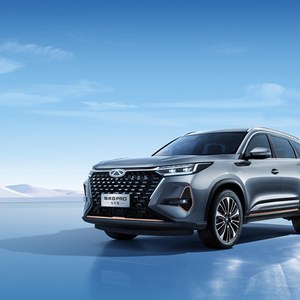
Used Chery Tiggo 8 PRO 2024 Champion Edition 390T Two-Wheel Drive Peak Version 5 Seats
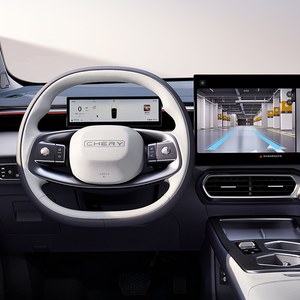
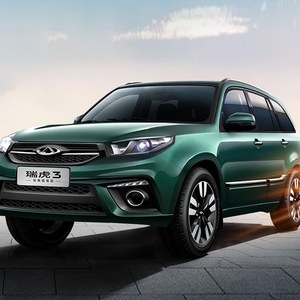
Used Chery Tiggo 8 PRO 2024 Champion Edition 290T Two-Wheel Drive Peak Version 5 Seats
How to buy a Chery Tiggo 4 from China
-
1
Define the destination and vehicle brief
Specify the destination country, LHD or RHD requirement, transmission, passenger or fleet use, quantity and required timeline. Include climate and equipment priorities so that unsuitable variants are not sourced.
-
2
Review live Tiggo 4 inventory
Compare each live listing by year, trim, engine, transmission, condition, steering side and commercial scope. The unit-specific listing is the reference for current price, MOQ and availability.
-
3
Request sourcing when no unit is listed
Submit an RFQ describing the required configuration, quantity, destination and delivery terms. Ask whether the supplier can locate a matching vehicle or propose a suitable alternative.
-
4
Verify the vehicle and compliance pathway
Confirm the VIN, production date, engine and transmission, condition, equipment and destination-specific type-approval requirements. Obtain a photo-backed specification before agreeing the order.
-
5
Agree the order and payment terms
Request a written quotation covering the exact vehicle, Incoterm, MOQ, deposit and balance schedule, inspection, warranty, documents, cancellation and refund conditions. Ensure the invoice and beneficiary details match the contract.
-
6
Arrange export shipping and delivery
Complete pre-shipment inspection, freight booking, export documentation, customs clearance and inland delivery under the agreed Incoterm. Retain the VIN, bill of sale, shipping invoice and certificate of origin throughout the process.
Tiggo 4 vs rivals
| Hyundai Creta | The Hyundai Creta occupies the same mainstream compact-SUV territory and often benefits from stronger brand familiarity and broader local service recognition. The Tiggo 4 may offer more Chinese supply value or available equipment, but the better choice depends on verified warranty, parts support, safety and residual prospects in the destination. |
|---|---|
| Dacia Duster | The Dacia Duster is a more utility-led rival with a practical, light-off-road image. Choose it where access and rugged utility outweigh refinement; assess the Tiggo 4 when comfort, equipment and a particular Chinese-market powertrain or supply arrangement matter more. |
| Geely Coolray | The Geely Coolray is a closer Chinese-brand rival, often matching the Tiggo 4’s modern presentation and value positioning. Decide using local aftersales coverage, parts consistency, software support, homologation and resale evidence rather than brochure equipment alone. |
Frequently asked questions
How is Chery Tiggo 4 export pricing determined?
Export pricing is built from the specific vehicle’s year, trim, engine and transmission, condition, mileage, options and the seller’s commercial terms. Freight, insurance, origin and destination charges, customs, taxes, financing, exchange rates and the selected Incoterm affect the landed figure. Current binding price and availability for an available unit should be read from the live Tiggo 4 listings; if no unit is shown, request a written RFQ quote.
Which engine and transmission does the Tiggo 4 use?
The Tiggo 4 is a petrol compact SUV, commonly associated with a 1.5-litre engine family. Manual and CVT transmissions are offered depending on market and version, with output and drivetrain varying as well. Check the VIN-specific live listing and seller documentation for the exact engine, transmission and drive layout.
Is a used Chery Tiggo 4 more economical than a new one?
A used vehicle can reduce acquisition cost, but mileage is only one variable. Condition, accident history, service records, remaining warranty, tyre and brake condition, and likely resale effects can make a lower purchase outlay less attractive. A new unit offers cleaner history and warranty terms, but production date and registration status should still be verified.
What is the MOQ for a Chery Tiggo 4 wholesale order?
MOQ is set by the seller and shipment plan rather than by the model name. A listed vehicle may be available as a single unit, while factory allocations or container consolidation can carry a higher requirement. Read the MOQ on the live unit and confirm it, together with mixed-model rules, in the written quotation.
What determines shipping time and cost?
Transit time and cost depend on origin and destination ports, sea or air mode, freight capacity, route, container utilization, insurance, customs clearance and inland delivery. Vehicle condition, documentation readiness and port congestion also affect timing. The quote’s Incoterm should state which charges are included; exchange-rate changes can alter the buyer’s final outlay.
Can spare parts be ordered for an imported Tiggo 4?
Parts can generally be sourced by model and VIN, but compatibility, catalogue references, lead times and freight can be significant. The seller or a specialist parts supplier should confirm whether items are held locally in the destination or must come from China, and whether the warranty covers labour as well as the component. Keep the vehicle identification record with every parts order.
Can I buy a right-hand-drive Tiggo 4 for export?
RHD availability depends on the production source and destination, so it must be specified before ordering and confirmed for the exact VIN. Steering side alone does not establish homologation; local safety, emissions and registration requirements still apply. A sourcing request can ask for RHD production or a locally compliant alternative.
How do I buy a Chery Tiggo 4 from China?
Start with the live Tiggo 4 inventory and compare each unit’s year, trim, powertrain, condition, steering side, MOQ and commercial terms. If no suitable vehicle is listed, submit an RFQ with the destination, configuration, quantity, budget framework and timeline for sourcing assistance. Before payment, obtain a written quote and contract covering the unit, Incoterm, inspection, payment milestones, warranty, documents, shipping and cancellation terms.
Ready to source the Chery Tiggo 4?
Request a specific Tiggo 4 quote and sourcing check through the RFQ page, and monitor the live listings when inventory returns.
Request a quote