
Chery Tiggo 8 Export Buying Guide for Overseas Dealers
Compare Chery Tiggo 8 trims, engines, seating and export pricing, then learn how overseas dealers assess new and used vehicles, shipping and compliance.
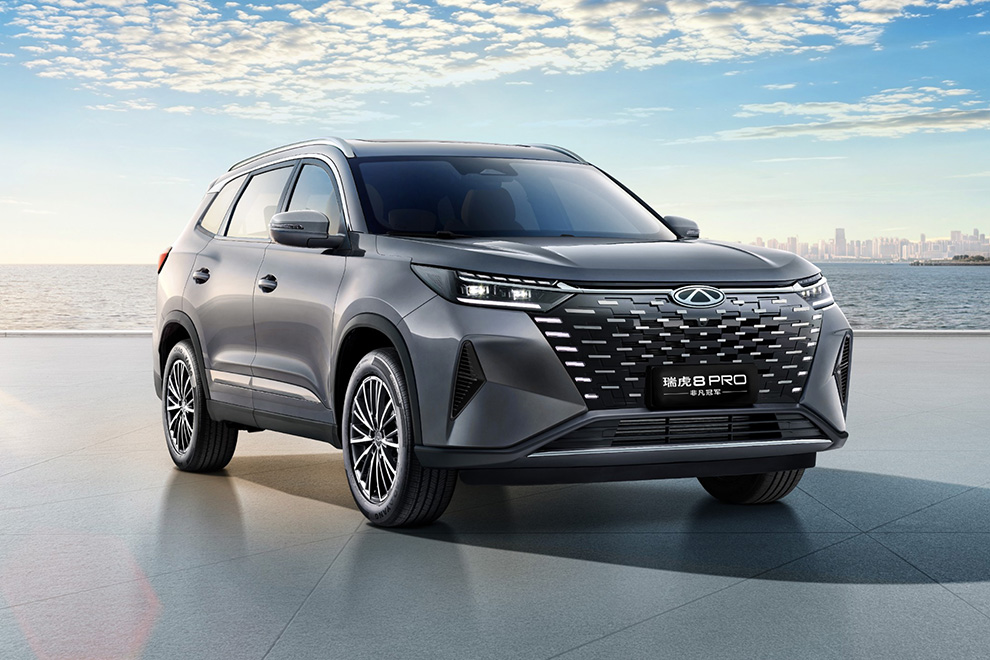
At a glance
- The Chery Tiggo 8 is a gasoline midsize SUV offering multiple seating layouts for distributors, families, and fleet operators.
- The export range includes 1.5 TCI, 1.6 TGDI, 2.0T, 290T, 290TGDI, and 390T designations, but each unit needs technical verification.
- Automatic and DCT choices, driven wheels, equipment, and seating must be compared within the same model year and market specification.
- Used Chery Tiggo 8 purchases can widen sourcing choices, while condition, mileage, ownership history, and repair reserves require closer scrutiny.
- Live ChinaCarDirect listings provide current per-unit price, availability, and MOQ; a written quotation should finalize the terms.
- Right-hand-drive availability, destination homologation, parts support, and landed freight must be confirmed before shipment.
Why the Chery Tiggo 8 matters for export markets
The Chery Tiggo 8 is a gasoline-powered midsize SUV that gives overseas buyers a practical alternative in the mainstream three-row segment. Its export relevance comes from combining 5-, 6-, and 7-seat configurations with a broad choice of turbocharged engine and transmission designations. That flexibility suits importers serving family transport, distributor, and fleet customers where one large SUV format is not enough. The versions represented here are gasoline internal-combustion models rather than battery EVs, so buyers should assess fuel availability and operating costs alongside purchase price. An urban-EV, body-on-frame, or premium-SUV buyer may find it less aligned.
Global buyer interest centers on the Tiggo 8’s combination of midsize-SUV packaging and value positioning rather than premium status. It offers a large cabin, useful third-row packaging, and several engine and comfort choices without moving into the cost bracket traditionally associated with established luxury mid-size SUVs. Buyers should not treat that as a substitute for due diligence: factory fit and finish, software, safety equipment, service intervals, and spare-parts support can differ by model year and destination. The right question is whether the exact unit’s specification and support package suit the market, rather than simply accepting the badge.
The model also has a cross-border role as a fleet and distributor product. A rental company can prioritize seating capacity, fuel efficiency, uptime, and acquisition cost, while a dealer can mix five-seat versions with six- or seven-seat derivatives to address different customer segments. Market naming also matters: Tiggo 8, Tiggo 8 Pro, Tiggo 8 Plus, facelift, and edition labels may describe related but differently equipped vehicles. Always compare the underlying year, engine, transmission, seating, and equipment in the live listing rather than relying on the model badge alone before approving an order.
- Gasoline midsize SUV
- Flexible seating layouts
- Market-specific equipment fit
Model range, trims and powertrain variants: how the lineup is structured and how to choose
Within the export catalogue, the Tiggo 8 range is organized by body generation, market edition, engine label, transmission, drivetrain, and seating layout. Visible designations include 1.5 TCI, 1.6 TGDI, 2.0T, 290T, 290TGDI, and 390T versions, with DCT and conventional automatic naming also appearing. These labels are market-facing identifiers rather than a reliable substitute for a technical sheet. Do not infer power output, torque, fuel economy, or homologation from a trim name; request the vehicle’s exact engine code, gearbox type, axle ratio, and factory build sheet. The build sheet should also confirm the origin and destination configuration.
Seating choice should follow the operating brief rather than the most expensive-looking badge. A five-seat derivative offers the simplest floor plan for fleet use, airport transfers, or customers who prioritize luggage space. Six-seat versions can balance third-row access with a conventional second row. Seven-seat models suit larger families and shuttle operators, but buyers should inspect access, cargo volume with the rear rows raised, child-seat interfaces, and whether the marketed seating count is supported by the pictured cabin. Fold-flat flexibility can be as important as the headline seat number in daily use.
Trim selection is where specification discipline matters most. Equipment may include different infotainment, climate-control, upholstery, wheel, driver-assistance, lighting, and safety packages, but availability changes across model years and export destinations. The most sensible comparison is a specification matrix for the shortlisted units: confirm engine and transmission, driven wheels, seat count, key functions, installed options, and any replaced or converted components. For commercial buyers, also ask whether the seller can supply service records, diagnostic information, owner manuals in the required language, and the parts needed for initial maintenance in the receiving market.
- Verify engine codes
- Automatic or DCT
- Payload-first seating
New vs used Chery Tiggo 8: how export inventory is structured and how buyers choose
New and used Tiggo 8 inventory serves different commercial needs. A new or unused unit is easier to describe consistently and may be closer to a current production specification, which helps dealers standardize a vehicle program. It can also avoid immediate refurbishment work, although production timing and the availability of a particular trim still determine lead time. Ask whether any factory warranty is valid in the destination country and whether the supplier is the registered owner. New does not automatically mean export-homologated, and the vehicle still must satisfy local rules there.
Used vehicles broaden age, mileage, trim, and condition choices and can reduce the initial acquisition burden for price-sensitive operators. The trade-off is that value depends on the condition of powertrain, transmission, suspension, interior, electronics, and accident history. Fleet-derived units may have high mileage but maintained service records; private-use vehicles may be lower mileage but lack the same documentation. Buyers should treat a used unit as a separate asset purchase, including allowance for repairs, missing equipment, tire replacement, and downtime while the vehicle is prepared for resale in the destination market.
A disciplined used-vehicle workflow starts with the VIN, production date, title or ownership documents, service history, odometer reading, and a physical or third-party inspection. Compare photos with the inspection, request cold-start and diagnostic evidence, and confirm that the engine, gearbox, seating layout, and drive configuration match the listing. The strongest choice is not simply the lowest asking amount but the vehicle whose known history, condition, and total preparation cost align with its intended resale or fleet role. Use current live listings to see which new and used options are actually available.
- New-unit standardization
- Used-unit inspection depth
- Refurbishment cost allowance
How export pricing works: the factors behind a live listing price, and how to read one
An export price is not a fixed national price for the Tiggo 8. It is the sum of several vehicle-specific and transaction-specific inputs: model year, trim, engine, transmission, seating, mileage, condition, ownership history, fitted options, production status, and whether the unit is new or used. Currency movements also affect the quote. Beyond the vehicle, inland transport, export handling, freight, insurance, port charges, destination fees, and taxes may be included or excluded. The first decision is therefore to define the Incoterm and exactly what the quoted figure represents for the proposed shipment.
To read a live listing correctly, start with the unit identifier and title, then compare year, trim, engine label, gearbox, driven wheels, seat count, mileage, condition, and seller location. Check whether the photographs show the actual vehicle, whether equipment is original, and whether any wording such as facelift, automatic, DCT, luxury, or flagship adds meaningful specification information. A converted RHD vehicle, reconditioned fleet car, or repair project needs a different comparison from a factory-fresh example. Live ChinaCarDirect inventory shows current price, availability, and listing-level MOQ; use it rather than cached information and rely only on a written, accepted quotation.
A landed-cost worksheet prevents misleading comparisons. Start with the listed vehicle price, then add any agreed vehicle preparation, inland transport, export documentation, freight, insurance, port or destination charges, and applicable duty or tax. Add a foreign-exchange contingency and an allowance for repairs or missing accessories on a used vehicle. Ask the supplier or forwarder to state inclusions, exclusions, payment currency, quote validity, and the port or delivery point. For a fleet, divide the projected landed cost by expected operating months, then add depreciation and downtime; that often matters more than a small quoted-price difference.
- Like-for-like comparisons
- Defined Incoterms
- Landed-cost worksheets
MOQ, ordering and payment: single units vs consolidating a container
Minimum order quantity (MOQ) is a supplier and listing condition, not a universal property of the Chery Tiggo 8. Some export offers accept one vehicle; others set a larger lot, especially for a full container or special production run. The current requirement should be read from the live unit listing or confirmed in the RFQ, rather than inferred from the model name. A single-unit purchase suits an importer testing demand or a fleet buyer taking one vehicle, but it usually leaves the buyer exposed to per-vehicle freight and fixed port costs unless the seller has consolidation arrangements.
Container consolidation changes the arithmetic. Combining several Tiggo 8 units, potentially with other compatible vehicles, can spread port, documentation, and handling charges across more units and may improve freight purchasing. It also requires a larger cash commitment, more quality control, and careful matching of specifications and colors to buyers. A distributor may buy a mixed container for resale, while a fleet operator may prefer one model and one specification to simplify training, parts, and resale. Freight consolidation should therefore follow demand validation, not precede it; otherwise unsold stock becomes the importer’s problem in the destination market.
For a wholesale order, the ordering sequence should be explicit. Select the unit, obtain a written quotation, reserve it with the agreed deposit, complete inspection or pre-shipment work, pay the balance against agreed milestones, and release the vehicle against verified export documents. Confirm invoice and title details, the VIN, bill-of-lading or shipping instruction, insurance, and the party responsible for customs clearance. A catalogue image or chat message is not a binding order. Put the specification, condition report, delivery term, and document list into the purchase contract. Payment method should reflect risk: staged transfers may suit direct trade, while documentary collection or a letter of credit may protect a larger cross-border order, subject to supplier terms and banking rules.
- Listing-specific MOQ
- Demand-led consolidation
- Milestone payment controls
Shipping, homologation and market compliance caveats: LHD/RHD and import rules by country
Steering configuration is an early sourcing filter. Many Chinese-market Tiggo 8 vehicles are left-hand drive, while some export destinations require right-hand drive. Do not assume that a Chinese listing is ready for the destination or that an RHD conversion is equivalent to factory production. Confirm where the vehicle was built, whether the steering, instrument cluster, lighting, controls, and cooling equipment are market-correct, and what documentation supports the configuration. For commercial use, an unapproved conversion can also substantially complicate registration, insurance, warranty claims, and future parts support across the destination market.
Local roadworthiness and import approval must be checked independently of the seller’s export status, and rules differ by country. Depending on the country, authorities may require VIN and conformity documents, emissions compliance, safety or type approval, customs clearance, proof of ownership, import permits, and evidence of applicable taxes. A Certificate of Conformity or factory release may help with customs, but it does not automatically grant local registration. Used vehicles can face additional age, emissions, inspection, or ownership restrictions. Buyers should obtain a written view from a customs broker or local vehicle-registration specialist before committing funds.
Shipping method affects both cost and vehicle condition. Enclosed-container transport can reduce exposure to weather and road damage, while roll-on/roll-off handling may offer more flexibility for larger shipments; actual suitability depends on vehicle dimensions, port equipment, routing, and available capacity. Compare freight against origin handling, marine insurance, terminal, customs, delivery, and demurrage charges. Use a pre-delivery inspection to check damage, fluid levels, starting battery condition, tires, and loose equipment. Also confirm the discharge port, documentation, insurance coverage, and the process for reporting concealed damage before accepting the vehicle at final destination.
- Factory RHD verification
- Destination-country homologation
- Pre-delivery inspection
Who should buy the Tiggo 8 — and who should pick a different vehicle
The Tiggo 8 fits importers and fleet operators seeking a midsize gasoline SUV with flexible seating, a useful equipment list, and several powertrain choices. Five-seat versions suit luggage-heavy executive transfer or rental use; six- and seven-seat versions address families, hotels, group travel, and larger fleet assignments. Distributors can use the range to cover different price points without moving outside the model family. The strongest case is where the vehicle can be supported by local technicians, spare-parts supply, and suitable fueling infrastructure. It is also suitable for buyers who want a familiar automatic or DCT drivetrain and modern SUV packaging.
It is less suitable for buyers whose priorities are not represented by the model. Those needing a battery-electric vehicle, zero-emission compliance, substantial off-road capability, body-on-frame durability, heavy towing, or premium cabin refinement should compare other categories. Extremely tight parking conditions may also make a large three-row SUV inconvenient. Operators with strict residual-value assumptions or limited access to parts should model those risks before buying, because a lower acquisition price does not compensate for prolonged downtime or difficult remarketing. A test of the intended vehicle with local passengers and luggage is more revealing than a showroom specification sheet.
Use a four-part approval test: people, payload, paperwork, and ownership economics. First, ensure the seat layout meets passenger and luggage demand. Second, confirm that engine, transmission, and fuel use suit the route and operating profile. Third, secure destination-specific approval and a realistic parts plan. Fourth, compare fully landed cost, expected downtime, financing, insurance, and likely resale position. This framework keeps the Tiggo 8’s flexibility useful while preventing a nominally suitable SUV from becoming an unsuitable export asset. It also gives importers a disciplined basis for negotiating and approving a multi-unit order.
- Flexible fleet applications
- Parts-access dependency
- Category-specific alternatives
Main rivals and how the Tiggo 8 compares
The closest alternatives depend on the buyer’s market and priorities. The Toyota Fortuner is a credible rival for seven-seat buyers who emphasize body-on-frame utility and a familiar service presence in established Toyota markets. The Hyundai Santa Fe is a road-focused family SUV alternative with a comfort and technology emphasis and, in some markets, electrified powertrains. The Mitsubishi Xpander Cross competes where an affordable, space-efficient seven-seat vehicle is the priority. These models are not identical, but each can divert consideration from a Tiggo 8 procurement; local availability and support should be checked.
Against the Fortuner, the Tiggo 8 offers a broader selection of family configurations and a more contemporary design impression in some export markets, while the Fortuner may better suit buyers who prioritize its traditional utility format and its more familiar service presence in established markets. Against the Santa Fe, the Chery can appeal to cost-conscious importers seeking three-row capability, but buyers should scrutinize local support, software familiarity, safety documentation, and residual expectations. The Xpander Cross emphasizes packaging efficiency and seven-seat practicality, so it can be a rational choice when cabin versatility matters more than SUV styling.
No rival wins every market. Fuel availability, tax treatment, emissions rules, parts supply, road conditions, insurance, and registration rules can matter more than a brochure comparison. Ask each supplier for the same configuration, warranty treatment, spare-parts list, and delivered price, then normalize all quotes to the same Incoterm and destination. The Tiggo 8 is most compelling when its combination of seating choice, turbocharged engine options, and acquisition positioning fits the buyer’s plan. Choose a rival when that plan gives greater priority to proven local support, a different powertrain, or a more specialized body format in the destination market.
- Fortuner utility focus
- Santa Fe comfort focus
- Xpander packaging focus
Live Chery Tiggo 8 export inventory
View all listings →Real units currently on ChinaCarDirect with per-unit asking prices and MOQ. Availability updates live from the catalogue.

How to buy a Chery Tiggo 8 from China
-
1
Define the destination and vehicle brief
Specify the destination country, RHD or LHD requirement, seat count, engine and transmission preference, and intended use. This prevents technically mismatched units from entering the shortlist.
-
2
Search and normalize live inventory
Use the live Tiggo 8 inventory and compare candidates by year, trim, engine label, gearbox, drivetrain, seats, mileage, condition, and VIN where shown. Normalize model and edition names before comparing.
-
3
Request documents and unit evidence
Ask for ownership or title documents, the factory build sheet, service history, equipment list, maintenance records, VIN, and high-resolution media. For a used unit, commission a physical or third-party inspection and diagnostic check.
-
4
Build a like-for-like landed quote
Request the vehicle price, preparation, inland transport, export handling, freight, insurance, port and destination charges, duties or taxes, payment currency, validity period, and Incoterm. Keep vehicle and landed costs separate.
-
5
Clear destination compliance
Have a customs broker or local registration specialist check the VIN, type approval, emissions, safety requirements, permits, ownership documents, import duties, and taxes. Verify whether factory RHD is required for the market.
-
6
Inspect, contract, and pay
Put the exact specification, condition, document list, Incoterm, delivery point, inspection remedy, and payment milestones into the contract. Release the balance only against verified documents and a satisfactory inspection.
-
7
Consolidate, insure, and ship
Decide between a single unit and consolidation based on validated demand and landed-cost savings. Book suitable transport, insure the vehicle, complete a pre-delivery inspection, and track customs clearance through final delivery.
Tiggo 8 vs rivals
| Toyota Fortuner | The Fortuner’s body-on-frame format and established service presence in some markets suit buyers prioritizing utility and familiarity. The Tiggo 8 offers broader seating and trim choices for family-oriented importers, but local support and residual-value expectations still require validation. |
|---|---|
| Hyundai Santa Fe | The Santa Fe is a road-focused family SUV with a comfort and technology emphasis, and some markets offer electrified versions. The Tiggo 8 offers a different equation for importers prioritizing three-row practicality and flexible engine choices. |
| Mitsubishi Xpander Cross | The Xpander Cross is a packaging-led seven-seat alternative with MPV-derived proportions and efficient use of interior space. It can appeal where cabin versatility matters more than SUV styling, while the Tiggo 8 has a more SUV-focused presentation. |
Frequently asked questions
How is Chery Tiggo 8 export pricing determined?
Export pricing starts with the unit’s model year, trim, engine, transmission, seating, mileage, condition, options, and availability. Currency, inland transport, freight, insurance, port charges, duties, taxes, and the Incoterm can then change the total. Check the current per-unit price and listing-level MOQ in live ChinaCarDirect inventory, and request a written landed quotation for the destination before paying.
Which Chery Tiggo 8 engine and powertrain options are available?
The range includes 1.5 TCI, 1.6 TGDI, 2.0T, 290T, 290TGDI, and 390T designations, with automatic and DCT transmissions on different trims. These market labels do not, by themselves, establish output, economy, or homologation. Confirm the engine code, gearbox, drivetrain, seating, and factory build sheet for the specific vehicle.
Should I buy a new or used Chery Tiggo 8?
New units can simplify fleet standardization and reduce immediate refurbishment, while used units widen age, trim, and acquisition choices. Used purchases carry more condition, mileage, history, repair-reserve, and downtime risk, so they require closer inspection. The better choice depends on the buyer’s fleet program and total operating economics, not the age label alone.
How does MOQ work when buying from China?
MOQ is a supplier and listing condition rather than a fixed model-wide rule. Some offers may accept one vehicle, while others require a larger lot for a container or production run; check the current requirement on each live listing or RFQ. Consolidating mixed units can improve freight economics but should follow validated demand.
What determines shipping time and cost?
Shipping time depends on origin and destination ports, vessel or roll-on/roll-off schedules, congestion, customs clearance, inland delivery, and documentation. Cost depends on transport method, route, vehicle dimensions, handling, insurance, terminal charges, duties, and taxes. Request a door-to-door schedule and landed quote rather than relying on a generic transit estimate.
How are spare parts and after-sales support handled?
Confirm parts support before ordering by asking for the VIN or vehicle model code, maintenance intervals, initial consumables, software and diagnostic support, warranty terms, and the lead time and cost of commonly needed parts. Chinese-market equipment labels may differ from the destination, so obtain an English or local-language parts list where available.
Is right-hand-drive Chery Tiggo 8 availability guaranteed?
Right-hand-drive versions may be available in some markets, but availability depends on the exact model year, trim, and production run. Confirm factory RHD status rather than assuming a Chinese listing is convertible or compliant. A conversion can affect registration, insurance, warranty, and parts support, so use a local registration specialist before committing.
How do I order a Chery Tiggo 8 from China?
Start with the live Tiggo 8 listings, shortlist like-for-like units, and request a written commercial quotation containing the exact specification and document list. Verify compliance, inspect the vehicle, pay against agreed milestones, and book insured transport using the correct Incoterm. Submit an RFQ specifying destination, seating, powertrain, condition, and quantity for current terms.
Ready to source the Chery Tiggo 8?
Send your destination, seating, powertrain, condition, quantity, and Incoterm requirements to request a current written Tiggo 8 quotation.
Request a quote