
Chery Tiggo 8 Pro Export Guide for Overseas Buyers
Compare Chery Tiggo 8 Pro trims, powertrains, pricing factors and export steps for overseas dealers, importers and fleet buyers seeking a versatile family SUV.
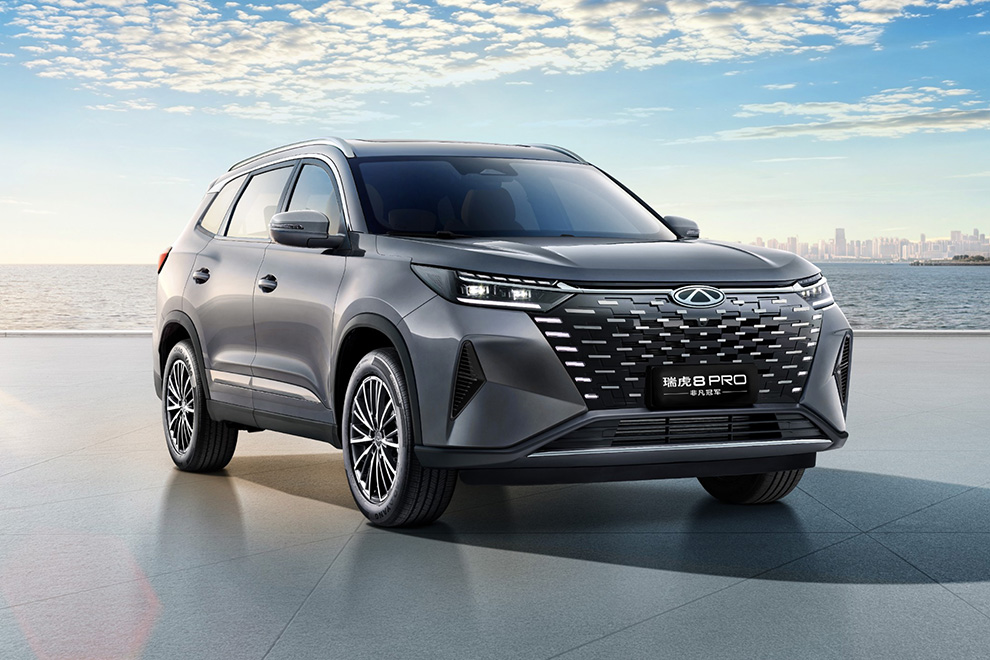
At a glance
- The range spans 290T and 390T trims, selected two- and four-wheel-drive versions, and five- or seven-seat layouts.
- An EV-branded 1.5T 100km Glory Edition is represented, so its propulsion, battery and certified range require unit-level confirmation.
- New vehicles offer predictable factory configuration, while used units require closer inspection of condition, mileage and history.
- Landing cost depends on trim, model year, condition, freight, Incoterm, exchange rates, duties and destination compliance.
- Confirm right- or left-hand drive, homologation, spare-parts access and warranty support before placing a firm order.
- Live inventory shows the binding unit price, MOQ and availability, while an RFQ clarifies shipping and compliance requirements.
Why the Chery Tiggo 8 Pro matters for export markets
The Chery Tiggo 8 Pro occupies a useful middle ground for overseas buyers: a large family SUV with three-row potential, multiple powertrain labels and a trim ladder that can serve both fleet and retail programs. Its appeal is not tied to one market. Dealers can compare five- and seven-seat formats, entry and higher-output drivetrains, and two- or four-wheel-drive versions according to local demand. That flexibility makes the model relevant where Chinese-brand acceptance is growing but buyers still expect SUV space and higher seating positions than a compact crossover without premium pricing.
Export demand for this type of vehicle usually comes from importers seeking a practical premium alternative to sedans, rental operators needing a durable-looking crossover, and family-focused dealers that require more passenger space than a compact SUV. The Tiggo 8 Pro's broad trim structure helps buyers match equipment and drivetrain to the market rather than accepting a fixed package. It also gives distributors room to test several price tiers at retail, although final positioning depends on local competition, tax treatment and the cost of homologating each unit for local use.
For distributors, the key commercial question is whether the model can be supported profitably after freight, duties, warranty work and dealer preparation. A spacious, seven-seat derivative can appeal to families and chauffeured operators, while five-seat versions may be easier to place in markets with smaller urban homes. Two-wheel-drive models can suit paved-road fleet use; four-wheel-drive derivatives are more relevant where traction, mild off-road use or a higher equipment image matters. Buyers should assess those roles before choosing a trim and avoid paying for capacity the market will not use well.
Model range, trims and powertrain variants: how the lineup is structured and how to choose
The export-facing Tiggo 8 Pro range is structured around 290T and 390T gasoline versions, with five- and seven-seat body choices and both two-wheel-drive and four-wheel-drive trims. The 290T designation is associated with the 1.5-liter turbo engine family, while 390T denotes the 2.0-liter turbo family. Trim names shift across markets, so the useful comparison is not the marketing suffix alone; buyers should align engine, seat count, drive system, equipment and the destination-market specification on the individual listing before requesting a firm quote for a specific vehicle and its landed cost terms.
Within the 290T line, two-wheel-drive versions form the broad practical choice set and are offered in five- and seven-seat forms, including Vast, Shining, Peak, Highlight and other market-dependent labels. The 390T line adds higher-output two-wheel-drive derivatives and selected four-wheel-drive versions, with Peak, Vast, Premium and related equipment tiers. Because names such as Luxury, Champion and Flagship can denote different content in different export batches, compare the equipment list rather than assuming a hierarchy. A 390T badge does not by itself confirm output, gearbox, roof equipment or destination certification for every unit.
Five-seat variants are usually the easier export decision when they provide the required luggage capacity and are more likely to fit common parking or fleet-use assumptions. Seven-seat versions make more sense for family transport, airport transfers, executive cars and routes carrying six or seven regular occupants. They may justify a higher acquisition cost because of added seating and body configuration, but the correct test is demand and packaging, not simply a larger invoice. Check boot space with all seats in use, because a third row can reduce luggage room even when it is folded.
- Confirm 290T versus 390T.
- Match seats to operating demand.
- Verify four-wheel-drive availability.
New vs used Chery Tiggo 8 Pro: how export inventory is structured and how buyers choose
ChinaCarDirect's export catalogue should be read as a mix of new vehicles and used units rather than as one homogeneous stock pool. New examples are typically associated with current factory configurations and may offer a more predictable specification history. Used examples can widen sourcing options and reduce initial acquisition pressure, especially for a dealer willing to refurbish or manage higher-mileage vehicles. The decisive factor is not the label alone: a buyer should compare the complete vehicle description, condition evidence and total expected operating outcome for each unit in the live listing.
New units suit buyers who prioritize known factory condition, a coherent option list and the possibility of selecting seating and drivetrain before shipment. They are also preferable when local homologation must be performed on a specification that can be matched cleanly to invoices and production documents. Used units can suit budget-led importers, replacement-stock buyers or dealers able to inspect and recondition them. For either category, request VIN-level photographs, an odometer record, option list, maintenance history and any disclosed damage rather than accepting a description alone before committing funds to the vehicle.
Model age is only one part of the used-vehicle decision. A later vehicle may still be attractive if it is complete, documented and in better cosmetic or mechanical condition than an older alternative. Conversely, a newer listing may carry less risk if its history is clearer. Compare remaining useful life, likely warranty support and repair access, not only the acquisition line. New vehicles can also lose value quickly, so a used unit may offer better value for a disciplined operator that monitors utilization and maintenance rather than assuming one age wins.
- New: prioritize factory specification.
- Used: inspect history and condition.
- Compare lifecycle cost, not age alone.
How export pricing works: the factors behind a live listing price, and how to read one
An export listing price is only one component of the commercial offer and should not be treated as the final landed cost. The vehicle itself is priced by factors such as model year, trim, 290T or 390T engine, drivetrain, seating, mileage, condition, ownership history and market demand. For an EV-branded derivative, battery version and certified range may also affect comparability. These variables must be separated clearly before comparing one unit with another, because two similarly named Tiggo 8 Pro vehicles may not be equivalent products under the same specification standard.
Market-side variables also move the amount a buyer ultimately pays. Exchange rates affect the Chinese supplier's cost and the buyer's currency exposure. Freight changes with sailing route, carrier capacity, season, port charges, fuel surcharges and whether the vehicle moves by RoRo or enclosed container. Insurance, inspection, documentation, storage, financing and dealer preparation add further lines. Taxes and duties may sit outside the vehicle quote altogether, so ask whether the displayed amount is an export basis price or an all-in estimate under a stated Incoterm and payment schedule before final approval.
To read a live listing correctly, start with the unit identifier and photograph set, then verify model year, exact trim, seats, engine designation, drive system, mileage or new status, and the seller-provided option list. Next, identify what the price covers, which party arranges payment, when it becomes non-refundable, and the expected document set. Ask whether the quote includes export declaration, inspection, loading, ocean freight and insurance, or only the vehicle at the named Incoterm. A written quotation should be the controlling document and should be reconciled with the live unit record.
- Separate vehicle price from landed cost.
- Confirm Incoterm and included charges.
- Recheck quote validity before deposit.
MOQ, ordering and payment: single units vs consolidating a container
Minimum order quantity is set by the seller, vehicle source and transaction structure rather than by the model name itself. Some export offers can be purchased as one vehicle, while a supplier may require several units for a particular production lot or shipping plan. Always read the MOQ shown against the individual live listing and include it in the written quotation. Do not infer the platform's catalogue-wide policy from one vehicle: a single-unit pilot may be possible even when another supplier applies a higher minimum for a different trim or condition.
A one-unit order is useful for market testing, demonstration fleets or a dealer filling a specific customer order. It reduces inventory exposure but may not provide the best freight rate or access to the seller's preferred vehicle batch. Consolidation can improve unit economics through shared loading or shipping arrangements, but mixed trims, seat counts, specifications or vehicle ages can complicate administration and make the first delivery less uniform. Buyers should model both routes using the same cost categories rather than assuming a larger order automatically produces the lowest per-vehicle cost.
Ordering mechanics should be settled before funds move. Request a pro forma invoice naming the exact unit or agreed batch, the MOQ, unit specification, Incoterm, payment milestones, inspection standard, document list, production or dispatch timing and cancellation terms. Confirm how the deposit is protected, which party arranges customs and freight, and what triggers final payment. If vehicles are consolidated, define how units are allocated, who bears loss or damage, and whether the buyer may substitute a similar vehicle if the selected unit becomes unavailable and how material specification changes are communicated.
- Confirm MOQ on the selected unit.
- Name the exact unit in the invoice.
- Define allocation and substitution rules.
Shipping, homologation and market compliance caveats: LHD/RHD and import rules by country
Overseas delivery begins with configuration and compliance, not merely booking a vessel. Steering position is critical: Chinese-market vehicles may be left-hand drive, while some destinations require right-hand drive, with conversion potentially affecting price, lead time and warranty. Confirm the hand of drive shown on the actual unit and whether it is factory-built or converted. Then identify destination rules for roadworthiness, emissions, lighting, restraint systems, cybersecurity, radio equipment and VIN or type approval. Requirements vary by country, so a Chinese domestic listing is not automatically importable in its factory specification unchanged.
The rule set changes by destination. European buyers should ask whether the vehicle has the required type approval, Certificate of Conformity, emissions compliance and any market-specific adaptations before using it for registration. Gulf and other regional markets may require local conformity evidence, authentication or a defined importing channel. Southeast Asian, African and Latin American markets can apply local standards for lighting, mirrors, emissions, labels and inspection. A homologation specialist or local importer should confirm the pathway for the exact configuration, especially for an EV-branded derivative whose charging or range claims must match local rules.
Freight planning should follow homologation rather than run in parallel with it. For a small trial, an enclosed container can offer flexible loading; for a regular program, RoRo may suit higher volumes. Request an all-in freight proposal showing origin charges, destination terminal fees, documentation, insurance, delivery window and the party responsible under the Incoterm. Build a buffer for inspections, repairs, storage and delayed sailing schedules. Also confirm that the model will receive the service support, spare-parts route and warranty handling needed in the destination country before committing to a launch schedule.
- Verify factory RHD or LHD.
- Complete local homologation before dispatch.
- Price origin and destination charges.
Who should buy the Tiggo 8 Pro — and who should pick a different vehicle
The Tiggo 8 Pro is a strong candidate for importers and dealers serving families, executive transport, airport and hotel transfers, or fleets that need a high seating position and substantial cabin space. Five-seat versions suit private buyers and company-car programs where frequent three-row use is unnecessary. Seven-seat versions add flexibility for groups, luggage and premium shuttle work. The two-wheel-drive range is sensible for ordinary paved use, while four-wheel-drive versions deserve consideration where weather, road quality or a rugged positioning justifies the extra equipment and operating complexity in the target market.
For fleet buyers, the decisive issue is utilization and total cost over time. A lower acquisition price can be outweighed by fuel consumption, insurance, downtime, unsold specialist parts or service interventions that cross borders. The Tiggo 8 Pro can make sense when the importer has a clear route to Chinese spare parts and technicians trained on the model. It may be less suitable for operators unable to support an unfamiliar nameplate, especially where resale value, financing or insurance conventions strongly favor established domestic brands with a deeply entrenched dealer network.
It is also prudent to choose another vehicle when the brief requires towing above the model's certified limit, serious low-speed off-road ability, a proven battery warranty in a specific market, or a mature residual-value base. Those who want the strongest fuel economy may prefer a dedicated hybrid or plug-in hybrid rather than a conventional gasoline Tiggo 8 Pro. Very large executive programmes may justify a premium full-size SUV, while compact operators may reduce total cost with a smaller C-SUV. The right decision is fit to duty cycle and support, not badge image.
- Best for family and group transport.
- Suitable for fleets with China support.
- Avoid where support or residual value dominates.
Main rivals and how the Tiggo 8 Pro compares
The closest comparisons depend on market and powertrain, but three families are useful reference points. The Haval H6 is a mainstream Chinese SUV competitor with overlapping space, equipment and dealer positioning, although local configurations differ. The Jetour X70 Plus is a close alternative for buyers prioritizing a large family body, five- or seven-seat utility and a similar China-sourced purchasing route. For buyers seeking lower operating costs, the BYD Song Plus DM-i provides a plug-in-hybrid proposition that the gasoline Tiggo 8 Pro does not directly match before making a final import decision.
Against the Haval H6, the Tiggo 8 Pro's strongest argument is its broader visible seating and trim ladder, including 390T and four-wheel-drive choices where offered. The Haval may be attractive where its badge awareness, local service network or particular variant is stronger. Against the Jetour X70 Plus, the Chery offers a closely related ownership and sourcing proposition, so comparison should focus on engine response, boot practicality, fuel use, safety equipment and after-sales coverage. Neither brand automatically wins without a market-specific parts and warranty review in the country of intended registration.
The BYD Song Plus DM-i is the more operationally different alternative: its plug-in-hybrid system can change fuel consumption, charging requirements and tax treatment, but those benefits depend on local incentives, electricity use and compliance. For the Tiggo 8 Pro, buyers are choosing a broader ICE-centered range that includes an EV-branded listing variant and more conventional 290T and 390T choices. Compare total operating cost over a defined period, including tax, insurance, service and downtime. A lower purchase quote does not establish the better business case without evidence from local operating data.
Live Chery Tiggo 8 Pro export inventory
View all listings →Real units currently on ChinaCarDirect with per-unit asking prices and MOQ. Availability updates live from the catalogue.
Chery Tiggo 8 PRO 2024 Champion Edition 290T 2WD Peak Edition 7-Seater
How to buy a Chery Tiggo 8 Pro from China
-
1
Define the destination-ready specification
Record the destination country, steering requirement, seating needs, engine and drivetrain preference, budget method and intended use. Include local registration, tax and warranty constraints in the brief.
-
2
Review the live inventory
Use the live Tiggo 8 Pro listings to compare the current trim, condition, photos, MOQ and unit-level price. Verify that the listed specification matches your operational requirements.
-
3
Request a written quotation
Ask for the exact unit or agreed batch, Incoterm, payment schedule, document set, dispatch timing and any excluded charges. Ensure the quotation names the trim, seats, drivetrain and new or used status.
-
4
Validate compliance and configuration
Confirm factory LHD or RHD status, local homologation requirements, inspection arrangements and destination charges. Resolve any conversion or compliance work before authorizing production or dispatch.
-
5
Inspect and document the vehicle
For a used unit, request VIN-level photographs, odometer evidence, maintenance records, option confirmation and disclosed damage. Agree the inspection standard and consequences of failing it in the order document.
-
6
Approve payment and shipping
Review deposit protection, final-payment triggers, cargo insurance, freight method and unit allocation before paying. For consolidation, specify how similar or substituted vehicles are handled and who bears transit risk.
Tiggo 8 Pro vs rivals
| Haval H6 | The Haval H6 is a mainstream Chinese SUV competitor with overlapping space and market positioning, while the Tiggo 8 Pro offers a broader visible seating and trim selection. The stronger choice depends on local badge awareness, variant availability, parts support and after-sales coverage. |
|---|---|
| Jetour X70 Plus | The Jetour X70 Plus is a close large-family-SUV alternative for five- or seven-seat buyers seeking a similar China-sourced purchasing route. Compare engine performance, luggage practicality, fuel use, safety equipment and warranty support rather than relying on trim labels alone. |
| BYD Song Plus DM-i | The BYD Song Plus DM-i is a more operationally different plug-in-hybrid alternative that may change fuel, charging and tax economics. The Tiggo 8 Pro provides a broader conventional gasoline range, so the final decision should follow a full local cost-of-ownership calculation. |
Frequently asked questions
How is Chery Tiggo 8 Pro export pricing determined?
Pricing is driven by model year, trim, engine, drivetrain, seating, new or used condition, mileage, history, exchange rates, freight, insurance, Incoterms and destination charges. Check the live listings for the binding price of each selected unit, then request a written landed-cost quotation for your destination.
What powertrain and range options are available?
The range includes 290T and 390T gasoline trims, selected two- and four-wheel-drive versions, and five- or seven-seat configurations. An EV-branded 1.5T 100km Glory Edition is also represented, but its motor, battery, charging system and destination-certified range must be confirmed on the live listing.
Should an overseas buyer choose a new or used Tiggo 8 Pro?
New vehicles generally provide a clearer factory specification and condition history, while used vehicles can suit test programs and value-focused importers. Choose according to inspection evidence, operating life, service support and total cost rather than model age alone.
How does MOQ work for Chery Tiggo 8 Pro orders?
MOQ is determined by the seller and individual vehicle offer, so it can differ between trims, conditions and suppliers. A single-unit purchase may be available for some listings, but the current requirement must be confirmed in the live inventory and written into the quotation.
What affects shipping time and cost?
Origin handling, destination charges, freight method, route, sailing schedule, carrier capacity, season, documentation, insurance and cargo condition all affect the total. A freight proposal should state the Incoterm, included charges, delivery window and responsible parties.
How are spare parts and maintenance support handled?
Before ordering, confirm the supplier's parts channel, expected part references, warranty process and lead-time approach for the destination country. A model with no reliable technical or parts route can create unacceptable downtime even when its purchase price appears competitive.
Is right-hand-drive availability guaranteed?
No. RHD availability depends on the specific source vehicle, and many China-origin vehicles are configured for left-hand-drive markets. Check the actual listing, confirm whether any conversion is factory-approved, and include local homologation and warranty implications in the landed cost.
How do I order a Tiggo 8 Pro from China?
Select and verify a live listing, then request a written quote naming the unit, MOQ, specification, Incoterm and payment milestones. After approving compliance documents and inspection terms, complete the agreed payment process and confirm freight, insurance, dispatch and delivery responsibilities before shipment.
Ready to source the Chery Tiggo 8 Pro?
Send your destination, seating, powertrain, steering and quantity requirements to ChinaCarDirect for a current unit-level quote and export compliance checklist.
Request a quote