
Chevrolet Cruze Export Guide for Overseas Buyers
Buy a Chevrolet Cruze from China with confidence: compare trims, engines, pricing factors, MOQ, shipping, compliance and rivals for informed export buying.
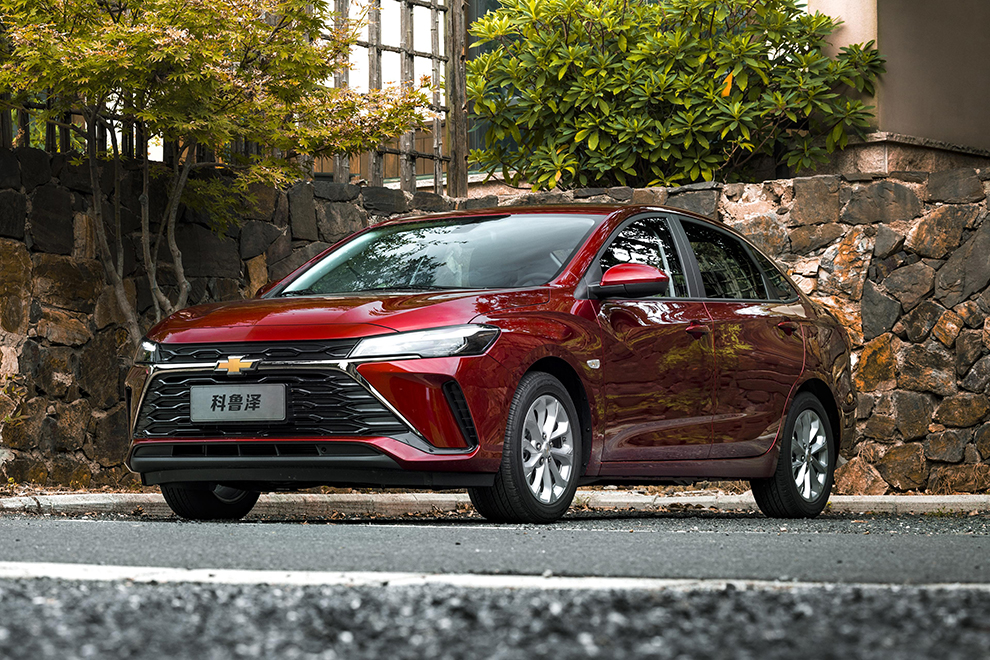
At a glance
- The Cruze is a compact, gasoline-powered sedan or hatchback for mainstream fleet and distributor use, depending on the selected market variant.
- Visible configurations span 1.5L, 1.6L, 1.8L and turbo-labelled versions, with manual and automatic transmissions.
- The strongest buying case depends on verified local parts access, vehicle condition, and destination compliance rather than trim badges alone.
- Export quotes must be read as vehicle-level references before freight, duties, insurance, and Incoterms are added.
- RHD availability, type approval, and VIN-level specification checks should be completed before any payment or shipment.
Why the Chevrolet Cruze matters for export markets
The Chevrolet Cruze occupies the mainstream compact-car segment: it combines a small footprint with a four-door sedan or, in some markets, a five-door hatchback. For export buyers, that positioning matters more than the badge alone. A compact Chevrolet can serve importers replacing a fleet model, distributors seeking a passenger-car line, and operators whose drivers need urban maneuverability without moving into a larger saloon or SUV. Its appeal comes from practical packaging and the operating logic of a gasoline-powered car. Buyers should value fuel economy, service access, parts availability, and destination compliance over trim imagery.
Demand for this kind of vehicle comes from work that requires many cars rather than one prestige purchase. Taxi, ride-hailing, company-pool, and distributor operations need manageable fuel use and parts that technicians can source. The Cruze can fit those roles where combustion-engine vehicles remain permitted and the importer can support its mechanical and electronic service needs. Fleet suitability also depends on payload, air-conditioning demand, road quality, and local technician coverage. That makes fleet fit a destination-specific calculation rather than a model-level claim for the proposed route and duty cycle.
The Cruze should be treated as a model family rather than one uniform specification. The relevant export listings span sedan and hatchback body styles, several displacement labels, manual and automatic transmissions, and trims such as Classic, Luxury, Pioneer, Redline, and flagship-oriented versions. Those names can come from different markets and generations, so they are not direct substitutes. Before ordering, verify the VIN, steering side, engine output, drivetrain, installed equipment, and production history for each specific vehicle. A Chevrolet badge alone does not guarantee identical safety equipment, software, or service procedures across those variants.
- Compact sedans and hatchbacks suit fleet use.
- Verify VIN, steering side, engine, and equipment.
- Local parts access determines ownership practicality.
Model range, trims and powertrain variants: how the lineup is structured and how to choose
The relevant lineup is easiest to understand by separating body style, engine family, transmission, and trim. The Cruze listings include sedan and hatchback configurations, with recurring 1.5L Classic, 1.6L, and 1.8L descriptions alongside 320, 330T, and 1.6T labels for other versions. Because those designations are not standardized across export sources, treat them as identification labels rather than a simple power ranking. Confirm the exact vehicle description before comparing equipment or running costs. For fleet buyers, match the corporate requirement to a VIN and option list, not merely to a trim badge.
The 1.5L Classic descriptions provide a route for buyers focused on a compact gasoline car, while 1.6L and 1.8L entries cover other displacement choices visible in the range. Turbo-labelled 1.6T and 330T versions may suit buyers who prioritize response or higher output, but the descriptions do not establish comparable power, torque, or fuel-consumption figures. The 320 designation also requires confirmation rather than an assumption about displacement or trim hierarchy. Use the live listing, manufacturer papers, and a road test to compare acceleration, noise, and economy instead of extrapolating from badge names.
Transmission and body style complete the selection. Manual versions can suit drivers familiar with them and offer a different acquisition profile from automatics, while automatic units are easier to standardize across a mixed-driver fleet. The range includes both, plus a dual-clutch-labelled Redline 330T derivative whose characteristics should be assessed on test. Hatchbacks improve cargo flexibility, whereas sedans provide a separate passenger and luggage layout. Decide around local driving conditions, driver training, load requirements, service capability, and the need for a uniform specification across multiple units.
- Match body style to cargo needs.
- Confirm output; never infer it from badges.
- Standardize transmissions for multi-driver fleets.
New vs used Chevrolet Cruze: how export inventory is structured and how buyers choose
The export catalogue separates vehicle identity from the condition assigned to each record, so a Cruze’s model year or trim should not be used as a proxy for condition. New and used purchases require different evidence. For a new unit, ask the seller to define condition in writing: prior registration, mileage, production date, warranty start, and whether it is dealer stock, demonstrator, or another unsold status. For a used vehicle, request the odometer reading, service history, accident or repair disclosures, inspection photographs, and title documents. Fleet buyers should compare this evidence because predictable uptime matters more than a model-year badge.
A new vehicle offers the clearest route to standardized specifications, a known history, and the strongest basis for comparing several units. It also makes warranty administration and parts planning easier when trims are matched. A used Cruze can suit a buyer who wants a lower acquisition outlay, a specific configuration, or an established model whose servicing is already understood locally. Its value depends more heavily on condition, remaining service life, and repair evidence. Do not treat depreciation savings as automatically cheaper ownership; fuel, insurance, downtime, and likely repairs still belong in the calculation.
Choose new when fleet consistency, warranty handling, and predictable delivery matter most. Choose used when the purchase is more opportunistic and the buyer can verify condition in person or through an independent inspection. For either route, match the vehicle to the operating country before focusing on appearance: confirm steering side, emissions, safety equipment, radio or connectivity requirements, and spare-part support. Then compare landed cost over the intended ownership period. The correct decision is the unit with the best total cost and lowest operational uncertainty, not automatically the newest or least expensive listing.
- Define condition, mileage, and history in writing.
- Weigh warranty certainty against acquisition outlay.
- Inspect used units independently before commitment.
How export pricing works: the factors behind a live listing price, and how to read one
A live export price is a vehicle-level reference, not a fixed market price for every Cruze. Model year, body style, engine and transmission, trim equipment, production origin, condition, mileage, and stock status can all affect the quoted amount. For a used vehicle, service history and repair disclosures become especially important; for a new unit, specification consistency and warranty treatment matter more. Exchange-rate movements can also alter what a seller can sustain. Consequently, two Cruze listings may sit at very different levels even when their model names or VINs look similar.
Freight and trade terms form a second layer. The total payable can change with the transport method, origin and destination ports, route distance, consolidation, fuel and handling surcharges, insurance, customs brokerage, and the chosen Incoterm. A vehicle price shown under an export basis does not include ocean freight, destination charges, duties, taxes, or local registration unless expressly stated. Ask the seller or forwarder to identify each charge and its currency, and clarify who bears risk at each transfer point. That avoids comparing one buyer’s delivered obligation with another buyer’s vehicle-only figure.
Read a live listing as the starting record, not as a final landed quote. Confirm the SKU, VIN or production identity, condition, mileage, options, steering side, warranty, and validity period. Check whether displayed terms are vehicle-only, port-to-port, or delivered, and whether payment milestones or credit terms are stated. For a current figure, review the [live Chevrolet Cruze listings](https://chinacardirect.com/products?q=Cruze&brands%5B%5D=928), then request a written quote for the exact unit. Exact price, MOQ, and availability are unit-specific, so confirm them in the live inventory and use the quote plus destination cost sheet as the commercial basis.
- Compare like-for-like trims and conditions.
- Separate vehicle cost from freight and duties.
- Request a written, validity-bound landed quote.
MOQ, ordering and payment: single units vs consolidating a container
MOQ is specific to the seller, listing, and transaction rather than a feature of the Cruze model. Some live offers may accept a single-unit order, which can be useful for testing demand or creating a mixed fleet, while other arrangements may be more efficient at container quantities. Buyers should not infer the minimum from the model name or another seller. Check the stated MOQ on each live listing and include it in the RFQ. If one-unit purchasing is permitted, confirm whether the vehicle will be loaded individually or consolidated with other orders.
A typical ordering flow begins with a precise vehicle request and ends with a pro forma invoice, payment milestones, and shipping instructions. The buyer may first reserve a specific SKU, then pay a deposit, complete any pre-shipment inspection, and settle the balance against the agreed terms. Some inventory is already built, while other arrangements can involve production or allocation, so the sequence must be stated clearly. Before paying, verify the seller entity, payment beneficiary, invoice references, refund terms, cancellation conditions, and included documents. No payment should be sent against an ambiguous price or unidentified vehicle.
Container consolidation changes the calculation because freight, handling, and port charges are spread across several vehicles, but it can also combine units with different specifications. A distributor may place a mixed batch of sedans and hatchbacks, or several grades of the same trim, to simplify fleet deployment. The trade-off is less flexibility: a consolidated shipment takes longer to assemble, and one delayed vehicle can hold the balance for others. Confirm cut-off dates, loading responsibilities, insurance coverage, and liability for demurrage or storage if clearance is delayed. Compare a consolidated wholesale program with a single-unit pilot before committing volume.
- Confirm listing-specific MOQ before payment.
- Use SKU and VIN references in invoices.
- Coordinate consolidation cutoffs and documentation.
Shipping, homologation and market compliance caveats: LHD/RHD and import rules by country
Shipping begins with the physical vehicle and its route, not simply the destination city. Cars may move through a vehicle carrier or container service, and the forwarder should explain the proposed method, loading plan, estimated transit stages, insurance, and tracking milestones. Secure transport, lashing, moisture protection, and protection against movement damage are important for a finished retail vehicle. Steering configuration must be confirmed before dispatch: a left-hand-drive car cannot simply be assumed suitable for a right-hand-drive market, and vice versa. Conversion is possible only where technically and legally appropriate, and it can reduce the original value proposition.
Market access depends on the destination country’s rules for the vehicle. The importer may need a VIN or vehicle identification check, customs clearance, evidence of origin, emissions approval, safety or type approval, roadworthiness documents, registration, and payment of applicable duties or taxes. Used vehicles can face additional age, emissions, inspection, or import-category restrictions that do not apply in the same way to a new unit. Local rules can also cover modified steering, lighting, or other equipment. A local compliance adviser should confirm requirements before loading, because approval in the origin country does not guarantee permission to register elsewhere.
Before loading, conduct or commission a pre-shipment inspection. Verify the VIN against the invoice and shipping documents, confirm the body and engine designation, photograph wheels, glass, paint, interior, underbody, and luggage area, and record tire age, fluid levels, warning lights, and cold-start behavior. Check that the sunroof, air conditioning, infotainment, instruments, and steering-side configuration work as described. Document mileage, fuel, existing damage, keys, tools, and spare equipment. Reconcile the inspection report, photos, repair disclosures, and export documents before balance payment and loading.
- Verify steering configuration before loading.
- Obtain destination-specific import approval.
- Complete a documented pre-shipment inspection.
Who should buy the Cruze — and who should pick a different vehicle
The Cruze is a candidate for importers and fleet buyers who need a compact, gasoline-powered passenger car rather than a premium model or an SUV. It fits use cases such as company pools, taxi operations, ride-hailing fleets, and distributor ranges built around economical daily mileage. A hatchback can be especially practical where luggage flexibility matters, while a sedan may suit buyers wanting a conventional three-box profile and a separate trunk. The decisive question is whether the destination’s infrastructure and service network support the selected configuration reliably throughout the intended ownership period.
It is a weaker choice for buyers whose priorities cannot be met by a conventional combustion-engine compact. Those seeking battery-electric range, plug-in capability, or emissions-zero procurement should choose an EV instead, subject to local charging and incentives. Buyers wanting premium materials, advanced driver assistance, or a particular software experience should compare newer mainstream models as well. Off-road ability, high ground clearance, and heavy towing point toward an SUV or pickup. A driver who cannot operate a manual may also need to avoid manual units even when they offer a different acquisition profile in the destination market.
The alternative should follow the failed requirement, not a brand trend. If service access and parts familiarity are the problem, compare the Cruze with locally supported sedans such as the Toyota Corolla, Honda Civic, or Hyundai Elantra/Avante. If hatchback utility is missing, evaluate a compact hatchback rather than forcing a sedan into the role. If the vehicle must support a demanding duty cycle, check payload, cooling, towing, and service intervals against a larger model. A test drive, compliance check, and parts quotation often eliminate weak candidates before any commercial negotiation begins.
- Best for compact gasoline fleet operations.
- Unsuitable where electric mandates apply.
- Choose alternatives around failed requirements.
Main rivals and how the Cruze compares
The Toyota Corolla is a fleet benchmark where parts service and resale recognition are priorities, because it is established across many markets. It can be the safer organizational choice where an importer needs standardized support and strong model recognition. The Cruze may be more attractive when a hatchback, manual, sunroof, or turbo-labelled version is needed, subject to local parts support. Compare service documentation, electronic-parts access, and expected body-part availability before treating either name as low risk.
The Honda Civic competes with the Cruze as a mainstream compact with a more driver-focused and typically more refined road proposition, although equipment and powertrains vary by generation. It may suit buyers who place more weight on cabin refinement, handling, or a current-generation feature set. The Cruze can suit those seeking a specific Chevrolet trim, a hatchback, or a manual car at the right purchase point. Hyundai’s Elantra, also sold under the Avante name in some markets, is a credible sedan rival with similar fleet logic and strong parts familiarity in numerous countries.
A fair comparison uses the same model year, body format, transmission, equipment level, mileage or condition, and destination charges. Review homologated fuel consumption where available, along with tire sizes, service intervals, insurance class, safety equipment, and expected parts lead time. Then test each shortlisted vehicle, verify its documents, and obtain a written landed quote. The Cruze wins when its available specification, local support, and total operating cost fit the operation better. If they do not, the Corolla, Civic, or Elantra is the rational alternative.
- Corolla leads for standardized fleet familiarity.
- Civic emphasizes refinement and driver focus.
- Elantra/Avante combines value and service reach.
Live Chevrolet Cruze export inventory
View all listings →Real units currently on ChinaCarDirect with per-unit asking prices and MOQ. Availability updates live from the catalogue.
How to buy a Chevrolet Cruze from China
-
1
Define the destination and operating requirement
Specify the country, steering side, body style, engine, transmission, safety equipment, payload, and expected service life. Separate legal requirements from preferred trim features.
-
2
Shortlist the live Cruze inventory
Review the live Chevrolet Cruze listings and compare matching units by VIN-level description, engine, transmission, condition, and options. Do not assume similarly named trims are identical.
-
3
Verify identity and condition
Request the VIN, production date, mileage, title or registration status, repair disclosures, warranty terms, and photographs. Use an independent inspection for a used vehicle.
-
4
Request a written landed quote
Ask for the vehicle price, freight method, Incoterm, insurance, documentation, payment milestones, and quote validity. Confirm which destination charges are excluded.
-
5
Confirm import compliance
Have the destination importer or a compliance adviser check type approval, VIN requirements, emissions, customs category, duties, taxes, and registration rules before payment.
-
6
Secure payment and inspect before loading
Match the invoice beneficiary and payment references to the agreed seller and vehicle. Complete the pre-shipment inspection and reconcile its report with the signed order.
-
7
Book freight and track the handover
Confirm loading, insurance, cut-off dates, export documents, destination charges, and tracking milestones. Review the vehicle and paperwork again after arrival.
Cruze vs rivals
| Toyota Corolla | Often the fleet benchmark where parts service and resale recognition are priorities, because the model is established across many markets. The Cruze may be more attractive when a specific hatchback, manual, sunroof, or turbo-labelled version is needed, subject to local parts support. |
|---|---|
| Honda Civic | Usually a stronger choice for buyers prioritizing cabin refinement, handling, and a driver-focused feel, depending on generation. The Cruze can fit buyers seeking a specific Chevrolet configuration or a more conventional fleet sedan. |
| Hyundai Elantra/Avante | A direct compact-sedan competitor with similar value logic and broad regional recognition. Choose it where Hyundai service and parts support are stronger; consider the Cruze where its available body styles, trims, or equipment create a better fleet fit. |
Frequently asked questions
How is Chevrolet Cruze export pricing determined?
A live price reflects the selected vehicle’s year, trim, engine, transmission, body style, equipment, condition, origin, and the seller’s commercial terms. Freight, insurance, duties, taxes, and the chosen Incoterm can change the landed total. Exact price and availability are shown per unit in the [live Chevrolet Cruze listings](https://chinacardirect.com/products?q=Cruze&brands%5B%5D=928), and a written quote should be requested for the selected vehicle.
Which engine and range options does the Chevrolet Cruze have?
The relevant range is gasoline internal-combustion, so battery capacity and electric driving range do not apply. Visible descriptions include 1.5L, 1.6L, 1.8L, 1.6T, 320, and 330T versions, with manual and automatic transmissions. Because labels differ by market, confirm displacement, output, fuel type, and emissions for the selected VIN.
Should an overseas buyer choose a new or used Chevrolet Cruze?
A new vehicle offers stronger specification consistency, clearer history, and simpler warranty administration. A used vehicle can reduce the acquisition outlay or provide a preferred configuration, but condition, remaining service life, and repair evidence become more important. The best choice depends on fleet uptime requirements and verified total operating cost.
What is the MOQ for buying a Chevrolet Cruze from China?
MOQ is set by the seller and listing, not by the Cruze model itself. A live offer may permit a single-unit purchase, while other arrangements may favor consolidated quantities. Check the stated MOQ on each listing and confirm it in the RFQ and pro forma invoice before paying.
How long does shipping a Chevrolet Cruze take, and what affects the cost?
Transit time and cost depend on the transport method, origin and destination ports, route, consolidation, cargo handling, insurance, fuel surcharges, and the selected Incoterm. The freight forwarder should provide the routing, loading plan, milestones, and charge schedule. Customs clearance and port congestion can also affect the total delivery schedule.
Are spare parts available for an exported Chevrolet Cruze?
Parts availability depends on the exact generation, engine, body style, market designation, and destination service network. Buyers should search using the VIN and verify mechanical, electrical, body, and trim parts before shipment. It is also prudent to identify suppliers for routine service items and emergency repairs.
Is a right-hand-drive Chevrolet Cruze available for export?
Availability varies by source and market, so a buyer must confirm the steering side on each live listing rather than infer it from the vehicle’s location in China. If no suitable RHD unit is available, evaluate the cost and legality of conversion against sourcing an RHD-market vehicle elsewhere. Local registration rules should be confirmed before committing.
How do I order a Chevrolet Cruze from China?
Shortlist a specific live listing, verify the VIN, condition, equipment, and documents, then request a written quote stating the Incoterm, payment milestones, and freight scope. Complete compliance review and the pre-shipment inspection before balance payment. After loading, track the shipment and coordinate customs clearance, destination charges, and registration.
Ready to source the Chevrolet Cruze?
Send your destination, required Cruze specification, quantity, and preferred Incoterm to request a current export quote.
Request a quote