
Chevrolet Equinox Export Guide: Specs, Pricing and Buying
Export a Chevrolet Equinox from China with confidence: compare trims, powertrains, pricing factors, MOQ, shipping, homologation and leading rivals.
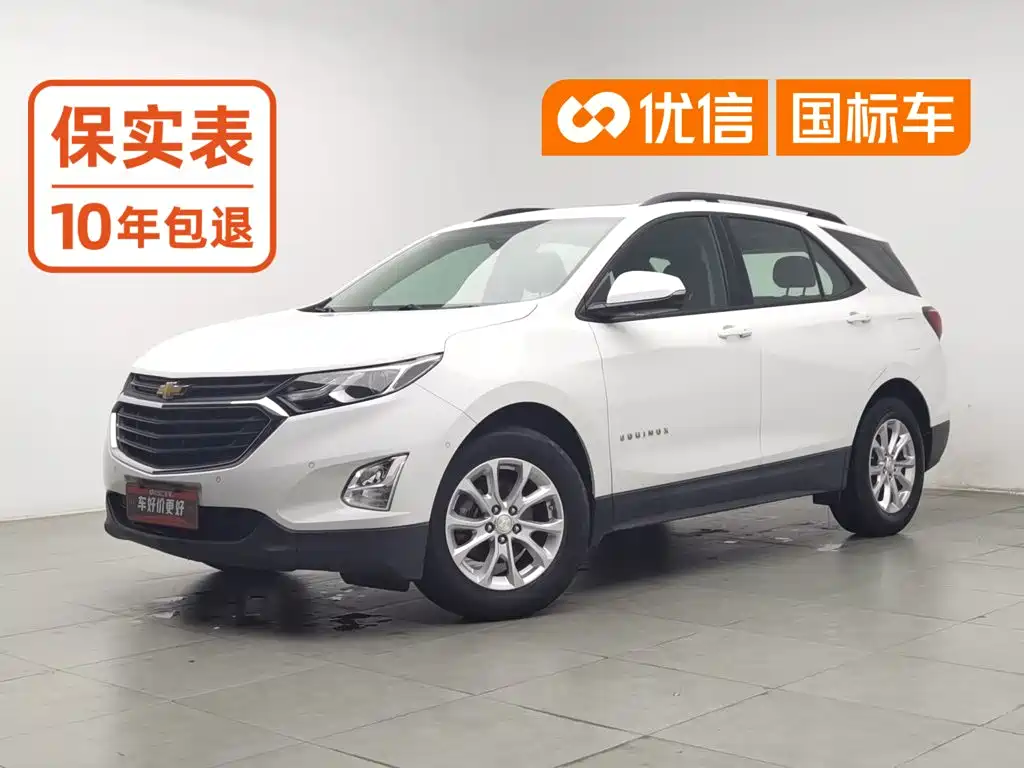
At a glance
- Equinox export specifications include 535T turbo gasoline, 550T mild hybrid, selected four-wheel-drive and RS versions, and 102km range-labelled electrified editions.
- A Chevrolet Equinox for export should be selected by destination, powertrain and homologation—not by badge alone.
- Automatic options and selected four-wheel-drive derivatives broaden the model's suitability for mainstream fleet programmes.
- New vehicles simplify fleet standardization, while used vehicles require deeper history, condition and VIN checks.
- Wholesale comparisons should normalize vehicle specification, freight, duties and Incoterm before choosing a supplier.
- Current per-unit price, MOQ and availability are shown in the live listings and should be reconfirmed for every purchase.
Why the Chevrolet Equinox matters for export markets
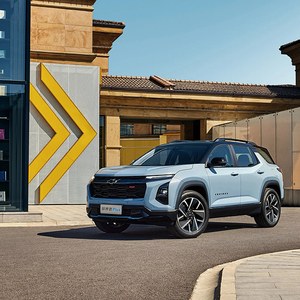
The Chevrolet Equinox offers overseas buyers a compact-SUV option with a familiar global marque and a broad China-market product family. The export-relevant range includes turbocharged gasoline versions, a 550T mild-hybrid line, selected four-wheel-drive and RS derivatives, and range-labeled electrified editions. That variety lets a distributor match a vehicle to a mainstream fleet, taxi, rental, or dealer programme, provided the buyer treats specification—not merely the Equinox badge—as the basis of comparison. This is especially relevant when a buyer wants automatic transmission, SUV packaging and powertrain or drivetrain flexibility without entering a luxury-priced segment.
Global demand for the Equinox is strongest where compact SUVs fit local tax, fuel and road conditions and where Chevrolet enjoys dealer or fleet recognition to support ownership. Demand is not uniform: a buyer in a mature Chevrolet market may prioritize factory warranty and parts, while an importer in a price-sensitive market may value the configuration available from China. Crucially, a China-spec Equinox can differ from an Equinox sold in North America or other regions in dimensions, steering, powertrain, equipment and emissions, so it should not be compared using another market's brochure.
For importers, the model is most credible as a configurable compact-SUV programme rather than one export commodity. The 535T, 550T and electrified labels let buyers separate powertrain requirements, while RS, defence and four-wheel-drive designations can help define higher-spec allocations. Those names are not substitutes for a build sheet, and features shown in Chinese promotional material may not be standard in the destination country. The first step is to shortlist exact live units, verify their equipment and confirm that the local programme can support the brand over the vehicle's planned service life.
- Best fit: mainstream compact-SUV dealer and fleet programmes seeking a Chevrolet-badged vehicle with several powertrain paths.
- Key distinction: a China-spec Equinox should be checked separately from Equinox derivatives sold in North America, Europe and other regions.
- Main caveat: local Chevrolet service coverage, parts availability and residual demand can outweigh imported configuration value.
Model range, trims and powertrain variants: how the lineup is structured and how to choose
A buyer comparing Chevrolet Equinox specs should organize the lineup by powertrain label, then by trim and drivetrain. The 535T family is associated with the range's 1.5T turbocharged gasoline offerings, while 550T versions are explicitly presented as mild hybrids. Separate listings also use 102km RS Ultimate and RS Flagship designations within Equinox Plus. That figure belongs to the trim name and should not be treated as a universal real-world range; the applicable test cycle, battery capacity, motor output and charging method must be confirmed for the exact unit before comparison. Do not extrapolate it to another generation.
For a fleet that prioritizes mechanical simplicity, an automatic 535T can be easier to evaluate than an electrified derivative, provided the buyer accepts its fuel and performance profile. A 550T mild hybrid adds electrical assistance and may improve operating logic in stop-start traffic, but the hybrid battery condition, service requirements and real-world fuel use are not established by the badge alone. Compare the exact technical sheets rather than assuming that the higher-numbered designation is automatically more efficient. This discipline also prevents a battery-equipped vehicle from being judged solely on its advertised range figure.
Drivetrain and equipment should form the next decision layer. Four-wheel-drive appears on selected 550T, RS and other named editions, while other trims follow different layouts; the live listing must confirm each configuration. For an RS-badged vehicle, check axle layout, tires, suspension, brakes, cooling and driver-assistance functions rather than assuming a motorsport derivative. Likewise, do not assume an Equinox Plus shares every body dimension with the standard model, because wheelbase, track, roof rails and loading details can alter suitability for garage access and cargo operations in the destination market. Request the equipment list in writing.
- 535T: conventional turbocharged gasoline option for buyers prioritizing a simpler powertrain.
- 550T: mild-hybrid option requiring verification of battery condition, output and real-world fuel use.
- 102km RS-labelled Equinox Plus editions: verify the test cycle, battery, charging method and export approval before comparing range.
- RS and four-wheel-drive versions: compare mechanical and driver-assistance equipment rather than relying on the badge.
New vs used Chevrolet Equinox: how export inventory is structured and how buyers choose
Dealers buying a Chevrolet Equinox from China should classify each vehicle as factory-new, demonstrator or used, because each category changes risk and value. New vehicles offer more predictable condition, mileage and warranty terms, which can simplify fleet standardization. Used vehicles can reduce depreciation, but the discount is meaningful only if the buyer validates condition, service history, title status and repair quality. Sellers may describe vehicles differently, so the condition field, photographs, invoices and VIN documents should be reconciled rather than accepted on wording alone or on a promotional inventory label. The classification should also reflect export eligibility.
For a used Equinox, inspection should extend beyond appearance and odometer reading. Ask for the VIN, registration or import documents, maintenance records, accident disclosure, and photographs of the underside, engine bay, wheels and cabin wear. For a hybrid or electrified derivative, request battery health or state-of-charge information and a scan report. Check that keys, tools, manuals and service invoices match the seller, and confirm whether the odometer, production date and modifications are consistent across records. Any repainting, converted use, accident repair or aftermarket electrical work should be priced into the risk assessment.
New status does not eliminate specification risk. Confirm that the vehicle is the year and trim, verify paint, wheels, interior, optional equipment and odometer, and obtain a build sheet that matches the VIN. Check the start date of any factory warranty and whether it begins at export, registration or first delivery. Dealers should reconcile each SKU with a physical vehicle, particularly when a catalogue contains several units under the same reference, and retain unit-specific photographs before payment. This also prevents paying for features shown in generic imagery rather than on the allocated vehicle.
- New: easier fleet standardization, clearer condition and potentially cleaner warranty; verify the build and warranty start date.
- Used: a potential depreciation advantage, offset by history, condition and repair risk.
- For every unit: reconcile the VIN, invoices, photographs, options, odometer and supporting documents.
How export pricing works: the factors behind a live listing price, and how to read one
An export price is a negotiated commercial outcome, not a fixed model-level figure. Model year, exact trim, 535T or 550T powertrain, electrified hardware, four-wheel-drive equipment, condition, mileage and cosmetic status all affect the vehicle's value. A unit can be quoted on different bases depending on inland transport, export handling, freight, insurance, port charges, taxes, duties and the chosen Incoterm. Exchange-rate movement and the seller's release schedule can change a live quote, so two listings are not comparable until their inclusions are aligned for the intended destination. Tax treatment depends on importer and route.
To read a ChinaCarDirect listing, open the live Equinox inventory and capture the unit identifier, model year, full trim name, declared condition, drivetrain, listed equipment, current price, stated MOQ and commercial terms. Check whether photographs show the specific vehicle and whether the description includes documents, warranty or export preparation. Do not infer a landed cost, a universal discount or future availability from the asking price. Exact current per-unit price, MOQ and availability are shown in the live inventory and should be reconfirmed before contractual commitment. Compare like-for-like units within the same market.
Compare offers on a worksheet that separates the vehicle price from inland transport, export documentation, freight, insurance, destination terminal charges, customs, tax and installation. Request the currency, quotation validity, payment milestones and Incoterm in writing, and identify whether exchange-rate risk sits with the buyer or seller. For fleet purchases, compare equivalent trim and equipment rather than using the lowest headline figure. A written request for the shortlisted unit and alternatives can reveal the commercial position faster than relying on a stale catalogue impression. Keep the quote attached to its SKU.
- Vehicle-value factors: year, trim, powertrain, drivetrain, condition, mileage and cosmetic status.
- Transaction factors: currency, freight, insurance, port charges, tax, duties, Incoterm and quote validity.
- Binding information: the current price, MOQ and availability appear on the live unit listing.
MOQ, ordering and payment: single units vs consolidating a container
Minimum order quantity is a seller term rather than a feature of the model. A supplier may accept a single vehicle, while another may require a batch or impose one-unit purchasing for selected trims. Buyers should therefore read the MOQ on each live listing and confirm it in the quotation; do not assume that a model's presence in the catalogue proves one-unit availability. Single-unit buying is useful for a pilot, a replacement vehicle or a dealer test, but it gives the seller scheduling leverage and may leave the buyer exposed to unit-specific allocation risk.
Consolidating units into one container can reduce freight and handling cost per vehicle, especially for a dealer wholesale order with consistent requirements. The trade-off is reduced flexibility: mixed years, trims, colours or drivetrains complicate allocation, insurance and customer delivery. Before loading, agree the serial number or SKU assigned to each buyer, photograph each vehicle and pack, define the inspection standard, and state how damaged or nonconforming units will be handled. Keep a documented allocation sheet so the consolidated shipment does not create disputes over which vehicle was purchased. Allocation records also aid insurance claims.
Payment terms should allocate risk between deposit and final settlement. A workable structure identifies the vehicle, states when the balance becomes due, links that event to document or inspection milestones, and specifies how exchange-rate and bank charges are handled. Before paying, verify the seller's legal identity and authority to sell, invoice ownership, VIN consistency, export-eligibility documents and the intended release process. Use only payment protections offered and confirmed for the transaction. ChinaCarDirect's RFQ channel can be used to request these terms in writing for named units or a proposed consolidation plan. No payment method should be assumed safe without verification.
- Read MOQ per seller and listing; it is not a permanent model attribute.
- Pilot orders can test demand, while consolidation may improve freight economics but complicate allocation.
- Tie final payment to verified documents, inspection milestones and the agreed release process.
Shipping, homologation and market compliance caveats: LHD/RHD and import rules by country
Shipping cost and lead time depend on origin and destination ports, transport mode, container availability, cargo volume, route complexity, carrier charges and the Incoterm. For an SUV programme, a complete-car carrier may be considered, but the best method depends on the lane and shipment size. Freight quotes can expire as carrier charges change. Ask for the charge basis, origin or destination services, insurance level, free-time rules, and a written estimated sailing schedule; then confirm the booking with the freight forwarder for each consignment. Avoid transit estimates that omit customs uncertainty.
Steering configuration is an early filter. China-origin vehicles are commonly supplied left-hand drive, while some target markets require right-hand drive. A conversion may alter cost, warranty and safety compliance, and it does not automatically create a homologated RHD vehicle. For an RHD order, seek an RHD example and verify the steering, instrument cluster, lighting, parking systems, driver aids and VIN approval. Check local rules on wheel position, towing equipment and layouts designed for a different market before committing funds to a unit or freight. Local conversion expertise is essential if no factory RHD source exists.
Country-level compliance must be checked before payment and shipment. China V or China VI designations in a trim name describe the Chinese emissions version; they do not prove approval under the destination's emissions, safety or type-approval regime. Destination requirements may cover vehicle age, VIN and document integrity, customs valuation, duty, tax, warranty arrangements and local parts support. A local broker should review the VIN and documents, while the buyer confirms road registration requirements with the relevant authority. Secure written clearance before a non-refundable commitment or arranging international transport prematurely. Keep copies of every clearance response.
- Confirm LHD or RHD requirements before deposit; a physical conversion is not the same as homologation.
- China V and China VI labels do not establish approval under a destination-market emissions or safety regime.
- Use a capable local broker or regulator and clear the VIN and documents before a non-refundable commitment.
Who should buy the Equinox — and who should pick a different vehicle
The Equinox is a strong candidate for a distributor or fleet buyer who wants a recognizable Chevrolet compact SUV, automatic transmission and access to several powertrain and drivetrain choices. It can suit dealer stock, airport or company fleets, rental programmes and mixed road environments where four-wheel-drive trims are relevant. The 535T is straightforward to evaluate as a combustion-powered option, while 550T mild-hybrid and 102km range-labelled versions serve buyers seeking more electrified hardware. The strongest case is a market with a Chevrolet service plan and LHD demand for fleets. Fit the choice to local fuel and tax rules.
Choose a different vehicle when the destination's factory network, warranty coverage or parts system is stronger for another brand, or when the Equinox lacks a required RHD, plug-in hybrid, towing, emissions or safety configuration. A Chinese-market vehicle may also be less attractive to local buyers than an equivalent sold through the destination's official channel, even if its imported specification appears richer. Do not buy on equipment count alone: verify whether the standard is homologated, supported by local diagnostic tools and backed by parts that can be obtained within a sensible maintenance cycle.
The safest route for an overseas buyer is a controlled pilot: select one or a few representative units, complete import and service checks, measure real operating costs, and only then standardize a larger order. Compare acquisition cost with fuel, insurance, maintenance, downtime, registration and expected resale, rather than using the vehicle price alone. For fleet procurement, write a build specification covering powertrain, drivetrain, gearbox, key options, paint, homologation, warranty handling and document set. Review live Equinox listings for the candidate pool, then send the shortlist through the RFQ channel for binding commercial terms.
- Strong fit: LHD markets and fleets or dealers wanting a Chevrolet badge with several configuration paths.
- Weak fit: markets with thin Chevrolet support or mandatory RHD, plug-in hybrid, towing or safety specifications.
- Best method: pilot representative units, measure total operating cost and service access, then standardize the order.
Main rivals and how the Equinox compares
The closest alternatives for buyers are the Hyundai Tucson, Kia Sportage and Toyota RAV4, although the right rival changes with market and equipment. Tucson and Sportage compete directly in the mainstream compact-SUV class, with trim hierarchies, drivetrains and hybrid choices that vary by country. RAV4 is an alternative for buyers who prioritize Toyota's brand presence and local ownership familiarity. The Equinox should be compared with these models on homologated specification, landed cost, warranty and service access, not on brochure equipment or the lowest import quote shown. Country availability can change this comparison entirely.
Against the Hyundai Tucson and Kia Sportage, the Equinox's strongest argument is access to China-market powertrain, RS and four-wheel-drive configurations, together with attractive import economics. Its weakness may be weaker Chevrolet recognition or a thinner local parts network than the Korean brands have in some markets. Do not assume Tucson or Sportage is mechanically closer in every country; compare the exact local derivative. A buyer should also test whether the imported Equinox can be serviced without moving the vehicle to another country for routine repairs over time. Include spare-part pricing in that assessment.
Against the Toyota RAV4, the decision comes down to local aftersales depth, residual-value expectations and access to the required powertrain. RAV4 may be the safer ownership choice where Toyota distribution is extensive and the buyer wants a global model. The Equinox may make more sense where a China-source unit offers a desirable 4WD or hybrid specification at a competitive landed cost, or where a distributor can establish parts and warranty support. Whichever wins, compare insurance, fuel, maintenance, registration, homologation and resale assumptions over the planned holding period. Lower acquisition cost can be offset by operating friction.
- Hyundai Tucson and Kia Sportage: direct compact-SUV alternatives; compare the exact local derivative and dealer support.
- Toyota RAV4: a familiar ownership benchmark; compare local residual values, aftersales and powertrain access.
- The Equinox is strongest when a China-source configuration creates landed-cost value and the distributor can support it properly.
Live Chevrolet Equinox export inventory
View all listings →Real units currently on ChinaCarDirect with per-unit asking prices and MOQ. Availability updates live from the catalogue.
How to buy a Chevrolet Equinox from China
-
1
Define the destination-market brief
Specify LHD or RHD requirements, fuel or electrified powertrain, drivetrain, budget methodology, fleet use and the features needed for registration and operation.
-
2
Review the live Equinox inventory
Compare exact model years, trim names, drivetrains, condition and equipment. Use the live listing for the current per-unit price, stated MOQ and availability.
-
3
Request a unit-specific dossier
Ask for the VIN, build sheet, unit photographs, options list, odometer reading, ownership documents, export status and applicable warranty information.
-
4
Verify powertrain and condition
Confirm output, battery details, test cycle and charging for the selected variant. For a used vehicle, commission a document, history and mechanical inspection, including battery assessment where applicable.
-
5
Clear compliance before payment
Have a local broker or the relevant authority review the VIN, emissions version, safety requirements, import age rules, taxes, duties and registration conditions.
-
6
Agree the order and payment terms
Request a written quote identifying the vehicle or allocation, MOQ, Incoterm, currency, payment milestones, ownership documents and export-document responsibilities.
-
7
Arrange inspection and shipping
Define the pre-shipment inspection standard, photograph the allocated vehicle, select the transport method and confirm freight, insurance, port charges, tracking and release procedures.
Equinox vs rivals
| Hyundai Tucson | A direct compact-SUV competitor whose local trims may offer different hybrid and drivetrain choices. Choose it when Hyundai's dealer network, warranty and parts support are stronger, and compare the exact local derivative rather than assuming equivalence. |
|---|---|
| Kia Sportage | Another direct mainstream rival with an equipment-oriented range. It may be the safer choice where Kia has stronger local recognition or service coverage; the Equinox becomes more compelling when a specific China-market four-wheel-drive or mild-hybrid configuration creates better fleet fit. |
| Toyota RAV4 | A mainstream ownership benchmark with strong Toyota brand familiarity in many markets. The RAV4 may offer more predictable local support, while the imported Equinox can win on the availability of a particular China-source configuration and landed economics. |
Frequently asked questions
How is the Chevrolet Equinox export price determined?
Export pricing is determined per unit by model year, trim, powertrain, drivetrain, condition, mileage, exchange rates, freight, insurance, port charges, taxes, duties and Incoterm. Open the live Chevrolet Equinox inventory on ChinaCarDirect for the current per-unit price and request an RFQ to confirm what the quote includes; the current MOQ and availability are also shown on the unit listing.
What powertrain and range options are available?
The export-oriented family includes 535T turbocharged gasoline, 550T mild-hybrid versions and 102km range-labelled Equinox Plus editions. The 102km designation is not a universal real-world range: confirm the test cycle, battery, motor, charging method and destination-market approval from the exact live listing.
Is a new or used Chevrolet Equinox better for export?
New vehicles are usually easier to standardize and may offer cleaner warranty terms, but buyers should verify the build, VIN, odometer and warranty start date. A used Chevrolet Equinox can offer depreciation savings, yet only after document, service-history, accident and condition checks, including battery assessment where applicable.
How does MOQ work when ordering from China?
MOQ is set by the seller and shown for each live unit, not by the model name alone. Some offers may accept a single vehicle while others require a batch; read the live listing and obtain written confirmation before paying. For container consolidation, request allocation by VIN or SKU.
What determines shipping time and cost?
Shipping time and cost depend on origin and destination ports, transport mode, carrier space, route, cargo volume, insurance, free time and Incoterm. Freight quotations have a validity period, so request a written sailing estimate and charge breakdown, then confirm the booking with the forwarder.
Are spare parts available for the China-spec Equinox?
Confirm that the chosen trim and VIN have service parts available in the destination market before purchase. Ask for the local Chevrolet parts catalogue, electronic service information, warranty process and an estimate for commonly replaced items; China-market trim names may not align with an overseas catalogue.
Is a right-hand-drive Chevrolet Equinox available?
Most China-origin vehicles are supplied left-hand drive, so RHD availability is limited and market-specific. Do not assume a conversion creates a compliant RHD vehicle; seek a factory RHD example when required and confirm steering, lighting, VIN approval and local registration before payment.
How do I order a Chevrolet Equinox from China?
Start with the live Equinox inventory, shortlist units by exact trim and condition, and request unit-specific documents and a written quote. After compliance and payment terms are agreed, arrange pre-shipment inspection, export documents and freight under a clearly stated Incoterm. ChinaCarDirect's RFQ channel is the appropriate route for a unit-specific quotation.
Ready to source the Chevrolet Equinox?
Send your preferred Equinox specifications and destination through the ChinaCarDirect RFQ channel for unit-specific pricing, MOQ, documentation and freight options.
Request a quote