
Chevrolet Malibu XL Export Guide for Dealers and Fleets
Buy Chevrolet Malibu XL from China with clear guidance on trims, turbo powertrains, export pricing, MOQ, shipping, compliance and market fit for dealers.
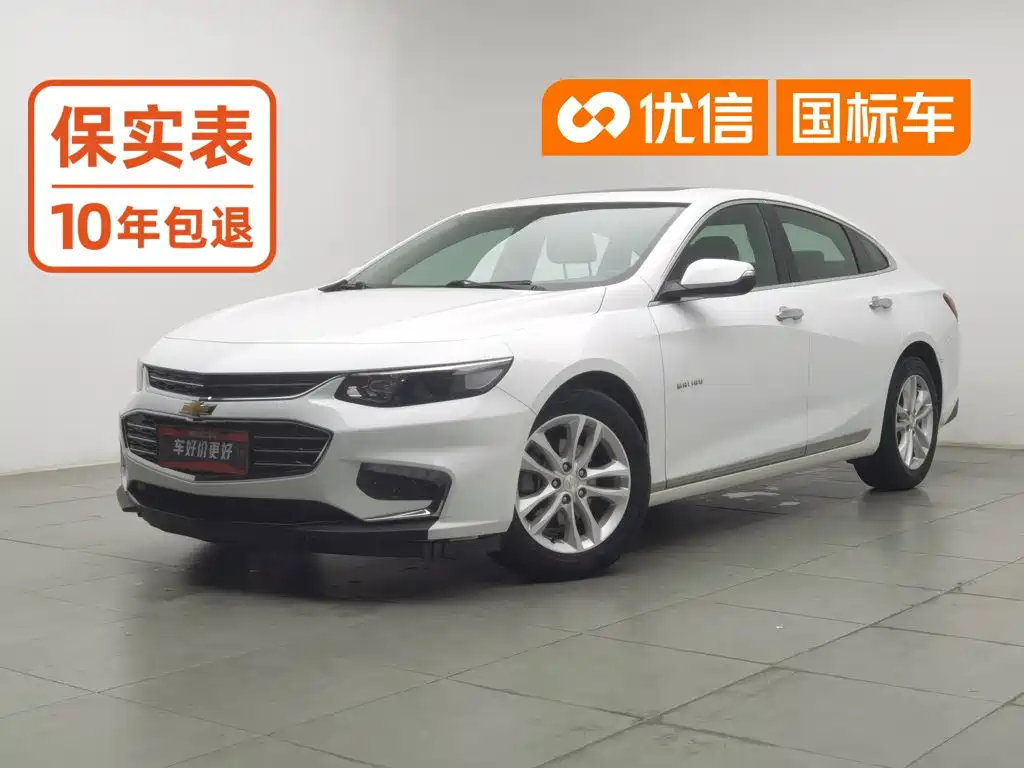
At a glance
- The Chevrolet Malibu XL is a China-specific, long-wheelbase midsize sedan designed for family, fleet and company-car use.
- Its China-market range spans 1.5T and 530T/535T/550T turbo labels with automatic, CVT or dual-clutch applications.
- It is best suited to buyers wanting a conventional saloon with more space than a compact car.
- Export price depends on the exact year, edition, powertrain, condition, freight and Incoterm, not the model name alone.
- Current unit pricing, availability and MOQ should be confirmed in live listings and a written RFQ quote.
- Wholesale buyers should consolidate compatible units and compare landed costs rather than isolated listing prices.
Why the Chevrolet Malibu Xl matters for export markets
The Chevrolet Malibu XL occupies a practical middle ground in the Chinese vehicle market: it is a larger midsize family sedan with a more spacious cabin and luggage area than a compact model, but a less exclusive, lower-requirement proposition than a premium executive car. For overseas dealers, that positioning matters because it targets buyers who need a comfortable road car for family use, hotel transport or company fleets rather than an off-road vehicle or a luxury saloon. The XL name also signals a China-focused, long-wheelbase interpretation of Chevrolet's familiar Malibu badge.
Demand potential comes from several use cases. Ride-hailing and airport-transfer operators value a conventional three-box sedan that is easier to clean and park than a large MPV, while family buyers prefer the rear-seat and trunk room of a midsize car. It can fill the gap between compact and premium sedans for distributors. Its appeal is strongest where fuel economy, purchase cost and running simplicity matter together, and where Chevrolet is already familiar in the local vehicle market. It can broaden a dealership's portfolio without entering premium or off-road market segments.
The export proposition should not be confused with a uniform specification. Chinese-market Malibu XL vehicles can carry different engine labels, transmissions, equipment grades and cosmetic packages from North American or Latin American Malibu models, and the right-hand-drive question cannot be answered from the model name alone. Dealers should assess the vehicle as a locally homologated product: compare its size, powertrain, parts availability and tax treatment with local sedans winning fleet contracts. Where Chevrolet service coverage is limited, parts planning and residual-value support may matter as much as the initial specification.
- China-focused long-wheelbase midsize sedan.
- Strong fleet and family relevance.
- Parts support remains market-dependent.
Model range, trims and powertrain variants: how the lineup is structured and how to choose
The Malibu XL range uses a China-specific ladder that can seem complex to buyers outside China. The catalogue includes 1.5T versions alongside 530T, 535T and 550T designations, then differentiates them with edition names such as Sport, Dynamic, Rui, Sharp and Connect, sometimes with Redline or model branding. These labels are useful for identifying a unit, but they are not a universal trim hierarchy. Ask the seller for the engine family, transmission type, equipment list and production documentation rather than assuming every similarly named edition is mechanically identical across model years.
For fleet-led buying, the 1.5T branch is the starting point because it targets efficiency and familiar compact-sedan running costs while still providing a turbocharged engine and the Malibu XL's larger body. The listings show this branch with automatic and dual-clutch applications. A buyer should judge them by the torque curve, gearbox behavior, maintenance record and local fuel availability rather than by the displacement badge alone. A dual-clutch may suit drivers valuing direct engagement, whereas an automatic is often simpler for mixed traffic and a broad driver base, easing fleet operation.
The 530T, 535T and 550T branches represent the higher-output turbo families in this export-facing lineup, with automatic or CVT applications appearing by edition and year. Their separation may reflect engine calibration, transmission choice and equipment rather than a simple equipment tier. Compare rated output, gearing, cooling requirements, service intervals and parts interchangeability on the exact unit, because the number in the trim label alone does not tell the whole story. CVT-equipped cars may appeal to buyers prioritizing smooth, efficient cruising; conventional automatics may be easier for service networks accustomed to them.
- 1.5T through 550T turbo branches.
- Pair exact engine with gearbox.
- Compare calibration, equipment and servicing.
New vs used Chevrolet Malibu Xl: how export inventory is structured and how buyers choose
Chevrolet Malibu XL export inventory is easiest to navigate as a set of individual, model-year-specific vehicles rather than one export grade. Each live record should be read for its year, Chinese edition, powertrain, gearbox, equipment, condition and seller location. Because the condition and ownership history are unit-specific, do not assume that advertised model is interchangeable or that a lower-priced record represents the same product. For a used Chevrolet Malibu XL request, search by condition or ask the RFQ team to source one if no unit appears in the live results.
A new unit is generally cleaner for fleet and dealer programs because its delivery history, wear and service record are simpler to establish, and its warranty position is easier to discuss. The trade-off is that buyers pay for the newest model-year technology and factory condition rather than the depreciation advantage of an earlier vehicle. Used imports can offer a lower acquisition basis and mature parts, but demand stricter pre-purchase inspection, title verification, maintenance evidence and checks on prior registration or restrictions in the origin market before a deposit is paid.
The used-versus-new decision should be made with a wholesale total-cost model, not the advertised price alone. Include expected repairs, tyre and fluid replacement, insurance classification, local registration rules and the cost of downtime. For a new export unit, confirm that road tax, emissions warranty and parts entitlement can be recognized in the destination country. For a used unit, request inspection photographs, an odometer statement, service invoices, ownership documents and a VIN check before deposit. The best choice depends on fleet uptime, residual assumptions and local repair capability, not age alone.
- Check each unit's condition field.
- Used vehicles need title and inspection evidence.
- Compare uptime and residual value.
How export pricing works: the factors behind a live listing price, and how to read one
A live Malibu XL listing price should be treated as the starting point for one vehicle, not as a universal export price or a guaranteed landed cost. The amount can move with model year, edition, engine and transmission, mileage and condition, confirmed equipment, seller location, currency exchange, freight, insurance, destination charges and the selected Incoterm. The same trim photographed in a different year may not have identical hardware. Buyers should therefore read the complete listing and request a written quotation tied to the unit or SKU they intend to buy.
To compare live records, build the comparison in the same order: identify year and edition; confirm engine, gearbox and options; inspect condition and documentation; then add the same freight, insurance, duty and tax assumptions. Ask whether the displayed amount is FOB, CIF, another basis, or simply the vehicle price before transport. Check the quote's validity because exchange rates and shipping costs can change. For a fixed procurement budget, ask for separate vehicle-only and delivered estimates so a lower purchase price is not mistaken for a lower overall landed procurement total.
The practical way to obtain a binding figure is to use the live Chevrolet Malibu XL inventory, then submit an RFQ with destination, quantity, model years, edition, transmission, condition and delivery terms. Ask the supplier to repeat those inputs in the quotation and state what payment includes or excludes. For wholesale programs, compare options to consolidate compatible units rather than judge an isolated listing. Exact price, current availability and minimum order are confirmed per unit or batch in the live listings and corresponding written quote, not inferred from this guide.
- Compare equivalent year and trim.
- Separate vehicle and landed costs.
- Use written, time-bound quotations.
MOQ, ordering and payment: single units vs consolidating a container
Minimum order quantity is a negotiable commercial term, not a fixed model characteristic. A seller may accept a single vehicle for a test order, while a container program may apply a larger MOQ, especially when units must share a production specification or dispatch route. Buyers should request the MOQ in writing for the exact SKU and delivery plan, and confirm whether it applies per model, seller, shipment or consolidated order. Do not assume a one-unit inquiry will be accepted merely because a single-unit listing is visible. The confirmed quotation remains binding.
Container consolidation offers a practical route for dealers needing mixed or higher-volume Chevrolet inventory. Subject to the seller's terms, several units may be grouped under one RFQ and freight booking, which can reduce per-vehicle transport cost and simplify customs planning. The buyer still needs to confirm whether all units can be mixed under one declaration, whether every vehicle must share a year or trim, and how payment is allocated if one line is unavailable. Separate LCL and FCL options should be compared on total handling charges and delivery reliability, not ocean freight alone.
A sound purchasing sequence is to approve the specification, request a pro forma invoice, verify the MOQ and payment milestones, place an agreed deposit, inspect or verify the vehicle against that invoice, and then release the balance under agreed documentary terms. The invoice and listing should identify the year, edition, engine, gearbox, VIN or production identity, condition, options, ex-works or named-port basis and planned sailing. Cancellation, refund, demurrage and damage-claim rules should be settled before funds are committed. ChinaCarDirect's RFQ page is the appropriate route to request those unit-specific terms in writing.
- Confirm MOQ for the SKU.
- Clarify mixed-unit consolidation rules.
- Define deposits, balance and cancellation.
Shipping, homologation and market compliance caveats: LHD/RHD and import rules by country
Handedness and homologation begin before the vehicle is loaded. Vehicles sourced from the Chinese domestic market are normally left-hand drive, so an overseas buyer must not assume a right-hand-drive Malibu XL is available. A right-hand-drive requirement may mean finding a specialist source, a conversion with its own compliance and warranty issues, or choosing another model already sold in the destination market. Confirm steering position, lighting, emissions equipment and VIN documentation before contracting. Import permission in the destination country takes priority over what a seller describes as export-ready for that market.
Import rules differ by country and can change, so check the destination authority's current requirements rather than rely on a generic export description. Relevant checks may include customs classification and age limits, VIN and emissions rules, safety standards, import taxes and duties, quotas, insurance, registration and inspection. A Chinese-market model may not have the same homologation as a Malibu sold in Europe, North America or another region. Local Chevrolet parts and workshop capability should also be checked, especially for an RHD conversion or an unfamiliar engine and transmission combination in that market.
Shipping choice should follow the inspection and documentation plan. A complete vehicle can move by roll-on/roll-off vessel or container, while LCL may suit a smaller consignment but can expose the vehicle to more handling and consolidate different cargo. Confirm the loading method, securement, route, port pair, terminal charges, marine insurance, delivery time and the party responsible for damage claims. Obtain verified unit dimensions and weight rather than estimating container fit. Pre-shipment inspection, export documents and spare-parts planning should be completed before the vehicle leaves its origin and before final payment is released.
- Confirm steering position early.
- Check destination homologation and import rules.
- Verify insurance and damage procedures.
Who should buy the Malibu Xl — and who should pick a different vehicle
The Malibu XL is a candidate for overseas dealers building a midsize-sedan category, fleet suppliers needing a conventional saloon, and buyers who want more cabin and boot space than a compact car without moving to a premium brand. Its China-specific turbo range and Chevrolet identity can provide an accessible alternative in markets where the model is not a long-established derivative. The case is strongest when the buyer can support the powertrain with parts, fuel and servicing, and when the vehicle's size remains appropriate for local roads, parking and tax bands.
It is a weaker fit for buyers needing an SUV's ground clearance, a commercial van's load capacity, a premium executive car's refinement, or a performance model's handling. It also suits buyers less well where right-hand drive is mandatory, emissions rules exclude the Chinese specification, or Chevrolet lacks workshop support for a mixed fleet. Those constraints cannot be solved by a discount. If parts lead times or downtime are costly, a locally established rival with simpler servicing may offer lower ownership costs despite a higher purchase position over the ownership cycle.
Before ordering, map the Malibu XL against the duty cycle: daily distance, passenger load, luggage, fuel access, driver profile, tax treatment and expected resale. For fleets, compare operating cost per kilometre or mile, including fuel, maintenance, tyres, insurance, downtime and financing. For dealers, compare sell-through speed with carrying costs and matched-parts availability. A model that fits those calculations is a better export purchase than one selected only by engine output or an elaborate edition name. This discipline creates a clearer seller brief and reduces the risk of ordering the wrong version.
- Best for conventional midsize sedan demand.
- Poor fit for premium, SUV or van needs.
- Use full-life operating-cost calculations.
Main rivals and how the Malibu Xl compares
The Buick Regal is a close internal-brand benchmark for the Malibu XL because both are Chinese-market midsize sedans competing for family, fleet and company-car buyers. A Regal may suit buyers wanting a more formal Buick presentation or strong local model familiarity; the Malibu XL can suit those who prefer the Chevrolet badge, turbo-focused trims and a sportier domestic range. Neither should win automatically: compare exact engines and gearboxes, rear-seat and boot usability, fuel, tax bands, parts and dealer support locally rather than relying on badge perception or resale assumptions alone.
The Honda Accord is the global-segment comparison because it occupies the same midsize-sedan space and is familiar to many fleet buyers. The Accord may be easier to support where Honda has local service coverage or where buyers already value its reputation. The Malibu XL can offer a different specification and sourcing proposition, particularly with its China-specific turbo and equipment packages. The decision should be based on homologated dimensions, drivetrain, gearbox, fuel consumption, warranty, service intervals, parts lead times and total delivered cost; global reputation cannot replace a country-by-country availability check.
The Nissan Teana is another credible regional competitor, particularly for fleets prioritizing a conventional midsize saloon and familiar Japanese-brand ownership. Its appeal against the Malibu XL will depend on locally offered powertrains and equipment and how dealers support each model. Across all three rivals, the useful comparison is not the brochure or cheapest source price. It is the landed, full-life proposition for the destination: tax, insurance, uptime, parts, resale and ease of homologation. If the Malibu XL wins those checks, its China-specific range can be an export strength rather than a limitation.
- Regal provides a related Buick alternative.
- Accord competes on global segment familiarity.
- Teana is a credible regional fleet rival.
Live Chevrolet Malibu Xl export inventory
View all listings →Real units currently on ChinaCarDirect with per-unit asking prices and MOQ. Availability updates live from the catalogue.
How to buy a Chevrolet Malibu Xl from China
-
1
Define the destination and duty cycle
Specify the destination country, steering requirement, fleet or private use, passenger load, roads and applicable tax category before selecting a vehicle.
-
2
Filter the live Malibu XL inventory
Compare model year, Chinese edition, engine, gearbox, options and condition. Treat each record as a separate vehicle rather than assuming every similarly named edition is identical.
-
3
Request an item-specific quotation
Submit an RFQ with the destination, quantity, preferred years, required powertrain and delivery terms. Ask for the current unit price, MOQ, payment schedule, Incoterm and quotation validity.
-
4
Verify identity, equipment and condition
Confirm the VIN or production identity, engine, gearbox, equipment and documented condition. For a used unit, also review title documents, odometer evidence, service records and inspection findings.
-
5
Agree MOQ and payment milestones
Confirm whether a single vehicle is acceptable or whether compatible units will be consolidated. Record deposit and balance conditions, inspection requirements, cancellation terms, refunds and demurrage responsibility.
-
6
Complete inspection and export documents
Arrange pre-shipment inspection and reconcile the vehicle against the invoice and listing. Prepare the agreed commercial, identity, condition and export documents, and plan essential consumables and spare parts.
-
7
Book freight and destination compliance
Compare RoRo, container and LCL options with the selected Incoterm and insurance coverage. Confirm destination customs, emissions, safety, inspection, registration and import requirements before the vehicle departs.
Malibu Xl vs rivals
| Buick Regal | The Regal is a close Chinese-market midsize benchmark and may suit buyers seeking a more formal Buick identity; the Malibu XL offers Chevrolet branding and its own turbo and trim range. Compare local homologation, taxation, parts availability and aftersales support. |
|---|---|
| Honda Accord | The Accord competes directly in the global midsize segment and may have stronger local recognition or service reach in some destinations. The Malibu XL's proposition comes from China-specific turbo choices and sourcing, but only if delivered cost, compliance and support work. |
| Nissan Teana | The Teana is a credible regional fleet rival for conventional midsize saloon use. The Malibu XL offers its own China-specific turbo and edition mix, while the Teana may be easier to support where Nissan has established channels; compare what each market actually offers. |
Frequently asked questions
How is Chevrolet Malibu XL export pricing determined?
Export pricing starts with the selected vehicle and then reflects model year, Chinese edition, engine, transmission, options, condition, seller and market conditions. Freight, insurance, duty, tax and the chosen Incoterm can change the landed result. Check the live listing for the current unit price, then request a written RFQ for binding terms.
Which engines and transmissions are available?
The China-market range includes 1.5T and 530T, 535T and 550T turbo designations. Automatic, CVT and dual-clutch applications appear depending on the year and edition, so the trim title alone is insufficient. Verify the exact engine, gearbox, output and equipment on the live unit and its documents.
Should overseas buyers choose a new or used Chevrolet Malibu XL?
New units generally offer a simpler ownership history and easier warranty discussion, while used units may offer a lower acquisition basis and mature parts. Used imports require stronger title, mileage, service and origin-market checks. Read the condition on each listing and use an RFQ if seeking a used unit not shown live.
How does the MOQ work?
MOQ is a seller and batch term, not a fixed feature of the model. Ask whether one unit can be purchased, whether mixed units can be consolidated and whether the minimum applies per SKU, seller or shipment. Check the applicable live listing and written quotation for the current MOQ.
What determines shipping time and cost?
Shipping time and cost depend on origin and destination ports, vessel and container availability, route, port handling, vehicle dimensions, securement, insurance, fuel surcharges and the chosen Incoterm. LCL and FCL should be compared on total handling and delivery reliability, not freight alone. Ask for a delivery estimate tied to the final quotation.
Are spare parts easy to source?
Parts availability depends on the destination and the exact engine, gearbox and Chinese edition, so buyers should not assume every global Chevrolet part fits. Obtain parts references using the vehicle identity and plan consumables before shipment. For a used unit, include a mechanical inspection and service-history review in the spare-parts budget.
Is a right-hand-drive Malibu XL available?
Vehicles sourced from the Chinese domestic market are normally left-hand drive, so a right-hand-drive Malibu XL should not be assumed. An RHD buyer may need a specialist source, a compliant conversion or an alternative model, but approval, warranty and safety implications must be checked. Confirm steering position in the live listing and RFQ.
How do I order a Chevrolet Malibu XL from China?
Start with the live Chevrolet Malibu XL inventory, select a vehicle or sourcing brief, and submit an RFQ with the destination, quantity, year range, edition, powertrain, gearbox and delivery terms. Review the item-specific quotation, MOQ and payment milestones before completing identity checks, inspection, documents and freight booking.
Ready to source the Chevrolet Malibu Xl?
Send your destination, model-year range, trim, transmission, quantity and delivery terms to ChinaCarDirect for a unit-specific quote and MOQ confirmation.
Request a quote