
Chrysler Grand Caravan PHEV Export Buying Guide
Export buying guide for the Chrysler Grand Caravan PHEV, covering the 3.6L plug-in hybrid, live pricing, MOQ, shipping, compliance and rival options.
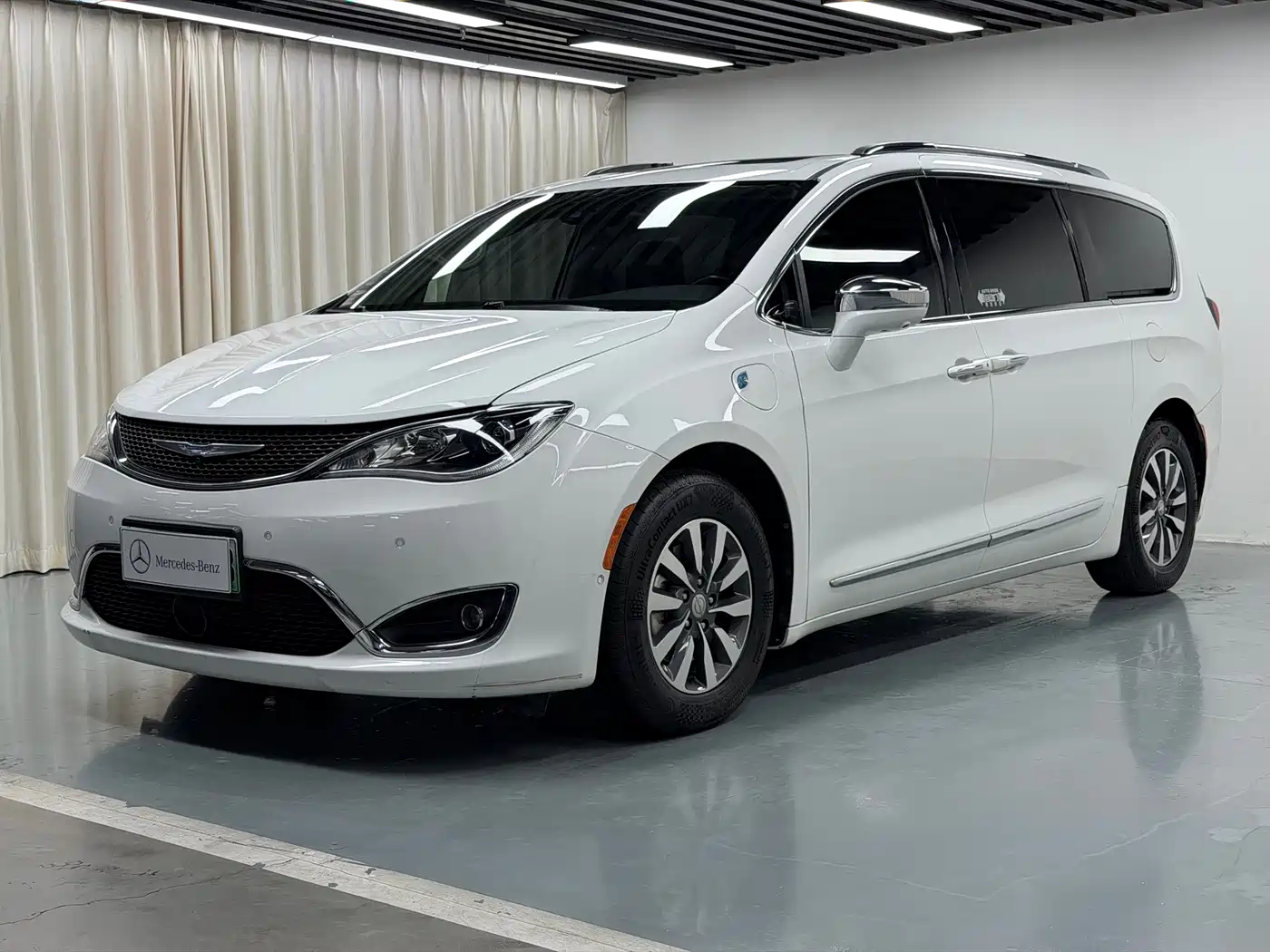
At a glance
- The imported Grand Caravan PHEV uses a 3.6L plug-in-hybrid powertrain in a large passenger-carrier format.
- It suits buyers seeking generous occupancy and flexible energy use across short and longer routes.
- Model year, equipment, condition, steering side and homologation documents can differ between individual vehicles.
- Export prices must be compared by specification, condition and Incoterm, with destination charges assessed separately.
- One-unit and consolidated-container purchasing both require confirmation of listing-specific MOQ, payment and freight terms.
Why the Chrysler Grand Caravan Phev (import) matters for export markets
The Chrysler Grand Caravan PHEV (import) combines a large passenger-carrier format with plug-in-hybrid technology, giving overseas buyers a vehicle designed around passenger capacity, flexible energy use and familiar minivan packaging. The export model is identified by a 3.6L plug-in hybrid powertrain. That combination is most relevant to dealers serving family, mobility, executive-transport and group-travel markets where a large MPV is easier to justify than a smaller crossover and where charging infrastructure is available. It is less compelling where freight-based emissions rules, narrow roads, high fuel taxes or a lack of charging access make a large PHEV less competitive.
Demand should not be assumed to be universal. The Grand Caravan PHEV is most persuasive in markets where large people movers are established, petrol stations and charging points are accessible, and families or operators value one vehicle that can cover school runs, shuttle work and long journeys. In markets with strong urban restrictions, high taxation of large vehicles or limited charging access, a smaller hybrid, compact MPV or conventional van may create a more economical operating case. Importers should test the model against local fuel mix and parking constraints before committing to volume.
For dealers, the commercial case rests on sourcing discipline rather than a generic discount expectation. A Grand Caravan PHEV can be positioned as a premium, high-occupancy vehicle for chauffeur or executive transfer, hotel guest transport, airport and event shuttles, or family mobility retail. The import proposition is strongest when the seller can substantiate condition, title, service history and charging configuration, and when the importer has a defined customer segment rather than broad speculative stock. That discipline reduces the risk of buying an attractive specification that cannot be registered or supported locally.
- Large MPV with plug-in flexibility.
- Target family and group-travel demand.
- Validate local registration economics.
Model range, trims and powertrain variants: how the lineup is structured and how to choose
The export catalog for the Grand Caravan PHEV is structured around one clearly identified powertrain: the 3.6L plug-in hybrid. The first choice is therefore not between unrelated hybrid systems, but between units of the same basic drivetrain that may differ in production year, fitted equipment, condition and destination-market documentation. Import records for an individual vehicle do not always establish a formal hierarchy of named trims, so buyers should not assume that a badge identifies the complete specification. The VIN, factory option list, photographs and documents should be treated as the controlling evidence for each vehicle.
Begin with the destination, because the same vehicle can be easy to register in one country and costly or non-compliant in another. Confirm whether the unit is left- or right-hand drive, the charging connection and local voltage arrangement, emissions documentation, road approval and insurance category. Then match the body and powertrain to the workload: family buyers may prioritize seating, luggage space and ride comfort, while shuttle or executive operators may focus on condition, uptime and total operating cost. Equipment such as infotainment, climate control, safety systems and adjustable seating is more useful as a decision criterion than an assumed trim label.
A plug-in hybrid combines a rechargeable traction battery with a combustion engine, so it can support electric-assisted or electric-only operation when the battery and operating conditions permit. The Grand Caravan PHEV’s 3.6L hybrid system is therefore most useful to a fleet that combines predictable daily mileage with a need for longer-distance flexibility. Electric-only range, usable battery capacity, charging time and real-world fuel consumption should be checked in the live listing and local test data rather than inferred from the engine size. For route planning, compare the expected electric share against charging access at depots and overnight bases.
- 3.6L plug-in-hybrid core.
- Verify equipment by VIN.
- Check usable range and charging.
New vs used Chrysler Grand Caravan Phev (import): how export inventory is structured and how buyers choose
For export purposes, condition should be classified unit by unit rather than inferred from the model name. A new or previously unregistered vehicle may offer the cleanest title trail, even warranty and predictable cosmetic condition, while a used import can be more appropriate where the buyer accepts age, higher mileage or a known work history. Neither category is automatically cheaper after freight, taxes and remediation; a used vehicle that needs repairs or battery work can become expensive quickly. The live listing’s condition, mileage, ownership and service fields should therefore be reviewed alongside its photographs and VIN documentation.
For a new or unused unit, verification should focus on whether the vehicle has been registered, driven, stored or modified before delivery. Ask for an exterior and interior inspection, tire and glass condition, battery state of health, manufacturing or production dates, shipping damage evidence and the complete equipment list. Confirm that no detail has been removed from the seat, door, load-floor or underbody areas, because a visually attractive vehicle can still hide minor wear. A signed condition report tied to the VIN is more valuable than a generic new-vehicle claim and should list options.
For a used Grand Caravan PHEV, the PHEV system changes the inspection priorities. Request battery state-of-health information, evidence of charging, confirmation that the high-voltage system has not been disconnected improperly, and a review of warning lights or service history. Mileage should be checked for consistency across the odometer, service records and VIN history. Because replacement parts, diagnostic time and battery work can be expensive in a new destination market, buyers should price maintenance access before selecting a used unit. A lower acquisition price may be offset by higher uncertainty and narrower service support at resale.
- Classify condition per unit.
- Tie inspection to VIN.
- Price battery and repair risk.
How export pricing works: the factors behind a live listing price, and how to read one
A live export price is not a fixed wholesale value for the model. It reflects the selected vehicle’s production year, trim or equipment level, mileage and condition, ownership history, cosmetic and mechanical status, battery condition where relevant, and the seller’s commercial terms. Currency movements can also alter the apparent price for buyers settling in another currency. Most importantly, the displayed vehicle price may stop at the chosen Incoterm, so it should not be compared directly with a competitor’s delivered or duty-paid quote. The correct comparison is like-for-like vehicle cost plus the same logistics and destination charges.
When reading a listing, first identify what the seller has actually declared: model year, exact trim name, engine or powertrain, mileage, condition, steering side, battery information, equipment, sale status and Incoterm. Then look for omissions as carefully as headline claims. A detailed image set should show VIN plate, dashboard display, seat and load-area condition, tire wear, charging equipment and any disclosed damage. Compare the listing description with the invoice and inspection report. Ask for the current figure on the specific unit through the live inventory, because an earlier enquiry, cached page or representative vehicle may not represent the vehicle being bought.
To build a landed-cost model, take the live vehicle amount and add only the costs defined by the agreed trade term: inland transport, export handling, ocean or air freight, insurance, destination charges, customs duties, taxes and dealer or registration fees. Some items are buyer-paid, while others may be embedded in the seller’s quote. Request an itemized statement rather than relying on a single headline figure. ChinaCarDirect’s live Grand Caravan PHEV listings are the source for the current per-unit price and availability, while a written RFQ should define freight assumptions, validity and payment milestones.
- Compare like-for-like vehicles.
- Separate freight and destination costs.
- Use live per-unit figures.
MOQ, ordering and payment: single units vs consolidating a container
Wholesale buyers should read minimum order quantity from the selected listing rather than assume a catalogue-wide policy. Some export sellers may accept a single vehicle; others may require a batch or define different terms for domestic and export orders. Ask the seller to confirm the MOQ, whether mixed model years or configurations can be combined, and whether units must be new or share the same destination. A one-unit purchase can suit a dealer testing demand or a fleet acquiring a small number of high-spec vehicles, but the buyer must accept that fixed freight and clearance costs will not be spread across a full container.
Container consolidation changes the purchasing equation by grouping compatible units under one freight and clearance process. It can reduce per-unit transport cost and protect inventory from being scattered across several bookings, but it also raises the cash committed, lengthens the selling cycle and increases exposure if one vehicle has unresolved title or condition issues. The mix should be deliberate: similar model years and equipment simplify valuation, while a highly specified unit placed with basic vehicles may be harder to price into the local market. For fleet procurement, align consolidation quantities with actual deployment dates rather than buying against unconfirmed demand.
A written purchase process should state the selected VIN or agreed specification, inspection standard, payment currency, deposit and balance schedule, documentary requirements, Incoterm, booking deadline and cancellation treatment. Payment should never be released against a generic model name when the buyer expects a particular vehicle or condition. Clarify who arranges export declaration, marine or air cargo booking, insurance, terminal handling, duty and tax payment, and destination clearance. The contract should also explain how discrepancies discovered before loading or at the port will be handled, including inspection evidence and remedies in writing for the buyer.
- Confirm listing-specific MOQ.
- Match consolidation to demand.
- Contract VIN and payment terms.
Shipping, homologation and market compliance caveats: LHD/RHD and import rules by country
Vehicle shipping is planned around the vehicle’s dimensions and weight, the selected transport mode, origin and destination terminals, routing, sailing or flight schedule, and the Incoterm. Ro-ro is commonly considered for a large MPV, while containerized sea freight depends on verified dimensions and carrier availability; air freight may be considered for urgent, high-value movements but can carry a substantial cost premium. The plug-in hybrid’s traction battery also belongs in the carrier’s dangerous-goods and battery-transport planning process. The exporter should confirm the packaging, isolation or safety procedure it requires and provide the documentation needed for lawful movement.
Steering configuration is a critical commercial check because the imported vehicle’s handedness may not match the destination. A left-hand-drive example can be less attractive in a right-hand-drive market, while a right-hand-drive conversion or re-import may bring safety, registration and insurance consequences. Do not assume that a foreign-market vehicle can be sold locally after conversion. Ask for the steering-side photograph, VIN, approval documents and any conversion history, then have the importing broker confirm acceptance before loading. For fleet use, a mismatch can also complicate spare-parts planning, driver familiarization and local requirements before contracting.
Import permission, road registration and commercial use are separate questions. Each destination may apply its own rules on vehicle age, emissions, safety equipment, VIN traceability, customs value, tariff classification, VAT or sales tax, insurance and local registration. Plug-in vehicles may also face rules related to charging access, energy labeling or fleet permissions that differ from those for a non-plug-in vehicle. Buyers should obtain a written broker assessment for the exact configuration, while importers should verify used-vehicle age restrictions and the treatment of salvage, imported or previously registered vehicles before committing stock.
- Verify steering side first.
- Check battery transport documents.
- Obtain local homologation advice.
Who should buy the Grand Caravan Phev (import) — and who should pick a different vehicle
This model is best suited to buyers who need one large vehicle to cover several operating roles: family transport, employee mobility, hotel or airport transfers, event hospitality and executive shuttles. A PHEV can be attractive where daily routes are short enough for regular electric-assisted use but occasional longer journeys make full-electrical operation impractical. Dealers should emphasize flexible energy use, cabin capacity and established minivan acceptance in the destination, while fleet buyers should model charging availability, fuel policy, route patterns and expected residual demand before scaling the purchase program.
It is a weaker proposition for buyers whose core requirement is a commercial cargo van, emissions-free urban operation, off-road capability or the lowest possible whole-of-life cost. A PHEV carries both combustion and high-voltage hardware, so complexity, battery aging and servicing should be considered alongside fuel savings. Very large or heavy vehicles can also face ownership charges, road-user costs or parking constraints that outweigh cabin benefits. If the destination does not recognize the vehicle configuration, lacks suitable service support, or has weak demand for large people carriers, a conventional hybrid MPV or a smaller import may be a better commercial bet.
The strongest business case usually comes from matching utilization to the powertrain rather than assuming that plug-in operation automatically means lower cost. Calculate energy use over representative routes, include employee charging time, account for the vehicle’s size and maintenance, and compare utilization against the local alternatives. For a dealer, test one or a small number of vehicles with a clear customer segment before scaling inventory. For a fleet, secure charging and service arrangements before delivery. These steps reveal whether the Grand Caravan PHEV solves a real operating need or is simply a distinctive but costly addition to the range.
- Suitable for mixed-route fleets.
- Unsuitable for cargo-only use.
- Test demand before scaling.
Main rivals and how the Grand Caravan Phev (import) compares
The closest direct rival is the Chrysler Pacifica Plug-in Hybrid. It targets the same large-family and premium-mobility buyer with a comparable plug-in-hybrid proposition, so it is the most natural benchmark for packaging, powertrain presentation, charging and destination-market acceptance. Differences in model generation, equipment, condition and local homologation can be more commercially important than the badge. A buyer comparing the two should test the same routes, inspect the same level of documentation and calculate delivered cost in the intended market, rather than assuming that one is newer or more suitable without checking the VIN.
Two other relevant alternatives are the Toyota Sienna Hybrid and Kia Carnival Hybrid where those models are offered and homologated. Both compete for large-family and executive-transport customers seeking a people carrier with hybrid efficiency, but their self-charging hybrid approach does not provide the same plug-in charging proposition as the Grand Caravan PHEV. That distinction matters for a buyer committed to regular electric-assisted operation, charger ownership or a specific fleet energy policy. It can be less decisive for a buyer who simply prioritizes cabin space, operating simplicity and proven local service support.
When comparing rivals, use a consistent decision matrix: seats and luggage flexibility, PHEV or hybrid capability, safety and equipment, local registration, expected energy use, service access, parts lead time and delivered operating cost. Do not compare a used Grand Caravan PHEV directly with a new rival on the basis of the vehicle badge alone, because condition and warranty treatment may differ. Conversely, do not reject the Grand Caravan because its model designation is unfamiliar in the destination; imported demand can still be viable, provided the importer controls compliance, support and resale planning. The best choice is the model whose verified configuration fits the buyer’s routes and customers.
- Pacifica PHEV: closest benchmark.
- Sienna and Carnival: hybrid rivals.
- Compare delivery and support.
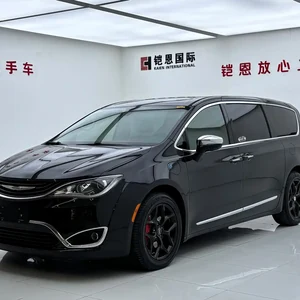
Live Chrysler Grand Caravan Phev (import) export inventory
View all listings →Real units currently on ChinaCarDirect with per-unit asking prices and MOQ. Availability updates live from the catalogue.
How to buy a Chrysler Grand Caravan Phev (import) from China
-
1
Define the destination and operating role
Identify the import country, road side, passenger or cargo use, typical routes, charging access and local registration category before selecting a vehicle.
-
2
Search the live Grand Caravan PHEV inventory
Use the live listings to identify candidate units, then review each vehicle’s model year, powertrain, equipment, condition, steering side and commercial terms individually.
-
3
Request unit-specific evidence
Ask for the VIN, option list, exterior and interior photographs, condition report, service history, battery information and ownership or title documents.
-
4
Verify configuration and condition
Confirm that the vehicle’s dimensions, charging arrangement, equipment and condition meet your intended market and customer requirements rather than relying on the trim name.
-
5
Run a compliance review
Have an importing broker assess local homologation, customs valuation, taxes, insurance, road registration, battery-transport requirements and any age restrictions.
-
6
Request an itemized landed quote
Specify the destination, Incoterm and required quantity, then request separate vehicle, freight, insurance, handling, duty and tax figures with quote validity.
-
7
Contract, pay and dispatch
Record the VIN or specification, inspection standard, payment milestones, documents, shipping plan and discrepancy procedure in the purchase contract before dispatch.
Grand Caravan Phev (import) vs rivals
| Chrysler Pacifica Plug-in Hybrid | This is the closest direct benchmark because it combines a large people-carrier format with plug-in-hybrid operation. Compare verified seating, equipment, charging, local homologation and landed cost; the Pacifica may be more familiar in some destination markets, while a Grand Caravan unit may better suit buyers seeking its particular configuration. |
|---|---|
| Toyota Sienna Hybrid | The Sienna Hybrid is a large-family and executive alternative where homologated, offering hybrid operation without a charging dependency. It may suit buyers prioritizing cabin space, operating simplicity and established local service support rather than the Grand Caravan PHEV’s plug-in proposition. |
| Kia Carnival Hybrid | The Carnival Hybrid competes in the same broad people-carrier segment in markets where it is offered. Assess it against local demand, cabin equipment and parts support; buyers requiring plug-in charging should verify compatibility instead of treating conventional hybrid and plug-in hybrid as equivalent. |
Frequently asked questions
How is the export price determined?
The live price reflects the selected vehicle’s year, equipment, condition, mileage, ownership history, battery condition where relevant, currency and agreed Incoterm. Freight, insurance, customs duties and destination charges may be separate. Check the current amount on the individual live Grand Caravan PHEV listing and request an itemized written quote.
What powertrain and range should I expect?
The export model is identified by a 3.6L plug-in-hybrid powertrain combining a combustion engine with a rechargeable traction battery. Usable battery capacity, electric-only range and charging time should be verified for the specific unit in the live listing and local homologation documents rather than inferred from the engine size.
Are new or used Grand Caravan PHEV imports better?
A new or unused unit may provide cleaner ownership records, even cosmetic condition and more predictable warranty treatment. A used unit can offer better value, but buyers should account for mileage, repair history, battery condition and limited local parts or diagnostic support. Select based on a VIN-linked inspection rather than age alone.
How does MOQ work for an export order?
MOQ is confirmed for the selected listing and may depend on the seller, configuration and destination. A buyer may be able to purchase a single vehicle or consolidate compatible units into one shipment. Review the current listing and obtain written confirmation before committing funds or arranging freight.
What affects shipping time and cost?
Vehicle dimensions and weight, transport mode, route, terminal handling, scheduling, insurance, fuel surcharges, destination charges and customs work all influence the result. Battery-transport procedures must also be planned for the PHEV. The seller or freight forwarder should quote the selected vehicle under a defined Incoterm.
Can I source spare parts for the PHEV?
Parts availability depends on the destination market, vehicle generation, VIN and local dealer coverage. Ordinary service items may be easier to obtain than PHEV-specific high-voltage components, so request a parts list and expected lead times before purchase. A used importer should also confirm diagnostic and battery-service capability in the destination.
Is a right-hand-drive Grand Caravan PHEV available?
Availability and suitability depend on the individual vehicle and destination rules, so buyers should not assume either handedness. Confirm the steering side, VIN, approval documents and conversion history before payment. A broker should verify whether the configuration can be registered without prohibited or uneconomic modifications.
How do I order a Chrysler Grand Caravan PHEV from China?
Choose a specific live listing, request its VIN, photographs, inspection evidence, documents and an itemized quote, then agree the MOQ, Incoterm and payment milestones in writing. After destination compliance and shipping arrangements are confirmed, follow the agreed inspection, dispatch, customs and delivery process. Use the RFQ channel to obtain current unit-specific terms.
Ready to source the Chrysler Grand Caravan Phev (import)?
Send your destination, quantity and configuration requirements to request a current Grand Caravan PHEV export quote.
Request a quote