
Deepal G318 Export Buying Guide for Overseas Buyers
Plan a Deepal G318 export purchase with practical guidance on trims, BEV and range-extender options, live pricing, MOQ, shipping, compliance, and rivals.
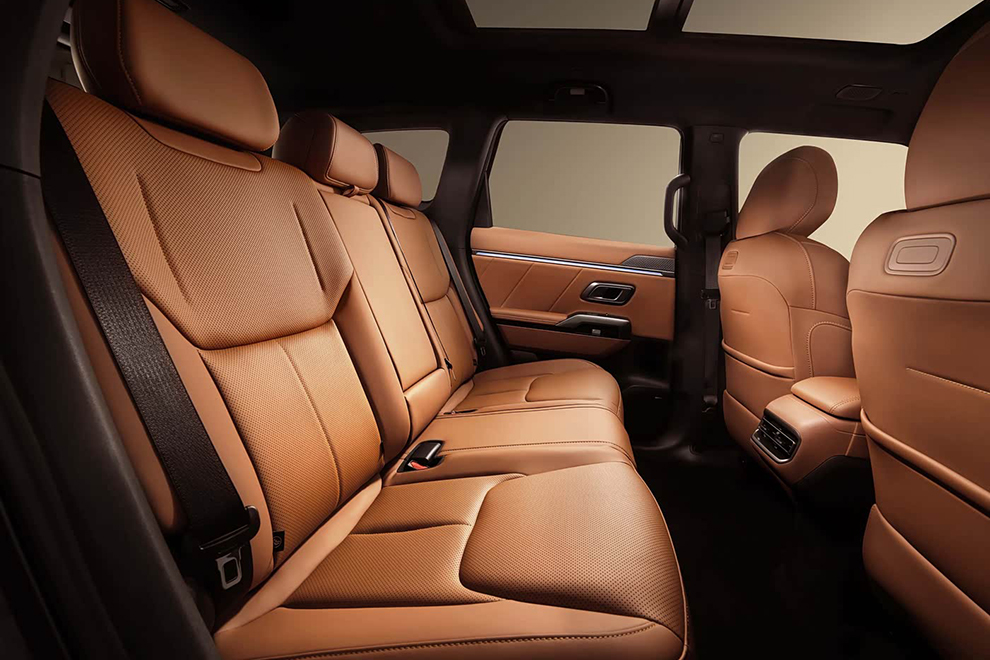
At a glance
- The G318 combines off-road intent with BEV and range-extended powertrains, 2WD and AWD choices, and selected air-suspension trims.
- BEV buyers need dependable charging, while range-extended buyers gain a fuel option for routes with charging gaps.
- New vehicles emphasize specification consistency, while used vehicles require battery, history, and condition checks.
- Vehicle price is only the baseline because freight, taxes, insurance, conversion, and compliance shape the landed cost.
- Current price, MOQ, condition, and availability should be checked in the live G318 inventory rather than a generic market range.
Why the Deepal G318 matters for export markets
The Deepal G318 matters in export markets by combining an off-road SUV format with new-energy drivetrains that offer an alternative to conventional combustion SUVs. Buyers can compare battery-electric and range-extended concepts, two- or four-wheel-drive layouts, and comfort-focused editions with air suspension. That combination gives importers a differentiated product for adventure, tourism, and premium fleets, although it remains a niche choice where charging, fuel, service, and homologation infrastructure are developing. Its relevance depends less on a low-cost fleet brief and more on serving customers who value electric mobility with off-road intent.
Demand for the G318 comes from buyers looking for a Chinese alternative to premium rugged SUVs that still feels distinct from conventional combustion models. Its appeal comes from the combination of electric driving, selectable two- or four-wheel-drive layouts, and equipment designed to manage rough-road use and long-distance travel. For overseas dealers, that creates opportunities in outdoor recreation, regional mobility, and high-visibility launch programs. The commercial test is not simply whether the vehicle looks capable; it is whether local charging or fuel coverage, parts support, and residual-value expectations match the customer.
For market planning, the G318 should be segmented by operating environment rather than treated as one generic SUV. City-oriented customers may prioritize range efficiency, ride comfort, and charging convenience, while remote-route customers may favor a range-extended version that reduces dependence on public chargers. AWD can improve traction on loose or slippery surfaces, whereas 2WD may suit buyers focused on efficiency and cost. Air suspension may improve ride quality and height adjustment, but neither suspension choice nor AWD alone substitutes for the right tires, software calibration, service capability, and conservative off-road use.
- Electric off-road format
- AWD for rough routes
- Verify service support
Model range, trims and powertrain variants: how the lineup is structured and how to choose
The G318 trim structure spans several decision layers rather than a luxury-to-base ladder. Two-wheel-drive and all-wheel-drive applications sit alongside comfort-oriented four-wheel-drive trims, air-suspension editions, and named cross-country, adventure, mountain, and secret-realm packages. Names may be translated differently across listings or markets, so a buyer should not infer equipment from wording alone. Record the drive layout, suspension type, energy configuration, and named equipment on the vehicle-specific listing and sales documents instead. This also prevents a discounted-looking trim from being compared with a richer off-road package on the basis of its badge.
Powertrain choice is the major filter. A battery-electric G318 is best matched to routes with dependable charging and buyers comfortable planning around charging access. A range-extended version combines electric propulsion with an onboard combustion generator, which can be more practical where long gaps between chargers are common or where customers want a familiar fuel backup. Neither label answers every duty-cycle question: towing, load, climate, grade, and regional fuel policy all affect real operating costs. Confirm the exact battery, motor, range, and charging figures in the live unit specification before contracting.
The third decision is capability versus efficiency. Two-wheel-drive versions can be the rational choice for paved-route customers who do not need additional traction. AWD models offer a conservative answer for wet roads, gravel, snow, or remote travel, but buyers should account for added drivetrain and energy-management complexity. Air suspension is valuable where ride comfort or adjustable height matters; however, buyers should verify whether the live unit has air suspension rather than a conventional spring system. For fleets, standardize this decision before comparing quotes, because trim labels can conceal equipment differences.
- Reliable charging for BEV
- EREV for charger gaps
- Verify drive system
New vs used Deepal G318: how export inventory is structured and how buyers choose
Deepal G318 export inventory may include both new vehicles and used examples, but each listing represents a specific configuration rather than a generic model grade. New units offer a more consistent specification and a clearer link to factory warranty and delivery processes. Used units can make particular trims or hardware more accessible, but their effective value depends on condition, mileage, service history, and remaining support. Buyers should therefore filter by condition and exact version, then carefully compare the same drivetrain, drive layout, and suspension across candidates on a strictly like-for-like basis.
For a used G318, the listing title is only the start of due diligence. Ask for mileage, service records, accident and repair history, battery condition for an electric or range-extended vehicle, tire condition, software status, warranty transfer, and evidence of recall completion. Inspect the underbody, suspension, steering, bodywork, cabin, and charging equipment where access is possible. A low purchase price can be offset by battery degradation, deferred maintenance, non-transferable rights, or imported parts that are difficult to source. Independent inspection is particularly valuable before a container commitment by an independent specialist.
A new G318 suits dealers that need predictable specification, standardized merchandising, and a straightforward factory-supported sale. Buyers should still confirm production timing, delivery sequence, included accessories, battery warranty terms, and whether the quoted vehicle is a domestic-spec derivative intended for export. Factory status does not remove the need for destination compliance work, and a new vehicle can still sit at the factory for a period before shipping. The best purchasing discipline is to separate the vehicle order, export preparation, and destination registration into distinct documented steps with clearly named responsibilities.
- New: factory consistency
- Used: inspect history
- Compare like-for-like
How export pricing works: the factors behind a live listing price, and how to read one
A live Deepal G318 listing price is shaped first by the vehicle itself: model year, exact trim, BEV or range-extended configuration, drive layout, air suspension, equipment, mileage, and condition. New-versus-used status also changes the risk profile, but it should not be treated as a stand-alone value rule. Currency movements can alter the displayed or quoted amount, while factory incentives and seller decisions may affect the opening level. Only a live, unit-specific quotation is binding; broad market averages or remembered prices are poor tools for budgeting an overseas purchase with confidence.
The landed cost can be materially different from the listing price. Depending on the Incoterm, the buyer may pay ocean or vehicle-carrier freight, marine insurance, export documentation, terminal handling, inland transport, destination port charges, customs duty, VAT or taxes, and modifications such as a right-hand-drive conversion. Vehicle-carrier versus container transport, routing, seasonality, port congestion, loading requirements, battery-related handling, and destination delivery distance all affect logistics. Ask for an itemized quote that identifies what is included, where responsibility transfers, and which charges remain with the importer as appropriate.
To read a live listing, separate vehicle price from transaction price. Confirm whether the seller quote is FOB, CIF, or another basis; whether port charges, insurance, taxes, and delivery are included; and whether the quoted amount is fixed for a named unit or subject to reconfirmation. Check that the year, trim, drive system, suspension, condition, and VIN or chassis reference match the contract. ChinaCarDirect's live G318 listings are the place to verify current per-unit figures and availability. For a binding decision, obtain an RFQ with validity, deposit, balance, and exclusions.
- Condition sets baseline
- Incoterm shifts duties
- Verify live quotes
MOQ, ordering and payment: single units vs consolidating a container
MOQ is an order-level term, not a substitute for vehicle-level availability. Listings may support a single-unit purchase; an RFQ can clarify whether several mixed variants can share one booking. Buyers should ask whether MOQ applies to each model, the total order, or one trim; whether the unit is in stock, in production, or allocated; and whether a deposit reserves it. Until the seller confirms the terms in writing, neither the catalogue page nor an inquiry proves that a unit is actually available at the requested order quantity for that trim.
Consolidating several G318 units can improve freight planning and inventory control, but it also concentrates risk. Mixed trims broaden the range but complicate documentation, parts stocking, customer handover, and later resale. Confirm whether vehicles can share a vessel or container and who bears packing or handling damage. Compare the per-unit saving with working-capital needs, demurrage exposure, insurance limits, and the possibility that one delayed unit holds the entire release. Destination-level compliance may also vary materially across those units locally. Consolidation should be commercially justified, not merely treated as the default.
Payment structure should follow control of the goods. A pro forma invoice should identify the seller, vehicle or production order, price basis, deposit, balance trigger, inspection rights, documentary conditions, and refund or cancellation terms. Buyers can use milestone payments linked to inspection, factory readiness, export release, and evidence of shipment rather than paying the balance against an unverified promise. Verify the contracting entity and beneficiary account against the seller’s corporate details, retain documents, and use a payment method with an audit trail. Seek local legal advice for larger fleet transactions.
- MOQ per listing
- RFQ confirms unit terms
- Consolidation raises risk
Shipping, homologation and market compliance caveats: LHD/RHD and import rules by country
Shipping starts with the vehicle’s dimensions, weight, destination, and regulatory treatment. A specialist vehicle carrier may be appropriate for a complete SUV, while container or other Ro-Ro arrangements depend on packing dimensions, securing rules, battery handling, and the carrier’s acceptance criteria. The forwarder should confirm loading method, lashing, battery documentation, customs classification, route, insurance, and the point at which risk transfers. Transit time and cost are not fixed: sailing or vessel schedules, port calls, congestion, seasonal demand, inland mileage, and destination processing can all change the result under current conditions.
Chinese-market approval does not automatically satisfy another country’s homologation rules. The importer should check applicable vehicle type approval, safety and emissions requirements, lighting, radio equipment, charging provisions, VIN and labeling rules, software and cybersecurity requirements, recalls, and warranty or consumer-law obligations. Exact obligations vary by market and can change, so obtain a written destination-specific assessment from a competent vehicle-homologation specialist and the relevant authority. Options such as lighting, infotainment, seat configuration, emissions equipment, or charging interfaces may need to be verified rather than assumed compatible with the exact market version.
Steering configuration is a separate sourcing issue. Some Chinese export stock is left-hand drive, while right-hand-drive demand may require sourcing an RHD-market vehicle or arranging a compliant conversion with the local authority’s approval. A conversion can affect cost, delivery, warranty, parts, and resale, so it should never be an informal afterthought. Importers must also check age restrictions, used-vehicle rules, customs valuation, duties, VAT or equivalent taxes, quotas, and who acts as importer of record. Insurance and roadside support should be arranged for the actual configuration before the vehicle is released.
- Confirm loading method
- Market-specific homologation
- Confirm LHD or RHD
Who should buy the G318 — and who should pick a different vehicle
The G318 is a strong candidate for an importer or dealer serving customers who want an electric-led off-road SUV and can support its ownership requirements. Typical fits include outdoor-tour operators, regional travel companies, premium dealerships, and demonstration fleets in markets where charging or fuel infrastructure is credible. A range-extended configuration may suit mixed urban and remote routes, while an AWD edition offers a more conservative traction choice. The vehicle’s visual presence and alternative drivetrain also help launch campaigns aimed at buyers who want something different from mainstream combustion SUV offerings.
It is a poor fit for buyers whose priority is the lowest purchase cost, maximum cargo efficiency, or high-volume fleet operation. A large premium off-road vehicle can be difficult to justify where roads are paved, charging is limited, fuel is expensive, or residual values favor mainstream models. Fleet managers should test support, uptime, service intervals, parts lead times, insurance, and repair complexity. If duty cycles are urban, a smaller BEV crossover or conventional family SUV may reduce operating complexity. If rugged equipment is essential, verify towing limits and accessories locally.
The decision is a weighted one. Route pattern determines whether BEV, range-extended, or fuel availability matters most; terrain influences the value of AWD and air suspension; annual distance affects economics; and aftersales readiness affects ownership risk. Buyers should model taxes, charging or fuel contracts, insurance, licensing, parts stocking, technician training, and resale before committing. A test drive and destination-specific landed-cost comparison can expose weak points that a brochure does not. Choose the G318 when its off-road positioning and new-energy character are central to the proposition, not merely wish-list options.
- Best for off-road retail
- Weak for budget fleets
- Weigh routes and support
Main rivals and how the G318 compares
The Jetour Traveller, marketed as the T2 in some countries, is a close Chinese-market rival in off-road positioning and commercial tier. Its combustion and plug-in-hybrid versions contrast with the G318’s BEV and range-extended focus and selected air-suspension trims, so buyers should compare the exact local derivative, equipment, homologation, and support rather than assuming the models are interchangeable.
The TANK 700 Hi4-T is a premium plug-in-hybrid benchmark for buyers who want rugged styling with familiar fuel replenishment and a more conventional hybrid architecture. The G318 differentiates through its electric-led BEV and range-extended options, available 2WD/AWD breadth, and air-suspension editions. TANK may appeal where buyers value a familiar premium off-road badge, while the G318 may suit customers prioritizing quiet electric running and new-energy positioning. Support, homologation, and a destination-specific landed-cost comparison should decide the final choice.
The Ford Bronco, including the 4xe plug-in-hybrid version where offered, serves as a global benchmark for rugged design, modular utility, and established dealer expectations. Bronco buyers may prioritize a recognizable off-road nameplate and a broad accessories ecosystem, whereas G318 buyers are choosing a Chinese alternative with electric or range-extended power and air-suspension trims. The Bronco’s local network can simplify ownership where it is established, while G318 sourcing may offer a different product and trim proposition. Service access, parts lead times, insurance, and homologation should carry more weight than adventure branding.
- TANK: hybrid rival
- Jetour: closest rival
- Bronco: global benchmark
Live Deepal G318 export inventory
View all listings →Real units currently on ChinaCarDirect with per-unit asking prices and MOQ. Availability updates live from the catalogue.
How to buy a Deepal G318 from China
-
1
Define the operating requirement
Map routes, charging or fuel access, load, climate, towing, and passenger needs before selecting a trim.
-
2
Select powertrain and drivetrain
Compare BEV versus range-extended power, 2WD versus AWD, and conventional versus air suspension using the live unit specification.
-
3
Compare the live inventory
Check current G318 listings for year, trim, condition, mileage, vehicle identity, MOQ, and the displayed per-unit quotation.
-
4
Request and verify the RFQ
Ask for the price basis, Incoterm, production timing, documents, warranty terms, payment milestones, and quotation-validity period.
-
5
Resolve condition risk
For a used vehicle, commission a specialist inspection and verify battery condition, service history, accident repairs, recalls, and warranty transfer.
-
6
Clear compliance and shipping
Confirm LHD or RHD configuration, homologation, customs treatment, duty and VAT exposure, insurance, and importer-of-record responsibilities before shipment.
-
7
Pay and protect the handover
Sign the pro forma invoice, release milestone payments against agreed documents, and retain independent inspection approval before final dispatch.
G318 vs rivals
| Jetour Traveller (T2) | The Jetour Traveller, marketed as the T2 in some countries, is a close Chinese-market rival in off-road positioning and commercial tier. Its combustion and plug-in-hybrid versions contrast with the G318’s BEV and range-extended focus and selected air-suspension trims, so buyers should compare the exact local derivative, equipment, homologation, and support. |
|---|---|
| TANK 700 Hi4-T | The TANK 700 Hi4-T is a premium plug-in-hybrid alternative centered on rugged styling and familiar fuel replenishment. The G318 offers a more electric-led choice through BEV and range-extended versions, broader 2WD/AWD availability, and selected air-suspension editions, making the better fit depend on destination support and buyer priorities. |
| Ford Bronco 4xe | The Bronco 4xe is a plug-in-hybrid global off-road benchmark in markets where it is sold, supported by an established brand and accessories ecosystem. The G318 provides alternative China-sourced new-energy configurations and selected air-suspension trims, while the Bronco may offer easier recognition and broader familiarity with global service networks. |
Frequently asked questions
How is the export price of a Deepal G318 determined?
Each live quote reflects the unit’s year, trim, BEV or range-extended version, drive layout, suspension, condition, mileage, options, and seller terms. Freight, insurance, terminal charges, inland transport, duty, VAT, compliance work, and any RHD conversion belong in the landed-cost calculation. Use the current ChinaCarDirect G318 listings for the displayed per-unit figure and request a written, destination-specific quotation for binding terms.
What powertrain and range options are available?
The G318 uses battery-electric and range-extended concepts, with 2WD and AWD applications across the range. A BEV is suited to dependable charging, while a range extender adds fuel-generated electricity for routes with charging gaps. Battery capacity, motor output, rated range, charging rates, and range-extender engine details must be checked for the exact live unit because they vary by version.
Should I buy a new or used Deepal G318?
New vehicles usually deliver more consistent specification and clearer factory warranty alignment. Used G318s can offer access to particular trims but carry battery condition, mileage, repair history, software, recall, and warranty-transfer risks. The right choice depends on route economics, inspection findings, and the importer’s aftersales capability.
What is the MOQ, and can I order one vehicle?
MOQ is shown for the listing or confirmed in the RFQ; it may depend on the model, trim, and whether units are mixed. Ask whether a single-unit order is accepted, whether a deposit reserves a specific vehicle, and how the balance and release conditions work. A multi-unit order should also specify packing, documentation, and responsibility for delay or damage.
What affects shipping time and cost?
Transit time and cost depend on vehicle-carrier or container availability, route, port calls, congestion, season, loading requirements, battery documentation, insurance, inland haulage, and destination clearance. Request an itemized quote under a defined Incoterm and confirm the point where risk transfers. A lower vehicle price can be offset by expensive or slow logistics.
Can I order spare parts with the vehicle?
Include priority spares in the RFQ rather than assuming they travel with the vehicle. Ask for a parts list, compatibility basis, lead time, packing method, pricing, and customs treatment, especially for battery-related or market-specific components. Dealers should also confirm whether warranty work must be performed in China or at an approved destination service center.
Is a right-hand-drive G318 available for export?
The steering configuration must be confirmed for each source because Chinese-market and export units may differ. A right-hand-drive market may require an RHD-market vehicle or an approved conversion, which can affect cost, homologation, delivery, warranty, and parts. Never assume a steering conversion is automatically road-legal or accepted by the importer.
How do I order a Deepal G318 from China?
Start with the live G318 listings, compare like-for-like units, and request an RFQ for the exact vehicle and destination. Review the pro forma invoice, Incoterm, MOQ, payment milestones, documents, inspection rights, shipping scope, and cancellation terms before paying. Keep all approvals and the final handover tied to the agreed vehicle identity.
Ready to source the Deepal G318?
Request a destination-specific Deepal G318 quote and confirm the current price, MOQ, and availability against the live listing before ordering.
Request a quote