
Denza D9 Export Guide for Overseas Dealers and Fleet Buyers
Plan a Denza D9 import with a practical guide to DM-i and EV variants, trim selection, export pricing, MOQ, shipping, homologation, and live listings.
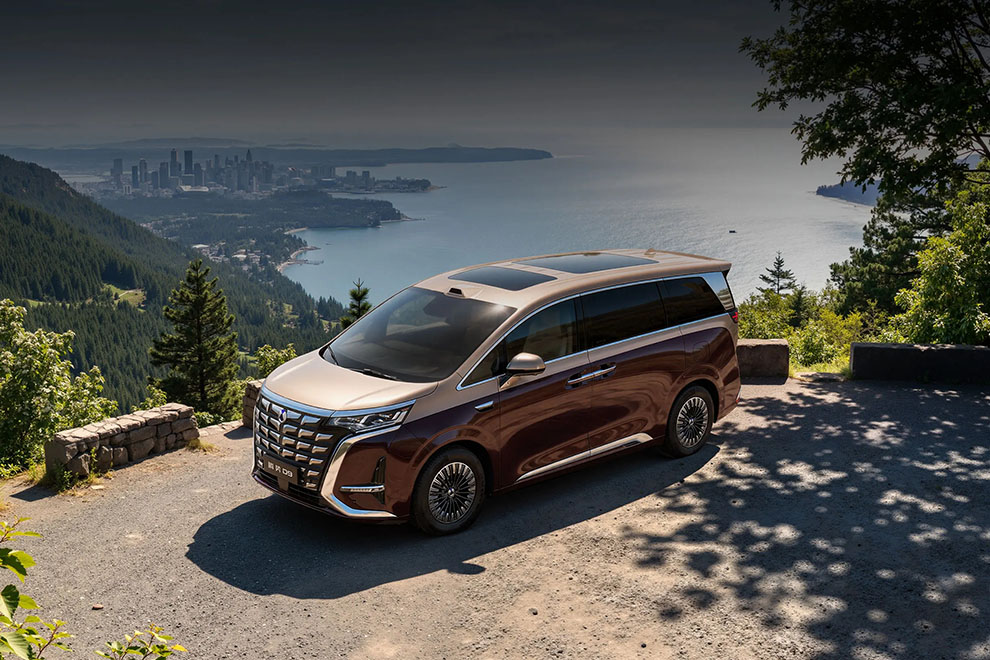
At a glance
- A large luxury MPV positioned for executive, family, corporate reception, and shuttle use.
- DM-i plug-in-hybrid and battery-electric versions give buyers distinct operating routes.
- Multiple AWD derivatives are available, but numeric trim labels require technical-sheet confirmation.
- New and used examples demand different inspection, warranty, and residual-value checks.
- Export price, MOQ, freight, and availability must be confirmed for each vehicle and destination.
Why the Denza D9 matters for export markets
When evaluating the Denza D9 for export, buyers will find a large luxury multi-purpose vehicle that combines executive-car presentation with the space and versatility normally expected from an MPV. That positioning makes it relevant to overseas dealers serving premium family transport, chauffeur operations, corporate reception, and hotel shuttle markets. Its appeal is not based on one specification: the export-facing range includes DM-i plug-in hybrid and EV versions, with multiple all-wheel-drive grades visible across the line. Export demand follows a practical equation: buyers want a commanding, comfortable vehicle, while plug-in-hybrid users value the option of combining electric and fuel-powered operation.
For a dealer, the D9 can fill a gap between a conventional luxury MPV and a premium electric people carrier. A family importer may prioritize passenger space and ride comfort; a fleet buyer may focus on occupancy, luggage flexibility, and the ability to deploy vehicles where charging infrastructure varies. Before placing it in the same category as a sedan or SUV, buyers should understand that the D9 is designed around passenger volume and a tall, van-like body rather than sporty proportions. That distinction affects parking access, fuel or charging planning, and passenger loading in commercial use.
The D9 also carries export relevance because Chinese premium vehicles increasingly compete on cabin technology, electrified powertrains, and configurable grade structures. Overseas success still depends on more than the badge: local homologation, spare-parts access, software support, and resale expectations can outweigh a richer feature list. For that reason, treat the model as a serious MPV candidate, then validate the exact derivative and operating case against local regulations and competing nameplates before committing stock. A live, derivative-level comparison is more useful than judging the D9 from a general model-page description or a photograph alone.
- Large MPV format for premium passenger duties.
- DM-i and EV export lineups.
- Local homologation determines real deployability.
Model range, trims and powertrain variants: how the lineup is structured and how to choose
The lineup is broad enough to require a structured comparison. Denza D9 trims include DM-i 970, 980, 1040, 1050, and Smart Drive 1020 derivatives, plus EV 600 and EV 620 versions. Across these names, the export catalogue shows grades such as Flagship, Prestige, Premium, Honor, and Luxury, with AWD appearing on numerous DM-i and EV variants. For Denza D9 specs, begin with the exact trim label rather than general model assumptions. Ask for the factory specification sheet, drive configuration, battery details where relevant, and standard equipment for that specific vehicle before making any comparison.
The DM-i family is the plug-in-hybrid route, while the EV versions are fully battery-electric. That distinction should drive the first shortlist decision because operating patterns, charging dependencies, and service planning differ. DM-i can suit buyers who want electric capability without making every journey dependent on charging access; EV buyers need a credible charging plan at the depot, workplace, and destinations. AWD labels identify an all-wheel-drive derivative, but they do not replace a check of motor layout and homologated equipment. Record daily mileage, overnight parking, route length, and available charging before selecting either route.
Grade names help define the expected equipment hierarchy, but the numeric labels should not be interpreted as universal range or performance measurements without the matching technical file. Buyers should compare seating, infotainment, driver-assistance hardware, climate equipment, luggage capacity, and service inclusions trim by trim. The most useful request is a VIN-linked specification sheet and current photographs, especially for Smart Drive editions where software and option naming can differ from conventional trims. Ask the seller to reconcile those documents with the vehicle identification number and confirm whether listed equipment is standard, optional, or market-specific.
- Match DM-i or EV to charging reality.
- Treat numeric trim labels as identifiers.
- Request VIN-linked equipment confirmation.
New vs used Denza D9: how export inventory is structured and how buyers choose
Export inventory should be separated into factory-new, demonstrator, and used categories before any commercial comparison. A new D9 normally offers the cleanest contractual baseline, current production specification, and manufacturer warranty pathway, subject to the seller’s terms and the destination market. A used Denza D9 can be economically attractive, but its value depends more heavily on service history, battery or hybrid-system condition, cosmetic condition, and whether the remaining warranty is transferable. For fleet buyers, a small variation in uptime and documentation can outweigh a lower acquisition figure, especially where vehicles must enter service quickly.
New inventory is easier to standardise across a fleet because paint, trim, seating, and factory options can be specified consistently. It also reduces uncertainty about prior commercial use. Used vehicles require a stricter inspection plan: verify the identification number, production date, odometer reading, accident and flood records, service invoices, software history, and—on electrified derivatives—diagnostic evidence for the high-voltage battery and hybrid components. Ask for evidence rather than relying on a general condition label. An independent pre-purchase inspection is particularly valuable when the vehicle will be resold or placed under a demanding fleet duty cycle.
The practical choice depends on cash deployment, holding time, and customer expectations. A dealer that needs immediate inventory and predictable configuration may favour a new vehicle, while a buyer able to manage refurbishment, registration history, and residual-value uncertainty may accept a used example. Do not assume every marketplace listing carries the same condition category, warranty, or seller location. Read the live inventory entry and seller terms separately, and ask for a written condition report before including a used D9 in a wholesale plan for the destination market with documentary support for buyers.
- Standardise configuration for fleet consistency.
- Inspect used electrified vehicles independently.
- Check warranty transfer and service records.
How export pricing works: the factors behind a live listing price, and how to read one
A Denza D9 export price guide should explain variables, not publish a stale number. The live vehicle price normally reflects model year, DM-i or EV route, exact grade, AWD configuration, production timing, mileage and condition, and the seller’s commercial terms. Currency movements can alter the displayed figure, while national charges such as VAT, duty, registration, and local taxes usually sit outside the vehicle listing. The binding quote must therefore separate what is payable for the vehicle from what is payable after import. Ask which charges are included and which remain the importer’s responsibility.
Read a live listing as the starting point of a total-cost calculation, not as the final landed cost. Confirm whether the quote is FOB, CIF, or another Incoterm, and identify the destination port or delivery point. A higher vehicle price may be offset by lower freight or a more suitable warranty package, while a cheaper listing may carry higher inland haulage, documentation, or compliance costs. Compare equivalent derivatives with the same currency, Incoterm, and payment schedule before deciding which quote is genuinely cheaper. Also request an itemised pro forma invoice and freight estimate.
Fleet buyers should model the complete acquisition equation for each shortlisted vehicle: vehicle price, inspection, inland transport, export handling, ocean or roll-on/roll-off freight, insurance, financing, destination charges, and expected preparation for sale. A worked quote is more useful than a catalogue average because it ties one VIN to one specification and destination. Review the current D9 listings, then use an RFQ to lock the vehicle identity, terms, validity period, and documents included. Only that written confirmation should drive an import budget. Re-quote if exchange rates or shipping assumptions change before payment and commitment.
- Compare identical trims on one Incoterm basis.
- Exclude import taxes until local calculation.
- Bind the quote to a VIN and validity period.
MOQ, ordering and payment: single units vs consolidating a container
MOQ is a commercial term, not a fixed property of the D9 model. For Denza D9 wholesale purchasing, ask whether the seller accepts one vehicle for a test order, imposes a trim-specific minimum, or offers lower unit terms for a consolidated shipment. The minimum may depend on stock ownership, container planning, and how the seller expects vehicles to be consolidated. Because the term can change by SKU and seller, treat the MOQ shown against each live listing as the starting point and confirm it in the RFQ rather than relying on a blanket catalogue assumption.
Consolidating several D9 units can improve freight planning and give a dealer broader customer coverage, but it also concentrates risk in one purchase decision. Mixed-trim consolidation may help a test market, while a single carefully selected vehicle may be safer for first-time importers. Before combining units, verify that every VIN has the required specification, documents, inspection status, delivery timing, and warranty treatment. Confirm who owns the vehicles before payment, whether they are held at the origin, and how cancellations or substitutions are handled. Put these terms in the order confirmation, not in chat.
Ordering should follow a controlled sequence: select the derivative, request documents and an inspection, agree the Incoterm and landed-cost breakdown, confirm MOQ and payment milestones, then receive the final pro forma invoice and shipping instructions. Check the seller’s legal identity, beneficiary details, refund terms, and the governing contract before remitting funds. Use the payment method and schedule written in the verified quotation, and do not release the balance merely because a photograph or production update has been received. Clear title, inspection, and shipping evidence should precede the final payment milestone as agreed.
- Confirm MOQ by SKU and seller.
- Consolidate only after document review.
- Use written payment milestones and beneficiary checks.
Shipping, homologation and market compliance caveats: LHD/RHD and import rules by country
Shipping begins with the vehicle’s homologation status, not merely its ability to leave China. The importer must confirm whether the exact D9 derivative is permitted in the destination country and, where relevant, whether the steering configuration is left- or right-hand drive. Import rules can cover emissions, type approval, roadworthiness, battery or hybrid safety, charging voltage, software functions, data protection, and connected-service requirements. A Chinese-market vehicle should not be assumed to be automatically approved elsewhere, even when the model name and exterior look are familiar. Obtain a destination-specific compliance checklist before paying and importing.
Working with a ChinaCarDirect vehicle can therefore include three different tasks: arranging export transport, supporting destination registration, and preparing the vehicle for the buyer’s market. Ro-ro and container shipping are common methods for finished vehicles, but the method, sailing frequency, securing process, insurance, and delivery point affect timing and cost. A large MPV also requires attention to height, length, weight, loading access, and discharge equipment at destination. Obtain a freight plan from an experienced vehicle forwarder rather than estimating from generic ocean rates. Also clarify who handles customs clearance and terminal charges.
RHD availability is a separate sourcing question from left-hand-drive production. Some markets have limited or no RHD D9 supply, so buyers may need an RHD conversion of a left-hand-drive vehicle or a different model, subject to local approval. Connected features, navigation, radio systems, assisted-driving menus, and over-the-air support may also require local configuration. A pre-shipment inspection should verify exterior condition, panel alignment, tyres, fluids, charging or fuel equipment, warning labels, tool kit, and matching VIN documents. Retain inspection images and reports as part of the shipping file and dispute process for any formal claim.
- Verify destination approval before shipment.
- Confirm RHD supply separately.
- Inspect and document before loading.
Who should buy the D9 — and who should pick a different vehicle
The D9 is a strong candidate for buyers who prioritise space, a premium cabin, and a people-carrier format over the lower profile of a sedan. It can suit executive transport, premium family use, hotel and corporate shuttles, or mixed fleets that need a comfortable vehicle with generous luggage capacity. Among electrified MPVs, the DM-i choice is especially relevant where drivers need flexibility in charging access, while the EV route is more coherent for operators with dependable charging and a sustainability-led fleet policy. The deciding evidence is not the badge but duty-cycle fit. Assess that fit before selecting trim.
Choose a different vehicle when operating economics matter more than premium MPV comfort. A compact SUV or crossover may be easier to park, cheaper to operate, and better suited to rough roads or a small loading requirement. A commercial van may provide more cargo flexibility at a lower acquisition cost, while a locally established luxury MPV may reduce parts, servicing, and resale uncertainty in markets with a mature Denza network. If most travel is urban and the vehicle carries only two people, the D9’s size and premium positioning may not be justified.
Before committing, run a three-way test: operational, commercial, and regulatory. Can the vehicle complete the route with realistic charging or fuelling? Can the importer support the selected powertrain and obtain parts? Does the planned market accept the exact configuration? A dealer should also test likely resale demand against its customer base, while a fleet operator should calculate loading, uptime, and replacement cycles. The D9 is most persuasive when these answers align; otherwise, a closer rival or a simpler platform will usually create less operational friction in the intended local operating market.
- Best for premium passenger and shuttle use.
- DM-i suits variable charging access.
- Compare against local service support.
Main rivals and how the D9 compares
The closest Chinese alternatives include the GAC Trumpchi E9 and Maxus MIFA 9, both of which place large new-energy MPV design against the Denza D9’s export proposition. The E9 is particularly relevant to buyers comparing plug-in-hybrid people carriers, while the MIFA 9 is a natural benchmark for EV or electrified fleet evaluation. The D9’s distinction is a broad visible trim ladder spanning DM-i and EV routes with multiple AWD versions. That choice is useful only if local homologation, parts supply, and customer recognition support it. Compare verified specifications rather than visual positioning alone.
Toyota Alphard is the more global benchmark for buyers focused on luxury-MPV familiarity, brand recognition, and established after-sales confidence in certain markets. It may appeal where resale expectations matter more than electrified powertrain choice or trim abundance. Against the Alphard, the D9 can present a newer specification proposition and a clearer DM-i-versus-EV decision, but an importer should verify local service coverage and conservative residual values rather than assume Chinese-brand parity. The right rival depends on the destination customer, not on a universal specification chart. Test each option against the same operating duty cycle.
A meaningful comparison should use one worksheet covering verified seating and luggage capacity, powertrain and charging strategy, safety and driver-assistance specification, homologation, warranty, parts access, payload, dimensions, and delivered cost. The D9 may be the stronger choice for buyers seeking extensive grade choice or an electrified MPV from China; a locally supported rival may be safer for conservative resale, simpler homologation, or an established service network. Neither the model badge nor a promotional trim name should decide the purchase. Use current, destination-approved specifications and a written landed quote for the final choice.
- GAC E9: close PHEV-oriented alternative.
- Maxus MIFA 9: direct new-energy MPV benchmark.
- Toyota Alphard: established global benchmark.
Live Denza D9 export inventory
View all listings →Real units currently on ChinaCarDirect with per-unit asking prices and MOQ. Availability updates live from the catalogue.
How to buy a Denza D9 from China
-
1
Define the operating requirement
Map passenger numbers, luggage, route length, charging access, destination market and expected resale positioning before selecting a powertrain.
-
2
Shortlist exact derivatives
Review the live D9 inventory and compare equivalent DM-i or EV trims, grades and drivetrains rather than grouping every vehicle under the model name.
-
3
Request VIN-level evidence
Ask for the identification number, production date, specification sheet, current photographs, odometer reading, ownership status and available service records.
-
4
Validate market compliance
Use a local vehicle agent or authority to confirm homologation, steering configuration, emissions rules, charging requirements and connected-service restrictions.
-
5
Request a landed-cost quotation
Ask for vehicle price, inland transport, export handling, freight, insurance, destination charges, taxes and the applicable Incoterm, with a quote-validity period.
-
6
Confirm MOQ and payment terms
Check the minimum for the selected SKU, mixed-unit options, deposit and balance schedule, beneficiary identity, inspection condition, refund policy and cancellation terms.
-
7
Order, inspect and ship
Complete the agreed inspection and document review before final payment, then confirm loading, securing, insurance, customs paperwork and the responsible freight forwarder.
D9 vs rivals
| GAC Trumpchi E9 | A close large-MPV alternative for buyers comparing plug-in-hybrid people carriers, particularly where Chinese-brand familiarity is already established. The D9 offers a broader visible DM-i and EV grade structure, but homologation, local parts support and residual-value evidence should determine the better fit. |
|---|---|
| Maxus MIFA 9 | A direct new-energy MPV benchmark for buyers assessing EV or electrified fleet deployment. Compare verified passenger and cargo arrangements, charging strategy, equipment, warranty and after-sales coverage rather than assuming a shared platform or specification. |
| Toyota Alphard | An established global luxury-MPV benchmark that may appeal where brand familiarity, parts support and conservative resale expectations dominate. The D9 provides more visible electrified powertrain and trim choice, while the Alphard may reduce operational uncertainty in markets with a mature official presence. |
Frequently asked questions
How is Denza D9 export pricing determined?
The live price is driven by model year, exact DM-i or EV derivative, grade, drivetrain, condition, mileage, production timing and the seller’s terms. Freight, insurance, exchange-rate movements, Incoterms and destination taxes can change the landed cost, so current per-unit prices and binding quotations should be checked through the live D9 listings and confirmed by RFQ.
What powertrain and range options does the Denza D9 have?
The export range includes DM-i plug-in-hybrid and battery-electric EV versions, with several AWD grades. Exact battery capacity, electric-only range, EV rated range, motor output, charging specification and fuel consumption vary by derivative, so numeric trim labels should not substitute for the VIN-linked specification sheet and live listing.
Is a new or used Denza D9 better for export?
A new vehicle usually provides a clearer specification, condition history and warranty pathway, while a used Denza D9 may offer more attractive acquisition economics. Used examples require stronger inspection of mileage, service records, accident history, high-voltage battery condition, hybrid components and warranty transfer before they enter a resale or fleet plan.
What is the MOQ for a Denza D9 order?
MOQ is seller- and SKU-specific rather than a permanent model rule. Some offers may accept a single vehicle, while others may require a lot or mixed-trim consolidation; confirm the requirement, payment schedule and unit terms in the RFQ and against the relevant live listing.
What determines D9 shipping time and cost?
Shipping time and cost depend on the origin and destination, vessel or roll-on/roll-off schedule, vehicle dimensions, port handling, cargo preparation, insurance and the selected Incoterm. Obtain an itemised freight quotation from a vehicle forwarder because generic ocean rates do not show the complete delivered-vehicle expense.
How are spare parts handled for an exported D9?
Confirm that the importer can access parts and technical support for the exact vehicle before purchase, particularly for EV charging systems, high-voltage components and DM-i hybrid hardware. Ask for the applicable parts catalogue, diagnostic capability, warranty process and an estimate of likely lead times for common wear items.
Is a right-hand-drive Denza D9 available?
RHD availability depends on the source vehicle and destination market, and it should be checked separately from left-hand-drive production. If conversion is proposed, confirm in advance whether local approval will cover the alteration and what effect it has on homologation, warranty and insurance.
How do I buy a Denza D9 from China?
Start with the live D9 listings, shortlist an exact VIN and grade, and request specifications, documents, photographs and an inspection. Then obtain a destination-specific landed quote, confirm MOQ, payment milestones and Incoterm in writing, complete the inspection and document review, and follow the agreed shipping and customs process.
Ready to source the Denza D9?
Send an RFQ for a VIN-specific Denza D9 quotation with trim, landed cost, MOQ, compliance and shipping terms confirmed.
Request a quote