
Denza N9 Export Buying Guide for Overseas Dealers
Denza N9 export buying guide for overseas dealers and fleet buyers, covering PHEV trims, pricing logic, MOQ, shipping, compliance and rival vehicles.
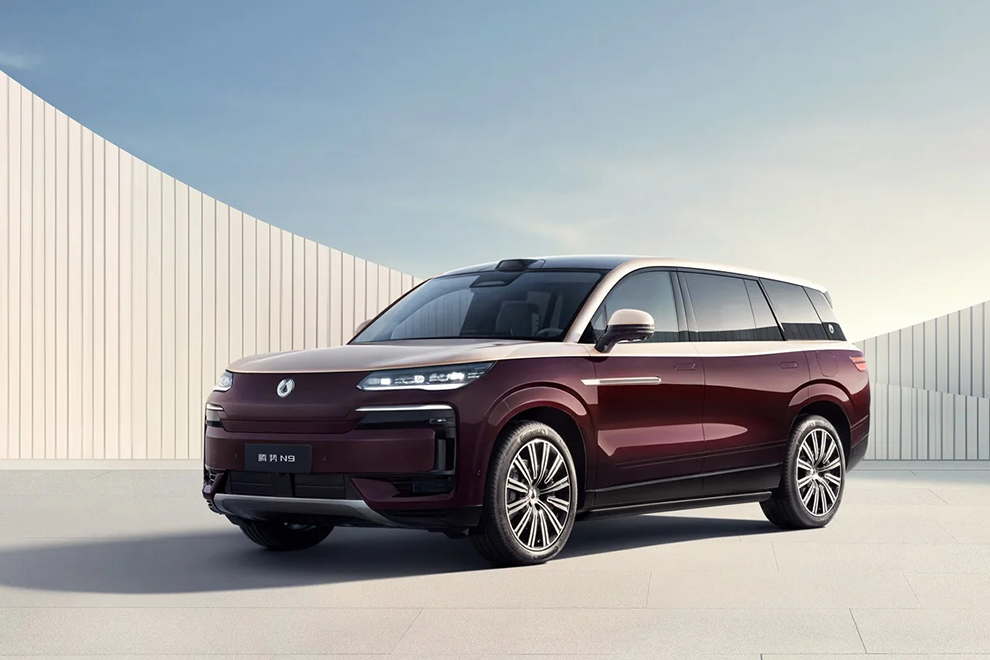
At a glance
- The Denza N9 is a full-size, premium-oriented PHEV SUV suited to family, executive and specialist fleet use.
- Electric capability supports routine commuting, while the combustion engine retains long-distance flexibility.
- Export trim labels are visible, but VIN-level documents must confirm year, equipment and powertrain package.
- Live prices move with specification, condition, logistics, exchange rates and the agreed Incoterm.
- RHD availability, homologation, duties and local service support must be confirmed before contracting.
Why the Denza N9 matters for export markets
The Denza N9 is a full-size, premium-oriented plug-in hybrid SUV from Denza, BYD’s luxury marque. It targets buyers who want the space and visual presence of a large SUV while retaining electric capability for routine journeys. For export markets, it offers a credible alternative to established European and Japanese premium models, particularly where dealers or fleet operators want a new, high-specification product with PHEV flexibility. The relevant question is not simply whether it looks expensive, but whether its size, software, service model and certification fit the destination market and operating economics.
For buyers evaluating the Denza N9 for export, demand is increasingly driven by three needs: differentiation in showrooms, competitive equipment, and lower procurement friction for multi-unit buyers. The N9 can serve all three, but only if its local proposition is supported. Dealers need a credible parts plan, clear warranty terms and a way to explain battery ownership, software updates and PHEV tax treatment. Importers must also assess whether premium expectations from Chinese domestic buyers translate into the destination’s legal categories, insurance model and after-sales network before committing to a container order.
Demand is therefore strongest among large family SUV buyers, premium ride-hailing operators, executive transportation businesses and distributors serving emerging mobility segments. It may be less compelling for fleet managers whose main priority is minimum cost per kilometre, because a luxury-positioned vehicle brings higher insurance, tyres, servicing and residual-value exposure. The N9 should also be judged as a product that must be supported after delivery, not as an isolated showroom purchase. Buyers who cannot secure local technical training, spare-part stocking and charging guidance should treat those gaps as deal blockers before contracting.
Model range, trims and powertrain variants: how the lineup is structured and how to choose
The export line-up uses labels such as Flagship Edition, Flagship Model, Model Prestige Edition and Model Premium Excellence. When comparing Denza N9 specs, these names help identify a seller’s advertised grade, but they are not a substitute for a VIN-level specification sheet. Model-year changes can alter standard equipment, powertrain calibration, interior content and even the meaning of a badge. Compare the same named trim only after confirming its year, battery or range package, drivetrain, wheel size, cabin layout and included options. A written itemisation is preferable to assuming that “Flagship” means identical equipment across production periods.
The Denza N9 belongs to the plug-in hybrid family: a combustion engine supports long-distance flexibility while electric drive can cover many normal commutes when the battery is charged. Exact battery capacity, electric range, combined range, motor output and charging figures vary by specification and should be read from the applicable live listing rather than copied from a generic article. CLTC figures are useful for identifying the Chinese homologated variant, but overseas buyers should also request real-world or homologated figures for their destination and clarify usable range after climate, towing or full-load effects.
Choose the variant around operating duty first, then equipment. A buyer with dependable home or workplace charging may prioritise electric capability, cabin refinement and driver assistance; a high-mileage operator may give greater weight to fuel range, tank practicality and service access. Compare total running cost rather than headline range, and verify payload, towing limits, boot capacity and seat folding for fleet use. Ask the seller to reconcile the trim badge, option list, VIN and production specification before paying, because cosmetic grade names can obscure meaningful mechanical differences across domestic and export configurations.
- Match trim labels to VIN-level equipment.
- Keep CLTC and destination-certified range separate.
- Confirm payload, towing and cargo limits.
New vs used Denza N9: how export inventory is structured and how buyers choose
A live export catalogue should be read as a set of individual vehicles, each with its own production year, trim, condition and seller terms. A new vehicle may be unregistered, factory-prepared or already registered depending on the supplier; those are different commercial propositions. Used Denza N9 units, when offered, can carry a different risk profile because the PHEV battery, high-voltage systems, software state and service history have been exposed to real use. Always classify condition from documents and inspection rather than from the listing title alone or seller category labels.
New inventory is usually easier to reconcile with the current model-year specification and may carry cleaner title and service documentation. It can also offer more predictable warranty handling, although the warranty’s territorial scope and transferability must be checked. A used N9 can be economically attractive when mileage, condition and remaining factory coverage are strong, but buyers should expect greater uncertainty around battery degradation, replacement parts, accident repair and software alignment. The lowest purchase number is not automatically the lowest operating cost if a high-voltage component is unverified at resale time.
For a used vehicle, request the VIN, registration and import-history documents, service records, recall completion, tyre and brake condition, and an independent inspection. For the plug-in hybrid system, ask how battery state of health is evidenced and whether the high-voltage warranty has been transferred. For a new vehicle, verify that no delivery mileage, charging-cycle history or undisclosed damage exists and that the vehicle supplied matches the quotation. Both routes require confirmation that software, user manuals, radio functions and the charging interface will be usable in the destination market without modification.
- New: verify identity and document consistency.
- Used: inspect battery health and repair history.
- Both: confirm warranty, VIN and software.
How export pricing works: the factors behind a live listing price, and how to read one
A Denza N9 export price guide should begin with the vehicle’s identity, not a fixed catalogue figure. Model year, trim, battery or range package, drivetrain, mileage, condition, ownership status and optional equipment all affect what a seller can reasonably ask. For a new vehicle, factory availability and whether it is unregistered or already registered can also change commercial terms. For a used example, history and mechanical condition must be reflected in the quote. The most defensible price is therefore the one tied to a specific VIN or a precisely documented new-vehicle specification.
The displayed vehicle price may exclude a growing set of landed costs. International freight, marine insurance, origin terminal handling, export documentation, destination charges, duty, VAT or GST, customs brokerage, registration and local commissioning can all change the final amount payable. Exchange-rate movements affect a quote between negotiation and settlement, especially when payment is made after a production or shipping interval. Incoterms determine where responsibility passes between seller and buyer, but they do not remove import duties or local compliance work. Ask for each charge separately rather than treating “FOB” or another term as a complete delivered cost.
To read a live listing, first check whether the quoted amount is a unit price, a promotional price or a conditional cash price. Then identify the exact vehicle, stated condition, tax treatment, warranty, delivery term, validity period and payment deadline. Compare the advertised amount with the written quote and calculate a landed-cost worksheet from the same base; do not compare one seller’s vehicle-only figure with another’s door-to-door package. Current per-unit prices and availability are shown in the live ChinaCarDirect inventory. If a binding number is required, send the listing reference and obtain written confirmation before transferring funds.
- Price the exact year, trim and condition.
- Separate vehicle, freight and tax costs.
- Check current figures in live inventory.
MOQ, ordering and payment: single units vs consolidating a container
Minimum order quantity is a commercial term, not a universal feature of the Denza N9. A seller may quote for one unit, a mixed batch or a container quantity, and the binding requirement should appear in the live listing or written quotation. Some distributors begin with one pilot vehicle to test local demand, colour preference and service costs before scaling. That approach reduces exposure to an unfamiliar model but gives less freight efficiency. Confirm whether a single-unit purchase changes packing, documentation or payment terms rather than assuming it does. Ask for the rule in writing.
A sound ordering workflow starts with a complete purchase request: destination country, port or city, required handedness, trim, colour, quantity, budget basis, preferred Incoterm and expected timeline. The seller should respond with an itemised pro forma invoice identifying the vehicle or production specification, serial or VIN references, payment method, title-transfer process, warranty, cancellation terms and dispatch estimate. Pay only through the verified contractual channel, and reconcile the invoice against the live listing before release. Payment milestones should reflect genuine procurement stages, with cancellation recourse defined before any funds are sent, rather than relying on an unexplained advance.
Container consolidation can improve freight efficiency when several N9 vehicles or mixed models share compatible documentation and destination requirements. Buyers must decide whether the price advantage of consolidation outweighs slower inventory release, damage risk and the consequences of one specification being unavailable. Secure the units with a VIN-level allocation, agree inspection and loading responsibilities, and confirm that each vehicle has matching title, homologation and option records. For Denza N9 wholesale programs, separate the vehicle order from freight booking so a shipping delay does not silently change the commercial terms or ownership of the cargo.
- Treat MOQ as a quoted term.
- Use a pilot order with written terms.
- Lock VIN allocation before freight booking.
Shipping, homologation and market compliance caveats: LHD/RHD and import rules by country
Handedness is the first configuration check. Vehicles prepared for China are commonly associated with left-hand drive, while right-hand-drive availability depends on the producer, export programme and live stock. Do not treat a conversion as a cosmetic switch: steering, controls, lighting, safety equipment and documentation may differ. When buying Denza N9 from China, state the required driving side at enquiry stage and ask for evidence of the vehicle’s original configuration. Local registration rules may also restrict changes, particularly where safety components or approvals are involved before the vehicle is shipped.
Import rules are country-specific, and a vehicle that is road legal in China is not automatically road legal elsewhere. The importer may need type approval or individual approval, emissions compliance, safety and cybersecurity checks, a compatible charging connection, local radio and software approval, and evidence of roadworthiness. Duties, emissions-based taxes, VAT or GST, registration fees and insurance can change the business case even when the vehicle price is agreed. PHEV incentives may also depend on local emissions classification. Give the importer the VIN, powertrain and exact equipment early, then obtain written confirmation of eligibility before committing funds.
Shipping method, route and responsibility allocation are equally important. Vehicles may move by roll-on/roll-off service, container or specialist carrier, with availability varying by port and origin. Freight cost varies with route distance, fuel surcharges, port handling, insurance, season, congestion, documentation complexity and the final inland destination. A pre-shipment inspection should verify identity, condition, option matching, roadworthiness preparation and export documents. Decide who acts as importer of record, who pays customs, when title and risk transfer, and whether the dealer or carrier handles registration. These choices belong in the final landed-cost model, not an afterthought.
- Confirm LHD or RHD before contracting.
- Check local type approval and tax rules.
- Define Incoterm and importer responsibilities.
Who should buy the N9 — and who should pick a different vehicle
The N9 is a strong candidate for a distributor serving premium large-SUV demand, especially where buyers value a spacious PHEV, high equipment content and a distinctive alternative to conventional premium badges. It can suit executive chauffeur operations, premium family transport and mixed business fleets that need long-distance flexibility. It is less suitable where the brief calls for the lowest purchase cost, minimal maintenance burden or a small urban footprint. Before buying, model fuel and electricity prices, insurance class, tyre sizes, service intervals and likely resale demand. A strong showroom fit can still become a weak fleet economics case.
Buyers should choose another vehicle if charging is dependable and the mission is fully electric, if urban parking makes a full-size SUV impractical, or if they require a proven local service and resale ecosystem rather than a new import proposition. Off-road users may prefer a model designed around dedicated hardware rather than a road-focused luxury SUV. Operators with tight payload or efficiency targets should test the N9’s size, weight and real-world consumption against alternatives. The decisive question is whether its passenger capability and PHEV convenience outweigh import, compliance and support complexity in the intended market.
The best N9 buyer is also an accountable operator: someone who can verify the specification, arrange compliant import, train technicians, stock critical spares and support software or battery issues over the vehicle’s life. This matters for a PHEV because it combines several systems rather than one simple powertrain. If those capabilities cannot be contracted locally, narrow the search to a model with an established parts network or postpone the order until the support plan is credible. A transparent launch plan—one pilot vehicle, clear specification and a documented service pathway—usually reduces risk better than a large speculative shipment.
Main rivals and how the N9 compares
The Aito M9 is one of the closest conceptual rivals because it also targets large, premium PHEV family and executive buyers. The N9 and M9 can appear similar in size, visual ambition and multi-row use, but package, software, range calibration and local support must be compared at trim level. A buyer should prioritise whichever brand has the stronger authorised service network, clearer warranty handling and more practical charging support locally. Where the two are otherwise equivalent, the M9 may be the safer familiarity choice in markets already served by Aito; in other markets, Denza’s specification and commercial terms may be the deciding factor.
Li Auto’s L9 is another direct benchmark for family-oriented large PHEV SUVs. It is especially relevant to buyers who prioritise usable electric commuting, interior packaging and a straightforward family-car proposition. The N9 may appeal more to distributors seeking a flagship Denza identity and a particular equipment mix, while the L9 may have a clearer advantage where Li Auto’s recognition and support are stronger. Do not infer superiority from badge or headline range: compare the exact battery version, seat and boot arrangements, towing limits, software language, service reach and expected parts cost in the destination country.
The Volvo XC90 plug-in hybrid offers a more conventional premium-SUV benchmark, with an established international brand identity that may simplify expectations for some fleet customers. The N9 can offer a newer visual proposition and more China-specific technology, but those advantages do not remove the need for local service, insurance and residual-value planning. XC90 ownership may feel more familiar to commercial buyers, while N9 differentiation can help a dealer stand apart. The fairest comparison is a like-for-like landed cost and after-sales assessment: acquisition price, energy use, insurance, servicing, downtime and resale should be scored together.
- Aito M9: closest large-PHEV family benchmark.
- Li Auto L9: range-and-family-use rival.
- Volvo XC90 PHEV: global premium alternative.
Live Denza N9 export inventory
View all listings →Real units currently on ChinaCarDirect with per-unit asking prices and MOQ. Availability updates live from the catalogue.
How to buy a Denza N9 from China
-
1
Define the operating requirement
Specify the destination country, LHD or RHD requirement, passenger capacity, annual mileage, charging access, duty assumptions and required equipment. This prevents a visually attractive vehicle from creating an unsuitable operating case.
-
2
Shortlist the live inventory
Review current Denza N9 listings by model year, trim, condition and location. Use the listing-level specifications and photographs to form a shortlist, but do not treat the displayed price or availability as final until the seller confirms them.
-
3
Verify vehicle identity
Request the VIN or production specification, trim document, option list, ownership status and battery or range package. Reconcile those details with the seller’s invoice and the physical vehicle before payment.
-
4
Request a landed quotation
Ask for an itemised quote separating the vehicle, freight, insurance, documentation, duties, taxes, customs, registration and inland transport. State the preferred Incoterm, destination and quantity so every party is pricing the same transaction.
-
5
Lock the commercial terms
Confirm the MOQ, payment milestones, accepted payment method, title transfer, warranty, cancellation terms and dispatch estimate in writing. Keep the vehicle order and freight booking identifiable as separate commitments.
-
6
Inspect before dispatch
Use a pre-shipment inspection to verify identity, condition, option matching, tyres, brakes, high-voltage warnings, roadworthiness preparation and export documents. Record any discrepancy before the vehicle is released for transport.
-
7
Complete import and registration
Coordinate freight, marine insurance, customs clearance, importer-of-record responsibilities, local type approval, charging compatibility, registration and technician preparation. Deliver vehicles only after the destination-market compliance file is complete.
N9 vs rivals
| Aito M9 | Like the N9, the M9 competes for premium large-SUV family and executive buyers with PHEV or electric variants in relevant markets. The deciding issues are local service reach, warranty clarity, option value and charging support rather than badge alone. |
|---|---|
| Li Auto L9 | The L9 is a direct family-oriented large PHEV benchmark, particularly relevant to buyers prioritising electric commuting and interior usability. The N9 may differentiate more strongly for distributors seeking flagship Denza identity, while local Li Auto recognition and support can favour the L9. |
| Volvo XC90 Plug-in Hybrid | The XC90 provides a more conventional international premium-SUV proposition that some fleet buyers may find easier to support and resell. The N9 offers a newer China-specific technology and design proposition, but requires a stronger local service and compliance plan. |
Frequently asked questions
How is Denza N9 export pricing determined?
The seller should price the exact year, trim, powertrain or battery package, condition and options. Freight, insurance, exchange rates, taxes, registration and the selected Incoterm can change the landed total. Current per-unit prices and availability are shown in the live ChinaCarDirect listings, while a written quotation supplies the binding amount for the specified vehicle.
What powertrain and range should I expect from the Denza N9?
The N9 is a plug-in hybrid, combining a combustion engine with electric drive for routine journeys and longer-distance flexibility. Battery capacity, pure-electric and combined range, motor output and charging specifications vary by version and must be confirmed in the live listing. Treat CLTC data as a Chinese type-approval figure and request destination-relevant usable-range information.
Is a used Denza N9 better value than a new one?
New examples usually provide cleaner model-year and ownership documentation, while a used Denza N9 can offer lower acquisition cost but greater uncertainty. For used units, verify VIN, title, service and accident history, warranty transfer, battery condition and high-voltage repairs. The better choice depends on condition, local support and total cost rather than the listing category alone.
What is the MOQ for Denza N9 wholesale orders?
MOQ is set by the seller and listing, not by the vehicle model. Some commercial offers may accommodate one unit, but the buyer should not assume a catalogue-wide figure. Check the live listing and request a written quote showing the required quantity, mixed-model permission, payment milestones and any consolidation conditions.
What determines Denza N9 shipping time and cost?
Freight varies with route, carrier method, port charges, insurance, season, congestion, documentation and inland delivery. The delivery estimate also depends on allocation, customs clearance, inspections and port handling. Ask for the Incoterm, charge schedule and realistic transit window in writing rather than relying on a generic shipping promise.
How are spare parts supplied for an exported Denza N9?
Spare-parts support depends on the importer’s local relationship with Denza or the relevant supply chain, and critical high-voltage components may take longer than wear items. Confirm parts availability, lead times, warranty labour and stocking recommendations before launch. For a pilot order, identify the service parts most likely to immobilise a vehicle.
Is a right-hand-drive Denza N9 available for export?
Right-hand-drive availability depends on factory preparation, destination homologation and current stock; it should not be inferred from a China-market listing. State LHD or RHD in the enquiry and require the seller to confirm the original configuration and supporting documents. If no compliant RHD vehicle is available, plan for a locally approved alternative rather than assuming a simple conversion.
How do I buy a Denza N9 from China?
Start with the live Denza N9 listings, select a vehicle or defined specification, then send an RFQ with destination, quantity, trim, handedness, budget basis and preferred Incoterm. The seller should return an itemised pro forma invoice with vehicle identity, payment method, warranty, dispatch estimate and cancellation terms. After inspection and document verification, the importer arranges freight, customs, registration and local commissioning.
Ready to source the Denza N9?
Send ChinaCarDirect your destination, quantity, trim and LHD/RHD requirement for a current Denza N9 quotation.
Request a quote