
Dongfeng Aeolus Haohan Export Buying Guide
Export buyers' guide to the Dongfeng Aeolus Haohan, covering 1.5T and DH-i trims, pricing logic, MOQ, shipping, compliance, rivals and ordering.
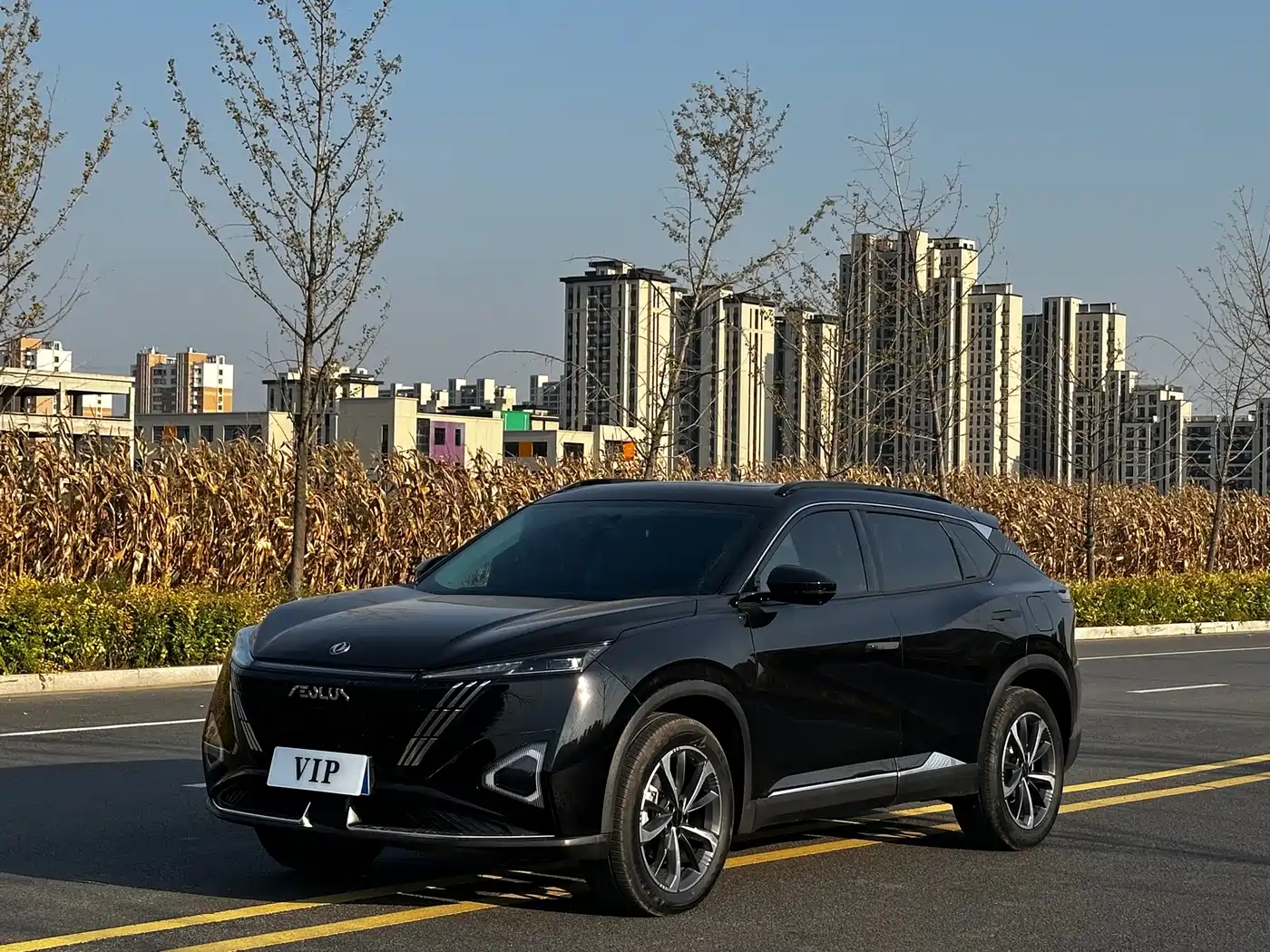
At a glance
- The Haohan is a compact crossover offered in conventional 1.5T and DH-i plug-in hybrid families for overseas sourcing.
- Sport, Luxury, Glory, Premium and Flagship labels create distinct trim levels, but equipment must be verified per vehicle.
- Buyers assessing Dongfeng Aeolus Haohan specs should confirm battery, range, motor, transmission, dimensions and steering configuration for the selected listing.
- New vehicles reduce condition uncertainty; used examples require mileage, service-history and technical-inspection checks.
- Export prices must be read as vehicle price plus freight, duty, tax, insurance, port charges and the chosen Incoterm.
- Dongfeng Aeolus Haohan wholesale decisions should account for listing-specific MOQ, consolidation, compliance and after-sales support.
Why the Dongfeng Aeolus Haohan matters for export markets
The Dongfeng Aeolus Haohan is a compact crossover positioned for overseas buyers who want a Chinese-built SUV with a more familiar global format than a niche domestic-only model. Its relevance is strongest in markets where dealers serve urban customers and regional fleets and need passenger space, modern styling and manageable operating costs. The 1.5T and DH-i labels also give importers room to match conventional and electrified demand without changing brands. That makes the model relevant to independent importers, multi-brand dealer groups and fleet operators comparing equipment, fuel strategy and landed cost before a trial order.
For overseas buyers, the Haohan should be evaluated as a sourcing option rather than assumed to be a direct replica of a mainstream European or Japanese SUV. Local preferences for steering position, infotainment, safety equipment, emissions rules and aftersales support can matter more than headline features. A disciplined importer first identifies the customer use case, then checks whether the relevant trim can be registered, equipped and serviced locally. This turns model interest into a commercially workable purchase, supported by predictable ownership costs and realistic local-service planning, rather than a speculative import.
Demand potential is strongest where compact crossovers are widely accepted and fuel, fuel-tax or urban-emission policy influences the powertrain decision. A DH-i edition may suit buyers seeking reduced daily energy use and some electric capability, while a conventional 1.5T can simplify the proposition for customers without charging access. Neither choice guarantees lower operating costs, because taxes, insurance, driving patterns and local energy prices determine the real economics. Fleet buyers can also use the Haohan to test a new source without committing the entire network to one domestic platform at once.
- Conventional 1.5T and DH-i editions.
- Local compliance and operating needs drive suitability.
- Registration, charging and aftersales determine practicality.
Model range, trims and powertrain variants: how the lineup is structured and how to choose
The Haohan lineup is organized around the 1.5T family, with conventional trims such as Luxury, Sport and Luxury Edition and separate labels such as Glory Edition, Premium Edition and Flagship Edition. The DH-i designation separates hybrid editions from the standard versions while preserving familiar equipment names. This means trim names alone are not enough for procurement: a buyer should map each grade to its powertrain, standard equipment, production year and market documentation. A like-for-like specification sheet prevents a lower-priced badge from being mistaken for a fully equipped vehicle without checking the live listing.
Buyers choosing between the standard 1.5T and a DH-i version should start with infrastructure and duty cycle. A company-car program with controlled charging and high annual mileage may justify studying the hybrid, while customers lacking reliable charging may prefer the simpler gasoline route. The live specification must confirm battery capacity, usable electric range, combined range, motor output, charging connection and fuel consumption; these figures can differ by trim and production year. A paper comparison that mixes versions or uses test-cycle values without local adjustment is not decision-grade information for procurement.
Equipment selection should then follow business needs rather than badge prestige. Dealers may prioritize visible safety and convenience features, climate control and infotainment, while fleet customers may focus on durability, boot capacity, service intervals and parts support. The Premium, Luxury, Sport, Glory and Flagship labels indicate positioning, but the exact inclusion of any feature must be checked for the selected vehicle. Buyers should request photographs, option lists and a VIN-linked specification before treating two similarly named Haohans from different production years as interchangeable in the same destination market. The same check applies to a trial unit and a planned container order, because specifications can change between production batches.
- Match trim, powertrain, equipment and year.
- Verify battery, range and charging per listing.
- Compare VIN-linked option lists before contracting.
New vs used Dongfeng Aeolus Haohan: how export inventory is structured and how buyers choose
Export stock for a model such as the Haohan is easiest to understand as a set of individual vehicles, each defined by production year, trim, powertrain, condition and seller location. New units provide a more direct route to current equipment and a defined starting condition, but age within the model year and factory specification still matter. Used vehicles can broaden sourcing options, yet their market value depends more heavily on mileage, service history, cosmetic condition and technical inspection. Buyers should therefore compare complete vehicle identities rather than use only the model name.
For a new Haohan, the commercial advantage is lower uncertainty rather than a universally lower purchase cost. The importer can compare factory-fresh trims, assess warranty handling and plan a consistent specification for fleet delivery. If a listing represents an older production year, the buyer should ask whether equipment, software, catalyst, battery or homologation details differ from the newest version. Dealer presentation, PDI status, storage duration and warranty commencement can also affect the final commercial proposition. These items belong in the quotation, not in assumptions based on the model name alone.
A used Haohan can suit a buyer with a firm purchase budget, a known financing plan and a clear view of its remaining life. The discount logic is incomplete unless mileage, service records, accident history, tires, battery or hybrid-component condition, and option equipment are checked. Because used export supply can involve different sellers and standards, a remote purchase should include inspection rights and a remedy for material mismatch. New stock is generally easier to standardize, whereas used stock can be justified only when the verified condition creates a measurable commercial advantage.
- Compare year, trim, condition and provenance.
- New units reduce condition uncertainty.
- Used units require inspection and documented history.
How export pricing works: the factors behind a live listing price, and how to read one
A live Haohan export price is the output of several variables, not a fixed model-level figure. Production year and trim set the commercial starting point, while the 1.5T or DH-i powertrain, optional equipment and vehicle condition can move it further. Mileage and age are especially relevant to used units. The destination, exchange rate, freight route, insurance, taxes, duties, port charges and selected Incoterm determine the landed outcome. Comparing an asking price without those inputs can make a cheaper vehicle appear more expensive—or the reverse before all charges are included.
To read a listing correctly, separate the vehicle price from the total purchase commitment. First identify the year, exact trim, powertrain, condition, mileage if applicable and whether the seller is quoting FOB, CIF, CFR, EXW or another Incoterm. Then check which documents, inspection, warranty, inland transport, export handling and destination charges are included. A lower vehicle line can still produce a higher landed cost if it lacks needed equipment, carries weaker cover or attracts extra port and compliance expenses that the buyer may have incorrectly assumed to be bundled already.
Exchange-rate movements and live carrier or handling quotations add another layer, so an old cached price should never be treated as a binding offer. Ask the supplier for a unit-specific quote tied to the VIN or listing, a validity period, the payment currency and the exact Incoterm. Confirm whether freight estimates include container loading, destination charges, customs brokerage and insurance. ChinaCarDirect’s live Haohan listings are the correct reference for current per-unit pricing, while an RFQ is the better route for multi-vehicle landed-cost comparison before issuing the final purchase order.
- Vehicle price differs from landed cost.
- Confirm Incoterm, currency, validity and inclusions.
- Use live listings and written RFQ quotes.
MOQ, ordering and payment: single units vs consolidating a container
Minimum order quantity is a commercial term, not a permanent attribute of the Haohan model. Some marketplace listings may accept a single vehicle, while a supplier or shipping plan may require a larger commitment for a container or production allocation. The current MOQ must be checked on the selected listing and confirmed in the quotation, together with any restriction on mixing trims, years or powertrains. Buyers should not infer a catalogue-wide rule from one vehicle or from another market’s transaction. A written confirmation is the only reliable basis for budgeting the order.
A single-unit order is often the sensible start for a dealer testing demand or an importer validating registration, parts supply and customer acceptance. The process normally starts with a live listing review, followed by an RFQ that fixes the exact vehicle, destination, Incoterm and documentation. After the supplier confirms availability and commercial terms, the buyer should review inspection evidence, agree the payment schedule and obtain final documents before releasing the balance. Deposits and staged payments should correspond to clear contractual milestones, with remedies if the vehicle or paperwork differs from the agreed specification.
Container consolidation changes the economics but increases specification control. A mixed container can combine several Haohan editions for different customers, yet every VIN must still match its trim, colour, destination and homologation file. The buyer should obtain a packing list tied to each vehicle, clear instructions for keys, documents and accessories, and a mechanism for reporting damage or missing items at delivery. Consolidated purchasing should not weaken the inspection standard: one discrepancy can affect the whole container’s customs or customer acceptance process if documents do not reconcile cleanly at destination.
- Check MOQ on every selected listing.
- Lock the VIN and specification before deposit.
- Consolidate only with strong inspection control.
Shipping, homologation and market compliance caveats: LHD/RHD and import rules by country
The Haohan cannot be treated as export-ready merely because it is offered for export. Destination-country rules may require a type-approval certificate, emissions compliance, safety labeling, customs valuation, local registration and evidence of a valid warranty or conformity. A Chinese-market plate, lighting specification or software setup may not match the receiving market. The importer must identify the exact homologation route early and ask the supplier for the documents the vehicle actually carries. Local conversion should never be treated as a substitute for approval that was never assigned to that individual vehicle.
Steering configuration is a separate sourcing decision. Left-hand-drive and right-hand-drive availability can vary by trim, production batch and destination, and no label should be inferred from the car’s origin. A buyer in a right-hand-drive market should request steering confirmation on the VIN, then check whether the wider specification includes the required instruments, controls, lighting and safety equipment. If no suitable configuration is available, converting a vehicle may be uneconomic and may still leave unresolved type-approval issues. Local availability should be checked in the live inventory and reconfirmed before contract signature.
Shipping time and cost depend on origin and destination ports, sailing and air schedules, container availability, customs clearance, inland haulage and the agreed Incoterm. A DH-i vehicle also needs the correct declaration for its hybrid system and battery, and the carrier must be told before booking. Insurance terms, inspection at origin, document preparation and destination handling can materially change the final delivery budget. Dealers should plan buffer time for compliance checks rather than treating the production date as the arrival date, and should agree responsibility for every charge before the vehicle leaves the supplier’s premises.
- Confirm destination approval before funding.
- Verify steering configuration on each vehicle.
- Separate freight, clearance and inland charges.
Who should buy the Haohan — and who should pick a different vehicle
The Haohan is a strong candidate for independent dealers that need a competitively positioned compact crossover, a mixed trim architecture and a potentially lower sourcing base than an established domestic marque. It also suits fleet buyers running mixed annual-mileage programmes where a conventional 1.5T and a DH-i option can cover different operating environments. The decisive question is not whether the SUV is fashionable, but whether the selected variant meets local registration, safety and aftersales expectations. Dealers with existing servicing capacity can convert that fit into a stronger commercial offer locally.
It is a weaker choice for buyers who require a fully documented local warranty, extensive nationwide parts coverage or a long-established resale brand, especially if no importer can support those needs in the destination market. It may also be unsuitable where charging infrastructure is unreliable, where the DH-i configuration cannot be homologated, or where very high towing or commercial-duty requirements exceed the model’s intended role. Those limitations are often more important than whether the purchase price appears attractive. A failed approval or unsupported ownership experience can erase the initial sourcing advantage.
The best decision method is a total-cost fit assessment. Compare the vehicle price, inland delivery, freight, insurance, taxes, registration, homologation, warranty handling, expected fuel or charging costs and residual-value risk for each shortlisted rival. Then score delivery timing, product consistency, parts access and the importer’s ability to remedy defects. The Haohan deserves the order when it wins on the combined commercial criteria and the buyer can support the product after sale. If it wins only on the headline vehicle price, the alternative is usually safer for the wider business case.
- Suits value-focused dealers and mixed fleets.
- Needs local warranty and parts support.
- Unsuitable for unsupported or charging-limited use.
Main rivals and how the Haohan compares
The Haohan’s closest comparison set depends on body size, powertrain and destination, but three Chinese-built compact crossovers form a useful practical benchmark. Chery Tiggo 7, Geely Binyue and Changan CS35 Plus compete for similar dealer and private-buyer attention in many markets. A buyer should compare like-for-like editions rather than each brand’s cheapest or newest derivative. Equipment, warranty route, parts availability, homologation and total landed cost often separate these alternatives more clearly than badges. The right rival can also change when the Haohan is compared with a hybrid-focused or dealer-established model.
Against the Chery Tiggo 7, the Haohan offers an alternative source and a useful conventional-versus-hybrid choice, but a buyer should verify which local specification has the strongest service network. The Geely Binyue may be easier for some overseas buyers to evaluate because of its wider international familiarity; the Haohan must therefore deliver enough equipment, document support and aftersales planning to compensate for any local brand gap. Neither comparison should be reduced to appearance. Compare the exact drivetrain, safety kit, warranty handling and expected parts cost for the destination before ordering.
The Changan CS35 Plus provides another sensible benchmark for a compact Chinese crossover with different trim logic and market recognition. Its presence in the comparison helps a buyer ask whether the Haohan’s DH-i option, equipment hierarchy or export proposition creates a real advantage in the chosen country. If the Haohan offers no clear advantage and local support is weaker, choosing the rival may reduce execution risk. If it delivers a better configuration-to-cost balance and dependable documentation, it can be a sound alternative. Confirm all claims against current destination-market information before contracting.
- Compare like-for-like power, equipment and support.
- Landed cost and ownership should decide.
- Never choose on badge or vehicle price alone.
Live Dongfeng Aeolus Haohan export inventory
View all listings →Real units currently on ChinaCarDirect with per-unit asking prices and MOQ. Availability updates live from the catalogue.
How to buy a Dongfeng Aeolus Haohan from China
-
1
Set the destination brief
Define the country, steering side, powertrain, trim, expected annual mileage, charging access and number of vehicles needed. Separate mandatory compliance from preferred equipment so the RFQ can identify the correct configurations.
-
2
Review live Haohan listings
Shortlist vehicles in the live ChinaCarDirect inventory and record each listing's year, trim, condition and location. Request VIN-linked photographs, equipment lists and any missing compliance information before comparing quotations.
-
3
Request a landed quotation
Ask for a unit-specific price, currency, quotation validity, Incoterm and itemized freight, insurance, handling, tax and duty treatment. For multi-unit orders, ask whether trims and production years can be consolidated.
-
4
Verify homologation and documents
Confirm destination-country type approval, emissions, safety, registration, steering and warranty requirements with qualified local authorities or an importer. Review the exact vehicle documents and any required modifications before paying the balance.
-
5
Inspect and contract
Agree inspection rights, condition standard, accessories, document list, deposit, staged payments and remedies for mismatch. Tie the final payment and release criteria to a satisfactory inspection and document review.
-
6
Book compliant transport
Choose the carrier and Incoterm after confirming the route, container or vehicle capacity, hybrid or battery declarations, insurance and destination handling. Use a packing list for consolidated shipments and record vehicle condition before loading.
-
7
Complete delivery and registration
Track customs clearance, inland transport and arrival inspection against the agreed terms. Resolve discrepancies before release, then complete registration and establish parts, warranty and service processes for each trim sold.
Haohan vs rivals
| Chery Tiggo 7 | The Chery Tiggo 7 is a direct compact-crossover alternative with its own equipment and powertrain choices. It may be the safer choice where its local service network is stronger; the Haohan deserves consideration where its specification, DH-i option or export proposition produces a better landed commercial fit. |
|---|---|
| Geely Binyue | The Geely Binyue benefits from broad international recognition and is easy for buyers to benchmark. The Haohan may appeal to dealers seeking a different source or conventional-versus-DH-i choice, but only if local parts, warranty and homologation support match the established rival. |
| Changan CS35 Plus | The Changan CS35 Plus is another close Chinese-built compact-SUV benchmark. Compare the Haohan's trim hierarchy, hybrid availability and export documentation against the Changan, and favor the model with the stronger total ownership and support structure in the destination. |
Frequently asked questions
How is the export price for a Dongfeng Aeolus Haohan determined?
A live price reflects the exact vehicle's year, trim, powertrain, condition, mileage where relevant and the seller's commercial terms. Freight, insurance, duties, taxes, exchange rates, port charges and the selected Incoterm affect the landed amount. Check the current per-unit figure in ChinaCarDirect's live Haohan listings and request a written RFQ for the full cost.
What engine and powertrain options should buyers expect?
The range is structured around 1.5T gasoline versions and DH-i hybrid editions, with several trim names across both families. Engine output, transmission, battery capacity, motor output and electric range must be checked for the exact year and trim rather than inferred from the model name. The spec snapshot identifies which figures require listing-level confirmation.
Is a used Dongfeng Aeolus Haohan suitable for export?
A used example can suit a buyer with a firm budget and a plan for inspection and after-sales support, but its value depends on mileage, condition, service history and whether it is correctly described. Ask for inspection evidence, VIN-linked details and contractual remedies for mismatch. A new unit is generally easier to standardize, while condition and availability should be checked on the live listings.
What is the MOQ for Dongfeng Aeolus Haohan wholesale orders?
MOQ is set by the selected listing, supplier and shipping plan rather than being a permanent model rule. Some units may be sold individually, while container or allocation orders can require more. Confirm the MOQ, allowed trim mix and unit price in the written quotation before paying a deposit.
How long does shipping take and what determines cost?
Transit time depends on origin and destination, carrier schedule, mode, customs clearance and inland delivery; production or payment date alone does not determine arrival. Cost depends on the route, container space, fuel and handling surcharges, insurance, Incoterm and destination charges. Ask for a door-to-door or port-to-port breakdown with responsibility assigned for each fee.
How should buyers plan spare parts for the Haohan?
Confirm that the exact model year and trim are supported by the importer or supplier's parts operation before committing volume. Ask about maintenance items, wear parts, hybrid-system service and regional lead times, and whether parts can be ordered against the VIN. Local inventory is a better basis for aftersales promises than a generic claim that the model is supported.
Is right-hand-drive Haohan availability for export?
LHD and RHD configurations can differ by trim, production batch and destination, so availability must be checked on each live vehicle. A buyer should request steering configuration and market-specific equipment confirmation tied to the VIN before contracting. If no compliant RHD unit is available, conversion should not be assumed to solve homologation or cost.
How do I buy a Dongfeng Aeolus Haohan from China?
Start by defining the destination, powertrain, trim, budget and quantity, then shortlist the relevant live listings. Send an RFQ for a unit-specific quote with Incoterm, documentation, payment milestones, inspection and shipping terms. After homologation review and contract signature, allow the agreed inspection, payment and export process to proceed before shipment.
Ready to source the Dongfeng Aeolus Haohan?
Request a unit-specific Dongfeng Aeolus Haohan export quotation and current landed-cost breakdown through ChinaCarDirect.
Request a quote