
Dongfeng Aeolus L7 Export Buying Guide for Dealers
Buy Dongfeng Aeolus L7 from China with a practical guide to trims, plug-in hybrid range, export pricing, ordering, shipping, compliance, and rival models.
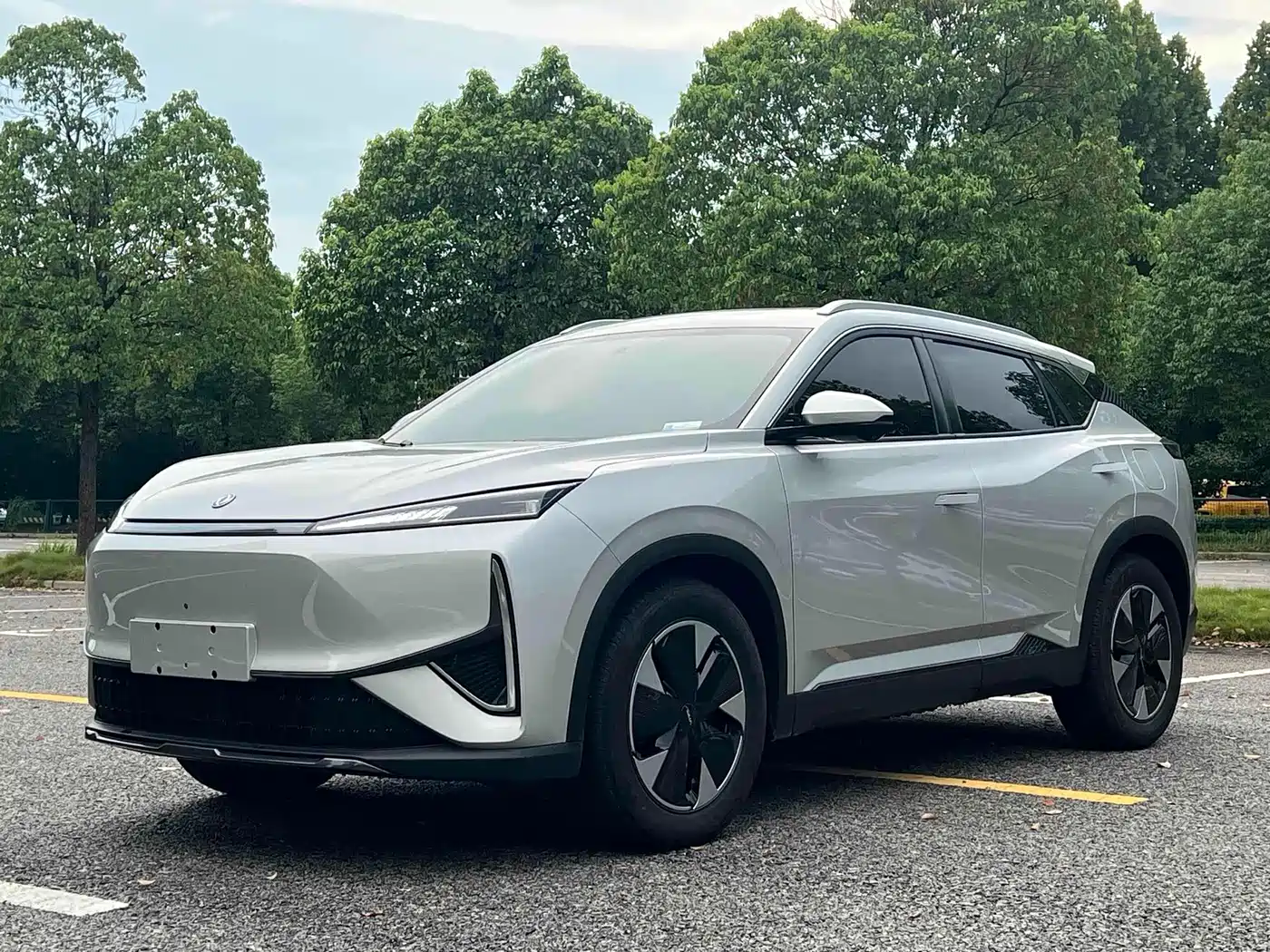
At a glance
- The L7 combines a turbocharged petrol engine, an electric motor, and a rechargeable battery in a compact SUV package.
- The line-up includes 205 and 518 version families with different equipment levels, so buyers should compare certified specifications rather than badge names.
- Export records may also identify the vehicle as the Dongfeng Fengshen L7.
- Export pricing is quote-specific and should be evaluated with the vehicle configuration, Incoterm, freight, payment terms, and destination charges included.
- New vehicles reduce condition uncertainty, while used L7 purchases require additional scrutiny of battery health, hybrid systems, mileage, and repair history.
- LHD availability, RHD sourcing or conversion, homologation, and aftersales support must be confirmed for the destination market before contracting.
Why the Dongfeng Aeolus L7 matters for export markets
The Aeolus L7 gives overseas buyers a relatively direct route into a five-door plug-in hybrid SUV from an established Chinese manufacturer. Its appeal is not novelty alone: the powertrain can support electric daily driving while retaining a petrol engine for longer journeys or uneven charging access. That combination is especially relevant to distributors designing a fleet offer for company cars, ride-hailing operators, and family-oriented retail customers who want SUV practicality without committing fully to a battery-electric fleet. The deciding question is whether its specification, homologation, and parts support can be made commercially viable in the destination market.
In markets where public charging is expanding but still uneven, a plug-in hybrid can offer a more practical adoption path than a pure EV. Fleets can use electric range during normal duty cycles and petrol range when routes extend beyond charging coverage. For importers, that means the L7 should be evaluated as a complete operating proposition: drivetrain efficiency, boot usability, warranty handling, and serviceability all matter as much as the headline equipment list. A model that is easy to support locally is generally more valuable than one with a marginally longer specification sheet.
Global demand for the L7 should be understood by use case rather than a sales ranking. It sits in the value-oriented compact SUV segment, where buyers often prioritize cabin space, visual size, comfort equipment, and operating cost. Those qualities can translate well into a dealer’s private-label import programme if the vehicle is certified correctly and supported with spare-parts arrangements. Conversely, a market expecting premium brands, advanced driver assistance, or a fully electric portfolio may need to look elsewhere. The L7 is most persuasive where its China-built value proposition fits tax rules and consumer preferences.
- Charge access shapes PHEV value.
- Compact-SUV positioning suits value buyers.
- Local support determines export viability.
Model range, trims and powertrain variants: how the lineup is structured and how to choose
The export line-up includes 205 Air, 205 Plus, 518 Pro, 518 Enjoyment, Model 518 Comfort Champion Edition, 518 Air, and 518 Luxury. These names separate equipment levels, but they should not be treated as universal range claims without the homologation file. For export purchasing, match the exact trim on the live listing to its battery version, certified electric-only range, combined range, and equipment sheet. That prevents a higher-numbered badge from being selected on name alone and creates a cleaner record for quotation, production-date verification, and eventual spare-parts ordering across suppliers.
Within the 205 family, Air and Plus should be compared primarily as entry and higher-equipped variants, while the 518 family covers several Pro, Enjoyment, Air, Luxury, and Champion Edition configurations. Equipment can include different comfort, infotainment, safety, and convenience content, so the safe approach is to compare standard and optional features line by line. For fleet buyers, prioritize driver-assistance functions, cabin durability, charging interface, and serviceability over cosmetic trim differences. For retail buyers, the equipment narrative should still be tied to parts commonality and expected resale in the destination country.
Because this is a plug-in hybrid rather than a battery-only EV, the right range question has three parts: electric-only distance under the applicable test cycle, combined distance with the engine operating, and real-world usability after charging and temperature effects. The trim number alone does not resolve those issues. Ask for the battery capacity, charge specification, fuel-consumption figures, and test-cycle labels attached to the exact vehicle. Also confirm whether local rules recognize both fuel and electricity for tax, emissions, or fleet-accounting purposes before committing to a version intended mainly for electric commuting.
- Compare certified range, not trim numbers.
- Match equipment to fleet and retail needs.
- Verify battery data for each unit.
New vs used Dongfeng Aeolus L7: how export inventory is structured and how buyers choose
Export stock should be assessed vehicle by vehicle because apparent model-level similarity can hide differences in production year, trim, battery specification, mileage, condition, and documentation. New vehicles generally offer the cleanest chain of ownership and the least uncertainty about wear, but the buyer still needs to verify factory status, production date, and whether the car has been registered or prepared for another market. Used L7 examples can make sense where their lower acquisition cost offsets battery condition and repair risk. The correct comparison is landed cost against expected life, not purchase price alone.
For a used plug-in hybrid, request a battery state-of-health report, confirmation of charging function, and evidence of the reported odometer. Review whether software, hybrid-system warnings, or accident repairs are disclosed, and insist on an independent inspection rather than relying on cosmetic images. Battery degradation can be difficult for a buyer unfamiliar with electrified vehicles to interpret, while maintenance history may be incomplete. A used unit can therefore suit an experienced buyer or a test fleet, but it should not enter a large rollout without documented technical acceptance and a clear parts and warranty plan.
New inventory is often easier to standardize when a distributor is building one model programme, but standardization still requires freezing the trim matrix. Decide which variants cover entry fleet demand, higher-specification retail demand, and local regulatory needs, then request quotes against that matrix. For used sourcing, allow for mixed condition and individualized inspection. Neither route guarantees availability at a chosen moment, so current unit status must be checked in the live listings. A quotation remains valid only for the described vehicle and configuration; a model-level enquiry does not reserve an allocation.
How export pricing works: the factors behind a live listing price, and how to read one
A live L7 export price is a structured commercial quote rather than a fixed model-wide amount. The vehicle’s year, exact trim, battery or range version, mileage and condition can establish its base value. Commercial variables then alter the final figure, including the seller’s location, order quantity, payment timing, exchange-rate movement, and the chosen Incoterm. Freight, insurance, inspection, documentation, and destination charges may sit inside or outside the displayed price. Always read the currency, tax status, validity period, included accessories, and payment conditions before treating the number as comparable with another supplier.
Incoterm selection changes what the quoted amount actually buys. An ex-works price leaves the buyer responsible for collection, export handling, loading, and onward freight, while a delivered or CIF arrangement may allocate more of the transport journey to the seller. Neither term automatically includes import duty, VAT, customs clearance, port charges, or final inland delivery in the buyer’s country. Ask for a written breakdown separating vehicle cost, inland China charges, origin handling, main carriage, insurance, and destination-side costs. This makes it possible to compare offers with different delivery scopes without assuming one is cheaper.
Buyers should use the live unit page as the starting record, not the end of due diligence. Confirm that year, trim, battery version, mileage, condition, steering orientation, and options match the listing, and ask whether the seller will hold the vehicle while a quote is reviewed. A binding quotation should identify the unit or SKU, currency, Incoterm, payment deadline, inspection rights, and transfer of title or risk. When comparing L7 listings, normalize them into a landed-cost worksheet; the visibly lowest vehicle price can otherwise conceal higher freight, tax, or payment costs.
- Compare quotes under one Incoterm.
- Normalize freight, tax, and payment terms.
- Confirm unit identity and quote validity.
MOQ, ordering and payment: single units vs consolidating a container
MOQ is an order-policy question, not a fixed property of the L7 model. Some suppliers may accept one unit, while others require a batch or offer better economics for a mixed-model container. Ask whether the advertised MOQ applies to one SKU, a trim family, or the full container, and whether mixed configurations can share one shipment. For a trial order, one unit may be the simplest way to validate paint, equipment, charging, and parts before scaling. For a full rollout, consolidation can substantially reduce overall freight and handling cost per vehicle.
A unit-based order should move through a controlled sequence: select the live listing, request a written specification and pro forma invoice, verify payment and documentary requirements, complete inspection, and then release the shipment against the agreed balance. The invoice should state the exact vehicle, quantity, price currency, Incoterm, serial or SKU reference, production year, and agreed delivery scope. Do not treat a general catalogue request as a purchase order or assume that a quotation reserves stock. Any deposit, cancellation term, inspection rejection process, or refund condition should be documented before funds are transferred.
Container consolidation requires more control than simply adding multiple names to an order. Confirm that each unit has an agreed trim and specification, that the supplier can combine the required quantities, and that the consolidated quantity satisfies each supplier’s MOQ and shipping rules. Agree who pays for loading, securing, insurance, inspection, and export documentation. Buyers should also decide how mixed-year or mixed-trim units will be valued and re-sold. For fleet programmes, a sample inspection is valuable because it can reveal assembly or finish differences that would otherwise affect acceptance of the full batch.
Shipping, homologation and market compliance caveats: LHD/RHD and import rules by country
Steering configuration is an early export check. China predominantly supplies left-hand-drive vehicles, so an L7 intended for a right-hand-drive market must be confirmed as RHD from the factory or handled through an approved conversion route. Do not assume a seller can change steering at the port without implications for homologation, warranty, insurance, or component supply. Buyers should specify the required configuration in the RFQ and verify it on the unit record. Availability, lead time, and conversion scope must then be established separately for the destination country rather than inferred from the vehicle’s general export availability.
Local market compliance is separate from being exportable from China. Depending on the destination, the importer may need to address vehicle type approval, emissions, safety, lighting, cybersecurity or software update rules, noise, warranty, labeling, taxation, and charging-related requirements. None of these should be presumed satisfied by a Chinese factory certificate. Provide the VIN or exact vehicle identifiers to the local authority or qualified homologation specialist early, and retain the original homologation documents with the vehicle. The importer remains responsible for confirming what applies in the country of registration before contracting and payment.
Shipping planning should begin before payment because the vehicle configuration affects both transport and paperwork. Secure the unit through inspection, confirm battery and charging documentation, agree whether the vehicle is rolled, containerized, or otherwise handled under the carrier’s rules, and verify export declarations and original manufacturer documents. Freight cost depends on origin and destination ports, route, container or roll-on/roll-off space, season, fuel surcharges, insurance, and last-mile delivery. Transit time is similarly variable, so avoid promising a fleet delivery date until the carrier and customs pathway are confirmed in writing for the importer.
- Specify LHD or RHD upfront.
- Start homologation before contracting.
- Confirm freight scope and documents.
Who should buy the L7 — and who should pick a different vehicle
The L7 is a strong candidate for an importer that wants a practical electrified SUV, especially where drivers can charge regularly but still need petrol range for regional travel or emergency use. It also suits company-car and fleet programmes that value a conventional SUV shape, a broad equipment ladder, and an acquisition-cost-led value case. The strongest business case combines sensible trim selection with local charging availability, realistic duty-cycle energy calculations, and a parts plan. A fleet that expects substantial electric mileage without dependable charging may achieve materially less benefit than expected.
Conversely, buyers focused on a pure-electric platform, premium cabin materials, or a strong performance brand may be better served by another model. The L7’s plug-in system also carries more complexity than a conventional combustion vehicle, so drivers who will never charge it should compare it with a standard hybrid or efficient ICE alternative rather than paying for capability they cannot use. Very low annual mileage, limited charging access, hot-climate duty cycles, or local incentives that favour zero-emission vehicles can weaken the proposition. An honest use-case analysis should precede any fleet discount.
The L7 also fits buyers who accept Chinese-market specification, validate it thoroughly, and build a localized service proposition. Check whether the destination has a parts channel, whether diagnostic and battery work can be supported, and whether warranty claims can be administered across borders. A distributor with little aftersales infrastructure may obtain a lower price but lose value through downtime and unsold stock. For used L7 acceptance, add battery-health and hybrid-system checks to the inspection. For new units, a controlled pilot can verify customer fit, charging habits, and service demand before a larger order.
- Best with regular charging and travel.
- Poor fit for strict BEV needs.
- Validate aftersales before scaling.
Main rivals and how the L7 compares
BYD Song Plus DM-i is a direct Chinese-market plug-in hybrid SUV benchmark and may be familiar to more local buyers. Its established brand presence can be an advantage for resale and consumer recognition, so the L7 should win on a clear combination of trim value, equipment, warranty handling, or delivered economics rather than price alone. Compare certified electric-only and combined range, charging provision, boot practicality, driver assistance, and local parts support. The closest alternative depends heavily on the destination’s dealer network and whether buyers prioritize resale familiarity or a distinctive value-oriented specification.
Geely Galaxy Starship 7 EM-i competes in the same modern PHEV family-SUV territory, combining electrified daily mobility with long-distance range capability. It is a relevant benchmark for buyers who place weight on contemporary cabin technology, hybrid calibration, and the strength of Geely’s brand proposition. The Aeolus L7 may offer a different balance of conventional SUV packaging, trim availability, and export economics, but those claims must be tested against a live, destination-compliant quote. For fleet customers, ask both products to be compared on total operating cost, service intervals, parts availability, and residual-value assumptions.
Changan Uni-Z iDD is another relevant Chinese PHEV SUV competitor, particularly for fleet and family buyers wanting electrified efficiency in a familiar utility format. The L7 should be judged against it on the same commercial checklist: certified range for the destination cycle, real-world charging assumptions, equipment, warranty, homologation, and aftersales reach. Changan may offer a stronger or weaker fit depending on local brand awareness and importer support, just as the L7’s fit depends on Dongfeng acceptance in that market. A structured side-by-side quote and parts plan is more reliable than brochure figures alone.
- Compare destination-cycle range properly.
- Include warranty, parts, and resale.
- Use landed quotes, not headlines.
Live Dongfeng Aeolus L7 export inventory
View all listings →Real units currently on ChinaCarDirect with per-unit asking prices and MOQ. Availability updates live from the catalogue.
How to buy a Dongfeng Aeolus L7 from China
-
1
Define the operating case
Map daily distance, charging access, regional travel, passenger loads, and towing needs. Confirm that local tax, emissions, and fleet policies make a plug-in hybrid commercially suitable.
-
2
Build a trim matrix
Select the intended Air, Plus, Pro, Enjoyment, Champion Edition, Air, or Luxury configurations. Compare each version’s certified range, equipment, charging details, and expected parts commonality.
-
3
Review live units
Check the current listings for year, trim, battery version, mileage, condition, steering configuration, images, and seller details. Request the exact vehicle specification before calculating a landed cost.
-
4
Normalize the landed cost
Compare quotes under the same Incoterm and include freight, insurance, inspection, documentation, exchange-rate effects, payment terms, and likely destination charges.
-
5
Lock order terms
Confirm the applicable MOQ, single-unit or container option, allocation procedure, deposit, cancellation terms, inspection rights, and final balance conditions in a pro forma invoice.
-
6
Inspect, document and ship
Approve the vehicle after inspection, verify serial numbers, production year, condition, and export documents, then release the balance and shipment under the agreed Incoterm.
L7 vs rivals
| BYD Song Plus DM-i | A direct PHEV compact-SUV benchmark with potentially broader buyer recognition and resale familiarity in some markets. Compare the L7 on trim value, certified range, charging, equipment, warranty administration, and local parts support rather than considering the vehicle price alone. |
|---|---|
| Geely Galaxy Starship 7 EM-i | A close Chinese PHEV family-SUV alternative for buyers focused on modern cabin technology and electrified daily mobility. The L7 may provide a different balance of conventional SUV packaging and export economics, so both should be tested against destination-compliant quotes and operating-cost assumptions. |
| Changan Uni-Z iDD | A relevant PHEV SUV competitor for fleet and family buyers seeking electrified efficiency in a utility format. Compare certified destination-cycle range, charging assumptions, equipment, homologation, warranty, aftersales reach, and parts availability. |
Frequently asked questions
How is the export price of a Dongfeng Aeolus L7 determined?
Each live quote should be evaluated by exact year, trim, battery or range version, mileage or condition, and then adjusted for exchange rate, payment terms, freight, insurance, documentation, and the selected Incoterm. The same model can therefore carry different quotes. Use the current live L7 listings for the binding per-unit price and ask the seller to state what is included.
Is the Dongfeng Aeolus L7 an EV, and what range should buyers expect?
The L7 is a plug-in hybrid: a petrol engine, electric motor, rechargeable battery, and hybrid transmission allow electric-only and combined driving. Range depends on the exact 205 or 518 version, applicable test cycle, weather, speed, load, and charging habits. Request battery capacity and certified electric-only and combined range for the exact unit rather than relying on trim names.
Is a new Dongfeng Aeolus L7 better than a used example?
A new vehicle generally provides a clearer ownership history and less uncertainty about wear, while a used unit may offer a lower acquisition cost. Used PHEV purchases require additional checks of battery state of health, charging operation, hybrid-system warnings, odometer evidence, and repair history. Availability changes, so compare the current live listings rather than assuming one category will always be available.
What is the MOQ for ordering a Dongfeng Aeolus L7?
The L7 model itself has no universal MOQ; the supplier sets order policy by listing and transaction. Ask whether one unit is accepted, whether the minimum applies per SKU, trim family, or container, and whether mixed models can be consolidated. Any agreed minimum and allocation should be stated in the pro forma invoice.
How long does shipping take, and what determines the cost?
Transit time and freight cost depend on origin and destination, carrier schedule, route, container or roll-on/roll-off capacity, season, fuel surcharges, insurance, customs, and last-mile delivery. Because plug-in hybrid units also have battery and charging documentation requirements, confirm handling requirements with the carrier. Do not rely on a generic transit estimate without a booking for the actual route and readiness date.
Are spare parts available for the Dongfeng Aeolus L7?
Parts support depends on the destination, exact model year, trim, and the supplier’s parts channel. Before ordering, request key part numbers, prices, lead times, packaging details, and cross-application guidance for items such as lamps, body panels, brake components, charging accessories, and hybrid-system service items. An after-sales plan should be agreed before a fleet rollout.
Is a right-hand-drive Dongfeng Aeolus L7 available for export?
China predominantly produces left-hand-drive vehicles, while some destinations require right-hand drive. RHD availability may depend on factory sourcing, a suitable model variant, or an approved conversion route, and it should not be inferred from a general L7 listing. Confirm the steering configuration, homologation, warranty, insurance, parts supply, and lead time for the specific unit.
How do I order a Dongfeng Aeolus L7 from China?
Begin with the live L7 listings, select the relevant trim and unit, and request a written specification and pro forma invoice. Confirm MOQ, price currency, Incoterm, deposit, inspection rights, documentary requirements, and the balance procedure before paying. After inspection and document verification, release the balance and shipment under the agreed terms.
Ready to source the Dongfeng Aeolus L7?
Request a current Dongfeng Aeolus L7 export quote with unit specifications, Incoterm, MOQ, shipping options, and RHD availability through ChinaCarDirect.
Request a quote