
Dongfeng Fengxing Stellar S7 Export Buying Guide
Buy the Dongfeng Fengxing Stellar S7 from China with clear guidance on trims, range, pricing, MOQ, shipping, compliance and rival options for overseas buyers.
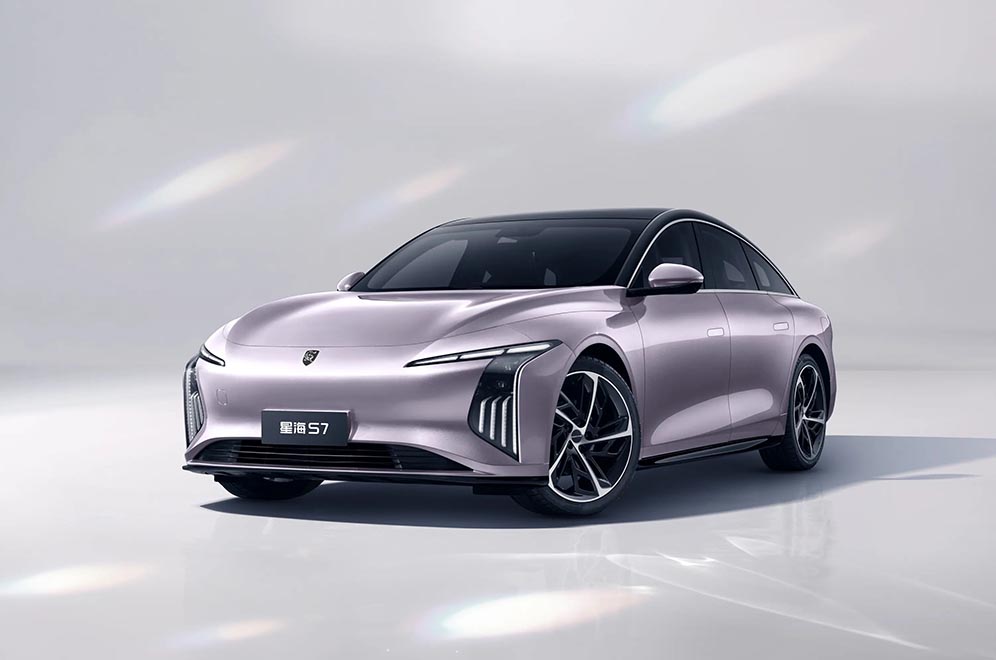
At a glance
- The Stellar S7 is a mid-size electrified crossover aimed at dealers and fleets seeking a more distinctive Chinese alternative.
- The line-up spans 555/565-designated editions and 235 km Extended Range versions, subject to unit-level verification.
- New and used buying decisions should be based on the VIN, configuration, condition, battery evidence and destination approval rather than the model name alone.
- Export prices move with edition, year, powertrain, condition, currency, freight and Incoterm, so only a current written quotation is binding.
- Homologation, steering configuration, charging infrastructure and aftersales support can determine suitability more than headline equipment.
Why the Dongfeng Fengxing Stellar S7 matters for export markets
The Dongfeng Fengxing Stellar S7 is a mid-size electrified crossover positioned between mass-market Chinese vehicles and higher-priced imported models. For overseas dealers and fleet operators, its relevance is not simply that it is a new China-origin name: it combines SUV packaging, contemporary styling and electrified drivetrain choices in a segment where buyers increasingly expect practical space, digital features and a more distinctive image. It can suit a distributor building a broader EV or range-extended portfolio without moving to a full luxury brand, provided local homologation and aftersales support are handled properly.
Global demand for the model is driven by the same affordability-and-technology equation that is reshaping several export markets. Buyers want vehicles that feel contemporary and are easier to electrify across a product line, yet they also need predictable registration, sensible charging assumptions and evidence that spare parts can be supported. The Stellar S7 is most credible in markets where imported new-energy vehicles are already accepted, charging coverage is expanding, and dealers can explain battery or range-extender ownership. In less mature markets, simplicity of servicing and total operating cost may matter more than headline equipment.
The best export proposition is therefore evidence-based rather than badge-led. A buyer should test whether the selected Stellar S7 configuration suits local road rules, charging infrastructure and customer expectations, then compare the landed cost with similarly sized electrified crossovers. Dealer launch, company-car fleets and distributor stocking are all plausible use cases, but each places a different weight on range capability, equipment and parts support. Review the Dongfeng Fengxing brand range for related models, and use current Stellar S7 listings as the source for available configurations rather than relying on an assumed export package.
- Mid-size electrified crossover.
- Built for dealer and fleet launches.
- Homologation shapes export value.
Model range, trims and powertrain variants: how the lineup is structured and how to choose
The Stellar S7 line-up is organized around several named editions rather than one generic specification. Export-facing names include 555 Luxury, 555 Joy, 555 Star Creation, 555 Fortune, 555 Light Enjoyment, Model 565 Comfort, 235 km Extended Range Enjoyment and 235 km Extended Range Luxury. These names help identify a vehicle, but they are not a substitute for the unit's build sheet. A buyer should request the exact equipment list, because the visible badging may not reveal every driver-assistance, comfort, infotainment or regional-standard difference that matters to an importer or reseller.
The most important choice is between the battery-electric versions associated with the 555 and 565 designations and the versions explicitly marketed as Extended Range. The 235 km figure belongs to the name of those extended-range editions and should not be read as their total travel distance; it normally denotes an electric-only claim under the relevant test cycle, while the combustion system provides additional range. For the other versions, do not convert 555 or 565 into certified range without checking the vehicle document, battery capacity, test standard and destination-market homologation approval.
Choose by operating scenario, not by the most elaborate badge. A company fleet may prioritize usable cabin space, charging compatibility, telematics and predictable servicing over cosmetic differentiation. A retail dealer needs equipment that helps the vehicle stand out, but should also understand which features are standard, optional or market-dependent. For mixed climates, ask about thermal management and battery charging limits in the actual specification. If the buyer intends to export used examples later, battery health and repair history become decisive, so the initial new-purchase choice should also consider local diagnostic access and replacement-part availability.
- Choose by operating scenario.
- Verify battery and motor documents.
- 235 km is not total range.
New vs used Dongfeng Fengxing Stellar S7: how export inventory is structured and how buyers choose
Export inventory should be read as a set of individual, saleable configurations rather than a fixed national product package. Each live record can differ by model year, edition, powertrain, production date, optional equipment and export readiness. A year shown in the name identifies the vehicle's production or registration context, but it does not alone prove local homologation or tell you how the car was previously used. The practical method is to select the required Stellar S7 attributes in the live inventory, inspect each SKU and request written confirmation for the exact unit being considered.
A new vehicle generally offers the cleanest initial ownership case: mileage and wear are not the central variables, the configuration is easier to define, and factory warranty, delivery preparation and documentation can be aligned before shipment. A used example can make sense where the buyer values immediate availability or lower acquisition cost, but the discount is not compensation for uncertainty. Ask for the VIN, service history, accident and repaint disclosures, battery state-of-health report for an electrified vehicle, charging-cycle information, tire condition and evidence that all electronic systems operate correctly before commitment.
Selection differs by buyer. A dealer should accept a used demonstration vehicle only after confirming that its presentation, software state and battery condition support resale; a fleet purchaser should prioritize uptime, telemetry and warranty over cosmetic originality. A used unit can suit a budget-conscious importer when independent inspection and a clear title reduce risk. Do not infer battery performance from the model name or original range claim. For every purchase, compare the unit quotation with inspection, transport and compliance costs, because an attractive acquisition price can be outweighed by remediation work.
- Compare VIN-level listings.
- New vehicles simplify warranty setup.
- Used cars need battery inspection.
How export pricing works: the factors behind a live listing price, and how to read one
An export listing price is the starting point for one vehicle, not a universal wholesale tariff. The base position changes with model year, edition, powertrain, battery or range version, production timing and market-linked supply conditions. Mileage and condition become relevant to used vehicles, while new units may carry separate charges for factory options, preparation, documentation or nonstandard market equipment. Currency movements also affect a quote. Because sellers may refresh prices, the only binding figure is the one displayed for the current unit or stated in a written quotation, supported by the specification that accompanies it.
Landed cost may move further because the vehicle must be financed, moved, insured, cleared and registered. Freight depends on transport mode, route, port or terminal charges, handling, security, seasonality and the carrier's battery-vehicle requirements. Incoterms define where risk and cost transfer, but the label alone does not disclose every fee. Compare quotations on the same term and confirm whether insurance, export documentation, local handling, taxes, duties and pre-delivery preparation are included. A lower vehicle price under one term may not produce a lower cost after arrival at the importer's chosen destination.
When reading a live record, look beyond the headline figure. Confirm the SKU or VIN, model year, exact edition, energy type, battery version, motor configuration, production date, mileage if applicable, color, included accessories, export status and expected readiness. Then check the stated Incoterm, payment schedule, validity period, lead time, warranty coverage and which documents are supplied. Ask whether the price is FOB, CIF or another basis and request an itemized pro forma invoice. Exact current price, minimum order and availability are shown per unit in the live Stellar S7 inventory and should be reconfirmed before deposit.
- Compare like-for-like Incoterms.
- Request itemized costs.
- Reconfirm before deposit.
MOQ, ordering and payment: single units vs consolidating a container
Minimum order quantity is a commercial condition, not a permanent model attribute. An individual vehicle may be procurable for a pilot order, while a distributor or fleet program can carry a different threshold because the supplier needs production planning, packing and freight efficiency. Do not copy an MOQ from an old catalogue: confirm the quantity attached to the specific live SKU and the seller's current quotation. Ask whether the quantity applies per model, per trim, per production batch or per consolidated shipment, and whether mixed editions are permitted within the same order.
Consolidating several units into one container can improve freight planning and give a dealer a broader customer-facing mix, but it also concentrates payment, inspection and delay risk. Imported vehicles may be consolidated with other compatible orders under a shared booking, while mixed powertrains can create documentation complexities. The importer remains responsible for every unit, whether it came from one seller or several. Model capacity by actual dimensions, securing requirements and carrier rules rather than assuming a fixed vehicle count. A consolidated order should preserve separate VIN-level inspection records and clear allocation of titles, keys and accessories.
A disciplined ordering sequence reduces ambiguity. First, define the destination, quantity, preferred edition and acceptable Incoterm; second, obtain a written quotation and pro forma invoice; third, agree the deposit, balance trigger, inspection standard, documentary pack and cancellation terms; fourth, approve the specific vehicle or production specification before release. Clarify whether the car is already available for shipment or must be produced, and how production delay is handled. Never rely on a chat message for the final configuration, and never release the balance solely because a photograph looks correct; match the VIN, invoice and inspection report.
- Confirm SKU-specific MOQ.
- Keep VIN-level records.
- Tie payment to document approval.
Shipping, homologation and market compliance caveats: LHD/RHD and import rules by country
Transport planning must account for the high-voltage battery as well as the vehicle dimensions and destination restrictions. Battery-powered cars are commonly moved by specialist roll-on/roll-off services or approved container arrangements, depending on the carrier and route. The shipping file should include the correct vehicle identification, declared energy type, battery documentation, customs paperwork and any carrier-specific instructions. Freight quotations should state the loading port, destination terminal or port, service basis, transit assumptions and charges for inspections, escort, storage or documentation. Delays can arise when cargo documentation, port handling or vehicle condition does not match the booking.
Steering configuration is a source-market decision, not a cosmetic conversion request. Left-hand-drive vehicles may align with many markets, but right-hand-drive production can be subject to model availability, factory lead time and minimum-order conditions. A converter's claim that a vehicle can be converted does not prove that the resulting car meets local type-approval, safety, registration or insurance rules. Ask for the VIN and steering position stated in the factory build sheet, and obtain written confirmation from the destination authority or an approved compliance adviser. Parts, display functions and servicing procedures may also differ between regional builds.
Market compliance is a chain, and every link must be planned before payment. It can include VIN and registration rules, customs classification, duty and tax treatment, emissions requirements, charging and electrical standards, cybersecurity or software controls, warranty provisions and compulsory insurance. European buyers may need whole-vehicle type approval or destination-specific authorization, while other countries can apply different inspection, emissions or conformity processes; no single export package satisfies every market. The importer of record should confirm which party holds approval, who pays duties and taxes, what certificates travel with the car and what must be completed after arrival.
- Plan compliant battery transport.
- Verify factory steering position.
- Confirm local approval ownership.
Who should buy the Stellar S7 — and who should pick a different vehicle
The Stellar S7 is a strong candidate for an importer seeking a distinctive mid-size crossover with both battery-electric and extended-range positioning. Dealers can use different editions to address customers with reliable charging access and those who want electric daily driving plus a combustion fallback. It may also suit company fleets that want a modern image and configurable equipment, provided the fleet can support charging or the chosen extended-range operating model. The business case improves when the importer can bundle homologation, staff training, parts planning and marketing rather than treating the vehicle as an isolated low-cost purchase.
It is a weaker choice for a buyer who requires long-established resale value, a dense nationwide service network, proven towing or heavy-duty capability, or a model whose compliance path is deeply understood. Low purchase budgets can also be undermined by freight, duties, insurance, commissioning and unsold-stock carrying costs. Fleets with no charging plan should not select an electrified configuration because its catalogue entry looks economical, and right-hand-drive markets should not assume a conversion will be accepted. Any buyer needing high uptime should insist on parts availability and a service plan before finalizing the trim.
Before approving an order, build a total-cost worksheet covering the vehicle quote, inland transport, freight, insurance, import charges, local registration, inspection, software setup, service training, warranty work and eventual resale. For a fleet, also model energy consumption, charging availability, downtime and replacement procedures. For a dealer, test whether the chosen edition can be supported without tying up too much capital in multiple configurations. Comparing that worksheet with the main rivals will show more than a vehicle-price difference: regulatory timing, service access and residual risk can outweigh a small quotation change.
- Strong for crossover portfolios.
- Needs charging or range planning.
- Weak without local service support.
Main rivals and how the Stellar S7 compares
The Leapmotor C10 is one of the closest comparisons because it is also a mid-size crossover sold with battery-electric and range-extended choices. For a buyer comparing the Stellar S7, the C10 deserves attention on cabin packaging, range versions, charging provision, driver technology and local aftersales support. Neither vehicle should be selected from the badge alone: obtain the exact export specification for each, compare usable range in the same climate and test whether the dealer can source parts and software support. The better choice is the model whose homologated specification and service proposition fit the market more closely.
The BYD Sea Lion 07 competes from a related large mid-size SUV position, with electrified drivetrain options and an emphasis on design and cabin technology. It is relevant where buyers value a more established badge identity, plug-in hybrid familiarity or confidence in an international parts ecosystem. Compare it carefully with the Stellar S7's battery-electric and extended-range route rather than assuming the powertrain labels are interchangeable. Charging method, boot usability, ride, warranty coverage, software language and local technician training can influence fleet economics. In tenders, require like-for-like quotations and the same destination compliance assumptions for both models.
Exeed Sterra ET is another benchmark because its export positioning also brings battery-electric and range-extended mid-size SUV alternatives into the same set. The Sterra ET may be attractive to buyers focused on a premium cabin and technology narrative, while the Stellar S7 should be assessed for the balance it offers within the Dongfeng Fengxing range. Decisive issues are not brochure hierarchy but exact motor and battery versions, measured efficiency after delivery, equipment localization, warranty enforceability, spare-part lead time and distributor support. A side-by-side landed-cost and service plan will be more informative than declaring a universal winner.
- Compare homologated specifications.
- Prioritize local service support.
- Use landed-cost worksheets.
Live Dongfeng Fengxing Stellar S7 export inventory
View all listings →Real units currently on ChinaCarDirect with per-unit asking prices and MOQ. Availability updates live from the catalogue.
How to buy a Dongfeng Fengxing Stellar S7 from China
-
1
Set the destination and operating requirements
Choose the destination, required steering configuration, charging pattern, expected volume and aftersales capability before narrowing the model.
-
2
Select a live configuration
Review the current Stellar S7 listings by model year, edition and powertrain, then shortlist vehicles using the exact SKU and VIN where shown.
-
3
Request comparable quotations
Ask for the vehicle price, MOQ, Incoterm, freight inclusions, payment milestones, lead time and warranty terms in writing.
-
4
Validate compliance and documents
Confirm the VIN, production date, title, steering position, battery or powertrain details and destination-market approval requirements before paying.
-
5
Contract with inspection conditions
Use a pro forma invoice that defines the deposit and balance, document pack, pre-shipment inspection, rejection rights and production terms.
-
6
Approve the exact vehicle
Match the VIN and build sheet to the contract, then inspect the exterior, interior, mileage, tires, electronic systems and agreed optional equipment.
-
7
Ship and complete clearance
Book compliant battery transport, provide the agreed documents, track arrival, complete customs and registration, and arrange warranty and parts handover.
Stellar S7 vs rivals
| Leapmotor C10 | A close segment comparator with battery-electric and range-extended options. The C10 may be the better fit where its local dealer and parts network are stronger; the Stellar S7 should be selected only if its exact specification and support package deliver better value. |
|---|---|
| BYD Sea Lion 07 | A larger-feeling premium SUV competitor with EV and plug-in hybrid choices. Compare charging, cabin, warranty and local brand recognition rather than treating its hybrid route as identical to the Stellar S7's extended-range versions. |
| Exeed Sterra ET | One of the closest alternatives in the technology-led mid-size EV and range-extended segment. It may suit buyers prioritizing premium presentation, while the Stellar S7 provides several named editions for distributors seeking configuration flexibility. |
Frequently asked questions
How is the Dongfeng Fengxing Stellar S7 export price determined?
A live price is built around the unit's year, edition, powertrain or battery version, condition, production timing and seller terms. Freight, insurance, port handling, exchange rates, duties and the chosen Incoterm can change the landed cost. Check the current Stellar S7 listings for the per-unit asking price and request a written quotation for the exact vehicle and destination.
Which powertrain and range specifications should I expect?
The line-up includes 555/565-designated battery-electric versions and editions carrying a 235 km Extended Range designation. The 235 km label is not the vehicle's total driving range, and the applicable test cycle should be confirmed. Ask each seller for battery capacity, motor output, charging method, drivetrain and the homologated range shown in the vehicle documents.
Is a new or used Stellar S7 better for export?
A new car is usually easier to specify and align with factory warranty and delivery preparation. A used car can suit buyers prioritizing acquisition cost, but requires VIN-level inspection, service and accident history, battery health evidence and confirmation of exportability. Availability changes, so use live listings rather than assuming either category is always present.
What is the MOQ for buying from China?
MOQ is set by the live SKU, seller, trim and order plan rather than being a permanent model rule. A pilot purchase may be possible, while fleet or production orders can carry different thresholds and container consolidation may be offered. Check the MOQ on the current listing and have it repeated in the quotation and pro forma invoice.
How long does shipping take and what affects the cost?
Transit time and freight cost depend on origin and destination ports, carrier, route, season, container or roll-on/roll-off method, handling, insurance and battery-vehicle requirements. The quotation should state the Incoterm, loading point, destination and included charges. Allow additional time for production, inspection, customs clearance, port handling and local registration.
Can spare parts be supplied for the Stellar S7?
Parts can be ordered against the exact VIN and model or edition code, but availability depends on supplier stock, regional configuration and shipping route. Before purchase, ask for a recommended initial parts list, warranty-process contacts, diagnostic access and realistic lead times for wear items and electronics. A car without a workable local support plan may be unsuitable for fleet use.
Is a right-hand-drive Stellar S7 available?
Right-hand-drive availability depends on the factory configuration and the seller's current production or stock position; it should never be inferred from the model name. Confirm the steering position in the build sheet and VIN, and obtain the MOQ and lead time in writing. A later steering conversion does not automatically preserve local type approval or insurance acceptance.
How do I order the Dongfeng Fengxing Stellar S7 from China?
Start with a live listing, then request a written quote stating the exact SKU, destination, Incoterm, MOQ, payment milestones, document pack, inspection standard and lead time. After verifying compliance and production details, approve the pro forma invoice and pay through the agreed method. Release the balance only after the VIN, specification and pre-shipment inspection match the contract.
Ready to source the Dongfeng Fengxing Stellar S7?
Request a current Stellar S7 quotation with unit details, MOQ, Incoterm and export-document scope.
Request a quote