
Dongfeng Fengxing Sx6 Export Buying Guide
Export buying guide for the Dongfeng Fengxing Sx6, covering 1.6L and 1.5T options, trim choice, pricing logic, shipping, compliance and rival SUVs.
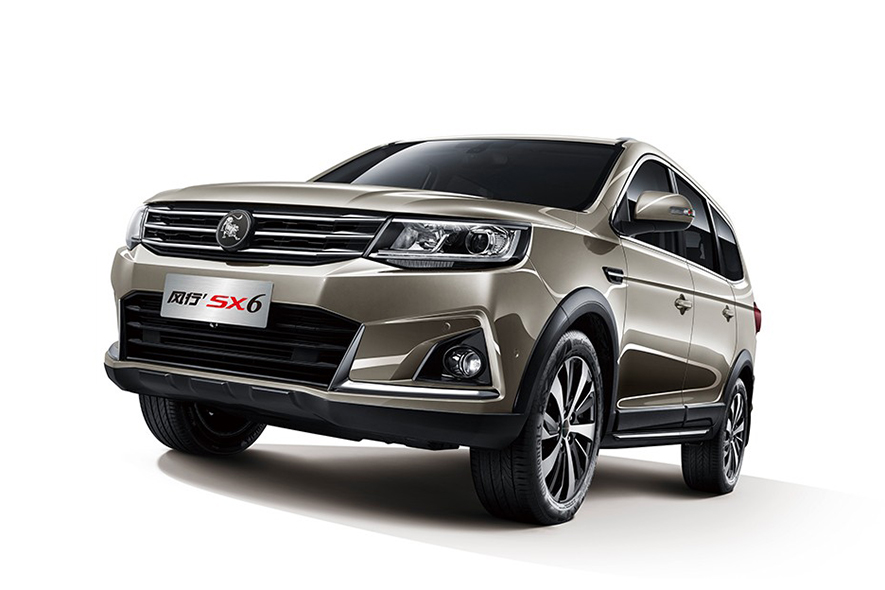
At a glance
- The Sx6 is a compact gasoline SUV suited to cost-led importers, small dealers and fleet buyers seeking conventional propulsion.
- The searchable range includes 1.6L manual and CVT versions, plus a separate facelift 1.5T CVT branch.
- Manual models suit cost and driver-control priorities, while CVT models reduce adaptation requirements for commercial drivers.
- For any listing marked new, distinguish sales condition from model-year age, specification and cosmetic condition.
- Live per-unit pricing, order quantity and availability must be confirmed in current listings before a purchase commitment.
- Steering configuration, destination-country homologation and parts support are decisive alongside vehicle cost.
Why the Dongfeng Fengxing Sx6 matters for export markets
The Dongfeng Fengxing Sx6 occupies the compact crossover segment, a category that appeals to overseas dealers serving buyers who want a practical SUV without moving into a larger, costlier class. Its relevance for export is therefore tied less to global brand recognition and more to accessible procurement, familiar gasoline propulsion and a choice of manual and automated transmissions. For distributors building a first SUV programme, the model offers a straightforward proposition: compare versions, confirm local suitability, then judge the fully landed cost against competing compact crossovers. That discipline matters because purchase appeal must survive freight, duties, homologation and after-sales support.
Demand for this model should be assessed at segment level rather than by assuming that one specification will travel unchanged between countries. Compact SUVs are commonly considered by small dealer groups, municipal buyers and fleet operators that need a raised seating position, usable luggage capacity and conventional refuelling. The Sx6’s mix of manual and CVT 1.6L versions can help match local driving preferences and fleet-driver experience, while the 1.5T facelift option gives importers another powertrain route. The commercial case, however, rests on each market’s vehicle age rules, tax structure, fuel costs and service expectations.
An importer evaluating the Dongfeng Fengxing Sx6 for export should treat the brand as a sourcing proposition that must be supported locally. Parts availability, technician familiarity, diagnostic access and residual-value confidence can matter as much as the initial vehicle price, especially for a model less familiar than established Japanese, Korean or European marques. A viable programme should include a parts plan, a clear scope of aftersales support and an understanding of which body, engine and emissions variants are easiest to service. Those checks turn a promising compact SUV into a commercially supportable product.
- Compact crossover export proposition.
- Manual and CVT 1.6L choices.
- Service support determines viability.
Model range, trims and powertrain variants: how the lineup is structured and how to choose
The searchable Sx6 lineup is centered on a 1.6L gasoline engine paired with either a manual or CVT. Trims follow a familiar hierarchy—Comfort, Premium, Luxury, Executive and Elite appear in marketplace names, while a facelift 1.5T CVT Luxury with a China V designation appears as a separate branch. These labels help identify equipment tiers, but they are not a substitute for the complete vehicle description. Engine badge, transmission, trim, model year, emissions version and fitted options should always be confirmed on the individual listing before placing a purchase order.
The manual 1.6L versions generally suit buyers who place purchase cost, mechanical simplicity and direct driver control ahead of shift refinement. They are also relevant where drivers are already familiar with manuals, although the actual gearbox ratios, clutch feel and fuel economy should be checked rather than inferred from the trim badge. The CVT versions reduce the learning burden for commercial drivers moving between vehicles and may suit markets where stop-start traffic is common. For either gearbox, evaluate payload, luggage space, ride quality, noise and service access under the operating conditions expected in the destination market.
The facelift 1.5T CVT branch is worth separating from the core 1.6L range because engine character, equipment and likely running costs can differ. Buyers should not treat “facelift” as a complete specification: confirm the exact trim, production year, emissions designation, steering configuration and standard equipment. A sensible selection method is to shortlist one manual, one 1.6L CVT and the 1.5T CVT, then score each against fleet policy, driver comfort, fuel use and parts support. If the live listing leaves a decisive field blank, request that evidence before treating the vehicle as comparable.
- 1.6L gasoline engine family.
- Manual or CVT transmission.
- Separate facelift 1.5T CVT branch.
New vs used Dongfeng Fengxing Sx6: how export inventory is structured and how buyers choose
The Sx6 export inventory should be read with care because “new” describes sales condition, not necessarily recent production. Factory-new vehicles from earlier model years can coexist with later examples, and the marketplace records include multiple 1.6L trim configurations and a facelift 1.5T branch. For fleet buyers, this distinction is useful: an older new vehicle may reduce acquisition and depreciation pressure, while a newer model can bring a more contemporary powertrain or specification. Always ask the seller to confirm whether the unit is unregistered, has never been sold, and carries any factory or transit damage.
A used Sx6 can make sense for a dealer seeking a lower entry cost, an immediate resale-ready vehicle or a known unit that can be inspected before commitment. The trade-off is that condition becomes a central part of the price: mileage, service history, previous repairs, paintwork, tyres, interior wear and mechanical condition all affect the commercial calculation. Ask for the vehicle identification number, registration status, title or ownership documents, service records and a current inspection report. Any discrepancy between the listing description and the physical unit should be resolved in writing before payment.
The most practical choice depends on the buyer’s route to market. Dealers with test-and-learn budgets may accept an older, correctly documented example to establish local demand, while fleet operators usually prefer more uniform specifications that simplify parts planning and driver training. New-old stock can provide a lower acquisition point without used-vehicle wear, but it may carry older technology, a dated emissions label or cosmetic storage issues. Compare candidates on total expected ownership cost, not age alone, and include inspection, repairs, registration, freight and unsold-stock carrying cost in the decision criteria.
- New does not mean recent model year.
- Used units require condition evidence.
- Standardization helps fleet planning.
How export pricing works: the factors behind a live listing price, and how to read one
An Sx6 export price is not one fixed number because the vehicle, transaction and destination can all change the commercial outcome. The model year and condition establish the starting point, while trim, engine, transmission, mileage and equipment affect comparability. Currency movements and seller terms can also change the quoted vehicle price. Freight, insurance, port charges, customs duties, taxes, registration and dealer margins belong in the landed-cost calculation. This is why a Dongfeng Fengxing Sx6 export price guide should explain the methodology and direct buyers to the live unit rather than publish a misleading catalogue-wide figure.
When reading a live listing, separate the base vehicle amount from the full procurement cost and confirm what the seller includes. Check the production or model year, exact engine and gearbox, trim, steering side, condition, mileage where applicable, and whether the displayed amount is on an EXW, FOB, CIF or another basis. Ask whether port handling, inland transport, export documentation, inspection and warranty are included. Confirm the quote validity and payment currency, then model the destination charges separately. Two apparently similar Sx6 units are not comparable until their specification and Incoterm match.
For wholesale buyers, compare offers on a consistent landed-cost sheet and verify whether discounts apply to individual units, mixed grades or a consolidated shipment. A lower vehicle figure can be outweighed by heavier freight, unsuitable specification or expensive compliance work. Treat the amount shown on the current [live Dongfeng Fengxing Sx6 listings](https://chinacardirect.com/products?q=Sx6&brands%5B%5D=1222) as the live starting point for that unit, then request written confirmation of the final commercial terms. Negotiation should focus on the complete package—vehicle, documentation, delivery basis and after-sales support—not merely on the headline number for your destination.
- Compare identical specifications and Incoterms.
- Calculate freight, duty and tax separately.
- Use the live listing as quote baseline.
MOQ, ordering and payment: single units vs consolidating a container
MOQ is a seller or listing term, not a permanent attribute of the Sx6 model. Some offers may accept a single vehicle, especially when a buyer is testing demand or consolidating several units into one container, but the current rule must be confirmed for each listing. The live [Sx6 listings](https://chinacardirect.com/products?q=Sx6&brands%5B%5D=1222) should show the applicable order quantity, and a written quotation is the binding reference. Buyers should also establish whether additional units of the same trim are required, whether mixed model years can share a shipment and whether the seller reserves stock before payment. Do not infer a universal quantity from a catalogue search.
Ordering usually proceeds through specification confirmation, a supplier quotation, a pro forma invoice and payment milestones, followed by production or stock confirmation, inspection and release documentation. The sequence can differ for factory-new stock and ready-to-load vehicles, so the contract should state whether the Sx6 is already completed, how long it remains reserved and what happens if the agreed vehicle fails inspection. Payment methods, deposit terms and the balance trigger should be linked to objective milestones. For a larger transaction, documentary credit or another protected payment structure may be appropriate, subject to the seller’s approved process and the buyer’s bank.
Consolidating a container can improve freight efficiency, but it also concentrates risk. A mixed load of model years, trims, transmissions or steering configurations may complicate parts stocking, resale timing and driver familiarisation. Before ordering, build a loading plan that matches each unit to a buyer or market segment, estimate landed cost for every row and avoid filling unused space with an unsuitable vehicle merely to meet a freight threshold. Confirm the permitted vehicle combination with the supplier and freight forwarder, and keep serial numbers, trim codes and photographs attached to the final packing list before authorizing shipment under the agreed trade term.
- Confirm MOQ on each listing.
- Tie payments to clear milestones.
- Match container mix to real demand.
Shipping, homologation and market compliance caveats: LHD/RHD and import rules by country
Steering configuration is the first destination check. A left-hand-drive Sx6 should not be assumed to be convertible or already approved for right-hand-drive use, and the reverse is also true. The vehicle identity, steering side, lamps, seat-belt arrangement and related hardware must be examined against local registration rules. Conversion may be possible for some markets, but it adds cost, lead time and technical risk if it is not a complete, inspected configuration. Ask for clear photographs of the dashboard and steering position, then have the supplier confirm whether the unit is factory LHD, factory RHD or converted.
Chinese emissions labels such as China V or China VI describe the source-market version; they do not by themselves prove approval for import or registration elsewhere. Depending on the country, authorities may impose type-approval, emissions, safety, noise, cybersecurity, tax or age-of-vehicle requirements, and inspection may focus on altered components. Confirm the VIN and homologation status with the destination’s competent authority or a qualified local conformity specialist before committing. Also verify that the importer, rather than the buyer alone, holds the required registration and customs registrations and insurance cover in place.
Freight planning should begin before payment because route choice affects cost, lead time and risk. An SUV may travel containerized or as a ro-ro vehicle, depending on origin, port capacity and the forwarder’s available booking. The quote should state the loading method, chargeable volume or deck space, port pair, included services and cut-off dates. Confirm export inspection, customs documents, VIN consistency, securing requirements and insurance before loading. Upon arrival, allow time for customs clearance, port charges, conformity work and transport to the dealer or fleet base rather than treating the sailing date as the delivery date.
- Verify factory LHD or RHD.
- Local approval overrides emissions labels.
- Budget post-arrival clearance and transport.
Who should buy the Sx6 — and who should pick a different vehicle
The Sx6 best fits overseas buyers who need a compact, gasoline-powered crossover and can build a practical support plan around it. It is especially relevant to small importers, independent dealers and fleet buyers testing a cost-led SUV programme where manual or CVT familiarity is useful and charging infrastructure is not a deciding factor. The 1.6L variants offer two transmission styles for different driver priorities, while the 1.5T CVT offers a separate facelift choice. Suitability is strongest where local homologation, parts supply and expected resale values are understood before launch rather than assumed.
It is less suitable for buyers whose core requirement is battery-electric range, rapid charging, premium cabin technology, established residual values or a mature global service network. Those priorities should not be compromised merely because the acquisition proposition is attractive. Buyers needing guaranteed right-hand-drive production, advanced driver assistance, a specific emissions certificate, heavy towing, seven-seat capacity or abundant cargo volume should confirm those requirements against the actual vehicle or consider another model. A low procurement price cannot compensate for a mismatch between the SUV and the buyer’s operating environment or purchase obligation.
The safest commercial approach is a staged purchase. Begin with a representative unit or small mixed batch, measure enquiry and conversion, and inspect parts lead times before committing to volume. Compare the Sx6 with at least one mainstream rival on purchase price, expected fuel use, insurance, servicing, downtime and resale. For a fleet, standardize transmission and trim where possible, while preserving a contingency plan for parts and repairs. If the vehicle meets market needs but aftersales support remains uncertain, secure technical documentation and spare-parts availability before launch in the destination country.
- Best for cost-led compact SUV fleets.
- Transmission choice supports driver fit.
- Poor fit where EV or premium support matters.
Main rivals and how the Sx6 compares
The Toyota Corolla Cross is the closest global benchmark for a compact crossover buyer comparing the Sx6 on mainstream-market expectations. It carries stronger recognition and generally a clearer expectation for resale, owner familiarity and service support, which can reduce market-development risk. The Sx6 may offer a different procurement proposition, particularly where vehicle cost is decisive, but the importer must build equivalent confidence in parts and residual value. Choose between them by comparing delivered cost, specification, warranty and likely holding period rather than assuming the newer or more familiar badge is automatically cheaper to operate.
The Hyundai Tucson is a larger mainstream alternative with a broader international footprint and a wider spread of powertrain and equipment expectations. That makes it relevant when a buyer prioritizes model familiarity, driver comfort or a broader parts network over minimizing the initial transaction. The Sx6 can still suit a more cost-focused segment, but its compact positioning and conventional powertrain should be matched to local demand. A side-by-side landed-cost analysis should include fuel, insurance, servicing and expected resale, because acquisition differences alone do not determine the better business choice over several years.
The Cherun Tiggo 4 is a closer China-export procurement comparator because it competes in the same value-oriented compact SUV category and can be assessed against similar importer support concerns. Neither model should be chosen from badge alone: engine, transmission, emissions documentation, steering side, warranty and parts support must match. The Sx6’s distinct 1.6L manual/CVT structure gives buyers a useful choice, while the 1.5T facelift branch needs separate evaluation. Across all three, the decisive advantage is not simply the lower offer; it is the vehicle that can be approved, supported and resold in the intended market.
- Corolla Cross prioritizes established market confidence.
- Tucson offers broader global alternatives.
- Tiggo 4 is closer in China-export economics.
Live Dongfeng Fengxing Sx6 export inventory
View all listings →Real units currently on ChinaCarDirect with per-unit asking prices and MOQ. Availability updates live from the catalogue.
How to buy a Dongfeng Fengxing Sx6 from China
-
1
Define the market and Sx6 specification
Record the destination country, steering requirement, preferred transmission, model-year preference, expected annual volume and local homologation needs before selecting vehicles.
-
2
Review live Dongfeng Fengxing Sx6 exports
Use the live listings to compare matching 1.6L manual, 1.6L CVT and 1.5T CVT configurations. Check each unit’s model year, trim, condition, emissions label and listed commercial terms.
-
3
Verify the vehicle and seller
Request the VIN, ownership or registration status, clear photographs, equipment list and any inspection or service records. Resolve omissions and inconsistencies in writing.
-
4
Request a landed quotation
Ask for a written quote separating the vehicle, Incoterm, freight, insurance, documentation, inspection and destination charges. This makes competing offers directly comparable.
-
5
Complete compliance checks
Confirm the steering configuration and obtain destination-specific guidance on type approval, emissions, customs, taxes, insurance and vehicle-age restrictions before paying.
-
6
Confirm the order and payment
Review the pro forma invoice, applicable MOQ, stock reservation, payment milestones, warranty and remedy for an inspection failure. Keep all approvals and agreed terms attached to the order.
-
7
Inspect and dispatch
Approve the final vehicle, packing list, VIN check and shipping documents before release. Track inspection, loading, customs clearance and inland delivery through the agreed freight terms.
Sx6 vs rivals
| Toyota Corolla Cross | The Corolla Cross offers stronger global recognition and clearer resale and service expectations, reducing market-development risk. The Sx6 may suit a more procurement-cost-focused buyer, but local parts and residual-value support must be built deliberately. |
|---|---|
| Hyundai Tucson | The Tucson is a larger mainstream alternative with broader international familiarity and powertrain choice. The Sx6 is more directly relevant to compact, cost-conscious fleet programmes where conventional operation and simpler variant selection are priorities. |
| Cherun Tiggo 4 | The Tiggo 4 is a close China-export comparator in the value-oriented compact SUV segment. The Sx6 differentiates through its 1.6L manual and CVT choices plus a separate 1.5T CVT facelift branch, while aftersales support remains a shared concern. |
Frequently asked questions
How is the Dongfeng Fengxing Sx6 export price determined?
The seller sets each live amount according to model year, trim, engine, transmission, condition, mileage, currency and commercial terms. Freight, insurance, duties, taxes and local charges must then be added to calculate landed cost. The binding per-unit price is shown on the current live Dongfeng Fengxing Sx6 listings.
What engine and transmission options does the Sx6 have?
The core range pairs a 1.6L gasoline engine with either a manual or CVT, depending on trim. A facelift 1.5T CVT branch is also represented, while China V or China VI labels appear on selected configurations. Confirm power output, drivetrain, emissions and exact equipment on the individual listing.
Should I choose a new or used Dongfeng Fengxing Sx6?
A new vehicle may be an older model year and can combine unused condition with older technology or cosmetic storage issues. A used unit may reduce the initial purchase cost but introduces mileage, repair history and condition risk. Compare registration status, documentation, inspection evidence and total ownership costs before choosing.
How does MOQ work for an Sx6 export order?
MOQ is set by the seller and shown against the applicable listing rather than being a universal model rule. Some offers may accommodate single-unit or mixed-grade purchases, but the current quantity must be confirmed in writing. For a consolidated container, confirm which trims, model years and configurations can be combined.
What determines Sx6 shipping time and cost?
Origin and destination ports, transport mode, vehicle dimensions, available space, booking conditions, fuel surcharges, documentation and customs clearance all affect the result. The freight quotation should state the Incoterm, route, services and cut-off dates. Arrival at the destination port is not the same as delivery to the dealer or fleet base.
How are spare parts handled for an exported Sx6?
Request parts availability for the exact engine, transmission, model year and trim before ordering the vehicle. Agree on recommended initial stock, technical documentation, warranty parts and expected supplier lead times. Confirm how replacement parts will be identified, shipped and cleared in the destination country.
Is a right-hand-drive Sx6 available for export?
Availability depends on the specific unit because listings can differ in steering configuration. Do not assume that a left-hand-drive vehicle can be converted without cost, delay and regulatory checks. Confirm whether the Sx6 is factory LHD, factory RHD or converted and obtain destination-country approval before payment.
How do I buy a Dongfeng Fengxing Sx6 from China?
Define the required specification, review the live listings and shortlist comparable units. Request a written landed quotation covering vehicle, freight, documentation, inspection, MOQ and payment terms. After local compliance and importer checks, approve the pro forma invoice, arrange payment and inspection, then release the shipment against the agreed documents.
Ready to source the Dongfeng Fengxing Sx6?
Send your destination, preferred Sx6 configuration and required quantity to request a current ChinaCarDirect export quotation.
Request a quote