
Dongfeng Fengxing T5 Export Buying Guide
Plan a Dongfeng Fengxing T5 export purchase with practical guidance on trims, engines, pricing logic, ordering, shipping, compliance, and rival SUVs.
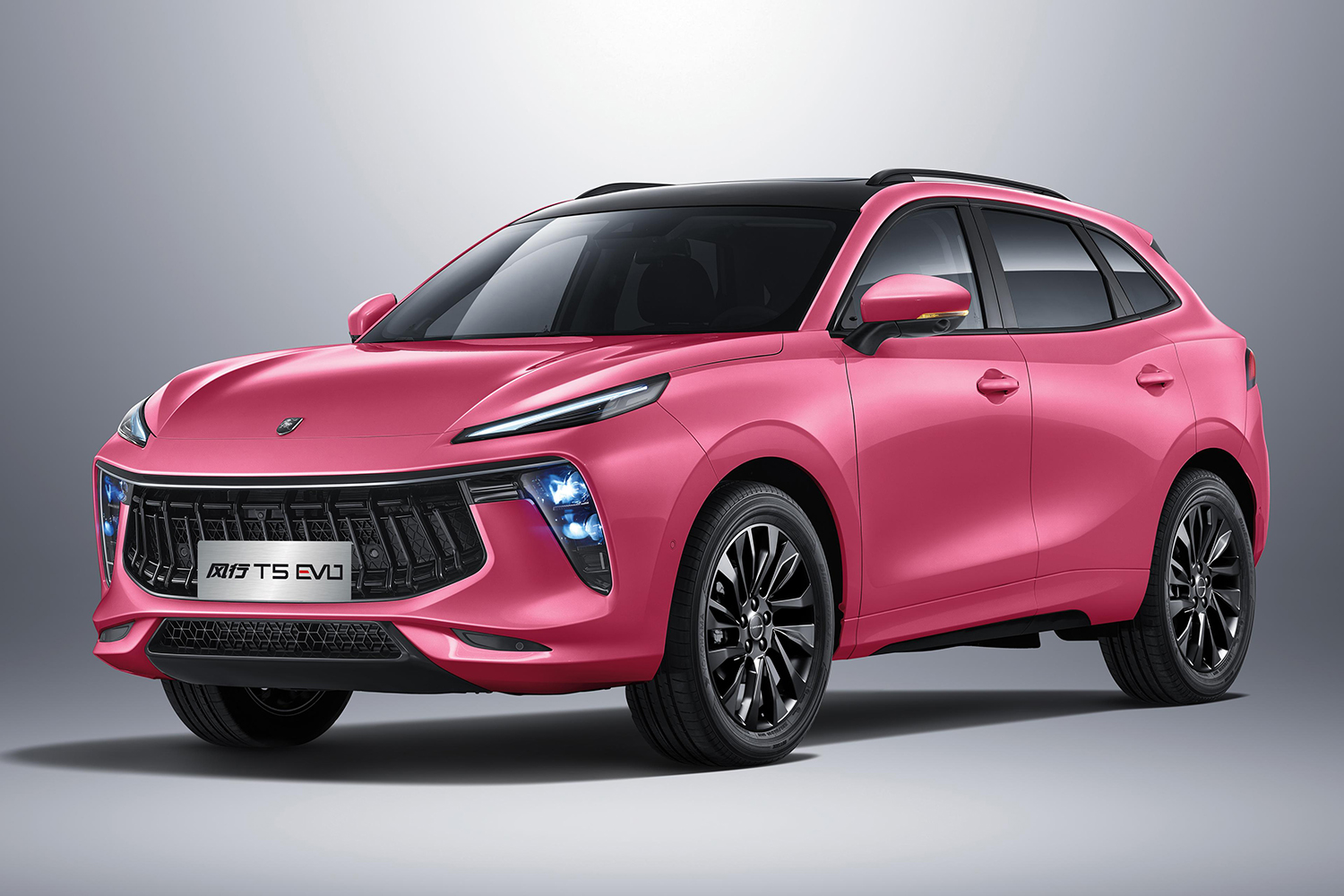
At a glance
- The T5 is a compact gasoline SUV offered with five- and seven-seat layouts.
- Engines and gearboxes span 1.5TD/1.6L variants with DCT, CVT, manual, or automatic options.
- The T5 EVO designation represents a gasoline model family here, not an electric drivetrain.
- Live listings should guide trim selection, pricing, quantity requirements, and availability.
- Homologation, steering configuration, freight, and aftersales support must be checked before ordering.
Why the Dongfeng Fengxing T5 matters for export markets
The Dongfeng Fengxing T5 occupies the compact SUV segment, combining a manageable footprint with the seating and powertrain choices overseas buyers seek in a value-oriented crossover. The range appears under T5 and T5 EVO naming, so “EVO” should be read as a model label here, not proof of battery-electric propulsion. That distinction matters when comparing listings because T5 EVO units are also described with 1.5TD engines and DCT transmissions. For an importer, the attraction is not a single global specification but the ability to choose a five- or seven-seat configuration, different engines, and several transmission types.
Demand for this kind of vehicle comes from practical needs. A five-seat T5 can suit importers serving urban and regional customers who want SUV styling and useful cargo space without the burden of a larger vehicle. A seven-seat derivative can be more relevant to family transport, airport transfers, or fleet use where occasional third-row capacity matters, although buyers must verify seat access, luggage capacity with the row deployed, and local registration rules. The model is therefore easier to position as a flexible family and fleet tool than as a single-purpose off-roader or premium mobility product.
International demand should be assessed market by market rather than inferred from the model name. Compact crossovers tend to be most relevant where buyers want a higher seating position, flexible passenger space, and lower operating complexity than a large premium SUV. The T5’s broad Chinese-market trim structure can help an importer serve price-conscious segments, but local fuel quality, taxation, insurance, road conditions, and aftersales support may matter as much as the vehicle. Before committing, compare the landed vehicle with domestic alternatives and confirm that Dongfeng parts and technical support are practical in the destination.
- Compact-SUV value positioning.
- Five- or seven-seat layouts.
- EVO is not electric.
Model range, trims and powertrain variants: how the lineup is structured and how to choose
The T5 line covers several buyer propositions rather than one technical configuration. Names such as 1.5TD DCT Diamond, Starlight, Platinum, and Glory identify turbocharged 1.5-liter variants paired with a dual-clutch transmission. Golden Age 1.6L Manual Dream Builder and 1.6L CVT Dream Chaser point to a 1.6-liter route with either manual or continuously variable gearbox. Other listings use 1.5T Automatic, 1.5T CVT, 230T CVT, or 300T DCT labels, but “automatic” does not always identify the gearbox. Check the trim name against the transmission type on the live unit page and vehicle documents before ordering.
Seating is another decisive axis. The line explicitly includes five-seat Dream Builder, Dream Chaser, and Racing-style applications, while Luxury, Far Dream, and Flagship entries are listed as seven-seaters. A five-seat model may be easier to position where SUV tax bands, registration rules, or customer preference favor smaller passenger capacity. A seven-seat T5 creates a different use case and should be evaluated for actual third-row packaging, not brochure headroom. Overseas buyers should also consider whether local homologation supports the intended seat count and whether their insurer or fleet operator recognizes that configuration in writing.
For selection, begin with powertrain and use rather than cosmetic edition names. The 1.5TD DCT options suit buyers prioritizing a turbocharged engine and automated twin-clutch behavior, while the 1.6L manual and CVT versions offer different operating characteristics for cost-conscious customers. A 230T or 300T designation may be a marketing or model-series identifier, so it should not be translated into a power figure without the official specification. Review the live listing for engine output, curb weight, fuel consumption, warranty, and equipment, then inspect the actual transmission directly, if local sourcing can be arranged before contracting.
- 1.5TD DCT high-feature editions.
- 1.6L manual and CVT trims.
- Verify the actual gearbox.
New vs used Dongfeng Fengxing T5: how export inventory is structured and how buyers choose
ChinaCarDirect’s live catalogue should be treated as a mixed, unit-level export market rather than a single factory package. T5 entries can span earlier T5 years, later T5 EVO versions, and facelift naming, with five- and seven-seat trims across different engine and transmission combinations. This lets buyers compare age, specification, and condition within one vehicle family. It also means similarly named units may differ in age, equipment, gearbox, emissions labeling, and documentation. Use model year and the full trim string as the starting point, then verify the photographed vehicle, individual listing details, and photographs.
A new vehicle is generally the cleaner choice for fleet launch, consistent warranty administration, and avoiding uncertainty over prior use, repainting, or wear. A used Dongfeng Fengxing T5 can make sense when the importer understands the model, condition is fully documented, and the price saving funds local marketing, compliance, or parts stock. Used-car trade-offs are not visible in a headline trim badge: mileage alone is less informative than service history, engine condition, transmission behavior, accident repair, paintwork, and age-related wear. Inspection should also cover underbody condition, fluid leaks, and evidence of mileage consistency.
Before buying either category, define what must match your business. For a new fleet order, settle on one drivetrain, gearbox, seating layout, tire specification, and equipment level before comparing quotes, because mixed specifications complicate parts and training. For a used purchase, require clear identification, a condition report, title and import documents, and an inspection covering commercial-use areas. Do not assume a listing description removes the need for verification. Current unit status, condition, price, and availability should always be confirmed on the live listing rather than inferred from older or saved catalogue records at all.
- Multiple T5 generations coexist.
- New units simplify fleet setup.
- Used units need condition checks.
How export pricing works: the factors behind a live listing price, and how to read one
A Dongfeng Fengxing T5 export price is not a fixed factory figure. It is built from the selected vehicle’s model year, generation or EVO/facelift status, trim, engine, transmission, seating, equipment, condition, and material options. For a used unit, mileage, service history, paint condition, and repair history become especially important. External variables then enter the quote, including the CNY exchange rate, seller margin, payment terms, inspection or documentation fees, and requested shipping terms. Because these inputs change, an old inquiry or cached catalogue page shows interest, not a binding offer or a live price today.
Start by opening the live listing and separating the vehicle price from the landed-cost estimate. The unit price shows what the seller asks for that configuration, but may not include international freight, marine insurance, port handling, customs, taxes, registration, inland delivery, or commissions. Check whether the quote uses an Incoterm such as EXW, FOB, or CIF and ask who bears each charge. Translate the asking price into the destination currency at the rate your payment will use, allowing for bank fees. A low vehicle price can still produce an unattractive landed cost if freight or compliance expenses are omitted.
The disciplined method is to compare like with like: same year band, seat count, engine, gearbox, condition, and equipment level; then apply the same freight assumptions and destination taxes. Ask for an all-in breakdown before discussing volume discounts, because a discount on the vehicle does not necessarily improve landed margin. Spreadsheet the vehicle cost, inland China transport, export clearance, ocean or roll-on/roll-off freight, insurance, destination charges, duties, registration, warranty reserve, and parts allowance. Use the T5 inventory page to compare units, then request a written quotation for the exact SKU you intend to purchase.
- Trim and year drive quotes.
- Add freight, tax, and duty.
- Check each live unit price.
MOQ, ordering and payment: single units vs consolidating a container
MOQ is a commercial condition attached to the offer, not an inherent specification of the T5. A dealer or exporter may accept one unit for a trial order, set a minimum on a discounted configuration, or require consolidation when freight economics demand it. The quantity requirement must be read from the listing or confirmed with the seller; do not assume a catalogue-wide rule. A single-unit purchase tests demand or launches a market, but it exposes the buyer to the full fixed cost of freight and compliance. Consolidation can improve transport efficiency, yet it concentrates risk in a mixed batch.
When comparing single-unit buying with container consolidation, model the shipment as a portfolio rather than one vehicle. A mix of popular trims can make freight and spare-parts planning easier than nearly identical units, provided every SKU has a confirmed buyer and meets the same documentation standard. Keep a contingency for different engines, gearboxes, seat counts, and model years because those differences affect parts, software, training, and residual values. For larger volume, ask whether the supplier can hold a mixed allocation, provide serial numbers in advance, and release units against a payment schedule. Confirm that the final packing list matches the contract.
Payment should be tied to independently verified milestones. Before remitting funds, review the seller’s company identity, vehicle description, quantity, price, Incoterm, delivery point, inspection rights, title documents, export declaration, warranty terms, and the event triggering balance payment. Use the payment method and currency specified in the contract, clarify who bears bank charges, and retain invoices, receipts, photos, and serial-number records. If a refund condition exists, define objective triggers such as failed inspection or inability to provide agreed documents. Request current terms and an RFQ for selected live units rather than relying on assumed deposit mechanics.
- MOQ varies by offer.
- Single units test demand.
- Mixed loads aid consolidation.
Shipping, homologation and market compliance caveats: LHD/RHD and import rules by country
Shipping begins with confirming whether the vehicle is homologated for the destination country and in which steering configuration. Many China-built models are documented for left-hand drive, while some markets require right-hand drive or only a locally approved variant. A T5 listing should not be treated as RHD merely because the destination is an RHD market. Ask the seller for steering position, VIN, homologation documents, and conversion history. A physical conversion may solve orientation but can affect regulatory compliance, warranty, component sourcing, and insurance. Local type approval is separate from the factory’s ability to export the vehicle.
Import rules are country-specific and can cover emissions, safety, VIN, customs valuation, duties, taxes, age limits, and seat count. A China VI label on some trim names does not automatically satisfy European, Middle Eastern, African, or other local standards, and rules may differ by engine and road class. Confirm the destination’s emissions and safety requirements, customs procedure, homologation route, and importer-of-record responsibility before shipment. For a seven-seat version, verify seating classification and tax treatment rather than assuming it carries the same rates as a five-seat derivative. Obtain professional customs and conformity advice where classification is uncertain.
At the logistics stage, choose the Incoterm before comparing carrier quotations, then confirm port, sailing or trucking schedule, insurance, and what happens after arrival. Full-container and shared-consolidation options suit different order sizes; roll-on/roll-off may suit some vehicle movements but should be checked against the cargo category. Plan the pre-shipment inspection, photograph the body and interior, verify VIN and option plates, and confirm tools, documents, and secure shipping preparation. Transit time and cost vary with ports, season, routing, fuel surcharges, cargo space, and whether inland haulage is included. Obtain the binding estimate through the freight forwarder and RFQ.
- Confirm steering configuration.
- Verify local homologation.
- Define the shipping Incoterm.
Who should buy the T5 — and who should pick a different vehicle
The T5 is a strong candidate for an importer seeking a compact SUV with broad trim, gearbox, and seating choices within one model family. It can fit a five-seat value crossover program, a seven-seat family and airport-transport niche, or a mixed fleet where some buyers prioritize 1.5TD DCT editions and others prefer 1.6L manual or CVT versions. EVO and higher-feature Diamond, Platinum, Starlight, or Flagship naming provide visible differentiation for showroom presentation. However, the right choice still depends on service access, parts planning, insurance, and whether local rules reward each configuration in that market.
It may be a weaker fit for a buyer whose priority is an emissions exemption, plug-in capability, high towing capacity, off-road hardware, or a fully certified European fleet package. Although some T5 versions are labeled China VI, that does not create an automatic homologation advantage abroad. Buyers in markets with low-emission zones, strong hybrid preferences, or high fuel taxation should compare the real operating cost of the gasoline T5 with favored alternatives. Organizations with exact RHD, advanced-driver-assistance, wheelchair-access, or heavy-duty requirements should obtain technical confirmation early, because a listing badge cannot establish compliance.
Before ordering, make the T5 pass the same business test as any rival: contribution margin after freight, duty, tax, insurance, warranty, and unsold-stock risk; parts holding; a dealer or fleet resale plan; and a warranty service process. Compare five-seat and seven-seat units with actual routes and customer use, then test whether the selected transmission, seating, and equipment are supported by target buyers. The model is most compelling when its configuration flexibility solves a market need that a narrower range cannot. If it does not, a more widely serviced rival or different energy type may reduce long-term operating risk.
- Flexible trims and seating.
- Service access remains critical.
- Compare total operating cost.
Main rivals and how the T5 compares
The closest budget compact-SUV alternatives for many export markets include the Jetta VS5, Changan CS35 Plus, and Chery Tiggo 4x4. All are Chinese-origin crossovers competing for price-conscious private buyers, ride-hailing operators, and small fleets, so compare delivered cost, seating, transmission preference, parts availability, and local brand recognition rather than brochure equipment alone. The T5’s distinguishing choice is breadth: explicit five- and seven-seat versions, 1.5TD DCT editions, and 1.6L manual or CVT derivatives. Other models may offer a simpler range or stronger recognition in particular export markets, but availability varies by destination.
Against the Jetta VS5, the T5 offers broader seating and gearbox choices, including seven-seat derivatives and a DCT-equipped 1.5TD route. The VS5 may benefit from stronger recognition of the Jetta name or a more established service expectation in some markets, so test those assumptions locally. Against the Changan CS35 Plus, the T5 provides both manual and CVT options and explicit seven-seat listings; the CS35 Plus benchmarks mainstream five-seat turbo crossover demand and may have stronger channel depth. In both cases, compare the destination-approved specification, not domestic trim names or overseas-market assumptions.
The Chery Tiggo 4x4 is another relevant rival because it competes in the value compact-SUV class and has export exposure in several markets. The T5 can be more flexible for a buyer needing an unusual seven-seat or manual configuration, while the Tiggo family may be easier to position where Chery recognition and service familiarity are stronger. Neither vehicle should be selected from an unverified import listing. Request a current quotation, inspect the actual unit, confirm documentation, and total destination costs. The winner is the model whose specification, support, and residual-demand case survive a same-country comparison—not the one with the most attractive headline trim.
- Jetta VS5: familiar badge.
- Changan CS35 Plus: five-seat benchmark.
- Chery Tiggo 4x4: export benchmark.
Live Dongfeng Fengxing T5 export inventory
View all listings →Real units currently on ChinaCarDirect with per-unit asking prices and MOQ. Availability updates live from the catalogue.
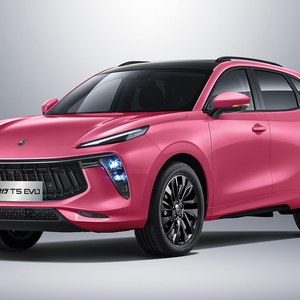
Dongfeng Fengxing Fengxing T5 EVO 2021 1.5TD DCT Starlight Edition
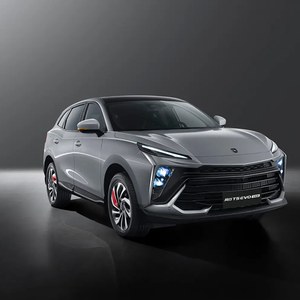
Dongfeng Fengxing Fengxing T5 EVO 2024 Racing Edition 1.5TD DCT Mach Diamond
Dongfeng Fengxing Fengxing T5 EVO 2021 1.5TD DCT Starlight Edition
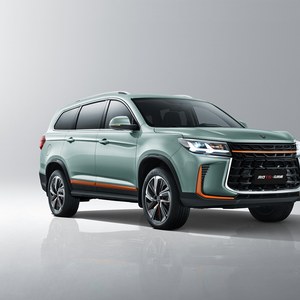
Dongfeng Fengxing Fengxing T5 2023 Golden Age 1.6L Manual Dream Builder 5-Seater
How to buy a Dongfeng Fengxing T5 from China
-
1
Define the target specification
Set the destination, steering requirement, five- or seven-seat layout, engine, gearbox, equipment level, and intended sales channel before comparing vehicles.
-
2
Screen the live inventory
Use the T5 listings to compare exact trim strings, model years, seating layouts, and equipment. Treat each unit page as the source for its current price and quantity terms.
-
3
Verify the vehicle and documents
Request VIN or serial records, photographs, option information, service or condition history, title documents, and export paperwork for the selected unit.
-
4
Request a written quotation
Ask for the vehicle price, currency, quantity requirement, Incoterm, payment schedule, inspection rights, freight inclusions, and warranty terms in one document.
-
5
Confirm market compliance
Check customs classification, duties and taxes, emissions and safety approval, steering configuration, importer responsibilities, and registration rules with qualified local advisers.
-
6
Inspect before final payment
Use an independent pre-shipment inspection covering bodywork, interior, VIN, mileage or condition, mechanical items, options, and export documents.
-
7
Book freight and retain records
Choose full-container or consolidated shipping after comparing the confirmed vehicle quantity and destination costs. Retain inspection evidence, serial records, contracts, shipping documents, and warranty files.
T5 vs rivals
| Jetta VS5 | The Jetta VS5 is a close value compact-SUV benchmark whose badge recognition can be stronger in some markets. The T5 distinguishes itself with explicit five- and seven-seat options and a broader mix of 1.5TD DCT, 1.6L manual, and CVT choices; local service depth and approved specifications still determine the better fit. |
|---|---|
| Changan CS35 Plus | The Changan CS35 Plus is a direct China-origin compact-crossover rival, particularly for five-seat buyers seeking a turbocharged, automatic-led proposition. The T5 adds less common seating and gearbox choices, including seven-seat and manual versions, while Changan channel strength may favor buyers prioritizing familiar local support. |
| Chery Tiggo 4x4 | The Chery Tiggo 4x4 competes on compact-SUV value and has wider export familiarity in several destinations. The T5 offers a more differentiated five- or seven-seat and transmission mix, while Chery may have the advantage where its brand recognition and service network are already established. |
Frequently asked questions
How is the Dongfeng Fengxing T5 export price determined?
Each live quote combines unit-specific factors such as model year, trim, engine, transmission, seating, condition, and options with exchange-rate, payment, documentation, and freight effects. Compare the asking price with a separately calculated landed cost under the stated Incoterm; the current per-unit price is shown on the live T5 listings.
Which engines and transmissions can the T5 have?
The catalogue naming shows 1.5TD/1.5T turbo variants, 1.6L versions, and transmissions described as DCT, CVT, manual, or automatic depending on trim. Labels such as 230T and 300T should not be converted into output figures without the unit’s official specification, so check the live listing for the exact engine and gearbox.
Is a new or used Dongfeng Fengxing T5 better for export?
New vehicles generally simplify warranty administration, fleet consistency, and uncertainty about prior wear. A used T5 can be suitable when condition, service history, repair records, title documents, and inspection results are strong; current condition and availability must be checked on the individual live listing.
What is the MOQ for buying a T5 from China?
MOQ is determined by the seller, configuration, and commercial offer rather than by the model itself. Some offers may accept one vehicle, while others may set a minimum or ask for consolidation; read the quantity shown per listing and confirm it in the RFQ or contract.
How long does T5 shipping take, and what affects cost?
Transit time and cost depend on origin and destination ports, sailing or trucking schedule, season, routing, cargo space, fuel surcharges, insurance, and the Incoterm. Ask the freight forwarder for a current port-to-port or door-to-door estimate because a vehicle quotation alone does not establish transit time or landed freight cost.
Can spare parts be ordered with the T5?
Parts can be planned by engine, transmission, model year, and trim because mechanical specifications differ across the range. Before shipment, request a recommended initial parts list, part numbers, lead times, and aftersales support arrangements; do not assume every destination warehouse stocks T5 components.
Is a right-hand-drive Dongfeng Fengxing T5 available?
RHD availability cannot be inferred from a China-market listing. Ask for the steering configuration, VIN, and homologation documents for a specific live unit, and check whether a conversion is proposed; local conversion can affect approval, warranty, insurance, and parts compatibility.
How do I order a Dongfeng Fengxing T5 for export?
Start with the live T5 listings, shortlist exact SKUs, and request a written quote stating trim, condition, quantity, MOQ, price, Incoterm, payment schedule, inspection, and document scope. Pay only against contractually verified milestones and retain the signed description, VIN or serial records, inspection evidence, shipping documents, and warranty terms.
Ready to source the Dongfeng Fengxing T5?
Request an RFQ with your destination, steering requirement, seat count, powertrain, quantity, and preferred Incoterm for a current T5 quotation.
Request a quote