
Dongfeng Yipai Nano Box Export Buying Guide
Evaluate Dongfeng Yipai Nano Box trims, range choices, export pricing, MOQ, shipping and compliance with a buyer checklist for overseas dealers and fleets.
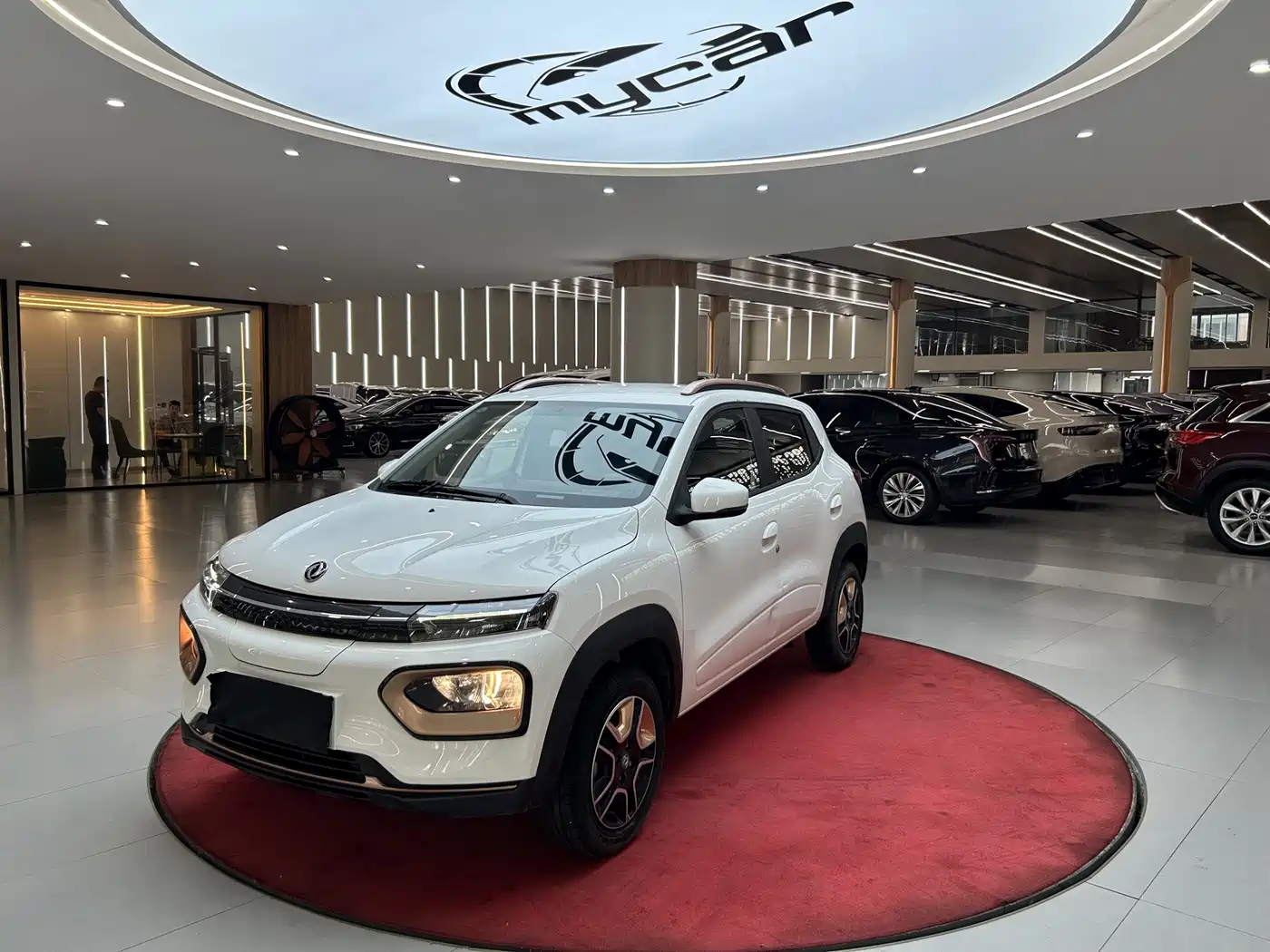
At a glance
- The Nano Box is a compact battery-electric hatchback suited to urban fleets, campuses, hotels, delivery businesses and rental pilots.
- Range-labelled 201KM, 331KM and 351KM versions allow buyers to match a version to different duty cycles without treating catalogue range as guaranteed real-world distance.
- Wind Chaser and Breeze families use Standard, Advanced, Lightning and facelift labels, so every export order should be confirmed against VIN-level equipment.
- Wholesale evaluation should separate vehicle value from freight, insurance, exchange-rate effects, taxes, registration and the chosen Incoterm.
- Current price, MOQ and availability must be checked on the live ChinaCarDirect inventory for each unit.
Why the Dongfeng Yipai Nano Box matters for export markets
The Dongfeng Yipai Nano Box occupies the compact battery-electric hatchback segment, where low acquisition cost, urban maneuverability and manageable charging matter more than long-distance capability. Its overseas relevance comes from a practical package: clearly range-labelled versions, a familiar five-door format and suitability for short-route commercial use. Dealers serving hotels, campuses, delivery businesses or rental operators can assess it against daily mileage and charger access. That makes it a candidate for controlled fleets, not automatically the right vehicle for every route. Local road, weather and charging conditions remain decisive for the buyer.
Export interest is most credible in dense cities where traffic, parking pressure and high vehicle utilization reward efficiency. A battery-electric car can reduce fuel and routine servicing exposure against conventional vehicles, although insurance, depreciation, charging tariffs, tyres and parts still shape the business case. The small format can also simplify driver training and charger deployment. For a dealer or fleet manager, the useful test is utilization: how many kilometres each vehicle covers, how often it is parked, and whether utilization justifies the additional electric-specific operating assumptions clearly under local conditions.
Demand is not automatic. Markets with limited charging access, weak used-EV residual values or strict type-approval procedures may offer a narrower market for the model than its domestic positioning suggests. The sound export case is operational: short routes, predictable mileage, suitable power access and a credible local service plan. Buyers who cannot substantiate those conditions should begin with a small pilot rather than a full-fleet commitment. This discipline prevents paying for range capacity the operation will never use. It also creates evidence for later fleet scale-up and better decisions.
- Best evaluated for short-route urban fleets.
- Compare utilization and charging, not price alone.
- Use a pilot where market conditions remain uncertain.
Model range, trims and powertrain variants: how the lineup is structured and how to choose
The Nano Box range is organized around the Wind Chaser and Breeze naming, with Standard, Advanced, Lightning and facelift descriptors appearing across versions. Range labels include 201KM, 331KM and 351KM, giving buyers a useful first filter by duty cycle. These labels are not interchangeable with guaranteed road range, because test cycle, weather, speed, load and charging losses affect actual use. The live unit record should therefore be matched to a specific version rather than treated as a generic Nano Box. VIN-level matching is essential before an overseas purchase contract is signed.
For a buyer running short urban loops, the 201KM-labelled version may reduce purchase and battery-capacity exposure when its rated range still exceeds the planned route with a safe reserve. The 331KM and 351KM-labelled versions are more relevant where vehicles cover longer commutes, heavier mileage or fewer charging opportunities. The right choice is not automatically the largest label; it is the smallest version able to complete the route reliably after allowing for weather, detours, payload variation and low state of charge. Validate that conclusion with route data and local test drives.
Within each range band, Standard, Advanced, Lightning and facelift labels may indicate different equipment levels, but the names alone do not prove which safety, infotainment, comfort or charging functions are fitted to an export unit. Ask the seller for a VIN-specific specification sheet, photographs of option labels and a list of standard and optional equipment. Confirm battery warranty terms, software history and local service access. Comparing trim names across countries can be misleading because market equipment and homologation can differ even when the model designation looks identical. Use photographs as supporting evidence, not proof.
- Match range labels to measured route needs.
- Verify each trim by VIN and photographs.
- Confirm warranty, software and service access.
New vs used Dongfeng Yipai Nano Box: how export inventory is structured and how buyers choose
Export inventory may be organized by condition, production year, trim, range version, mileage and availability status. A new vehicle should have a clear unworn-condition description and documented production history; a used vehicle requires mileage, battery state of health, charging history and visible-wear records. ChinaCarDirect’s live Nano Box listings establish what is actually offered now. Do not assume a used example exists, or infer the current market mix from general catalogue information, without checking the live filter and asking the supplier about the particular unit before any payment or shipment begins.
New inventory is generally easier to compare because wear is less of a variable, although age within a production run can still affect battery calibration, software, cosmetic condition and perceived depreciation. Confirm whether the unit is genuinely new, whether it has been registered or displayed, and whether its production or homologation differs from the advertised version. For a launch fleet, a documented, delivery-ready vehicle with a clear warranty and parts plan may be more valuable than the lowest quoted example. Evidence should support the category label, not replace it alone.
A used BEV can make sense for a short test fleet or a buyer seeking a lower initial outlay, but the traction battery becomes the central inspection item. Request a credible state-of-health report, evidence of charging method and history, confirmation that the high-voltage pack has not been damaged, and records of recalls or repairs. Compare the remaining warranty with repair risk and verify that any battery work is properly documented. If the seller cannot provide those items, the apparent saving should not be treated as the real transaction value. A comprehensive pre-shipment inspection remains essential.
- New units require production and warranty evidence.
- Used units require battery and repair records.
- Live listings define current inventory availability.
How export pricing works: the factors behind a live listing price, and how to read one
A live wholesale export price combines vehicle attributes with transaction terms; it is not a fixed tariff for the model. Start with the exact trim, range and battery version, production year, condition and factory options. Then separate vehicle value from inland transport, export documentation, marine insurance, freight, terminal handling and destination charges. The exchange rate used to display a quote can also move the final amount. Ask whether the number follows an EXW, FOB, CIF or another basis before comparing it with another seller’s offer with identical inclusions and exclusions in writing.
For a used unit, mileage, paint and interior condition, battery state of health, warranty status and repair history can move the vehicle price more than the model badge suggests. The same trim may carry different accessories or production details. Read the title, VIN, specification, condition notes and images as one record, and flag contradictions rather than filling gaps from a generic trim description. A good export quote should place those assumptions in writing before payment, alongside any repair, replacement-part or battery-related limitation so the buyer can price the risk correctly.
Volume can reduce freight and handling cost per vehicle when several units travel together, but it does not necessarily change each vehicle’s underlying value. Compare quotes on the same Incoterm, destination, currency, payment timing and documentation scope. Build a landed-cost worksheet covering freight, insurance, duty, VAT or sales tax, port charges, pre-delivery work and local registration. ChinaCarDirect displays current per-unit figures on the live Nano Box listings; treat those pages, not a general article or an old quote, as the source for actionable figures. A written quote should carry a validity period.
- Compare identical trims, condition and vehicle age.
- Separate vehicle price from landed charges.
- Use live listings for current per-unit figures.
MOQ, ordering and payment: single units vs consolidating a container
MOQ is a transaction term, not a permanent model fact. A live listing may be open to a single-unit buyer, while a seller arranging a container may request a larger lot or coordinate several buyers. Check the stated MOQ and any lot condition in the live listing, then include it in the written quotation. For an importer testing demand, one unit can reduce exposure, but it may leave a higher per-vehicle logistics share and may not secure the same production slot or delivery terms as a consolidated order in writing.
Consolidating a container can improve freight efficiency and allow a buyer to mix 201KM, 331KM and 351KM versions for different fleet roles. It also concentrates risk: capital is committed before demand is proven, unit-level control becomes harder, and a customs delay can create demurrage or storage exposure. Model landed cost, expected sell-through, working capital and the exit route before agreeing volume. The right quantity is one the market can absorb within an acceptable cash and inventory cycle, not the largest quantity that happens to fit. Freight savings do not justify over-ordering.
Payment mechanics should follow a controlled sequence: identify the unit or production specification, receive a pro forma invoice and contract, verify the beneficiary and product description, then agree deposit and balance milestones. For a single-unit purchase, require VIN-level photographs, a pre-delivery inspection and a signed packing list before release. For a consolidated shipment, create a unit matrix showing VIN, trim, range label and options. Tie the balance to inspection and document checks, and confirm whether loading supervision, export declaration, marine insurance and terminal support are included in the written quotation.
- Confirm listing-specific MOQ and lot conditions.
- Use a unit matrix for consolidated shipments.
- Tie balances to inspection and documents.
- Verify beneficiaries and payment milestones.
Shipping, homologation and market compliance caveats: LHD/RHD and import rules by country
The first compliance question is whether the vehicle is configured for the destination’s traffic side. A left-hand-drive car may need approval or modification for right-hand-drive use, while availability of a right-hand-drive example can vary by source and route. Import rules are country-specific and may cover type approval, roadworthiness, environmental or emissions standards, electromagnetic compatibility, battery safety, charging connectors, software, labeling, customs valuation, duty and tax. Used vehicles can face extra restrictions. Obtain a local broker or authority checklist before an irrevocable payment and confirm whether any modification would affect final registration eligibility locally.
EV shipping requires additional planning because the traction battery can be regulated as dangerous goods, while chargers, loose equipment and high-voltage components must be packed correctly. Ask the carrier or forwarder which battery test summaries and transport papers the route and carrier require; a listing image does not prove compliance. Agree how battery state of charge, vehicle securing, moisture protection and pre-shipment condition will be handled. Any damaged pack, exposed terminal or incomplete document should stop loading. Confirm that marine insurance and cargo coverage match the agreed value and route.
Commercial operation may add fleet, operator, maintenance or local-content expectations beyond ordinary registration. Dealers should confirm access to replacement charging cables, adapters, tyres, brake components, body panels, diagnostic tools and high-voltage support, because imported parts can be slow or unavailable without a local channel. Model technician training and parts availability before committing volume. A vehicle that passes inspection but cannot be repaired economically may be less suitable than a larger alternative with stronger support. Local registration advice should cover all modifications before shipment and establish who signs off the final conversion.
- Confirm traffic side and local homologation.
- Obtain country-specific import guidance.
- Verify battery transport documents and insurance.
- Secure parts, diagnostics and technician support.
Who should buy the Nano Box — and who should pick a different vehicle
The Nano Box best suits buyers with short, repeatable routes and controlled charging: urban delivery operators, hotel and campus shuttles, compact rental fleets, municipal pilots and dealerships testing a small EV category. Its range-labelled versions allow a fleet to be segmented by duty cycle instead of using one battery specification for every role. The business case should be based on daily mileage, dwell time, charger utilization, driver familiarity and expected resale demand. Those inputs matter more than the largest catalogue headline. A controlled pilot can prove them before scale-up.
It is a weaker choice for buyers who routinely need long intercity travel, fast rural coverage, heavy payloads, towing, rugged roads or operation where charging is sparse. Long-distance users should not buy on the largest range label alone, because traffic, weather, terrain and reserve requirements reduce usable distance. High-utilization fleets also need confirmed parts availability and repair turnaround, not only a low purchase price. A conventional hybrid, plug-in hybrid, larger EV or combustion model may be more appropriate when charging time, payload or uptime dominates the duty cycle in practice.
The most disciplined route is often a staged pilot: buy several units, measure route consumption and uptime, and verify service performance before scaling. This also tests whether drivers and customers value the compact dimensions and whether the selected range label suits local conditions. Record charger depreciation, insurance, cleaning, tyres, downtime and resale assumptions so the next decision rests on evidence rather than model enthusiasm. For mixed fleets, the 201KM-labelled version may suit short loops, while higher-labelled versions can handle longer routes after local validation under expected payload and weather conditions.
- Strong fit: predictable urban routes and charging.
- Assign range versions by actual duty cycle.
- Poor fit: remote travel, heavy load or towing.
- Pilot before committing fleet volume.
Main rivals and how the Nano Box compares
Rival comparisons should test the same job: a low-to-mid-price urban BEV sold through dealer or fleet channels. Useful checks include usable range under local conditions, passenger and cargo space, charging provision, safety equipment, software support, warranty treatment and the importer’s ability to source parts. The Nano Box’s strengths are its clearly range-named versions and conventional compact hatchback format. Its weaknesses in a purchase decision are equally important: smaller service networks, limited residual-value evidence and fewer established support options than global marques in less mature destination markets during early market entry.
Wuling Bingo is a close price-led benchmark in the small electric hatchback class. The Nano Box may appeal to buyers wanting its more conventional five-door presentation and broader spread of range-labelled choices, while the Bingo should still be checked for local charging, boot use and service arrangements. Leapmotor T03 is another relevant urban EV comparator with a similarly small footprint. Between these vehicles, destination specification, landed cost and support determine the better fit; neither brand identity nor a catalogue range headline should decide the purchase without verified unit evidence first.
JAC EV3 is a useful compact five-door EV benchmark for buyers assessing practical space, charging and dealer support in the same broad segment. It may provide a different equipment balance, so compare option by option rather than assuming trim equivalence. Build a final scorecard around five weighted items: compliant configuration, usable range, total landed cost, support and residual risk. Ask each supplier for the same specification, document, warranty and all-in quote on one Incoterm. This exposes where a cheaper rival becomes dearer after freight, adaptation, servicing and downtime risk.
- Compare range, space, charging and support.
- Use identical quote assumptions for every rival.
- Check current Nano Box listings before shortlisting.
Live Dongfeng Yipai Nano Box export inventory
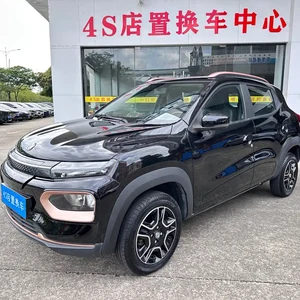
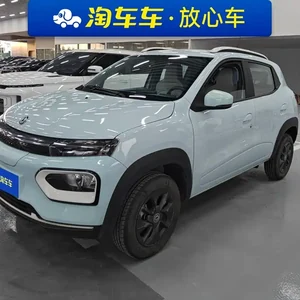
View all listings →Real units currently on ChinaCarDirect with per-unit asking prices and MOQ. Availability updates live from the catalogue.
How to buy a Dongfeng Yipai Nano Box from China
-
1
Define the operating case
Record daily mileage, route length, payload, charging access, expected utilization and the destination’s traffic-side requirement. These inputs determine which range version and configuration are relevant.
-
2
Select a range version
Compare the 201KM, 331KM and 351KM-labelled versions against measured route needs. Include weather, detours, payload and a safe operating reserve rather than relying on the catalogue label alone.
-
3
Review the live inventory
Check the current Nano Box listings for the exact trim, condition, production information and available unit identifiers. Treat the live inventory as the only source for current pricing, MOQ and availability.
-
4
Request a unit-level quotation
Ask for VIN-level photographs, a complete equipment list, battery and charging information, warranty terms, condition records and document copies. State the destination, quantity, Incoterm and required RHD or homologation details in the RFQ.
-
5
Validate compliance and logistics
Have a local broker or freight forwarder review import rules, customs classification, battery transport papers, insurance, charging compatibility and any required modifications. Obtain a route-specific schedule and landed-cost estimate.
-
6
Agree commercial and inspection terms
Confirm MOQ, lot conditions, deposit and balance milestones, inspection rights, packing-list procedures and responsibility for export declaration and terminal handling. Tie the final payment to verified vehicle condition and documents.
-
7
Approve shipment and release
Complete the pre-shipment inspection, verify the VIN, option list, battery condition and shipping seals, then authorize the balance. Keep the pro forma invoice, contract, packing list, transport papers and customs documents together for delivery.
Nano Box vs rivals
| Wuling Bingo | The Wuling Bingo is one of the closest price-led small-EV comparators for urban buyers. The Nano Box’s conventional five-door format and wider range-label choice may suit fleet diversity, while the Bingo should be compared on local charging, cargo use and service support. |
|---|---|
| Leapmotor T03 | Leapmotor T03 competes in the same small urban-EV territory. Choose between it and the Nano Box on destination specification, usable range, landed cost and after-sales support rather than assuming either has a decisive advantage. |
| JAC EV3 | JAC EV3 is a useful compact five-door EV benchmark for practical space, charging and dealer support. It may suit buyers wanting a different equipment balance, so the Nano Box should win only if its operating fit and total cost are stronger. |
Frequently asked questions
How is export pricing determined for the Dongfeng Yipai Nano Box?
Export pricing starts with the exact trim, range version, production year, condition, mileage and options, then adds transaction costs such as inland transport, documentation, insurance, freight, duties and local registration. Exchange rates and the chosen Incoterm can change the final figure. See the current per-unit figures on ChinaCarDirect’s live Nano Box listings and request a written quote for your destination and delivery terms.
What powertrain and range versions does the Nano Box offer?
The Nano Box is a battery-electric hatchback, with 201KM, 331KM and 351KM range-labelled versions across the Wind Chaser and Breeze families. The labels are version identifiers, not a promise of identical real-world range; test cycle, weather, load and driving conditions matter. Confirm the exact battery, motor, charging and range details in the live unit listing.
Should I choose a new or used Dongfeng Yipai Nano Box?
New units are usually easier to compare because wear is less variable, but buyers should still check production history, warranty, registration status and delivery readiness. Used units require verified mileage, battery state-of-health evidence, charging history, damage and repair records. The live inventory determines the current mix; do not rely on a general article for availability.
What is the MOQ for the Dongfeng Yipai Nano Box?
MOQ is agreed per listing or transaction rather than being a permanent model rule. A single-unit order may suit a pilot, while a container order can improve freight efficiency but increases inventory and cash exposure. Check the MOQ and lot conditions shown on the live listing and have them included in the quotation.
What determines shipping time and cost?
Shipping time and cost depend on origin handling, port and sailing availability, carrier routing, container consolidation, destination port, customs clearance, insurance and the agreed Incoterm. EV battery transport documentation can add planning steps, and delays may create storage or demurrage costs. Ask the seller or forwarder for a route-specific schedule and a landed-cost estimate.
Are spare parts available for exported Nano Box vehicles?
Do not assume every part is stocked overseas. Before ordering, identify the supplier’s support process for charging cables, adapters, tyres, brakes, body panels, diagnostic tools and high-voltage components, and confirm warranty handling for battery-related work. A local technician should be able to inspect the exact model before a volume purchase.
Is right-hand-drive Nano Box availability guaranteed?
Right-hand-drive availability depends on the source market, production configuration and the specific units offered for export. Ask for the traffic-side configuration, steering and control details, and evidence of destination-market approval before ordering; a steering conversion alone may not satisfy registration. Current configurations and units should be checked on the live listings and confirmed by the supplier.
How do I order a Dongfeng Yipai Nano Box from China?
Start with a live Nano Box listing, verify the trim, range label, condition, VIN and documents, then send an RFQ stating the destination, Incoterm, quantity, payment terms and required RHD or homologation details. Review the pro forma invoice, sales contract, beneficiary and inspection conditions before paying, and confirm shipping and customs responsibilities in writing. ChinaCarDirect’s contact page can be used to request the quote.
Ready to source the Dongfeng Yipai Nano Box?
Request a current Nano Box export quote with unit specifications, Incoterm options, shipping terms and compliance-document requirements.
Request a quote