
Exeed Landmark Export Buying Guide for Overseas Buyers
Buy Exeed Landmark from China with practical guidance on 390T, 400T and C-DM variants, seating, export pricing, MOQ, shipping and market compliance.
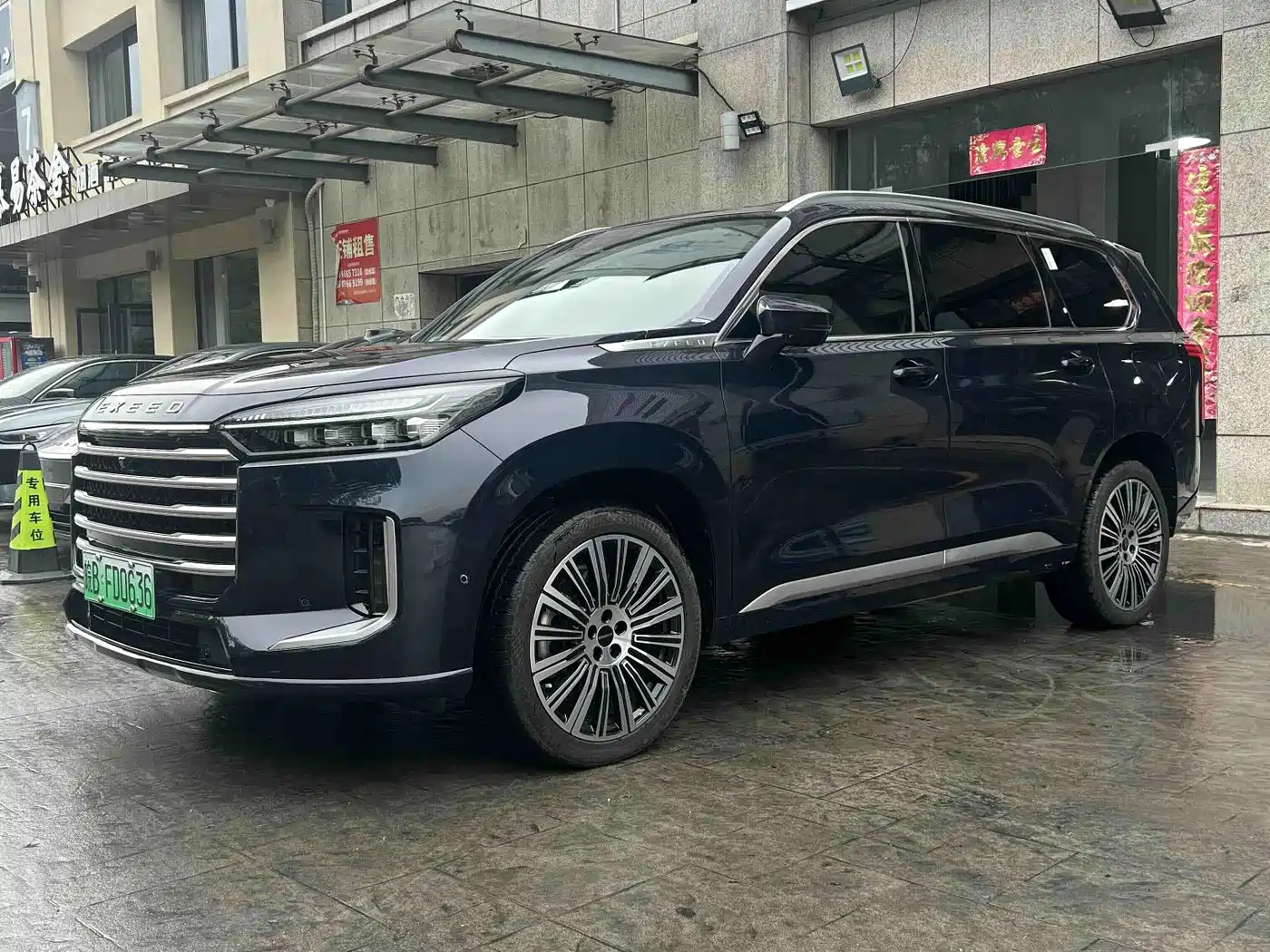
At a glance
- The lineup spans 390T and 400T combustion versions and a C-DM plug-in-hybrid derivative, with 2WD and AWD/4WD choices.
- Five-, six-, and seven-seat configurations suit different passenger and cargo priorities.
- Treat export pricing as unit-specific: compare the year, trim, powertrain, condition, Incoterm, freight, and taxes on the live listing.
- One-unit buying and container consolidation are different strategies; confirm the MOQ and intended sales mix before ordering.
- New and used Exeed Landmark units serve different capital, warranty, and condition-risk profiles.
- Factory RHD availability, destination homologation, parts support, and landed cost are critical export checks.
Why the Exeed Landmark matters for export markets
The Exeed Landmark matters in export markets because it combines a three-row SUV body with a choice of combustion, plug-in-hybrid, two-wheel-drive, all-wheel-drive, five-, six-, and seven-seat configurations. That breadth lets an importer serve family transport, executive reception, hotel, and fleet segments without abandoning one platform. Its strongest export proposition is not simply size or equipment, but the ability to match a right-hand-drive or left-hand-drive market with a commercially workable derivative once local rules are satisfied. For overseas dealers, that configurability can simplify range planning, although trim-level verification remains absolutely essential.
Demand for Chinese crossovers has drawn attention to models that offer more cabin space and equipment than compact SUVs without moving into the cost and operating burden of a full-size off-roader. The Landmark sits naturally in that middle ground, especially where buyers value a three-row layout, a substantial bonnet, and SUV presentation. Its export relevance is strongest in destinations where local alternatives are limited, or an importer can support the brand with parts, technician training, and a sustainable warranty support plan. That commercial support can matter as much as the vehicle itself.
However, global interest should not be confused with automatic homologation. A vehicle assembled for China may still require changes or documentary approvals for emissions, safety, lighting, radio equipment, fuel labelling, and local type approval in its destination. Export buyers should therefore assess the Landmark as a vehicle-plus-market proposition. The buying decision is sound only when the exact derivative, steering side, equipment list, service pathway, and import route all match the intended customer and the dealer’s aftersales capability. A low purchase commitment cannot compensate for weak parts support or unclear approvals.
- Three-row format supports fleet and family use.
- Multiple drivetrains widen destination fit.
- Homologation and parts support govern viability.
Model range, trims and powertrain variants: how the lineup is structured and how to choose
Within the combustion range, the Landmark is organised around 390T and 400T model designations, with two-wheel-drive, four-wheel-drive, or all-wheel-drive descriptions depending on the derivative. Export listings also carry multiple Star, Starlight, Shine, Elite, Premium, Explorer, and International labels, often paired with five-, six-, or seven-seat layouts. These names are useful for matching a unit, but they should not be treated as a single global trim hierarchy: equipment can differ between model years, editions, and export-market preparations. Compare the unit-specific equipment sheet and build plate, not just the marketing badge alone.
The C-DM 180 Ultra Long Range AWD six-seater adds a plug-in-hybrid route for buyers interested in electric-assisted operation without committing to a battery-only vehicle. Its “Ultra Long Range” wording is part of the model name and should not replace the certified electric range, battery capacity, fuel-consumption figures, or charging standard shown in the destination-market homologation file. That distinction is crucial for tax planning, charger planning, and realistic duty-cycle claims. Before claiming low local running costs, obtain the destination certificate and confirm that the hybrid hardware remains unchanged for that market.
Selection should begin with the customer’s daily load and road environment, then move to the derivative. Two-wheel-drive versions may suit buyers with modest terrain demands and simpler operating expectations; four-wheel-drive or all-wheel-drive versions add traction-oriented positioning. Seat count is equally important: seven seats maximise passenger and luggage flexibility, six seats can improve cabin comfort for executive use, and five seats suit buyers who still want a large SUV but prioritise cargo space. Final choice must also reconcile comfort, safety, infotainment, warranty equipment, and final market fit with the destination price point.
- 390T and 400T are combustion families.
- 2WD and AWD depend on derivative.
- C-DM range needs certification.
New vs used Exeed Landmark: how export inventory is structured and how buyers choose
New and used Exeed Landmark supply should be read as two different commercial propositions. New units generally offer the clearest condition history, the most coherent factory warranty path, and easier matching of model year, trim, paint, and interior specification. They can also carry a higher capital requirement and lose value sooner. Used examples, when available through a live listing or private export source, may reduce acquisition cost, but condition, service history, remaining warranty, and hybrid-system health become central to value. For buyers, the cheapest entry may carry higher operating risk.
New inventory is the cleaner choice when a dealer is building launch stock, needs consistent presentation, expects a defined warranty hand-off, or plans to advertise a current model year. Used stock can make sense for a dealer testing demand, fitting lower-risk shuttle work, or serving a customer who accepts an older specification. For combustion vehicles, request evidence of service intervals and inspect for wear, accident repair, fluid leaks, and electrical faults. For C-DM units, also seek battery condition, charging history, and confirmation that the high-voltage system has not been modified.
A sensible dealer buying plan often separates the two categories by purpose rather than choosing only one. A new demonstrator or launch vehicle can establish the brand, while a carefully inspected used unit may meet a price-sensitive fleet need without duplicating stock. This mixed structure also helps a buyer compare real residual-cost signals before committing to a larger programme. Because availability changes, check current new and used Exeed Landmark listings for each unit’s year, condition, title, warranty, and location, and do not infer availability from older market guides or summaries.
- New units reduce condition ambiguity.
- Used units require service evidence.
- Hybrids require battery and high-voltage checks.
How export pricing works: the factors behind a live listing price, and how to read one
An Exeed Landmark export price is not a fixed wholesale amount attached to the model name. It is the result of the specific vehicle’s commercial terms: factory configuration, model year, condition, supplier margin, inland handling, export documentation, freight, insurance, and destination charges. Incoterms determine where that responsibility transfers. An ex-works price may exclude most international costs, while a delivered quotation should identify freight, insurance, customs, and taxes—or clearly exclude them—so an importer can compare like with like. The same trim can produce different landed outcomes between two buyers.
The price drivers are visible in a live listing and should be read in sequence. Start with model year, 390T or 400T designation, drivetrain, seat count, C-DM battery or equipment variant, mileage, condition, paint, and market edition. Then establish whether the quote includes inland transport, port charges, export clearance, Ro-Ro or container freight, marine insurance, destination terminal fees, duty, VAT or equivalent taxes, and local delivery. Exchange-rate movements and the chosen Incoterm can also alter the final commercial comparison without any change to the vehicle. This keeps comparisons commercially honest.
To read an offer correctly, open the unit record rather than relying on a search-result headline. Confirm the SKU, vehicle name, photographs, model year, powertrain, seating, mileage or new status, seller location, and stated Incoterm. Ask for a written quotation that separates vehicle cost from logistics and taxes, states the quote validity, and identifies any charges that can only be calculated after destination details are known. Use ChinaCarDirect’s live Landmark inventory to obtain the binding per-unit figure, then build the landed-cost sheet before accepting it. A headline price can mislead.
- Compare matching year, trim, and seating.
- Confirm the Incoterm.
- Separate vehicle and landed costs.
MOQ, ordering and payment: single units vs consolidating a container
Minimum order quantity should be separated into two questions: can the seller accept the intended wholesale order, and is that order commercially sensible for the importer? Some live ChinaCarDirect vehicle offers can be bought individually, allowing a dealer to test demand with one unit; other channels may apply a larger production or shipment minimum. The MOQ shown against an individual ChinaCarDirect listing is the relevant term, but it should be confirmed in the pro forma invoice rather than assumed from the model name, marketplace interface, or an earlier enquiry. Confirm every selected SKU.
A one-unit order is useful for a new importer, a dealer validating trim demand, or a fleet buyer securing one pilot vehicle. It also exposes freight, compliance, and parts costs more clearly than a large speculative order. Consolidating a container can reduce some per-vehicle logistics costs and improve freight planning, but it commits capital across several model years, seat configurations, or powertrains. Mixed loading may create different residual values and slower-moving derivatives, so the expected retail mix should be agreed before the units are ordered. Logistics should match retail demand.
A sound ordering process begins with a written pro forma invoice showing the vehicle or vehicles, unit price, MOQ, deposit, balance trigger, Incoterm, delivery window, and cancellation terms. Verify the seller’s legal identity, payment beneficiary, and vehicle-title documents, and ask for a pre-shipment inspection that records VIN, condition, mileage, equipment, and visible damage. For a deposit, use a traceable payment method and understand the refund conditions. Release the balance only after the agreed documents and inspection milestones are satisfied. The contract should state who bears risk after the agreed handover.
- Confirm MOQ per selected listing.
- One-unit orders support market testing.
- Use staged payments against milestones.
Shipping, homologation and market compliance caveats: LHD/RHD and import rules by country
Shipping begins with the export packing method. Ro-Ro is common for finished vehicles and avoids the need to fit a vehicle into a conventional container, while container or other specialist arrangements depend on the vehicle’s dimensions, weight, securing requirements, and available equipment. Freight cost and transit planning depend on origin and destination terminals, vessel or carrier service, sailing frequency, season, route congestion, fuel surcharges, insurance, and the number of vehicles handled at each port. The seller should quote the intended transport method rather than use the word shipment without qualification.
Import compliance is country-specific and can prevent an otherwise attractive vehicle from being registered. Check VIN and title consistency, customs classification, emissions standards, safety and lighting requirements, radio or connected-system approval, fuel labelling, insurance requirements, age restrictions, and import permits or quotas. Taxes and duties may differ by engine, fuel, vehicle category, displacement, or local policy, so an importer should obtain a destination broker’s classification before presenting a landed cost. Chinese-market type approval does not automatically satisfy the destination authority. Local inspection or conversion may be required before registration can proceed.
Steering configuration is a sourcing issue, not a late cosmetic preference. China-origin vehicles are commonly supplied in left-hand-drive form, but right-hand-drive demand can be served only if a genuine RHD derivative is specifically allocated and properly documented for the destination market. Conversion is not equivalent to factory RHD and may affect homologation, warranty, parts, and buyer expectations. Confirm the steering side from photographs and the VIN-linked build sheet, state the lead time in writing, and avoid promising RHD availability based only on a general model listing. RHD may require allocation.
- Confirm Ro-Ro or container transport.
- Obtain destination customs classification.
- Verify factory RHD and approval documents.
Who should buy the Landmark — and who should pick a different vehicle
The Landmark fits dealers and fleet buyers who need a large SUV with a genuine third row, configurable passenger capacity, and a choice of conventional or electrified drivetrain. It is particularly relevant to premium transport, executive chauffeur, hotel, and family-segment programmes where appearance, space, and equipment matter. A six-seat derivative can suit executive use where second-row comfort takes priority, while seven seats serve larger groups. For fleet buyers, the business case should compare the complete vehicle cost with utilisation, comfort, maintenance, and expected resale rather than the purchase quote alone.
A different vehicle is usually more sensible when the buyer does not need three rows, operates in a region where the relevant drivetrain or charging system is poorly supported, or has a total-cost ceiling that a large SUV cannot meet. Two-wheel-drive and combustion versions may align with simpler duty cycles, while the C-DM derivative makes more sense where charging access, favourable tax treatment, and genuine electric driving are available. A compact SUV or a five-seat vehicle should win when frequent loading and urban efficiency matter more than occasional third-row capacity.
Before committing, a buyer should conduct a channel fit review rather than a showroom-only comparison. Test the intended trim on the routes, loads, and weather common in the market; verify fuel or charging arrangements; and obtain local quotations for insurance, registration, servicing, and likely parts delays. For a dealer, speak with existing customers about brand awareness and resale expectations. For an importer, map the nearest parts source and technical support. The best Exeed Landmark is the derivative that can be sold, serviced, and replenished profitably in the destination over time.
- Suits multi-row passenger and premium use.
- Fits markets with large-SUV demand.
- Needs parts and homologation support.
Main rivals and how the Landmark compares
The closest alternatives depend on whether the buyer prioritises electrified capability, a large conventional SUV, or brand familiarity. The BYD Tang is a natural comparison for dealers already familiar with a large SUV and plug-in-hybrid options. Jetour X90 competes in the multi-row, combustion-led family and executive segment, while GAC GS8 is another large SUV considered for seven-seat and fleet use. None is automatically superior: the meaningful comparison is between the exact derivative, destination approval, landed cost, and aftersales proposition. A familiar rival may be easier to explain and maintain locally.
For an electrified buyer, compare the Landmark C-DM against a homologated BYD Tang on certified electric range, battery warranty, charging interface, fuel-use treatment, and tax rules, not just model designation. For a combustion-led order, compare the Landmark 390T or 400T with the Jetour X90 or GAC GS8 on seating efficiency, equipment, fuel economy, service access, and resale prospects. The Landmark’s broad trim and seat range can improve fit, but complexity can complicate sourcing and stock planning. A smaller rival may remain easier to move if the market needs five seats.
Dealers should create a like-for-like matrix instead of choosing from model names alone. Record the target country, steering side, powertrain, seating, model year, equipment, warranty route, certified energy figures, and every import charge. Then compare service intervals, parts lead times, technician familiarity, insurance assumptions, and likely resale discounts over a realistic ownership period. If no rival has a clear cost or compliance advantage, the Landmark’s configuration breadth may be decisive. The final choice should come from documented quotations and a test-drive checklist, not an obsolete export price guide alone.
- BYD Tang: electrified-SUV comparison.
- Jetour X90: combustion multi-row alternative.
- GAC GS8: large-SUV fleet comparison.
Live Exeed Landmark export inventory
View all listings →Real units currently on ChinaCarDirect with per-unit asking prices and MOQ. Availability updates live from the catalogue.
Exeed Exeed Landmark C-DM 2025 180 Ultra Long Range AWD (6-Seater)

Exeed Exeed Landmark C-DM 2025 180 Ultra Long Range AWD (6-Seater)
Exeed Exeed Landmark C-DM 2025 180 Ultra Long Range AWD (6-Seater)
Exeed Exeed Landmark C-DM 2025 180 Ultra Long Range AWD (6-Seater)
How to buy a Exeed Landmark from China
-
1
Define the destination and approval route
Identify the destination country, delivery port, steering side, tax regime, and intended customer before selecting a vehicle. Have a local broker confirm the likely customs classification and approval requirements.
-
2
Select the powertrain and seating
Compare 390T, 400T, and C-DM options against real duty cycles, charging access, road conditions, and passenger capacity. Check that the exact trim, drivetrain, and seat configuration appear in the unit’s build information.
-
3
Review live unit listings
Open the live Exeed Landmark inventory and shortlist exact SKUs by year, derivative, condition, mileage, location, and seller. Use each unit record for the current binding price, stated MOQ, and availability rather than a generic model figure.
-
4
Request comparable written quotations
Send the destination, port, desired Incoterm, and required vehicle quantity for a written quotation. Ask for vehicle cost, inland transport, export charges, freight, insurance, duty basis, and taxes to be separated clearly.
-
5
Verify the seller and vehicle
Check the seller’s legal identity, payment beneficiary, VIN, title documents, model year, and build sheet against the advertised vehicle. Resolve discrepancies before paying a deposit.
-
6
Agree MOQ, payment, and documents
Confirm the per-listing MOQ rather than assuming a catalogue rule. Put the deposit, balance trigger, refund conditions, Incoterm, cancellation terms, inspection, and document handover into the pro forma invoice.
-
7
Inspect before dispatch
Use an agreed pre-shipment inspection to record condition, mileage, equipment, VIN, and visible damage. Keep the invoice, inspection report, VIN record, and shipping documents together for the final handover.
Landmark vs rivals
| BYD Tang | The BYD Tang is a close alternative for buyers prioritising a large SUV with plug-in-hybrid options. Compare the actual C-DM battery and range package, tax treatment, destination approval, and aftersales support against a locally homologated Tang rather than assuming trim equivalence. |
|---|---|
| Jetour X90 | The Jetour X90 competes as a large, multi-row SUV for conventional-powertrain, family, and executive programmes. Landmark buyers should compare third-row packaging, drivetrain, equipment, operating cost, and parts support for the destination. |
| GAC GS8 | The GAC GS8 is another large-SUV alternative considered for seven-seat and fleet needs. It may suit buyers prioritising a different brand or fleet package, while the Landmark offers broader trim and seat choices that require careful stock planning. |
Frequently asked questions
How is the Exeed Landmark export price determined?
The export price combines the vehicle’s year, trim, powertrain or battery version, condition, seller margin, exchange rate, freight, insurance, and selected Incoterm. Destination duty and taxes may be separate. Current binding figures are shown per unit in the live Landmark inventory, and buyers should request a written quote for the exact SKU and destination.
What powertrain and range options does the Exeed Landmark have?
The lineup includes 390T and 400T combustion derivatives with 2WD or AWD/4WD, plus the C-DM 180 Ultra Long Range AWD six-seater plug-in-hybrid. The model name’s long-range wording is not a certified range figure. Battery capacity, electric range, engine output, and charging details must be checked on the live listing and destination homologation certificate.
What are the main new versus used Exeed Landmark trade-offs?
New units generally provide clearer condition and specification records, a more coherent warranty hand-off, and easier fleet-standardisation. Used units can reduce initial capital requirements but require evidence of service history, accident repair, wear, electrical condition, and, for C-DM vehicles, high-voltage and battery health.
How does MOQ work for an Exeed Landmark wholesale order?
MOQ depends on the selected listing and supply channel. A live vehicle offer may permit an individual purchase, while a production or consolidated-container programme can carry different terms. Confirm the applicable MOQ for every selected SKU in the written pro forma invoice rather than assuming a blanket catalogue requirement.
What determines shipping time and cost?
Shipping time and cost depend on the transport method, origin and destination terminals, carrier schedule, route, season, congestion, insurance, and handling requirements. The seller should identify whether the vehicle moves by Ro-Ro or another arrangement and whether the quote covers freight only or a wider delivered scope. Compare landed-cost sheets rather than route names.
How are spare parts supplied for the Exeed Landmark?
Confirm the exact SKU before ordering consumables, service items, body parts, or hybrid components. Ask for the applicable parts catalogue, recommended maintenance items, packaging, and an indicative lead time through the supplying dealer. Availability depends on model year, derivative, and local stock, so a generic parts promise should not replace a written check.
Is right-hand-drive Exeed Landmark availability guaranteed?
No. RHD availability is derivative-specific and may require a factory allocation, so a general model listing does not guarantee a right-hand-drive unit. Confirm the steering side through photographs and the VIN-linked build sheet, and check local homologation before presenting an LHD vehicle as an RHD alternative.
How do I buy Exeed Landmark from China?
Start with the live inventory, select an exact SKU, and send the destination and required derivative in an RFQ. Confirm the per-listing price, MOQ, Incoterm, deposit and balance terms, title documents, inspection, and shipping plan in writing before paying. Keep a vehicle-level record linking the VIN, invoice, and shipping documents.
Ready to source the Exeed Landmark?
Send your destination and required trim to the RFQ desk for a current Exeed Landmark quotation and landed-cost review.
Request a quote