
Ferrari California T Export Buying Guide for Overseas Buyers
Export guide for the Ferrari California T: compare engines, pricing factors, MOQ, shipping, compliance and rivals before ordering from China with confidence.
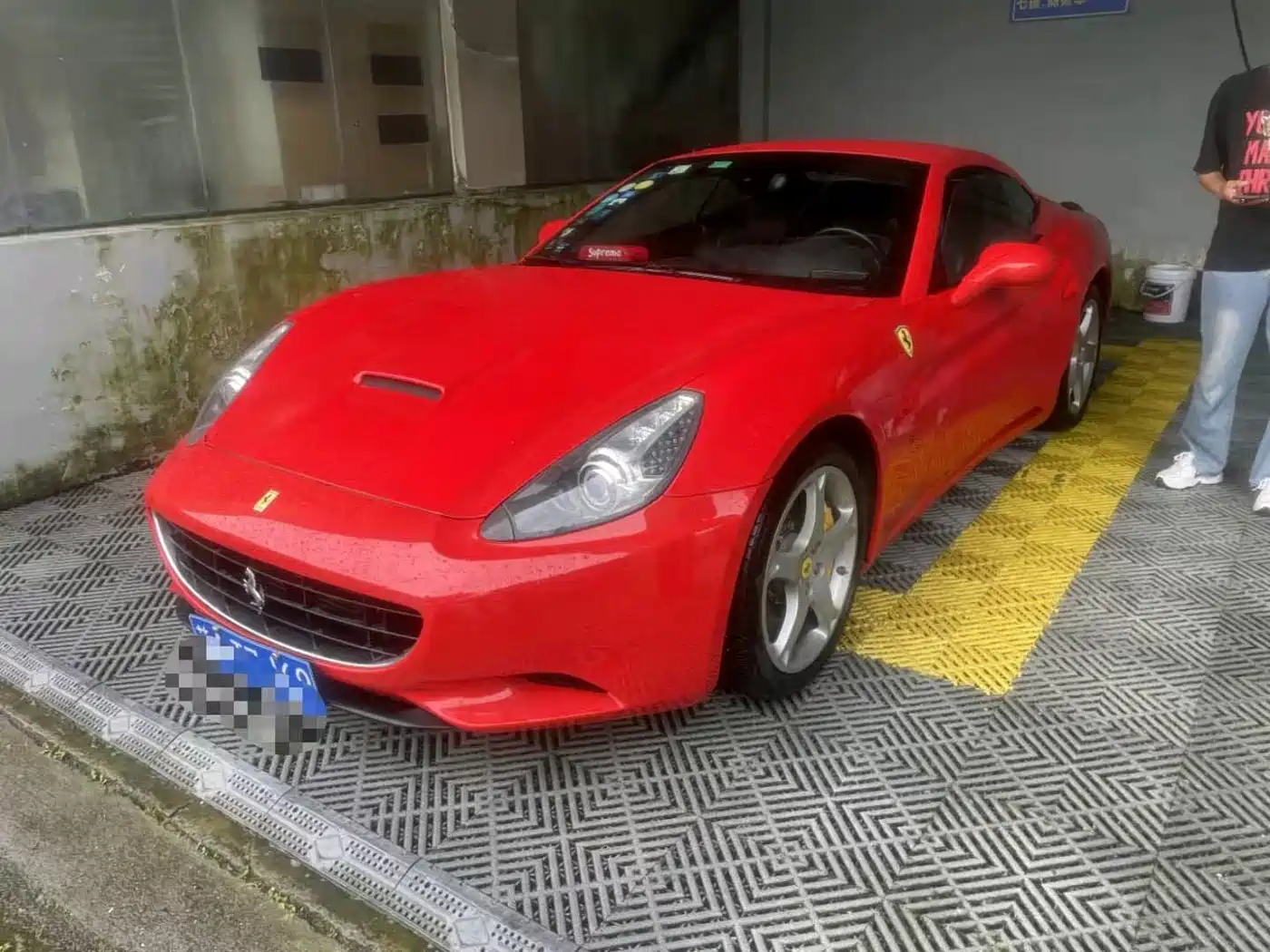
At a glance
- The California T pairs a front-engine V8, retractable metal hardtop and occasional rear seats in a recognizable Ferrari grand tourer.
- The defining California T uses the 3.9-liter twin-turbo V8; 4.3L-labeled listings need model-identity verification because that engine belongs to the earlier California lineage.
- Condition, provenance, roof operation and service evidence can matter more than a new or used label.
- Export pricing is unit-specific and shaped by specification, condition, documentation, exchange rates, freight, taxes and Incoterm; current binding figures belong in the live listing.
- LHD/RHD configuration and destination-country type approval must be confirmed before shipment or registration.
Why the Ferrari California T matters for export markets
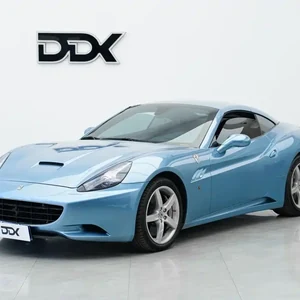
The Ferrari California T occupies a distinctive niche: a front-engine Ferrari grand tourer with a retractable metal hardtop, rear seats, and a design that is immediately recognizable without moving into V12 flagship territory. That combination makes it commercially relevant to overseas dealers seeking a recognizable premium marque, an open-roof lifestyle proposition, and a car that can be presented credibly to both collectors and affluent touring customers. Its global appeal comes from the combination of Italian visual identity, everyday usability and a relatively focused V8 layout rather than pure track machinery for cross-border retail.
For an export buyer, the California T matters because it bridges several established customer needs. It is more flexible than a two-seat convertible because the roof closes and the rear cabin is available, although those rear seats remain occasional-use space. It is also easier to position as a grand tourer than a narrowly focused supercar. Dealer value comes from model-specific knowledge: provenance, service records, option configuration, roof condition and market-specific compliance all materially affect how readily the car can be sold or placed with an end customer. Documents matter more than labels.
International demand is not simply a function of badge recognition. Buyers usually balance emotional appeal against practical ownership, and the California T offers an identifiable Ferrari experience with a V8 soundtrack, open-top usability and less complexity than many higher-performance exotics. For importers, this can translate into a manageable acquisition project: source the correct car, verify its documents and history, budget specialist servicing, then place it where infrastructure and demand are already proven. The model is strongest in markets that appreciate design heritage and can support premium after-sales support and viable long-term ownership.
- Retractable-hardtop grand tourer
- Front-engine V8 performance
- Four-seat packaging
Model range, trims and powertrain variants: how the lineup is structured and how to choose
The lineup requires careful naming discipline. California T inventory can appear under two broad labels: 4.3L Standard and 3.9T Standard. The 4.3-liter naturally aspirated V8 belongs to the earlier California family, whereas the defining California T uses the 3.9-liter twin-turbocharged V8 with an eight-speed dual-clutch transmission. Older marketplace records may apply the California T name loosely to earlier California cars. Therefore, engine badging is not enough: the VIN, model designation, build record and registration documents should all agree before an overseas buyer treats a car as an unambiguous genuine California T model.
The 3.9T is the more relevant choice for a buyer seeking the model in its intended modern form. Its twin-turbo V8 delivers stronger outright performance than the earlier naturally aspirated engine and suits buyers who value quick throttle response, high touring speed and the latest electronic and comfort equipment available within the California T range. The trade-off is a more complex fuel, cooling and service ecosystem. The 4.3L car can appeal to collectors who prefer linear throttle response, a naturally aspirated character and an earlier, simpler specification, provided its identity is properly documented.
For selection, start with the intended customer rather than the badge. A dealer serving road-trip enthusiasts will usually prioritize the 3.9T’s performance, open-roof usability and refined cabin. A collector establishing an early-Ferrari portfolio may prefer the authenticity of the 4.3L-labeled car, but should budget for condition restoration and verify whether it is marketed as California rather than California T. In both cases, inspect factory options, wheel and tire specification, paint condition, roof operation, service evidence and matching documents. A technically attractive engine does not compensate for a questionable identity or neglected chassis.
- 3.9T: later twin-turbo specification
- 4.3L: earlier naturally aspirated lineage
- Verify VIN and model documents
New vs used Ferrari California T: how export inventory is structured and how buyers choose
New versus used is a channel and evidence question, not merely a badge on a listing. A genuinely new example should be supported by factory documentation, delivery records and a clear warranty position. A used example should be evaluated through its title, VIN, service history, mileage evidence, accident records and condition inspection. In a mature model, even a vehicle described as new may be an older parallel-import or dealer-held car, so ask what “new” means legally and commercially in the selling market rather than relying only on the category label alone.
Used-car procurement may be easier to audit because the ownership trail should already exist, but age brings greater uncertainty in paint, roof hydraulics, coolant systems, brake components, suspension and electronics. A new or low-claim status may reduce some wear concerns, yet it does not remove the need for a pre-purchase inspection because long storage, demonstration use, repainting or incorrect import documentation can be disguised. The smart comparison is total cost: acquisition price plus inspection, repairs, compliance, freight and financing should be weighed against expected condition and provenance, as well as resale positioning.
For an overseas dealer, build a shortlist that mixes desired specification with realistic condition standards. The 3.9T offers the strongest tie to the California T’s established identity, while an early 4.3L-labeled car may offer a different collector proposition. On every candidate, verify that the VIN is visible and consistent across the listing, chassis, engine bay, title and service papers. Then grade cosmetic condition, roadworthiness and completeness separately. A high-value car with a minor but disclosable issue is less damaging than an apparently clean car whose identity or condition cannot be proven.
- Compare evidence, not labels
- Inspect age-related risks
- Assess total ownership cost
How export pricing works: the factors behind a live listing price, and how to read one
Export pricing is not a fixed market value attached to the model name. It is the result of several interacting variables: model year, exact California versus California T identity, engine, transmission, factory options, mileage, ownership count, condition, paint and cosmetic work, accident or restoration history, documentation quality and the seller’s location. Currency movements and the cost of inspection, secure storage, insurance, transport, customs and taxes can also alter the landed figure. A buyer should therefore compare cars on a like-for-like specification and ask whether each quote includes only the vehicle or the full export service.
To read a live listing correctly, separate the vehicle reference, export price and landed cost. First, confirm the year, engine label, gearbox, mileage, condition, VIN availability and seller location. Next, check the photographs for panel consistency, wheel condition, tire date codes, interior wear and visible repair evidence. Read the price field together with its validity period and terms, then identify the Incoterm, payment schedule, documentation scope, inspection fee, storage charges, insurance and destination charges. Current binding figures for each unit are shown in the live ChinaCarDirect inventory and should be confirmed in a written quotation before funds are committed.
The most reliable comparison is a written, apples-to-apples quote. Ask the supplier to repeat the VIN or unit reference, condition summary, included accessories, export service, Incoterm and quote-validity period in the final offer. Exclude vehicles with unclear title or inconsistent identification, and treat an unusually attractive headline number as a prompt for more verification rather than evidence of value. For a business buyer, also calculate the cost of delayed registration, compliance remediation and unsold inventory. Those carrying costs can outweigh a small nominal saving and should appear in the acquisition model.
- Compare like-for-like cars
- Separate vehicle and landed costs
- Require written unit terms
MOQ, ordering and payment: single units vs consolidating a container
Because the California T is a low-volume passenger car, the practical purchasing unit is normally an individual vehicle, not a containerized retail order. Dealer buyers should nevertheless read the minimum-order quantity shown for the selected listing and request the applicable wholesale terms rather than infer them from another model or general marketplace conventions. For an experienced importer, one carefully selected car may be dispatched as a specialist vehicle shipment. For a new entrant, the economics should be tested before ordering several examples: each unit needs its own sourcing, inspection, compliance and destination-margin planning, plus a commercial resale plan.
Consolidation still has a role when a buyer has independently sourced several cars with compatible destinations and timelines. The benefit is not simply a lower per-car freight rate; it can also be better container utilization and fewer documentation handoffs. However, luxury sports cars do not follow ordinary high-volume vehicle loading assumptions. Actual dimensions, weight, floor limits, lashing points, fuel or battery isolation rules for any auxiliary batteries, and the carrier’s securing plan must be checked. Ask the freight forwarder for a vehicle-specific load plan rather than relying on a generic cars-per-container rule.
Ordering mechanics should be settled before the deposit. A typical sequence is to select a unit, review live terms, request an RFQ, reserve it in writing, pay through the agreed method, complete inspection, then release the shipment under the chosen Incoterm. Clarify who owns the vehicle during transit, when risk passes, who insures it, and the quote-validity period. For multi-car purchases, use a schedule listing each VIN, agreed configuration, price basis and release condition. That prevents a promising first vehicle from becoming an ambiguous template for cars the buyer never inspected.
- Confirm listing MOQ
- Schedule by VIN
- Define payment and risk transfer
Shipping, homologation and market compliance caveats: LHD/RHD and import rules by country
Left- or right-hand drive is a destination-specific decision, not a cosmetic preference. The California T has been offered in both configurations in major markets, but a car prepared for China or another left-hand-drive market must not be assumed to be right-hand drive, and the steering position, lighting, mirrors, instrumentation and related components should be confirmed on the VIN. If the buyer needs RHD, specify that requirement before inspection and shipment. Retrofitting after export can add cost, delay and compliance risk, so it is generally preferable to source the correct factory configuration.
Import rules vary by country and can be more restrictive than ordinary used-car rules because of age, engine capacity, emissions, safety, luxury-vehicle taxes or local registration systems. In the European Union, ask whether the car carries valid EU Whole Vehicle Type Approval and the correct Certificate of Conformity; in the United Kingdom, confirm the route through DVLA, IVA or another lawful approval before shipment. US buyers should establish EPA and, where applicable, California emissions requirements before assuming the car is registrable. In Australia, New Zealand, Japan, Gulf markets and other territories, use a local customs broker to verify age limits, VIN rules, conformity programs, duties and registration criteria.
Export documents should match the physical car and the declared value, while the importing party remains responsible for local registration and road legality. Expect core documents such as the original invoice, export declaration, bill of lading or air waybill, VIN records, customs paperwork and any available service or ownership records; the exact set follows the transaction and jurisdiction. Do not rely on a supplier’s statement that a car is “export ready.” Obtain the original title or release documents directly or through a verified intermediary, confirm that no lien or theft record is unresolved, and budget for local duties, VAT or sales tax, registration, insurance and any compliance inspection before the vehicle is marketed.
- Specify LHD or RHD
- Check local approval rules
- Match documents to VIN
Who should buy the California T — and who should pick a different vehicle
The California T suits an overseas buyer who wants a recognizably Ferrari experience without moving to the cost and intensity of a V12 flagship. Its strengths are the retractable-hardtop format, front-engine grand-touring balance, V8 performance, usable two-seat-plus-two packaging and the ability to serve both an emotional lifestyle purchase and an enthusiast touring use case. It is particularly relevant to a dealer with access to specialist servicing, robust insurance and a local customer base that values design and open-air driving. In those conditions, the model can occupy a clear and attractive position in the premium imported-sports portfolio.
It is less suitable when the priority is low operating cost, abundant cargo, effortless local compliance, inexpensive parts or a track-centered ownership plan. The model’s age will eventually expose buyers to age-specific inspection rules, while specialized body, roof, electronics and V8 servicing can be expensive. The rear seats and luggage capacity should not be mistaken for those of a family saloon. Buyers who want the newest technology, hybrid efficiency, mid-engine balance or supercar performance should compare newer rivals rather than expecting the California T to absorb every requirement. A clear use case prevents a prestigious purchase from becoming an awkward ownership project.
For an end customer, the decision often comes down to character versus convenience. The California T delivers an open-top grand tourer with a Ferrari badge and a distinctive folding-hardtop silhouette; it does not deliver the extreme performance, rear visibility or some of the sharper handling of a mid-engine supercar. For a dealer, the right buyer is someone who values styling, touring comfort, collectibility and a memorable ownership experience, and who can accept specialist maintenance. Ask every prospect about climate, road quality, parking, local access to a Ferrari specialist and realistic annual usage before recommending the model.
- Touring and collector focus
- Specialist servicing essential
- Poor fit for low-cost track use
Main rivals and how the California T compares
The closest conceptual rival is the Maserati GranTurismo. It also combines a front-engine V8, four-seat grand-touring layout and retractable-hardtop thinking, but it emphasizes traditional touring comfort and cabin space rather than Ferrari design rarity and badge appeal. It may be easier to place with clients who prioritize usability, luggage and a more conventional GT presentation. The trade-off is that the GranTurismo’s own maintenance profile and depreciation require their own analysis; selecting it merely to avoid badge risk is not a substitute for a proper total-cost and support review before purchase or import.
The Aston Martin DB11 Volante is the more powerful, more comprehensively engineered alternative for a buyer who prioritizes luxury, refinement and long-distance capability. Its open-top grand-touring proposition overlaps directly with the California T, while its modern electronics, cabin presentation and performance typically command a materially different acquisition and maintenance profile. The California T may offer greater visual drama and Ferrari collectibility, but it is older and less convenient to live with. For an overseas buyer, direct regional parts support and local homologation can often matter more than the badge comparison alone.
For a higher-luxury comparison, the Bentley Continental GT Convertible offers a handcrafted, quiet and extremely comfortable open-top environment. It is a credible rival for clients who want a grand tourer but place cabin finish, rear-seat comfort and effortless long-distance travel ahead of compact dimensions, V8 character or Ferrari styling. Against it, the California T feels more focused, compact and visually dramatic, but it offers less outright luxury and may have a less accessible service network. The best choice is therefore determined by customer priorities, confirmed local support and an honest landed-cost comparison, not by brochure specifications alone.
- GranTurismo: more GT usability
- DB11: more power and refinement
- Continental GT: more luxury
Live Ferrari California T export inventory
View all listings →Real units currently on ChinaCarDirect with per-unit asking prices and MOQ. Availability updates live from the catalogue.
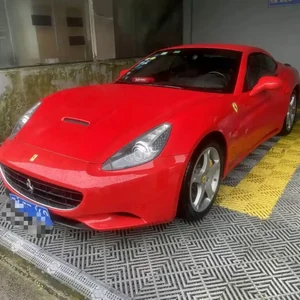
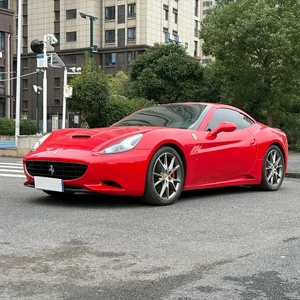
How to buy a Ferrari California T from China
-
1
Set the market-fit brief
Define the required 3.9T or 4.3L lineage, LHD or RHD configuration, condition standard, destination and intended customer. This prevents a visually attractive but commercially unsuitable car from entering the sourcing process.
-
2
Shortlist live inventory
Use the live Ferrari California T listings to compare the current unit price, displayed MOQ, specification, location, photographs and available documentation. Treat each listing as a separate candidate rather than assuming every California T is mechanically alike.
-
3
Verify identity and ownership
Match the VIN across the listing, chassis, engine bay, title, invoice and service records, and confirm whether a 4.3L car is properly identified as California or California T. Check ownership, lien and export-release information before paying.
-
4
Request an RFQ and inspection
Request a written quote stating the exact vehicle, condition, options, Incoterm, payment schedule, document scope, validity period and all logistics charges. Arrange an independent or supplier-facilitated inspection, with findings recorded in the sale agreement.
-
5
Reserve with written terms
Agree the reservation deposit, cancellation conditions, inspection and payment gates, insurance responsibility and the point at which risk passes. For multiple vehicles, attach a VIN-level schedule showing each agreed configuration and release condition.
-
6
Release and ship the vehicle
Complete a final pre-shipment inspection, photograph the vehicle and its identifiers, secure the correct export documents and approve a vehicle-specific loading plan. Confirm marine or air transit insurance, customs instructions and shipment tracking.
-
7
Complete import and registration
Use a destination-country customs broker to confirm type approval, duties, taxes, inspections and registration eligibility. Keep the physical vehicle, VIN and imported documents aligned before releasing the car for sale or fleet use.
California T vs rivals
| Maserati GranTurismo | The GranTurismo matches the front-engine V8, four-seat GT and open-roof proposition, but it prioritizes conventional touring space and cabin utility over Ferrari styling and collectibility. Choose it for clients who value a more mainstream GT brief; compare regional parts support and total ownership costs rather than assuming either marque is automatically cheaper. |
|---|---|
| Aston Martin DB11 Volante | The DB11 Volante is a more powerful and modern luxury alternative with a directly comparable open-top grand-touring role. The Ferrari may have greater visual drama and badge appeal, while the Aston may be easier to justify on refinement and technology; local support and homologation should decide. |
| Bentley Continental GT Convertible | The Bentley Continental GT Convertible is the higher-luxury comparison, emphasizing handcrafted comfort, rear-seat space and effortless long-distance travel. The California T is more compact and characterful but less plush; choose the Ferrari when V8 focus and styling matter more than cabin serenity. |
Frequently asked questions
How is Ferrari California T export pricing determined?
A live price reflects the individual vehicle’s year, exact California or California T identity, engine, options, mileage, condition, history and documentation. Freight, insurance, storage, exchange rates, customs, taxes and the Incoterm can change the landed total. Check the current unit price and MOQ in the live ChinaCarDirect listings, then request a written quotation that lists inclusions, exclusions and validity.
What engine and powertrain does the Ferrari California T use?
The genuine later California T uses a 3.9-liter twin-turbocharged V8 with an eight-speed dual-clutch and rear-wheel drive. Earlier California cars use a 4.3-liter naturally aspirated V8 and may appear under the 4.3L Standard label; confirm whether a listing is actually California or California T. It is a petrol car, so electric range, battery capacity and charging time do not apply.
How should buyers compare new and used Ferrari California T examples?
New status should be supported by factory or dealer records and a clear warranty position, while used status should be assessed through title, VIN, mileage, service history and a condition inspection. For this mature model, paint, roof hydraulics, brakes, suspension, electronics and provenance can outweigh the listing category. Compare total ownership and remediation costs, not just the acquisition figures.
How does MOQ work for a California T purchase?
Read the MOQ displayed for the selected unit rather than assuming a catalogue-wide requirement. A low-volume luxury purchase is often made as an individual vehicle, but any multi-car condition should be confirmed in writing before the deposit. If several cars are consolidated, use a VIN-level order schedule and obtain a vehicle-specific freight plan.
What determines shipping time and cost from China?
Transit time depends on the route, transport mode, port handling, customs documentation, inspections and weather; a specialist enclosed-car carrier may be required. Cost depends on origin and destination, carrier charges, insurance, fuel surcharges, terminal fees, customs, taxes and the vehicle’s actual dimensions and weight. Ask the forwarder for a route-specific quote and an all-in landed-cost schedule.
Are spare parts available for an exported Ferrari California T?
Parts availability varies by VIN, model year, destination and body, roof or electronic configuration. Confirm part numbers, regional Ferrari support and alternative specialist or remanufactured sources before purchase, and check the condition and warranty of used parts. For cross-border servicing, also verify that the supplier can invoice and ship the required components under the destination’s import rules.
Is a right-hand-drive Ferrari California T available for export?
The model has been offered in LHD and RHD forms, but the configuration of each available car must be confirmed. Specify RHD before selection and inspect the steering position, lighting, mirrors and instruments against the VIN and documents. Retrofitting after export can add cost, delay and compliance risk.
How do I order a Ferrari California T from China?
Start with the live California T listings, select a vehicle matching the required specification, and verify its VIN, condition and export documents. Send an RFQ with the destination and required Incoterm, then reserve the unit using written payment, inspection and risk-transfer terms. Release shipping only after the final inspection, documentation check and agreed payment milestone are complete.
Ready to source the Ferrari California T?
Send ChinaCarDirect your preferred California T specification and destination for a current unit-specific quote, MOQ confirmation and export-document checklist.
Request a quote