
Ferrari F8 Export Buying Guide for Overseas Dealers
Buy a Ferrari F8 from China with clear guidance on Tributo and Spider trims, export pricing, MOQ, shipping, compliance and ownership risks for importers.
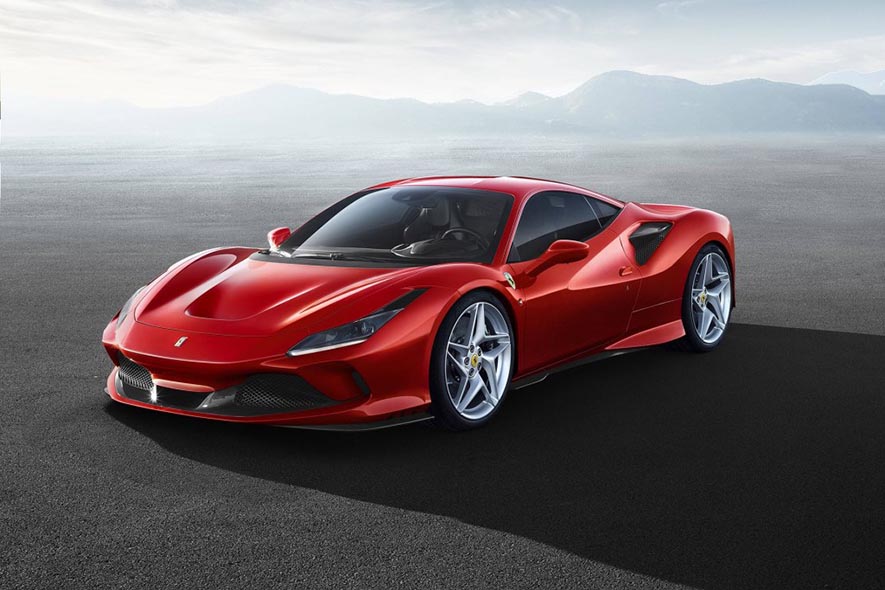
At a glance
- The F8 combines a mid-engined 3.9-litre twin-turbo V8 with road-going refinement.
- Tributo buyers choose the fixed-roof berlinetta; Spider buyers choose the retractable-hardtop convertible.
- New and used cars demand different checks, from delivery mileage to independent specialist inspection.
- Export pricing depends on the exact car, Incoterm, freight, currency, duties and destination-market rules.
- Live unit listings and written RFQs should replace any assumed price, MOQ or availability.
Why the Ferrari F8 matters for export markets
The Ferrari F8 occupies a distinctive place in the global supercar market: a mid-engined, rear-wheel-drive V8 that combines performance with the refinement expected of a modern road car. Tributo and Spider give buyers distinct body choices around the same engineering idea. Its strongest export appeal lies in the combination of Ferrari identity, a turbocharged 3.9-litre V8, driver-focused cabin and road usability. That balance attracts collectors who want more character than a sanitised electric exotic, while appealing to clients who need a car that can be driven to an event and returned home.
For overseas dealers, demand is usually concentrated among high-income private buyers, Ferrari collectors and performance-car fleets that need a recognisable halo model. The coupe may appeal to buyers who prioritise visual drama and a more rigid roof structure, while the Spider adds open-air appeal for leisure markets and destination driving. Export value does not come only from the badge; documented service history, matching documents and careful condition can preserve buyer confidence. A supercar can therefore work as a low-volume, high-value portfolio asset when ownership expectations and operating support are realistic.
Global demand should be assessed market by market, not assumed from Ferrari's global reputation. Import duty, luxury-car taxation, parking rules, insurance classifications and local registration policies can change the ownership proposition. In some markets, a group of buyers will pay for exclusivity; in others, operating costs or regulatory barriers may limit the addressable audience. Export buyers should validate demand with Ferrari specialists, insurers and dealers before committing to a vehicle. This is important when sourcing from China, where the listing must ultimately fit the destination market's legal and commercial expectations.
- Mid-engined V8; road-oriented
- Tributo coupe; open-top Spider
- Validate destination demand
Model range, trims and powertrain variants: how the lineup is structured and how to choose
The F8 range is structured around roof format and use rather than a ladder of unrelated versions. Tributo is the two-door berlinetta, while Spider is the two-door retractable-hardtop convertible; both are built around the marque's mid-engine layout and the 3.9-litre twin-turbocharged V8 identified in the export listings. For most buyers, this means the first decision is coupe versus open-top car, not a search through engine families. It simplifies comparison while leaving differences in appearance, luggage accommodation and usability. That makes a disciplined specification review more useful than chasing headline performance figures.
Choose Tributo when visual purity, a fixed roof and the coupe's more silhouette matter most. It is the simpler brief for buyers focused on one hero car in a collection, and it avoids questions about roof operation, rear-space packaging and weather protection. Spider suits buyers who value the open-air experience and are prepared to manage convertible-specific considerations such as luggage space, roof condition and care. Neither choice should be reduced to a badge hierarchy: evaluate the actual car, its options and its inspection findings against how the owner will use it.
Across either body style, verify the 3.9-litre V8, transmission, drivetrain, steering position and factory options against the unit's documents and live listing. Configuration can differ by origin market, so a model name alone is not enough to establish equivalence between cars. Ask for the VIN or chassis record, build sheet, service history and photographs of underbody, engine bay and cabin. If exact output, dimensions, equipment or homologation are material to your decision, check the live unit record and request written confirmation for the car rather than relying on model assumptions.
- Tributo: fixed-roof coupe
- Spider: retractable hardtop
- Verify each live specification
New vs used Ferrari F8: how export inventory is structured and how buyers choose
Export inventory for the F8 may come from established exotic-car dealers, private consignments or vehicles prepared for overseas sale. Within those channels, a car may be classified as new because it has not been registered, even if it has delivery mileage, or as used after ownership and road use. That distinction is useful but not sufficient: condition, disclosure history and documentation matter more than the new or used label. Buyers should ask how a vehicle was acquired, whether it has been driven or displayed, and who owns or controls it.
A new or effectively new F8 generally offers the cleanest ownership narrative, current warranty position and easier alignment of factory specification, condition and delivery documents. It may also carry demand for particular paint, interior and option combinations. A used Ferrari F8 can be attractive when condition is well documented, but the buyer inherits the previous owner's service quality, modification history and market perceptions. Supercar depreciation is not uniform, and a lower acquisition price does not automatically create a lower total cost if repairs, missing parts or weak provenance follow the car.
Whichever route you choose, make the condition assessment independent of the sales description. Verify odometer readings, service invoices, tyres, brake condition, paintwork, accident repair, carbon-ceramic brake wear, roof operation for a Spider, and the completeness of tools, books and keys. An independent Ferrari or supercar inspection is particularly valuable for a used car, while a new listing still warrants checks for transport damage and correct delivery mileage. Require clean title records and a documented chain of ownership before paying the balance. Ask the seller to reconcile every discrepancy in writing.
- New does not mean unused
- Used cars need inspection
- Verify title and history
How export pricing works: the factors behind a live listing price, and how to read one
A Ferrari F8 export price is the result of several variables, not a fixed model tariff. Model year, Tributo or Spider body, mileage, condition, service history, paint, options, accident history and ownership provenance can separate two apparently similar cars. Seller standing and warranty terms may affect the offer. Market-level currency movements, insurance, freight, handling, port charges, customs duties and the chosen Incoterm change the landed total. A live vehicle price therefore needs to be read as one input in a landed-cost calculation, not as the amount payable in the destination country.
When reading a live listing, confirm the currency, whether the figure is a vehicle-only asking price or an export quotation, and where responsibility for freight, insurance, duties and taxes begins. Check the Incoterm and whether the seller expects payment milestones before release. Compare like with like: a coupe and Spider, a lower-mileage car and a project car, or FOB and CIF arrangements are not equivalent offers. Ask whether the price is firm for that unit and how long it remains valid, because exchange rates and transport costs can change between enquiry and contract.
The reliable method is to request a written, unit-specific quote and compare its inclusions with your destination-cost estimate. Build a worksheet separating vehicle price, inland transport, export handling, freight, marine or air insurance, port or terminal fees, duties, taxes and dealer preparation. Add a contingency for currency movement or an issue discovered during inspection rather than treating the displayed figure as a guaranteed all-in number. Exact prices and availability should be taken from ChinaCarDirect's live F8 listings, then confirmed through an RFQ, because only the quotation and sales terms become binding.
- Compare like with like
- Separate price from landed cost
- Use live listings and written quotes
MOQ, ordering and payment: single units vs consolidating a container
MOQ for an F8 is a condition set by the seller, export programme or transaction, not a permanent attribute of the car. Some exporters welcome a single-unit order, while other channels impose lot quantities, allocation rules or a minimum transaction value. Never infer a market-wide MOQ from a model page or a conversation with one broker. Before placing funds, obtain the MOQ, deposit structure, allocation method, payment currency and cancellation terms in writing. If several vehicles are needed, ask whether the seller can reserve a specific unit rather than allocating one after payment.
Consolidating a container can improve freight efficiency only when several vehicles share compatible routing, security and documentation requirements. It is often less practical for a high-value F8 because a single exotic car occupies secured volume, needs moisture protection and loading procedures, and attracts handling scrutiny. Specialist enclosed vehicle transport or air freight may offer better control for one purchase. For a group order, confirm whether the vehicle can be registered in the container plan, who secures it, what partitions and restraints are used, and how damage claims are handled under the relevant Incoterm.
A disciplined purchase follows a sequence: verify the supplier and vehicle, agree a unit-specific commercial sheet, pay only through the agreed protected method, inspect before release, settle the balance against documents, and authorise export shipment. The pro forma invoice should identify the exact F8, trim, VIN or chassis number, price, currency, Incoterm, payment milestones and cancellation conditions. Keep correspondence, inspection photographs, title documents and shipping instructions in one file. These controls are more valuable than negotiating an apparently low headline price that omits fees, leaves ownership unclear or compresses the agreed shipment timeline.
- MOQ is quote-specific
- Single-unit transport may suit
- Tie payments to documents
Shipping, homologation and market compliance caveats: LHD/RHD and import rules by country
LHD and RHD availability is a central sourcing check for the F8. A car sold for one steering configuration should not be assumed compatible with the other, and a listing that omits the configuration is not ready for quotation. Overseas buyers in right-hand-drive markets should search for a confirmed RHD car and accept potentially narrower availability rather than plan on converting a LHD example. Steering conversion can affect safety, electronics, homologation and resale, and is not a routine export adjustment. Confirm the VIN, build specification and physical steering position before paying.
Import rules vary by destination and can be stricter than the export process in China. Authorities may assess the vehicle's VIN or chassis identity, emissions standard, type approval, customs category, value, age, safety equipment and evidence of roadworthiness. Duties, VAT or sales tax, luxury-vehicle charges, registration fees and insurance premiums can affect the acquisition case. Obtain written advice from a customs broker and the destination's vehicle registration authority, using the exact VIN and intended use. A vehicle being exported legally from one country does not automatically satisfy another country's registration rules.
Compliance work should begin before the balance is paid, not after the car reaches the port. Review the bill of sale, export declaration, ownership evidence, chassis and VIN records, customs papers, service documents and roadworthiness or emissions paperwork. For Europe, the United Kingdom, North America, the Gulf region, Australia or other destinations, confirm the route with local specialists rather than assuming one global homologation. If modifications are planned, assess their impact on registration and insurance. Secure transport should match the vehicle's value, and cargo cover should reflect the Incoterm and risk-transfer point.
- Confirm LHD or RHD first
- Check using the exact VIN
- Homologate before shipment
Who should buy the F8 — and who should pick a different vehicle
The F8 is a strong fit for a buyer who wants a visually dramatic Ferrari, a mid-engined V8 experience and a car capable of regular road use without abandoning supercar character. It suits collectors, entrepreneurs and established performance fleets that understand specialist servicing. The Tributo is attractive as a focused coupe, while the Spider serves buyers who regard open-air driving as part of the ownership experience. The decision works best when emotional appeal is supported by realistic insurance, storage, servicing and depreciation budgets rather than treated as a substitute for financial planning.
The F8 may be the wrong choice for a buyer whose priority is maximum electric range, minimal running cost or the practicality of a family car. Its V8 character also does not provide the low-maintenance experience sought by many exotic owners. Buyers focused on track use may prefer a model engineered explicitly around circuit performance, while those wanting open-top grand touring may find a more comfort-oriented alternative. If a quiet cabin, large luggage capacity, broad infotainment, easy servicing or predictable residual values outweigh marque and mid-engine appeal, an alternative should win.
Before placing an order, test-drive the body style and specification you intend to buy and compare it with at least one credible alternative. Ask the insurer, local Ferrari specialist and bank or financing provider to review realistic annual costs, delivery timing and resale assumptions. For a used car, add an independent inspection and contingency for wear; for a new car, confirm warranty administration in the destination country. A Ferrari F8 wholesale or multi-car purchase should also test the seller's ability to allocate specific units, handle title documents and support after-sales service remotely.
- Best for V8-focused buyers
- Not ideal for low-cost EV use
- Test ownership costs and support
Main rivals and how the F8 compares
The closest external comparison for the F8 Tributo is the Lamborghini Huracán EVO: both are compact two-seat, rear-wheel-drive supercars pairing a large naturally aspirated or turbocharged V8 with a driver-focused cabin. The F8 uses a twin-turbo V8 and adds the option of the Spider within the same model family. The Huracán EVO may attract buyers who prioritise a naturally aspirated engine and theatrical exhaust, while Ferrari buyers often value the F8's road refinement and broader brand ecosystem. Local dealer support and condition should decide the outcome rather than badges alone.
The McLaren 720S is the closest engineering-led alternative for a buyer focused on lightness, a low-volume two-seat cabin and a twin-turbocharged V8. Its carbon-based structure and sharply focused dynamics can appeal to track-minded collectors, while the F8 counters with a more road-oriented Ferrari presentation and the choice of coupe or convertible within the F8 range. Both vehicles involve specialized servicing, but parts planning, workshop access and insurance terms may differ by market. Drivers should compare real-world visibility, ride quality, luggage and usability, not only acceleration figures or brochure claims alone.
The Porsche 911 GT3 provides a useful contrast because it is a front-engine, rear-wheel-drive car with a naturally aspirated flat-six and a strong track reputation. It may serve buyers who prefer a familiar sports-car silhouette, everyday flexibility and a simpler distinction between road and circuit roles. The F8 offers mid-engine drama, turbocharged V8 delivery and, in Spider form, open-top touring that the 911 does not replicate. Whichever wins on driving preference, compare local service capability, parts lead times, insurance, expected depreciation and the car's own condition before signing the purchase contract.
- Huracán EVO: aspirated V10
- McLaren 720S: lightweight V8
- Porsche 911 GT3: front-engine rival
Live Ferrari F8 export inventory
View all listings →Real units currently on ChinaCarDirect with per-unit asking prices and MOQ. Availability updates live from the catalogue.
How to buy a Ferrari F8 from China
-
1
Define the destination and specification
State the destination country, required LHD or RHD configuration, body style and intended use before shortlisting cars. This avoids paying for an incompatible or unsuitable unit.
-
2
Review the live F8 inventory
Compare model year, body style, mileage, condition, options, seller information and the stated price within the live listings. Shortlist by VIN or chassis number where possible, not only by listing title.
-
3
Request a written RFQ
Ask for a unit-specific price, MOQ, payment milestones, Incoterm, delivery estimate, documentation and all cost components. Make clear that the quotation should identify the exact vehicle.
-
4
Verify identity and condition
Review title, ownership, VIN or chassis number, service history, build sheet and an independent specialist inspection. Resolve discrepancies before paying the balance.
-
5
Agree payment and export terms
Use a written pro forma invoice tied to the VIN, with deposit, balance, cancellation, title and document-release conditions. Keep every payment milestone linked to verified documents and inspection.
-
6
Complete compliance and shipping
Have a destination broker confirm import, tax, emissions and registration requirements using the VIN. Book compliant insured transport, confirm the risk-transfer point and retain the final handover and customs records.
F8 vs rivals
| Lamborghini Huracán EVO | The Huracán EVO is the closest rival for a rear-wheel-drive, high-performance V8 supercar, with a naturally aspirated V10 and an exhaust-focused character. Buyers prioritising that engine response may favour it, while an F8 buyer may prioritise Ferrari identity, road refinement and coupe-or-Spider choice. |
|---|---|
| McLaren 720S | The 720S competes through a lightweight carbon-based body, focused dynamics and twin-turbo V8. It can suit track-minded buyers, whereas the F8 offers a more road-oriented Ferrari experience with a coupe and retractable-hardtop Spider in the same family. |
| Porsche 911 GT3 | The 911 GT3 is a front-engine, rear-wheel-drive alternative with a naturally aspirated flat-six and strong circuit credentials. It may better suit buyers valuing familiar sports-car packaging, while the F8 delivers mid-engine character and the option of open-top touring. |
Frequently asked questions
How is the Ferrari F8 export price determined?
A live price reflects the exact vehicle's year, body style, mileage, condition, options, history and seller terms. Freight, insurance, currency movement, port charges, duties, taxes and the selected Incoterm determine the landed cost. Check the current figure on the live F8 listings and request a written, unit-specific quote for binding terms.
What engine and drivetrain does the Ferrari F8 use?
The F8 Tributo and Spider use a 3.9-litre twin-turbocharged V8 in a mid-engine, rear-wheel-drive layout, paired with an eight-speed dual-clutch automated manual. Exact output, emissions specification and equipment can vary by market, so confirm those details against the individual listing and build documentation.
Should I buy a new or used Ferrari F8?
A new F8 generally offers the cleanest condition and documentation narrative, but delivery mileage and transport damage still require checks. A used F8 may offer a different acquisition proposition, yet buyers inherit service history, wear, modification risk and repair exposure. Choose according to a verified condition report, service evidence and total ownership plan rather than the label alone.
What is the MOQ for a Ferrari F8?
MOQ is set by the seller, export channel and quoted transaction rather than by the model itself. A single-unit order may be available, but some sellers require a lot, value threshold or allocation process; confirm this in writing. Treat a general listing as a starting point, not a binding order commitment.
How long does shipping take and what does it cost?
Transit time and cost depend on route, transport mode, port handling, cargo insurance, customs work, destination charges and the Incoterm. A high-value F8 may use specialist enclosed transport or air freight, while consolidated shipping requires secure loading. Ask the freight provider for a written estimate tied to the unit's VIN and delivery terms.
Can spare parts be ordered with the Ferrari F8?
Yes, parts support should be planned using the car's VIN or chassis record, model year, body style and specification. Availability and lead times vary by market, so confirm Ferrari service access and common wear items before shipping. Do not assume parts held in one country can be transferred or installed without customs and conformity checks.
Is a right-hand-drive Ferrari F8 available for export?
RHD availability may be narrower than LHD availability and should be confirmed for each live listing. Do not assume a LHD car can be converted economically or legally; changes to steering, electronics and safety equipment can affect homologation and insurance. Provide your destination and steering requirement before requesting a quote.
How do I order a Ferrari F8 from China?
Start with the live Ferrari F8 listings, shortlist the required body style and configuration, then request an RFQ with destination, steering requirement and documentation. Verify the unit, agree an itemised price and Incoterm in writing, and use a protected payment and inspection process. Release the balance only after the title, export and shipping documents have been checked.
Ready to source the Ferrari F8?
Send your destination, preferred F8 body style and purchase requirements for a unit-specific export quote.
Request a quote