
Ford Edge Export Guide for Overseas Buyers
Buy a Ford Edge from China with practical guidance on specs, trims, export pricing, MOQ, shipping, homologation, rivals and live inventory for importers.
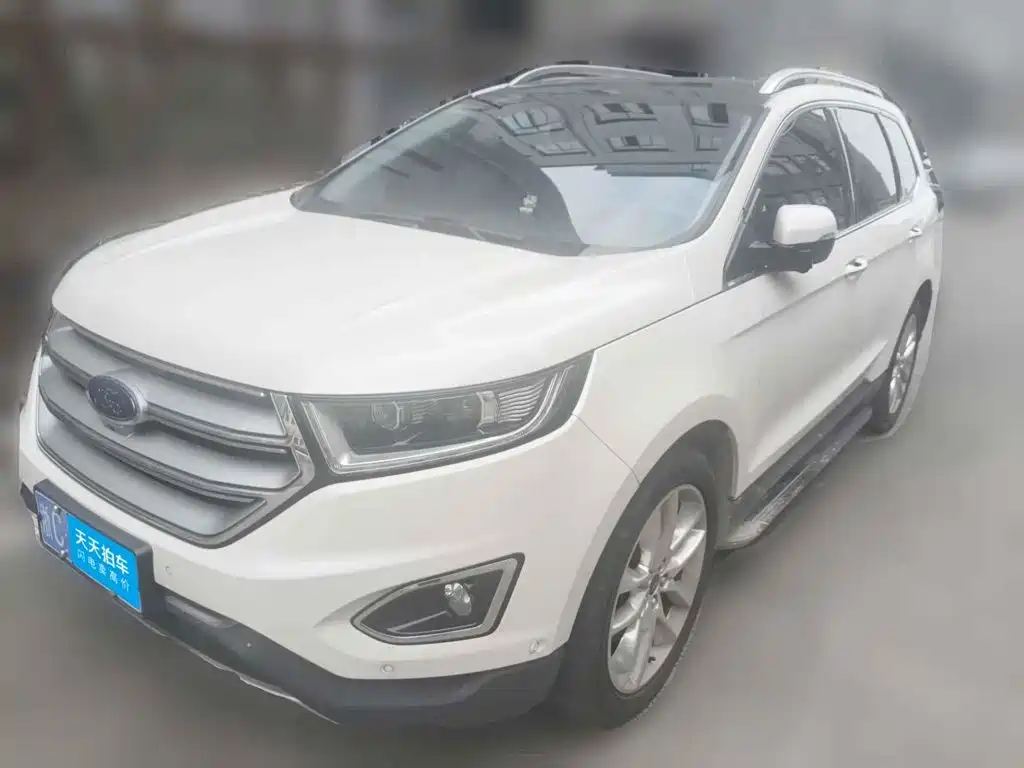
At a glance
- The Edge sits between compact crossovers and larger three-row SUVs, combining road-oriented proportions with useful passenger and cargo flexibility.
- Chinese-market choices include 2.0T EcoBoost or GTDi applications, 2.7T GTDi versions, and multiple FWD, 2WD, 4WD and AWD configurations.
- Five- and seven-seat versions suit families, executives, hotel fleets and buyers who need a configurable passenger vehicle.
- Used Edges can offer acquisition value, while newer vehicles reduce age-related condition risk; both require careful documentation and inspection.
- Export price, MOQ and availability must be checked for each live listing, then adjusted for freight, insurance, taxes, duties and destination compliance.
Why the Ford Edge matters for export markets
The Ford Edge occupies a useful middle ground between compact SUVs and larger three-row crossovers. For overseas buyers considering the Ford Edge for export, that positioning matters because it combines a road-oriented midsize body with turbocharged petrol powertrains, five- or seven-seat configurations, and front- or all-wheel-drive applications. The result suits family transport, hotel and executive fleets, and light-duty commercial use rather than specialist off-roading. Its familiar Ford design and established SUV format also appeal to importers filling a gap below premium European brands without moving into full-size SUV packaging and operating burdens.
Chinese-market Edge inventory is especially useful for buyers who need several body and drivetrain configurations under one model name. Depending on the exact vehicle, listings can identify 2.0T EcoBoost engines, the 2.7T GTDi, EcoBoost 245 versions, front-wheel drive or 2WD, 4WD or AWD, and five- or seven-seat layouts. The Edge L name appears on longer-wheelbase seven-seat applications. This variety lets a dealer compare a five-seat, front-drive fleet derivative with an AWD family vehicle, but it also means trim labels must be decoded rather than treated as a single export specification.
Demand potential is strongest where buyers want a midsize SUV that feels substantial on-road but remains manageable for urban use and standard vehicle logistics. The Edge offers useful choices for passenger fleets, premium ride-and-handling positioning, and additional traction through AWD versions. For importers, the Ford badge can simplify customer recognition, while China’s broad production base offers a wider specification search than a single domestic-market trim range. The trade-off is that China-specific emissions, equipment and trim standards may not align with the destination, making homologation planning part of the purchase decision rather than an afterthought.
- Five- and seven-seat layouts serve varied needs.
- Turbo options suit efficiency or output priorities.
- AWD adds traction where conditions justify it.
Model range, trims and powertrain variants: how the lineup is structured and how to choose
The Chinese Edge lineup is easiest to understand as three linked choices: mechanical specification, seating layout, and equipment grade. Engine names include 2.0T EcoBoost, 2.0T GTDi and 2.7T GTDi, while EcoBoost 245 identifies another version in the range. Drivetrain labels move between front-wheel drive, 2WD and 4WD or AWD depending on the application. Equipment grades seen across listings include Luxury, Premium, Platinum, ST-Line, Elite, Prestige and Ultimate. Because naming changes between model years and the Edge L body, compare the complete listing description rather than relying on the badge or trim name alone.
Start with the 2.0T EcoBoost or GTDi applications when the operating brief prioritises a smaller turbocharged engine, manageable fuel use and a practical cost profile. The 2.7T GTDi is the logical high-output route for buyers carrying heavier loads, towing more often or prioritising stronger acceleration. Drive type should follow the operating environment: FWD or 2WD suits predominantly paved fleets with disciplined mileage budgets, whereas 4WD or AWD gives additional traction when weather, road surface or load conditions justify it. Confirm the engine, gearbox and driven wheels on the VIN-linked record, not only in the listing title.
Seating is a commercial decision, not merely a comfort preference. A seven-seat Edge can carry additional passengers, but buyers should check whether the third row is genuinely usable for adults and how it affects luggage space. Five-seat versions generally suit fleet and executive use where the third row is rarely needed, and they may be easier to load. Trim choice then determines equipment, but avoid paying for cosmetic features that local customers will not value. Match the vehicle to the buyer, route and repurchase cycle rather than simply selecting the highest-grade name on the page.
- Decode engine, drive, seats and grade.
- Choose power around load and route.
- Test third-row usability before purchase.
New vs used Ford Edge: how export inventory is structured and how buyers choose
Export inventory for the Edge can mix used vehicles sourced from domestic ownership channels with newer China-specification vehicles moving through parallel-export or dealer channels. Used examples may come from private ownership, fleet disposal, auctions or trade-ins, while newer units may carry low mileage or showroom distance. The structure gives buyers access to different acquisition points, but condition and provenance vary. A listing title can look similar across very different assets, so the age, mileage, title status, service record and seller documents must be checked for every unit rather than inferred from the model family.
For a used Ford Edge, value comes from acquiring a depreciated vehicle while accepting more uncertainty. Inspect cold starts, idle quality, engine mounts, transmission changes, brake condition, suspension noise, tyre age, glass and body repair, and the condition of electrical and restraint systems. Obtain the service history and ask whether the odometer reading can be supported by maintenance records. For a vehicle in a left-hand-drive configuration, also inspect for evidence of prior overseas use or steering conversion. Any repair not shown in the record should be valued as a risk, not treated as a benefit.
Newer China-spec vehicles reduce age-related wear and may offer a clearer warranty, but the manufacturer’s warranty and service network may not transfer directly to an overseas buyer. Equipment can be China-specific, and a clean domestic title does not by itself satisfy customs or type approval in another country. Buyers should compare the total expected benefit of newness against a well-documented used unit. For fleet replacement, predictable condition and downtime may justify newer stock; for a fixed project with tight acquisition spending, a thoroughly inspected used Edge can be the rational choice.
- Used value depends on inspection and records.
- Newer vehicles reduce age-related wear.
- Check warranty portability and approval.
How export pricing works: the factors behind a live listing price, and how to read one
An export price guide for the Ford Edge should explain that pricing is a quotation built around the exact vehicle and the transaction scope. The baseline is influenced by model year, Edge versus Edge L body, engine, drivetrain, seating, trim, new or used condition, mileage, service history and visible or documented repairs. Options, title status and the level of inspection also matter. On top of that vehicle value, exchange rates, sea or air freight, insurance, port handling, documentation, destination taxes, duties and the selected Incoterm can change the amount a buyer ultimately pays. There is therefore no defensible fixed price for every Edge.
Read each live listing as a vehicle-specific entry rather than a market-wide price band. Establish whether the displayed amount is the vehicle price at origin, whether it includes inland transport and export documentation, and whether freight, insurance, port charges, local taxes or commissioning are excluded. Note the stated Incoterm, because the point at which responsibility transfers affects both risk and cost. Compare units that match on year, trim, engine, drive type, seating and condition. A cheaper but differently equipped or less-documented Edge is not automatically the better import for the buyer.
An export quote becomes decision-useful only when it is tied to the VIN or SKU, the destination and the chosen delivery term. Ask for an itemised breakdown of vehicle cost, inland logistics, freight, insurance, port fees, taxes and any conversion or homologation work. Confirm whether payment milestones are refundable and whether changes in exchange rates or shipping costs are passed through. The live ChinaCarDirect Edge inventory carries the current per-unit price, MOQ and availability, while a buyer-specific RFQ should state the destination and required specification so that the final commercial terms can be made binding.
- Compare like-for-like specifications.
- Check Incoterm and exclusions.
- Request an itemised landed quote.
MOQ, ordering and payment: single units vs consolidating a container
A single-unit purchase is often the practical starting point for a test vehicle, dealer sample or modest fleet order. The listing should state its minimum order quantity and accepted payment and delivery conditions; these are unit-specific terms, not a universal catalogue rule. For a Ford Edge wholesale order, confirm whether one buyer may order one vehicle, who issues the invoice, which party holds title, and what documents accompany the car. A single-unit deal gives lower inventory exposure and flexibility, but may not obtain the same freight efficiency as a consolidated shipment. Treat the listing’s MOQ and quote as binding only after written confirmation.
Consolidating several Edges into one container or vehicle shipment can improve freight utilisation and simplify fleet deployment, especially when the units share destination, documentation and handover requirements. However, mixing trims, seat counts or drive types may leave slower-moving stock after the first wave arrives. Consolidation also ties up more capital before sale, increases exposure to port or customs delays and requires accurate declarations. Buyers should model landed cost per vehicle, not freight cost alone, and decide whether every unit has a confirmed customer or planned rotation before committing the group to one shipment.
Payment structure should mirror the sequence of performance. A workable process separates the vehicle reservation, cleared payment, export documents, shipment and release at destination, with each stage tied to an identifiable vehicle or shipment. Clarify deposit deductions, balance timing, documentary conditions, inspection rights, refund triggers and title-transfer timing. Do not release the balance merely because a vessel has departed if the agreed export documents are missing. For a consolidated order, use a schedule that lists each VIN or SKU, trim and agreed price, then require the same documentation standard for every unit. This reduces the risk that one difficult vehicle delays the whole group.
- Confirm listing-specific MOQ.
- Consolidate only planned-demand vehicles.
- Link payments to performance milestones.
Shipping, homologation and market compliance caveats: LHD/RHD and import rules by country
Complete vehicles are commonly moved by roll-on/roll-off vessels, while container or other specialist arrangements may suit particular loading constraints. A midsize SUV must be checked against vessel, terminal and tunnel clearances, and the carrier must confirm that the chosen variant is accepted. Securement, lashing, underbody clearance, weather exposure and discharge method all matter. Door-to-door delivery should distinguish origin handling, international freight, destination port charges and inland haulage. The importer should also establish the booking party, insurance coverage and the point at which risk transfers, especially where an Incoterm leaves more obligations with the buyer.
Common RHD destinations include the UK, Japan, Australia and Thailand, while many Continental European, Gulf and North American markets use LHD. A China-market Edge listing must not be assumed to match the required steering side; confirm the actual configuration and whether any conversion has been performed. For an RHD destination, conversion affects more than the steering wheel: safety, lighting, instrument display, control mapping and local type-approval requirements may all be affected. An RHD example sourced in an RHD market can be easier to assess, but availability is narrower and the vehicle’s age, origin and specification should be documented. Never rely on a conversion photograph alone; request the relevant vehicle and compliance records.
China V and China VI labels visible in some trim names describe the Chinese emissions context, not automatic approval for Europe, the UK, Australia, the Gulf or any other destination. Importers must check local emissions, safety, cybersecurity, VIN, noise, lighting and equipment rules, as well as age restrictions that can apply to used cars. Confirm the Certificate of Conformity or equivalent, customs paperwork, bill of sale, export declaration and import-eligibility evidence for the exact vehicle. Duties, VAT or GST, registration and insurance can be material. Because rules vary by country and model year, obtain written advice from a local customs broker or authority before paying the balance.
- Confirm steering configuration.
- China V/VI is not local approval.
- Include all landed charges.
Who should buy the Edge — and who should pick a different vehicle
The Edge is a strong candidate for importers serving families, premium ride-and-handling buyers, hotel or executive fleets, and customers who want five- or seven-seat flexibility without entering a full-size SUV. The turbocharged petrol range offers a familiar refuelling model, and AWD versions suit buyers who prioritise traction. It is particularly attractive where the brand is already trusted and a dealer can source parts, servicing and technical support locally. A business buying for resale should also consider model-year appeal and the ease of keeping a manageable spread of trim and seat configurations.
It is a weaker choice for buyers whose priority is maximum fuel economy, minimal tailgate overhang, serious off-road ability, commercial-duty towing or a very low acquisition budget. Operators focused on EV operating costs may prefer a battery-electric crossover, while large-cargo users may need a van or body-on-frame pickup. A seven-seat Edge can also disappoint if the third row is cramped or the boot becomes unusable with passengers aboard. Fleet buyers should test the actual seating and loading case rather than relying on the seat count in the listing title, especially for airport or hotel runs where luggage volume matters.
The decision should be based on whole-life suitability rather than purchase price alone. Compare expected fuel use, insurance class, tyre and service costs, parts lead times, residual demand and the productivity lost to downtime. For a dealer, the key question is whether the Edge’s brand, size and specification fit the local market faster than a cheaper rival. For a fleet operator, uptime, compatibility with existing workshop processes and predictable parts may outweigh luxury equipment. A test-and-inspection process against one shortlisted rival often reveals whether the Edge’s extra capability is valuable or merely adds acquisition and preparation cost.
- Strong for family and executive fleets.
- Choose AWD for justified traction.
- Reject when cargo or efficiency dominates.
Main rivals and how the Edge compares
The Nissan Murano is the closest like-for-like rival for buyers who want a road-oriented midsize crossover and typically a five-seat layout. The Edge gains flexibility where seven-seat derivatives are required, while the Murano may be easier for a buyer whose local brand support is already established. Compare parts, fuel economy, compliance and landed cost in the destination rather than assuming a trim hierarchy transfers between markets. The Edge’s main advantage is specification breadth; the Murano may be more straightforward for fleets committed to one well-supported configuration or fleet programme.
The Mazda CX-9 is another credible rival, combining a midsize SUV format with available five- or seven-seat layouts in relevant markets. Its appeal often centres on driving character and a more focused equipment proposition, whereas the Chinese Edge offers multiple engine, drive and grade combinations. An importer should test which powertrain suits local fuel prices and road conditions, then compare service access and parts availability. A higher-grade Edge may satisfy buyers wanting more equipment, but the Mazda can be a rational choice for a customer prioritising a simpler trim strategy and brand identity.
The Hyundai Santa Fe is a broad alternative for mainstream family, executive and fleet buyers who need five- or seven-seat utility. The Edge differentiates through its turbocharged-petrol emphasis, recognisable Ford positioning and broad China-origin trim availability; the Hyundai may have a different local service and residual-value profile. For any rival, compare the same test: destination compliance, real occupancy and cargo needs, fuel use, parts support and landed cost. Use the live Edge listings for current specification and commercial data, then benchmark shortlisted vehicles in the destination market before issuing a purchase order.
- Murano: a five-seat fleet benchmark.
- CX-9: strong seating and driving fit.
- Santa Fe: broad family alternative.
Live Ford Edge export inventory
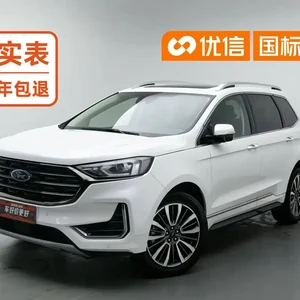
View all listings →Real units currently on ChinaCarDirect with per-unit asking prices and MOQ. Availability updates live from the catalogue.
How to buy a Ford Edge from China
-
1
Define the destination and use case
Specify the destination country, required steering side, seat count, engine, drivetrain, operating route and expected holding period. This narrows the search before comparing commercially similar vehicles.
-
2
Review live Edge inventory
Use the live Edge listings to shortlist vehicles by model year, body, trim, seating and drivetrain. Check the current price, MOQ, availability and complete vehicle description for each unit.
-
3
Validate condition and documents
Request the VIN or SKU, ownership or title documents, service history and available inspection evidence. For a used Edge, verify mileage, accident repairs, maintenance records and the condition of high-wear components.
-
4
Build a landed quotation
Ask for an itemised quote covering the vehicle, inland transport, freight, insurance, port charges, destination taxes and any conversion work. State the intended Incoterm and destination clearly.
-
5
Confirm MOQ and payment terms
Confirm the listing-specific minimum order, deposit, balance schedule, refund conditions and documentary requirements in writing. For a group shipment, attach every VIN or SKU to its agreed commercial terms.
-
6
Complete compliance and transport checks
Use a destination-country customs broker or relevant authority to confirm import, emissions, safety and type-approval requirements. Verify RHD availability or conversion legality before paying the balance.
-
7
Track documents and handover
Follow the export release, vehicle identifiers, freight documents, customs clearance and final delivery. Retain inspection evidence and reconcile the physical vehicle with the contract before completing handover.
Edge vs rivals
| Nissan Murano | The Murano is a close five-seat midsize-crossover alternative for fleet and family buyers. The Edge gains flexibility through seven-seat derivatives, while the Murano may be more straightforward where its local brand support is already established. |
|---|---|
| Mazda CX-9 | The CX-9 competes directly for midsize buyers and offers five- or seven-seat layouts in relevant markets. The Edge provides broader Chinese-market engine, drive and grade choice, while the CX-9 may better suit buyers focused on driving character and a focused dealer proposition. |
| Hyundai Santa Fe | The Santa Fe is a broad alternative for mainstream family, executive and fleet buyers needing five- or seven-seat utility. The Edge offers a distinct Ford identity and turbocharged-petrol emphasis, but the Hyundai may have stronger destination-market familiarity and service recognition. |
Frequently asked questions
How is Ford Edge export pricing determined?
Live Edge export pricing is built around the exact vehicle: model year, body, engine, drivetrain, seating, grade, mileage or condition, options, title and inspection status. Freight, insurance, port charges, taxes, exchange rates and the Incoterm determine how much the buyer ultimately owes. Check the current per-unit price and terms in the live Edge listings, then request a destination-specific itemised quotation.
What engine and powertrain options are available?
These Edge versions use petrol combustion engines, so battery capacity and electric range do not apply. Chinese-market names include 2.0T EcoBoost, 2.0T GTDi, 2.7T GTDi and EcoBoost 245 versions, with FWD, 2WD, 4WD or AWD layouts. Confirm the exact engine, transmission application and emissions specification on the VIN-linked live listing.
What are the main new versus used Ford Edge trade-offs?
A used Edge can provide better acquisition value but carries more condition, mileage, repair-history and parts uncertainty. A newer vehicle reduces age-related wear but may have China-specific equipment, limited overseas warranty portability and no automatic destination approval. Compare inspection evidence, service records, warranty coverage and total operating risk rather than using age alone.
How does MOQ work for a Ford Edge order?
The minimum order quantity is a unit-specific commercial term displayed or confirmed for each live listing. A buyer may be able to purchase a single vehicle, while a larger fleet shipment may offer better freight utilisation but ties up more capital. Confirm the applicable MOQ, mixed-model restrictions, deposits and cancellation terms in writing before ordering.
What determines Ford Edge shipping time and cost?
Shipping time and cost depend on the transport mode, origin and destination, sailing schedule, congestion, customs clearance and inland delivery distance. A complete vehicle may travel by roll-on/roll-off vessel or another approved loading method, with the carrier confirming suitability. Ask for an itemised freight quote and clarify insurance, port charges, destination taxes and the point at which risk transfers.
How should I plan Ford Edge spare-parts supply?
Parts planning should start with the exact model year, engine, trim and drive configuration rather than a generic Edge catalogue. China-market equipment and badge variants can require part-number verification, so confirm supplier access, lead times and any installation requirements before committing to a fleet batch. Ordering common service items early can reduce downtime after the vehicles reach market.
Is a right-hand-drive Ford Edge available for export?
Do not assume a China-market Edge is right-hand drive; confirm the steering configuration in the VIN-linked listing. If the destination requires RHD, establish whether a compliant factory RHD vehicle is available or whether conversion is lawful and practical in the source market. Conversion can affect safety, lighting, controls, warranty and type approval, so obtain documentary confirmation before paying.
How do I buy a Ford Edge from China?
Start with the live Edge inventory, shortlist units by specification and request a destination-specific quotation for each VIN or SKU. Confirm the condition report, ownership documents, MOQ, payment milestones, Incoterm, export paperwork and compliance requirements before paying the balance. Once booked, track the vehicle identifiers, inspection evidence, export release, freight documents and destination handover.
Ready to source the Ford Edge?
Send your destination, required specification, quantity and Incoterm to request a current, vehicle-linked Ford Edge quotation.
Request a quote