
Ford Edge (import) Export Buying Guide for Dealers
Compare Ford Edge (import) trims, export pricing, ordering, shipping and compliance for overseas dealers, importers and fleet buyers seeking practical value.

At a glance
- The 2012-era Edge sits between compact crossovers and larger family SUVs, with family-carrier practicality.
- The 2.0T range includes Elite, Elite Sunroof Edition and Prestige, while the 3.5L Premium provides a V6 alternative.
- Used-import value depends heavily on vehicle age, history, condition and destination eligibility.
- Vehicle acquisition and landed cost must be separated because freight, tax and compliance vary by market.
- Current unit pricing, MOQ and availability should be confirmed on live Edge (import) listings.
Why the Ford Edge (import) matters for export markets
The Ford Edge occupies a useful middle ground between compact crossovers and large family SUVs. Its midsize body can offer more passenger space, luggage capacity and road presence than a small crossover without the operating footprint of a full-size three-row model. For overseas dealers, that makes it relevant to buyers who want a practical family vehicle but do not need seven seats. The import label broadens the sourcing pool, especially where the Edge is not offered through a regular local distributor. That makes it a model to assess on trim, condition and destination rules rather than badge appeal alone.
Global demand for this type of vehicle is strongest where household budgets support a midsize crossover and buyers still value a raised driving position, generous glass area and an adaptable cargo floor. The Edge can suit school-run, hotel-shuttle and light-fleet duties as well as private family use, provided its age and specification fit local regulation. Its appeal is not tied to one fuel system: the represented 2.0T models offer an efficiency-oriented turbocharged option, while the 3.5L version caters to buyers preferring a naturally aspirated V6. For export planning, powertrain familiarity and parts support often matter as much as original list equipment.
For importers, the key commercial question is whether the Edge fills a local price-and-space gap that compact crossovers cannot. Overseas dealers can place it in a wholesale used-import niche, a secondary fleet model or an alternative to locally assembled SUVs, subject to homologation and taxation. Buyers should compare total ownership rather than purchase price alone: fuel use, insurance class, parts lead times and compliance costs can materially alter the proposition. A vehicle that is attractively priced but difficult to register or support is not a viable export line for the buyer.
- Midsize space without three-row packaging
- 2.0T and 3.5L gasoline options
- Compliance and running costs decide value
Model range, trims and powertrain variants: how the lineup is structured and how to choose
Within the represented 2012 Edge import range, the structure is easier to read by separating engine choice from equipment tier. The 2.0T appears in Elite, Elite Sunroof Edition and Prestige designations, indicating a turbocharged four-cylinder family offered at different feature levels. The 3.5L Premium represents the V6 alternative. Trim names are useful orientation points, but they do not replace the listing’s specification sheet: options, transmission, drivetrain and market-specific equipment can differ between units. Treat the visible trim as the starting point for a unit-level comparison, especially when matching vehicles for a dealer network.
Buyers choosing 2.0T versions are usually prioritizing a balance of response, efficiency and everyday manageability. The sunroof edition adds a visible comfort-oriented differentiator, while Prestige signals a higher feature tier, although neither name alone confirms the complete equipment package. The 3.5L Premium is the more traditional choice for smooth V6 character, particularly for buyers who value relaxed highway behavior over a smaller displacement engine. Neither powertrain should be selected from displacement alone; torque delivery, fuel availability and duty cycles deserve equal attention before any vehicle is committed to a quotation.
A disciplined selection process starts with the market: urban stop-start use, long highway transfers and multi-unit fleet resale each reward different priorities. For fleet buyers, parts standardization, service access and fuel efficiency may outweigh cosmetic equipment, so a lower-feature Elite can be more rational than a sunroof or Prestige version. For private buyers, comfort, visibility and equipment can support the higher tier. Ask the seller to reconcile the trim badge with VIN-linked documents, then verify tax status, options and accident history before placing a deposit in the intended destination market.
- Elite: practical fleet-oriented starting point
- Sunroof Edition: comfort-led differentiation
- Prestige and 3.5L Premium: higher-tier alternatives
New vs used Ford Edge (import): how export inventory is structured and how buyers choose
Export inventory can reach buyers through different channels, so “new” and “used” must be defined precisely. A new parallel-import unit may be unregistered or exceptionally low mileage, with no local driving history but also no established local service record. A used unit may have been exported from another market, acquired through an auction process or arrive with documented mileage and wear. The phrase “Ford Edge (import)” describes the model designation in this context; it does not by itself prove the unit’s origin, ownership history or registration status before the buyer commits.
For a new unit, priorities are delivery condition, pre-delivery inspection, warranty coverage and whether its age is permitted in the destination market. A dealer may prefer the appearance of low usage and straightforward fleet presentation, but should still inspect tyres, paint, underbody, fluids and shipping damage because “new” is a condition claim. For a used Edge, mileage is only one part of the assessment: service history, prior damage, corrosion, cold starts, transmission operation and matching engine numbers can be more revealing. Ask for dated photographs and a pre-purchase inspection report.
Used units can create a clearer value proposition where buyers accept an older vehicle in exchange for lower acquisition exposure and established depreciation, but fleet buyers should model maintenance risk over the intended holding period. Newer-looking examples may suit the market best, while dated stock can be easier to place in price-sensitive channels. Because a listing title cannot establish condition, treat odometer, grade, VIN history and inspection findings as separate evidence. The live inventory should be checked for the current unit mix, with each listing treated individually rather than assumed representative.
- New status still needs condition evidence
- Used units require history and mechanical checks
- Check live listings for current availability
How export pricing works: the factors behind a live listing price, and how to read one
A Ford Edge (import) export price is not one fixed figure: it is the outcome of several variables that can move independently. Model year and age, trim, 2.0T versus 3.5L powertrain, mileage, condition, options and repair history shape the vehicle’s commercial value. The same unit can also produce different totals depending on exchange rate, inland transport, export handling, freight route, insurance, port charges and the selected Incoterm. For this reason, compare a vehicle price with a fully itemized landed-cost quote rather than treating the first number as the final import budget.
Read a live listing as a starting record, not as a binding quote. Confirm whether the displayed amount covers the vehicle only or includes export preparation, documentation, transport and insurance; identify the currency, validity period and payment milestones, then compare like-for-like units. For fleet buyers, ask whether prices are tied to identical trim, condition, mileage band and steering configuration. Discounts should be evaluated against specification differences. A consistent quote makes it easier to decide whether a 2.0T Elite or the V6 Premium is the better fit for the intended market.
The most reliable budgeting method is to separate vehicle acquisition from destination cost. First, normalize comparable Edge units by year, engine, trim, condition and mileage. Next, add or contract the inland move, export documentation, sea or Ro-Ro freight, cargo insurance, duties, taxes and local compliance work. Finally, add a currency buffer and the cost of delay. Duties and taxes are destination-specific and should never be guessed from the listing. ChinaCarDirect’s live Edge inventory is the place to verify the current per-unit price, while a written quotation should be the controlling commercial reference.
- Normalize year, trim, engine and condition
- Separate vehicle price from landed cost
- Use a written quotation as the binding reference
MOQ, ordering and payment: single units vs consolidating a container
Minimum order quantity is a commercial term, not a universal characteristic of the model. Ask the seller or broker what minimum applies to a single-unit purchase, how that minimum changes for dealer orders and whether mixed trims can share one shipment. A one-vehicle inquiry may be possible for some offers, while a container shipment naturally involves a larger commitment; neither should be assumed. Availability is also unit-specific. Review the live listings for the vehicles currently offered, then state the required quantity clearly so the seller can confirm allocation, production of documents and the applicable booking terms.
When consolidating a container, compare the benefits of better unit economics and simpler freight handling against the risks of holding more stock than the market can absorb. Group units only after aligning steering side, powertrain, trim, condition and expected sales channel, because mixed attributes complicate both marketing and after-sales support. Freight may be booked as a full container or through an approved consolidation service, but the method must be confirmed for the vehicle dimensions and route. The quotation should identify the loading plan, estimated sailing schedule, insurance responsibility and the point at which risk transfers.
Ordering should proceed through a documented sequence rather than an informal promise. Identify the unit or reserve an approved batch; receive a pro forma invoice showing the vehicle description, quantity, price basis, Incoterm, payment schedule, estimated freight and validity; complete any agreed inspection; then pay only against a verified beneficiary account and the signed contract. Confirm the balance, release conditions, export documents and tracking method in writing. A purchase order should also state what happens if the vehicle fails inspection, shipment is delayed or a documentary discrepancy prevents clearance, leaving a documented remedy rather than relying on verbal assurances.
- Confirm MOQ for each seller and shipment
- Separate single-unit and container economics
- Use a pro forma invoice and verified payment details
Shipping, homologation and market compliance caveats: LHD/RHD and import rules by country
Steering configuration is the first practical export check. A left-hand-drive Edge cannot simply be assumed acceptable in a right-hand-drive market, and changing the steering side is neither routine nor risk-free. Likewise, a right-hand-drive example may need careful confirmation of its history and condition before entering a left-hand-drive country. Ask whether the unit is LHD or RHD, have that answer tied to the VIN and photographs, and confirm local registration rules. Availability by configuration can vary, so the buyer should search live inventory rather than rely on a generic model assumption.
Importability depends on the destination’s age, emissions, safety, type-approval, customs and used-vehicle rules. These can prohibit an older vehicle, require modifications or documentation, or make it uneconomic after duty, tax and compliance charges; thresholds differ by country and may also vary for commercial categories. Before contracting, give the VIN, engine, fuel type, steering side and intended use to a local customs broker or vehicle compliance specialist. Obtain a written eligibility opinion and landed-cost estimate, and verify whether any inspection or conversion must occur before the vehicle can be registered locally.
Freight cost is another variable, not a promise attached to the listing. Container versus Ro-Ro capability, vehicle dimensions, sailing frequency, origin and destination ports, fuel and handling charges, insurance, congestion and security requirements all affect the route. Ask whether the quote includes inland haulage, export terminal charges, loading, ocean freight, destination terminal fees, customs clearance and delivery; many quotations cover only part of that chain. Before dispatch, verify the booking details, vehicle securing method, insurance cover, document set and inspection timing. For used vehicles, align the condition report with the payment inspection.
- Verify LHD/RHD against VIN and photos
- Obtain destination-specific eligibility advice
- Itemize freight, terminal and customs charges
Who should buy the Edge (import) — and who should pick a different vehicle
The Edge (import) is a strong candidate for dealers serving family-SUV buyers who value usable space, a conventional gasoline powertrain and straightforward parts identification. It can also suit fleets needing a comfortable midsize crossover rather than a bare utility van or compact passenger car. A used example can work where buyers focus on value and the operator can absorb age-related maintenance, provided servicing and corrosion checks are handled properly. The buying case is strongest when the destination has manageable import rules, a viable Ford service network and enough demand to move the trim quickly.
It is a weaker choice for buyers who require the latest driver-assistance systems, plug-in efficiency, factory warranty coverage in their market or zero uncertainty about age-related compliance. A dated imported crossover may also be a poor fit for a fleet operator with tight residual-value assumptions, high daily utilization or strict total-cost-of-ownership targets. EV and hybrid buyers should compare charging availability and running costs instead. Likewise, if cargo length or seven-seat flexibility is the priority, a genuine three-row SUV may serve better; if budget is tighter, a compact crossover may be easier to stock and insure.
Before buying, define the customer and the holding plan. A family importer may emphasize rear-seat comfort, visibility and cargo practicality; a shuttle operator may prioritize fuel consumption, uptime and easy cleaning; a dealer may focus on sourcing consistency and the availability of common service items. Match the Edge to that use, then obtain a vehicle-specific inspection, service-history review and destination compliance opinion. The right question is not whether the Edge is a good SUV in the abstract, but whether this configuration, condition and ownership cost can be sold and supported profitably in the intended market.
- Best for family and light-fleet use
- Value suits buyers not seeking latest technology
- Verify service network and age-related rules
Main rivals and how the Edge (import) compares
The closest alternatives depend on what the buyer values. A same-era Nissan Murano competes on comfort and styling, usually with a more car-like emphasis, while the Edge offers a squarer, more utility-oriented cabin and cargo area. The Murano can suit buyers who prioritize road presence and front-seat comfort over maximum family flexibility. However, equipment, condition and servicing requirements vary greatly in the used-import market, so trim-by-trim comparison is still necessary. Neither model should be selected solely because its badge appears on a lower-priced list without checking the actual vehicle condition.
The Honda Pilot is a credible rival when a buyer wants true three-row versatility, especially for larger families. It can offer a more natural solution for frequent passengers and long trips than the Edge, but it also brings greater size, fuel and shipping considerations for an import operation. The Jeep Grand Cherokee is another logical comparison, especially where four-wheel-drive capability, towing or off-road-oriented branding matter. The Edge generally sits between these approaches: more wagon-like utility than the Pilot and a less trail-focused image than the Grand Cherokee. Local rules and service support can outweigh these broad character differences.
For a disciplined comparison, build a like-for-like matrix rather than comparing model names. Record seating layout, engine, transmission, drivetrain, equipment, condition, service evidence and landed cost for the Edge and each rival. Check whether the alternative has a clearer local parts network or simpler registration path, because those advantages may outweigh styling preferences. For a dealer, resale speed and unit standardization matter; for a fleet buyer, utilization, fuel use, downtime and workshop support may dominate. The best rival fits the market and operating plan, not simply the newest model available.
- Murano: comfort and styling alternative
- Pilot: stronger three-row family utility
- Grand Cherokee: four-wheel-drive and towing appeal
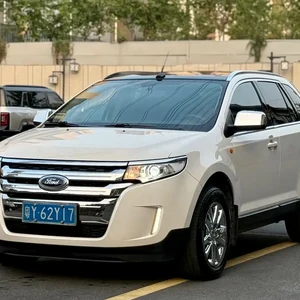
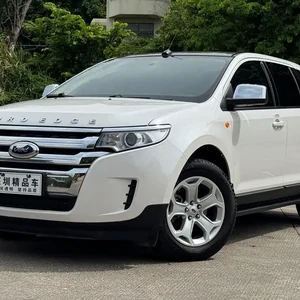
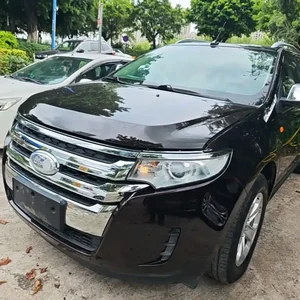
Live Ford Edge (import) export inventory
View all listings →Real units currently on ChinaCarDirect with per-unit asking prices and MOQ. Availability updates live from the catalogue.

How to buy a Ford Edge (import) from China
-
1
Set the destination and use case
Define the country, buyer segment, steering-side requirement and intended holding period before selecting a vehicle. Check local age, emissions, safety and used-import restrictions early.
-
2
Search live Edge (import) listings
Compare trim names, engine, steering side, condition and visible options on the live inventory. Treat each listing as the source for its current per-unit price, MOQ and availability.
-
3
Request a full specification pack
Ask for VIN-linked photographs, engine and transmission details, drivetrain, equipment, dimensions, mileage, tax status and service history. Do not rely on trim badges alone.
-
4
Normalize the export quote
Request a written quotation that separates vehicle acquisition, export handling, freight, insurance, duties, taxes and compliance work. Confirm currency, quote validity, Incoterm and payment milestones.
-
5
Confirm MOQ and commercial terms
State the exact quantity required and ask whether mixed trims can be consolidated. Record allocation, inspection, deposit, balance, cancellation and shipment conditions in the pro forma invoice.
-
6
Inspect and verify identity
Complete an agreed pre-purchase or pre-shipment inspection covering condition, VIN, engine numbers, tyres, fluids and damage. Tie final payment approval to the documented inspection result.
-
7
Clear compliance and book freight
Obtain destination-specific eligibility advice before dispatch, then verify the loading plan, insurance, document set, tracking method and origin inspection. Keep the final landed-cost calculation with the purchase records.
Edge (import) vs rivals
| Nissan Murano (same-era) | A same-era Murano leans more toward comfort and styling, while the Edge’s squarer rear and cargo area can be more utility-minded. Choose based on actual condition, equipment, local parts support and destination compliance. |
|---|---|
| Honda Pilot (same-era) | The Pilot’s three-row layout is stronger for larger families and frequent passenger carrying; the Edge is generally simpler for two-row family use. The Pilot’s greater size and fuel requirements can also complicate import economics. |
| Jeep Grand Cherokee (same-era) | The Grand Cherokee can appeal where four-wheel-drive capability, towing or off-road branding matter, depending on specification. The Edge prioritizes crossover comfort and family practicality, so service access and condition should guide the final comparison. |
Frequently asked questions
How is the export price of a Ford Edge (import) determined?
The vehicle’s year, trim, engine, mileage, condition, options and history affect its acquisition value. Freight, insurance, exchange rates, Incoterms, duties and compliance work determine the landed total. Check live Edge (import) listings for the current per-unit price and request a written quote for binding terms.
Which engine and powertrain options should I expect?
The represented range includes a 2.0-liter turbocharged engine in Elite, Elite Sunroof Edition and Prestige trims, plus a 3.5-liter V6 in Premium form. These are gasoline powertrains, so electric range and battery specifications do not apply. Verify transmission, drivetrain and exact vehicle condition in the live listing.
Is a new or used Ford Edge (import) better for export?
A new unit may offer lower usage and simpler fleet presentation, but condition claims still require inspection and age-related import rules may apply. A used unit can offer stronger value when its service history, damage record and mechanical condition support the intended holding period. Compare evidence and total ownership rather than relying on the new or used label alone.
What is the MOQ for Ford Edge (import) orders?
MOQ depends on the seller, vehicle selection and shipment arrangement; single-unit inquiries and consolidated shipments may follow different terms. The live inventory shows current per-unit MOQ and availability. State the required quantity in your RFQ so the seller can confirm the applicable commitment.
How long does shipping take and what does it cost?
Transit time and freight cost depend on the route, vessel or Ro-Ro schedule, ports, season, congestion, insurance and handling requirements. A complete quote should itemize inland transport, export handling, ocean freight, destination charges, customs clearance and delivery. Obtain a route-specific schedule rather than relying on a generic shipping estimate.
Are spare parts readily available for the 2012-era Edge?
Parts can generally be identified by VIN, engine and trim, but availability and lead times depend on the destination’s Ford dealer and independent workshop network. Confirm common service items before committing to a batch. Low parts accessibility can materially change the vehicle’s operating cost and resale proposition.
Is a right-hand-drive Ford Edge (import) available?
Availability varies by unit and source market, so check the live listings for the current LHD and RHD options. Do not assume that an imported Edge is right-hand-drive or that a steering conversion is permissible. Confirm the configuration against the VIN, photographs and destination registration rules.
How do I order a Ford Edge (import) from China?
Select a unit or specify the required trim, quantity, destination and Incoterm, then request a pro forma invoice and inspection terms. Verify the beneficiary details and contract before paying, and retain the agreed documents, insurance and shipping plan. Current unit pricing, MOQ and availability should be confirmed on the live listings before the order is finalized.
Ready to source the Ford Edge (import)?
Send the trim, quantity, destination and Incoterm for a current Edge (import) quote and shipment plan.
Request a quote