
Ford Escort Export Buying Guide for Overseas Buyers
Buy a Ford Escort from China with clear guidance on trims, engine choices, export pricing, MOQ, shipping, compliance and the best rival alternatives.
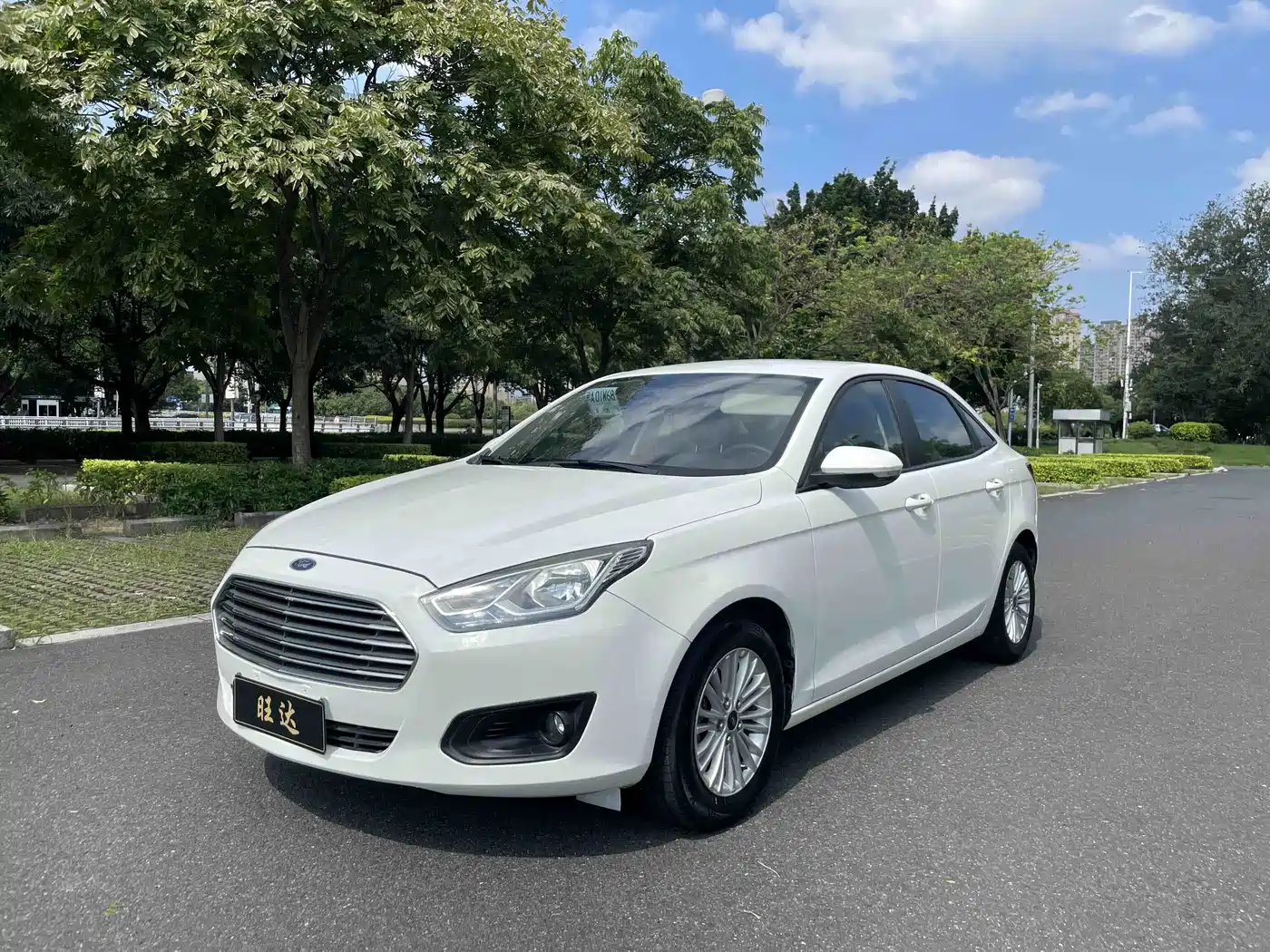
At a glance
- The China-origin Ford Escort is a compact petrol sedan, not a direct equivalent of every Escort sold elsewhere.
- The represented range pairs a 1.5-litre petrol engine with manual and automatic transmissions across numerous named trims.
- Model year, facelift status, transmission and equipment must be matched before comparing export quotations.
- Vehicle price is only one part of landed cost; freight, taxes, exchange rates, Incoterms and documentation also matter.
- Use the live inventory for the current unit price, exact MOQ and availability.
Why the Ford Escort matters for export markets
The Ford Escort sold through ChinaCarDirect is a compact petrol sedan positioned for overseas buyers who want a straightforward, road-focused car rather than a large premium import. Its long-established nameplate can help recognition, but the China-origin Escort should be evaluated as a specific product: it is not automatically equivalent to every Escort or successor sold in Europe, North America or other markets. Buyers should separate brand familiarity from the actual vehicle’s specification, equipment and homologation status. That distinction matters for spare-parts references, software assumptions, insurance descriptions and any comparison with familiar models already operating in the destination country.
Compact sedans remain relevant in many fleet and retail programmes because they generally combine a manageable footprint, practical four-door access and lower transport volume than larger vehicles. The Escort’s appeal to an importer is not one spectacular feature but the breadth of its range: buyers can compare manual and automatic versions, comfort-oriented trims, higher-spec editions and pre- versus facelift presentations. That choice allows a dealer to build a price-conscious fleet while offering automatic and better-equipped cars to private customers, without confusing model-year differences with a fundamentally different platform or market version.
For fleet buyers, the decision usually starts with operating priorities: uptime, fuel use, ease of maintenance, gearbox preference and the ability to source parts in the destination market. The Escort can suit those seeking a familiar Ford badge, a practical body and several equipment tiers. It may be less suitable where buyers require an electrified powertrain, SUV body, seven-seat flexibility or a model with a deep local dealer network. Demand should therefore be tested against the destination’s tax, fuel, insurance and registration rules. A locally relevant competitor may ultimately be easier to support.
- China Escort is market-specific.
- Compare segment fit before badges.
- Validate local operating and parts support.
Model range, trims and powertrain variants: how the lineup is structured and how to choose
The represented Escort lineup is built around a 1.5-litre petrol engine, with manual and automatic transmissions offered across different trim names. Named versions include Fashion, Comfort, Joy, Diamond, Quality, Glory and Platinum, alongside Happiness, Premium and facelift formulations. Those names help identify equipment tiers, but they are not standardized globally: a Comfort car in one export context may not match a similarly named car elsewhere. Treat each listing’s trim, model year, transmission and option list as the controlling description. Ask for a translated equipment sheet before promising any feature to a customer.
Model-year labels and the word Facelift help separate earlier cars from later design and equipment revisions. Some listings also carry China V or China VI emission designations, and certain named versions explicitly mention TPMS. These markers are useful for comparison, but a Chinese emissions label is not the same as approval in the destination country. Buyers should request the relevant production information and option evidence rather than infer equipment from a photograph, badge or trim badge alone. This discipline is especially important when a buyer is building one mixed fleet from several trim levels.
Manual versus automatic is often more consequential than the trim badge for a fleet. A manual may suit drivers already familiar with it and fit fleets whose training and service processes already cover that gearbox, while an automatic can reduce fatigue and simplify training in stop-and-go operations. Neither choice removes the need to verify the clutch, shift behavior, brake feel and condition of a specific car. For private buyers, compare total ownership priorities rather than assuming the higher trim is always the better-value option; the correct Escort is the one whose gearbox and equipment suit the use case.
- 1.5-litre petrol anchors the range.
- Choose manual or automatic by use.
- Verify equipment on each listing.
New vs used Ford Escort: how export inventory is structured and how buyers choose
New-inventory purchasing gives a buyer a clearer basis for comparison because paint, interior wear, odometer reading and prior repair history are not the central variables. For a new Escort, the practical questions become production age, trim level, transmission, optional equipment, delivery timing and the seller’s disclosure of any transport or storage condition. The available Escort catalogue should be treated as new-car supply unless a live listing explicitly states otherwise, rather than being interpreted as a mixed new-and-used pool. Buyers can then concentrate on whether the vehicle was prepared for export and whether its specification suits local rules.
A used Ford Escort can make sense where the buyer values lower acquisition cost or a specific configuration that is difficult to reproduce new. The inspection must then go beyond appearance: verify the VIN, production date, registration documents, title or ownership status, odometer, service history, accident repairs, corrosion, engine and transmission condition, and the completeness of the factory equipment. In many destination markets, a used vehicle also faces tighter age, emissions or inspection rules than a new one, so compliance should be checked before funds are committed. This diligence is essential.
For dealers, the choice is often between a new vehicle with simpler condition disclosure and warranty terms that can be checked, and a used car that may offer a lower entry point but carries more unknowns. Neither option should be judged only from the headline asking price: acquisition cost, expected downtime, repair exposure, residual positioning and local registration all affect the business case. The safest process is to separate the vehicle price from the landed cost, then compare like-for-like examples with the same transmission, equipment level and condition standard. That avoids false savings in practice.
- Read condition from the live listing.
- Check used VIN, history and repairs.
- Compare landed cost, not asking price.
How export pricing works: the factors behind a live listing price, and how to read one
A live Ford Escort export price is the output of several variables, not a permanent model-level rate. Model year and facelift status affect depreciation and equipment; trim, transmission and optional features affect the comparable vehicle; condition and mileage matter for any used or ex-display unit. Beyond the car itself, currency movements, freight method, route, insurance, port charges and the chosen Incoterm can change the commercial result. Buyers should therefore treat the figure on an Escort listing as a starting point for that specific unit, not a guaranteed wholesale rate at all.
When reading a live listing, first decode the title: year, 1.5-litre engine, manual or automatic gearbox, trim name, facelift status and any China emissions or TPMS descriptor are all decision variables. Then check whether the displayed amount is the vehicle selling price or a broader landed quotation, and whether it is fixed, negotiable or subject to a supplier confirmation. For the current per-unit price and availability, open the live Escort inventory on ChinaCarDirect. For a wholesale purchase, request a written quote naming the exact VIN or SKU, options, condition, payment milestones, validity period, freight assumptions and what remains excluded from the total.
To compare Escort offers fairly, create a like-for-like matrix rather than ranking the first result returned. Keep model year, trim, gearbox, production configuration and condition aligned, then add freight, duty, taxes, port handling, insurance and inland delivery to reach a landed cost. Clarify whether payment is in the listing currency and who bears the exchange-rate risk. For fleet or container orders, ask whether volume terms apply to a mixed batch or only to identical trims, because apparently similar listings can still carry materially different commercial conditions in the final contract.
- Match year, trim, gearbox and condition.
- Separate vehicle price from landed cost.
- Demand written, SKU-specific quotations.
MOQ, ordering and payment: single units vs consolidating a container
Minimum order quantity is a commercial condition attached to the seller and listing, not an inherent property of the Ford Escort. Some marketplace offers may be available to individual buyers, while a direct factory or container programme may impose batch requirements. The exact MOQ shown for a current Escort unit must be checked on its live listing or confirmed in a quotation. Buyers should not plan a vehicle count from model-level assumptions; instead, build the order around the seller’s stated unit limit, available configuration and the destination schedule and terms.
A single-unit order is straightforward to test operationally: select the exact car, obtain a pro forma invoice, confirm the specification, pay according to the agreed milestones, arrange export documentation and approve shipment. A multi-unit order needs a vehicle schedule showing each VIN or SKU, model year, trim, gearbox, options, condition and agreed selling price. That schedule prevents a mixed batch from becoming a chain of substitutions and gives the buyer, seller, freight forwarder and clearing agent one shared document against which to reconcile the consignment before the vehicle leaves the supplier.
Consolidating a container can reduce per-vehicle freight and handling cost when several Escorts share the destination, but it concentrates risk. A mixed load may require more loading space, careful securing and precise delivery sequencing; a container filled with one year, trim and gearbox can simplify customs, resale and after-sales planning. Payment terms should define deposits, the balance trigger, refund conditions, title transfer and what happens if a unit is missing or does not match the approved schedule. Obtain written terms rather than assuming the process for a sample listing applies to every unit.
- Check MOQ on every live unit.
- Use a VIN- or SKU-level schedule.
- Define deposits, title and remedies.
Shipping, homologation and market compliance caveats: LHD/RHD and import rules by country
Shipping method should follow the order size and urgency. Sea container transport is generally the economical choice for multiple finished cars, while roll-on/roll-off can suit smaller urgent shipments; air freight is rarely the practical solution for a whole fleet of sedans. The route, sailing frequency, port congestion, customs clearance, documentation and inland delivery all affect transit time and cost. Because these variables change, request a current freight estimate and realistic schedule against the agreed Incoterm rather than relying on a generic lead time for the specific destination and order today.
China-origin Escorts are commonly encountered with left-hand drive, but the steering arrangement must be confirmed for every export unit. A left-hand-drive car normally suits right-hand-traffic markets, while a right-hand-drive car normally suits left-hand-traffic markets. Do not assume a catalogue entry is factory right-hand drive or treat a converted steering wheel as equivalent. Verify the VIN, steering position, instruments, lighting, equipment and local approval before describing the vehicle as RHD-ready. Some regulations may permit an exception, but importers remain responsible for proving compliance rather than assuming local tolerance at the port of entry.
Import approval is separate from the vehicle being new and mechanically sound. Depending on the destination, an importer may need to address emissions, safety and equipment requirements, VIN and customs documents, customs value and duty, age or used-vehicle restrictions, inspection, registration and local type approval. China V or China VI in the trim name does not by itself satisfy a foreign emissions or type-approval regime. Buyers should appoint a customs broker or local compliance adviser, confirm the homologation route before payment, and include any conversion, certification or registration work in the landed budget.
- Confirm factory LHD or RHD.
- Verify local type approval and customs.
- Budget certificates, inspection and port fees.
Who should buy the Escort — and who should pick a different vehicle
The Escort is most logical for an overseas dealer or fleet buyer that needs a conventional compact sedan, accepts a petrol powertrain and values a broad choice of manual and automatic trims. It can suit a mixed customer base: a fleet manager may prioritize straightforward operation and planned maintenance, while a retail customer may want an automatic, facelift appearance or a higher named edition. The decision should be anchored in a target retail profile, expected life cycle and service plan rather than in the badge alone. Clear use cases matter here.
It is a weaker fit for buyers who require an SUV’s higher seating position, greater cargo flexibility or seven-seat transport, or who need a hybrid, plug-in hybrid or battery-electric powertrain to meet local emissions or running-cost targets. It may also disappoint buyers seeking a premium cabin, performance-focused chassis or a model with extensive local aftersales coverage. Before ordering, compare total operating cost, insurance class, parts access and resale expectations. If those priorities outweigh the Escort’s compact-sedan simplicity, a different segment may offer better commercial fit for the target market.
Manual and automatic Escorts also suit different operating cultures. A manual may be preferable where it is common in local fleets, driving tuition is built around it and procurement teams value straightforward mechanical operation. An automatic may be better where traffic is congested, drivers are less familiar with manual gearboxes or customers expect more relaxed city use. Neither transmission choice resolves the need for suitable tyres, service procedures, diagnostic access and parts planning. The strongest case for the Escort is therefore operational: a simple, well-understood sedan used in a market that can support it.
Main rivals and how the Escort compares
The closest alternatives depend on how the Escort is positioned in the destination market, but three compact sedans provide useful benchmarks. The Toyota Corolla is a global benchmark for straightforward ownership and established after-sales familiarity. The Honda Civic generally competes with more emphasis on driving character and higher-grade technology. The Nissan Sylphy, particularly where the China-market model is established, is a close size-and-purpose alternative for mainstream family and fleet use. Compare these against the exact Escort trim, not a generic badge. Local taxation, fuel costs and parts availability can change the winner.
Against the Corolla, the Escort may appeal to buyers seeking a different Ford product and a distinct trim hierarchy, while the Corolla’s wider international recognition can reduce uncertainty for resale and servicing. The Civic may be a better fit where cabin technology, driver engagement or a more upmarket image justify a higher equipment position. Against the Sylphy, the Escort should win only if its selected trim offers a clear cost, equipment or availability advantage; similar dimensions alone are not enough. Evaluate tax bands, insurance, fuel economy, warranty and parts lead times.
A useful comparison sheet should use the destination-market versions of all three rivals and normalize the test: identical year band, comparable transmission, equivalent equipment, known condition, and a landed-cost calculation under the same Incoterm. Include dealer aftersales reach and expected parts interchangeability, because theoretical equipment lists do not determine serviceability. The Escort’s strongest case is value within a defined fleet brief. If the competing model is easier to support, cheaper to operate after tax or better aligned with buyer preferences, it is rational to choose that vehicle instead of it.
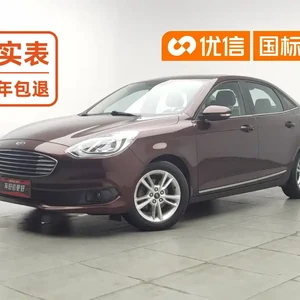
Live Ford Escort export inventory
View all listings →Real units currently on ChinaCarDirect with per-unit asking prices and MOQ. Availability updates live from the catalogue.
How to buy a Ford Escort from China
-
1
Define the destination-market brief
Specify the destination, required steering side, fleet or retail use, transmission preference, passenger and cargo needs, and service expectations. Reject any configuration that cannot meet the destination’s basic operating and legal requirements.
-
2
Filter and decode the live inventory
Use model year, trim, gearbox, facelift status and condition filters where available. Open the exact listing because its title may identify the engine, transmission, trim, facelift and emissions descriptors.
-
3
Request vehicle-level evidence
Ask for the VIN or SKU, model year, factory equipment sheet, condition photographs, dimensions and relevant production documents. Verify that the seller’s description matches the vehicle being quoted.
-
4
Build a landed quotation
Request a written breakdown of vehicle cost, MOQ, payment milestones, freight, Incoterm, duty, taxes, port fees, insurance and inland delivery. Confirm the quotation validity and currency.
-
5
Lock the order and payment terms
Use a pro forma invoice and a VIN- or SKU-level vehicle schedule for multi-unit orders. Define title transfer, inspection rights, substitution rules, refunds and the balance-payment trigger.
-
6
Arrange freight and compliance
Confirm LHD or RHD configuration, destination type approval, emissions requirements and customs documents with the broker or local adviser. Arrange freight, cargo insurance, loading supervision and delivery under the agreed Incoterm.
-
7
Inspect before loading and after arrival
Verify each VIN, condition, option and visible defect against the approved vehicle schedule before shipment. After arrival, complete customs clearance, inspect the vehicle again and complete local registration steps.
Escort vs rivals
| Nissan Sylphy | A close China-market compact sedan rival for family and fleet use. The Escort may offer a different trim hierarchy or Ford familiarity, but the Sylphy should be shortlisted wherever its local service network, tax treatment and parts support are stronger. |
|---|---|
| Toyota Corolla | A globally recognized compact sedan benchmark with an established international ownership profile. The Escort is the alternative for buyers seeking a China-spec Ford and a different model-specific value proposition, while resale and service familiarity may favour the Corolla. |
| Honda Civic | The Civic generally competes with a more upmarket, technology-focused and driver-oriented position. Choose it where those qualities justify the higher equipment position; choose the Escort for a more mainstream fleet brief and a straightforward compact-sedan proposition. |
Frequently asked questions
How is the Ford Escort export price determined?
The displayed price belongs to a specific Escort unit and may move with model year, trim, transmission, condition, exchange rates, freight and Incoterm. It is not a fixed model-level export tariff. Open the live Escort inventory for the current unit price and request a written quote that separates vehicle cost, payment terms and landed charges.
What engine and transmission does the China Escort use?
The China-market Escort entries represented here use a 1.5-litre petrol engine, with manual and automatic transmissions depending on trim. There is no battery-electric range or charging specification for these cars. Confirm output, fuel consumption, emissions version and fitted equipment in the live listing because trim names alone do not provide every technical value.
Should an overseas buyer choose a new or used Ford Escort?
New Escorts simplify condition comparison and may be easier to position for fleet use, while used cars can offer a lower acquisition entry point but require more history and condition checks. Verify the condition field and inspect a used vehicle’s VIN, mileage, service history, repairs and ownership documents. Used-car age or inspection rules in the destination may also restrict import.
What is the MOQ for Ford Escort orders?
MOQ is set by the seller and listing, not by the Escort model itself. A current listing may permit a single unit, while a batch or container arrangement may require more; check the stated requirement on the live listing and quotation. If several units are needed, ask whether mixed trims can be consolidated under one order.
How long does shipping take and what changes the cost?
Transit time and cost depend on the transport method, route, sailing schedule, port congestion, customs, insurance, handling and inland delivery. The order quantity and Incoterm determine which costs belong to the buyer. Request a destination-specific freight estimate and schedule because these factors change.
How should an importer plan Ford Escort spare parts?
Order parts using the vehicle identification number, exact trim and confirmed part number where possible. Before committing to a fleet, ask the supplier for the parts catalogue, recommended service items and lead times, then compare availability with established local Ford support. Parts for a China-spec Escort should not be assumed interchangeable with every overseas Escort.
Is a right-hand-drive Ford Escort available for export?
Right-hand-drive availability must be confirmed for the individual listing; the China-origin catalogue cannot be assumed to contain factory RHD cars. Verify steering side, VIN, instruments, lighting and approval in the destination before payment. A conversion may introduce compliance, warranty and resale issues and should not be treated as equivalent to factory RHD.
How do I order a Ford Escort from China?
Start with the live Escort listings, select a candidate unit and send its SKU or VIN with the destination and required quantity. ChinaCarDirect can then confirm current availability, MOQ, specification, written price and payment milestones. After documentation and payment are agreed, arrange freight, compliance and pre-shipment inspection through the agreed forwarder or broker.
Ready to source the Ford Escort?
Send ChinaCarDirect your destination, transmission, trim and required quantity for a current Escort inventory check and written export quotation.
Request a quote