
Ford Explorer Export Buying Guide for Overseas Buyers
Buy Ford Explorer from China with expert guidance on trims, used units, export pricing, MOQ, shipping, homologation and fit for overseas dealers.

At a glance
- The Explorer targets buyers who need three-row flexibility, practical utility and four-wheel-drive capability.
- The China-market range spans multiple grades, powertrains, drive systems and two- or three-row seating layouts.
- Used imports can reduce entry cost, but condition and history require documented verification.
- Export pricing depends on the exact vehicle and on separately negotiated freight, insurance, duty and delivery terms.
- China-origin examples are commonly LHD; RHD supply and destination compliance need confirmation before ordering.
Why the Ford Explorer matters for export markets
The Ford Explorer occupies a middle ground in the large-SUV market: it combines three-row capability, a body-on-frame foundation and four-wheel drive with the packaging and equipment required by dealers. It appeals to fleet operators, premium SUV buyers and importers serving regions where a three-row vehicle is more useful than a compact crossover. Its value proposition is not size, but the combination of passenger flexibility, cargo utility and the ability to specify drivetrain and seating for the intended duty cycle. Local fleet use can make that balance more persuasive than headline power.
Demand for the Explorer for export is strongest where buyers need more passenger capacity without moving into a full-size commercial derivative. Dealers can serve families, executive transport, airport and hotel operations, or regional fleet accounts with one platform, while importers can choose from several equipment grades. The China-built model also gives buyers access to familiar global design cues and locally produced parts support, which can reduce uncertainty. However, international demand is not automatic: fuel rules, road conditions, residual values and taxation still decide whether the model fits a particular country.
For buyers comparing a Ford Explorer for export against ordinary crossovers, the decisive checks are seating flexibility, ground clearance, towing provision, serviceability and the real cost of operating a relatively large vehicle. A seven-seat version can carry people and luggage more intelligently than a five-seat model, while a six-seat arrangement may be easier to live with in markets where seven-seat demand is narrower. A dealer should therefore start from customer use cases, not from trim badges, and build a repeatable specification sheet before approaching sellers or submitting a purchase request.
- Three-row flexibility for fleets.
- RWD, AWD and 4WD choices.
- VIN-level trim verification.
- RHD supply requires confirmation.
Model range, trims and powertrain variants: how the lineup is structured and how to choose
The Chinese-market Explorer range is broad enough to serve several buyer missions, but the labels require careful decoding. Common grades include Trend, Elite, Titanium, Platinum, Sport or ST-Line, plus distinctive Kunlun and Cross Country variants. Some are offered with rear-wheel drive, all-wheel drive or explicit four-wheel-drive wording, while seating may be five, six or seven. A trim name alone does not guarantee identical equipment outside China, so buyers should treat the full model code, VIN and option list as the controlling references for homologation and purchase approval by the importer.
Powertrain choices include the 2.3T EcoBoost family, the EcoBoost 285 grade, a 3.5-litre petrol option and diesel configurations on some Trail Explorer listings. These should be matched to payload, towing and route demands rather than treated as interchangeable. The four-cylinder units may offer a useful balance of purchase and operating costs, while the larger petrol and diesel configurations suit buyers prioritising sustained load or torque. Because output, emissions equipment and calibration can change by model year and market, buyers should verify the engine badge, gearbox and drive system on the exact unit.
Seating and equipment decisions often matter more to an importer than the hierarchy implied by the badges. A five-seat Cross Country-style vehicle may suit a company-car customer who wants luggage flexibility without a third row, while Titanium or Platinum examples with six or seven seats address family and fleet needs. Compare infotainment, climate control, safety assistance, upholstery, panoramic-roof equipment, tow hooks or factory tow packages, and whether every seat is usable. Ask for photographs, option codes and an in-cabin feature checklist because imported vehicles can mix equipment across otherwise similar trims.
- Verify trim, engine and drivetrain.
- Match seating to cargo needs.
- Obtain option codes and photos.
- Chinese grades are not universal.
New vs used Ford Explorer: how export inventory is structured and how buyers choose
Export inventory can be structured as factory-new, near-new demonstration or parallel-import stock, and as used vehicles imported for resale. The distinction matters because a new vehicle is normally easier to standardise across a fleet and may carry clearer manufacturer support, while a used example can deliver lower acquisition cost and immediate availability. Neither label alone proves condition or history. The live inventory on ChinaCarDirect should be read unit by unit, with model year, condition, mileage, ownership and seller location shown or confirmed before a buyer assumes what “new” or “used” means.
For a used Ford Explorer, value depends on what can be verified, not simply the age printed on the listing. Inspect bodywork for repair quality, verify the VIN, check odometer consistency, and obtain service records, title documents and an independent condition report. Also examine tyres, brakes, suspension, cabin wear, odour, water exposure and the condition of infotainment and driver-assistance systems. A lower entry cost can be offset by near-term maintenance, and a clean imported unit may still need alignment, fluids, tyres or software work before entering service in the destination market.
New units suit buyers who value specification consistency, warranty handling and a straightforward handover process more than the lowest possible entry cost. Fleet purchasers can still create variation through paint, seat count, drive system and option packages, so a new designation should not remove the need for a build sheet. Used vehicles can offer better value for secondary-purpose fleets, rental programmes or price-sensitive consumers when records are strong. The best route is often a mixed purchasing strategy: standardize a core fleet specification, then test one carefully verified used unit before scaling.
How export pricing works: the factors behind a live listing price, and how to read one
An export listing price is the starting commercial value of a specific vehicle, not the importer’s complete landed cost. It is shaped by model year, trim, engine and output grade, drivetrain, seating configuration, new or used status, mileage, condition and service history. Seller margin and current vehicle demand can also influence the figure. For Chinese exports, currency movements may alter the displayed or quoted amount. Buyers should therefore compare like with like and avoid treating a polished trim badge as a complete description of the vehicle before comparing offers carefully.
Freight, marine insurance, export handling, terminal charges, customs duties, taxes and inland delivery may sit outside the vehicle price. Whether they are included depends on the Incoterm and the seller’s quotation: an EXW price leaves more obligations with the buyer, while a delivered or delivered-at-place arrangement can include more of the journey. Port handling, congestion, vessel routing, insurance coverage and the destination address all affect the final outlay. Ask for a written breakdown so vehicle margin is not confused with logistics or regulatory cost for the importing dealer before contracting.
The best way to judge a live Ford Explorer listing is to open it and note the exact identity, condition, equipment, seller terms and stated logistics basis. Confirm whether the price changes with the Incoterm or destination, whether additional charges are excluded, and how long the quotation remains valid. Then compare the resulting landed cost with a similar vehicle in the target market, including registration and operating expenses. Current price and availability are shown per unit in the live ChinaCarDirect inventory; use that listing or quotation as the commercial reference.
- Compare equivalent vehicles only.
- Separate freight, tax and insurance.
- Quote destination and Incoterm.
MOQ, ordering and payment: single units vs consolidating a container
For Ford Explorer wholesale orders, MOQ can mean either the smallest number a seller will release for one shipment or a preference to fill a container with compatible units. ChinaCarDirect’s live unit records are the right place to establish the current MOQ and what the seller will accept, rather than relying on a generic marketplace assumption. Many buyers start with a single vehicle to validate specification, paperwork and delivery performance. For a larger fleet, consolidating several units can improve freight efficiency, but only if the vehicles share compatible grades and the budget can absorb a longer planning cycle.
A one-unit order is useful for a dealer testing demand for a seat count, finish or drive system, and for fleet clients who need a pilot vehicle before committing to a larger rollout. The buyer should check whether the seller requires a deposit, how the balance is linked to inspection or shipping documents, and ownership during transit. For a consolidated shipment, define allocation rules in advance so each VIN, trim and condition corresponds to the agreed purchase schedule. Combining units does not remove the need for individual inspection and documentation.
Payment terms should mirror the risk profile of the transaction. A staged structure links a deposit to the signed order, inspection or production evidence, and the balance to release against transport documents, but the sequence must be stated in writing. Buyers should verify the contracting entity, invoice details, refund triggers and title or ownership status of the vehicle. If financing, ensure the lender recognises the vehicle, payment route and security documents. Never rely on an informal message when contract terms, serial numbers or refund conditions are material to the deal.
Shipping, homologation and market compliance caveats: LHD/RHD and import rules by country
Most China-origin Explorers are configured for left-hand drive, but steering configuration must be confirmed before an order is placed. Right-hand-drive availability cannot be inferred from a trim listing and should not be assumed from the model’s global reputation. Some importers commission a conversion, yet that can add engineering, certification, warranty and insurance issues. For an RHD market, start from a seller’s documented RHD example or budget the conversion separately; never treat a LHD vehicle as an RHD product merely because its controls can be moved during a local conversion process.
Import rules are destination-specific, and a vehicle can clear customs yet still fail local registration or commercial use. The importer should check VIN and title requirements, emissions standards, safety and equipment rules, homologation, customs classification, duty, tax and any age or steering-side restrictions. China-market equipment is not automatically accepted everywhere, particularly where emissions, connectivity or advanced driver-assistance systems are regulated. Obtain confirmation from a customs broker or local conformity specialist before paying a non-refundable balance and record who is responsible for modifications and their certification evidence before shipment is released.
Transport is usually by sea, using roll-on/roll-off service or a vehicle carrier where the unit and route suit that method. The decision depends on port infrastructure, vehicle dimensions, securing requirements, sailing frequency and destination handling; a specialist logistics provider should confirm the method rather than assume it. The landed-cost model must include loading, terminal, insurance, customs and delivery charges, and it should state the risk-transfer point. Inspection should occur before loading, with photographs and a condition report forming the handover record for every VIN in a consolidated shipment by the appointed inspector.
- Confirm steering side by VIN.
- Check local homologation first.
- Define risk transfer and inspection.
Who should buy the Explorer — and who should pick a different vehicle
The Explorer is a strong fit for overseas dealers serving buyers who need more passenger or cargo capacity than a compact SUV but do not require the extreme size and operating cost of a heavy truck-derived model. It is particularly relevant to three-row family use, executive cars, airport transfers, hotel fleets, regional sales teams and mixed off-road/urban duty. A six- or seven-seat configuration with all-wheel drive or four-wheel drive can broaden the addressable customer base, especially where rain, snow or unpaved access makes traction equipment important during the year seasonally.
It is less suitable for buyers whose priorities are minimum operating cost, easy urban parking, rapid acceleration or a small footprint. The Explorer’s size, weight and fuel consumption can work against fleets with high annual mileage or tight budgets, while a smaller SUV may be easier to stock and insure. Nor should an importer choose it solely because it has seven seats if local demand is concentrated in five-seat vehicles. Before buying, test the business case against expected utilization, resale prospects, fuel assumptions and the actual cost of certifying each configuration.
The strongest buying case combines a validated customer segment with a clear unit specification and a service plan. Dealers should identify whether the local fleet needs cargo capacity, occasional seven-seat use, all-weather traction or a premium image, then match those needs to a narrow set of trims. Keep serviceable, commonly understood components and confirm parts support before scaling. For importers, the vehicle is usually a better proposition when it fills a segment the existing range cannot, rather than when it merely adds another high-cost SUV to an already crowded catalogue.
- Best for multi-row utility.
- Useful for specialist fleets.
- Less suitable for fuel-sensitive fleets.
Main rivals and how the Explorer compares
Against the Toyota Highlander, the Explorer’s strongest distinction is its body-on-frame, utility-oriented architecture and the availability of three-row configurations with four-wheel drive. The Highlander is widely regarded as a more comfort-focused, road-oriented alternative and may appeal where fuel economy, refinement and easier urban use dominate the brief. Conversely, buyers needing a seven-seat vehicle, stronger utility character or a broader choice of China-market equipment grades may prefer the Explorer. Neither is universally better; the deciding issue is the balance between passenger comfort, load carrying and operating cost for the target market.
The Jeep Grand Cherokee is a closer rival for buyers focused on four-wheel-drive capability, rugged positioning and an SUV rather than crossover format. The Explorer generally offers more three-row practicality and a wider selection of luxury-oriented grades, while the Grand Cherokee has a strong off-road identity that some buyers prioritise. For an import programme, equipment availability and aftersales support can matter as much as the badge. Compare the exact drivetrain, seating and service arrangements rather than selecting a broad trim name without evidence for the destination market and buyer segment.
The Hyundai Palisade serves a similar family-and-fleet need but places greater emphasis on unibody comfort, packaging efficiency and a more urban-friendly character. It can be a persuasive alternative where the Explorer’s dimensions, fuel use or traditional SUV construction create unnecessary cost, and where three-row buyers prioritise cabin refinement over towing or ruggedness. The Explorer is more relevant when durable utility, selectable four-wheel drive and higher-end equipment justify the larger footprint. Run a side-by-side landed-cost and residual-value assessment before committing, rather than assuming the oldest familiar badge wins in every market.
- Highlander favours comfort and efficiency.
- Grand Cherokee emphasises four-wheel drive.
- Palisade favours urban family use.
Live Ford Explorer export inventory
View all listings →Real units currently on ChinaCarDirect with per-unit asking prices and MOQ. Availability updates live from the catalogue.

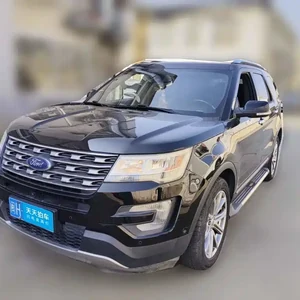
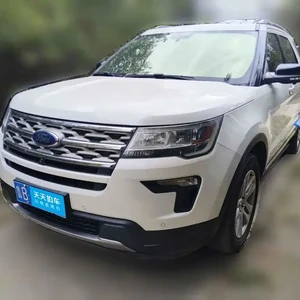
How to buy a Ford Explorer from China
-
1
Define the market and duty cycle
State the destination country, steering-side requirement, typical passenger count and annual mileage. Separate family retail, executive transport, off-road use and fleet duty because each points to a different Explorer configuration.
-
2
Build a target specification
Select the engine, drive system, seating layout, finish and equipment required for local customers. Treat Chinese trim names as market-specific and use the VIN-linked option list as the purchasing reference.
-
3
Compare live unit records
Review equivalent vehicles in the live ChinaCarDirect Explorer inventory, checking model year, condition, mileage, equipment and seller location. Use each unit’s displayed price, MOQ and availability as the current commercial reference.
-
4
Verify condition and ownership
For a used vehicle, request an independent inspection, service history, odometer evidence, title documents and VIN verification. Confirm that any repainting, wear or mechanical work is disclosed before payment.
-
5
Confirm MOQ and landed terms
Ask whether one unit may be purchased or whether the seller requires a compatible container group. Obtain a written quotation naming the Incoterm, destination, freight basis, payment stages, allocation method and validity period.
-
6
Complete pre-shipment inspection
Approve the exact vehicle against the agreed specification and condition standard. Record bodywork, tyres, glass, interior, warning lamps and VIN, with dated photographs forming the shipping handover record.
-
7
Clear compliance and delivery
Use a local customs broker or conformity specialist to confirm registration, emissions, safety and steering-side requirements before shipment release. Track the agreed risk-transfer point through loading, customs, delivery and importer receipt.
Explorer vs rivals
| Toyota Highlander | The Highlander is a comfort- and efficiency-led alternative for buyers who prioritise cabin refinement and fuel economy. The Explorer is the stronger fit when body-on-frame construction, seven-seat utility or four-wheel-drive availability matter more than urban running costs. |
|---|---|
| Jeep Grand Cherokee | The Grand Cherokee shares the Explorer’s appeal to buyers focused on four-wheel drive and traditional SUV utility. The Explorer generally provides more three-row practicality and a broader luxury-grade selection, while the Grand Cherokee has a more distinct off-road identity. |
| Hyundai Palisade | The Palisade competes as a comfort-focused three-row family SUV with road-oriented efficiency. The Explorer fits importers seeking a larger, utility-led model with more drive-system choices and a broader premium trim ladder. |
Frequently asked questions
How is Ford Explorer export pricing determined?
Pricing is determined by model year, trim, engine, drivetrain, seating, mileage, condition, market demand and seller terms. Freight, insurance, tax, customs and inland delivery may be separate, depending on the Incoterm. Review the unit in the live ChinaCarDirect inventory and request a written quote for the exact vehicle and destination before budgeting.
Which Ford Explorer engines and drivetrains are available?
Listings can include 2.3T EcoBoost, EcoBoost 285, 3.5L petrol and diesel configurations, with rear-, all- or four-wheel drive and five-, six- or seven-seat layouts. Exact output, transmission calibration and equipment depend on model year and trim. Verify the engine and drive designation against the VIN, option list and vehicle inspection.
Are used Explorers better value than new ones?
Used Explorers can offer a lower entry cost and a wider choice of import-year vehicles, but buyers bear more condition and maintenance risk. New vehicles are easier to standardise and may have clearer warranty and support pathways. Choose used stock when records and inspection support the acquisition cost; choose new units when consistency, support and handover reliability are more important.
What is the MOQ for Ford Explorer orders?
MOQ is seller- and shipment-specific: one buyer may purchase a single unit, while a seller may require a compatible group for a container. The live listing and written quotation should state the minimum order, allocation method, deposit and balance terms. For a fleet, a pilot unit can validate the specification before consolidating additional vehicles.
How long does Explorer shipping take and what does it cost?
Shipping time and cost depend on origin and destination ports, vessel schedules, congestion, vehicle dimensions, carrier type, insurance and customs handling. Roll-on/roll-off and enclosed carrier options may suit different routes and budgets. Ask the logistics provider for a door-to-door or port-to-port landed quotation with the risk-transfer point clearly stated.
Are spare parts available for an imported Ford Explorer?
Parts support varies by model year, engine and trim, and some export vehicles may use parts or electronic systems that differ from the destination-market version. Importers should provide the VIN when ordering and confirm engine, safety-system and infotainment compatibility before fitting a component. For fleet volumes, ask about aftersales kits, lead times and consolidation to reduce downtime.
Is a right-hand-drive Ford Explorer available for export?
China-origin Explorers are commonly left-hand drive, and RHD availability should not be assumed from the global model name. An importer may source a documented RHD example or commission a conversion, but conversion can create homologation, warranty and insurance issues. Confirm steering side in the exact listing and obtain local approval before ordering.
How do I order a Ford Explorer from China?
Start with ChinaCarDirect’s live Explorer listings, compare equivalent units and send the chosen VIN with destination, trim, seating and Incoterm requirements through the RFQ page. Confirm condition, ownership documents, MOQ, payment stages, inspection and shipping responsibilities in writing. Release the balance only after the agreed inspection or shipping-document milestone.
Ready to source the Ford Explorer?
Request a tailored Ford Explorer export quotation with your destination, preferred trim, seating and MOQ terms.
Request a quote