
Ford Explorer (Import) Export Buying Guide for Dealers
Buy Ford Explorer (import) from China with clear guidance on trims, engines, export pricing, MOQ, shipping, compliance and rival options for overseas buyers.
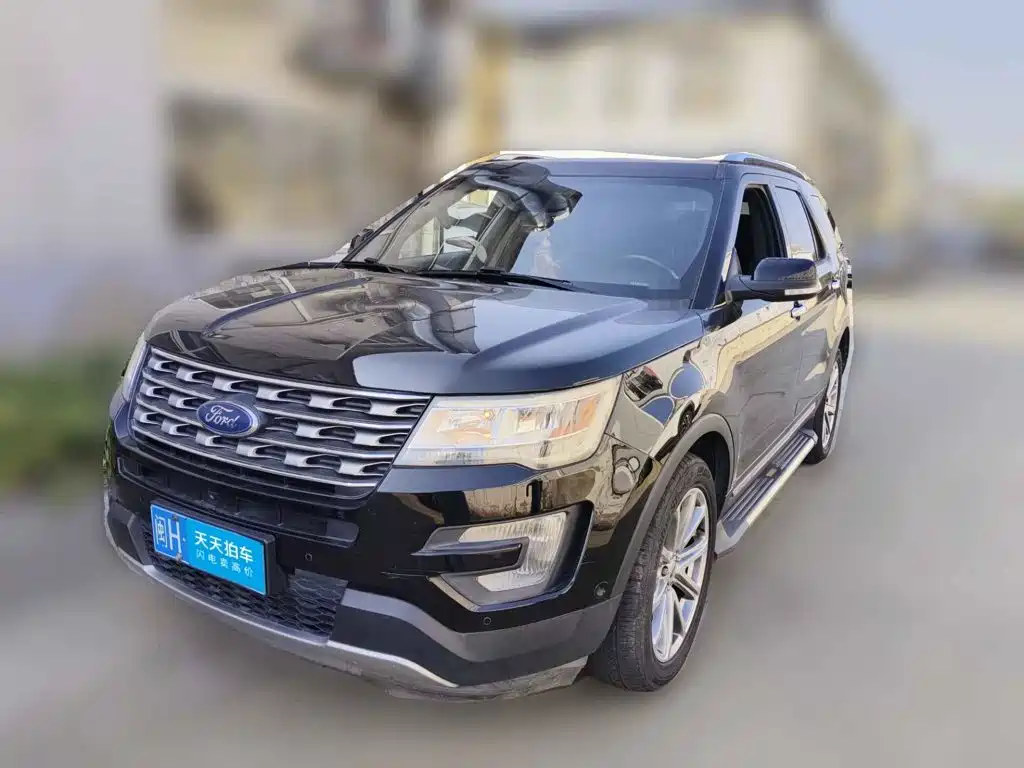
At a glance
- The Ford Explorer (import) combines a recognizable three-row SUV format with four-wheel-drive positioning for passenger and light-utility programs.
- The 2.3T, 3.5L and 3.5T powertrain themes serve different priorities, so engine choice should follow fuel cost and duty.
- New units emphasize condition and warranty verification; used units require history, wear and deferred-maintenance checks.
- Export prices should be compared on a landed-cost basis under the same Incoterm, with vehicle and logistics charges separated.
- Live inventory, destination compliance, steering configuration, warranty coverage and parts support should be confirmed before ordering.
Why the Ford Explorer (import) matters for export markets
The Ford Explorer (import) occupies a useful middle ground for overseas buyers: a recognizable, three-row SUV with a strong four-wheel-drive identity, but without moving into the cost and size of a full-size off-road model. Its long-established nameplate helps dealers explain the product to fleet operators, airport-transfer businesses and family-focused retail customers who need more passenger space than a compact SUV. For import programs, that combination of brand recognition, practical packaging and established trim logic is often more valuable than headline specifications alone in the target market or importer sales messaging.
Demand for the model is strongest where buyers want a conventional SUV that can handle long-distance road work while carrying passengers or equipment. The Ford Explorer (import) for export is relevant to distributors replacing an aging imported model, rental operators upgrading from a compact crossover, and regional wholesalers building a mixed fleet around one name. Because China-origin Explorers are not automatically interchangeable with every domestic-market version, local buyers may need reassurance over certification, software, parts support and steering configuration. Those details can influence acceptance as much as the trim badge.
For a dealer, the commercial case is based on fit rather than scarcity. The Explorer can serve premium family transport, executive chauffeur work, light fleet duty and customers who want SUV styling without a dedicated off-road platform. A wholesaler should test the proposition against local fuel costs, road quality, parking limits and the after-sales network before committing to volume. If the market needs a compact, low-cost urban runabout or a plug-in hybrid with the applicable tax treatment, the Explorer name alone will not make it the right purchase for them.
- Three-row utility format with a 4WD identity.
- Recognizable Ford badge helps dealer positioning.
- Local support affects buyer conversion.
Model range, trims and powertrain variants: how the lineup is structured and how to choose
The China-linked Explorer (import) lineup is structured around displacement and turbocharging, then divided into named editions. Relevant designations include 2.3T Trend, Fashion and Elite, 3.5L Premium, and 3.5T Elite. In practical terms, the 2.3T labels denote a 2.3-liter turbocharged engine, the 3.5L denotes a naturally aspirated 3.5-liter unit, and 3.5T denotes the turbocharged 3.5-liter option. Sellers may use additional equipment descriptions, so the exact year, gearbox, axle and equipment list should be read on each unit rather than inferred from the badge or from a general global market brochure.
Engine choice should follow duty, fuel availability and the buyer's tolerance for operating cost. The 2.3T is the most compact of the three displayed powertrain concepts and is commonly the easier specification to justify where fuel expense matters. The naturally aspirated 3.5L emphasizes simplicity and linear delivery rather than forced induction, while the 3.5T prioritizes stronger performance. None of these labels tells the whole story: towing needs, local fuel quality, heat management, maintenance intervals and the planned resale market should be considered before ordering for a specific overseas operating profile.
Edition names help, but they are not a substitute for a trim-by-trim equipment audit. Compare seating configuration, infotainment and connectivity, safety equipment, cargo features, wheels, air-conditioning capacity and rear-seat convenience in the target market. Chinese-market vehicles may include equipment, materials or option bundles that differ from North American or European models sold under the same Explorer name. For an overseas buyer, the best choice is the least-cost version that meets the mission: fleet buyers may prioritize durability and uptime, while private-market buyers may strongly value cabin presentation and convenience features.
- 2.3T turbo option.
- 3.5L naturally aspirated option.
- 3.5T turbo performance option.
- Verify gearbox, 4WD and equipment per unit.
New vs used Ford Explorer (import): how export inventory is structured and how buyers choose
New and used Ford Explorer (import) units can coexist in export sourcing, and they should be evaluated as different products rather than simple alternatives. A new vehicle may be a Chinese-market vehicle in current or aged factory stock, while a used unit can arrive from trade-ins, auctions or fleet disposal with recorded mileage and prior registration history. The listing title alone is not enough: confirm whether the vehicle is factory-new, unregistered, demonstrator or previously owned, and require documentary evidence before treating any of those categories as equivalent for customs purposes.
The strongest argument for a new unit is simpler initial condition and clearer warranty terms, provided it is valid in the destination and the seller can provide it. It can also simplify specification checks when options are verified against the build record. A used Explorer can offer a lower outlay or access to a desirable trim, but that apparent saving must absorb higher refurbishment risk, wear, deferred maintenance and potentially limited warranty recourse. The correct comparison is total cost over the planned holding period, not simply the invoice headline alone.
For used Ford Explorer (import) purchases, inspect more than paint and mileage. Ask for service records, title and VIN status, engine and transmission condition, four-wheel-drive operation, underbody condition, accident evidence, tire age, cabin wear and evidence of previous flood or off-road use. A pre-shipment inspection should test cold start, brakes, steering, air-conditioning, electronic functions and fluid condition. For fleet disposal units, document seat, trim and cargo-area wear against the stated grade. A complete dossier reduces disputes and helps buyers compare vehicles with different histories on the same basis before contracting.
- New: verify condition and warranty.
- Used: inspect history and deferred maintenance.
- Classify registration and factory-stock status.
How export pricing works: the factors behind a live listing price, and how to read one
A Ford Explorer (import) export price guide should explain how a live quote is built rather than reproduce a dated number. The seller's asking price normally starts with the vehicle's model year, trim, engine, drivetrain, options, mileage or condition, production age and the seller's required margin. Market supply and demand can also affect the number. Currency conversion matters when the listing and your purchase order use different currencies, so the buyer should record the exchange-rate basis and the date on which the quote becomes binding in the written commercial proposal.
Logistics can either be included or separated from the vehicle price, depending on the Incoterm. Ocean freight, vehicle-carrier or container charges, insurance, terminal handling, export documentation, inland haulage, customs brokerage, duties and taxes all affect landed cost. A lower sticker price may be a poor choice if the quote excludes destination charges; a higher figure may offer better protection if it includes transport, insurance and handling under terms. Read the exclusions, delivery point, documentation scope and validity period, then ask for a total-cost comparison using the same destination and Incoterm.
Read each live Explorer listing as variables rather than an isolated number. Confirm model year, exact edition and engine, condition or mileage, steering side, claimed warranty, VIN, seller location, and whether tax, freight and documentation are included. Compare like with like: an older lower-mileage unit, a different trim and a quote delivered under a different trade term are not equivalent. If the seller can update the price or terms, ask for a written, unit-specific quotation and state how long it is valid. ChinaCarDirect's live inventory shows prices and availability; the written quote is binding.
- Vehicle: year, trim, engine and condition.
- Landed: freight, insurance, duty and tax.
- Read Incoterm, validity and live unit figures.
MOQ, ordering and payment: single units vs consolidating a container
MOQ is a seller-specific commercial term, not a universal Explorer rule. A live listing may permit a single vehicle, require a mixed-model batch, or apply a higher minimum to a particular production or discount arrangement; the buyer should confirm the minimum attached to the chosen unit. For a first test purchase, ask whether one vehicle can be ordered without a container commitment. For a dealer program, clarify whether the minimum applies per model, per trim, per seller or across several listings, because those structures lead to very different sourcing plans.
Single-unit ordering is useful for testing demand, validating specification and keeping exposure to one model year or trim. It can involve higher freight cost because the vehicle travels alone or through group consolidation. A container or vehicle-carrier program can reduce logistics cost and improve fleet consistency, but it raises inventory risk: a poor trim mix, concentrated model-year exposure or delayed homologation can leave stock tied up. Build the batch around confirmed demand, allow substitution of an equivalent unit, and avoid deliberately filling a container merely to meet a volume threshold.
Before paying, turn the commercial terms into a checklist: unit identity, price basis, deposit, balance trigger, payment method, Incoterm, delivery point, expected document set, inspection standard, warranty and cancellation or substitution rights. A common sequence is a deposit followed by balance against satisfactory inspection and required export documents, but the sequence must be agreed rather than assumed. Ask whether any protected-payment or escrow arrangement is available and who releases funds. The buyer should also verify title, VIN and export eligibility before the balance becomes due under the signed purchase contract.
- Confirm listing-specific MOQ.
- Single-unit testing versus batch inventory risk.
- Contract payment, documents and inspection rights.
Shipping, homologation and market compliance caveats: LHD/RHD and import rules by country
Shipping method depends on the unit's verified dimensions, weight, condition and route. A road carrier may move it from the seller to the export port, followed by RoRo vessel or container transport depending on the booking and vehicle's eligibility for that service. Do not assume an Explorer can enter a container or roll-on vessel: ask for measurements and loading confirmation from the forwarder. Transit time also varies with port pairs, sailing frequency, transshipment, congestion, customs clearance and inland delivery, so a realistic schedule should include buffer days for weather.
Steering configuration is the first market-specific check. China-origin Explorer examples are commonly left-hand drive, while some destination markets require or strongly favor right-hand drive. A live listing should state the configuration, and a buyer needing RHD must confirm whether a genuine RHD example exists before committing; otherwise, conversion brings cost, homologation and insurance questions. Import rules may also distinguish factory-new from used vehicles, impose age limits, require emissions or safety approval, demand a VIN and certificate of conformity, or calculate duty and tax differently by engine displacement and value locally.
Treat compliance as a destination-market project, not a formality added after booking. Before the balance is paid, provide the VIN, engine label, model year and intended use to a customs broker or local conformity specialist. Confirm roadworthiness inspection, emissions rules, local-language documentation, radio or electrical requirements where applicable, insurance, registration and any used-vehicle age restriction. The exporter should also issue the correct sale, export and ownership papers, while the buyer checks whether customs valuation includes freight, accessories and options. Approval in one country does not guarantee admission in another market.
- Confirm LHD or RHD.
- Check age, emissions, safety and VIN.
- Confirm loading method and customs cost.
Who should buy the Explorer (import) — and who should pick a different vehicle
The Explorer (import) best fits buyers who want a large SUV with three-row utility, a strong Ford identity and four-wheel-drive capability for weather, rural roads or light utility work. It can suit airport and hotel transfers, regional distributors, company-car programs and rental fleets where luggage volume and passenger flexibility matter more than minimum fuel consumption. A buyer should also value a familiar nameplate and a repair ecosystem. These strengths make the model easier to position than a niche vehicle, provided the importing market recognizes the name and can support it.
It is a weaker fit for buyers whose priorities are urban efficiency, a compact footprint, the newest driver-assistance suite or zero-emission operation. A three-row gasoline SUV generally carries more weight and consumes more fuel than a smaller crossover, while an aged parallel-import model may not match current safety technology offered in newer rivals. Buyers seeking a plug-in hybrid, battery-electric vehicle or advanced electrified drivetrain should not treat the Explorer badge as a substitute. Those shoppers need a product whose charging, tax and range proposition works properly in their destination market.
The decision should test whether the imported version is the right commercial proposition in the destination. Taxes, fuel prices, insurance, parts lead times and registration rules can change the ownership case, while Chinese equipment may not match what local buyers expect. A dealer should ask whether its customers need RHD, a factory warranty or a European, Middle Eastern or North American equipment standard. If the answer is no and conversion or missing equipment would erase the value, a locally sourced rival may offer a cleaner sale and faster after-sales support.
- Best for three-row and 4WD use.
- Weak fit for low-cost urban use.
- Verify RHD, warranty and parts support.
Main rivals and how the Explorer (import) compares
The Toyota Highlander is a direct family-SUV competitor for dealers serving parents, hotels and mixed fleets. It generally appeals through a polished family-car image and, in markets where offered, efficient hybrid choices. The Explorer (import) offers a more traditional utility-oriented SUV presentation, four-wheel-drive positioning and a model line that buyers may already associate with road and light-duty versatility. The Highlander may be easier to sell where local hybrid tax treatment and residual values are strong; the Explorer may fit buyers who prefer its larger visual presence or established service familiarity.
The Jeep Grand Cherokee competes for buyers who value a strong four-wheel-drive identity and a rugged SUV image. Its brand appeal and parts support can be compelling in markets with a Jeep history, while the Ford's three-row family positioning and distinct powertrain choices serve a somewhat different customer. Compare local fuel consumption, ride, towing requirements, safety equipment and service access rather than badges alone. An older parallel-import Explorer may have less technology than a newer Grand Cherokee, but it can suit a buyer prioritizing cost, condition and established mechanical familiarity.
The Hyundai Santa Fe is a mainstream alternative for price-conscious SUV buyers and fleets that want a more contemporary family-vehicle proposition. It can be attractive where local sourcing, common equipment and efficient powertrain choices make ownership simpler, whereas the Explorer offers a substantial three-row utility format and a 4WD identity. The right choice depends on passenger and cargo layout, local running costs, homologation and the availability of technicians. For wholesale planning, test each rival with the same customer profile rather than stocking on badge recognition alone.
- Highlander: family and hybrid appeal.
- Grand Cherokee: rugged 4WD positioning.
- Santa Fe: mainstream ownership proposition.
Live Ford Explorer (import) export inventory
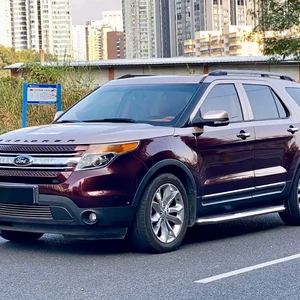
View all listings →Real units currently on ChinaCarDirect with per-unit asking prices and MOQ. Availability updates live from the catalogue.
How to buy a Ford Explorer (import) from China
-
1
Define the destination and operating profile
State the destination country, required steering side, passenger capacity, cargo needs, road conditions and expected holding period before selecting a vehicle.
-
2
Shortlist live inventory
Use the live Explorer (import) listings to compare model year, edition, engine, condition, mileage, steering configuration and stated equipment on individual units.
-
3
Request the vehicle documents
Ask the seller for the VIN, build or specification sheet, ownership documents, warranty terms and evidence that the unit is eligible for export.
-
4
Build a landed-cost quotation
Request separate vehicle, freight, insurance, terminal, documentation, brokerage, duty, tax and inland-delivery figures under a named Incoterm.
-
5
Clear destination compliance
Give the VIN, engine label, model year and intended use to a local customs broker or conformity specialist before committing the vehicle to a sailing.
-
6
Agree the order and payment terms
Record the unit, price basis, MOQ, deposit, balance trigger, payment method, Incoterm, documents, inspection standard, warranty and substitution rights in the written order.
-
7
Inspect before shipment and release
Use an agreed pre-shipment inspection covering fluids, cold start, brakes, steering, air-conditioning, electronics and underbody condition, then release the balance only against the agreed results and documents.
Explorer (import) vs rivals
| Toyota Highlander | The Highlander is a strong family-SUV alternative, especially where hybrid efficiency and local residual values matter. The Explorer (import) offers a more utility-oriented three-row format and traditional four-wheel-drive positioning for buyers who prefer that character. |
|---|---|
| Jeep Grand Cherokee | The Grand Cherokee competes directly for customers attracted to rugged styling, four-wheel-drive capability and an established SUV brand. Compare technology, fuel use, local service access and the condition of older parallel-import Explorers carefully. |
| Hyundai Santa Fe | The Santa Fe can be a simpler mainstream ownership choice where local sourcing, efficient powertrains and broad after-sales support dominate. The Explorer (import) is better suited to buyers prioritizing a larger three-row utility format and traditional 4WD identity. |
Frequently asked questions
How is the Ford Explorer (import) export price determined?
The price combines vehicle attributes such as model year, trim, engine, condition, mileage and options with exchange rates, seller margin and market conditions. Freight, insurance, handling, customs, duties, taxes and inland delivery may be included or separate depending on the Incoterm. ChinaCarDirect's live Explorer listings show the price and availability displayed for each unit, while the seller's written quote supplies the binding terms.
Which engines are available, and is there battery range to consider?
Relevant listings may identify 2.3T, 3.5L and 3.5T powertrains, representing turbocharged and naturally aspirated gasoline engine concepts. These vehicles are not battery-electric, so range should be considered in terms of usable fuel distance under local driving conditions. Exact fuel consumption cannot be inferred from the trim label alone.
Should I choose a new or used Ford Explorer (import)?
A new unit is easier to justify when initial condition, documented equipment and warranty coverage are the buyer's priorities. A used unit may reduce the acquisition outlay or provide access to a preferred trim, but it adds history, wear and deferred-maintenance risk. Compare the total cost over the intended holding period rather than the vehicle invoice alone.
What is the MOQ for an Explorer (import)?
The minimum is set for each listing or seller rather than being a universal Explorer rule. A single-vehicle request may be possible, while some programs or discount arrangements may require a batch. Confirm the applicable MOQ in the unit-specific quotation and ask whether it applies per vehicle, trim, seller or mixed order.
How long does shipping take, and what determines the cost?
Transit time and freight cost depend on the origin and destination ports, sailing frequency, transshipment, congestion, customs clearance, inland delivery and the selected RoRo or container service. The vehicle's verified dimensions, weight, condition and route also affect loading charges. Ask a forwarder for a door-to-door or port-to-port quotation with a realistic schedule and all handling fees identified.
How are spare parts and after-sales support arranged?
Parts support depends on the model year, engine, edition and the compatibility of China-market components with the destination market. Request a parts list for the exact vehicle and obtain written estimates for commonly needed service items before importing. Buyers should also assess local technician availability, diagnostic equipment and warranty handling rather than assuming every part is readily available.
Is a right-hand-drive Ford Explorer (import) available?
China-origin Explorer examples are commonly left-hand drive, so RHD availability should never be assumed. Check the steering configuration stated on each live listing and request a genuine RHD unit if required. If only an LHD example is available, evaluate the cost and legal consequences of conversion, inspection, insurance and local market acceptance before placing the order.
How do I order a Ford Explorer (import) from China?
Select a unit from the live inventory, verify its documents and request a written quote covering price, MOQ, payment, Incoterm, inspection, warranty and export documents. The balance should be linked to satisfactory inspection and receipt of the agreed documents. A buyer can then use the ChinaCarDirect request form to send the destination and vehicle details for an RFQ.
Ready to source the Ford Explorer (import)?
Review the live Ford Explorer (import) listings and request a unit-specific landed quote for your destination.
Request a quote