
Ford F-150 Raptor Export Guide for Overseas Buyers
Export buying guide for the Ford F-150 Raptor, covering trims, engines, live pricing, MOQ, shipping, compliance, rivals and the right buyer fit.
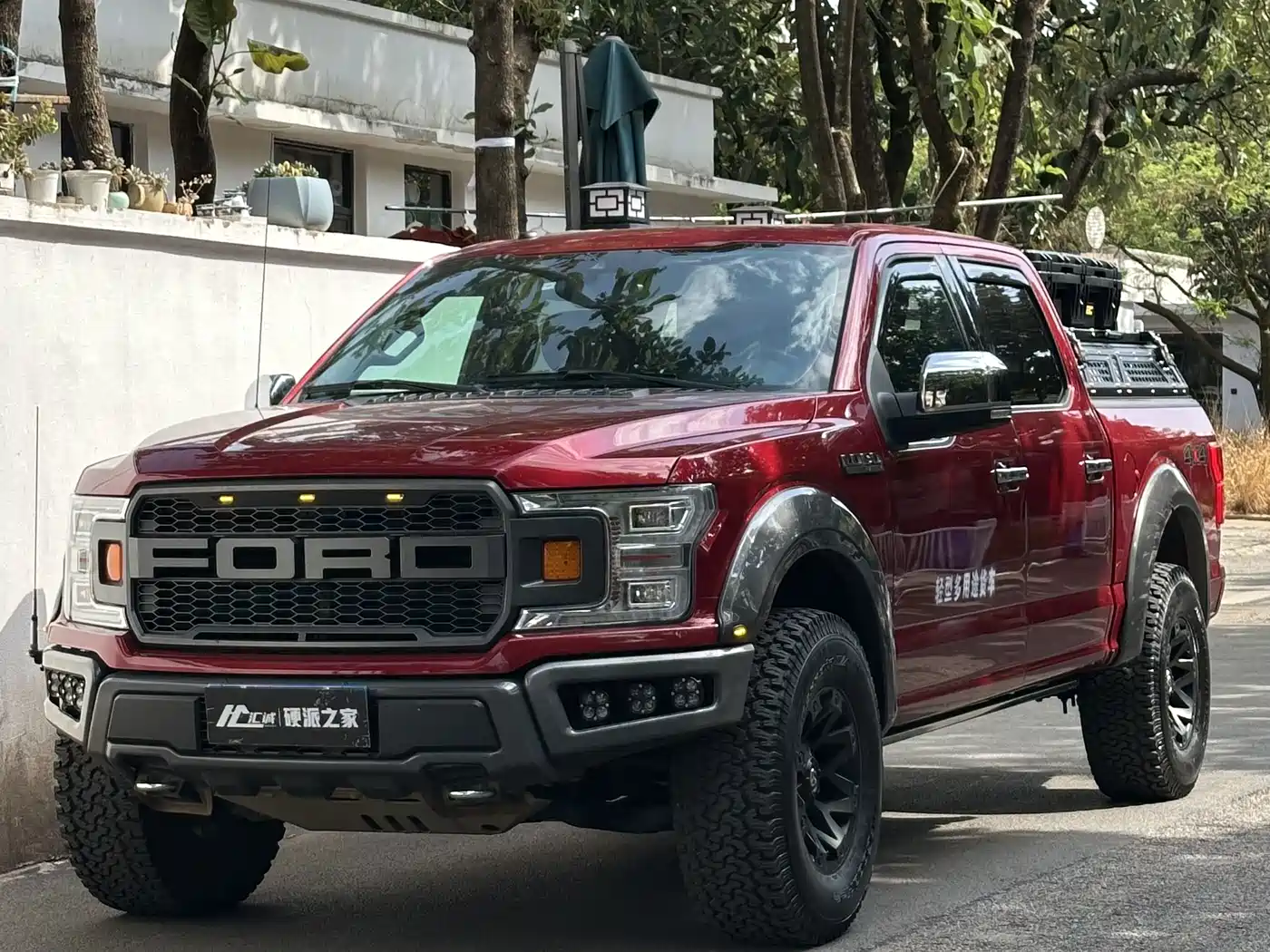
At a glance
- The F-150 Raptor combines full-size pickup utility with factory-developed off-road hardware and powerful gasoline engines.
- Engine, suspension and equipment choices depend heavily on model year, so buyers should compare VIN-level specifications rather than badges alone.
- New vehicles prioritize consistency and warranty pathways, while used Raptors require deeper inspection of condition, history and modifications.
- Export pricing varies with year, trim, powertrain, condition, freight, exchange rates and Incoterms; current figures should be checked per live listing.
- MOQ is seller-specific, while destination-country steering, homologation, customs and operating-cost rules can determine whether the model is commercially suitable.
Why the Ford F-150 Raptor matters for export markets
The Ford F-150 Raptor occupies a distinctive place in the full-size pickup segment: it combines F-150 commercial utility with factory-developed high-speed off-road hardware and powerful gasoline engines. That combination attracts dealers, rental operators, off-road fleets and private buyers who need more capability than a conventional work truck without building a competition vehicle from components. Its appeal is strongest in markets where wide roads, severe terrain, towing demand or a developed off-road leisure market make a full-size 4x4 commercially relevant. It is also a halo product: a Raptor can signal capability and prestige even when the buyer only uses it for weekend travel or premium fleet demonstrations.
Buyers evaluating the Ford F-150 Raptor for export should not confuse global interest with universal commercial demand. Its size, fuel consumption, tire width and high performance can raise registration, insurance, tax and operating costs in countries with narrow roads, urban restrictions or high import duties. Conversely, those same attributes make it useful in mining, agriculture, emergency response, remote operations and off-road tourism. The correct export question is therefore not simply whether the model is popular, but whether its engineering and ownership economics fit the destination. That qualification protects both importer and end customer.
Dealers should also separate the Raptor from the broader F-150 range when forecasting demand. Standard F-150 versions may suit trade fleets better through lower operating costs, conventional equipment and easier service planning; the Raptor is a performance-oriented niche with a stronger lifestyle proposition. A buyer sourcing a Ford F-150 Raptor for export should identify the customer first, then match cab, powertrain, axle, suspension, tow rating and local registration rules. This prevents a visually impressive but commercially unsuitable vehicle from becoming an expensive stock mistake before committing any deposit or import budget.
- Factory-integrated performance and off-road capability
- Best fit: specialist fleets and recreational markets
- Size and fuel costs narrow many export markets
Model range, trims and powertrain variants: how the lineup is structured and how to choose
The lineup is easiest to understand as a family rather than a simple ascending trim ladder. The 3.5T Raptor forms the core, while names such as Performance Edition, Performance Enhanced Edition, 3.5T LTD and Flame Storm Special Edition reflect model-year packages, equipment, styling or powertrain emphasis. Older inventory can carry the 6.2L SVT Raptor designation, while newer generations can use the 5.2-liter V8. Equipment therefore cannot be inferred from the word Raptor alone; the exact year, trim label and build sheet should control the comparison, especially when preparing an export specification sheet before export.
Most 3.5T models use a 3.5-liter EcoBoost V6 and a ten-speed automatic transmission, whereas the older 6.2L SVT generation uses a naturally aspirated V8 with a six-speed automatic. Later Raptor configurations have offered a 5.2-liter V8 for buyers prioritising sustained high-speed output, while the V6 remains the common 3.5T choice. Because these combinations are generation-dependent, a buyer asking for Ford F-150 Raptor specs should verify engine, transmission, four-wheel-drive system, axle ratio, tire package and emissions information on the unit being considered rather than relying on a generic catalogue description or memory alone.
Choose the powertrain around the duty cycle, not the badge. The 3.5L V6 is a practical all-rounder for mixed road use, towing and off-road travel, with less mechanical complexity than a large V8 but a different performance character. A V8-equipped car may suit sustained high-speed desert running, heavy towing or an enthusiast buyer who accepts higher fuel use. Where fitted, the wider 37-inch tire package and long-travel suspension can also increase replacement cost and reduce comfort, so test ride, braking, clearance and loading limits matter as much as acceleration on public roads.
- 3.5T Raptor: core family
- Edition labels vary by model year
- Confirm engine and axle by VIN
New vs used Ford F-150 Raptor: how export inventory is structured and how buyers choose
Export inventory should be assessed by condition categories rather than by model name alone. A new vehicle normally offers the cleanest ownership start, factory warranty route and simplest cosmetic inspection, but its acquisition commitment is higher. A used Ford F-150 Raptor may reduce initial depreciation and open access to a desired trim, yet the buyer must examine mileage, service records, accident repair, off-road modifications, chassis condition and title history. The relevant structure is therefore model year plus trim plus engine plus condition, all shown and verified unit by unit before purchase.
For commercial importers, new units make sense when predictable specification, presentation and warranty transfer matter more than acquisition cost. They are also easier to standardise for rental, demonstration or corporate fleets, although component availability and local homologation still apply. Used Raptors can be attractive for a dealer test, an off-road specialist or a buyer seeking an older SVT character, but the unit should be treated as a separate inspection project. Heavy suspension use, hard impacts, water crossings and aftermarket modifications may not be fully represented by ordinary service-book entries alone.
A sensible workflow is to shortlist several equivalent configurations, then request a condition report, VIN, title or ownership documents, maintenance history, photographs of the underbody and tires, and a walk-around video. Confirm whether new means dealer-new, parallel-imported or previously registered, and whether the sale includes local registration, export clearance or only the vehicle. Exact Ford F-150 Raptor availability changes as units are sold or contracted, so use the live inventory page for the current options and never infer availability from an older photograph, catalogue or market article or export guide.
- New: predictability and warranty pathway
- Used: lower entry, deeper inspection
- Verify condition, documents and origin
How export pricing works: the factors behind a live listing price, and how to read one
A Ford F-150 Raptor export price guide should explain variables rather than publish a stale headline figure. The vehicle-side value starts with model year, Raptor trim, engine, cab, axle ratio, factory options and condition, while a used example also carries mileage, service history, modification status and remaining warranty considerations. Market variables then include the seller location, destination, exchange rate, local taxes, financing, insurance and the number of vehicles sharing freight. Two units carrying the same Raptor name can therefore sit in different commercial positions once shipping and Incoterms are applied.
Read each live listing as a commercial document, not simply a headline sale number. Establish whether the displayed amount covers the vehicle only, domestic export preparation, sea freight, insurance, customs clearance or delivery to the buyer's warehouse. Check which Incoterm is named, which party bears risk after loading, and whether destination charges, port handling, documentation or taxes are excluded. Then compare like-for-like units: same year, trim, powertrain, condition and service scope. This removes false savings created by one quote including freight and another presenting a vehicle-only amount at a glance.
For a binding budget, build the total landed cost in writing. Ask the seller for the unit price, deposit, balance schedule, serialisation or transport cost, marine insurance, export documentation, origin charges, freight, destination handling and estimated duties or taxes, with each item marked included or excluded. Exchange-rate assumptions should be stated because they can move between quotation and payment. Exact per-unit price, MOQ and availability are shown in the [live ChinaCarDirect inventory](https://chinacardirect.com/products?q=F-150%20Raptor&brands%5B%5D=20) and confirmed in a written RFQ, not inferred from this evergreen guide.
- Compare identical year, trim and condition
- Separate vehicle cost from landed cost
- Use live listings and written quotations
MOQ, ordering and payment: single units vs consolidating a container
For a buyer planning to buy a Ford F-150 Raptor from China, minimum order quantity is a seller and listing term, not a universal feature of the market. Some export offers allow a single unit, while other sellers set a multi-unit requirement or prioritise container-consignment quantities. The live listing should show the current MOQ, and the RFQ should confirm whether it applies to the same model, trim and condition. Buyers should not assume that one-unit access to a display listing guarantees equally favourable freight, lead time, documentation or after-sales support for a larger order of the same specification unit.
A one-unit purchase is often sensible for a dealer's first import, a specialist rental operator or a customer testing demand in a new segment. It offers more flexibility over trim and year and limits exposure if homologation, registration or local demand is uncertain. The trade-off is that transport and fixed handling costs are spread across fewer vehicles, and a delayed sale can leave the unit sitting. Consolidation can improve freight efficiency, but only when every vehicle has a confirmed specification and payment schedule before the container is committed to port.
A sound RFQ should specify quantity, preferred model years, trim hierarchy, engine, cab, condition, destination, Incoterm and required documents, then ask for an itemised pro forma invoice and payment milestones. Typical mechanics are deposit, production or inspection confirmation, documentary release, balance payment and shipping; the exact sequence follows the seller and contract. For Ford F-150 Raptor wholesale purchasing, request a written allocation and VINs rather than relying on an inventory image, and verify that deposits are refundable or non-refundable, when title transfers, and which party bears storage or demurrage risk.
- MOQ is shown per seller and listing
- Single units suit market-entry purchases
- Consolidate only after specification approval
Shipping, homologation and market compliance caveats: LHD/RHD and import rules by country
Finished pickups are commonly moved by roll-on/roll-off vessels, although container or specialist transport may suit a particular route and unit. Cost and transit time depend on origin and destination ports, sailing frequency, vessel space, vehicle dimensions, securing equipment, cargo value, marine insurance, port handling, customs clearance and inland delivery. A Raptor's height, wide track and modified bumper or tire package can affect loading plans and lashing, so provide accurate measurements. Keep the commercial invoice, packing list, VIN list and export documents consistent from booking through discharge and final delivery arrangements.
Steering-side and homologation checks belong before the vehicle is paid for. ChinaCarDirect listings can include vehicles sourced for different destination requirements, so ask whether the Raptor is left-hand drive or right-hand drive and confirm the VIN, engine format, emissions category and factory equipment. A steering conversion may alter safety, warranty, insurance and type-approval status and should not be assumed road-legal. Import rules vary by country and may cover customs classification, duty, VAT or GST, age limits, emissions, noise, lighting, VIN verification, local standards and licence-plate eligibility in the destination market.
Budget for regulatory work as well as freight. If local rules require road lighting, mirrors, glass, emissions documentation, security equipment, software calibration or a local type approval, use an approved specialist rather than an informal modification. Confirm whether the importer or the end customer bears conversion, inspection, storage and registration delays. For RHD access, check official Raptor specifications and local authorised support before arranging a conversion; right-hand-drive availability may be limited and can materially change the vehicle's value. Finally, obtain written customs advice for the exact VIN, origin, engine and destination rather than assuming a general import rule.
- Confirm steering side before payment
- Use approved homologation specialists
- Insurance must cover the shipment
Who should buy the F-150 Raptor — and who should pick a different vehicle
The F-150 Raptor fits buyers who need credible factory off-road performance and can absorb the ownership trade-offs. Strong candidates include remote-site operators, agricultural and utility fleets with demanding tracks, towing-equipment businesses, off-road tour operators, event support crews and enthusiasts who value a road-usable vehicle with genuine high-speed capability. It can also serve as a premium demonstrator for a dealer. The case is strongest when the vehicle's suspension, tires, powertrain and towing capability are regularly used, because those qualities are difficult to reproduce economically on a conventional pickup without specialist engineering.
It is a weaker choice for urban taxi work, light-duty trades that only need payload, or buyers whose priority is low fuel consumption and easy parking. The wide stance, long bonnet, off-road tire package and high-output engine can make fuel, tires, insurance and servicing materially more expensive. A full-size pickup may also face tolls, access charges or restrictions that a smaller pickup avoids. Before buying, calculate total cost over the planned holding period, including fuel, maintenance, tire replacement, insurance, local registration and the time vehicles spend off the road while being imported.
Buyers should also test the operating reality of a Raptor rather than relying on its off-road reputation. Confirm ride comfort with loads, visibility, parking and manoeuvrability, service access, towing equipment compatibility and local parts support. An enthusiast may accept firm suspension and frequent tire costs; a commercial fleet may not. Where the mission is mostly paved travel with occasional unsealed roads, a less specialised F-150 trim, another full-size pickup or a smaller utility vehicle can preserve more budget. The right choice is the narrowest platform that still satisfies the terrain, load and recovery requirements.
- Strong for terrain, towing and recovery
- Weak for fuel-first urban fleets
- Evaluate full-life operating costs
Main rivals and how the F-150 Raptor compares
The closest performance alternative is the Ram 1500 TRX, where still offered in the buyer's market. It also pairs a supercharged V8 with long-travel off-road hardware and a factory high-speed focus, making it a direct substitute for buyers who prioritise straight-line performance and aggressive styling. The F-150 Raptor offers a broader powertrain story across generations, including the 3.5-liter EcoBoost V6 and later 5.2-liter V8, plus numerous special editions. Choice, local dealer coverage, parts pricing and the ability to support fleet use should therefore influence the decision as much as acceleration.
The Chevrolet Silverado 1500 ZR2 is a more off-road-focused rival, using a factory off-road suspension and locking differentials to compete in rough-terrain capability. It may appeal to buyers who prioritise trail protection, utility and a more traditional rugged-pickup brief, while the Raptor's wider tire stance and higher-performance configurations lean harder toward desert running and high-speed use. The Chevrolet is a credible alternative, but model-year availability, drivetrain choices and local service support can shift. A fair comparison must test the exact vehicle's axle, tires, clearance, tow rating and warranty rather than compare badges.
The Toyota Tundra TRD Pro is a relevant rival for buyers who need a dependable factory off-road pickup without entering the most extreme performance tier. Its suspension and chassis treatment are aimed at trail use, while the Raptor more strongly emphasises high-speed desert capability, its V6 option and special-edition breadth. Toyota's reputation and local service familiarity can influence fleet decisions, but exact market equipment, tax treatment and warranty must be checked. Across all three rivals, compare the same mission: payload and towing, tire replacement, fuel use, ground clearance, service access, local parts and the total landed cost into the destination market.
- Ram 1500 TRX: closest performance substitute
- Silverado ZR2: trail-focused off-road alternative
- Tundra TRD Pro: rugged, less extreme alternative
Live Ford F-150 Raptor export inventory
View all listings →Real units currently on ChinaCarDirect with per-unit asking prices and MOQ. Availability updates live from the catalogue.
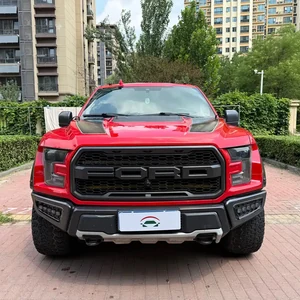
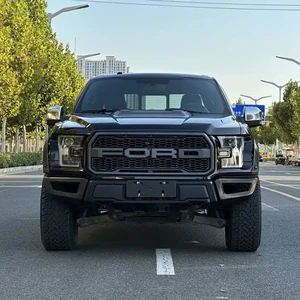
Ford Ford F-150 Raptor 2018 3.5T Raptor Performance Enhanced Edition
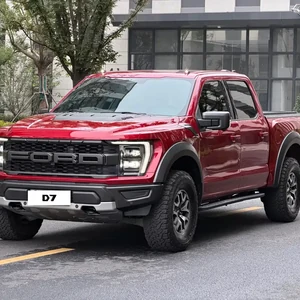
Ford Ford F-150 Raptor 2023 3.5T Raptor Flame Storm Special Edition
How to buy a Ford F-150 Raptor from China
-
1
Define the mission and destination
Specify whether the Raptor is for towing, remote operations, rental use, demonstration or off-road travel, and note the destination's road, fuel, parking and registration conditions.
-
2
Review the live inventory
Use the live Ford F-150 Raptor listings to compare model years, trims, engines, condition and seller terms. Each current listing is the source for its own asking price, MOQ and availability.
-
3
Verify the unit-level specification
Request the VIN, build sheet, condition report, ownership documents, service history and photographs of the underbody and tires. Confirm any modifications, accident repair or off-road use.
-
4
Request an itemized landed-cost quotation
Ask the seller to separate vehicle cost, export preparation, freight, insurance, port charges, documentation, duties and taxes, while naming the applicable Incoterm.
-
5
Check steering side and homologation
Confirm whether the vehicle is LHD or RHD and obtain destination-specific advice on emissions, safety, lighting, type approval and registration. Avoid planning around an unapproved steering conversion.
-
6
Approve allocation and payment terms
Review the pro forma invoice, MOQ, VIN allocation, deposit and balance schedule, title-transfer timing and storage liability. Record which costs and risks belong to each party.
-
7
Book shipping and final inspection
Confirm vessel or container routing, securing requirements, marine insurance, export documents and pre-shipment inspection. Inspect the vehicle again at discharge before final delivery or release.
F-150 Raptor vs rivals
| Ram 1500 TRX | The Ram 1500 TRX is the closest direct performance substitute where offered, pairing a supercharged V8 with factory long-travel hardware. Choose it for V8-only high-speed character, but compare local service, tire costs and the exact Raptor powertrain options before deciding. |
|---|---|
| Chevrolet Silverado 1500 ZR2 | The Chevrolet Silverado 1500 ZR2 is more trail- and rough-terrain-oriented, while Raptor variants lean toward high-speed desert use and offer a broader powertrain and trim history. It can suit buyers prioritizing off-road utility over extreme acceleration. |
| Toyota Tundra TRD Pro | The Toyota Tundra TRD Pro is a rugged factory alternative for trail use and fleet familiarity, not a like-for-like extreme-performance match. Consider it when durability, ownership familiarity and trail capability outweigh the Raptor's broader performance and special-edition choices. |
Frequently asked questions
How is Ford F-150 Raptor export pricing determined?
Export price is built from vehicle attributes—year, trim, engine, options, mileage and condition—plus seller terms, exchange rate, freight, insurance, port charges and the chosen Incoterm. A listing may be vehicle-only, so ask for an itemized landed-cost quote. Exact per-unit price, MOQ and availability are shown in the [live ChinaCarDirect inventory](https://chinacardirect.com/products?q=F-150%20Raptor&brands%5B%5D=20) and should be confirmed in writing before payment.
What powertrain does the Ford F-150 Raptor use, and does it have a battery range?
The Raptor is gasoline-powered, not an EV, so battery capacity and electric range do not apply. Most 3.5T versions use a 3.5L EcoBoost V6 with a 10-speed automatic; older SVT versions use a 6.2L V8, and some later versions offer a 5.2L V8. Verify the exact engine and transmission by model year and VIN in the live listing.
Should an overseas buyer choose a new or used Ford F-150 Raptor?
New units are usually easier to standardize and may retain a transferable factory warranty, while used units can offer lower acquisition cost and access to older or special trims. A used Raptor requires a stricter inspection of service history, accident repair, underbody condition, modifications and title documents. The best choice depends more on condition transparency and total cost than on the new or used label alone.
What is the MOQ for Ford F-150 Raptor wholesale orders?
MOQ is set by the seller and may differ between single-vehicle, mixed-consignment and full-container offers. One unit may be available where the listing permits it, but a wholesale request should state quantity, trim, condition and destination so the seller can confirm allocation, consolidation and unit-level MOQ in the written quote. Always verify the current MOQ on the live listing or RFQ.
What determines shipping time and cost for an exported Raptor?
Transit time and cost depend on origin, destination, sailing schedule, vessel space, vehicle dimensions, cargo value, marine insurance, port handling, customs clearance and inland delivery. Wide Raptor packages can require specific securing and clearance planning. Obtain an all-in freight quotation rather than assuming a standard container rate.
How are Ford F-150 Raptor spare parts handled?
Order parts using the VIN, model year and build sheet, and first check support from the destination-market Ford network or an Raptor specialist. Common wear items may be easier to source than body panels or model-specific off-road components. For fleet purchases, include spare tire, service and hard-part lead times in the operating plan.
Is right-hand-drive Ford F-150 Raptor availability for export limited?
Right-hand-drive availability is limited and varies by source vehicle, generation and destination. Confirm steering side, factory specification and local type approval before contracting because a conversion can affect safety, insurance, warranty and registration. Do not assume an imported LHD vehicle can be converted economically or legally.
How do I order a Ford F-150 Raptor from China?
Start with the live Ford F-150 Raptor listings, select a vehicle matching the required year, trim, engine and condition, then send a destination-specific RFQ. The seller should return an itemized quotation with MOQ, Incoterm, payment milestones and transport scope. After document review, inspection, payment and export clearance, the vehicle can be booked for shipment with inspection and insurance confirmed.
Ready to source the Ford F-150 Raptor?
Send a destination-specific RFQ for a current Ford F-150 Raptor unit and receive an itemized quotation covering specification, MOQ, Incoterm and shipping options.
Request a quote