
Ford Mondeo Export Buying Guide for Overseas Dealers
Compare Ford Mondeo trims, engines and hybrid options, learn export pricing, MOQ and shipping factors, and source vehicles for overseas markets.

At a glance
- The China-market Ford Mondeo is a five-door midsize liftback positioned above typical compact sedans.
- EcoBoost and GTDi petrol engines span several designations, with a 1.5T E-Hybrid alternative available.
- Trim names such as Fashion, Luxury, Premium and ST-Line signal equipment tiers, not complete specifications.
- Export price depends on unit attributes, currency, freight, insurance, taxes and the selected Incoterm.
- Confirm destination homologation, steering configuration, MOQ, payment milestones and parts support before ordering.
Why the Ford Mondeo matters for export markets
The Ford Mondeo is a China-market midsize liftback that gives overseas buyers an alternative to the familiar global large sedans. Its appeal is not based on one headline specification, but on a useful combination of Ford styling, five-door practicality, turbocharged petrol options and a broad selection of equipment-led trims. For dealers, that makes it easier to build a varied offer for company fleets, executive transport and private buyers who want more presence than a compact saloon. It also suits buyers who value a conventional road car and established parts categories over a niche electric platform.
Demand for this model in its segment should be understood as buyer-specific rather than universal. Ford recognition can help a reseller communicate the proposition, while the liftback profile suits markets where a conventional saloon is expected but occasional cargo flexibility is useful. However, the Chinese Mondeo is not automatically interchangeable with every Ford Mondeo sold elsewhere; engine tune, emissions equipment, infotainment, parts and regional homologation may differ. That distinction matters because an attractive vehicle can still be unsellable, expensive to maintain, or difficult to certify properly in its destination country.
Export buyers should therefore assess the Mondeo as a source-market product with international potential, not as a guaranteed global-market equivalent. The strongest candidates are importers that have checked local type approval, can support the exact engine and transmission, and can explain the vehicle’s age, condition and provenance. This diligence also prevents a familiar badge from masking differences between domestic Chinese versions and the LHD or RHD Mondeo configurations familiar in other regions. A clear sales proposition, realistic spare-parts planning and access to inspection are more valuable than assuming every badge carries identical engineering.
- Midsize five-door liftback format
- Turbo petrol and hybrid options
- Verify source-market specification differences
Model range, trims and powertrain variants: how the lineup is structured and how to choose
Chinese-market Mondeo naming can look complex because it combines displacement, engine technology, output designations, facelift status and equipment grade. Across the model range, trim labels include EcoBoost 180, 200 and 245 versions, GTDi 180, 200 and 240 versions, a 2.3L model, and a 1.5T E-Hybrid ST-Line. Trim names such as Fashion, Luxury, Premium and ST-Line indicate different positioning, but they are not a substitute for a line-by-line equipment and compliance review. Compare the exact listing year, facelift designation, gearbox, emissions version, installed options and documents before selecting a trim for the intended market.
For a petrol buyer, the practical first choice is the engine and usage pattern rather than the highest trim name. The 180 and 200 labels cover different EcoBoost or GTDi applications, while the 245-branded versions are typically positioned at the upper end of the petrol range; the exact output and drivetrain must be confirmed from the unit’s documentation. The older 2.3L entry can suit buyers seeking a simpler specification, but parts availability and fuel use should be checked. Taxation, insurance classes and emissions suitability can also influence whether a nominally similar vehicle works economically.
The 1.5T E-Hybrid option serves a different brief: buyers wanting lower-emission urban running and a newer drivetrain proposition without moving to a pure battery-electric Mondeo. Its battery capacity, electric range, fuel consumption, charging arrangement and real-world incentives are not safely inferred from the trim title, so request the technical sheet and test the declared operating mode. A hybrid also adds another service-training and parts-planning requirement for the importing dealer. It may be attractive in markets with favourable hybrid treatment, yet tax bands, registration rules and workshop capability still determine whether the extra complexity is commercially justified.
- Decode trim and engine labels
- Match powertrain to operating need
- Verify hybrid technical data
New vs used Ford Mondeo: how export inventory is structured and how buyers choose
ChinaCarDirect’s export inventory for the Mondeo is weighted mainly toward new vehicles, with used examples representing a smaller, highly selective channel. That structure suits importers who want a consistent product story, consistent trim naming and easier presentation to fleet customers. It also means the used segment should not be treated as an undifferentiated discount pool: each vehicle needs its own inspection because age, mileage, service history and prior use can materially affect export value and resaleability. The condition report should also explain cosmetic faults, tyres, battery health if hybrid, and any outstanding repairs.
A new Mondeo is generally the safer choice for a buyer establishing a repeatable export programme. It offers clearer expectations around delivery condition, factory documents, model-year consistency and any warranty coverage, while reducing uncertainty from repairs and accumulated wear. The trade-off is higher capital committed per vehicle and a narrower used-market comparison. Dealers should calculate the cost of preparing, certifying and supporting an older car rather than comparing only the headline purchase quote. A fleet contract may also require newer model years, specified equipment and predictable handover procedures that an older used vehicle cannot consistently provide.
A used Mondeo can make commercial sense when acquisition cost, a specific equipment level or a proven model-year pattern is more important than factory-new consistency. Buyers should ask for exterior and interior photographs, VIN and registration documents, odometer evidence, service records, accident and flood checks, plus a mechanic’s report. For hybrid cars, state of health and actual hybrid-system operation deserve particular attention; for petrol cars, engine condition, cooling system and maintenance discipline are central. Any repair should be costed before shipment because deferring work abroad can be more expensive and can affect the vehicle’s first impression.
- New vehicles improve programme consistency
- Used cars require unit inspection
- Verify mileage, documents and repairs
How export pricing works: the factors behind a live listing price, and how to read one
A Ford Mondeo export quote is a composite commercial figure, not simply the domestic catalogue price. It is influenced by model year, trim, engine or hybrid version, factory options, mileage and condition, seller margin and the currency in which the vehicle is priced. Export adds a second layer: inland transport, documentation, marine or air freight, insurance, destination charges and the selected Incoterm. Comparing two listings without confirming these elements can produce a false impression of value. The most useful first step is to read each live listing carefully and identify exactly what its displayed price includes.
The choice of delivery term changes both the apparent price and the buyer’s obligations. An ex-works price leaves the buyer responsible for collection and export handling; FOB typically ends at the named Chinese port; CIF may include freight and insurance to a stated destination; and DDP can place more responsibility—and regulatory risk—on the seller. Local import duty, VAT or sales tax, customs clearance, terminal handling and inland delivery can also create costs not shown in a vehicle listing. Request the complete landed-cost worksheet. This avoids double-counting freight or assuming tax treatment.
Use the live Ford Mondeo inventory as the source for current numbers, because vehicle prices and availability can change with the underlying unit and market conditions. For each shortlisted listing, verify the VIN, model year, trim, powertrain, mileage or delivery condition, currency, quote validity, payment schedule and inclusion of export documents. Ask whether the price is negotiable and how a change in exchange rate or shipping scope would affect the final landed total. Exact price, minimum order and availability must always be confirmed on the unit-level live listing or in a formal quotation.
- Compare equivalent vehicle specifications
- Confirm freight and tax inclusions
- Check currency, validity and payment terms
MOQ, ordering and payment: single units vs consolidating a container
Minimum order quantity is a commercial field attached to each supplier’s terms, not a safe assumption to carry across every Ford Mondeo listing. A buyer testing the model may request a single-unit purchase from a seller whose listing accepts it, while a distributor may need to reserve several vehicles to make a container programme economical. The commercial logic depends on unit availability, loading efficiency, shipping method, payment risk and handling charges. Always confirm the MOQ shown or agreed for the exact lot before paying. Do not infer a fixed catalogue-wide rule.
For a trial shipment, a single vehicle can test the product proposition, document flow, inspection quality and arrival condition with limited capital exposure. It may also expose weaknesses in parts support or customer expectations before a larger order. For a full-container programme, calculate how many units fit the chosen vehicle and loading arrangement, whether mixed model years or trims are permitted, and who bears the cost of damage, loading amendments or a shortfall. The lower unit acquisition cost of a larger lot can be offset by the risk of slower stock turnover.
Payment structure should reflect inspection and documentary milestones rather than a vague promise of performance. Typical points to negotiate are an initial deposit, payment after the vehicle passes the agreed inspection, a balance before release, and a clear refund or remedy clause if the VIN, condition, documents or shipping terms do not match the contract. Confirm accepted payment methods, beneficiary identity, invoice requirements and cancellation terms in writing. For a larger lot, use a vehicle-level handover list so no unit is substituted without approval. This is especially important when trims, model years or equipment differ between reservations.
- Confirm MOQ for the exact lot
- Use one vehicle as market validation
- Tie payment to inspection milestones
Shipping, homologation and market compliance caveats: LHD/RHD and import rules by country
Steering configuration is a critical sourcing issue. Most vehicles assembled for the Chinese market are left-hand drive, while some destination markets expect or effectively require right-hand drive. A Mondeo listing may identify its configuration, but buyers should confirm the VIN, physical steering position and whether conversion has been performed. A converted vehicle needs inspection for column, pedals, electrical systems, airbags and certification; conversion does not automatically make the car compliant with local registration rules. For RHD procurement, identify specialist conversion capability before placing a sizeable order rather than discovering limitations after loading.
Import permission and road legality are separate questions. A vehicle can clear customs yet fail local type approval, emissions, safety, noise, cybersecurity or inspection requirements. Requirements differ across the European Union, United Kingdom, Gulf markets, Southeast Asia, Latin America and Africa, and may include an age limit, homologation certificate, emissions conformity, local inspection, insurance, taxes and registration. Buyers should obtain a destination-specific compliance checklist from a licensed customs broker or vehicle-homologation specialist before committing funds. Do not assume that a Chinese certificate, working headlights or existing registration documents are sufficient in the destination country.
Shipping method and cost should be planned around route, urgency, lot size and vehicle condition. RoRo or container transport can protect the vehicle better than an open flat rack; air freight may suit a small, urgent consignment but carries strict battery, fuel and handling restrictions. For hybrids, confirm the battery state of charge and carrier requirements. Insure the vehicle for the agreed Incoterm, inspect it before loading, photograph the body and interior, secure the VIN record, and understand where risk transfers during the voyage. Insurance exclusions and claims procedures matter as much as freight.
- Confirm steering configuration early
- Obtain destination compliance advice
- Record condition before loading
Who should buy the Mondeo — and who should pick a different vehicle
The Mondeo is a strong candidate for importers serving business fleets, airport and hotel transfer operators, government or company fleets, and private buyers seeking a comfortable midsize saloon with a distinctive body shape. It can also suit a dealer building an upper-mainstream petrol range where Ford recognition is useful and the dealer can support Chinese-specification vehicles. The best fit is an organisation able to compare total cost, support parts and manage registration rather than simply chase a low acquisition quote. A buyer with local compliance capability and realistic aftersales support is in a stronger position.
A used Mondeo may suit a smaller retailer, a budget-conscious fleet buyer or a customer seeking a particular older specification at a manageable acquisition cost. It can also work for a buyer who values the model’s shape and road-car format but does not need the latest hybrid or facelift equipment. Such purchasers should accept more variability and build a repair reserve into the plan. If documentation is incomplete, condition is uncertain, or no economical parts route exists, the apparent saving should be rejected. Remote markets should first prove supply before committing.
Other buyers should choose a different vehicle. Drivers prioritising battery-only range, rapid public charging or minimal tailpipe emissions should assess a plug-in hybrid or battery-electric saloon that is already homologated for their market. Off-road work, heavy towing or commercial-duty requirements call for a suitable utility vehicle or a model with verified payload and towing approvals. Buyers seeking a compact budget car, a performance-focused sports saloon or effortless RHD availability without conversion may also find the Mondeo a poor operational match. The right decision is based on lifecycle suitability, not on securing a lower-priced export lot.
- Strong fit for company fleet use
- Useful for measured used-car strategies
- Choose alternatives for incompatible needs
Main rivals and how the Mondeo compares
The Volkswagen Passat is the closest general alternative for buyers who recognise a conventional global midsize saloon and expect a familiar parts catalogue in many markets. Its established European and other-market presence can simplify service planning outside China. The Mondeo differentiates itself with a liftback profile and a broad selection of turbocharged petrol versions, but its Chinese-market specification, electronics and trim naming may require more explanation. Choose the Passat where brand familiarity and mature destination support outweigh the Mondeo’s distinctive design. Both require destination-specific compliance and final pricing checks before contracting.
The Toyota Camry is a credible rival for buyers who prioritise a globally established sedan name and, where offered locally, a familiar hybrid proposition. Hybrid availability can make sense where tax treatment, fuel use and workshop familiarity support it. The Mondeo offers more turbocharged petrol choices and a more distinctive profile, while the Camry may be easier for a buyer to compare with local inventory. The decision should compare homologated hybrid systems, after-sales coverage and landed cost, not engine badges alone. Both nameplates require the same careful inspection and destination checks.
The Honda Accord is another direct competitor for fleet and executive buyers seeking a conventional four-door saloon with broad international recognition. Depending on the destination, its local service network and model familiarity can reduce procurement and workshop uncertainty. The Mondeo competes through its liftback styling, turbocharged engine breadth and China-specific trim choices, but may require more effort to establish residual-value appeal and parts routes. Compare safety equipment, cabin usability, fuel and maintenance costs, warranty support and confirmed homologation for the destination market. A live quote and trial inspection should carry more weight than badge assumptions.
- Passat offers global saloon familiarity
- Camry provides hybrid-aware comparison
- Accord is a fleet-focused rival
Live Ford Mondeo export inventory
View all listings →Real units currently on ChinaCarDirect with per-unit asking prices and MOQ. Availability updates live from the catalogue.
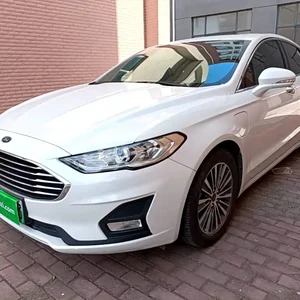
Ford Mondeo New Energy 2018 2.0 PHEV Smart Control Fashion Version China VI
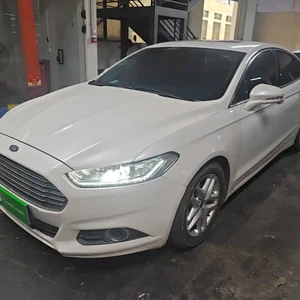
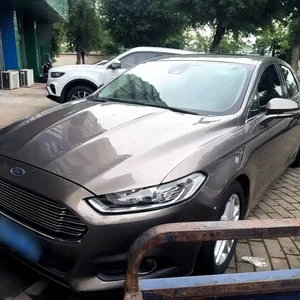
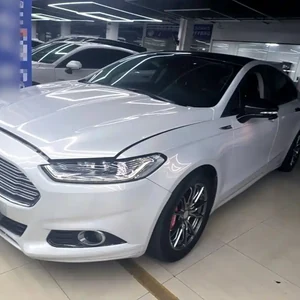
How to buy a Ford Mondeo from China
-
1
Define the destination and compliance scope
Specify the destination country, sales channel and required steering position. Obtain current type-approval, import, inspection, insurance and registration requirements from a local specialist before selecting vehicles.
-
2
Choose the powertrain and trim
Compare the EcoBoost, GTDi, 2.3L and E-Hybrid options against fuel use, tax treatment, parts support and customer demand. Use each unit’s technical documents to confirm engine, transmission, drivetrain and equipment.
-
3
Review and shortlist live inventory
Review the live Ford Mondeo listings and compare equivalent model years, trims and powertrains. Contact the seller for missing photographs, documents, service history and exact unit information.
-
4
Verify condition and ownership documents
Check the VIN, registration papers, mileage evidence, service records and accident or flood history. For used hybrids, obtain battery-health information and operating test results.
-
5
Request a complete landed quotation
Ask for the unit price, MOQ, payment schedule, quote validity and Incoterm. Confirm freight, insurance, documentation, destination taxes, customs clearance and inland charges so the comparison covers the same scope.
-
6
Inspect before releasing payment
Use an independent inspection and agree objective acceptance criteria for condition, documents and VIN. Tie deposits and balances to inspection and handover milestones, with written remedies for any discrepancy.
-
7
Prepare loading and destination clearance
Photograph the vehicle before loading, preserve the VIN and condition record, and complete the agreed export and transport documents. Coordinate with the customs broker and prepare a model-specific parts plan before the vehicle reaches its destination.
Mondeo vs rivals
| Volkswagen Passat | The Passat gives buyers a globally familiar conventional saloon with established service recognition in many markets. The Mondeo offers a more distinctive liftback shape and broader turbo petrol choice, but Chinese-specific equipment and parts may need more support. |
|---|---|
| Toyota Camry | The Camry is the logical hybrid-aware comparison for buyers prioritising an established global name and locally familiar after-sales support. The Mondeo stands out for styling and turbo petrol breadth, while the Camry may be easier to source and support locally. |
| Honda Accord | The Accord competes directly for fleet and executive buyers with conventional four-door packaging and broad international name recognition. The Mondeo differentiates through its liftback profile and China-specific trims, but residual-value and parts planning may favour the more familiar rival. |
Frequently asked questions
How is Ford Mondeo export pricing determined?
Export pricing is calculated from the specific vehicle’s year, trim, powertrain, condition and mileage, then adjusted for currency movement, freight, insurance, export handling, destination taxes and the chosen Incoterm. The live Ford Mondeo inventory on ChinaCarDirect shows the current unit-level price; request a written quotation for the exact listing and landed scope before paying.
Which Ford Mondeo engines and hybrid options are available?
The China-market range includes 1.5L and 2.0L EcoBoost or GTDi turbocharged petrol versions, an older 2.3L petrol option, and a 1.5T E-Hybrid trim. Exact output, transmission, drivetrain, hybrid battery and electric range must be read from the unit’s technical documents rather than inferred from the trim name.
Should an overseas buyer choose a new or used Ford Mondeo?
New vehicles generally provide more consistent condition, documentation and model-year presentation, while used cars can reduce acquisition cost but carry more condition and history risk. For a used unit, request VIN and registration documents, mileage evidence, service history, accident or flood checks, and an independent inspection; for hybrids, also request battery health and operating test results.
How does MOQ work when importing a Ford Mondeo?
MOQ is agreed for the particular lot and may allow a single-vehicle trial order, a mixed selection, or a larger container requirement. Confirm the stated quantity, whether trims can be mixed, loading responsibility, deposit terms, inspection milestones and cancellation remedies in writing. Do not assume that one listing’s terms apply to another seller or to the whole catalogue.
What determines shipping time and cost?
Shipping time and cost depend on origin and destination ports, transport mode, route congestion, carrier space, customs clearance, port charges, insurance and the Incoterm. A small urgent consignment may use air freight, while a larger programme is normally evaluated with enclosed RoRo or container shipping; confirm hybrid battery restrictions and where risk transfers before dispatch.
Are Ford Mondeo spare parts available for export?
Spare-parts support is model-year and specification specific, especially for China VI and China V vehicles, hybrid batteries, electronic modules and LHD-to-RHD conversions. Before ordering, ask the supplier for part numbers, catalogue references and authorised alternatives, then confirm landed cost and lead time with local distributors or a workshop familiar with Chinese-specification Fords.
Is right-hand-drive Ford Mondeo availability limited?
Most China-market Mondeo vehicles are left-hand drive, and right-hand-drive availability must be confirmed for each listing or conversion route. A conversion should be inspected for steering, pedals, electronics, airbags and documentation, and it does not guarantee local type approval. Where a market expects RHD, involve an approved specialist before confirming the vehicle.
How do I order a Ford Mondeo from China?
Start by reviewing the live Ford Mondeo listings, shortlist vehicles that fit the destination’s powertrain and compliance rules, and request an RFQ with model year, trim, VIN, condition, Incoterm and destination. Verify documents and condition, agree MOQ and payment milestones, complete inspection, then release the balance and shipment only against the agreed handover checklist. Keep the sales invoice, registration papers, export declaration, transport document and pre-loading photographs in the vehicle file.
Ready to source the Ford Mondeo?
Send your destination, required powertrain, preferred trim and target quantity to ChinaCarDirect for a current Ford Mondeo export quotation.
Request a quote