
Ford Ranger Export Guide for Overseas Buyers
Ford Ranger for export: compare trims, petrol and diesel options, used vehicles, pricing, MOQ, shipping and compliance before ordering from China.
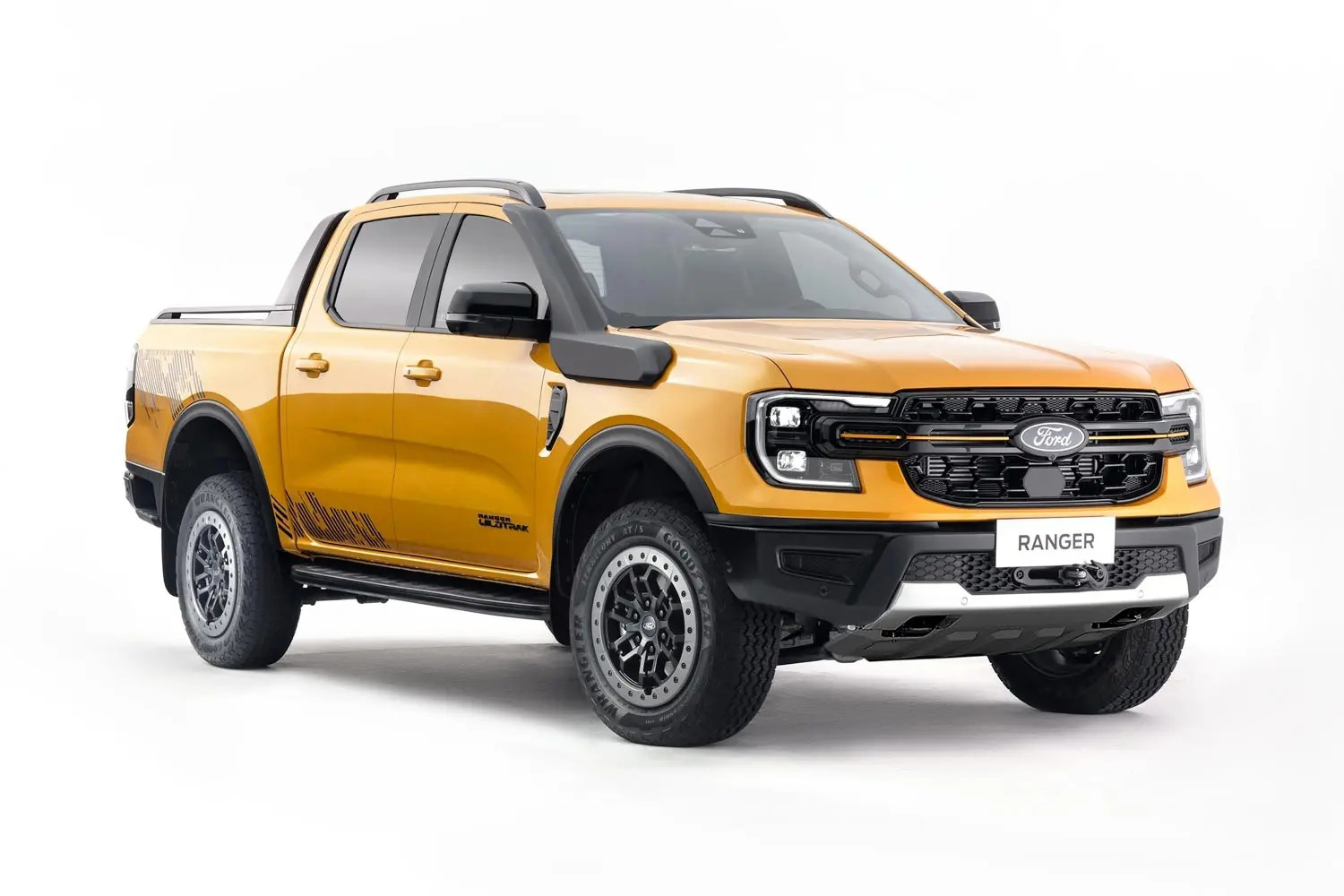
At a glance
- The Ranger is a midsize pickup offered in petrol and diesel forms, with manual and automatic transmissions and 2WD or 4WD depending on trim.
- Trail Explorer, Trailblazer, Trail, Mountain Forest, Wild Field and Wild naming helps identify equipment, but buyers should verify the exact Chinese-market configuration.
- New vehicles suit buyers prioritizing model-year consistency and documented ownership; used vehicles can suit budget-conscious buyers who accept condition and history checks.
- Export prices move with specification, condition, year, supply, exchange rates, freight, taxes, port charges and the selected Incoterm.
- RHD availability and legal importability are destination-specific, so steering configuration and homologation should be confirmed before payment.
Why the Ford Ranger matters for export markets
For overseas buyers considering a Ford Ranger for export, the model sits in the midsize pickup segment, combining a commercial load bed with four-door practicality and 4WD versions suited to rough access. That balance explains its relevance to contractors, farms, utilities, fleet operators and distributors: it can carry equipment while remaining more manageable than a full-size truck. For importers, the Ranger also offers a broad mix of petrol, diesel, manual and automatic configurations rather than a single export specification. However, names and equipment can reflect Chinese-market packaging, so each vehicle still needs to be checked against the intended work and destination requirements before final contracting.
Global demand for this class is driven less by lifestyle marketing than by operating economics. A dealer can serve customers who need a work truck during the week and a weekend recreation vehicle without moving to a different platform. Fleets also care about parts continuity, driver familiarity and the ability to match a 2WD work configuration to a 4WD off-road one. China-origin examples may be attractive to buyers seeking those configurations outside their home market, but import suitability must be assessed independently. The result is a broad but specification-sensitive export proposition for each destination.
Demand does not mean every Ranger listing is interchangeable. Chinese export trims can use names such as Trail Explorer, Trailblazer, Trail, Mountain Forest, Wild Field and Wild, with separate petrol, diesel, manual and automatic entries. These labels help organize the range, but they do not by themselves establish payload, towing capacity, emissions compliance or suitability for local registration. An overseas buyer should start with the duty cycle—load, terrain, fuel availability and service network—then compare the closest configurations. That discipline is especially important when a buyer plans to resell the truck in another country before final contracting.
- Best fit: mixed commercial and private use where one pickup must handle both work and recreation.
- Key export advantage: multiple powertrain, transmission and drivetrain combinations within the model family.
- Primary caution: trim names do not replace verification of payload, towing and homologation figures.
- Best starting point: define the operating duty cycle before selecting year or trim.
Model range, trims and powertrain variants: how the lineup is structured and how to choose
The export Ranger range is easiest to understand as a matrix of body, drivetrain, powertrain and transmission. Visible trim names include Trail Explorer, Trailblazer, Trail, Mountain Forest, Wild Field, Wild, Shanlin and Wildtrak, plus special-edition or off-road labels. Rather than assuming a rigid global hierarchy, treat those names as the catalogue’s organizing language and compare the equipment shown for each individual vehicle. A listing marked automatic 4WD tells you the drivetrain and gearbox, but not necessarily the final equipment level in another market. That distinction prevents buyers from importing a domestic trim assumption before final contracting.
Petrol and diesel choices serve different priorities. Petrol units may suit buyers with broad petrol-station access and a preference for lower routine fuel costs in markets where diesel economics are weak. Diesel units are commonly considered where fuel efficiency, sustained load or towing is central, but the final engine, emissions stage and service requirements must be confirmed for the exact vehicle. The visible range includes petrol and diesel versions of several names, including Trail Explorer and Mountain Forest. That makes fuel availability and realistic operating hours more useful than a generic fuel label for fleet purchasing.
The gearbox choice should follow the fleet’s operating pattern. Automatic transmissions reduce driver workload and suit stop-start work or mixed traffic, while manual versions can suit buyers comfortable with a more engaged driving setup and seeking a particular listed configuration. For traction, most named export versions are 4WD, although the range also includes a 2WD diesel configuration. Do not infer tyre, axle, differential-lock, ride-height or off-road capability from “4WD” alone; verify the equipment list and homologated limits. The live listing should be your source for exact mechanical and dimensional specifications before final contracting.
- Choose petrol or diesel around local fuel access, annual utilization, load and towing—not badge appeal alone.
- Automatic broadens driver comfort; manual appears in selected diesel configurations.
- 4WD is common across named trims, but equipment behind the designation must be verified.
- Check exact engine, dimensions, payload, towing and bed data against the live listing.
New vs used Ford Ranger: how export inventory is structured and how buyers choose
New and used Ford Rangers serve different buying strategies rather than representing one interchangeable pool. New export inventory is generally associated with a later model year, no disclosed operating mileage and an identifiable factory configuration. Used inventory includes vehicles that have already been registered or operated, so mileage, condition and service history become part of the value calculation. The correct comparison is not simply entry price; it is the expected cost after inspection, repair risk, freight, taxes and eventual resale. This is particularly important for dealers planning to hold several units across mixed trims.
A new Ranger is usually easier to standardise across a batch. Buyers can compare like-for-like trim, powertrain, gearbox and drivetrain, then plan a common spare-parts baseline and staff training around one vehicle family. New units also avoid uncertainty over previous repairs, accident repair or commercial abuse, although buyers still need a pre-shipment inspection. The trade-off is tied-up capital, initial depreciation and potentially higher acquisition and freight cost than a carefully selected used example. It can make sense where fleet uptime, warranty handling and consistent resale presentation matter more than minimizing the purchase cheque.
A used Ford Ranger can make economic sense when the buyer understands exactly what age and condition are being bought. Review mileage against the model year, service records, tyres, suspension, bodywork, corrosion, cabin wear and evidence of accident repair. Check that the VIN, engine, gearbox, steering position and trim match the listing, and ask whether the vehicle was previously exported or registered elsewhere. Then estimate early maintenance, unavailable trim-specific parts and the effect of local age or emissions restrictions. A live inspection report should resolve questions that photographs cannot clearly establish before final contracting.
- New: easier batch standardisation and clearer factory history, but higher capital and depreciation exposure.
- Used: potentially lower acquisition outlay, offset by inspection, maintenance and age-rule risk.
- Compare total landed and early-maintenance cost, not asking price alone.
- Require VIN-level verification and an inspection before releasing final payment.
How export pricing works: the factors behind a live listing price, and how to read one
A live Ford Ranger export price is the output of several interacting variables, not a fixed model-wide tariff. The vehicle’s year, trim level, petrol or diesel choice, transmission, 4WD or 2WD layout, mileage, condition, options and supply position all influence the seller’s expectation. External inputs also matter: the renminbi-to-buyer-currency exchange rate, supplier margin, financing, domestic taxes or charges, freight, marine insurance and destination fees. A trim that looks similar can therefore carry a meaningful quote difference. The Ford Ranger export price guide should be read as a methodology for comparing quotes, not a promise.
When reading a listing on ChinaCarDirect, identify what the displayed amount represents and what it excludes. Check whether the vehicle is new or used, how the condition is described, and whether the listing names the model year, trim, engine, transmission and drivetrain. Confirm whether images are of the exact unit, whether an inspection is available and whether the seller will issue a written specification sheet. Any placeholder or ambiguous field should be resolved through the RFQ before treating the visible quote as final. The live listing is the authoritative place for current unit pricing before final contracting.
For budgeting, convert the vehicle quote into a landed-cost comparison. Establish the Incoterm first: an EXW price leaves more obligations with the buyer, while FOB, CIF and similar terms allocate different portions of loading, freight, insurance and risk. Then add destination charges that the seller excludes, such as terminal handling, customs, taxes, inspection, registration and inland delivery. Use the same exchange-rate date and cost assumptions for every candidate, and ask for a written quotation with validity, payment milestones and a clear list of included documents. This approach also prevents a low headline price from masking a costly delivery structure before final contracting.
- Price drivers: year, trim, powertrain, transmission, drivetrain, condition, mileage and options.
- Market drivers: exchange rate, supply, seller terms, freight, insurance and destination charges.
- Read each live listing for the exact vehicle and what the quote includes.
- Compare candidates using one Incoterm, one exchange-rate basis and the same destination charges.
MOQ, ordering and payment: single units vs consolidating a container
For a Ford Ranger wholesale order, the minimum order quantity should be read from the live unit listing or confirmed in the RFQ, because a seller may impose a model, trim, production-batch or shipping requirement. One-unit purchasing may be possible for suitable stock, but it should never be assumed from a general marketplace. Before placing an order, ask what quantity applies to that exact SKU, whether it applies across mixed trims and whether the seller changes it after a quote. The accepted MOQ is part of the commercial offer. Confirm the quantity and its scope in the signed quotation.
A single-unit order is attractive to a dealer testing demand or a fleet buyer replacing one vehicle, but it leaves the buyer exposed to individual-unit condition, freight and fixed charges that would be spread across a larger batch. Consolidating a container can improve freight efficiency and simplify spare-parts planning, yet it demands strict matching of model year, trim, engine, gearbox, steering position and colour. Mixed units may be acceptable, but each must be inspected and described separately rather than sold under an averaged specification. This is especially important for homologation and resale consistency.
A sound ordering workflow separates commercial approval from vehicle acceptance. Review the live listing, request a pro forma invoice, confirm the specification, MOQ, Incoterm and payment schedule, then make the agreed deposit. Use the balance milestone to tie release to satisfactory inspection, clear photographs, matching VIN and required export documents. Understand the refund, cancellation and title-transfer terms, and keep every invoice, inspection report and correspondence. Payment methods, documentary requirements and buyer identity checks can vary, so they should be agreed rather than assumed. Never use a generic deposit request as a substitute for due diligence before final contracting.
- Read MOQ on the exact live listing and confirm it in the RFQ or pro forma invoice.
- Single-unit orders suit trials and small replacements; consolidation needs strict unit matching.
- Tie the final balance to inspection, VIN verification and document delivery.
- Agree payment method, title transfer, cancellation and refund terms in writing.
Shipping, homologation and market compliance caveats: LHD/RHD and import rules by country
Ford Ranger shipments may move by RoRo, container or other specialist arrangements, and the right method depends on vehicle dimensions, port handling and the delivery route. Securement, lashing points, deck height, weather exposure and clearance can all affect suitability. Transit time and cost also vary with origin and destination ports, sailing frequency, season congestion, customs readiness and whether the quote includes loading, freight, insurance and destination charges. Ask the forwarder for a route-specific plan rather than relying on a generic transit estimate. Packing dimensions and destination infrastructure should be checked early, before contracting.
Import rules are destination-specific, and a vehicle can be mechanically suitable yet legally ineligible or expensive to register. The receiving country may impose emissions, safety, noise, VIN, age, inspection, customs, tax and local-content requirements, while individual ports or agencies can request additional evidence. Chinese-market Ranger variants should therefore be checked against the destination’s current type-approval and registration process. Ask for the original homologation documents, build plate, engine and emissions information, customs papers and any certificate required in the destination market. Do not assume that a valid Chinese export certificate guarantees foreign registration.
Steering configuration is a critical sourcing choice. Left-hand-drive and right-hand-drive Rangers have different steering, instrument-cluster, lighting and market-equipment arrangements, and a left-hand-drive listing should not be assumed to be convertible without confirmation. State the required steering position in the RFQ and verify it from VIN-level photographs and documents. Also check local rules on age, mileage, emissions, modifications, insurance and registration before committing freight. If local rules are unclear, use an experienced importer or vehicle-compliance adviser. This protects against paying for a vehicle that must be converted, re-registered or scrapped on arrival.
- Match RoRo, container or specialist transport to verified dimensions and port handling.
- Destination emissions, safety, VIN, age, tax and inspection rules can determine eligibility.
- Confirm LHD or RHD from VIN-level documents and photographs before payment.
- Use a vehicle-compliance adviser when local homologation requirements are unclear.
Who should buy the Ranger — and who should pick a different vehicle
The Ranger is a strong candidate for contractors, farms, utilities, mines, outdoor operators and regional distributors that need genuine load-carrying ability with four-door access. It also suits lifestyle buyers who deliberately want a pickup rather than an SUV, provided they can accept bed-security, ride and fuel-use trade-offs. The breadth of Trail, Trail Explorer, Wild and related 4WD configurations gives importers room to address work, light off-road and lifestyle demand. The best buyer has a clear operating need, not merely an interest in a large-looking vehicle. It should solve a defined job before contracting.
Choose a different vehicle when the requirement is primarily unladen comfort, quiet family travel or urban efficiency. A pickup’s separate load bed, higher noise and vibration, and frequent entry into the bed are not equivalent to a passenger SUV’s packaging, even when both have four doors. Very heavy towing, payload or commercial-duty work may also call for a model certified for that task rather than an off-road-styled Ranger. Buyers constrained by narrow streets, low loading limits or local access rules should assess dimensions before ordering. Capacity claims alone are not enough.
The buying decision should be based on total operating suitability, not acquisition cost or appearance. Compare realistic payload, towing, fuel consumption, service intervals, insurance, tyre costs, downtime and resale prospects in the destination. Confirm that the selected configuration is supported by local mechanics and that spare parts can be sourced without changing the vehicle. A lower purchase price can be overwhelmed by fuel, maintenance or compliance costs; conversely, the right Ranger can consolidate two vehicle roles and simplify fleet management. That is the core value proposition for an overseas buyer before final contracting.
- Strong fit: trade, agriculture, utilities, fleet work and buyers needing one vehicle for work and leisure.
- Weak fit: buyers prioritising quiet SUV comfort, compact access or minimum running cost.
- Check certified payload and towing against the actual load, not off-road presentation.
- Include parts support, downtime and resale in the total-cost decision.
Main rivals and how the Ranger compares
The Toyota Hilux is the closest global benchmark for a buyer choosing a mainstream midsize pickup. It is often backed by a broad international dealer and parts footprint, which can reduce risk where Ford support is thinner. The Ranger’s distinguishing case is its visible breadth of petrol, diesel, manual and automatic 4WD trims, including several off-road-labelled versions. Buyers should compare local warranty, service access and certified load figures rather than assume either brand wins on capability or value. Availability in the destination market may be more decisive than global reputation before final contracting.
The Isuzu D-Max is a credible alternative for commercial buyers who prioritise a straightforward work pickup and strong regional recognition in many markets. It can be attractive where local Isuzu service coverage is established or where a fleet already knows its maintenance pattern. The Ranger offers a different balance for buyers who want more visible trim and off-road choice, including petrol as well as diesel configurations. The correct comparison is local parts pricing, payload certification, duty cycle and total downtime. Neither name substitutes for checking the exact vehicle and destination rules.
The Mitsubishi Triton is another close alternative, often marketed with a more road-focused character than some off-road-oriented Rangers. It may appeal to buyers prioritising on-road manners, cabin use or a particular local drivetrain package, while the Ranger’s broader visible trim naming gives resellers more differentiation on paper. Final choice should be made from back-to-back cost and compliance checks: engine and gearbox, certified towing, bed size, safety equipment, RHD availability, warranty, service network and expected resale. The strongest offer is the properly specified vehicle, not the best-looking badge alone, before final contracting.
- Toyota Hilux: compare global support footprint with the Ranger's wider visible trim mix.
- Isuzu D-Max: often relevant where local commercial service familiarity dominates.
- Mitsubishi Triton: compare road-focused utility with the Ranger's off-road-oriented range.
- Use destination-specific warranty, parts, homologation and resale evidence to decide.
Live Ford Ranger export inventory
View all listings →Real units currently on ChinaCarDirect with per-unit asking prices and MOQ. Availability updates live from the catalogue.
How to buy a Ford Ranger from China
-
1
Define the operating requirement
Specify payload, towing, fuel access, terrain, local driving conditions and required LHD or RHD configuration. Distinguish commercial work from lifestyle or recreational use before selecting a trim.
-
2
Shortlist the live inventory
Use the live Ford Ranger listings to compare units whose year, trim, powertrain, gearbox and drivetrain match the brief. Treat the displayed per-unit price and MOQ as current information and request an updated written quote for the selected SKU.
-
3
Verify the exact vehicle
Request VIN-level photographs, the build plate, trim equipment, engine details, emissions information and export documents. Confirm that the listing describes the actual unit rather than a representative example.
-
4
Complete an independent inspection
Check mileage, accident history, tyres, suspension, bodywork, corrosion, cabin condition, fluid levels and test drive where practical. For used units, reconcile the condition report with service records and the seller's description.
-
5
Calculate the landed cost
Agree the Incoterm, then identify all included and excluded freight, insurance, customs, tax, inspection, registration and inland-delivery charges. Use one exchange-rate basis when comparing candidate vehicles.
-
6
Confirm MOQ and payment terms
Obtain a pro forma invoice showing the applicable MOQ, unit specification, price validity, deposit, balance milestone, title-transfer process and refund conditions. Tie final payment to satisfactory inspection and matching documents.
-
7
Arrange shipping and import clearance
Book a route-appropriate carrier and confirm securement, dimensions, marine insurance, export release and destination clearance. Prepare for pre-arrival inspection and local registration before the vehicle leaves its origin.
Ranger vs rivals
| Toyota Hilux | The Hilux is a close global benchmark with a widely established international dealer and parts ecosystem in many markets. The Ranger's stronger visible distinction is its broad export mix of petrol, diesel, manual, automatic and off-road-labelled 4WD configurations. |
|---|---|
| Isuzu D-Max | The D-Max can be persuasive for commercial buyers where Isuzu service familiarity and regional recognition reduce operating uncertainty. The Ranger offers more visible trim differentiation, so local parts support, payload certification and downtime should determine the better fit. |
| Mitsubishi Triton | The Triton is often positioned toward a balance of road use and pickup capability, while some Rangers lean more heavily toward off-road styling and equipment. Compare the exact engine, drivetrain, towing certification, warranty and destination-market parts support. |
Frequently asked questions
How is Ford Ranger export pricing determined?
The price reflects the vehicle's year, trim, powertrain, transmission, drivetrain, condition, mileage, options and available supply. Exchange rates, freight, insurance, destination charges and the selected Incoterm also affect the landed total. ChinaCarDirect's live Ranger listings show current per-unit prices, while a written RFQ quote should confirm the final binding terms.
What Ford Ranger specs matter most for an export buyer?
The range includes petrol and diesel engines, manual or automatic transmissions, and 2WD or 4WD configurations depending on the trim. There is no EV battery range to assess for this combustion-powered model. Exact displacement, power output, payload, towing and dimensions should be checked on the live listing and against destination homologation.
Is a used Ford Ranger worth importing?
A used Ranger may offer a lower acquisition outlay, but the buyer assumes more condition and history risk. Inspect the VIN, service records, mileage, accident history, corrosion, tyres and trim consistency before accepting it. Age restrictions and parts availability can change the final value in the destination market.
What is the MOQ for a Ford Ranger order?
The MOQ is determined by the seller, vehicle, trim and commercial terms, so read it on the exact live listing or request it through the RFQ. Single-unit purchasing may be possible when the listing permits it, but buyers should not assume this for every vehicle. Container consolidation is another option when several inspected units can be matched to the same destination requirements.
What determines shipping time and cost for a Ford Ranger?
Shipping depends on the transport mode, vehicle dimensions, origin and destination ports, sailing frequency, customs readiness and seasonal congestion. The Incoterm determines which party bears loading, freight, insurance and risk. Destination handling, taxes, inspection and inland delivery can also be excluded from the vehicle quote and must be included in the landed budget.
Can spare parts be ordered with a Ford Ranger?
Parts can be discussed with the seller, but availability should be verified by model year, engine, gearbox, trim and steering configuration. Some Chinese-market or Chinese-origin Ranger components may differ from other market versions. Confirm part numbers, compatibility, expected dispatch arrangements and the cost of importing them before including them in the order.
Is right-hand-drive Ford Ranger availability for export?
RHD availability depends on the individual vehicle, trim and destination market. State the required steering position in the RFQ and verify it through VIN-level photographs and documents rather than assuming an LHD vehicle can be converted. Local registration, safety and modification rules must also be checked before shipping.
How do I buy a Ford Ranger from China?
Start with the live inventory, select matching vehicles and send an RFQ stating the destination, configuration, steering side and required quantity. Confirm the specification, MOQ, Incoterm, payment schedule, inspection rights and export documents in writing. Release the balance only after the vehicle and paperwork are accepted, then arrange insured shipping and destination clearance.
Ready to source the Ford Ranger?
Send an RFQ with your destination, preferred powertrain, steering side and required quantity for a current Ford Ranger quote.
Request a quote