
Ford S-Max Export Buying Guide for Dealers and Fleets
Plan a Ford S-max export purchase with practical guidance on trims, used vehicles, live pricing, MOQ, shipping, compliance and direct rivals for importers.
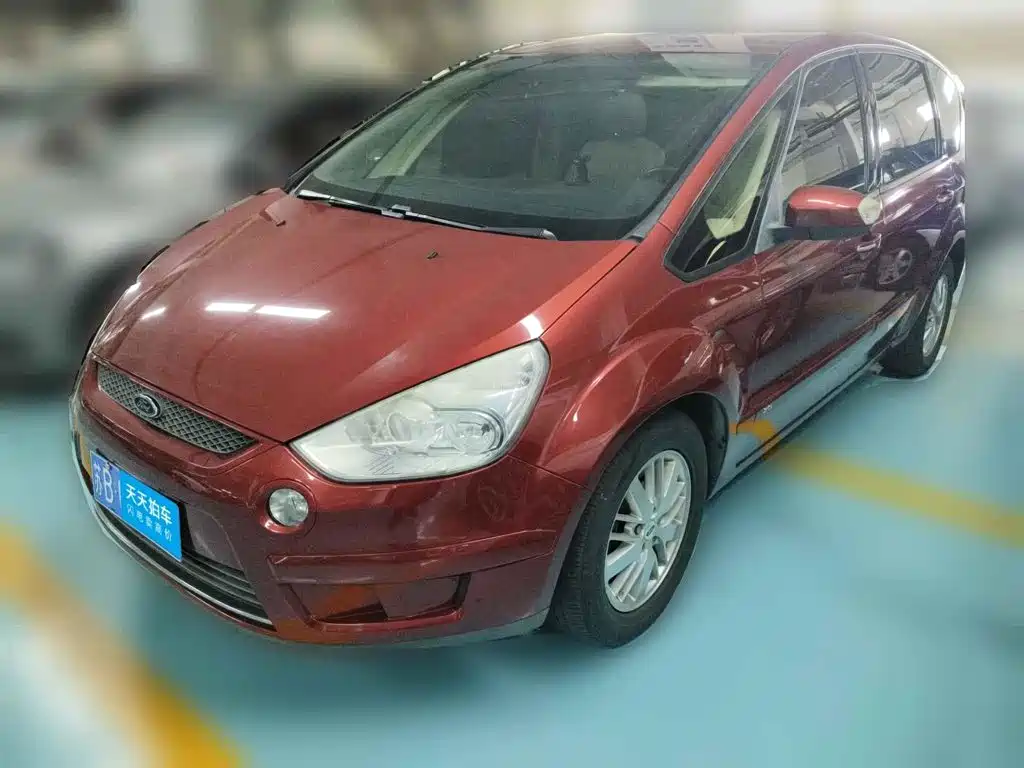
At a glance
- The S-max offers seven-seat people-carrier packaging for dealers serving families, hotels, transfers and mixed passenger fleets.
- The relevant China-origin S-max range centers on a 2.3-litre gasoline engine, while trim equipment and transmission must be verified by unit.
- New-labelled stock can be older than buyers assume, so VIN, registration, service history and condition evidence are essential.
- Export pricing depends on the vehicle, Incoterm, freight, currency and destination charges; the live unit quote is the binding reference.
- Single-unit purchasing and container consolidation create different cash-flow, inspection and risk profiles.
Why the Ford S-max matters for export markets
The Ford S-max sits in a useful export niche: a large, practical people carrier that can carry seven people without feeling like a commercial van. Its appeal is strongest where buyers need flexible seating, access and luggage space for groups. For dealers, the model can fill the gap between compact MPVs and larger shuttle vehicles, particularly for family transport, airport transfers, hotels and staff movements. The early-generation cars remain relevant because the format is still easy to understand and inspect. It offers a familiar alternative to SUVs and vans without requiring a new platform.
What makes the model exportable is not novelty but usable packaging. A raised roof and tall rear opening help in markets where loading luggage or child seats is a task. Flexible rear rows can create passenger-and-cargo combinations that suit mixed business use. Buyers should treat the S-max as a passenger vehicle rather than a light-commercial van: payload limits, seat mounting, restraint equipment and registration category need confirmation. That distinction prevents a roomy cabin from being mistaken for commercial carrying capacity. The same seats that create flexibility must remain secure, comfortable and legally usable.
Global demand is strongest in markets that value large MPVs, established Ford service familiarity and straightforward mechanical layouts. Parts support can be easier where the model has a recognized local following, but an older S-max should never be purchased on badge familiarity alone. Import age, safety and emissions rules can make an inexpensive vehicle expensive to register. For importers, the S-max is most attractive when its condition, documentation and seating configuration match a resale or fleet niche. A disciplined inspection and landed-cost calculation turns that potential into a viable commercial case.
- Seven-seat MPV format
- Flexible passenger-cargo use
- Strong group-transport fit
Model range, trims and powertrain variants: how the lineup is structured and how to choose
For the China-origin export versions relevant to this guide, the lineup is structured around a 2.3-litre gasoline engine. Buyers will encounter S-max trim names such as Fashion, Luxury, Flagship and Flagship Navigation, with wording sometimes expanded to “Version” or “Edition.” These labels indicate an equipment hierarchy rather than a different platform. Because export units can come from different market programmes, do not assume every listed feature is standard. Treat the live vehicle description, VIN and build information as the controlling evidence. Also verify whether navigation is factory-installed, aftermarket or included by local market programme.
Seating is the practical choice. Seven-seat cars maximize passenger capacity and suit shuttle, family and cross-border tour operations, while five-seat versions can provide more rear luggage space. The trim names in this export context include seven-seat configurations, but the live listing must confirm seat count and whether the third row is fixed, folding or removable. Also inspect access to the rear seats and the load floor in person or through media; nominal seating alone does not reveal how usable the arrangement is. Test loading with the luggage and child-seat combinations the vehicle will carry.
Next, compare transmission and equipment rather than relying on the top trim badge. A manual may appeal to buyers focused on mechanical simplicity, whereas an automatic can reduce driver workload in stop-and-go traffic. Transmissions vary by source market and vehicle, so confirm rather than infer. Navigation, camera systems, upholstery and infotainment should be treated as trim differentiators, while safety equipment should be checked for compatibility with the destination market. A well-equipped S-max is not necessarily the best fleet purchase if local homologation does not recognize key systems. Confirm drivetrain and axle condition too.
- 2.3-litre gasoline focus
- Fashion-to-Navigation hierarchy
- Verify seats and transmission
New vs used Ford S-max: how export inventory is structured and how buyers choose
A live export catalogue may present vehicles under new and used labels, but those labels do not reveal registration status, production age or commercial history. A “new” listing can mean seller-declared stock that has not been registered in the destination country; it can still be an older production vehicle. A used listing can be attractive for a fleet operator, provided wear, service records and repair history support the intended life cycle. The useful distinction is therefore the vehicle’s condition and documentation, not the category label alone. Treat each label as a seller classification.
Used S-max purchases demand an inspection because age concentrates wear in areas: tyres, brakes, suspension, engine mounts, cooling and electrical systems. Check seat and trim condition, door operation, tailgate function, roof rails and third-row mechanisms. Review VIN history, registration documents, import records, maintenance invoices and evidence of accident repair. A photograph set helps, but it should support—not replace—an independent inspection and a documented purchase contract. For a seven-seat vehicle, test every restraint and seat latch, especially if child transport is planned. Also check for corrosion, fluid leaks and evidence of overheating or neglected servicing.
New-labelled stock can reduce uncertainty about fleet use when the seller can substantiate it, but buyers should verify production dates, customs status, warranty scope and whether the vehicle has been started, stored, registered or prepared for export. Compare remaining service life with price rather than treating “new” as a quality grade. For used units, a lower acquisition cost is useful only if maintenance and compliance costs are included in the comparison. The choice depends on depreciation, downtime and resale expectations. Neither label replaces a condition assessment or destination eligibility check.
- New does not mean recent
- Condition drives valuation
- Verify registration and history
How export pricing works: the factors behind a live listing price, and how to read one
An export listing price is a starting commercial reference, not the buyer’s final landed cost. The vehicle-side value normally responds to production year, trim, engine and transmission, mileage, condition, options, ownership history, repair quality and scarcity. For an S-max, seven-seat configuration, navigation equipment and the condition of the cabin, seats, tyres and mechanical systems can materially change comparability. Sellers also adjust for their own margin and the market conditions when the listing was published. Always read the current live entry rather than relying on an old enquiry, catalogue summary or cached figure.
Logistics can be as important as the vehicle. Ask whether the quote is EXW, FOB, CIF or another basis, because each transfers a different set of risks and costs. Ocean freight, insurance and documentation charges may sit outside the headline figure. Exchange-rate movement, port congestion, fuel surcharges, route choices and the number of vehicles consolidated can change the result. Where a destination is quoted, confirm whether it includes customs clearance, duties, taxes, registration and delivery—or only transport to an agreed point. A written quotation should name every exclusion and the party responsible for each charge.
Compare vehicles: open the live listing, record the year and trim, check the condition notes, identify what is included, and ask for a written quotation under a named Incoterm. Request vehicle, inland haulage, origin handling, freight, insurance, destination charges and tax estimates. That breakdown reveals whether a lower asking price is genuinely better or simply excludes more expense. ChinaCarDirect shows the binding per-unit price, MOQ and availability on each [live listing](https://chinacardirect.com/products?q=S-max&brands%5B%5D=20), so buyers should validate the quote there before committing funds. Ask whether a quote remains valid for the agreed transaction and delivery window.
- Trim and condition affect value
- Confirm the Incoterm basis
- Compare fully landed costs
MOQ, ordering and payment: single units vs consolidating a container
The MOQ shown on an individual listing defines the minimum quantity the seller will accept for that transaction; it should not be assumed from the model name or from another seller’s listing. Some offers are structured for one vehicle, while others may ask for a batch, a mixed model set or a full container. If your requirement is a single S-max, ask for written confirmation that one unit can be invoiced and released. This is especially important for test purchases, pilot fleet programs and buyers who intend to assess resale before scaling.
Container consolidation can improve freight efficiency, but it changes the commercial risk. A wholesale buyer may reserve several S-max units across mixed trims or combine them with other compatible vehicles, then save space compared with shipping separately. The counterpoint is cash tied up in inventory, slower liquidation if one vehicle is unsuitable, and more complex inspection, allocation and claims handling. Mixed loading also requires agreement on how condition claims and missing equipment are allocated. Consolidation is most attractive when demand is proven, specifications are standardized and the buyer can control quality before loading.
Payment mechanics should mirror the risk. A structure may involve a deposit followed by a balance before release, but the sequence, accepted method and cancellation terms must be written in the pro forma invoice and sale contract. Confirm the legal seller entity, vehicle title or ownership documents, export declaration process, refund conditions and the party responsible for customs clearance. Never send a balance based only on a chat message. Align the payment milestone with inspection, document verification and a clear shipping handover. Have any amendments incorporated before funds are released.
- MOQ is set per listing
- Confirm single-unit eligibility
- Control payment milestones
Shipping, homologation and market compliance caveats: LHD/RHD and import rules by country
Handedness is the configuration question. China-origin examples are commonly left-hand-drive, but the S-max was also produced for right-hand-drive markets, and the steering side must be confirmed for each unit. A left-hand-drive car is not prohibited everywhere, yet traffic direction, parking practice, fleet rules and resale expectations can affect demand. Importers should verify the steering position, pedal and control layout, instrument information and whether the vehicle was designed for the destination market. Retrofitting or converting a vehicle adds cost and may create compliance issues. Do not treat a conversion as a substitute for factory-market suitability.
Each country sets gatekeeping rules for used vehicles. Authorities may inspect VIN and production date, emissions, roadworthiness, seat belts, lights, tyres, glass and restraint systems; they may also impose age limits, customs value rules, duties, taxes or type-approval requirements. A model being road-legal in China does not establish that it can be registered elsewhere. Buyers should obtain a homologation assessment from a local importer or authority before committing, especially when operating a shuttle or selling to fleet customers under tender rules. Environmental-zone access and local inspection rules may also affect shuttle use.
Shipping method depends on dimensions and packing options. A vehicle may move by container or roll-on/roll-off, but the freight forwarder should confirm feasibility, securing points and cost after reviewing the VIN and specification. Also plan for pre-delivery inspection, PDI, battery condition, fluid checks, tyre condition, rust assessment and port storage. Export readiness, customs paperwork and the destination inspection must be sequenced; otherwise demurrage, storage or rejected paperwork can erase a sourcing advantage. The forwarder should also identify any lashing, height or weight restrictions at both origin and destination.
- Confirm LHD or RHD
- Check local type approval
- Allow time for inspection
Who should buy the S-max — and who should pick a different vehicle
The S-max is a strong candidate for importers serving families, hotels, airports, tour operators, executive-transfer businesses or mixed passenger fleets that regularly need seven seats and a roomy cabin. Its people-carrier layout makes it easier to carry passengers plus luggage than a sedan or small crossover, and less commercial-looking than a van. It also suits buyers who want established model recognition without moving to the much higher complexity of newer electrified people carriers. The strongest case is a clear passenger demand in a market where this format remains culturally and commercially relevant.
It is less suitable for buyers whose priority is the lowest price, maximum payload, off-road ability or the newest safety and emissions architecture. Commercial users may prefer a van because seat removal, load restraint and payload ratings are clearer. Urban buyers may find an MPV difficult to park, while fleet managers focused on fuel use may prefer a smaller seven-seat crossover or MPV. Buyers operating where old vehicles face stringent access, tax or safety restrictions should model compliance before seeing the S-max as economical. Modern crash-rating expectations and urban restrictions deserve equal weight.
The decision should compare cost per usable seat and per operating month, not just vehicle acquisition cost. Include insurance, maintenance, tyres, fuel, downtime, registration and expected resale. A well-maintained used example may offer better economics for a vehicle, while a newer or dealer-held example may reduce risk. Test the loading workflow with luggage, child seats and passengers. If the S-max cannot meet those requirements, move to a van, a larger SUV or a more efficient seven-seat alternative rather than negotiating on price alone. Seat availability and turnaround time are operational requirements.
- Strong seven-seat passenger fit
- Ideal for hotels and transfers
- Weak for maximum payload
Main rivals and how the S-max compares
The Volkswagen Touran is the closest conceptual rival: a compact people carrier with flexible seating and a similarly family-oriented brief. It can be attractive where the buyer values a different badge, a particular engine or local service familiarity, but the S-max often presents a more spacious, van-like cabin. Condition and specification matter more than the name. For an older export purchase, compare rust, interior wear, parts availability and the cost of servicing each model in the destination country before choosing. A well-kept example of either model can be the better commercial purchase.
The Opel Zafira Family is another credible alternative, with a space-efficient seven-seat layout and a driving character aimed at family use. The S-max generally emphasizes a larger, more upright cabin and easier rear access, while the Zafira may appeal where a smaller footprint or particular fuel choice is preferable. Neither is automatically cheaper once condition is equal. Buyers should evaluate real examples, not generic trim assumptions, because wear patterns and maintenance records can outweigh small differences in catalogue equipment. Compare loading access, third-row usability and parts lead times locally before purchase.
The Toyota Previa, particularly a first-generation example, competes as a larger and often more premium seven-seat MPV. It may offer a different driving and ownership proposition, but buyers should inspect age-related condition carefully and compare the availability of replacement parts. The S-max’s strengths are its accessible people-carrier layout, visible trim hierarchy and potential for mixed passenger use. The Previa can suit buyers wanting a larger or upmarket vehicle. Whichever route is taken, verify the exact vehicle rather than assuming one model is better in every market. Do not infer condition from the model name.
- Touran prioritizes compactness
- Zafira offers efficient packaging
- Previa adds size and premium
Live Ford S-max export inventory
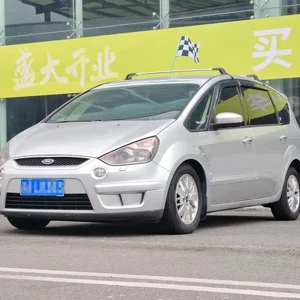
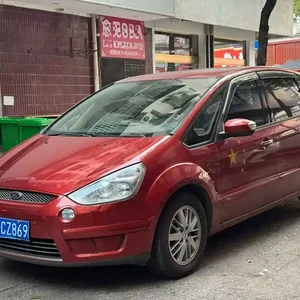
View all listings →Real units currently on ChinaCarDirect with per-unit asking prices and MOQ. Availability updates live from the catalogue.
How to buy a Ford S-max from China
-
1
Define the destination and operating requirement
Specify the destination country, passenger-and-load mix, steering side, seat count and budget. Check local import, type-approval and fleet rules before paying a supplier.
-
2
Compare the live Ford S-max listings
Buyers looking to buy a Ford S-max from China should review the year, trim, engine, transmission, seating and condition notes. Each live entry shows the current per-unit price, MOQ and availability, which should form the basis of a written quotation.
-
3
Verify identity, history and equipment
Request the VIN, build and registration records, ownership and import history, service invoices, equipment list and detailed photos or video. Confirm that every seat, restraint and trim feature in the description matches the physical vehicle.
-
4
Commission an independent inspection
Use a qualified inspector before final payment, with attention to the engine, transmission, cooling, brakes, suspension, tyres, rust, bodywork, tailgate and third-row mechanisms. Include a road test where local rules and site conditions permit.
-
5
Request an itemized written quotation
Ask for a pro forma invoice under a named Incoterm, separating the vehicle, inland haulage, origin charges, freight, insurance, customs, duties, taxes, registration and inland delivery. Identify every exclusion and the quote-validity period.
-
6
Confirm MOQ and payment terms
Confirm the listing-specific MOQ, legal seller, ownership documents, deposit and balance milestones, cancellation terms and inspection sign-off. If a single unit is planned, have that quantity and its commercial terms expressly documented.
-
7
Arrange export and destination steps
Engage a freight forwarder to confirm loading method, securing, documents, insurance, origin and destination charges, and PDI arrangements. Complete export declaration, customs clearance, local registration checks and handover before releasing final funds.
S-max vs rivals
| Volkswagen Touran | The Touran is a close size-and-layout alternative with flexible seating and a family-focused brief. The S-max generally offers a more spacious, van-like cabin, so actual condition, parts support and local service costs should decide the choice. |
|---|---|
| Opel Zafira Family | The Zafira Family competes through efficient packaging and a smaller footprint. The S-max prioritizes cabin volume and rear access, making third-row usability, luggage capacity and serviceability important comparison points. |
| Toyota Previa | The Previa offers greater size and a more premium MPV proposition, while the S-max provides a simpler people-carrier format. Age-related condition, parts availability and total operating cost should determine which vehicle better fits the buyer. |
Frequently asked questions
How is the Ford S-max export price determined?
The live price reflects the seller’s vehicle offer and may move with trim, year, mileage, condition, options, exchange rates and market conditions. Freight, insurance, origin handling, customs, taxes and inland delivery can sit outside it. Read the [live listing](https://chinacardirect.com/products?q=S-max&brands%5B%5D=20) for the current unit price, MOQ and availability, then request an itemized written quote under a named Incoterm.
What engine does the Ford S-max use, and does it have electric range?
The relevant China-origin S-max exports use a 2.3-litre gasoline engine. As a combustion vehicle, it has no battery-electric range; usable distance depends on fuel capacity, consumption, load and driving. Verify the exact engine, transmission, fuel type and condition in the live listing.
Should an overseas buyer choose a new or used Ford S-max?
A new-labelled unit may be dealer-held, unregistered or prepared for export, but that label does not establish production recency. A used S-max can offer useful remaining operating life if inspection, service history and import eligibility are strong. Compare documents, condition, warranty and expected downtime rather than relying on the category label.
How does MOQ work for a Ford S-max order?
MOQ is set by the seller for each listing and may differ between a single vehicle and a wholesale batch. Check the live entry, then ask the supplier to confirm the minimum, whether mixed units are allowed and the consequences of changing quantity. Put the agreed quantity in the pro forma invoice.
How long does export shipping take, and what drives the cost?
Transit time depends on the origin and destination ports, vessel schedule, transshipment, congestion, customs clearance and inland delivery, so no fixed lead time can be stated responsibly. Cost is driven by the vehicle or container rate, fuel and terminal surcharges, insurance, documentation, destination charges and whether units are consolidated. Ask the freight forwarder for a port-to-port or door-to-door quotation under a named Incoterm.
Are spare parts available for the Ford S-max?
Parts availability depends on the exact part, vehicle specification and destination country. Use the VIN to identify the component and ask the supplier or specialist importer to confirm original, aftermarket and locally serviced alternatives before purchase. For a fleet purchase, compare expected lead times for wear parts as well as body and interior components.
Can a right-hand-drive Ford S-max be ordered from China?
Availability is unit-specific and cannot be inferred from the model name. Open the live listings and check steering-side photographs, the VIN and seller description; if no suitable RHD unit is shown, ask whether one can be sourced within an agreed specification. Do not assume a conversion will satisfy local registration or fleet rules.
How do I order a Ford S-max from China?
Begin with the live inventory, shortlist a vehicle and submit the destination, configuration and quantity through an RFQ. Verify the VIN, documents and condition, obtain an independent inspection, and require an itemized quotation with the MOQ, Incoterm and payment milestones in writing. Release funds only against agreed inspection and shipping milestones, then complete customs clearance, local registration checks and pre-delivery inspection.
Ready to source the Ford S-max?
Send your destination, required configuration and quantity through the [RFQ page](https://chinacardirect.com/contact) for a written Ford S-max export quote.
Request a quote