
Ford Territory Export Buying Guide for Dealers and Fleets
Compare Ford Territory trims, powertrains and seating for export, learn pricing, MOQ, shipping, homologation and order mechanics before requesting a quote.
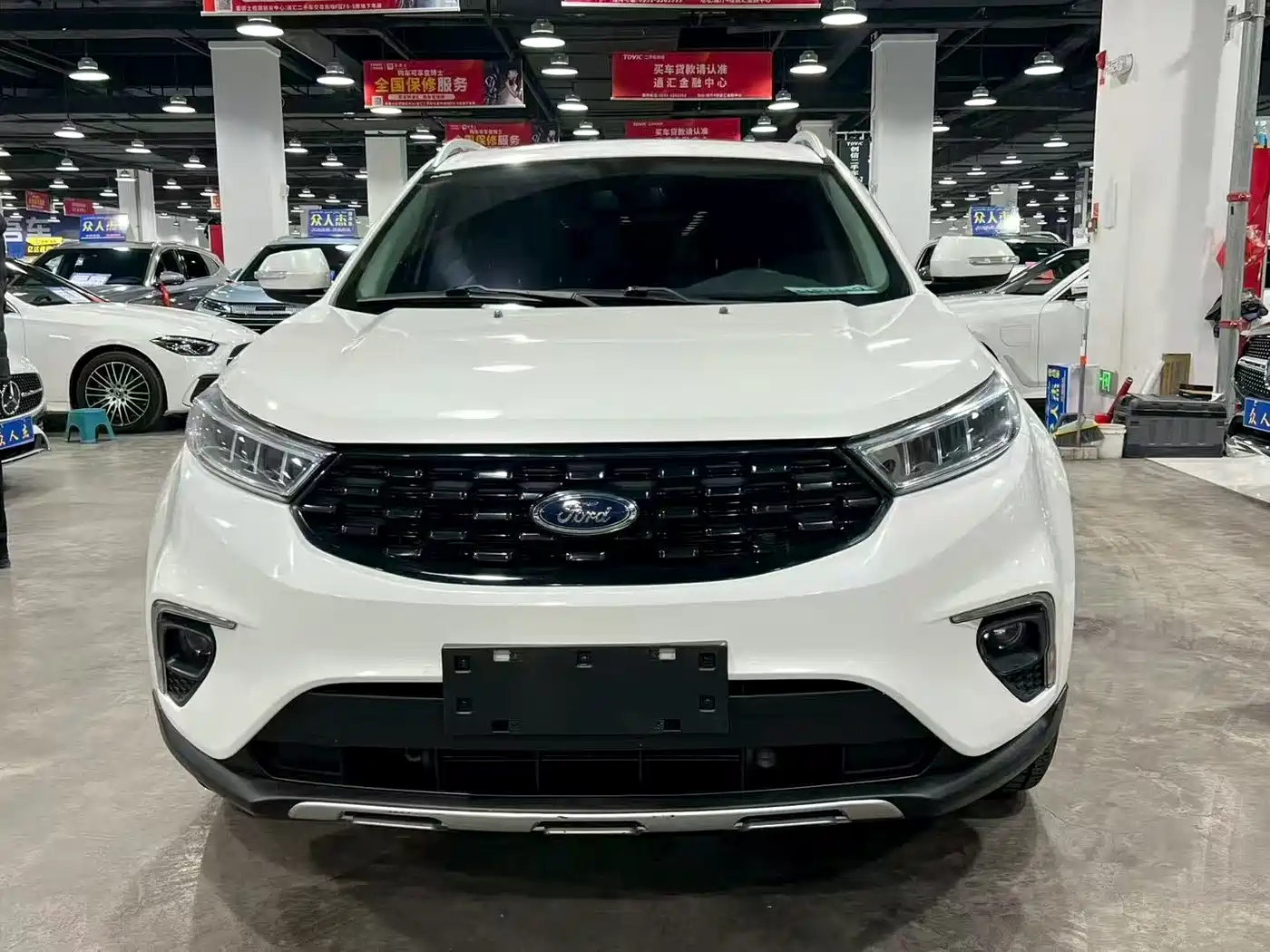
At a glance
- The China-sourced Ford Territory is a turbocharged EcoBoost gasoline crossover designed for mainstream family and fleet use.
- EcoBoost 145 CV and 225 CV versions provide distinct output choices; CVT is explicit on several 145 CV trims.
- Six-seat and seven-seat layouts suit different passenger and luggage requirements.
- China V/VI labels do not establish destination approval, and right-hand-drive availability must be confirmed per unit.
- Current per-unit price, MOQ, condition and availability must be checked in the live Territory listings.
Why the Ford Territory matters for export markets
The Ford Territory occupies a useful middle ground in China’s compact-SUV market: it offers mainstream family-car packaging, turbocharged EcoBoost choices and, on selected versions, six- or seven-seat flexibility. That combination makes it relevant to overseas dealers serving growing demand for practical SUVs without moving into large premium territory. It is especially useful where importers need a well-specified, non-luxury alternative that can be adapted for local fleet, rideshare or family use. Its value proposition is functional rather than lifestyle-led, so buyers should compare usable space, serviceability and compliance rather than badges alone.
The model gives import businesses a way to offer a Ford-badged crossover sourced from China, but its commercial case depends on destination fit. It is not automatically equivalent to every Ford SUV sold elsewhere, and a China VI label does not constitute approval in Europe, the Gulf, Africa or Latin America. Dealers should therefore treat homologation, parts support and residual values as commercial requirements, not paperwork to settle after the vehicle has been purchased. The sourcing decision and destination approval should be developed together, with written confirmation from the supplier.
For buyers, the Territory’s relevance is strongest where value, cabin capacity and a turbo engine matter more than badge prestige. It can give a dealer a broad talking point: a compact footprint for city use, three-row flexibility for family demand and a higher-output option for hot climates or fully loaded trips. Those benefits should be tested against local fuel costs, road conditions, insurance categories and service capability. A vehicle that is inexpensive to acquire can still be costly to operate if parts are slow to arrive or if downtime is excessive.
- Six- or seven-seat layouts.
- 145 CV and 225 CV outputs.
- China VI is not destination approval.
Model range, trims and powertrain variants: how the lineup is structured and how to choose
The Territory line-up is organized around EcoBoost power labels of 145 CV and 225 CV, with CVT wording appearing on 145 CV trims. The 225 CV listings use names such as Premium, Premium PLUS, Platinum and Prestige, while lower trims include S, Elite and Smart designations. A selected 48V Premium PLUS listing shows that 48V positioning may also be relevant. Trim labels alone do not reveal every technical difference, so buyers should compare the listing rather than assume that one badge defines the whole vehicle or its destination suitability.
The practical split is seating capacity. The catalogue includes six-seat Premium and Platinum versions, seven-seat variants, and listings with a 2/2/3 three-row arrangement. A six-seat model may be easier to package where a third row is uncommon, while a seven-seat vehicle can be more useful for families, airport transfers or shared transport. Check the seat layout, folding behavior and luggage capacity, because a seven-seat label does not guarantee equivalent cargo room with the rear rows occupied. For fleet work, measure load-floor length and securement needs rather than relying on passenger capacity alone.
Selection should follow use case. The 145 CV group is the straightforward entry point for buyers prioritizing operating simplicity, and its CVT wording helps when comparing drivetrain expectations. The 225 CV group offers higher output for buyers carrying passengers, climbing gradients or operating in hot weather, but transmission, fuel consumption and equipment must be confirmed. Because this is a combustion-engine SUV, there is no electric range to compare; fuel economy is the relevant operating metric. Request the homologation label, consumption figures and warranty terms before treating a trim as a fleet standard.
- 145 CV and 225 CV choices.
- CVT on several 145 CV trims.
- Confirm the 2/2/3 seat layout.
New vs used Ford Territory: how export inventory is structured and how buyers choose
New and used Ford Territory vehicles should be treated as separate buying strategies, not interchangeable inventory. A new example gives the importer a defined configuration, current model-year presentation and a clearer basis for warranty and PDI claims. A used example may suit a buyer seeking a lower entry point, a particular previous trim or immediate availability, but it raises questions about prior use, mileage, service history, wear and remaining warranty. Compare total operating suitability after transport, homologation and refurbishment, not simply the acquisition line shown in a live listing page.
ChinaCarDirect export inventory is organized at unit level, with listings presenting designations such as S, Premium, Platinum and Prestige, but trim names are not a standardized equipment list. Buyers should identify whether a listing is new or used, then request the VIN, model year, odometer reading, paint condition, interior condition, tyre condition and maintenance evidence. For used units, inspect panel fit, glass, underbody and service stamps; for new units, confirm that display or transit handling has not caused damage. Photos supplement inspection but do not replace a written condition report.
For an overseas buyer, the strongest case for a new Territory is predictable specification and easier pre-delivery planning. The strongest case for a used vehicle is access to a known, preferred configuration at a potentially lower acquisition cost, provided the buyer accepts more uncertainty and may need refresh work. Do not assume every year or trim is equally represented; filter live results and ask what is available. Availability, condition and asking terms must be confirmed for the individual unit, while current binding price and order quantity are shown in each live listing.
- New: predictable specification.
- Used: verify condition and history.
- Check live unit status.
How export pricing works: the factors behind a live listing price, and how to read one
A Ford Territory export price is not a fixed market rate; it is the result of the vehicle and the trade structure attached to it. The baseline starts with the asking price for that year, trim, EcoBoost output, seating layout, condition, mileage and equipment. Export treatment can then change through exchange-rate movement, taxes or charges at origin, transport allocation, insurance, destination documentation, port charges and the selected Incoterm. A listing that looks cheaper may be cheaper only because it excludes freight, duty assistance or inspection. Compare like-for-like vehicles on the same delivery basis.
When reading a Territory listing, separate the asking price from the landed cost. Confirm the model year and whether the 145 CV or 225 CV badge matches the engine description. Check whether the quote is FOB, CIF or another basis, and whether taxes, clearance, registration and delivery are excluded. Review the minimum order, payment schedule, documentation package and quote validity. These details determine what the importer must budget and what is contractually committed. ChinaCarDirect displays per-unit terms in its inventory, so use that listing rather than a catalogue summary as a budget.
Price movement also has a commercial cause. A dealer comparing Territory examples should normalize them by trimming less useful equipment, confirming seat count, checking drivetrain and transmission, and separating cosmetic condition from mechanical or documentary issues. If the destination imposes high duty, emissions penalties or adaptation charges, model those costs before approving a purchase order. Currency can change before payment, so request the currency, exchange-rate rule and validity period in writing. A transparent quote is not simply a low number; it is one whose scope, exclusions and settlement mechanism are clear.
- Compare equivalent vehicles.
- Confirm Incoterm and currency.
- Model freight, duty and FX.
MOQ, ordering and payment: single units vs consolidating a container
MOQ means the minimum number of units a seller will accept in one transaction, and it should never be assumed from a catalogue impression. ChinaCarDirect provides vehicle pages where buyers can inspect the quantity basis attached to a listing, while an RFQ can clarify terms that are not visible. For a test order, ask whether one vehicle can be purchased directly. For a wholesale program, request written confirmation of the minimum, whether mixed trims are permitted, how unit count affects freight, and whether a reservation or production allocation is involved.
Single-unit buying is useful for testing demand, validating a trim choice or launching a small fleet, but it can expose the importer to unfavorable unit economics and container underutilization. Consolidating compatible orders can spread freight and documentation costs across vehicles, but it adds coordination: all units must share specifications, destination rules, payment security and delivery timing. Mixed seating layouts may be possible, but confirm whether the seller permits them and whether shipping assumes identical preparation. Never let a low per-unit figure outweigh the total cost of moving a mixed or prepared consignment.
Ordering mechanics should be settled in writing before funds are sent. The purchase contract should identify the vehicle or allocation rule, trim, seat count, condition, VIN where known, price currency, Incoterm, payment milestones, inspection rights, documents and cancellation terms. For a unit, request a deposit if the seller accepts one; for a consolidated order, funds may be collected per unit or against an agreed schedule. Use a traceable payment channel and verify the beneficiary and contract entity. ChinaCarDirect’s contact page supports an RFQ, but the supplier’s acknowledgment remains the record.
- Confirm MOQ before deposit.
- Test with one unit.
- Consolidate compatible orders.
Shipping, homologation and market compliance caveats: LHD/RHD and import rules by country
Chinese-built Territory vehicles are discussed around left- and right-hand-drive configurations, but a buyer must not infer steering position from the model name. China V and China VI designations appear in the trim naming and relate to emissions/version identification; they do not automatically satisfy the destination country’s emissions, safety, type-approval or registration rules. Confirm the steering side, VIN, build specification and homologation route in the offer. If a right-hand-drive conversion is proposed, require a scope covering steering, lighting, instruments, safety systems and local inspection rather than accepting the conversion label alone.
Import rules differ by country, so compliance should precede the vehicle order. Ask the destination authority or a customs adviser what evidence is needed for the engine, emissions version, seats and equipment, as well as duties, taxes and age or standard restrictions. Dealer organizations may also need model approval, warranty parts planning and local type approval that a private importer does not require. Shipping before approval can lead to storage, rework or refusal at the border. Document who is responsible for each approval and keep homologation, customs and title records.
Shipping planning is equally destination-specific. The route affects vessel or air availability, transit time, insurance, port handling, destination charges and the vehicle’s exposure to delay. A professional exporter should confirm whether the vehicle is on a carrier approved for that market, whether the model must be protected from display use before shipment, and what pre-delivery inspection is required. Also verify that the consignee, VIN, keys, manuals and customs paperwork correspond. Final compliance can affect price because modifications, certification, insurance or port charges may land with the importer rather than the seller.
- China labels are not approval.
- Confirm steering side.
- Price compliance charges.
Who should buy the Territory — and who should pick a different vehicle
The Territory is a strong candidate for overseas dealers and fleet buyers who want a practical, turbocharged crossover with more choice than a single fleet derivative. Six- and seven-seat configurations allow the importer to address both family-SUV and group-transport demand, while the 145 CV and 225 CV labels create a clear entry-versus-output choice. It can be particularly attractive in markets where a mid-size, three-row utility vehicle is desired but premium-brand budgets are limited. The strongest business case comes from a clear customer segment, not from a generic claim of global popularity.
It is less suitable for buyers whose core requirement is an electric range figure, ultra-low operating emissions or a model with a mature, deeply entrenched residual-value network in the destination market. A petrol-powered Territory may not align with fleet electrification targets, and buyers in stringent emissions or safety jurisdictions may face homologation barriers. Heavy-duty users should also verify towing limits, payload, cooling and durability claims rather than assuming passenger-SUV capability. Before scaling, test parts lead times, technician familiarity, warranty reimbursement and fuel consumption against the competing vehicles customers actually consider locally.
A pilot order is usually more prudent than immediate full-container commitment for an unfamiliar model. Start with the configuration most likely to sell, collect live dealer feedback, and compare the Territory’s landed cost and equipment with locally available rivals. Pay attention to insurance classification, spare-parts access, diagnostic support and customer acceptance of fuel consumption. If the importer cannot support aftersales confidently, a more established rival may produce a better total return even when it costs more to acquire. The right choice combines utility with the importer’s ability to support it profitably.
- Family and fleet use.
- Weak for EV-first mandates.
- Pilot before scaling.
Main rivals and how the Territory compares
The closest alternatives for mainstream compact-SUV buyers include the Hyundai Tucson, Honda CR-V and Toyota Corolla Cross, although local size, drivetrain and price positioning can change by country. Tucson offers a broad family-SUV proposition and is a shopping comparison. CR-V brings a longer-established ownership record and efficient hybrid options in many markets. Corolla Cross emphasizes fuel economy, simplicity and Toyota support. These factors matter because an overseas buyer is not choosing a badge in isolation; the buyer is choosing which resale and service proposition will be easier to support locally.
Against the Tucson, the Territory’s distinguishing case is its combination of selectable 145 CV and 225 CV powertrains with six- or seven-seat versions at a mainstream value level. In return, the importer accepts less familiar model recognition and must establish parts and service support independently. Against the CR-V, Territory buyers may gain a more practical high-output option and three-row choice, while CR-V buyers benefit from broader global recognition and, where offered, efficient electrified powertrains. Neither comparison is universal: tax bands, local standards and dealer pricing can outweigh badge or specification differences.
The Corolla Cross is a benchmark for buyers prioritizing efficiency, compact packaging and established after-sales support. A Territory can be more logical when the buyer needs more seats, wants the higher-output 225 CV version or values Platinum-class equipment. Conversely, the Corolla Cross may reduce operational risk in markets with strong Toyota coverage. For the CR-V and Tucson, compare the destination specification rather than a global brochure. The Territory is most competitive where its seating and powertrain choice solve a local customer need and the importer has a credible parts and diagnostic plan.
- Tucson: mainstream benchmark.
- CR-V: ownership benchmark.
- Corolla Cross: efficiency option.
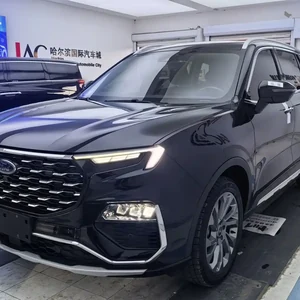
Live Ford Territory export inventory
View all listings →Real units currently on ChinaCarDirect with per-unit asking prices and MOQ. Availability updates live from the catalogue.
How to buy a Ford Territory from China
-
1
Set the destination and use case
List the destination country, steering-side requirement, passenger count, luggage needs and annual mileage. Use those criteria to decide whether a six-seat, seven-seat, 145 CV or 225 CV example fits.
-
2
Filter the live Territory inventory
Review current unit pages on ChinaCarDirect and compare year, trim, seating, condition and listing status. Treat the displayed per-unit price, MOQ and availability as the current reference, not a guaranteed future quote.
-
3
Request a specification and condition sheet
Ask for the VIN, model year, engine and transmission, drivetrain, seat layout, equipment, mileage, condition and document list. Require confirmation of any China V/VI designation and whether steering is left- or right-hand drive.
-
4
Normalize written quotes
Request the currency, Incoterm, freight scope, payment milestones, quote validity, inspection rights and warranty terms. Compare equivalent vehicles rather than mixing FOB and CIF economics.
-
5
Run a destination compliance pre-check
Use a customs adviser or local authority to confirm type approval, emissions, safety, duty, tax and registration requirements. Do not order conversion-dependent vehicles until the route is validated.
-
6
Inspect and secure payment
Have the seller provide detailed media and, where practical, an independent inspection before releasing the balance. Match the beneficiary and contract entity to the written order, and retain inspection and payment evidence.
-
7
Consolidate, ship and receive
Group only compatible orders and confirm the carrier, route, insurance, export declaration, PDI and release process. Recheck VIN and document matching plus destination charges before container release or final delivery.
Territory vs rivals
| Hyundai Tucson | A like-for-like benchmark in the mainstream compact-SUV class, with a broad range of sizes and powertrains across markets. The Territory may appeal where seven-seat utility and a higher-output 225 CV option matter, while Tucson offers broader recognition and usually a more established service and resale proposition. |
|---|---|
| Honda CR-V | The CR-V is a globally familiar family-SUV benchmark with efficient hybrid choices in many markets and strong residual-value recognition. The Territory offers more distinctive seating and output choices for value-focused importers, but buyers must build confidence in local parts, diagnostics and resale support. |
| Toyota Corolla Cross | An efficient, mainstream alternative for buyers prioritizing simple ownership, fuel economy and Toyota support, generally with less emphasis on three-row capacity. The Territory fits buyers who prioritize 225 CV output, six- or seven-seat configurations or higher-grade equipment, subject to destination-market serviceability. |
Frequently asked questions
How is the Ford Territory export price determined?
Each live price starts with the vehicle’s year, trim, 145 CV or 225 CV powertrain, seating, condition and any mileage or equipment differences. Exchange rates, freight, insurance, origin charges, destination duties and the selected Incoterm can change the landed cost. Compare the stated scope, currency and exclusions before budgeting. Current per-unit prices are shown in the live ChinaCarDirect Territory listings.
What engine, transmission and seating options are available?
The Territory is petrol-powered, with EcoBoost 145 CV and 225 CV versions. CVT is stated for several 145 CV trims, while the exact transmission and drivetrain for a 225 CV example should be checked. Six-seat and seven-seat layouts are available, including 2/2/3 seating; there is no EV range because this is not a battery-electric model.
Should an overseas buyer choose a new or used Ford Territory?
New examples are easier to standardize and plan for warranty and PDI; used examples can suit buyers seeking a particular older trim or lower acquisition outlay. Used units require stronger scrutiny of mileage, service history, body condition, wear and remaining cover. Check each live listing’s status rather than assuming a model year is equivalent condition.
How does MOQ work for a Territory order?
MOQ is seller-specific for the vehicle or transaction, not a permanent promise about the model. Review the live listing’s order basis and ask through an RFQ whether one unit is accepted and whether mixed trims can be consolidated. Agree any deposit, allocation and cancellation terms in writing.
What determines shipping time and cost?
Route, vessel or air space, vehicle preparation, cargo handling, insurance, exchange rates, destination charges and customs clearance all affect the total. Transit time cannot be inferred from vehicle price or listing alone. Ask the exporter for a current routing plan and quote under a stated Incoterm, and budget separately for duties and port charges where applicable.
Can spare parts be ordered for the Ford Territory?
Parts should be matched by VIN, model year, engine output and China V/VI version where applicable; visually similar trims may not share every component. Ask the seller or distributor for the parts catalogue, diagnostic requirements and expected dispatch method before committing. Test a service-parts plan in the destination market because low acquisition cost does not guarantee fast aftersales support.
Is a right-hand-drive Ford Territory available for export?
Availability is not guaranteed by the model name, so the seller must confirm the actual steering configuration for each unit. A factory right-hand-drive example is preferable to a conversion where the destination requires it; otherwise a conversion needs local technical and inspection review. Do not place a non-compliant deposit on an assumed RHD supply.
How do I order a Ford Territory from China?
Start with the live Territory listings, shortlist equivalent vehicles and send an RFQ stating the destination, seat count, powertrain, steering side and delivery preference. Ask the supplier to confirm the exact unit, price currency, MOQ, Incoterm, documents, inspection and payment milestones in writing. Verify the contract and beneficiary, complete compliance before shipment, and release the final payment only after the agreed inspection.
Ready to source the Ford Territory?
Send a Territory RFQ with your destination, seating and powertrain requirements for a unit-specific quote and export plan.
Request a quote