
Foton Scenic G7 Export Buying Guide for Overseas Buyers
Buy a Foton Scenic G7 from China with practical guidance on trims, used vehicles, export pricing, MOQ, shipping, homologation, and rival options.
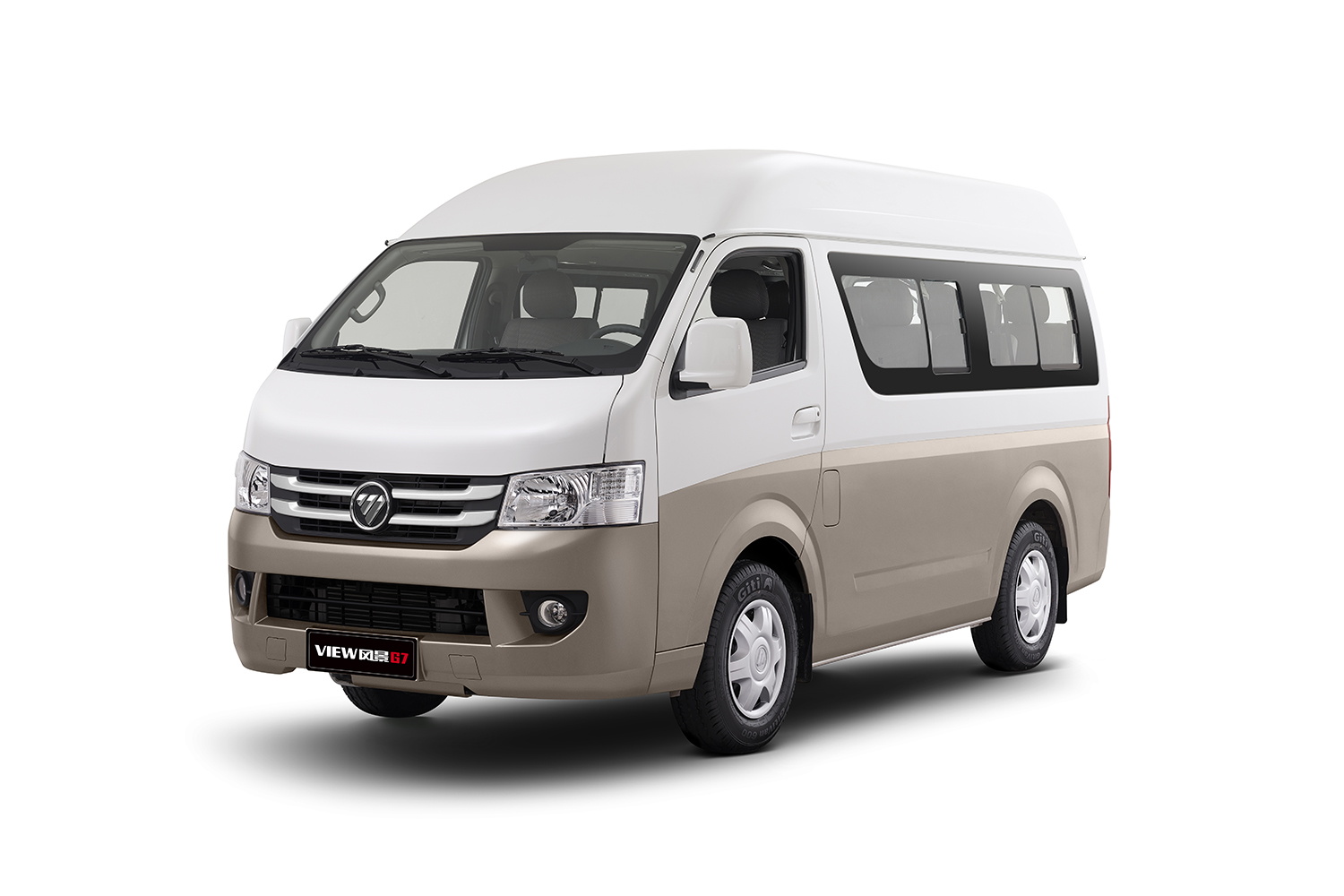
At a glance
- A diesel-and-gasoline light commercial van with 2.0L, 2.4L, 2.0T and 2.8T engine options.
- Configurations span short and long wheelbases, multiple roof forms and seating for cargo, shuttle or specialist use.
- Used Scenic G7 sourcing can offer configuration choice, but every unit needs condition and document verification.
- Landed cost depends on the selected unit, freight, Incoterm, exchange rate, duties and local charges.
- RHD availability, homologation and specialist conversions require destination-specific confirmation before shipment.
Why the Foton Scenic G7 matters for export markets
The Foton Scenic G7 sits in the light-commercial van and crew-van segment, combining passenger-carrier layouts with practical cargo space. It is not a lifestyle SUV; its relevance comes from configurable wheelbase, roof, seating and powertrain choices at a cost-conscious procurement level. For overseas dealers, that makes it easier to serve shuttle, trades, delivery and light-fleet needs without moving into the cost of a larger van. The model is most compelling where a buyer needs commercial carrying capability, can accept Chinese-market specification, and plans to handle registration and compliance in the destination market.
Demand for this type of vehicle comes from practical fleet requirements rather than image-driven purchasing. A high-roof long-wheelbase van can serve as a mobile workshop or parcel carrier, while short-wheelbase, low-roof and passenger-seat configurations suit urban distribution, employee transport or converted refrigerated operations. Buyers can match the body to the duty cycle instead of paying for unused capacity, the core export value proposition of the Scenic G7. This flexibility matters to small distributors and regional fleet operators comparing purchase cost, usable payload and ease of local registration and vehicle uptime.
The Scenic G7 should not be treated as a single export product. A listing may describe a gasoline commercial van, a diesel people carrier, a long-wheelbase high-roof unit, or a refrigerated conversion, each implying different economics and approval paths. The buying case is strongest when the buyer specifies the layout, fuel, transmission and intended use, then verifies that documents and physical configuration match that brief. This reduces the risk of buying a high-capacity van for a low-load job, or a passenger derivative that cannot meet local commercial rules in that destination market.
- Primary use: cargo, shuttle, trades and mobile-service work.
- Value driver: matching body capacity to the duty cycle.
- Export caveat: local approval and support must be planned.
Model range, trims and powertrain variants: how the lineup is structured and how to choose
The lineup is best read as a configuration matrix rather than a simple list of luxury trims. Available structures include short- and long-wheelbase bodies, high-, flat- and low-roof formats, two-, five-, six- and ten-seat arrangements, plus cargo-oriented and refrigerated examples. Engine families include 2.0L and 2.4L gasoline units and 2.0T and 2.8T diesel units. Buyers should therefore start from payload, passenger count and roof clearance, then narrow by fuel and transmission. For each candidate, ask for the model designation, engine code, gearbox type, wheelbase, gross vehicle weight and interior layout in writing.
Gasoline versions are generally the simpler choice for short routes, lower operating complexity and fleets where diesel fuel quality or maintenance capability is uncertain. The 2.0L and 2.4L gasoline options cover different commercial roles, while manual gearboxes appear on many configurations and an automatic transmission is also offered. Diesel derivatives, including the 2.0T and 2.8T engines, may suit higher-load routines where fuel efficiency and operating torque matter more. Compare engine choice against annual utilization, payload, route conditions and service support near the operating base rather than relying on engine size alone.
A sound selection starts with the actual load: measure cargo length, width and height, include passengers and equipment in the weight calculation, and check side-door, rear-access and roof-equipment needs. Next, compare seating against local passenger-vehicle or commercial-van rules. Finally, request the live specification sheet and vehicle documents, because engine code, transmission, axle configuration, emissions standard and equipment can differ between similarly named units. Do not infer these details from photographs; treat dimensions, weights and missing technical data as items requiring written confirmation before agreeing on freight, taxes or final purchase terms.
- Gasoline options: 2.0L and 2.4L.
- Diesel options: 2.0T and 2.8T.
- Body choices: short or long wheelbase, with several roof and seating layouts.
- Selection order: load, seats, fuel, transmission and emissions.
New vs used Foton Scenic G7: how export inventory is structured and how buyers choose
Export inventory for this model is fragmented by age, body configuration, fuel, mileage and seller location. A live search may present used examples from several model years and a mix of commercial and passenger layouts, rather than a standardized batch of identical vehicles. Buyers should open the live inventory for each candidate and verify condition, registration date, exact trim, engine, transmission and paperwork before treating listings as equivalent. Availability should be reconfirmed with the seller, because a vehicle can be reserved, in transit, withdrawn or already allocated or sold after the page loads.
A used Scenic G7 can make sense when the buyer values immediate configuration availability and can absorb inspection and refurbishment work into the budget. Lower acquisition outlay may also leave more room for freight, duty, taxes, registration and maintenance. The trade-off is uncertainty: mileage alone does not reveal engine condition, gearbox wear, accident repairs, corrosion, refrigeration performance or the remaining life of consumable and high-cost components. A pre-shipment inspection and a clear document check are therefore more important than choosing the listing with the most attractive headline terms or discount figure.
New procurement is attractive when a buyer wants known build status, warranty handling and a predictable configuration, but it may involve a different supplier route and longer approval than purchasing an individual used unit. For either route, total cost should include inspection, repairs, taxes, local adaptation, downtime and resale timing. Choose new when uptime and standardization outweigh procurement complexity; choose used when the brief is clear, the vehicle can be inspected and the discount compensates for the work required. A mixed fleet can also work if incoming used units are standardized before delivery.
- Verify age, trim, mileage, condition and ownership documents.
- Inspect corrosion, accident repair, engine, gearbox, brakes and refrigeration.
- Compare total cost after freight, tax, repair and downtime.
How export pricing works: the factors behind a live listing price, and how to read one
There is no defensible fixed Foton Scenic G7 export price, because each live listing represents a different vehicle and trade terms. The asking amount normally responds to model year, trim, engine and transmission, mileage, condition, seating and roof layout, specialist conversions, and the seller’s commercial position. Currency movements also matter when the quote is converted into the buyer’s currency. Use the current per-unit price on the live inventory, not an old article or remembered range. Negotiation may apply, especially to a multi-unit order, but it should be recorded against a specified vehicle and delivery basis.
The most useful comparison is landed cost, not the vehicle line alone. Build the quote from vehicle price, inland transport, export handling, ocean or air freight, insurance, destination charges, import duties, taxes, registration and conversion work. Establish the Incoterm and who is responsible for each stage; a lower vehicle figure can be offset by higher freight, more origin charges or buyer obligations. Request a written quotation separating product cost from logistics and destination charges. That breakdown permits fair comparison with local dealers, used imports or independently sourced units on an equal basis.
When reading a live listing, check whether the displayed amount is the seller’s vehicle price or a delivered estimate, then review exclusions. Confirm currency, payment schedule, validity, documentation, loading location, lead time, warranty and cancellation terms. Compare only units with similar year, configuration, condition and service history, and ask whether a price improvement applies to the selected unit or larger volume. Current price, availability and terms remain binding only in the live listing and final quotation. Save the accepted quotation for contract review, but do not treat it as permanent stock.
- Use the current per-unit price shown on the live listing.
- Separate vehicle price, freight, insurance, duties and local charges.
- Compare equivalent configurations under the same Incoterm.
MOQ, ordering and payment: single units vs consolidating a container
Some overseas buyers need one vehicle to test a route, launch a small operation or replace a failed van, while others need a container for resale or fleet deployment. For an individual purchase, ask whether the unit can be sold alone, whether any minimum order quantity applies to that listing, and what freight basis is available. Treat a displayed MOQ as seller- and unit-specific rather than assuming a model-wide rule or a guarantee that matching stock is immediately available. A unit order may be possible even when a container order is preferred, subject to written terms.
Container consolidation can reduce per-vehicle freight and simplify shipment planning when several buyers or fleet units share compatible specifications. The coordinator must standardize engine, transmission, body, seat count and documentation, while assigning each unit to the correct purchaser and handling inspection disputes. Consolidation also increases the importance of pre-loading checks, because several buyers may be affected if one vehicle is misdescribed. Mixing incompatible units may save space but can create administration, customs and configuration risk. Compare that saving with coordination time, separate inspections and the risk of one delayed unit holding the group.
The order should state the selected vehicle or consolidation list, inspection standard, deposit and balance conditions, ownership transfer, payment method, documentation scope and Incoterm. Confirm what happens if the vehicle differs materially from the agreed description, is damaged during handling, or cannot obtain the promised export documents. Keep the signed contract, final invoice, inspection report and shipping documents together. Payment milestones should follow verifiable events rather than informal promises. For higher-value mixed fleets, consider escrow or another independently verifiable protection mechanism where available and acceptable to both parties before funds are released.
- Ask whether one unit can be sold and what MOQ applies.
- Treat MOQ as seller-specific rather than a model-wide rule.
- Consolidate only compatible units with clear ownership records.
Shipping, homologation and market compliance caveats: LHD/RHD and import rules by country
Shipping cost and time depend on dimensions and weight, route, origin handling, destination port, season, fuel surcharges, cargo consolidation and the insurance or service level requested. A high-roof long-wheelbase van can occupy more space than a shorter derivative, so loading plan and vehicle combination affect freight efficiency. Request an international or domestic leg breakdown, document deadlines and a realistic sailing or flight schedule; avoid promising delivery until the unit clears export handling. Weather, port congestion, inspections and customs queries can extend the timetable, especially when commercial documentation is required in the destination country.
Import and road-use requirements are set by the destination country, not by the Chinese configuration alone. The buyer may need to check VIN and age restrictions, emissions and type approval, customs valuation, duty and tax treatment, roadworthiness, insurance, passenger capacity, refrigeration rules and local van classification. A China VI label does not automatically establish compliance elsewhere. Obtain a local broker or authority view for the configuration before paying the balance or committing volume. If modifications are required, include their cost and approval lead time in the plan rather than treating them as routine port work.
Right-hand-drive availability should be checked for each unit, because the live market can contain left-hand-drive vehicles or specialist conversions rather than a universally interchangeable factory version. Converting steering position can involve changes to steering hardware, electrical systems, lighting, controls and safety-related components, followed by local inspection or certification. Do not assume a conversion preserves original homologation, warranty or insurance status. Confirm hand of drive, modification records and destination acceptance before shipment, especially for passenger or refrigerated uses. The same caution applies to air-conditioning, refrigeration, load restraints and seat anchorage systems.
- Confirm country rules for age, emissions, type approval and road use.
- Verify LHD or RHD status before ordering.
- Budget for freight, insurance, inspection, customs and conversion work.
Who should buy the Scenic G7 — and who should pick a different vehicle
The Scenic G7 fits buyers who need a flexible commercial carrier with a direct route to Chinese supply, particularly small logistics operators, trades businesses, shuttle providers and fleets testing demand. It is especially attractive when the required wheelbase, roof height, seat count and fuel type may be difficult to find in a standard local range. The vehicle can also start a refrigerated or mobile-service conversion when local engineering rules permit. Dealers should be comfortable sourcing, inspecting and preparing imported commercial vehicles rather than expecting turnkey homologation in the destination market.
It is a weaker choice for buyers who need a premium ride, advanced driver-assistance suite, large volumes from an authorized local channel, or a standardized factory warranty in the destination market. A passenger carrier may also be unsuitable where local rules impose strict age, emissions or safety limits, while a cargo van may not satisfy shuttle comfort expectations. If payload, braking, refrigeration duty or roadside support falls outside the selected unit’s specification, do not force the application. A larger van or established local alternative may lower lifecycle risk despite a higher initial commitment.
The decision should be made on total cost of ownership over the intended service life. Include acquisition, freight, duties, taxes, registration, insurance, adaptations, fuel, maintenance, spare-parts planning, downtime and eventual resale. For a high-mileage commercial user, reliability and service access may outweigh the lowest purchase price; for a short trial or light-duty operator, a well-maintained used unit can be more rational. Record the minimum acceptable specification before comparing quotes, then reject any unit that misses a non-negotiable requirement. Keep the decision tied to operating economics rather than model year alone.
- Strong fit: distributors, trades, shuttle operators and fleet trials.
- Weak fit: buyers seeking premium comfort or turnkey local approval.
- Decision rule: prioritize compliance and total operating cost.
Main rivals and how the Scenic G7 compares
JAC Refine M5 is a useful alternative for buyers comparing a Chinese passenger-led van or MPV with the Scenic G7. Its appeal depends on the precise body, seating and commercial conversion, while the Scenic G7’s strongest argument is the breadth of short- and long-wheelbase cargo configurations in this marketplace. Neither should be chosen from styling alone: compare load dimensions, permitted seats, gearbox, fuel choice, local approval and delivered specification. For an importer already familiar with JAC parts and distribution, that familiarity can outweigh a small configuration difference in the destination market.
Maxus V80 is a closer conceptual rival for commercial-van buyers, but it generally represents a larger vehicle and a different capacity-versus-manoeuvrability trade-off. Ford Transit is the more familiar international benchmark, often attractive where brand recognition, residual demand and an established service ecosystem matter, but it can require a different budget and compliance route. The Scenic G7 can be compelling where procurement cost and Chinese sourcing access dominate, provided the buyer accepts more market-specific preparation. None of these alternatives removes the need to verify the exact variant being offered or its local support.
A structured comparison should score cargo usefulness, legal passenger capacity, fuel availability, service-parts access, RHD availability, homologation work and landed cost. The best rival is not automatically the newest or largest model; it is the alternative that satisfies the same operating brief with less compliance and downtime risk. Before buying the Scenic G7, obtain a like-for-like quote for the closest rival and include every delivery, conversion and registration cost. That exercise often reveals whether a smaller van, factory-authorized alternative or local used vehicle is more economical for the intended route.
- JAC Refine M5: closer Chinese passenger-van or MPV alternative.
- Maxus V80: larger commercial-van alternative.
- Ford Transit: international brand and service benchmark.
Live Foton Scenic G7 export inventory
View all listings →Real units currently on ChinaCarDirect with per-unit asking prices and MOQ. Availability updates live from the catalogue.
Used Foton Scenic G7 Foton Fengjing G7, registered in 2023, manual transmission, 2.4L engine, 6 seats, converted from gasoline to gas.
Used Foton Scenic G7 Foton G7, registered in 2019, manual transmission, 2.0L engine, 6 seats, long-wheelbase high-roof model.
Used Foton Scenic G7 2023 Model 2.4 Manual, Two-Wheel Drive, Ten-Seater
Used Foton Scenic G7 2022 2.4L Gasoline Commercial Version Short Wheelbase Low Roof Open-Window Design 6-Seater – 4K22D4M
How to buy a Foton Scenic G7 from China
-
1
Define the operating requirement
Measure cargo space, confirm passenger needs, identify routes and fuel availability, and decide whether a standard van, passenger conversion or refrigerated unit is required.
-
2
Search and shortlist live inventory
Review current Scenic G7 listings by wheelbase, roof, seating, engine and transmission. Treat availability and pricing as live information and verify the chosen unit with the seller.
-
3
Request and verify documents
Ask for the VIN, registration details, engine and gearbox codes, emissions information, ownership record and export-document scope. Compare them with the agreed configuration before payment.
-
4
Inspect before commitment
Use a competent independent or buyer-side inspection covering structure, corrosion, fluids, engine start, gearbox, brakes, tyres, load restraints and refrigeration where applicable.
-
5
Agree the landed quotation
Request a unit-specific or consolidation quote showing the vehicle price, freight route, Incoterm, insurance, taxes, payment milestones, delivery basis and quotation validity.
-
6
Complete compliance and shipping
Confirm destination-country approval, LHD or RHD status, insurance and any required conversion before dispatch. Complete a pre-loading check and retain all signed, inspection and shipping records.
Scenic G7 vs rivals
| JAC Refine M5 | A close Chinese van or MPV alternative when cabin comfort and passenger conversion lead the brief. The Scenic G7 is more relevant when short- and long-wheelbase cargo configurations, including commercial and refrigerated layouts, are required. |
|---|---|
| Maxus V80 | A closer conceptual competitor in the Chinese commercial-van export class, but it generally occupies a larger-capacity bracket. Choose the Scenic G7 when a smaller footprint and broad configuration matching matter more than maximum load volume. |
| Ford Transit | A familiar international benchmark for commercial buyers who prioritize brand recognition and an established service ecosystem. The Scenic G7 can suit importers prioritizing China-based sourcing value, provided they budget for market-specific compliance and parts planning. |
Frequently asked questions
How is the Foton Scenic G7 export price determined?
Each live listing carries a unit-specific current price shaped by model year, trim, engine and transmission, mileage, condition, body configuration and conversion. Freight, exchange rates, Incoterms, insurance, duties and taxes can change the landed total. Check the live Scenic G7 listings for the current figure and request a written quotation for the exact unit and delivery basis.
What engine and range options are available?
The combustion lineup includes 2.0L and 2.4L gasoline engines and 2.0T and 2.8T diesel engines, with manual or automatic transmissions depending on configuration. These are not battery-electric vehicles, so battery capacity, electric range and charging specifications do not apply. Request the fuel-consumption, payload and technical details for the selected unit.
Should I buy a new or used Foton Scenic G7?
A used unit can provide configuration choice and a lower acquisition outlay, but it requires inspection, document verification and an allowance for repairs. New procurement may offer known build status and a more predictable warranty route, but the supplier and approval process can differ. Compare total landed operating cost rather than choosing on acquisition price alone.
Does the Foton Scenic G7 have a fixed minimum order quantity?
MOQ is set by the seller and transaction, not by the model name. Ask whether the selected listing can be purchased as one unit and whether any MOQ applies to that unit or seller. For a container, confirm who will coordinate consolidation, inspection, ownership records and customs documentation.
What determines shipping time and cost?
Vehicle dimensions and weight, loading plan, route, ports, season, freight surcharges, consolidation and the selected service level all affect the shipment. A high-roof long-wheelbase van may require different loading and freight arrangements from a shorter derivative. Request a detailed leg-by-leg schedule and delivery quotation for the actual unit.
How are spare parts arranged for an imported Scenic G7?
Before ordering, ask for the exact engine, gearbox and model codes plus a recommended maintenance and spare-parts list. Confirm which parts can be supplied directly or through a local agent and estimate delivery lead times for critical items. For a fleet, consider holding selected consumables and service components in the destination market.
Is right-hand-drive Scenic G7 availability guaranteed?
No. Right-hand-drive availability must be confirmed for each listing because the market can contain left-hand-drive vehicles or specialist conversions. A conversion may affect homologation, insurance, warranty and safety-related systems, so obtain destination-market approval before shipment. Do not assume a conversion is equivalent to a factory right-hand-drive version.
How do I order a Foton Scenic G7 from China?
Start with the live listings, select a configuration that matches the operating brief and request an RFQ for the specific unit. Review the specification, ownership documents, inspection findings, landed-cost breakdown, Incoterm and payment milestones before committing. Complete destination-country compliance and shipping arrangements before the final balance payment and dispatch.
Ready to source the Foton Scenic G7?
Send your required body, fuel, seating, destination and Incoterm to request a current, unit-specific Scenic G7 export quotation.
Request a quote