
Foton Tunland Export Guide for Overseas Buyers
Compare Foton Tunland specs, diesel and gasoline trims, used options, export pricing, MOQ, shipping and compliance before buying from China.
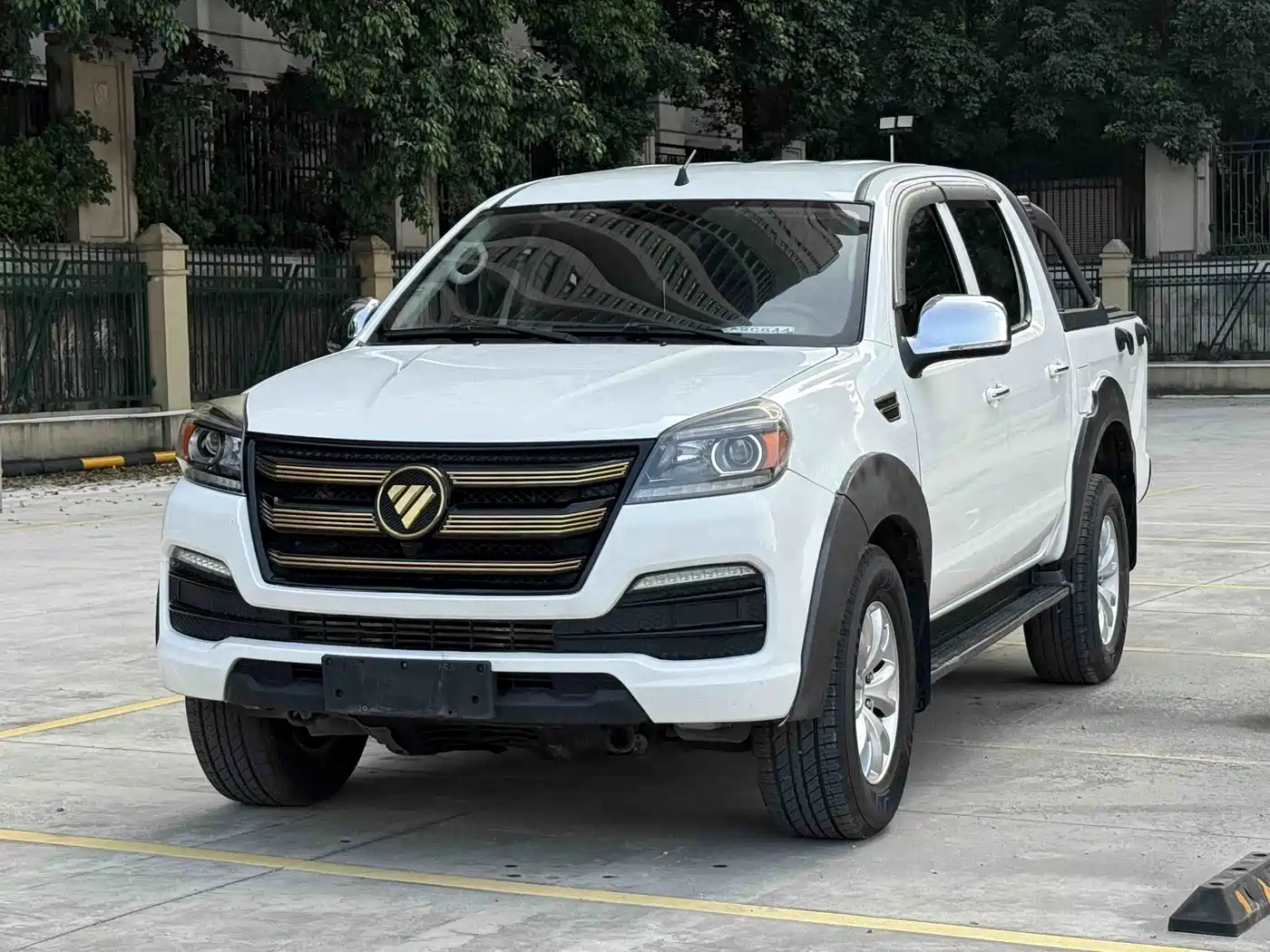
At a glance
- The export range spans 2.0T and 2.8T turbo-diesel plus 2.4-litre petrol applications.
- Manual and automatic transmissions, two-wheel drive and four-wheel drive are all represented.
- Standard and long-wheelbase versions suit different load and passenger priorities.
- New and used vehicles require different inspection, documentation and risk controls.
- Live export prices vary by unit, specification, condition, logistics and Incoterm.
- RHD, homologation, parts support and local registration must be confirmed before payment.
Why the Foton Tunland matters for export markets
The Foton Tunland is a pickup-derived SUV built for buyers who want commercial-vehicle toughness with a more car-like cabin. Its relevance in export markets comes from the combination of diesel efficiency, available four-wheel-drive versions and a broad mix of comfort, long-wheelbase and high-clearance configurations. That makes it relevant to construction, agriculture, utilities and regional distribution businesses, as well as dealers serving customers who need a rugged daily vehicle rather than a lifestyle-only SUV. It also lets importers cover paved commercial use, mixed roads or light off-road duty without moving to a premium-brand pickup.
Interest in the Tunland segment is not based on a single global specification. Instead, buyers respond to a practical proposition: a vehicle that can carry equipment, tolerate poor road conditions and offer choice between two-wheel drive and four-wheel drive. Diesel versions tend to suit operators prioritising sustained work and fuel economy, while the 2.4-litre petrol option can simplify ownership where diesel fuel quality, cold-start habits or service arrangements are less certain. Export demand therefore varies by climate, infrastructure, fleet policy or local regulation rather than following one universal trend across all regions.
For importers, the model is especially attractive when a single chassis family can cover several duty cycles without moving to a premium-brand pickup. A two-wheel-drive version may suit sealed roads and controlled fleet yards; a four-wheel-drive derivative adds a sensible choice for farms, quarries and areas with intermittent difficult surfaces. Long-wheelbase variants can serve buyers who need extra load-space or passenger-room flexibility. The decisive point is not merely whether the Tunland looks capable, but whether the selected engine, gearbox, axle layout and wheelbase match the destination, duty cycle and budget.
- Diesel and petrol options.
- 2WD and 4WD configurations.
- Standard or long wheelbase.
Model range, trims and powertrain variants: how the lineup is structured and how to choose
The Tunland catalogue is easiest to understand as three powertrain families. The 2.0-litre turbo-diesel family uses the 4F20TC designation and appears in Yutu 9 and Shengtu 5 versions, including two-wheel-drive and four-wheel-drive versions with standard or long wheelbases. A 2.0 E7 automatic 2WD version carries 4G20TI3. The 2.8-litre turbo-diesel family includes BJ493ZLQ4 versions and an ISF2.8s5174P S Series. The 2.4-litre 4G69S4M petrol family covers manual two-wheel-drive comfort and four-wheel-drive elite derivatives. Names such as Enjoyment, Elite, Flagship, Comfort and E3 describe trim or series positioning, not a uniform equipment list across model years.
Within each family, the practical choices are drivetrain, transmission, wheelbase and equipment grade. The 2.0T Yutu 9 range includes long-wheelbase two-wheel-drive and four-wheel-drive versions, while Shengtu 5 derivatives are presented in standard- or long-wheelbase forms with high-clearance positioning. Manual and automatic transmissions both appear in the wider model family. The 2.8T options span S Series, E3, Comfort and Elite nomenclature, and the 2.4L E5 includes both two-wheel-drive Comfort and four-wheel-drive Elite versions. Buyers should compare the exact listing carefully because names alone do not reveal every equipment difference across different production periods.
Choose the engine around the duty cycle rather than the largest output on paper. The 2.0T diesel is a choice where buyers want turbocharged performance and diesel availability without moving to the 2.8T. The 2.8T can suit heavier work requiring more pulling reserve, but its larger package should be matched to operating costs and local support. The 2.4-litre petrol may be easier to manage for light commercial use or mixed fleets. Automatic transmissions can reduce driver workload, whereas manuals suit drivers accustomed to them and may simplify specific fleet specifications.
- Verify engine and gearbox.
- Compare wheelbase, load.
- Check complete trim details.
New vs used Foton Tunland: how export inventory is structured and how buyers choose
Export listings for the Tunland can include both new vehicles and used examples, and the two categories should be evaluated with different checklists. A new vehicle offers the cleanest ownership history and avoids uncertainty around previous repairs, but its specification and availability still depend on the production batch and the seller’s stock. A used vehicle can make a practical entry point for buyers with a budget and the ability to inspect it properly. The correct choice depends less on age alone than on condition, history, documentation and whether the variant is still supported.
For a used Tunland, start with the chassis and engine bay, then test every drivetrain function. Look for evidence of accident repair, corrosion, suspension wear, fluid leaks, overheating and evidence of off-road abuse. Verify that the gearbox, transfer case, differential and four-wheel-drive system engage correctly, and confirm whether modifications affect warranty or parts support. Review registration and ownership documents before treating the vehicle as readily exportable. A lower acquisition price can be offset by near-term repairs, replacement tyres, downtime and uncertain resale value before launch plans in the intended destination market.
For a new vehicle, confirm whether the advertised version is factory-built, what factory warranty applies and whether the seller can provide consistent documents and delivery support. The buyer should still inspect finish, panel alignment, tyre condition and underbody areas, because transport damage or storage practices can affect a supposedly new unit. It is also worth checking that the desired engine, gearbox, seat count, wheelbase and infotainment or comfort equipment are actually fitted. The best new-versus-used decision is the one that leaves adequate contingency for registration, shipping, compliance and preventive maintenance.
- Inspect used condition.
- Inspect new arrival.
- Include repair and downtime.
How export pricing works: the factors behind a live listing price, and how to read one
A Foton Tunland export price is not one fixed model-wide figure. The live listing price for each unit is shaped by model year, Yutu, Shengtu or other series, engine and transmission, four-wheel-drive layout, wheelbase, equipment grade, mileage and condition. New-versus-used status also matters, as do cosmetic condition, service history and whether the seller can supply complete export documents. Because the Tunland range spans older and newer diesel or petrol configurations, two units carrying similar model names may not have equivalent equipment, age or regulatory compliance status for the intended destination market.
Read the listing’s commercial terms before using its displayed amount as a budget. A vehicle-only price is not necessarily a landed cost. Freight depends on origin and destination ports, container space, route, fuel surcharges, insurance and the Incoterm; exchange-rate movements can also alter the final payable amount for an overseas buyer. Local charges may include customs, taxes, registration, inspection, handling and conversion or modification work. Ask for a written quotation that separates the vehicle, inland transport, export handling, freight, insurance and destination charges so comparisons remain meaningful across suppliers and Incoterms. Obtain a freight quotation rather than assuming the listing includes transport, insurance or destination charges.
The most reliable workflow is to treat the live listing as a reference, not a binding fleet quotation. Open the Foton Tunland listings, select a suitable configuration, and compare like with like: similar year, engine, drivetrain, wheelbase, transmission, condition and delivery terms. Then request a written quote for the vehicle or specification you intend to buy. That quote should state validity, payment currency, deposit and balance terms, documentation, inspection rights, loading location and delivery responsibility. Exact price and availability must be confirmed against the ChinaCarDirect live listing and the seller’s final quotation.
- Compare matching specifications.
- Separate vehicle and landed costs.
- Obtain written unit quotes.
MOQ, ordering and payment: single units vs consolidating a container
MOQ means the minimum quantity a seller is willing to accept in one order, and it should be checked on the specific listing rather than inferred from the model name. A seller may accommodate individual-unit purchases, while another may impose quantity conditions for certain production, shipping or payment arrangements. A dealer testing demand with a small order should ask directly whether the unit can be purchased separately and whether mixed configurations are allowed in the same order. The platform’s live listing should be the starting point for the seller’s terms.
Consolidating several compatible vehicles into one container can improve freight efficiency, but it changes the risk profile. A full-container order ties up more capital, requires closer matching of specifications and may expose the buyer to storage or demurrage if loading or documentation is delayed. It can also make inspection and replacement of one problematic unit harder. Smaller orders provide flexibility for testing the market, while consolidated orders may offer unit-level logistics. Model the decision on total landed cost, actual cash flow and the time required to sell or redeploy each vehicle.
Ordering should follow a sequence: confirm the specification, agree the quantity and Incoterm, request an invoice and export-document list, make the payment, complete inspection, and release the vehicle only after the checks. Ask whether payment is by bank transfer or another method, when the balance is due, and what happens if inspection fails. Also establish title ownership, the seller’s authority to export, document originals, insurance start date and the point at which risk transfers. These terms differ by seller and should appear in the quotation rather than in a listing.
- Check listing MOQ.
- Assess container economics.
- Document payment and inspection.
Shipping, homologation and market compliance caveats: LHD/RHD and import rules by country
Shipping begins with the delivery term, not the route. An exporter may quote on a basis such as Ex Works, FOB or CIF, and each term allocates cost and risk differently. The buyer should confirm the place, whether the vehicle is on a roll-on/roll-off carrier or in a container, which charges are included, and the documentation required at origin. Transit duration depends on the origin and destination ports, vessel availability, transshipment, customs clearance and inland delivery. Obtain a freight quotation rather than assuming the listing includes transport, insurance or destination charges.
Vehicle import rules are destination-specific. A buyer may need to address customs classification, customs value, duties, taxes, emissions or roadworthiness standards, VIN and chassis-number requirements, insurance, registration and local inspection. A National V/China V designation or other domestic compliance marking does not automatically prove acceptance in another country, and used vehicles can face additional age or emissions restrictions. Local registration rules may also require changes such as lighting, mirrors or other equipment. Engage a customs broker or compliance specialist before committing, and provide the vehicle identification and destination for an assessment.
Steering configuration is another filter. A left-hand-drive vehicle is appropriate only if local law, road design and the buyer’s operating model permit it; some markets require right-hand drive, and a conversion may affect safety approvals, warranty, insurance and parts availability. Do not assume that a diesel engine, four-wheel-drive system or trim badge guarantees a homologated RHD version. Give the seller the destination country and ask for the steering side, VIN or chassis number, engine and emissions details, then verify them. A compliant vehicle still needs local insurance and registration before commercial use.
- Confirm Incoterm and charges.
- Check destination import rules.
- Specify steering side.
Who should buy the Tunland — and who should pick a different vehicle
The Tunland is a strong candidate for importers and fleet buyers that need a rugged, diesel-capable utility vehicle but do not require the refinement, towing electronics or international support network of a premium pickup. It can suit farms, construction contractors, mining-support operations, utility companies, humanitarian buyers and regional distributors working on poor or unfinished roads. The strongest business case appears where heavy payload demands, four-wheel-drive access and fuel operating priorities outweigh cabin polish and resale expectations; mature pickup markets still require a careful test against the importing company’s local needs.
A four-wheel-drive Tunland with the correct diesel and long-wheelbase configuration can be especially useful when road access, ground clearance and load capacity are central operating constraints. A two-wheel-drive petrol or diesel version may be more rational for paved routes, shorter travel distances and fleets prioritising acquisition simplicity and lower mechanical complexity. Manual transmission models may appeal to experienced drivers and organisations with established manual fleets. Automatic versions can improve comfort in dense urban traffic, although buyers should still compare fuel use, maintenance provisions and driver familiarity before choosing for the region.
Choose a different vehicle when the operation is urban, the cargo does not justify a pickup-derived body, or a vehicle must enter a market with a controlled homologation regime. Premium pickups may be better when towing technology, refined ride, advanced driver assistance, financing and an international aftersales network justify the higher ownership commitment. An SUV may be easier to register and more efficient where road conditions are good. A heavy commercial truck should be selected when payload, braking, durability or legal load limits exceed what a passenger-based utility vehicle can carry.
- Use 4WD when justified.
- Match fuel to infrastructure.
- Consider urban alternatives.
Main rivals and how the Tunland compares
Jetour T2 is the closest domestic-style alternative because it also combines a pickup-derived body, off-road styling and two-wheel-drive or four-wheel-drive variants for fleet and lifestyle buyers. The comparison should focus on the specific engine, transmission, locking differentials where fitted, load bed, ground clearance, warranty and local parts network rather than visual similarity. A Tunland buyer may favour its diesel range or selected Yutu and Shengtu configurations, while a T2 buyer may prefer a different dealer proposition. Local service access in the destination market can outweigh small equipment differences in daily practice.
GWM Wingle 5, also known in some markets as the Cannon, is another Chinese pickup-based SUV that competes for commercial and off-road buyers. Both lineups offer two-wheel-drive and four-wheel-drive thinking and petrol or diesel choices depending on market, so the buyer should compare homologated versions rather than brochures. Wingle 5 may appeal where GWM’s local presence is stronger, while the Tunland offers 2.0T and 2.8T diesel configurations worth checking. Parts availability, fuel-system support and the dealer’s willingness to handle warranty work should be included in the decision, backed by after-sales commitments.
Ford Ranger is a global benchmark, particularly for fleet buyers who value an international brand and an established parts proposition. It is not automatically the best choice in every market: local emissions rules, drivetrain content, equipment levels and aftersales support may differ from China-sourced alternatives. A Ranger buyer may prioritise brand familiarity and residual-market confidence; a Tunland buyer may prioritise the available Chinese diesel configurations, four-wheel-drive formats and configuration flexibility. Compare actual total ownership cost and local support in the destination, not just vehicle purchase cost or brochure equipment alone.
- Jetour T2: format rival.
- GWM Wingle 5: Chinese rival.
- Ford Ranger: support benchmark.
Live Foton Tunland export inventory
View all listings →Real units currently on ChinaCarDirect with per-unit asking prices and MOQ. Availability updates live from the catalogue.
Foton Tunland Shengtu 2020 2.0T Shengtu 5 Diesel 2WD Elite High Ground Clearance Long Wheelbase 4F20TC
Foton Tunland Shengtu 2020 2.0T Shengtu 5 Diesel 4WD Elite High Ground Clearance Standard Wheelbase 4F20TC
How to buy a Foton Tunland from China
-
1
Define the destination and duty profile
Specify the destination country, road conditions, payload, towing needs, fuel availability and required steering side. This establishes which powertrain, drivetrain and body length are commercially and legally suitable.
-
2
Shortlist the live inventory
Open the current Foton Tunland listings and compare candidates by engine code, transmission, drivetrain, wheelbase, seating, condition and displayed unit price. Exact price and availability must always be taken from the current listing.
-
3
Verify the exact vehicle
Request the VIN or chassis number, engine designation, transmission, axle configuration, dimensions, equipment list, service history and ownership documents. Confirm that the specification matches the intended operating environment.
-
4
Request a landed quotation
Ask for a written quote stating the vehicle price, Incoterm, freight method, insurance, origin handling, destination charges, payment currency and validity period. Request separate figures for the vehicle and logistics.
-
5
Agree MOQ and consolidation
Ask whether the selected listing accepts an individual-unit purchase, whether mixed configurations can be combined and what quantity conditions apply. Compare container economics with working-capital, storage and demurrage exposure.
-
6
Inspect before final payment
Arrange a pre-shipment inspection covering body, chassis, engine, fluids, tyres, drivetrain functions and installed options. Do not release the balance until the findings and original ownership and export documents are satisfactory.
-
7
Ship, clear and complete registration
Agree loading, insurance, freight and document handover before shipment. After arrival, complete customs clearance, local inspections, modifications where permitted, registration and insurance before putting the vehicle into service.
Tunland vs rivals
| Jetour T2 | The T2 is the closest China-origin format rival in the same pickup-derived, import-oriented SUV segment. Compare the locally homologated engine, drivetrain, load-bed and equipment options; parts access and dealer support in the destination may matter more than styling. |
|---|---|
| GWM Wingle 5 | The Wingle 5, also marketed as the Cannon in some countries, competes directly for commercial and four-wheel-drive buyers. It is worth comparing diesel availability, equipment, warranty handling and local parts networks with the specific Tunland engine and trim selected. |
| Ford Ranger | The Ranger is a global benchmark for fleet buyers prioritising brand familiarity, established parts support and a mature dealer proposition. The Tunland may offer alternative Chinese diesel and four-wheel-drive configurations, so the final choice should reflect homologation and lifecycle support rather than purchase price alone. |
Frequently asked questions
How is the Foton Tunland export price determined?
Price is set at the unit level by year, series, engine, transmission, drivetrain, wheelbase, mileage or condition, documentation, exchange rates and logistics. Use the current Foton Tunland listings to see the live price for each vehicle, then request a written quote stating the Incoterm, freight, insurance, payment currency and validity period. Treat that quote—not a general market range—as the binding commercial reference.
Is the Tunland electric, and what engine or range options are available?
The Tunland in this export range is an internal-combustion vehicle, so battery capacity, charging and electric range do not apply. The line-up includes 2.0-litre and 2.8-litre turbo-diesel applications, a separate 2.0 E7 automatic and a 2.4-litre petrol engine, with manual or automatic choices and two- or four-wheel drive depending on version. Verify the fitted engine code and emissions specification on the exact listing.
How do new and used Foton Tunland vehicles compare?
New examples offer cleaner history and may carry a factory warranty if applicable; used examples can suit buyers focused on acquisition cost but require closer mechanical and documentary checks. Compare condition, mileage, service history, ownership, modifications and parts support rather than assuming a lower displayed price resolves the total-cost question. The live listings show which category each unit belongs to.
How is the MOQ applied when buying Foton Tunland vehicles from China?
MOQ is set by the seller and order terms and must be confirmed for each listing. Ask whether the selected listing accepts an individual-unit purchase, whether configurations can be mixed and what quantity condition applies. For a container order, also model freight, working capital, demurrage and the time needed to sell each vehicle.
How long does shipping take and what changes the cost?
Transit time depends on origin and destination ports, carrier schedules, transshipment, customs clearance and final inland delivery. Cost is affected by the route, vehicle or container space, fuel surcharges, insurance, handling and the Incoterm; obtain a freight quote tied to the named loading and delivery points rather than relying on the vehicle listing price.
Can spare parts be ordered for an exported Tunland?
Parts availability depends on the exact engine, gearbox, drivetrain, model code and destination, so parts should be matched before shipment. Confirm local dealer or distributor support, expected lead time for common wear items and whether the seller can provide service documentation. For remote operations, an initial consumables kit may reduce downtime, but parts support should also influence the vehicle choice.
Is a right-hand-drive Foton Tunland available for export?
Do not assume RHD availability from the model name or from the presence of a four-wheel-drive version. Give the seller the destination country, require the steering side, VIN or chassis number and emissions details, and confirm whether a native RHD, converted or locally approved version is required. Conversion can affect registration, insurance, safety approval, warranty and parts supply.
How do I order a Foton Tunland from China?
Start with the live listings, shortlist by engine, gearbox, drivetrain, wheelbase and condition, and send the exact unit or specification with destination and required Incoterm in your RFQ. Verify documents, ownership, export authority, payment terms, inspection rights, freight and destination compliance before releasing funds. After shipment, complete customs clearance, local registration and insurance before putting the vehicle into service.
Ready to source the Foton Tunland?
Send an RFQ with your destination, trim, drivetrain, quantity, Incoterm and inspection requirements for a unit-specific Foton Tunland quotation.
Request a quote