
GAC Trumpchi M6 Export Buying Guide for Dealers
Buy a GAC Trumpchi M6 from China with clear guidance on 270T trims, 6- and 7-seat layouts, export pricing, MOQ, shipping, compliance and key rivals.
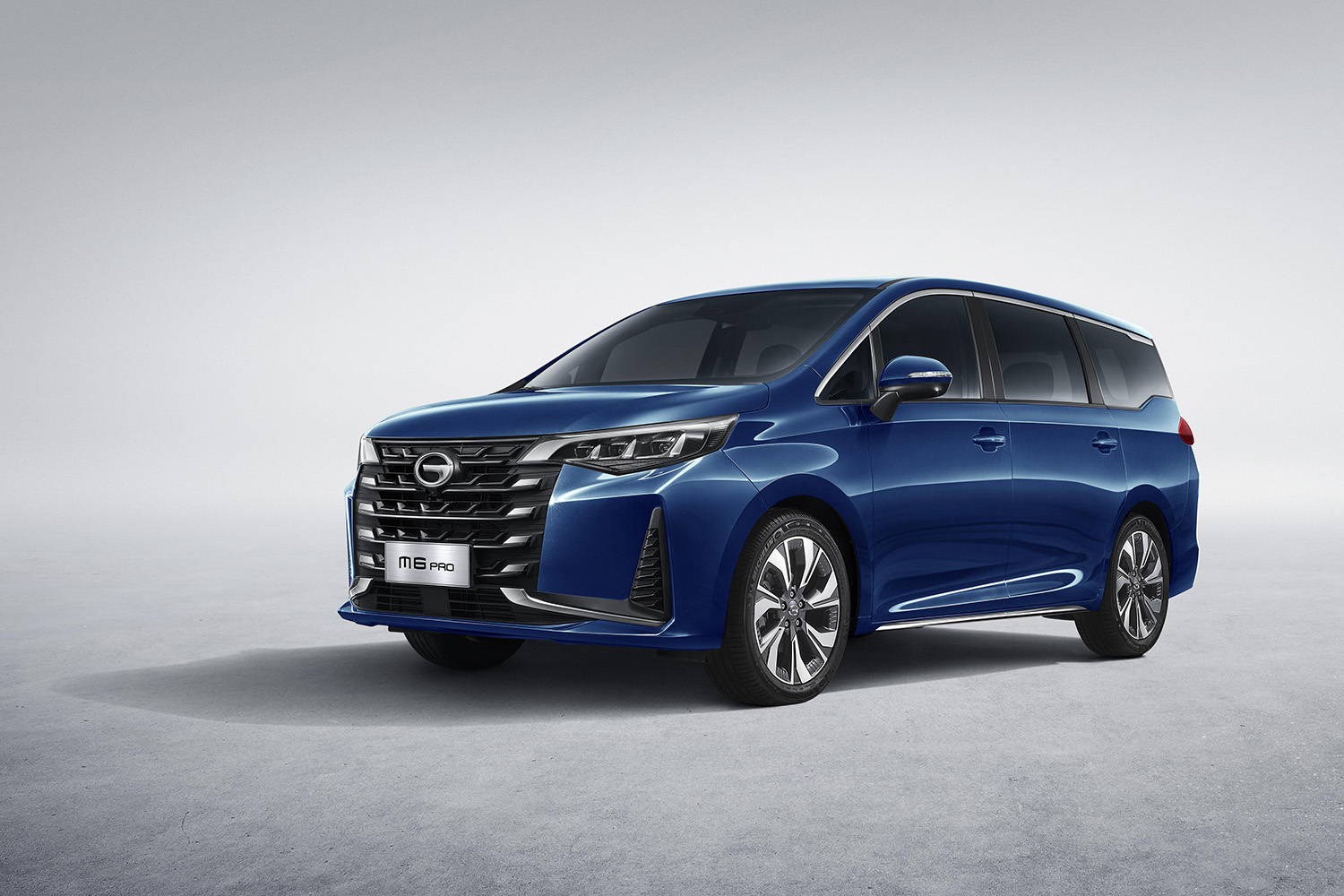
At a glance
- The M6 is a compact MPV with SUV-style proportions and six- or seven-seat layouts across the range.
- The 270T turbocharged petrol range spans manual, DCT and automatic transmissions, subject to the exact unit.
- New vehicles suit predictable fleet specifications, while used examples require detailed condition and history checks.
- Export prices must be compared on a like-for-like landed-cost basis, using current per-unit listings and written terms.
- RHD availability, homologation, parts access and local service support must be confirmed before an order.
Why the GAC Trumpchi M6 matters for export markets
The GAC Trumpchi M6 matters in export markets because it occupies a useful middle ground: a compact multi-purpose vehicle with people-carrier seating flexibility and an SUV-style stance. Dealers can position it for families, airport-shuttle operators and mixed fleets that need more usable rows than a sedan without moving to a full-size van. The China-developed M6 also gives importers a recognizable alternative to larger Japanese and Korean MPVs where acquisition cost and loading efficiency matter more than premium branding. Its export role is practical rather than prestige-led, covering fleet and family use with one versatile model.
That positioning is especially relevant in markets where buyers want passenger-car comfort and flexibility but locally available alternatives are larger, more expensive to operate or less well equipped. The 270T turbocharged petrol powertrain fits the model's family-and-shuttle role, while manual and automated transmission choices allow importers to address markets with different driver and operating-cost preferences. Demand remains market-specific: fuel prices, import rules, taxation and after-sales support can be as decisive as the vehicle's features, so segment fit does not guarantee strong sales. Confirm local product acceptance before committing to a sizeable import programme.
For an importer, the M6's strongest argument is the combination of seating choice and a relatively straightforward specification review. Six- and seven-seat versions allow one model to serve different cabin layouts, while Elite, Luxury, Prestige and PRO designations indicate a graded range rather than one universal specification. Buyers should still assess each exact unit's age, transmission, condition, equipment and local homologation status. The right export question is not simply whether the M6 is popular in China, but whether its landed package matches the duties, roads and customer expectations of the destination market.
- Compact MPV, SUV-style stance.
- Six- or seven-seat layouts.
- Family, shuttle and fleet focus.
Model range, trims and powertrain variants: how the lineup is structured and how to choose
The lineup is organised around seating configuration, transmission and trim hierarchy. Some M6 versions are marketed as seven-seaters, while selected Luxury or Prestige versions use a six-seat layout. Elite, Luxury, Prestige and PRO names help identify grade and feature level, but they are not a substitute for a vehicle-specific equipment sheet. Model-year updates can also change standard equipment, infotainment, safety equipment and cabin finish. A buyer comparing listings should therefore match the exact trim name before comparing condition or quotation, rather than assuming every similarly named car is identical in its export specification.
The powertrain choices shown by the M6 range centre on the 270T turbocharged petrol engine, with manual, dual-clutch transmission and conventional automatic options appearing across different model years and trims. Manual versions can suit buyers focused on purchase economy and straightforward operation; DCT units prioritise smooth automated delivery, while a conventional automatic may appeal where that gearbox type is already familiar in the destination fleet. Final power output, gearbox ratios and equipment can differ by market, so the live listing and seller documents should control the comparison for procurement purposes.
The practical choice starts with the number of occupants and luggage the vehicle must carry. A seven-seat M6 is generally the more flexible family and shuttle configuration, while a six-seat version can provide a more spacious middle-row arrangement for buyers who do not need a third row. Trim level should then be matched to essential equipment rather than badge appeal. Ask for photographs, the full option list, maintenance record and any electronic diagnostics; on a used vehicle, also verify that the installed seats, dashboard and drivetrain correspond to the stated trim.
- Choose seat count first.
- Manual, DCT and automatic.
- Verify each exact trim.
New vs used GAC Trumpchi M6: how export inventory is structured and how buyers choose
Export inventory for the M6 may include both new vehicles and used examples from different production periods. A new unit is the simpler choice when a buyer wants a known factory condition, a defined model-year specification and a cleaner handover process, subject to the trim actually offered in the destination market. A used vehicle can broaden sourcing options and may suit importers with established refurbishment capability. The relevant distinction is therefore not new versus used in the abstract, but whether the unit's age, specification and documentation support the intended resale or fleet programme.
Used M6 sourcing requires a different risk assessment. Model age can affect depreciation, financing, parts support and the availability of driver-assistance or infotainment features, while mileage and condition do not tell the whole story without a physical or documented inspection. Look for service records, cold-start behaviour, transmission operation, fluid leaks, tyre condition, body repair and evidence of accident history. A lower acquisition figure can be offset by refurbishment, compliance work and holding costs. Compare the complete cost of putting each unit into service, not just the amount shown on the listing page.
New and used units suit different commercial roles. A new vehicle may be easier to standardise across a fleet and describe in a tender, particularly where buyers expect warranty support and predictable specification. A carefully chosen used M6 can be more rational for a short-term rental, secondary staff vehicle or price-sensitive channel that values the 270T platform but not the latest model year. Whichever route is chosen, secure a VIN or chassis number, inspect the actual vehicle, confirm ownership and payment details, and align the purchase terms with local registration before dispatch.
- New: predictable fleet specification.
- Used: inspect history and condition.
- Compare total acquisition cost.
How export pricing works: the factors behind a live listing price, and how to read one
An export listing price is not a fixed market value; it is a unit-level asking point that must be interpreted with its commercial terms. The model year, trim, seating layout, transmission, emissions marking and whether the vehicle is new or used can all affect the figure. For a used example, mileage, service history, cosmetic condition and disclosed repair history matter. At the transaction level, the seller's location, exchange rate, payment terms, inland handling, freight, insurance, destination charges and selected Incoterm can change the final landed cost. Ask for each cost to be shown separately.
Reading a live quote requires more than comparing headline numbers. First establish whether the displayed amount is an EXW, FOB, CIF or another basis; do not assume that shipping, insurance, export documentation, customs clearance or import duty are included. A dealer's working currency may also differ from the currency used for payment, making the exchange-rate assumption visible in the quote. Check what the seller will provide for the VIN, ownership, maintenance records, keys, documents and vehicle condition. Any promised inclusion should appear on the pro forma invoice and final sale contract.
For a like-for-like comparison, normalise several vehicles to the same model year, trim, seat count, gearbox, condition and delivery basis. Then add the same estimated destination costs to each amount, including freight, insurance, port charges, taxes and any compliance or refurbishment work. This makes it possible to distinguish a genuinely better-equipped vehicle from one that merely carries a lower asking price. The current per-unit price and commercial terms should always be checked in the live M6 inventory, and a written quotation should be requested for the unit actually selected before funds are committed.
- Confirm Incoterm and currency.
- Normalise trim and condition.
- Request a written quote.
MOQ, ordering and payment: single units vs consolidating a container
For wholesale procurement, minimum order quantity is a listing-level commercial term, so the requirement shown for each M6 should be checked before planning a purchase. Some export sellers may accept a single vehicle, while others set a higher lot quantity for a particular trim, production run or container plan; neither rule can be assumed from the model name. One-unit buying is useful for testing a market, but it may leave the importer carrying container costs that a larger purchase would spread. Confirm the MOQ, unit allocation, deposit and cancellation terms in writing for the exact listing.
Consolidating several M6 units can improve freight economics, but the saving must be weighed against configuration control. One container loaded with mixed trims, seat counts or gearbox types may create a complicated vehicle mix, while a uniform batch is easier to sell and maintain. Buyers can also explore consolidated shipping with other compatible vehicles when a supplier or freight consolidator accepts them. Before booking, obtain a loading plan, gross-weight and dimension information, securing requirements and the proposed route. The lower freight cost per vehicle is only valuable if every unit has already passed inspection and destination compliance checks.
The ordering sequence should move from product selection to a binding paper trail. Ask for a pro forma invoice showing the vehicle identifiers, specification, unit price, MOQ, Incoterm, payment milestones and estimated shipment window, then reconcile it with the live listing. The buyer should verify the seller's legal identity, authority to sell and vehicle ownership, and confirm payment instructions through an independent contact. Use a traceable method, avoid last-minute changes to bank details, and retain inspection reports, transport documents and handover records until the vehicle is received and accepted without exception.
- MOQ is confirmed per listing.
- Single-unit freight can cost more.
- Tie payment to a pro forma invoice.
Shipping, homologation and market compliance caveats: LHD/RHD and import rules by country
Steering configuration is one of the first checks for an overseas buyer. The M6 is primarily associated with left-hand-drive production for the Chinese domestic market, while some export destinations require right-hand drive. Do not assume that a listing can be converted economically or legally: confirm whether a factory right-hand-drive M6 is available, and if not, whether a reputable conversion is permitted under local rules. A conversion can affect safety conformity, warranty, insurance and residual value. For the RHD market, availability should therefore be established before purchase, not after the vehicle has been financed and shipped.
Sea freight is commonly considered for complete vehicles because Ro-Ro or container shipping reduces handling compared with some break-bulk options, although the correct method depends on dimensions, port equipment and the carrier. Vehicle condition, securing points, lashing, weather routing and insurance all influence the quotation and the risk of damage in transit. Obtain the loading and discharge ports, planned sailing, free-time allowance, documentation package and claims procedure. Also budget for pre-shipment inspection, export preparation, inland movement, destination handling and customs clearance, because the quoted freight charge is rarely the only landed expense.
Import and road legality are destination-specific. A China V or China VI label identifies the Chinese emissions version, but it does not automatically satisfy the destination's emissions, safety, noise, lighting or vehicle-type approval. Depending on the country, registration may require a Certificate of Conformity or homologation evidence, VIN checks, customs classification, duty and tax payment, an approved importer or permit, and local modifications such as lighting, mirrors or glass. Build a compliance checklist with a qualified local customs broker before committing. If the vehicle cannot be registered as intended, reconsider the purchase.
- Confirm factory RHD availability.
- Chinese labels are not local approval.
- Use a destination compliance checklist.
Who should buy the M6 — and who should pick a different vehicle
The M6 is a strong candidate for an importer or dealer serving families, hotel and airport shuttles, regional staff transport and cost-conscious light fleets. Its compact footprint and choice of six- or seven-seat layouts can cover several customer needs, while the 270T petrol platform can be compared directly with mainstream combustion-engine fleets. A manual unit may suit a buyer prioritising lower acquisition and operating complexity; a DCT or automatic can reduce driver workload in stop-start traffic. The strongest case is where these practical advantages produce a lower total cost of ownership than a larger premium MPV.
It is less suitable for buyers who require an electric vehicle with meaningful battery range, a plug-in hybrid, or a model with a major local electrified range. Those priorities would point toward a battery-electric or hybrid people carrier instead of an M6 built around the 270T petrol engine. The M6 may also be a poor match for serious off-road work, heavy towing, executive transport or a fleet needing a long-established premium support network. Check ground clearance, towing limits, crash ratings and destination equipment rather than assuming them. If support and comfort outweigh cost and flexibility, a rival may be wiser.
A structured decision test helps prevent a low purchase quote from dominating the evaluation. Score shortlisted M6 units against payload needs, seat layout, transmission preference, fuel availability, annual distance, maintenance capability and parts access. Then compare complete operating cost, including freight, insurance, taxes, servicing, tyres, depreciation and commercial-user downtime. Inspect at least one representative vehicle and include a pre-shipment inspection in the contract. The M6 should win when its room, running costs and manageable size align with the operation; otherwise, move to a segment rival rather than accepting a poor specification compromise.
- Best for families, shuttles and light fleets.
- Weak fit for EV or heavy-duty priorities.
- Compare operating cost and support.
Main rivals and how the M6 compares
Comparing the M6 with rivals should begin with the use case rather than badge or brochure styling. Review actual dimensions, usable third-row space, luggage capacity, powertrain, gearbox, safety equipment, warranty coverage, homologation and the local service network. Export versions can differ from vehicles sold under the same name in their home market, so the destination specification is decisive. Also calculate landed cost for an equivalent vehicle; a rival that is more expensive at purchase may still be cheaper after freight, tax, fuel and servicing. The M6 is most competitive where its seating versatility and China-sourced value outweigh weaker local recognition.
Against the Mitsubishi Xpander, the M6 competes in the compact people-carrier and MPV-crossover arena. The Xpander may benefit from stronger recognition and established after-sales support in certain Southeast Asian and other markets, whereas the M6 offers an alternative supply route and a 270T petrol range with manual and automated choices. The deciding factors should be the exact seven-seat packaging, destination equipment, warranty and total cost. If local Xpander service and residual demand are strong, that can outweigh the M6's sourcing advantages; if not, the M6 may be more practical for a value-led dealer.
The Hyundai Staria and Toyota Innova are also relevant, although local availability varies. The Staria generally competes as a larger, more modern premium people carrier with different petrol, diesel or electrified choices depending on market; it may suit buyers prioritising cabin sophistication and space over acquisition efficiency. Toyota Innova fleets benefit from an established reputation and market-specific diesel options where offered, which can matter for high-utilisation operators. The M6 instead centres on 270T petrol power and can offer six- or seven-seat layouts from a different sourcing base. Compare fuel availability, real-world service costs and local resale demand before selecting either alternative.
- Compare destination-spec equivalents.
- Xpander: established local-brand support.
- Staria and Innova serve different priorities.
Live GAC Trumpchi M6 export inventory
View all listings →Real units currently on ChinaCarDirect with per-unit asking prices and MOQ. Availability updates live from the catalogue.
How to buy a GAC Trumpchi M6 from China
-
1
Define the operating requirement
Set the required seat count, payload, annual distance, fuel preference and transmission habits before shortlisting vehicles.
-
2
Review live M6 inventory
Compare current M6 listings by model year, trim, seat layout, transmission, condition and location. Treat every displayed amount as a unit-level asking price requiring confirmation.
-
3
Verify the exact vehicle
Request the VIN or chassis number, full option list, ownership documents, service records, photographs and any diagnostic information for the selected unit.
-
4
Request a written quotation
Ask for the unit price, MOQ, currency, Incoterm, payment milestones, documentation and estimated freight in one clear quotation.
-
5
Clear destination compliance
Work with an approved importer or customs broker to confirm steering configuration, homologation, VIN requirements, duties, taxes and registration rules.
-
6
Inspect, reserve and pay
Complete the agreed inspection, verify the seller's identity and authority, then use traceable payment instructions that match the final invoice.
-
7
Book freight and complete handover
Agree the loading plan, insurance, shipping route, document package and inspection point. Retain transport, customs and vehicle-acceptance records.
M6 vs rivals
| Mitsubishi Xpander | Both target compact seven-seat MPV buyers, but the Xpander can have stronger local-brand recognition and service support in markets where it is established. The M6 offers a China-sourced 270T alternative with manual and automated choices; choose on destination specification, warranty and landed cost. |
|---|---|
| Hyundai Staria | The Staria is generally larger and positioned more premium, with a broader powertrain range that can include diesel and electrified versions depending on market. The M6 is more compact and value-led, suiting buyers prioritising purchase efficiency and flexible six- or seven-seat utility over premium cabin space. |
| Toyota Innova | An established people-carrier and fleet option where sold, the Innova is attractive for its reputation and market-specific diesel availability in certain markets. The M6's 270T petrol and manual or DCT proposition can appeal where acquisition efficiency and configuration choice matter more. |
Frequently asked questions
How is GAC Trumpchi M6 export pricing determined?
Each live listing carries its own asking price and commercial terms. Year, trim, seat count, transmission, condition, mileage, exchange rate, freight, insurance, duties and Incoterm can all change the landed amount, so request a written quote for the selected unit rather than treating the displayed figure as a fixed market price.
What engine and transmission does the M6 use?
The M6 range represented here uses 270T turbocharged petrol powertrains, with manual, DCT and automatic transmissions appearing across model years and trims. Engine output and equipment vary by market, so confirm the exact configuration, gearbox and local compliance data on the live listing.
Is a used GAC Trumpchi M6 a better value than a new one?
New units generally offer a known factory condition and easier fleet standardisation; used units can offer broader sourcing and a lower entry point. Used purchases require inspection of mileage, service history, bodywork, wear and repair evidence, and refurbishment or compliance costs must be included.
What is the MOQ for a GAC Trumpchi M6 order?
MOQ is a commercial term set for each listing, not a permanent model-wide rule. Check the stated quantity on the live M6 record and include it in the RFQ, particularly if the plan involves consolidating several units into one shipment.
What determines M6 shipping time and cost?
Shipping time and cost depend on origin and destination ports, carrier and sailing schedule, vehicle method, securing, insurance, documentation, customs clearance and destination charges. Ask for the full route and Incoterm rather than relying on freight alone; current quotes require an RFQ.
Are spare parts available for the GAC Trumpchi M6?
Do not assume every overseas part is held locally. Before purchase, request the VIN, key parts list, part numbers, diagrams and expected lead times from Chinese or regional suppliers, then assess whether the destination can support routine servicing and warranty work.
Is a right-hand-drive GAC Trumpchi M6 available?
RHD availability must be confirmed for each destination because China-market M6 examples are commonly left-hand drive and not every export configuration is offered in both layouts. Ask whether a factory RHD vehicle exists and, if conversion is considered, obtain local approval and assess warranty, insurance and residual-value effects.
How do I order a GAC Trumpchi M6 from China?
Start with the live M6 inventory, shortlist like-for-like units and send an RFQ requesting the unit price, MOQ, Incoterm, payment schedule, documents and shipping estimate. After verifying ownership, inspection and destination compliance, sign the final documents, pay through traceable agreed instructions and retain the transport and handover records.
Ready to source the GAC Trumpchi M6?
Request a current GAC Trumpchi M6 quotation with the exact unit, Incoterm, MOQ and destination confirmed.
Request a quote