
GAC Trumpchi Gs8 Export Buying Guide
Buy GAC Trumpchi Gs8 from China with guidance on trims, hybrid options, export pricing, MOQ, shipping, compliance and main rivals for overseas dealers.
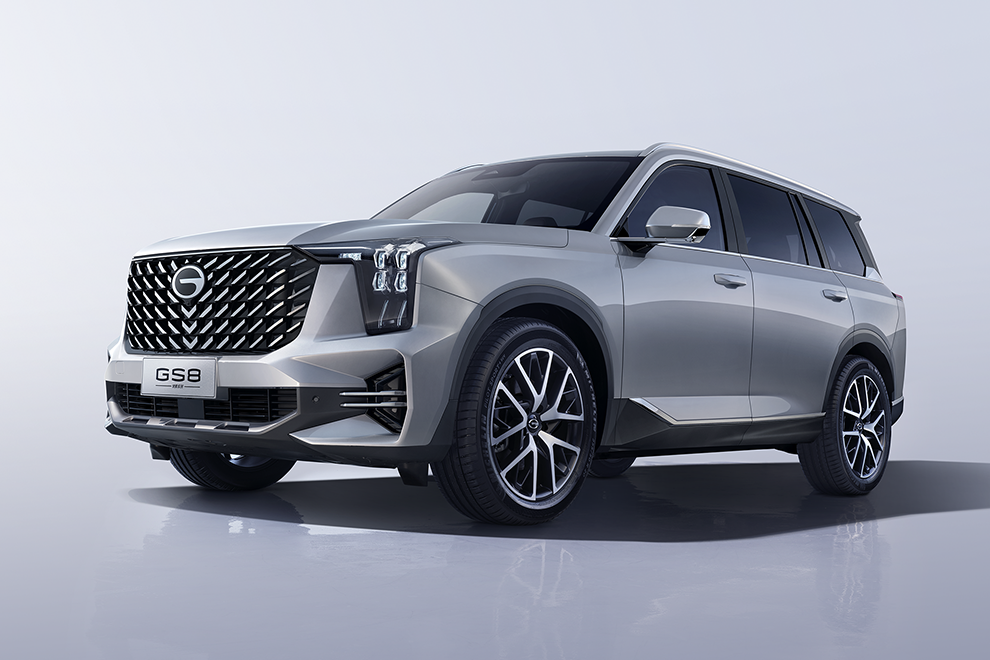
At a glance
- A mid-size SUV export offering spans five-, six- and seven-seat layouts for family, executive and fleet use.
- Gasoline, 2.0TGDI, 320T, 390T and 2.0TM hybrid families broaden configuration choices.
- 2WD and AWD/4WD-labelled trims suit different road, load and regional operating priorities.
- New and used export units require different checks, from exact specification to VIN-backed inspection.
- Live listings and a written RFQ should establish current price, MOQ, freight and lead time.
Why the GAC Trumpchi Gs8 matters for export markets
The GAC Trumpchi Gs8 is a mid-size SUV positioned for buyers who need more space and seating flexibility than a compact crossover without moving to a premium-brand vehicle. Its export proposition combines a substantial multi-row body, a broad mix of gasoline and hybrid versions, and equipment-led trims that can suit family use, chauffeur service or light fleet duty. For overseas dealers, that creates a clear value position: the model answers practical transport needs while leaving room to compare equipment, drivetrain and ownership cost before committing to a particular configuration carefully.
Demand for the GAC Trumpchi Gs8 for export is strongest where buyers compare three-row utility against total acquisition cost rather than badge prestige alone. The model can appeal to importers in markets where larger passenger vehicles are needed for family travel, hotel or executive transport, and mixed private/commercial use. Its different seating and powertrain choices also let a distributor address more than one niche with one platform, reducing the complexity of building an entire range around very different products. Actual demand still depends on local fuel prices, road conditions, taxation and dealer support.
The important export-market distinction is that the Gs8 is not simply a cheaper version of every established SUV. Buyers who value a familiar manufacturer network, long-established residual values or a specific homologated drivetrain may prefer a rival. Buyers who prioritize cabin capacity, configurable seating and a broader Chinese-manufacturer feature set may find the Gs8 more relevant. A sound purchase decision therefore starts with use case, then seating, powertrain, safety equipment and serviceability, rather than with the lowest displayed listing or the newest model year, or treating trim labels as proof of local suitability.
- Multi-row SUV positioning
- Gasoline and hybrid choices
- Configuration-led selection
Model range, trims and powertrain variants: how the lineup is structured and how to choose
The GAC Trumpchi Gs8 range uses several familiar naming layers, so an importer should read the full designation rather than rely on the model badge. Visible 320T and 390T versions sit alongside 2.0TGDI Pilot and Navigator variants, while Dual Engine and Hybrid Series names identify 2.0TM-based electrified versions. Trim labels then add drivetrain, equipment and seating details such as Luxury, Premium, Smart Connect, Pro and Comfort. This structure gives buyers recognizable comparison points, but it also means that two similarly named vehicles may not be direct substitutes in the same export market.
Seating is one of the clearest ways to narrow the GAC Trumpchi Gs8 specs for a buyer. Export trims appear in five-, six- and seven-seat forms, changing the balance between passenger capacity, luggage space and rear-row usability. A seven-seat vehicle is usually the more flexible family or tourer choice, while six seats can reduce packaging pressure in chauffeur or executive use; a five-seat version prioritizes cabin and cargo room over third-row versatility. Buyers should verify seat count, folding arrangement and luggage dimensions in the unit listing rather than assuming every version has the same interior.
Drivetrain and powertrain choice then determine how the Gs8 is likely to fit local operating conditions. The range includes 2WD versions and AWD or 4WD-labelled trims, with gasoline-only and hybrid family cars available under different series names. For buyers evaluating GAC Trumpchi Gs8 specs, the safest approach is to request the confirmed engine, transmission, output, fuel type, battery details where applicable and curb weight for the exact listing. These figures can vary by market or trim, so the live unit record should remain the controlling reference before homologation and costing.
- Five-, six-, seven-seat layouts
- 2WD and AWD/4WD options
- Multiple powertrain labels
New vs used GAC Trumpchi Gs8: how export inventory is structured and how buyers choose
Export inventory for the GAC Trumpchi Gs8 can include both newly prepared vehicles and used examples, so the buying task starts by establishing the condition category of the exact unit. New cars suit buyers who want a consistent specification, current model-year features and a cleaner chain of ownership, although the model year does not by itself guarantee identical equipment across markets. Used GAC Trumpchi Gs8 vehicles can broaden the choice for importers focused on value, but age, mileage, service history and repair condition become central to the decision and due diligence.
For a used vehicle, the listing should be treated as the start of an inspection, not proof that the car is road-ready. Request exterior and interior photographs, underside images, the VIN, odometer reading, maintenance records and evidence of ownership. Check for accident repairs, suspension wear, tire age, fluid condition, warning lights and the condition of the infotainment and safety systems. An independent pre-shipment inspection is especially valuable for higher-mileage units, because appearance alone cannot reveal deferred mechanical work or evidence of previous flood exposure that may not be visible externally at all.
For new inventory, the decision shifts toward specification accuracy and delivery discipline. Buyers should compare the trim name, engine, gearbox, drivetrain, seating, colour, options and production timing with the importer's market plan. A new vehicle may still need local safety, emissions, radio or equipment adjustments, and a delivery delay can affect launch timing. Used stock, by contrast, may allow faster access to a proven configuration but should be valued after repair risk, depreciation and likely resale costs. Neither category automatically delivers the stronger commercial result without a careful local total-cost analysis.
- Confirm condition first
- Inspect used VINs
- Verify new specifications
How export pricing works: the factors behind a live listing price, and how to read one
A GAC Trumpchi Gs8 export price guide should separate the vehicle quote from the landed cost. The displayed listing amount represents the seller’s asking position for that unit, while the final import budget can also include inland transport, export handling, freight, insurance, port charges, customs duties, taxes, registration and local compliance work. Exchange-rate movements can also alter an otherwise unchanged quote. Incoterms matter because they define where responsibility transfers and which costs the seller includes, so two listings are not directly comparable until those terms are aligned in the quotation.
To read a live GAC Trumpchi Gs8 listing correctly, start with the complete vehicle description and then look at the commercial terms. Check model year, trim, engine or hybrid version, gearbox, drivetrain, seating, mileage or new condition, exterior colour, and whether optional equipment is included. Next, establish the currency, tax status, Incoterm, named destination or port, validity period and payment milestones. A lower displayed amount can still be more expensive if it excludes sea freight, insurance, taxes or mandatory modifications; price is meaningful only in the context of the stated scope.
Buyers who want to buy GAC Trumpchi Gs8 from China should use the live inventory for the current per-unit figure, then request a landed-cost quotation for a shortlist. Ask the supplier to identify every line item, state whether duties and taxes are estimates or fixed amounts, and explain what would cause the quote to change. Keep the comparison consistent by using the same destination, Incoterm and vehicle specification. If a marketplace price is being treated as a budget ceiling rather than a final offer, leave a contingency for exchange-rate changes, port charges and compliance work.
- Quote versus landed cost
- Compare matching Incoterms
- Use live unit pricing
MOQ, ordering and payment: single units vs consolidating a container
Minimum order quantity is a listing-level commercial term, not a permanent property of the GAC Trumpchi Gs8. Some sellers may accept a single vehicle, while another supplier or special configuration may require a batch. Buyers looking for GAC Trumpchi Gs8 wholesale supply should therefore read the MOQ field on each unit, confirm it in the quotation, and ask whether mixed trims or model years can count toward the same batch. The binding number is the one accepted in the written order, not an assumption based on the marketplace or the model’s popularity.
A single-unit purchase suits a pilot importer, a business needing one specific configuration or a customer willing to manage freight and homologation individually. Consolidating several vehicles into one container can reduce freight and handling cost per unit, but it introduces coordination risk: trims, colours, production dates and payment terms must align, and one delayed vehicle can hold the group. Secure the first unit with a pro forma invoice, document each allocation, and confirm how the seller will handle shortages, substitutions and early release before paying the balance. Use a written allocation sheet.
A workable ordering process separates the vehicle order from the international shipment. Select the unit or batch, complete the seller’s KYC and ownership checks, agree on inspection, payment, documentation and delivery terms, and obtain a final pro forma invoice showing the exact vehicle identifiers. Payment commonly follows a deposit with the balance linked to agreed shipment milestones, but the method and timing must be verified. Use a traceable corporate payment channel, confirm the beneficiary, retain receipts and correspondence, and avoid treating a general enquiry as permission to dispatch without written approval.
- Confirm listing MOQ
- Document mixed allocations
- Verify payment milestones
Shipping, homologation and market compliance caveats: LHD/RHD and import rules by country
Left-hand-drive and right-hand-drive availability must be settled before an order, because steering configuration affects the vehicle description, documentation and sometimes the price. The GAC Trumpchi Gs8 export range may be presented in different market configurations, but a buyer should not assume that a left-hand-drive listing can simply be converted. Ask for the VIN, steering position, factory equipment and any relevant conversion history, and select a unit that already matches the destination market where possible. Local rules may restrict altered vehicles even when the mechanical conversion appears straightforward for road use.
Import compliance extends beyond steering position. Depending on the destination, the vehicle may need local type approval, emissions and noise compliance, safety-equipment changes, VIN and customs documentation, age restrictions, duties, taxes and registration. The importer remains responsible for confirming the applicable rules with a customs broker or local authority; a Chinese-market specification is not automatically homologated elsewhere. Ask the supplier for the original homologation papers, engine and emissions information, and any approvals relevant to the export destination. Budget separately for headlamp, mirror, radio, software or equipment changes that local rules require.
Shipping method should be selected only after the packed dimensions, weight, destination port and delivery deadline are confirmed. Depending on those factors, a vehicle may move by roll-on/roll-off carrier, enclosed container or another approved mode, and the quotation should state the route, surcharges and responsibility for cargo handling. Sea freight takes longer than local delivery but can suit planned stock programs; air or expedited transport may reduce transit time at higher cost. Allow time for export inspection, customs clearance, inland haulage and final registration, and do not treat the vessel departure date as the vehicle’s delivery date.
- Confirm steering position
- Check local homologation
- Budget clearance and haulage
Who should buy the Gs8 — and who should pick a different vehicle
The Gs8 is a strong candidate for importers serving families, hotel and executive transport, regional dealers, and fleet buyers that need a spacious SUV without a premium-brand budget. A seven-seat version can suit families and group travel; six-seat derivatives may work better where a third row is rarely used and second-row access matters. The choice between gasoline, 2.0TGDI, 320T, 390T and 2.0TM hybrid variants should reflect local fuel availability, expected annual mileage, local servicing arrangements and ownership support. It also gives distributors room to serve several equipment tiers without changing platform.
Different vehicle types suit buyers better when their priorities conflict with the Gs8’s packaging or ownership model. A compact crossover may be easier to park, consume less fuel and cost less to import, although it will offer less third-row flexibility. A heavy-duty pickup or body-on-frame SUV may be more appropriate for rough roads, commercial payloads or towing. An electric vehicle may be preferable where charging is reliable and local incentives favor zero-emission vehicles. Buyers loyal to an established global brand, or those requiring a homologated diesel option, should compare those alternatives before finalizing a Gs8 order.
A practical buying matrix prevents an attractive trim from becoming the wrong commercial decision. First define passengers and luggage, then choose two-wheel drive or four-wheel drive according to roads and load, then compare the confirmed powertrain against local fuel and tax conditions. Add expected resale positioning, parts access, service support and the importer’s ability to register the vehicle. If a planned margin is too thin after freight, tax and compliance, a cheaper used example or a different rival may protect the business better than the newest Gs8 specification for launch.
- Multi-row family utility
- Consider operational priorities
- Protect the landed margin
Main rivals and how the Gs8 compares
Toyota Fortuner is the clearest established alternative for many Gs8 buyers. It benefits from a widely developed export presence, familiar diesel availability in some markets, and strong recognition among fleet and family customers. The GAC Trumpchi Gs8 generally competes through a Chinese-brand value proposition, broader use of connected-equipment trims and a choice of five-, six- or seven-seat layouts. A Fortuner buyer prioritizing dealer familiarity, residual value and proven fuel choices may prefer Toyota; a buyer prioritizing cabin equipment and configuration flexibility may find the Gs8 more compelling after local checks.
Mitsubishi Pajero Sport is another relevant rival where buyers value a rugged SUV positioning, long-distance use or diesel availability. It may appeal to buyers who prefer an established global marque and a model closely associated with mixed-road travel. The Gs8 counters with connected luxury trims, multiple seating configurations and a hybrid option within its export range, but it may not carry the same international aftersales recognition. The better choice depends on the destination’s service network, road profile, expected resale market and the exact engine offered for import and homologation.
Chery Tiggo 8 is the closest Chinese-brand value comparison for distributors considering a large family SUV. It competes directly on price-oriented procurement, spacious cabin positioning and the option of five- or seven-seat configurations, making trim and equipment comparisons useful. The GAC Trumpchi Gs8 differentiates through its wider mix of GAC series names, hybrid and four-wheel-drive variants, and distinct luxury or smart-connect equipment. Neither brand should be chosen by badge alone: compare verified specifications, aftersales parts, homologation, real freight and the importer’s ability to maintain a credible resale proposition locally.
- Toyota Fortuner: support and resale
- Pajero Sport: ruggedness and diesel
- Tiggo 8: direct Chinese-brand rival
Live GAC Trumpchi Gs8 export inventory
View all listings →Real units currently on ChinaCarDirect with per-unit asking prices and MOQ. Availability updates live from the catalogue.

GAC Trumpchi Trumpchi GS8 2017 320T 2WD Luxury Smart Connect (7-seater)
GAC Trumpchi Trumpchi GS8 2020 390T AWD Luxury Smart Connect Anniversary Edition (7-Seater)
How to buy a GAC Trumpchi Gs8 from China
-
1
Define the target specification
Record the destination market, steering position, seat count, drivetrain, powertrain, budget and expected annual mileage. Separate mandatory compliance requirements from preferred equipment before selecting a trim.
-
2
Review the live inventory
Search the live GAC Trumpchi Gs8 listings and compare complete trim descriptions rather than model names alone. Open each shortlisted unit to check its condition, exact specification and current commercial terms.
-
3
Request a written quotation
Send an RFQ stating quantity, destination, Incoterm, timeline and compliance needs. Request an itemized breakdown of the vehicle, freight, insurance, port charges, taxes, duties and any required modifications.
-
4
Verify identity and documents
Confirm the VIN, model year, engine, gearbox, drivetrain, seating, equipment, ownership and export-related documents. Ensure the specification matches the trim shown in the quotation and pro forma invoice.
-
5
Inspect before final payment
Use an independent pre-shipment inspection, with additional mechanical and structural checks for used vehicles. Resolve discrepancies before authorizing the balance or shipment release.
-
6
Confirm MOQ and payment terms
Accept the MOQ only in writing, including rules for mixed trims or model years. Verify the deposit, balance milestones, payment channel, beneficiary, invoice details and refund or cancellation provisions.
-
7
Arrange freight and clearance
Agree the shipping mode, route, insurance, loading and discharge responsibilities with the named destination port. Allow time for customs, inland delivery, local registration and any equipment changes before launch.
Gs8 vs rivals
| Toyota Fortuner | The Fortuner offers stronger international brand familiarity, established after-sales support and established resale positioning in many markets. The Gs8 is more relevant to buyers prioritizing Chinese-brand value, connected equipment and five-, six- or seven-seat configuration flexibility. |
|---|---|
| Mitsubishi Pajero Sport | The Pajero Sport is a credible choice for buyers prioritizing a rugged market image, mixed-road use or diesel availability where offered. The Gs8 competes with connected luxury trims, flexible seating and hybrid options, but its local service network must be assessed carefully. |
| Chery Tiggo 8 | The Tiggo 8 is a direct Chinese-brand competitor for value-oriented importers seeking a spacious five- or seven-seat SUV. The Gs8 offers a broader selection of series, hybrid and four-wheel-drive variants, while the final choice should depend on verified equipment, parts support and landed cost. |
Frequently asked questions
How is GAC Trumpchi Gs8 export pricing determined?
Export pricing is driven by model year, trim, powertrain, drivetrain, seating, condition and mileage, then adjusted for currency, freight, insurance, port charges, taxes, registration and Incoterms. The current vehicle amount and per-unit terms are shown on live GAC Trumpchi Gs8 listings. Request a written RFQ for a destination-specific landed-cost breakdown because these figures can change.
Which GAC Trumpchi Gs8 engine and powertrain options are available?
The visible range includes 320T and 390T labels, 2.0TGDI Pilot and Navigator gasoline variants, and 2.0TM Dual Engine/Hybrid versions. Seating spans five to seven, while drivetrain choices include 2WD and AWD/4WD-labelled trims. Confirm the exact output, transmission, battery and fuel figures on the individual unit because specifications vary by trim.
Are new or used GAC Trumpchi Gs8 vehicles better for export?
New vehicles provide a cleaner ownership chain and a more standardized specification, while used cars can offer access to older trims or a lower acquisition cost. A used vehicle adds uncertainty in mileage, repairs, wear and residual value, so it should be supported by VIN-backed documents and inspection. Choose the condition that fits the importer’s launch timing and risk tolerance.
What is the MOQ for buying a GAC Trumpchi Gs8 from China?
MOQ is set per seller or listing and can differ between Gs8 configurations. Some units may be sold individually, while a batch, color mix or special order may require more. Confirm the accepted quantity, mixed-unit rules, deposit and allocation in the written quotation; only that agreement is binding.
How long does shipping take and what affects freight cost?
Transit time and freight cost depend on the origin and destination, shipping mode, route, insurance, surcharges, vehicle dimensions and clearance requirements. Sea freight is usually slower, while expedited modes cost more; customs and inland delivery can add time after arrival. Ask for port-to-port or door-to-door terms and a lead-time breakdown rather than relying on a departure estimate alone.
Can spare parts be ordered for the GAC Trumpchi Gs8?
Spare-part planning should begin before the first bulk order. Record the model year, trim, engine and VIN configuration, then ask the seller or parts supplier to confirm availability and lead time for filters, brakes, tires and service consumables. For uncommon versions, compare local aftermarket support and keep emergency stock because interchangeability should not be assumed.
Is a right-hand-drive GAC Trumpchi Gs8 available for export?
Right-hand-drive availability depends on the exact unit and destination. Ask the seller for the VIN, steering position and conversion history, and do not assume a left-hand-drive car can be converted without local type-approval consequences. If no factory-configured unit matches, compare approved alternatives before authorizing modifications.
How do I order a GAC Trumpchi Gs8 from China?
Start with the live inventory, compare complete unit descriptions and send an RFQ with the destination, quantity, configuration and Incoterm. Verify the VIN, specification and documents, then agree inspection, payment and shipment terms before paying the balance against confirmed milestones. The seller should issue a pro forma invoice identifying the vehicle, beneficiary, costs and dispatch arrangements.
Ready to source the GAC Trumpchi Gs8?
Send your target market, seating and powertrain requirements to ChinaCarDirect for a current GAC Trumpchi Gs8 quotation and export checklist.
Request a quote