
Geely Binyue Export Buying Guide for Overseas Buyers
Explore Geely Binyue export options with a buyer-focused guide to trims, engines, pricing factors, MOQ, shipping, homologation and rival vehicles.
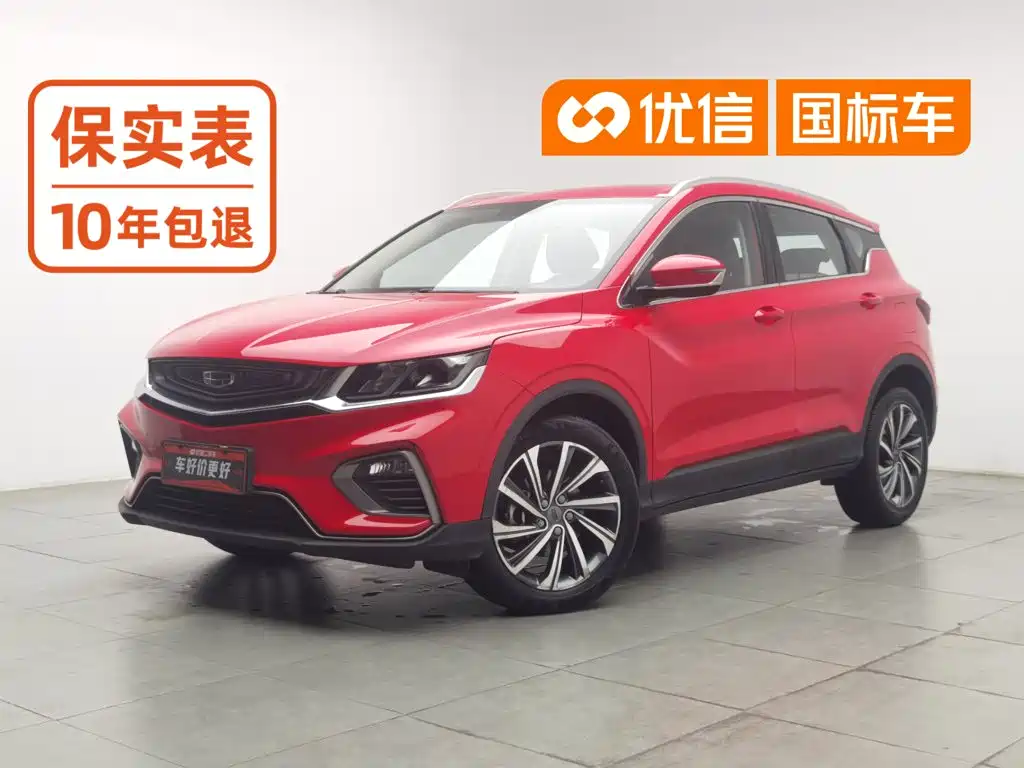
At a glance
- The Binyue is a compact, road-oriented SUV suited to urban, family and light-fleet use.
- Listed petrol choices span 1.4T, 1.5T/1.5TD and 1.5L engines with DCT or CVT transmissions.
- Series and edition names include Binyue L, PRO, COOL, Sport and multiple named packages.
- Export quotes vary by exact unit, specification, condition, logistics and Incoterm; consult live inventory.
- A single-unit trial may be negotiable, while container consolidation demands strict configuration and market matching.
- RHD supply, emissions approval, parts support and import rules must be confirmed before commitment.
Why the Geely Binyue matters for export markets
The Geely Binyue sits in the compact crossover segment, combining a relatively manageable footprint with the seating height and luggage flexibility expected of an SUV. That balance is useful in export markets where importers need a vehicle that can navigate dense streets, fit common parking spaces and still serve families or business users better than a conventional hatchback. The Binyue is therefore not positioned as an off-road model, but as a practical, road-oriented compact SUV for everyday commercial use. Its appeal comes from format flexibility, available equipment and multiple petrol powertrain choices rather than from a single headline specification.
For overseas dealers, the relevant demand case is straightforward: buyers often want a modern-looking, automatic-transmission crossover without moving into a larger premium SUV. A compact Geely can broaden a dealership’s entry-level offer, while a petrol powertrain may suit markets without extensive charging networks or customers who need longer operating range between refills. Fleet and commercial users can also value easier packaging and potentially lower running costs than larger vehicles, although actual fuel economy, insurance and servicing costs must be checked locally before a purchase order is placed or amended after compliance work.
Export suitability depends on disciplined configuration matching. Chinese-market Binyue names can differ from international model names, and a listing may identify an edition, transmission, emissions version and optional equipment that are not obvious from the Binyue badge alone. Buyers should therefore compare the complete vehicle description, not assume every Binyue has the same engine, gearbox or equipment. ChinaCarDirect’s live Binyue inventory is the practical starting point for finding the exact configuration, after which the destination importer can assess local demand and compliance. This sequence avoids importing a specification the local market does not need.
- Compact SUV packaging for urban use
- Multiple petrol powertrain configurations
- DCT and CVT choices by edition
- Exact trim and emissions matching required
Model range, trims and powertrain variants: how the lineup is structured and how to choose
The Chinese-market Binyue range is structured around model series, appearance packages and named editions rather than one simple global trim ladder. The range includes the core Binyue, Binyue L, PRO, COOL and Sport labels, plus editions such as Diamond, Platinum, Hunter, Knight, Soaring Dragon and Beyond. These names may indicate equipment, styling or powertrain packages, but they are not standardized across every export destination. Treat the full listing title as the configuration identifier, and ask the seller for a written equipment list before comparing two vehicles marketed under similar names.
The powertrain menu visible in the lineup consists of 1.4T and 1.5T/1.5TD turbo engines paired with dual-clutch gearboxes, plus a 1.5L naturally aspirated engine paired with a CVT. Some entries use codes such as 240T and 260T, while others spell out displacement and forced induction; those labels should not be treated as a universal international specification system. A BSG designation appears on one named edition and generally indicates mild-hybrid assistance, not a battery-electric range claim. For any shortlist, verify the actual engine, gearbox, output figures, fuel type and emissions version on the unit-specific listing.
Selection should start with the use case rather than the edition badge. A 1.5L CVT car may be the simpler choice for buyers prioritizing straightforward petrol operation, while a turbo-DCT version may suit drivers who prefer more responsive acceleration and a more modern automated gearbox. Those are general engineering characteristics, not a substitute for a road test or local tax calculation. Compare acceleration, braking, noise, ride, visibility, boot usability and after-sales support, then verify that the selected trim’s safety and convenience equipment is useful in the destination market rather than paying for equipment that will not be used.
- Match engine and gearbox before styling
- Treat 240T and 260T as listing codes
- Confirm China V and China VI details
- Shortlist by use case and running costs
New vs used Geely Binyue: how export inventory is structured and how buyers choose
Export inventory is fragmented by model year, series, edition, engine/transmission combination and source-market emissions label, so condition is only one part of the comparison. A vehicle can look nearly identical from the exterior while differing in gearbox, safety equipment, registration history or age-related condition. The correct workflow is to classify each unit from its live record, then compare it against a written specification and inspection report. Do not treat the model name as sufficient evidence that two units are equivalent. This discipline is especially important when a buyer places several Binyue vehicles into one import program.
Choosing a new Binyue primarily reduces uncertainty around wear, previous repair history and the condition of cabin, paint and mechanical components. It can also make trim, colour and factory equipment easier to align when ordering multiple units, although new does not by itself confirm that a vehicle is unregistered or immediately ready for export. Ask for registration status, production or invoice dates, factory delivery documents, storage history and a current condition report. A recent model year may offer a more current specification, but age alone does not guarantee suitability for a particular import rule.
A used Geely Binyue can make economic sense when the buyer accepts a defined age, mileage and cosmetic condition in exchange for a lower vehicle acquisition cost. The tradeoff is that savings must absorb inspection, refurbishment, warranty uncertainty and possible parts delay, and the same model name may hide a different powertrain or emissions standard. Review the VIN, title or registration documents, service history, tyres, underbody, accident indicators and test-drive behaviour, and ask whether warranty or corrosion obligations transfer. Compare the live unit price with the complete cost of making that vehicle roadworthy in the destination market, not with a generic used-car benchmark.
- Confirm condition and registration per unit
- Match model year to emissions documents
- Inspect used examples for wear and corrosion
- Include remediation in total ownership cost
How export pricing works: the factors behind a live listing price, and how to read one
An export price should never be treated as a fixed catalogue value. The live figure starts with the specific vehicle and its condition, then reflects variables such as model year, trim, engine and transmission, mileage if used, colour or option demand, and the seller’s commercial terms. Exact price and availability are shown per unit in the live inventory on ChinaCarDirect; a number seen in an earlier message or another unit is not a valid quote. Use the unit’s SKU and full title to ensure that every enquiry and comparison refers to the same physical vehicle or an equivalent specification.
The largest variables are often commercial rather than cosmetic. Exchange rates can move the local-currency cost; freight depends on origin and destination ports, sailing schedule, cargo volume, insurance and terminal charges; and Incoterms decide where risk and cost transfer. Destination duties, taxes, registration fees, compliance work and dealer margins sit outside many displayed vehicle prices unless expressly included. Model year and specification also affect resale expectations. A buyer should ask for an itemized quote that separates vehicle price, inland transport, export handling, freight, insurance and any destination charges or taxes.
To read a live listing correctly, check the title and SKU first, then confirm condition, year, trim, powertrain, gearbox, emissions label, mileage where applicable and included options. Next identify what the Incoterm is and whether the displayed amount is FOB, CIF or another basis; do not compare a vehicle-only figure with a landed estimate. Confirm whether the quote is valid for the referenced unit and whether payment, inspection, documentation and release conditions are stated. A low headline price can still be unattractive if freight, tax, compliance or rectification costs are omitted. Compare only like-for-like quotations on the same trade basis.
- Match the quote to the exact SKU
- Separate vehicle and logistics costs
- Confirm the governing Incoterm
- Check quote validity and exclusions
MOQ, ordering and payment: single units vs consolidating a container
MOQ is not a universal property of the Binyue model; it is attached to a particular seller, configuration and shipment plan. A buyer may request one vehicle as a pilot, but must confirm whether the selected listing accepts a single unit and whether that unit can be sold separately rather than released only as part of a group. For larger programs, the seller may offer a container allocation, but mixing years, editions, emissions versions or colours can create slow-moving stock and complicate homologation. Ask what minimum applies to each exact specification and whether the MOQ can be met with interchangeable units.
Container consolidation improves freight efficiency only when the vehicles are commercially compatible. A mixed container can combine entry trims, different colours and mechanically similar units, yet still create problems if some are aimed at different markets or carry different registration or emissions documents. The buyer should build a loading plan around confirmed demand, reserve budget for demurrage or storage if a model sells slowly, and identify which units can be sold independently. The importer should also check whether the destination permits mixed-brand or mixed-version consolidation and how customs treats each chassis. A single-unit trial often reveals these issues before a full container is committed.
Payment workflow should mirror the risk of each shipment. A normal sequence begins with specification and price confirmation, followed by a pro forma invoice naming the vehicle or agreed allocation, a deposit, inspection, document review and payment of the balance before release. Verify the contracting entity, beneficiary name, payment currency, bank instructions and cancellation terms; independently confirm bank details because copied invoice instructions can be altered. For a used unit, holdback against inspection findings can be more useful than an unconditional early balance payment. For a container, reconcile the final packing list, VINs and invoices against the signed purchase order.
- Confirm MOQ for the exact allocation
- Use a written pro forma invoice
- Validate beneficiary details independently
- Tie payment stages to inspection
Shipping, homologation and market compliance caveats: LHD/RHD and import rules by country
China-origin Binyue vehicles are commonly encountered in left-hand-drive form, while some export destinations require or strongly prefer right-hand drive. Availability therefore depends on the source unit, production specification and destination market; a live title alone does not prove steering configuration. RHD conversion can affect more than the seat position, including controls, safety systems, documentation and parts planning, and may conflict with the manufacturer’s warranty. Ask for the VIN, steering position and evidence of any factory RHD build, then have the destination authority or conformity assessor confirm acceptance before paying a non-refundable balance.
Import rules are destination-specific, and no listing can guarantee automatic clearance. The importer may need to verify VIN and registration documents, customs classification, tariff and tax treatment, age restrictions, emissions conformity, safety approval, roadworthiness, insurance, local labelling and software or radio requirements. Listings carrying China V or China VI designations identify source-market emissions generations, but those labels are not substitutes for local type approval. Obtain a written compliance opinion from a customs broker or conformity specialist for the exact configuration, especially when converting a left-hand-drive vehicle or changing its intended use from private to fleet registration. The cost and lead time of that review belong in the landed-cost model.
Shipping and release planning should begin after the unit is locked and documented. Ro-Ro vessel transport is a common method for finished vehicles, while container arrangements may be used in some lanes; the choice affects cost, loading security and transit planning. Freight and timing depend on origin and destination terminals, vessel frequency, seasonality, booking space, congestion, insurance and the agreed Incoterm. Require a pre-shipment inspection covering exterior, interior, tyres, fluids, VIN plates and warning devices, and confirm export declaration, customs release, spare-key handling and shipping-document responsibilities. Neither booking a vessel nor paying freight proves that the vehicle is legally exportable.
- Confirm factory steering configuration
- Map China V or VI to local approval
- Include broker and port-related costs
- Inspect and document before release
Who should buy the Binyue — and who should pick a different vehicle
The Binyue is a strong candidate for overseas dealers building an accessible compact-SUV category, and for fleet buyers that value a raised driving position, automatic transmission and straightforward petrol operation. It can suit urban operators, young professionals and small families seeking more utility than a hatchback without moving to a large premium SUV. The breadth of Binyue, PRO, COOL, Sport and L labels also allows a distributor to match equipment levels to different budgets, provided each order is specified precisely. The best fit is a buyer who values practicality and configuration choice over prestige or off-road capability. It is also a sensible candidate for a single-vehicle market test when local demand is still being validated.
It is less suitable for buyers who require seven-seat capacity, serious towing, commercial off-road work or a premium level of refinement and brand experience. Those needs call for a larger or more specialized vehicle, and the Binyue should not be sold with capabilities its drivetrain or dimensions do not support. It is also a weak fit where zero-emission fleet mandates make petrol propulsion unacceptable, or where the buyer’s duty cycle demands low running costs at very high annual mileage. Buyers needing a factory warranty with specific local parts support should confirm coverage before assuming a Chinese-market unit will be serviced like a domestic-market model.
Before ordering, score the Binyue against the likely sale price, tax band, fuel use, insurance class, service intervals, parts lead time and expected residual value in the destination market. Include delivery preparation, compliance work, shipping and dealer margin in the commercial case rather than evaluating the vehicle in isolation. A short test drive and an inspection of the exact intended unit can reveal noise, vibration, brake feel, ride quality and software compatibility that trim photographs cannot. If the Binyue wins on practicality but loses materially on aftersales coverage, a rival with stronger local support may be the better commercial purchase.
- Strong fit for urban and light-fleet use
- Useful for dealer range-building and pilots
- Weak match for EV mandates or heavy work
- Verify warranty, parts and residual-value support
Main rivals and how the Binyue compares
Among the closest global-market alternatives is the Hyundai Creta, which competes for the same compact-SUV buyer with a similar need for usable packaging and an aspirational badge. The Binyue may offer a broader visible trim and powertrain menu in Chinese-market listings, while the Creta can benefit from stronger brand recognition or established after-sales support in certain countries. Neither is automatically cheaper after taxes, freight and compliance, so compare the exact destination-approved engine, warranty, service network and landed cost rather than treating manufacturer reputation as a proxy for value. A local Creta promotion can also change the commercial equation.
The Kia Stonic is a smaller, design-led crossover alternative that may appeal where a youthful image and efficient powertrain mix matter more than Binyue equipment breadth. Its dimensions, boot and rear-seat packaging should be checked against the buyer’s frequent-use case, because the two models do not create exactly the same space proposition. Some Stonic markets also offer electrified variants, which may change fleet-tax treatment; the Binyue configurations considered here are petrol-led. Compare local warranty terms, parts availability and tested fuel economy before treating either name as the safer choice for a particular fleet policy.
The Chery Tiggo 4x4 is the more directly comparable Chinese-export alternative, with a similar focus on efficient compact SUVs and multiple powertrain and equipment strategies. This makes it a useful benchmark for freight consolidation, parts planning and dealer margins, but differences in steering, safety equipment, emissions documents and exact dimensions still require verification. The Binyue’s strongest case is the specific combination of its chosen engine/transmission, equipment and local landed cost, not the badge alone. Build a like-for-like comparison sheet for the shortlisted rivals and test each vehicle against the same local compliance and total-cost criteria. That process prevents a specification mismatch from masquerading as a genuine price advantage.
- Hyundai Creta: brand and service benchmark
- Kia Stonic: smaller design-led alternative
- Chery Tiggo 4x4: direct Chinese-export benchmark
- Compare landed cost, approval and support
Live Geely Binyue export inventory
View all listings →Real units currently on ChinaCarDirect with per-unit asking prices and MOQ. Availability updates live from the catalogue.


How to buy a Geely Binyue from China
-
1
Define the destination and operating environment
Set the destination country, steering preference, tax rules, typical annual mileage, load requirement and aftersales expectations before selecting a Binyue configuration.
-
2
Build an exact configuration shortlist
Compare the relevant Binyue series, edition, engine, gearbox, emissions label and equipment. Treat China V, China VI, BSG, 240T and 260T as configuration details that require confirmation.
-
3
Verify the live unit
To buy a Geely Binyue from China, open the live inventory and match the full title, SKU, photographs, condition, VIN and documents. Exact price, MOQ and availability are shown for the current unit.
-
4
Request an itemized quotation
Ask for the vehicle price, payment currency, Incoterm, inland transport, freight, insurance, port charges, documentation duties and quote validity. Distinguish vehicle cost from the estimated landed cost.
-
5
Confirm the order structure
Ask whether the selected listing accepts a single-unit pilot or requires a larger allocation. For a container, match years, editions, emissions versions, colours and destination-market demand before confirming.
-
6
Inspect, verify and pay
Use a written pro forma invoice, independently verify payment instructions and make payment stages conditional on inspection and document checks. Reconcile every VIN with the contract and packing list.
-
7
Complete compliance and shipping
Engage a local broker for customs and type-approval advice, complete pre-shipment inspection, confirm export declarations and book freight under the agreed Incoterm. Retain final release only after the vehicle and documents reconcile.
Binyue vs rivals
| Hyundai Creta | The Creta is a close compact-SUV benchmark and may be the stronger choice where Hyundai has a denser local service network or stronger residual recognition. The Binyue can be more attractive where its broader visible trim and powertrain selection better matches local price bands. |
|---|---|
| Kia Stonic | The Stonic is a smaller, more design-focused alternative that may suit style-conscious urban buyers and some electrified fleet policies. The Binyue may better serve buyers wanting a broader equipment menu, but rear space and boot usability should be compared directly. |
| Chery Tiggo 4x4 | The Tiggo 4x4 is the closest China-sourced export benchmark for efficient compact SUVs. Compare engine, gearbox, dimensions, safety equipment, warranty and local support; the Binyue should win only when its exact specification offers better landed economics. |
Frequently asked questions
How is the Geely Binyue export price determined?
The price is set for the individual listing and moves with year, trim, engine/transmission, condition, mileage where relevant, options and commercial terms. Exchange rates, freight, insurance, port handling, taxes and the Incoterm can change the landed cost. Check the current unit-specific figure and MOQ in ChinaCarDirect’s live inventory, then request an itemized quotation for your destination.
Which Geely Binyue powertrains and ranges are available?
The export-relevant listings represented here include 1.4T and 1.5T/1.5TD petrol engines with DCT, plus a 1.5L petrol engine with CVT. A BSG-labeled edition indicates mild-hybrid assistance rather than a battery-electric drivetrain, so there is no electric battery range to quote for these configurations. Verify the exact engine, output, gearbox, emissions label and options on the chosen live listing.
When is a used Geely Binyue worth considering?
A used Binyue can offer acquisition savings when the buyer accepts specific age, mileage and cosmetic-condition limits. The saving must be compared with inspection, refurbishment, warranty and parts risks, and the vehicle’s engine and emissions version must match the intended market. Always review the VIN, service history and physical condition rather than relying on the model name.
What is the MOQ for Geely Binyue wholesale orders?
MOQ depends on the seller, exact configuration and shipment plan rather than on a universal Binyue rule. A single-unit pilot may be negotiable for a selected listing, while container orders may have an allocation requirement. Ask the seller to confirm the minimum in writing for the specific units, and check the current per-unit MOQ shown in live inventory.
How long does shipping take and what does it cost?
Transit time and freight cost depend on the origin and destination ports, vessel frequency, seasonality, congestion, booking space, insurance and the selected Incoterm. Vehicle size and shipping method also affect the quotation. Request a freight-inclusive or clearly separated quote, and avoid comparing a vehicle-only price with a landed estimate.
Can spare parts be ordered for an exported Binyue?
Parts can usually be sourced, but Chinese-market trims may use parts, software or service procedures that differ from an international-market model of the same name. Provide the VIN and exact edition when requesting a parts quotation, and confirm catalogue availability, lead time and distributor support in the destination country. Also consider whether local warranty coverage requires an approved repairer.
Is a right-hand-drive Geely Binyue available for export?
Right-hand-drive availability depends on the individual source vehicle and should be confirmed from its VIN and full specification. Do not assume a live Chinese-market listing is RHD. An RHD conversion can affect safety equipment, documentation, insurance and warranty coverage, so obtain destination-market approval before paying the final balance.
How do I order a Geely Binyue from China?
Start with the live Binyue listings, shortlist the exact engine, gearbox, edition and condition, and request a unit-specific quote and RFQ. After agreeing on the Incoterm and MOQ, use a pro forma invoice with clear inspection and payment stages. Verify documents and the VIN before release, then complete compliant export, freight and destination clearance.
Ready to source the Geely Binyue?
Send ChinaCarDirect your destination, target configuration and required quantity for a current unit-specific Binyue quotation and RFQ.
Request a quote