
Geely Boyue L Export Buying Guide for Overseas Dealers
Export buyers' guide to the Geely Boyue L, covering trims, pricing factors, ordering, shipping, compliance and the best rival options for dealers.
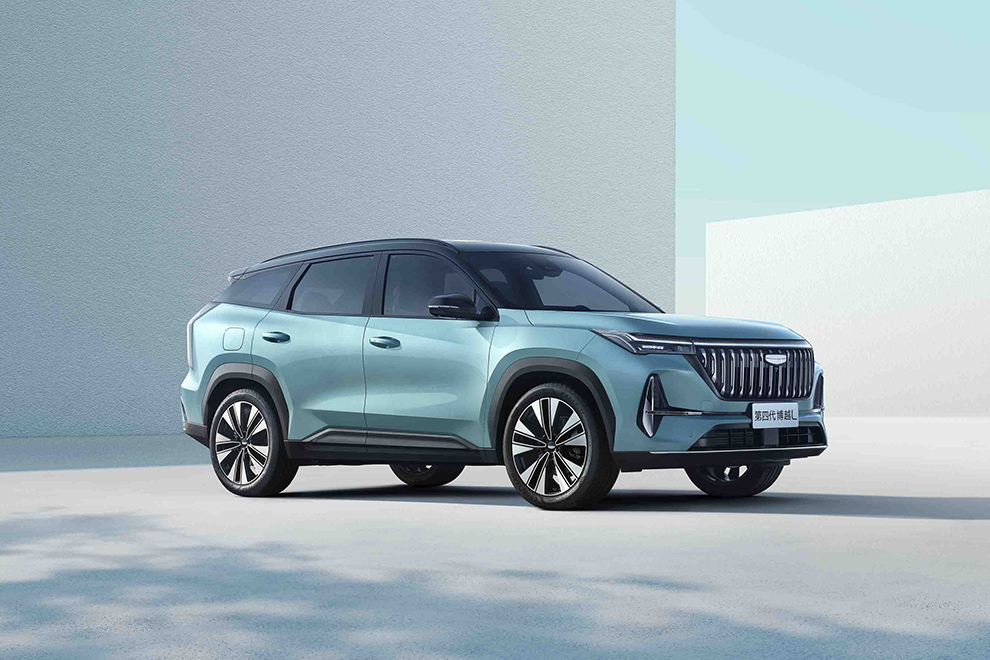
At a glance
- The Boyue L is a gasoline-powered compact crossover positioned for value-focused importers and fleet buyers.
- Export naming shows 1.5TD and 2.0TD DCT powertrains across Premium, Luxury, Flagship and special-edition trims.
- New and used units require different evidence: documented factory condition versus VIN history and independent inspection.
- Live export pricing changes with specification, condition, logistics, Incoterms and exchange-rate movements.
- LHD/RHD availability, homologation and aftersales support should be confirmed for the destination country.
Why the Geely Boyue L matters for export markets
The Geely Boyue L occupies the mainstream compact crossover SUV segment, combining SUV packaging with the turbocharged 1.5TD and 2.0TD gasoline powertrains seen in its export naming. For overseas distributors, that combination is commercially relevant: it offers a familiar five-door utility format and a modern DCT without moving into the cost and homologation complexity of a battery-electric range. It is a practical alternative for buyers who want more presence and luggage flexibility than a sedan. Its strongest export case is therefore value-oriented importers and fleet operators comparing equipment, purchase cost and operating support rather than brand image alone.
Demand for this class is strongest where consumers prefer SUV seating, higher loading positions and a robust road impression, particularly in importer-led markets across Latin America, the Middle East, Southeast Asia and Eastern Europe. Those needs do not automatically translate into the same model choice everywhere. Local fuel quality, climate, road conditions, tax treatment and the availability of Geely-trained service support can matter as much as trim appeal. Export buyers should therefore validate the use case market by market rather than relying on global sales narratives, generalized online reviews or assumed worldwide demand for the intended market.
The Boyue L also has fleet and dealer potential because its compact utility format can serve private customers and commercial operators without electric charging or battery-aging concerns. Distributors can match trims to buyer tiers, while fleets can compare duty cycles against fuel economy and maintenance assumptions. The caveat is brand and aftersales recognition: a vehicle may have strong paper specifications yet weak local residual demand if few buyers know the model or workshops lack the right training. Distributor launch support, parts planning and realistic reconditioning assumptions should therefore be evaluated alongside the vehicle.
- 1.5TD and 2.0TD DCT powertrain choices.
- Value-focused importer and fleet positioning.
- Local aftersales support remains decisive.
Model range, trims and powertrain variants: how the lineup is structured and how to choose
The export lineup is structured around 1.5TD DCT and 2.0TD DCT vehicles. Within the 1.5TD family, names such as Luxury Model, Premium, Premium Edition, Flagship Edition and Shanhe appear, along with special editions. The 2.0TD entries are associated with Flagship and Premium Model trims. These labels indicate hierarchy and market positioning, but they are not a substitute for a VIN-specific equipment sheet, especially when Chinese domestic naming is translated for an overseas catalogue. Buyers should request the original Chinese trim designation, production details and a complete option list before comparing vehicles.
The 1.5TD DCT is the volume-oriented option in the range and should suit buyers prioritizing purchase efficiency, everyday duty and lower powertrain complexity. The 2.0TD DCT is the more relevant choice where frequent load carrying, sustained highway use, stronger overtaking or a higher expected level of refinement matters. Published export listings may not provide standardized output, torque or economy figures, so do not select by displacement alone. Compare the seller’s homologated specification, local tax class and real-world fuel records. The lower-displacement option should not automatically be assumed more economical in every duty cycle.
DCT is another selection point, but it should be judged in the context of the destination market. Some buyers appreciate the convenience and rapid gear changes of a modern automatic, while others place greater weight on long-term service simplicity. Confirm the driving configuration, software level, cooling provisions, warranty coverage and local maintenance capability for the exact car and market. Also check whether a Fourth Generation label appears: it can indicate a different model-year development, so the VIN and build information must take precedence over the trim badge or translated listing title alone.
- 1.5TD for routine fleet use.
- 2.0TD for higher-duty evaluation.
- Verify VIN-specific equipment and warranty.
New vs used Geely Boyue L: how export inventory is structured and how buyers choose
Export inventory can be structured in three ways: a new vehicle sourced through an OEM or dealer channel, a used vehicle transferred from the Chinese market, or a mixed batch assembled from both. These categories describe commercial origin rather than merely whether a listing is marked new or used. A fleet can appear nearly new because it was lightly used, while an off-road demonstration vehicle may have higher mileage. Always use the condition field, VIN history, odometer reading and inspection evidence to classify a specific unit before any contracting or payment.
A new Boyue L is generally easier to standardize for fleet procurement because condition, mileage, paint and interior wear can be documented from the start. The trade-off is that the buyer may have to wait for production, allocation and shipment, and must confirm whether the factory warranty starts at dispatch, delivery or registration. For a used vehicle, faster availability can be attractive, but the apparent saving should be weighed against service history, accident repair, tyre age, fluid condition, wear and the strength of transferable warranty coverage in the destination market.
Used-unit due diligence should be physical and documentary rather than based on a polished listing photograph. Request the VIN, registration or import history where applicable, maintenance invoices, current odometer evidence, tyre and windscreen dates, and a third-party inspection covering suspension, brakes, engine bay, underbody and diagnostic scans. Confirm that software, infotainment functions and camera or driver-assistance calibration suit the export market. A lower acquisition figure is useful only after repair risk, tax status and remaining useful life are understood. This matters especially when the vehicle will enter a fleet with tight uptime expectations and narrow maintenance downtime.
- New: document condition and warranty.
- Used: inspect history and wear.
- Both: verify trim and documents.
How export pricing works: the factors behind a live listing price, and how to read one
A live Boyue L export price is a negotiated output, not a fixed characteristic of the model. The starting vehicle price responds to production year, trim hierarchy, 1.5TD or 2.0TD choice, gearbox, factory options, paint, production date, mileage and condition. Currency movements also matter because Chinese supply is usually quoted in RMB while many buyers budget in another currency. Freight, insurance, port charges, inspection, documentation and financing are additional quote lines rather than facts that can be inferred from the model name. Compare only after a like-for-like specification sheet is attached.
To read the quote properly, separate the vehicle line from international logistics and destination-market costs. Ask whether the seller’s figure is FOB, CIF, DAP or another Incoterm, and establish exactly what it includes: export declaration, inland transport, vessel booking, marine insurance, terminal fees, unloading, customs brokerage and local delivery. Import duty, value-added tax, emissions or registration charges, port congestion and inland haulage may fall to the importer. A low vehicle line can therefore be offset by a higher total landed cost unless every quote uses identical assumptions, scope and terms in writing.
Exact price and availability must be read from the current live listing, because a vehicle can be reserved, repriced or replaced without changing the model page. Check the asking price together with the unit reference, year, trim, condition, mileage, quantity field and seller terms. Ask the seller to issue a written quotation tied to a VIN or SKU, with the quote-validity period, payment schedule, warranty and delivery scope stated. That unit-level document, not an earlier catalogue figure or another supplier’s remembered quote, should drive the purchase decision and board approval.
- Compare equivalent vehicles only.
- Separate vehicle and landed costs.
- Use live, VIN-linked written quotes.
MOQ, ordering and payment: single units vs consolidating a container
MOQ is a commercial rule set by the seller, route and transaction, not a permanent attribute of the Boyue L. Some vehicle listings can be purchased as one unit; other export programs may impose a batch minimum, restrict certain trims to mixed quantities, or offer container pricing only when several units share the same destination and document set. Therefore, treat the quantity shown on an individual live listing as the starting point, then ask in writing whether one-unit purchasing, mixed-model consolidation and full-container quantities are all permitted for your order before contracting.
The ordering mechanics should be mapped before funds are committed. A typical sequence is quotation, VIN or SKU confirmation, refundable deposit, production or stock allocation, final inspection, balance payment, release of documents and dispatch. Some sellers collect payment in stages; others may require the balance after inspection. The contract should identify the exact vehicle, commercial terms, production date, inspection standard, warranty, cancellation conditions and party responsible for export clearance. Never rely on a generic order form when trim and condition differ between units within any mixed-model container order in writing.
Container consolidation can improve freight efficiency, especially for a distributor ordering several Boyue L units or mixing closely related trims. It can also create more administration: each VIN must match the commercial invoice, packing list and export declaration, while battery-related declarations are not relevant to this gasoline model but dangerous-goods and vehicle documents still must be handled correctly. Buyers should model the cost of slow-moving trims, customs valuation of each unit and the effect of one damaged vehicle. Consolidation does not remove the need for unit-level inspection before dispatch or loading.
- Confirm one-unit ordering terms.
- Link payments to the exact vehicle.
- Reconcile VINs with shipping documents.
Shipping, homologation and market compliance caveats: LHD/RHD and import rules by country
Steering configuration is one of the first checks for any export SUV because the Boyue L is offered for different international uses and listing availability can vary. A left-hand-drive car is not automatically unsuitable for a right-hand-drive market: importers sometimes reorient a vehicle, but labor, parts, inspection, warranty and homologation can change. A factory right-hand-drive example is normally the cleaner route. Confirm steering-wheel side, accelerator and pedal arrangement, lighting, driver-assistance functions and local conversion approval before placing an order and request photographs of the exact vehicle and the VIN; record it.
For an SUV order, the usual choices are roll-on/roll-off shipping or a vehicle carrier, with enclosed container transport also possible when loading rules and vessel capacity allow. Freight cost and transit time depend on origin and destination ports, vessel frequency, booking space, route length, port charges, insurance, cargo handling and seasonal congestion. A faster service may reduce inventory carrying cost but cost more, while a slower sailing can improve unit economics. Quote the route, sailing schedule and shipment scope together rather than comparing freight in isolation or using a generic estimate.
Import rules are destination-specific, and no exporter can guarantee that one Chinese configuration is road-legal everywhere. The importer may need to satisfy emissions and type-approval rules, VIN and customs documentation, safety-equipment standards, local taxation, registration, insurance and inspection requirements. Software language, lighting, emissions equipment and driver-assistance calibration may also need confirmation for the target market. Responsibility should be allocated contractually between exporter, freight forwarder, importer and local agent, with homologation treated as a project rather than an afterthought, especially where local standards and enforcement can change substantially between model years for the vehicle.
- Confirm factory LHD or RHD.
- Compare identical Incoterm scopes.
- Contractually assign compliance duties.
Who should buy the Boyue L — and who should pick a different vehicle
The Boyue L is a strong candidate for value-focused importers, regional distributors and mixed fleets that need a modern compact SUV with a choice between 1.5TD and 2.0TD DCT powertrains. It is particularly relevant where buyers want a five-door, gasoline-powered format without investing in charging infrastructure or dealing with battery declaration and degradation concerns. A distributor can also use different trims to address separate customer tiers, provided the option lists, documentation and local homologation support are clearly mapped before the container is committed and when aftersales parts can be supported.
A different vehicle is usually wiser when the operating environment calls for a battery-electric or hybrid model, when charging and fuel policy make one powertrain more attractive, or when buyers need a much larger cargo volume. Buyers seeking a premium badge, advanced driver assistance, a proven towing package or extensive off-road hardware should not assume the Boyue L’s general-purpose positioning meets those needs. Very hot, very cold or high-altitude operations also justify checking engine calibration, cooling, fuel quality, tyre and corrosion requirements rather than relying on model category or labels alone.
The most disciplined route for an unfamiliar brand is a staged market entry rather than a large speculative shipment. Start with a manageable pilot, verify registration lead times and parts support, compare actual fuel use against local alternatives, and measure dealer uptake before scaling. Fleet operators should include uptime targets, service intervals, insurance classification and residual-value assumptions in the business case. If the local workshop cannot support DCT maintenance or the relevant trim parts promptly, a more established rival may offer a lower total risk even when its vehicle price is different.
- Strong fit: importers and gasoline fleets.
- Alternatives suit electric, towing or off-road needs.
- Pilot before scaling inventory.
Main rivals and how the Boyue L compares
The closest export-market benchmark is the Chery Tiggo 8 Pro family, another China-origin compact SUV sold with turbocharged engines and multiple equipment levels. Both vehicles compete for dealer margin, fleet suitability and private buyers who want an aspirational shape without moving to a premium Western brand. The Tiggo family may have greater familiarity in some import networks, while the Boyue L offers a distinctive 1.5TD/2.0TD DCT choice. Compare the exact derivative and the equipment available locally, because engine, dimensions and features can differ substantially within each model family before ordering.
Haval Jolion is another credible value-oriented compact crossover benchmark, with turbocharged powertrains and equipment tiers aimed at similar importers. It gives buyers an alternative SUV proposition and may benefit from broader recognition or more established local service routines in selected markets. The Boyue L competes through its distinct design, trim hierarchy and 2.0TD option, but a Haval quote may be easier for a buyer to benchmark if dealer support is already established. Evaluate aftersales reach and parts lead time before deciding which has the stronger lifecycle economics over time in that market.
Changan CS75 Plus is relevant for distributors comparing a similarly substantial Chinese compact SUV with a broad trim ladder and alternative dealer economics. It can suit buyers who prioritize cabin packaging or a different badge, while Boyue L buyers may focus on the DCT presentation, 2.0TD availability and the precise mix of Premium, Luxury and Flagship equipment. None of these rivals is automatically cheaper once the same destination taxes, freight, homologation, warranty and dealer margins are applied. The correct comparison is the landed cost of a genuinely equivalent specification, not the lowest web listing.
- Tiggo 8 Pro: direct size and trim benchmark.
- Jolion: relevant where brand recognition matters.
- CS75 Plus: different brand and economics.
Live Geely Boyue L export inventory
View all listings →Real units currently on ChinaCarDirect with per-unit asking prices and MOQ. Availability updates live from the catalogue.
How to buy a Geely Boyue L from China
-
1
Define destination requirements
Record the destination country’s steering, emissions, safety, VIN, tax, registration and parts-support requirements before comparing vehicles.
-
2
Shortlist live vehicles
Review current Boyue L listings and note the 1.5TD or 2.0TD engine, trim, build year, condition, steering side, unit reference and seller location.
-
3
Verify unit evidence
Request the VIN, original trim name, equipment list, production date, odometer reading, service history and an inspection appropriate to the vehicle’s condition.
-
4
Request a written quotation
Ask for the unit price, Incoterm, inclusions, freight, insurance, taxes, payment milestones, quote validity, warranty and delivery scope.
-
5
Confirm the order and payment
Sign a vehicle-specific order, pay against documented milestones and obtain the invoice, packing list, export documents and VIN records.
-
6
Arrange shipping and market clearance
Use a qualified freight forwarder, verify loading and securing, then complete customs, local type approval, insurance and registration before delivery.
Boyue L vs rivals
| Chery Tiggo 8 Pro | A direct China-origin compact-SUV benchmark for importers balancing turbocharged powertrains, trim hierarchy and local dealer support. Compare the exact derivative because equipment and dimensions can differ, while the Boyue L may appeal through its distinct DCT range and trim presentation. |
|---|---|
| Haval Jolion | A credible alternative for value-focused distributors and fleet buyers seeking a turbocharged compact crossover. The better choice may depend on local Haval recognition and aftersales reach rather than the vehicle listing alone. |
| Changan CS75 Plus | A relevant rival for buyers comparing substantial Chinese SUVs with different cabin packaging, trim ladders and dealer economics. The decision should be based on equivalent specifications and landed costs, not headline trim names. |
Frequently asked questions
How is the Geely Boyue L export price determined?
A live price reflects the specific vehicle’s year, trim, 1.5TD or 2.0TD choice, options, condition and mileage, adjusted for currency and commercial terms. Freight, insurance, port charges, tax and inland delivery may be quoted separately. Check the current live Geely Boyue L listings for the unit price and request a written, VIN-linked landed-cost quotation.
What engine and range does the Boyue L have?
The export line uses turbocharged 1.5TD and 2.0TD gasoline engines with DCT transmissions. As a combustion-engine SUV rather than a BEV or PHEV, it does not have an electric driving-range or battery-charging specification. Verify output, fuel consumption, emissions and towing figures on the exact listing because export records may not standardize them.
Is a new or used Geely Boyue L better for export?
New units are generally easier to standardize because their condition, mileage and production history are clearer, but production and warranty timing may require confirmation. Used units can offer faster availability but need stronger inspection and VIN-history checks. Compare repair risk, remaining useful life, warranty coverage and total landed cost before selecting either condition.
What is the MOQ for a Boyue L wholesale order?
MOQ is set by the seller and transaction rather than by the model name. A live unit may be offered as a single purchase, while a container program can impose its own batch or consolidation rule. Confirm whether one-unit orders and mixed-quantity shipments are permitted in the written quotation.
How long does shipping take, and what drives the cost?
There is no universal shipping time or freight cost for the Boyue L. Transit depends on the origin and destination ports, vessel schedule, booking space, route length, port charges, insurance, handling and seasonal congestion. Compare freight and vehicle costs under the same Incoterm and delivery scope.
Are spare parts available for exported Boyue L vehicles?
Parts availability must be confirmed for the destination market and exact vehicle rather than assumed from the model name. Ask for a VIN-relevant list covering the engine, DCT, brakes, bodywork, electronics and infotainment, together with prices, lead times and the authorized support channel. A distributor should include parts planning in the launch budget.
Is a right-hand-drive Boyue L available for export?
RHD availability depends on the source build and the current unit, so the steering side must be checked on each live listing. Do not assume an LHD vehicle can be converted without checking local rules, labor, parts, warranty and inspection. Where factory RHD supply is unavailable, compare the compliance risk of another RHD competitor.
How do I buy a Geely Boyue L from China?
Start with the current Boyue L listings, select a suitable powertrain and trim, and request a VIN-specific quotation and condition evidence. Agree the Incoterm, payment milestones, inspection standard, warranty and document responsibilities before paying. After production or stock allocation, arrange freight, customs clearance, homologation, registration and local delivery.
Ready to source the Geely Boyue L?
Request a current, VIN-linked Geely Boyue L export quotation with trim details, Incoterm options and an importer-ready document checklist.
Request a quote