
Geely Jiajie Export Buying Guide for Overseas Buyers
Buy a Geely Jiajie from China with clear guidance on trims, 1.5TD and 1.8TD powertrains, pricing factors, shipping, compliance and used units.

At a glance
- Choose among 1.8TD diesel, 1.5TD MHEV and ePro PHEV variants.
- Confirm the exact trim, model year, condition and VIN before purchase.
- Use each live listing for its current per-unit price and MOQ.
- Budget inland transport, freight, insurance, taxes and compliance separately.
- Check RHD availability, homologation and after-sales support by destination.
Why the Geely Jiajie matters for export markets
The Jiajie occupies the compact crossover-SUV segment, combining a raised body, practical passenger space and diesel-focused powertrains with a value-oriented export proposition. That positioning makes it relevant to importers seeking a vehicle for fleet, company-car or distributor use without moving into a large, premium SUV class. Overseas buyers commonly respond to a combination of useful equipment, manageable dimensions and lower operating costs, although local preferences and regulations still determine the final case. Its appeal is strongest where narrow streets, moderate parking spaces and mixed road conditions make a compact SUV easier to operate than a larger alternative.
The model also benefits from Geely’s expanding recognition outside China, but buyers should judge it as a product rather than as a badge. The Jiajie for export is most compelling when a distributor can combine competitive purchase economics with straightforward parts identification and a clear service proposition. Its broad trim ladder allows one model family to address comfort, luxury and economy, while the range of diesel, mild-hybrid and plug-in hybrid choices can suit different duty cycles. However, brand awareness, residual values and aftersales support are not uniform across export destinations, so distributor due diligence matters as much as the purchase list.
For an overseas buyer, the strongest use case is a mixed operating environment where a diesel model provides useful torque and economy, or where a plug-in hybrid can support electrified daily mileage with a combustion engine available for longer journeys. A mild-hybrid version can reduce operating burden without requiring charging infrastructure, but its benefits should not be confused with plug-in range. Ultimately, global demand for the Jiajie depends less on a universal trend than on whether each importer’s market values its dimensions, powertrain and serviceability against competing local brands closely.
- Diesel, MHEV and PHEV positioning
- Comfort-to-luxury trim ladder
- Local serviceability shapes value
Model range, trims and powertrain variants: how the lineup is structured and how to choose
Jiajie nomenclature can initially look more complicated than the market needs. The core listings group around 1.8TD DCT versions—Comfort, Luxury, Platinum Deluxe and Platinum Luxury—plus 1.5TD DCT mild-hybrid Deluxe or Luxury and ePro PHEV Deluxe, Luxurious or Premium editions. Some identify the vehicle as Jiaji L, a related derivative with 1.5TD DCT Comfort or Luxury. Procurement should therefore start from the complete model-year and trim designation on the VIN, not from the family name alone. This is especially important when comparing equipment, wheel sizes, tax class and replacement parts across otherwise similar-looking vehicles.
The powertrain labels explain the largest technical differences. The 1.8TD DCT cars use a turbo-diesel engine with a dual-clutch transmission, while the 1.5TD family covers mild-hybrid and ePro plug-in-hybrid versions, with DCT also named on selected trims. DCT describes the gearbox, but it does not by itself confirm output, axle layout or market calibration. For a Geely Jiajie specs comparison, treat the live listing and build documents as the source for rated power, torque, emissions equipment and any model-year changes. Engine tune, gearbox calibration and cooling or emissions hardware can vary by production market.
Choosing between them should follow route intensity, charging access and fleet policy, not badge hierarchy. A conventional 1.8TD DCT is straightforward for buyers wanting diesel operation and a broad parts ecosystem. The 1.5TD MHEV is sensible where frequent stop-and-go driving is common but charging is impractical. The ePro PHEV becomes more compelling when drivers can charge reliably and local taxation or emissions rules reward low-emission travel. Confirm usable electric range, charging connector and battery warranty directly for the exact car. Do not infer those figures from the trim name alone.
- 1.8TD DCT turbo-diesel
- 1.5TD MHEV without charging
- ePro PHEV range needs verification
New vs used Geely Jiajie: how export inventory is structured and how buyers choose
The Jiajie export category is used-vehicle-led, so procurement should focus on how a specific unit’s age, mileage and history affect suitability. Useful selection variables include the exact trim, the 1.8TD versus 1.5TD powertrain, transmission type, production year, mileage, service history and whether the vehicle has been repaired or repainted. A low listing price can still produce a poor import if an apparently inexpensive unit carries accident damage, software limitations or parts that are difficult to source. The objective is not simply to buy the oldest or newest car, but to match condition and specification to the intended resale market.
Used-unit buying should be treated as a condition audit rather than a model-year exercise. Request VIN-specific photographs, cold-start and driving videos, underbody images, panel-gap views, a dashboard warning check and evidence of maintenance. For diesel and hybrid versions, ask how the battery or high-voltage system was maintained during storage and whether any warning indicators are present. Independent inspection at the export terminal is valuable because photographs cannot reveal fluid leaks, uneven wear or hidden structural damage. This is particularly important for PHEV cars, where transport and prolonged inactivity can affect how the hybrid system should be prepared.
New versus used Geely Jiajie procurement follows the same core decision: total cost after transport, taxes, compliance, repairs and downtime. A new vehicle may offer a clearer warranty history and more predictable initial condition, but availability, configuration and price are destination-specific. A carefully selected used unit can reduce acquisition cost and broaden trim choice, yet it transfers more uncertainty to the buyer. For wholesale programs, run separate approval rules for each unit and avoid treating a mixed-year fleet as a homogeneous product. That discipline is especially valuable when preparing vehicles for resale.
- Audit VIN and condition
- Weigh year and residual value
- Price condition risk
How export pricing works: the factors behind a live listing price, and how to read one
A Geely Jiajie export price guide should be read as a negotiation framework, not a fixed market tariff. The vehicle’s year, exact trim, powertrain, battery version, mileage, condition, service history and ownership rights affect its base value. Currency movements, inland transport, export handling, marine insurance, freight and the selected Incoterm then change the delivered economics. Two cars with similar model names can therefore occupy different price positions for entirely legitimate reasons. A buyer comparing quotations should normalize those variables before deciding which listing represents the better commercial fit for its intended market.
Each live listing should be read as a vehicle-specific commercial offer, not as a complete landed-cost quote. Confirm whether the displayed amount covers the vehicle only, which documents accompany it, and the stated minimum order. Review the trim, model year, mileage, condition notes, images, VIN availability and seller location. Use the live Jiajie inventory on ChinaCarDirect for the current per-unit price, MOQ and availability, then ask the supplier for a written quote that separately identifies vehicle cost, inland logistics, export charges, freight and any destination services. This prevents an attractive headline figure from hiding the true landed total.
Beyond the vehicle, buyers should build sensitivity into the final decision. Exchange-rate changes can alter an exporter’s cost before a shipment closes, while freight and insurance depend on route, season, container availability and cargo terms. Ask whether a quote is valid for a stated period and whether it assumes a particular port pair or Incoterm. If the business case depends on a narrow margin, model several freight and currency scenarios rather than relying on the most favorable assumption. Written purchase terms should state how adjustments will be communicated and when payment becomes non-refundable.
- Core value drivers
- Incoterm sets risk transfer
- Check live unit terms
MOQ, ordering and payment: single units vs consolidating a container
ChinaCarDirect live listings display an MOQ for each unit, and buyers should use that field rather than assume a catalogue-wide rule. Some commercial offers can be structured for a single vehicle, which suits a test-unit purchase, a dealer seeking one flagship car or a small fleet. A larger programme may require consolidation across several units. The correct question is therefore whether the selected listing or negotiated batch meets the seller’s stated MOQ, not whether the model is generally sold in fixed container quantities. Always confirm the binding quantity in the written quotation.
Ordering mechanics should mirror the risk being transferred. For one unit, the buyer may reserve it after verifying identity and specification, followed by payment and preparation for inspection and export. For a batch, agree on production or selection standards, inspection stages, discrepancy remedies and release timing before the balance is due. Payment milestones should correspond to verifiable events, and the invoice should match the legal seller, vehicle description and agreed Incoterm. Avoid transfers based solely on informal chat promises. A written dispute and refund process is more valuable than an assumed generic payment policy.
Container consolidation can improve freight efficiency, but it changes the buying risk. Matching several cars with different trims, condition standards or delivery dates complicates inspection, payment allocation and customs documentation. Agree on a vehicle schedule, how missing or damaged vehicles are replaced, and who bears storage or demurrage if export clearance is delayed. For first-time importers, a smaller approved batch may offer better control than committing early to a full consolidation merely because the model is in demand. The buying plan should remain viable if one vehicle misses inspection or arrives with an unresolved discrepancy.
- Use each listing's MOQ
- Link payments to inspection
- Define batch remedies
Shipping, homologation and market compliance caveats: LHD/RHD and import rules by country
Sea freight is the usual starting point, with roll-on/roll-off and container options depending on the carrier, port handling and the exporter’s offer. The destination city, route, sailing frequency, terminal charges and customs appointment directly affect the delivered schedule and cost. Steering configuration must be established before shipment: a left-hand-drive car cannot simply be assumed acceptable in a right-hand-drive market, and RHD examples should be verified rather than inferred from trim or model year. If local rules or fleet policy require another configuration, plan sourcing or approved conversion before paying for freight.
Import rules are destination-specific, so the buyer must check the destination country’s vehicle approval, emissions, safety, noise and inspection requirements before committing. Customs classification, age limits, taxes, registration and insurance can all change the commercial case, while local incentives for plug-in hybrids may depend on factors beyond the vehicle itself. A diesel or PHEV imported for commercial use may face a different approval path from a private passenger car. Obtain a local customs broker’s written view rather than extrapolating from another market. That review should occur before payment and ideally before unit selection.
Documentation should travel with the vehicle and be reconciled across the purchase file, shipping file and customs entry. Verify the VIN, engine and gearbox identifiers, model designation, ownership or title status, export authorization, insurance coverage and any certificate required for the powertrain. For a PHEV, also confirm the battery documentation, charging equipment and transport instructions supplied by the seller. If one file does not reconcile with the physical vehicle, pause shipment until the discrepancy is resolved. Retaining copies with the transaction record supports insurance claims, registration and any later warranty or service enquiry.
- Verify steering configuration
- Check local vehicle approval
- Reconcile vehicle documents
Who should buy the Jiajie — and who should pick a different vehicle
Dealers, ride-hailing groups and company-fleet operators can find the Jiajie attractive when their priorities are diesel economy, a practical crossover format and a broad choice of comfort equipment. It is particularly suitable for markets where compact dimensions ease urban use and long-distance routes make a combustion engine sensible. A PHEV version may suit fleets with dependable charging and clear internal emissions policies, while an MHEV fits operations that want hybridization without dedicated plug-in infrastructure. It can also serve as a carefully value-oriented demonstrator for a distributor entering a new segment.
Buyers should pick a different vehicle when brand prestige, established residual values or a mature nationwide service network are the overriding priorities. The Jiajie may be less persuasive where buyers expect long-term parts availability for a specific engine, require a proven homologated RHD version or want a charging and battery warranty structure already familiar in their market. Commercial operators should also reject it if their duty cycle cannot support the selected diesel or hybrid configuration. Compatibility must be demonstrated, not assumed from the badge. A failed local requirement can outweigh purchase economics.
The best way to decide is to test the business case against three checkpoints: fit, evidence and after-sales support. Fit asks whether the powertrain, steering configuration and dimensions suit the duty cycle and market. Evidence requires VIN-specific documents, an independent inspection and a clear condition report. Support requires a workable parts plan, technician familiarity and a credible route for warranty or technical claims. If any checkpoint fails, compare a more suitable rival rather than negotiating only on price. For a first import, one verified vehicle can be more informative than a speculative bulk order.
- Strong for value-focused fleets
- Suited to diesel routes
- RHD support can decide fit
Main rivals and how the Jiajie compares
The closest rivals for many buyers are the Chery Tiggo 7 and GWM Haval H6, because they occupy the same value-oriented compact-SUV and Chinese-brand export environment. The Tiggo 7 often offers a similarly broad family of combustion and electrified versions, while the Haval competes through established name recognition and extensive market-specific configurations. Neither rival is automatically better: compare the exact powertrain, dimensions, safety equipment, warranty support and destination approval rather than choosing from badge familiarity alone. The Jiajie’s strongest counter-argument is its distinctive diesel, mild-hybrid and PHEV mix within the relevant trim ladder.
Changan CS75 Plus is another relevant benchmark, especially against longer-body Jiaji L listings. It can appeal to buyers prioritizing a larger cabin and a more upmarket visual package, but size, powertrain options and equipment differ by market. The Jiajie is generally the more compact, diesel-centered proposition, while the rival’s exact variant may carry a broader retail presence. A side-by-side test should therefore compare boot usability, rear-seat comfort, fuel or energy consumption, and the real cost of local parts. Also check whether the comparison vehicle is mechanically and legally eligible for the same import route.
Overall, the Jiajie is most competitive when the buyer values a specific combination of compact SUV packaging, diesel efficiency and hybrid choice at a disciplined import cost. The Tiggo 7, Haval H6 and CS75 Plus may offer stronger retail familiarity or a different size and powertrain balance, so they remain serious alternatives. Before choosing a Geely Jiajie wholesale shipment, normalize specification, landed cost, inspection evidence and service support. The strongest bid is not the one with the lowest vehicle number, but the one that remains profitable after every real operating cost.
- Tiggo 7 segment benchmark
- Haval H6 retail alternative
- CS75 Plus space alternative
Live Geely Jiajie export inventory
View all listings →Real units currently on ChinaCarDirect with per-unit asking prices and MOQ. Availability updates live from the catalogue.

Used Geely Auto Jiajie New Energy 2021 ePro 1.5TD PHEV Deluxe Model
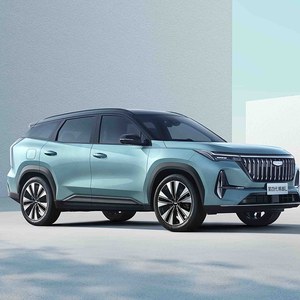
Used Geely Auto Jiajie 2023 Geely Jiaji L 1.5TD DCT Luxury Model - Luxury
Used Geely Auto Jiajie 2023 Geely Jiaji L 1.5TD DCT Comfort Edition
How to buy a Geely Jiajie from China
-
1
Define the operating requirement
Record the route, duty cycle, charging access, steering configuration, cargo needs and destination before selecting a trim. This prevents a visually similar model from being chosen for an incompatible duty cycle.
-
2
Shortlist matching live units
Use the live Jiajie inventory to compare matching model years, trims, powertrains, mileage and condition notes. Review the current per-unit price, MOQ and availability on each selected listing.
-
3
Confirm the vehicle specification
Request the VIN, engine and gearbox identifiers, steering position, equipment list and relevant build documents. For a PHEV, verify battery, electric-range and charging information rather than relying on the trim name.
-
4
Request an itemized export quote
Ask for vehicle cost, inland transport, export handling, freight, insurance, destination services and the applicable Incoterm to be shown separately. Confirm quote validity and any exchange-rate assumptions.
-
5
Approve the condition independently
Review VIN-specific media, service evidence and dashboard information, then commission a pre-shipment inspection for the selected unit. Document any defect or discrepancy before releasing the balance payment.
-
6
Agree order and payment terms
Confirm the binding MOQ, vehicle schedule, inspection standard, discrepancy remedies, ownership documents and payment milestones. Ensure the legal seller and invoice details match the agreed transaction.
-
7
Arrange shipping and market clearance
Book freight and insurance against the confirmed port pair, then reconcile VIN, title, export and powertrain documents with the physical vehicle. Use a local customs broker to confirm taxes, registration, homologation and any RHD requirements.
Jiajie vs rivals
| Chery Tiggo 7 | The Tiggo 7 is a close segment and export-market alternative, with its own mix of combustion and electrified SUVs that may offer broader local familiarity. Choose it over the Jiajie when its exact powertrain, charging support, parts network and destination approval better match the fleet; do not assume either model is automatically more compliant or economical. |
|---|---|
| GWM Haval H6 | The Haval H6 competes through stronger badge recognition in many markets and a broad selection of compact and near-compact SUVs. It may be the safer commercial choice where dealer support and residual-value confidence outweigh the Jiajie’s distinctive diesel and PHEV options, but compare the selected variant’s size, tax class and equipment. |
| Changan CS75 Plus | The CS75 Plus is a larger-space benchmark, particularly relevant against Jiaji L comparisons. Buyers prioritizing cabin and luggage room may prefer it, while those needing a more compact footprint and diesel-centered range may favor the Jiajie; actual suitability still depends on local parts and homologation. |
Frequently asked questions
How is the export price of a Geely Jiajie determined?
Export pricing combines the vehicle’s year, trim, powertrain and battery version, mileage, condition, service history and ownership terms with exchange rates, inland transport, freight, insurance, export handling and the selected Incoterm. A live listing shows the current vehicle-specific asking price and MOQ, but those figures are not necessarily a complete delivered landed cost. Ask for a written quote that itemizes the vehicle, logistics, freight and any destination charges quoted.
Which engines and hybrid systems are available?
Jiajie listings in this market include 1.8TD turbo-diesel DCT cars, 1.5TD turbo-diesel MHEV versions and 1.5TD ePro PHEV versions. Engine outputs, battery capacities, electric ranges, charging connectors, emissions hardware and axle layouts must be confirmed for the exact VIN and market build. The trim name alone is not enough to calculate operating cost or charging requirements.
How should an overseas buyer choose between new and used?
Used Geely Jiajie units can broaden trim choice and reduce acquisition cost, but buyers absorb more condition, history and mechanical uncertainty. A new car can offer a clearer initial condition and warranty framework, though configuration and availability are destination-specific. For either route, compare landed cost and obtain a VIN-specific inspection rather than relying on model age alone.
Can I order one vehicle or must I buy a container?
MOQ is set by the selected live listing or negotiated batch; it should not be assumed to be a permanent model-wide rule. A buyer may structure an order for a single vehicle when the seller’s terms allow it, while larger buyers can consolidate several units. Confirm the binding quantity, vehicle schedule, inspection and discrepancy remedies in writing.
How long does shipping take and what determines cost?
Lead time depends on origin and destination ports, sailing or road frequency, vessel space, terminal handling, customs clearance, congestion and the selected Incoterm. Freight and insurance also vary with route, season, cargo terms and exchange rates. Request a current freight quote and realistic schedule for the specific VIN and destination rather than relying on a generic transit time.
Can spare parts be ordered for the Jiajie?
Parts can generally be ordered against the exact model and trim, but availability and lead time vary by destination and by whether the vehicle is 1.8TD, 1.5TD MHEV or PHEV. High-voltage parts, calibration files and electronic components may require specialist support. Before a bulk purchase, verify the seller’s parts process, cross-reference numbers and local workshop capability for the selected configuration.
Is right-hand-drive Geely Jiajie availability for export?
RHD availability depends on the source vehicle and destination approval; it must be checked for each listing rather than inferred from the model name. A left-hand-drive unit may be unsuitable for markets requiring RHD, and conversion should be considered only if technically appropriate and legally accepted. Ask for steering configuration, VIN, homologation documents and local conversion requirements before payment.
How do I order a Geely Jiajie from China?
Start with the live Jiajie listings, compare matching trims and request an RFQ for the selected unit or batch. Verify the specification, ownership documents, inspection evidence, MOQ, Incoterm, payment milestones and shipping plan before paying. The vehicle should be released only when the agreed inspection, documentation and balance-payment conditions are satisfied.
Ready to source the Geely Jiajie?
Contact ChinaCarDirect with your preferred Jiajie trim, destination and required quantity for a vehicle-specific export quotation.
Request a quote