
Geely Xingyue L Export Guide for Dealers and Fleet Buyers
Buy Geely Xingyue L from China with confidence. Compare trims, powertrains, pricing factors, MOQ, shipping, compliance and rivals before ordering.
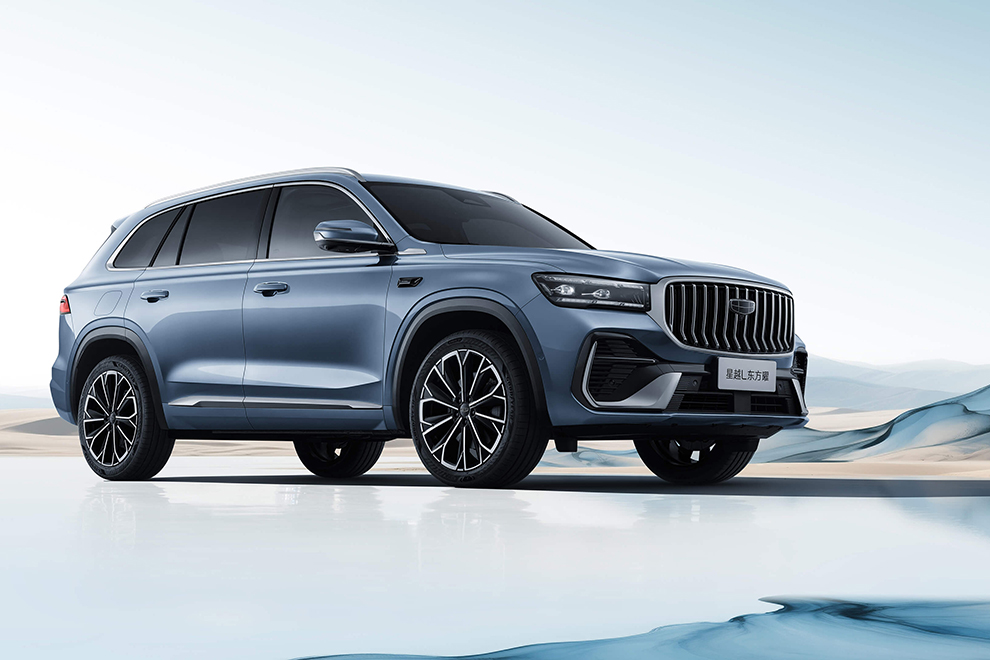
At a glance
- Midsize crossover with multiple 2.0TD, 1.5T and range-extender routes.
- Trim names combine powertrain, transmission, drivetrain and equipment labels.
- New and used purchases require different inspection and documentation.
- Export pricing depends on specification, condition, Incoterms and market charges.
- Compliance, RHD requirements, parts and freight planning must precede ordering.
Why the Geely Xingyue L matters for export markets
The Geely Xingyue L is a midsize crossover SUV positioned between compact SUVs and larger family models. For overseas dealers, its main attraction is not a single headline specification but the breadth of its export-facing powertrain choices: 2.0TD turbo engines with DCT or conventional automatic transmissions, front- and rear-wheel-drive applications, plus 1.5T range-extender variants. That mix lets an importer address different fuel, tax and operating-cost environments without leaving the model family. It also gives fleet buyers a single model badge to work with while still comparing drivetrain, equipment and procurement priorities vehicle by vehicle.
Demand for this kind of model comes from practical gaps in several export markets. Dealers may need a roomier SUV than the compact segment without moving into a large, expensive off-road platform. Fleets can compare combustion versions for uncomplicated long-distance use with range-extender versions where electrification is desirable but charging coverage is uneven. The result is relevant to taxi, ride-hailing, company-car and distributor programmes, subject to local rules and a realistic charging assessment. Its appeal therefore depends less on badge recognition than on whether its size, powertrain mix and landed cost fit local demand.
International interest should not be confused with universal homologation. The Xingyue L was developed for the Chinese market, so equipment, emissions standards, software, charging provisions and right- or left-hand-drive availability can differ by source unit. Export buyers should assess the vehicle as a platform: confirm the exact derivative, its local compliance status and the after-sales support around its chosen engine or range-extender system before treating it as a ready-to-register product. A credible dealer decision includes a document checklist, a local approval pathway and a realistic estimate of the time required to complete both.
- Midsize crossover positioning.
- Multiple powertrain routes.
- Homologation before dispatch.
Model range, trims and powertrain variants: how the lineup is structured and how to choose
Trim names can look complex because the Xingyue L combines several naming systems. The 2.0TD DCT EVO group is front-wheel drive and uses a dual-clutch transmission, while the separate 2.0TD High-Power group appears with a conventional automatic and two- or four-wheel drive. Other labels, including Oriental Glory, Cloud, Skyline, Premium, Flagship and Intelligent Premium, describe market positioning or equipment rather than a single measurable hierarchy. Always decode the full listing name. Edition labels should therefore be compared against the same year, drivetrain and equipment list, not ranked by their final word alone.
The 1.5T Tiāngōng derivative provides another combustion-powered route, while the 1.5T DHT range-extender editions add a different operating concept. For the latter, electric drive serves normal propulsion and a combustion engine extends the usable journey when required. The useful buyer question is not simply whether the badge says range-extender, but how the local duty cycle affects fuel use, charging habits, service needs and the value placed on quiet electric running. Ask for the range-extender’s approved fuel, charging and battery arrangements in the destination market before selecting it for fleet deployment.
A sensible trim decision starts with the duty cycle. Choose front-wheel drive where road conditions, payload and usage make driven axles unnecessary; consider all-wheel drive for traction-sensitive fleets or regions with demanding seasonal roads. Then compare the actual equipment list against regulatory requirements, driver expectations and repairability. Higher-tier names may add convenience or technology, but their value should be assessed through uptime, residual demand and running costs rather than by assuming the most expensive derivative is automatically the best export choice for your market and operating channel in practice.
- DCT EVO: front-wheel drive.
- High-Power: automatic or AWD.
- DHT: analyze duty cycle.
New vs used Geely Xingyue L: how export inventory is structured and how buyers choose
For this model, new export units form the core procurement route, while any used example should be evaluated as a separate, condition-led purchase. New units offer a clearer manufacturing history, warranty route and expected specification; they may also carry technology, trim or model-year changes that make comparison less direct. A used vehicle can make sense where its condition, remaining equipment and local suitability are strong, but the purchase cannot be based on model name or mileage alone. Compare the VIN, production date, title history and an independent inspection before discussing delivery.
For a new purchase, the critical checks are production year, exact trim, drivetrain, transmission, factory options, paint, delivery protection and documentation. Confirm whether the vehicle is current stock, parallel stock or an older model-year allocation; these categories can carry different expectations about condition and residual value. A live unit record should be treated as the starting specification sheet, not proof of every visible or electronic feature. Request photographs, option codes and a signed comparison against the invoice. Also ask whether the vehicle has been prepared for export and which party owns any remaining manufacturer warranty.
For a used Xingyue L, inspect the body, paint, glass, tyres, brakes, suspension and cabin for signs of repair or intensive use. Ask for service records, diagnostic evidence and a clear title or ownership history. If a range-extender or electrified derivative is considered, battery condition, charging faults and thermal-control warnings require specialist assessment. The financial comparison should then include expected repair, reconditioning and compliance work rather than treating acquisition cost as the total cost of ownership. Buyers should also compare resale-cycle assumptions with the more conservative profile of a new vehicle.
- Verify new-unit specifications.
- Inspect used-unit history.
- Test electrified systems.
How export pricing works: the factors behind a live listing price, and how to read one
A Xingyue L export price is not a fixed market value. The live amount can move with model year, trim, 2.0TD or 1.5T powertrain, transmission, drive configuration, range-extender version, production condition and the seller’s commercial terms. For a used vehicle, mileage, service history, paint, damage and warranty status also affect value. Exchange-rate movements may influence a quote between enquiry and payment, so the currency, validity period and price-lock mechanics must be stated in writing. Dealers should compare the vehicle line with the Incoterm, not only the headline figure shown in the inventory interface.
Freight is another component that may sit inside or outside the displayed figure. A buyer should identify the named place or port, whether the supplier handles export customs, what loading, documentation and marine-insurance charges are included, and when the vehicle becomes the buyer’s risk. Destination charges can include terminal handling, customs brokerage, taxes, duties, registration and modifications. These costs vary by route and market, so the same vehicle can produce different landed costs for different importers. Comparing two quotes is therefore meaningful only when their service scope and delivery terms match.
On ChinaCarDirect, use the live Xingyue L listing as the source for the current per-unit amount, MOQ and availability, then work through the same checklist on each candidate. Save the quotation terms with the SKU, not just a screenshot of the headline figure. Clarify whether the displayed number is vehicle-only, port, or delivered, and ask for a pro forma invoice showing the vehicle, options, services and payment milestones. If the budget is fixed, rebuild the landed-cost worksheet whenever any of those inputs change. A quote without defined scope is not yet comparable.
- Trim and year set base.
- Incoterms set freight scope.
- Live listings bind current terms.
MOQ, ordering and payment: single units vs consolidating a container
Some ChinaCarDirect vehicle listings can be opened as single-unit enquiries, while a supplier may set a batch minimum for a particular programme. The MOQ shown on the live unit is the controlling commercial term for that quotation; do not infer it from the model generally or from another trim. Single-unit purchasing suits test vehicles, a dealer launch or a mixed fleet, but it leaves the buyer exposed to container efficiency. Confirm MOQ, unit allocation, production lead time and whether mixed colours or specifications are allowed before paying any deposit.
Consolidating several vehicles can improve freight efficiency, but it changes the risk profile. A buyer must fund more vehicles, coordinate releases and maintain sales coverage for each specification. Storage, demurrage, financing and unsold-stock exposure can erase the apparent shipping saving. Build a container plan around delivery timing, destination receiving capacity and realistic local demand. If mixed units are permitted, keep colour, trim and drivetrain choices that can be sold within a normal stock-rotation period rather than filling space with slow-moving variants. Request the loading plan and final destination costs before confirming the allocation.
A secure order process normally separates commitment stages. After technical selection, the buyer should obtain a pro forma invoice, verify the seller’s legal identity, agree the deposit and balance, and define inspection, shipping, cancellation and refund conditions. Payment should never be released merely because a vehicle photograph looks correct. For a larger wholesale order, consider a staged process linked to inspection and document readiness, while reserving a remedy for damaged transport, missing accessories, title defects or material differences from the agreed specification. Retain the signed contract and vehicle-specific annex with every payment record.
- Confirm each listing's MOQ.
- Single units support trials.
- Consolidation raises stock risk.
Shipping, homologation and market compliance caveats: LHD/RHD and import rules by country
Shipping begins with selecting the correct vehicle for the destination, not simply booking transport. Ask the supplier for the VIN, model year, exact dimensions and any optional equipment that affects handling. An enclosed vehicle carrier is generally preferable for a finished SUV, while RoRo or flat-rack options depend on carrier availability and route economics. The vehicle must be protected from moisture, movement damage and exposure during loading. Marine insurance, destination terminals and the handover point should be allocated clearly in the contract. Any loading restriction must be confirmed before the vehicle enters the carrier's custody.
Left-hand drive is the usual configuration for vehicles sourced from China, but the destination may require or favour right-hand drive. Confirm the steering position before contracting. A left-hand-drive vehicle can sometimes be converted, subject to local rules and the quality of the conversion, while a purpose-built right-hand-drive unit may reduce modification risk but has a narrower supply. RHD availability should be treated as a source-and-market question: ask the seller, verify the actual vehicle, and price any conversion, parts, inspection and registration work separately. Do not assume a model is offered in both configurations.
Import requirements differ by country and can include VIN checks, emissions and type approval, roadworthiness, cybersecurity and software-data rules, radio equipment, lighting, safety equipment, insurance, customs classification, taxes and local registration. A range-extender vehicle may also be assessed differently from a pure battery model under local rules, so obtain a written classification before shipment. Used imports can face additional age, emissions or roadworthiness restrictions. Homologation work should be completed by qualified local specialists where the importer lacks the capability. Keep evidence of every conversion, certificate and inspection with the vehicle file.
- Match carrier to dimensions.
- Verify LHD or RHD.
- Approve before shipment.
Who should buy the Xingyue L — and who should pick a different vehicle
The Xingyue L is a strong candidate for an importer seeking a midsize SUV with both combustion and range-extender routes, particularly where the fleet needs one model family but mixed duty cycles. Dealers can stock front-wheel-drive versions for simpler road use and all-wheel-drive versions where traction has greater commercial value. The range-extender editions may be persuasive where electric running is wanted but long-distance charging coverage is incomplete. The buying case depends on local taxation, fuel, charging access and a credible parts plan. That makes this a suitability decision, not simply a specification decision.
It is less suitable for a buyer who requires a battery-only vehicle, because the range-extender versions retain a combustion engine and are not equivalent to a pure EV proposition. It may also be a poor fit for operators prioritising the lowest acquisition outlay over size and drivetrain choice. Importers should not buy a left-hand-drive conversion without local approval, or a high-specification derivative without evidence that customers will pay for it. Strong demand for compact dimensions, established residual values or mature local servicing may point elsewhere. A competitor may serve those priorities better.
Before placing a fleet order, run a three-part business case. First, confirm the legal route and realistic operating cost, including fuel or electricity, insurance, registration and likely maintenance. Second, verify that spare parts, technical literature, diagnostic access and trained workshops can support the chosen powertrain. Third, model residual demand using local trim preferences and conservative sale-through timing. A Xingyue L that meets all three tests can offer useful flexibility; one that fails the parts or compliance test should not be ordered merely to secure a lower unit quote or prestige.
- Suits mixed powertrain fleets.
- Useful with uneven charging.
- Not a battery-only choice.
Main rivals and how the Xingyue L compares
BYD’s Song Plus is a close Chinese-market alternative for buyers who prioritise a mainstream electrified SUV family and a broad distributor ecosystem. The Song Plus offers familiar combustion and plug-in-hybrid pathways in some markets, whereas the Xingyue L’s distinguishing point is the combination of 2.0TD DCT and automatic derivatives with a range-extender option. Choice should turn on exact drivetrain, local compliance, expected servicing and brand acceptance rather than on the badge alone. A buyer should compare the live specification, total landed cost and parts pathway carefully for each candidate before contracting.
The Changan Uni-K is another credible midsize SUV alternative, with a reputation in China for large-cabin turbo models and multiple drivetrain and electrification choices across its range. It can appeal where Changan-trained support is already present. The Xingyue L may offer a different balance of standard equipment and export packaging, but that is not a reason to assume lower ownership costs. Compare actual purchase terms, fuel use, warranty support, resale evidence and the availability of mechanical or range-extender parts in the destination. Local proof of support should carry more weight than brochure positioning.
The Deepal S7 is a closer technology-led alternative for buyers focused on electric or range-extender operation and a more overtly electrified product image. The Xingyue L can be more convenient for a dealer that wants a broad selection of combustion, DCT, automatic, front-drive and all-drive variants under one model name. Neither is automatically superior. The decisive questions are which derivative clears local rules, what the buyer can service, what infrastructure customers have, and which vehicle’s total cost and resale prospects survive conservative assumptions. Compare these variables before committing to an order.
- BYD Song Plus: electrified ecosystem.
- Changan Uni-K: local-service option.
- Deepal S7: electric-led alternative.
Live Geely Xingyue L export inventory
View all listings →Real units currently on ChinaCarDirect with per-unit asking prices and MOQ. Availability updates live from the catalogue.
Geely Xingyue L 2021 2.0TD DCT EVO FWD Intelligent Premium Edition
How to buy a Geely Xingyue L from China
-
1
Define the market and duty cycle
Specify the destination, fuel availability, charging coverage, road conditions, expected annual distance and preferred 2WD or AWD configuration before selecting a trim.
-
2
Shortlist live inventory
Review the current Xingyue L listings and compare matching model years, editions, powertrains, drivetrains and documented options. Record the SKU for each shortlisted vehicle.
-
3
Verify the exact unit
Request the VIN, production date, transmission, steering position, factory equipment, export preparation and ownership documents. Confirm that the listed configuration matches the intended use.
-
4
Build the landed quotation
Ask for a vehicle-specific pro forma invoice showing the unit price, Incoterm, freight scope, insurance, documentation, destination charges and payment milestones.
-
5
Contract, inspect and pay
Define inspection, shipping, cancellation, warranty and refund conditions in the contract. Use staged payments linked to documentary readiness and a satisfactory pre-shipment inspection.
-
6
Ship and complete homologation
Coordinate carrier collection, export documents, marine insurance, customs clearance and local type approval. Retain every invoice, certificate, inspection report and vehicle record.
Xingyue L vs rivals
| BYD Song Plus | A close alternative for buyers wanting a mainstream electrified SUV family with combustion and plug-in-hybrid options. Choose the Xingyue L when its particular 2.0TD, automatic and range-extender mix better matches local demand and dealer support. |
|---|---|
| Changan Uni-K | A credible midsize SUV competitor with turbo models and multiple drivetrain and electrification pathways. The Xingyue L may offer different export packaging, but Changan is potentially stronger where established local service infrastructure already exists. |
| Deepal S7 | A more directly electric-led and technology-focused alternative for buyers prioritising EV or range-extender operation. The Xingyue L is more convenient for dealers wanting broad combustion, DCT, automatic, front-drive and all-drive coverage under one model. |
Frequently asked questions
How is Geely Xingyue L export pricing determined?
The price reflects model year, trim, engine, transmission, drivetrain, range-extender version, condition, seller terms and currency movements. Freight, insurance, customs charges, taxes and modifications may sit inside or outside the displayed figure, depending on the Incoterm. Current per-unit prices, MOQ and availability are shown on the live Xingyue L listings.
Which powertrain and range options are available?
The lineup includes 2.0TD turbo engines with DCT or conventional automatic transmissions, a 1.5T combustion derivative and 1.5T DHT range-extender electric versions. Front-wheel drive and all-wheel drive applications are available depending on the derivative. Battery capacity, motor output, usable range and charging specifications should be confirmed in the live listing and homologation documents.
Is buying a used Geely Xingyue L from China sensible?
It can be sensible when a specific vehicle has a strong condition report, clear ownership history and suitable remaining equipment. Buyers should inspect repair history, mileage, tyres, service records and title documents, while seeking specialist diagnostics for any electrified derivative. A used purchase should be priced with reconditioning, compliance and higher near-term maintenance risk included.
What is the MOQ for a Xingyue L order?
MOQ is set by the individual supplier and vehicle quotation, so the live listing and pro forma invoice are the controlling sources. Some opportunities may support single-unit purchases, while larger programmes may require a batch. Confirm the required quantity, unit allocation, mixed-specification rules and any container commitment before paying a deposit.
How long does shipping take and what affects the cost?
Shipping time and cost depend on origin and destination ports, carrier availability, vessel schedules, vehicle dimensions, documentation and customs clearance. Terminal handling, insurance, inland transport and destination charges can also change the landed cost. Ask the supplier and a freight forwarder for a route-specific schedule and a quote that clearly states every included and excluded charge.
How are spare parts and technical support handled?
Parts support should be assessed for the exact powertrain and model year, not for the Xingyue L name in general. Before ordering, confirm the parts catalogue, diagnostic access, technical documents, regional warehouses and workshop support. A small trial purchase can help verify parts availability and service procedures before a larger fleet commitment.
Can I buy a right-hand-drive Xingyue L?
Most vehicles sourced from China are left-hand drive, and right-hand-drive availability is not guaranteed for every derivative. Ask for the actual steering configuration before contracting. If conversion is required, obtain local approval and include the mechanical work, parts, inspection and registration cost in the landed budget.
How do I buy Geely Xingyue L from China?
Start with the live inventory, select the closest exact specification and submit an RFQ with the destination, quantity, preferred Incoterm and required documents. Review the pro forma invoice and contract, pay the agreed deposit, inspect the vehicle and release the balance under the agreed milestone. The exporter or forwarder then handles the agreed export, freight and customs process.
Ready to source the Geely Xingyue L?
Send an RFQ with your destination, preferred powertrain, trim, quantity and Incoterm to request a unit-specific Geely Xingyue L export quotation.
Request a quote