
Genesis G80 Export Buying Guide for Dealers and Fleet Buyers
Genesis G80 export buying guide for overseas dealers and fleet buyers, covering petrol and electric trims, live pricing, MOQ, shipping, compliance and rivals.
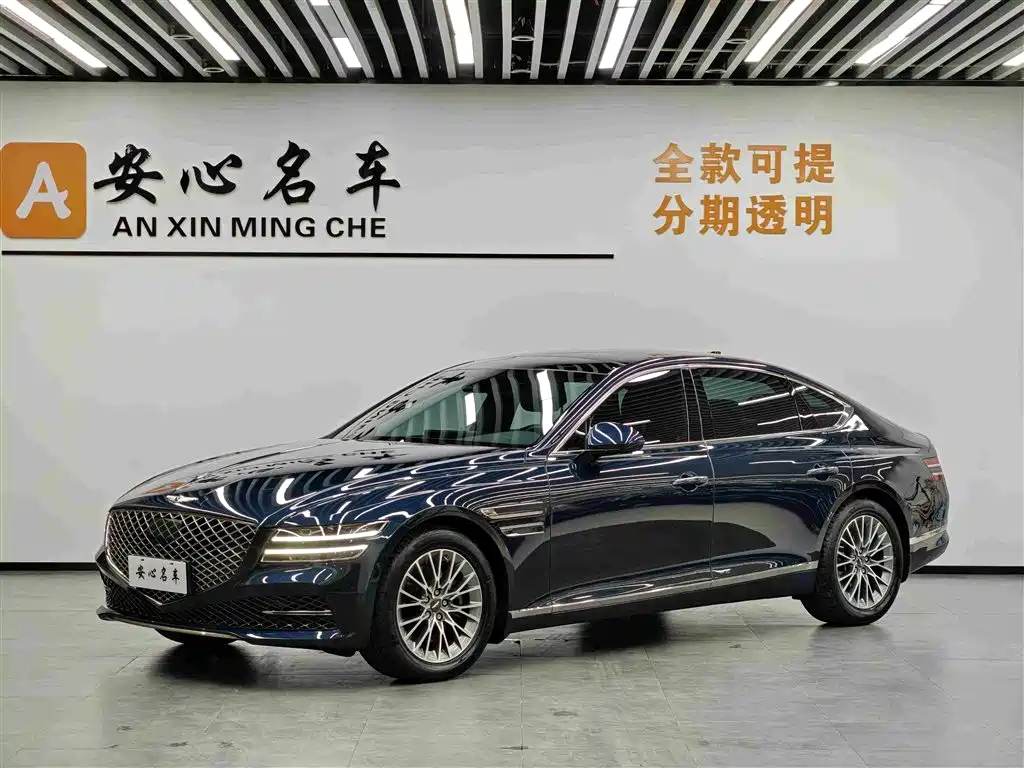
At a glance
- The G80 is an executive luxury sedan with 2.5T petrol and all-electric configurations.
- RWD and 4WD/AWD variants reflect different cost, traction and market priorities.
- New and used vehicles should be compared by condition, history, warranty and downtime rather than age alone.
- Export pricing depends on the exact unit and the complete logistics and Incoterm package.
- MOQ, availability, homologation and RHD suitability must be confirmed for the destination market.
Why the Genesis G80 matters for export markets
The Genesis G80 occupies the executive luxury sedan segment, between ordinary premium sedans and larger chauffeur-oriented models. For overseas dealers, that positioning matters because it combines a recognizable premium badge, rear-seat comfort and a formal profile with the service, parts and compliance work involved in importing a niche Korean marque. It is not a mass-market bargain sedan; it is aimed at buyers who value refinement, comfort and brand differentiation. Its relevance is strongest in markets where imported premium sedans already have an established customer base and dealers can support a model with selective rather than high-volume demand.
Export demand should be evaluated by use case, not simply by badge recognition. Corporate travel programs, executive transport operators, hotel and chauffeur fleets, and affluent private buyers may all consider the G80, although their economics differ. A dealer needs to consider whether local preferences favor rear-seat space, quietness, technology and distinctive styling enough to offset less familiar resale demand and higher ownership costs than mainstream sedans. The vehicle is therefore most defensible where premium buyers already understand the segment and the importer can maintain realistic sourcing, servicing and parts arrangements and warranty terms.
Global interest also depends on the balance between product appeal and practical adoption. Genesis benefits from an upscale image without the established badge equity of some European brands, while the G80 gives buyers a credible alternative with Korean-manufactured provenance and a distinct design identity. Before treating demand as proven, dealers should test it through targeted pre-sales, local chauffeur partnerships and realistic total-cost comparisons rather than relying on online attention alone. A successful importer also prepares model-specific service information, realistic delivery commitments and a clear explanation of after-sales support before committing to meaningful stock.
- Executive sedan with a differentiated premium identity.
- Strongest fit is established premium import markets.
- Validate niche demand before scaling inventory.
Model range, trims and powertrain variants: how the lineup is structured and how to choose
The G80 range is structured around three buyer choices: the 2.5T turbocharged petrol model, the availability of rear-wheel drive or 4WD/AWD, and luxury-oriented editions that step up equipment and visual treatment. Within the petrol line, listings use names such as RWD Luxury, RWD Luxury Edition, 4WD Luxury Edition and Flagship Edition. These labels are the starting point for comparison, but they are not a substitute for checking the exact vehicle specification attached to each unit. Trim names can change between model years and markets, while equipment fitted to an individual car may differ.
Rear-wheel-drive versions generally make the simplest operational choice for buyers focused on cost, efficiency and straightforward deployment, provided road conditions and towing or load expectations are modest. Four-wheel-drive variants can add confidence in poor weather or for clients who value additional traction, but they normally carry a price and ownership consequence that should be quantified. Because the G80 is a large executive car, buyers should also assess tires, braking costs, parking access and local repair support for the driven configuration. A live listing should confirm the axle layout rather than rely on broad model assumptions.
The all-electric G80 versions create a separate sourcing decision. Listings identify electric Luxury and Flagship configurations, so a buyer must confirm battery capacity, certified range, motor output, charging interface, on-board equipment and the condition of the high-voltage system rather than infer them from a petrol equivalent. Range labels may also follow different test cycles in different markets. For an overseas buyer, the decisive questions are local charging access, route patterns, weather, payload and the importer’s ability to support high-voltage components. Never import an electric unit on range alone; request the documents needed for destination approval.
- 2.5T petrol line spans RWD and 4WD/AWD.
- Trim labels require year-specific verification.
- Electric choices need range and charging checks.
New vs used Genesis G80: how export inventory is structured and how buyers choose
ChinaCarDirect’s export catalogue can present G80 units from different production years, with new and used vehicles represented as separate buying conditions rather than one homogeneous pool. A new vehicle may be unregistered or otherwise presented as export-ready, while a used vehicle may have mileage, prior ownership and condition that affect its valuation. The correct comparison is not “new versus old” alone; it is condition, history, specification, documentation and expected downtime after arrival. For fleet buyers, even a small variation in specification can make one vehicle more suitable than another for the same purchasing brief.
New G80s generally offer the advantage of a more straightforward comparison with the model-year factory configurations described by the seller, less wear on wear-sensitive components and potentially clearer warranty pathways, although the actual coverage must be confirmed in writing. Used G80s can offer better value when mileage, service history and condition are well documented, yet buyers should expect refurbishment risk. A polished exterior does not prove that a vehicle has been mechanically maintained or that its battery, software and high-voltage systems are in good condition. Request evidence tied to the individual vehicle, not a generic model claim.
Start with the intended use. A dealer building a first stock program may favor newer vehicles because they are easier to position and prepare for delivery. A budget-conscious fleet operator may accept an older unit only after a mechanical inspection, service-record review and an allowance for immediate maintenance. For used electric cars, request battery-health and charging information; for combustion cars, inspect service history, tyres, fluids, accident repair and emissions equipment. A lower acquisition cost can be erased by downtime and unplanned maintenance. The live listing should state condition and history clearly enough to support that decision.
How export pricing works: the factors behind a live listing price, and how to read one
An export quote is not simply a domestic vehicle price converted into another currency. The listed amount for a G80 is shaped by model year, trim, rear-wheel-drive or all-wheel-drive configuration, petrol versus electric powertrain, mileage, condition, visible or documented service history and the level of preparation required. Market demand can also affect a seller’s asking position. For every quote, confirm the currency, tax treatment and whether local charges, export documentation or inland transport are included. A lower number is not necessarily cheaper if the shipment scope differs. Compare like-for-like terms.
Shipping can move the final landed cost substantially. Freight is affected by origin and destination ports, route and carrier capacity, vehicle dimensions, booking timing, insurance, export handling and the Incoterm selected. A quote under an FOB-style term may leave ocean freight, destination charges and import taxes with the buyer, while a delivered arrangement can shift more responsibility to the seller. Because the G80 is a large executive sedan, secure the loading method and cargo plan in writing rather than assuming it will follow the same route as a compact car. Ask who bears the risk of loss.
To read a live listing correctly, separate the vehicle’s condition and specification from the logistics package. Confirm the VIN or chassis identity, production year, trim, powertrain, drivetrain, mileage, equipment, seller location, inspection evidence, payment terms and Incoterm. Then build a landed-cost worksheet covering vehicle price, inland transport, freight, insurance, customs, taxes, port charges, pre-delivery preparation and local registration. ChinaCarDirect’s live G80 inventory should be treated as the source for the current per-unit quote, not an archived market average. Ask the supplier to state exclusions and assumptions explicitly in the written quotation.
- Compare like-for-like Incoterms and inclusions.
- Landed cost exceeds the displayed vehicle price.
- Use live listings for current unit quotes.
MOQ, ordering and payment: single units vs consolidating a container
Minimum order quantity is a seller and transaction term, not an inherent feature of the G80. A marketplace listing may accept a single-vehicle inquiry, while a direct factory or consolidation program may set a different threshold. Buyers looking to buy one G80 from China should therefore open the live listing and confirm its displayed MOQ, but should not assume that the catalogue contains a universal rule. The binding answer is the one attached to the quoted unit or written into the sales confirmation. MOQ should be reconfirmed before any deposit.
Single-unit purchasing suits a dealer testing local demand, an executive customer ordering for personal use, or a fleet buyer securing a pilot vehicle. It offers lower exposure to unsold stock, but the buyer may not receive the same freight economics as a multi-vehicle movement. Consolidating several G80s can improve freight utilization and simplify fleet homogeneity, yet it requires allocation rules, compatible specifications and careful identification of each vehicle. A mixed group needs a clear key linking the VIN, trim and condition to its assigned shipping document. Agree this before payment.
The normal sequence begins with a specification request, followed by a written quotation and payment terms. Buyers should ask what deposit is required, when the balance is due, which party holds the vehicle, what inspection is included, and what happens if the car fails an agreed check. Payment methods, currency and refund conditions should be stated rather than inferred from a listing button. For a significant purchase, use the RFQ process to obtain a contract-style summary covering the exact unit, document set, delivery scope and dispute process. Do not pay against an incomplete description.
- MOQ is seller-specific, not model-wide.
- Single-unit orders suit pilot purchasing.
- Consolidation needs clear VIN allocation.
Shipping, homologation and market compliance caveats: LHD/RHD and import rules by country
Steering configuration is the first physical check. A left-hand-drive G80 may be easier to source from China, while a right-hand-drive version must match the destination market and cannot be inferred from the model name. Confirm whether the steering wheel, instrument layout, lighting, door controls and other market-specific equipment are factory configured. Converting steering later rarely provides the same result as a factory right-hand-drive car, particularly for safety, software integration and resale. Availability therefore depends on factory production, seller inventory and importer requirements rather than on the model badge alone at origin.
Import approval is country-specific. The buyer may need a valid VIN and customs documentation, proof of ownership, age or emissions compliance, roadworthiness inspection, customs duty and taxes, and local registration. Electric versions can trigger additional review of battery safety, charging equipment, vehicle type approval and local subsidy eligibility; none of those issues disappears because the car is imported. Do not treat a Chinese-market listing as automatically homologated for another country, and verify requirements with a customs broker or specialist before committing. Confirm both the vehicle and the importer’s eligibility documents before shipment.
Shipping time and cost vary with port pair, sailing schedule, transshipment, terminal handling, vehicle dimensions and the selected Incoterm. A dealer should request a written route, estimated sailing and release windows, and a clear allocation of risk during loading, carriage and discharge. Original customs and vehicle documents should be prepared before dispatch to reduce clearance delays. For used units, condition may need to be disclosed to customs and insurers, and age-related rules can be more restrictive. Compare landed cost and timing together; the cheapest freight quote is not useful if it misses the buyer’s delivery program.
- Confirm factory steering configuration early.
- Check destination approval before paying.
- Document risk transfer and release timing.
Who should buy the G80 — and who should pick a different vehicle
The G80 best fits buyers who want an executive sedan with a formal appearance, strong focus on cabin comfort and a less conventional premium-brand choice. It can suit chauffeur services, corporate guest transport, hotel operators and private customers who prefer rear-seat space over the lower profile and easier maneuvering of a compact executive car. Dealers should also consider residual-value risk: a premium niche model may need more deliberate remarketing and may be harder to stock than a high-volume European sedan. A test program can reveal local willingness to pay before deeper inventory.
A buyer should choose a different vehicle when cargo volume, ground clearance or frequent rough-road use matters more than passenger refinement. The G80 is a sedan, not a utility vehicle, and its operating cost may exceed that of a mainstream premium sedan once insurance, tires, servicing and fuel are considered. Electric shoppers without dependable charging access should compare a combustion G80 with a hybrid or plug-in alternative. Buyers requiring a factory right-hand-drive unit, a specific performance model or extensive local service coverage should verify availability before placing an order promptly or contracting.
Fleet suitability also depends on utilization. A single premium sedan may make sense for executive transfers or a small hospitality fleet, but many vehicles in the same class can generate better utilization for airport transfers or contracted transport. Drivers should be familiar with the G80’s dimensions, visibility, parking requirements and infotainment controls before handover. For company use, check taxation, insurance, residual-value policies and local procurement rules. The right decision is not merely whether the G80 is comfortable, but whether its acquisition, operation and eventual resale fit the operator’s total-cost model.
- Suited to executive, chauffeur and hospitality use.
- Poor fit for cargo or rough-road priorities.
- Charging access determines the electric case.
Main rivals and how the G80 compares
The BMW 5 Series is the closest broad segment benchmark for many buyers. It offers a similarly capable executive-sedan format, but its dealer network, model variety and established resale recognition can make it easier for some overseas operators to support. The Genesis G80 differentiates through its distinct styling, comfort-led specification and alternative premium identity. For a buyer comfortable supporting a newer import channel and accepting more measured remarketing demand, that difference can justify the G80. Test the business case with real prospects rather than badge-based assumptions before ordering and service arrangements.
The Mercedes-Benz E-Class is the strongest rival when brand familiarity, premium cabin presence and broad international recognition matter most. It generally gives buyers a more established service and resale proposition in many markets, while the G80 offers a more differentiated alternative that can stand out in chauffeur and executive fleets. The choice should turn on confirmed equipment, expected holding costs, local technician access and the buyer’s target customer—not simply on perceived prestige. For a commercial importer, those operating variables can outweigh a styling preference. A direct landed-cost comparison is essential.
The Audi A6 competes through a restrained design, a broad sedan format and an established premium badge. It is a rational choice where A6 familiarity and service reach reduce operating complexity. Against it, the G80 offers more visual distinction and a comfort-focused alternative, which can help in private-client or hospitality use. For the electric G80, the buyer should separately compare electric range, charging, payload and approval with electric versions of the closest executive sedans. Matching the wrong powertrain or homologation route can erase an otherwise sound vehicle comparison for the market.
Live Genesis G80 export inventory
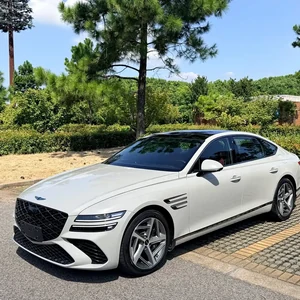
View all listings →Real units currently on ChinaCarDirect with per-unit asking prices and MOQ. Availability updates live from the catalogue.
How to buy a Genesis G80 from China
-
1
Define the market and vehicle brief
Decide whether the G80 is for private customers, executive transport or fleet use, and establish whether petrol, RWD, 4WD/AWD or all-electric configurations fit local operating conditions.
-
2
Shortlist the live G80 inventory
Review the live Genesis G80 listings by model year, trim, drivetrain, powertrain, condition and seller location, using the listing details as the basis for further enquiries.
-
3
Verify the individual vehicle
Request the VIN or chassis number, production year, exact trim, equipment list, mileage, service history, ownership status and photographs before treating a listing as eligible for purchase.
-
4
Request a written landed quotation
Ask for the per-unit vehicle price, currency, payment terms, MOQ, inspection scope and Incoterm. Request separate calculations for inland transport, freight, insurance, customs, taxes, port charges and registration.
-
5
Pre-clear destination compliance
Confirm steering configuration, homologation, emissions rules, age restrictions, charging requirements and import documentation with the relevant broker or authority before paying.
-
6
Inspect and formalise the order
Arrange the agreed inspection, verify that the inspected vehicle matches the quoted VIN, and record the deposit, balance, warranty, refund and dispute terms in a written sales confirmation.
-
7
Arrange shipping and handover
Confirm the shipping route, cargo plan, insurance, risk-transfer point, original documents and port release process. Track preparation, customs clearance and local registration against the delivery program.
G80 vs rivals
| BMW 5 Series | The 5 Series is a close segment benchmark with broader international recognition and established service access. The G80 is the more distinctive choice for buyers comfortable supporting a less conventional premium import channel. |
|---|---|
| Mercedes-Benz E-Class | The E-Class generally carries stronger brand familiarity and a more established resale proposition in many markets. The G80 offers more differentiated styling and comfort character for chauffeur, hospitality and private-client use. |
| Audi A6 | The A6 provides a restrained, established premium-sedan alternative that may simplify servicing and resale. The G80 stands out visually and through its comfort-led positioning, but buyers should compare confirmed equipment and operating costs. |
Frequently asked questions
How is the Genesis G80 export price determined?
A live price reflects the exact vehicle’s year, trim, powertrain, drivetrain, mileage, condition and commercial terms. Freight, insurance, inland transport, customs, taxes and port charges may sit outside the displayed figure depending on the Incoterm. Check the current per-unit price and request a written landed-cost quotation through the live G80 listings.
What engine and electric-range options are available?
Petrol G80 listings in this range use the 2.5T designation, while the lineup also includes all-electric Luxury and Flagship versions. Battery capacity, certified range, motor output, charging and equipment can differ by unit and market, so confirm those specifications in the live listing rather than assuming a trim-wide specification.
Should an overseas buyer choose a new or used Genesis G80?
A new vehicle generally simplifies comparison with the seller’s factory description and reduces ordinary wear, but its warranty must still be confirmed. A used vehicle may offer stronger acquisition economics when supported by evidence of ownership, service and condition, although it carries more refurbishment and downtime risk.
Does the Genesis G80 have a universal MOQ?
No universal MOQ should be assumed because minimum quantities are set by the seller and transaction. Open the relevant live listing to see its displayed terms, then have the MOQ and any consolidation condition confirmed in the written quotation before paying a deposit.
What determines Genesis G80 shipping time and cost?
Origin and destination ports, sailing schedule, transshipment, terminal handling, vehicle dimensions, insurance, export preparation and the selected Incoterm all affect the shipment. Request written sailing and release estimates, a documented route and a clear allocation of risk rather than relying on a general freight estimate.
How are spare parts handled for an exported G80?
Confirm parts support for the exact model year, market specification, steering configuration and powertrain before purchase. Mechanical items may also require VIN identification, while electric models need technicians trained on high-voltage systems. Ask the seller for a parts-list reference and realistic sourcing channels for long-term support.
Is a right-hand-drive Genesis G80 available from China?
Availability depends on factory production, the specific unit and the destination market, so it must be checked rather than inferred from the G80 name. Confirm the steering wheel, instrument layout and market-specific equipment directly on the live listing, and include factory right-hand-drive suitability in the RFQ.
How do I order a Genesis G80 from China?
Shortlist a unit in the live inventory, verify its specification and condition, and submit an RFQ requesting a written quotation, Incoterm, MOQ and payment schedule. After inspection, homologation and document checks, pay only against a sales confirmation that identifies the vehicle, delivery scope, warranty and dispute terms.
Ready to source the Genesis G80?
Request a current Genesis G80 quotation with vehicle details, Incoterm, MOQ and shipping options.
Request a quote