
Genesis GV70 Export Buying Guide for Dealers and Fleets
Export buyer guide to the Genesis GV70 covering trims, 2.5T powertrains, pricing logic, MOQ, shipping, homologation and rival models for importers.
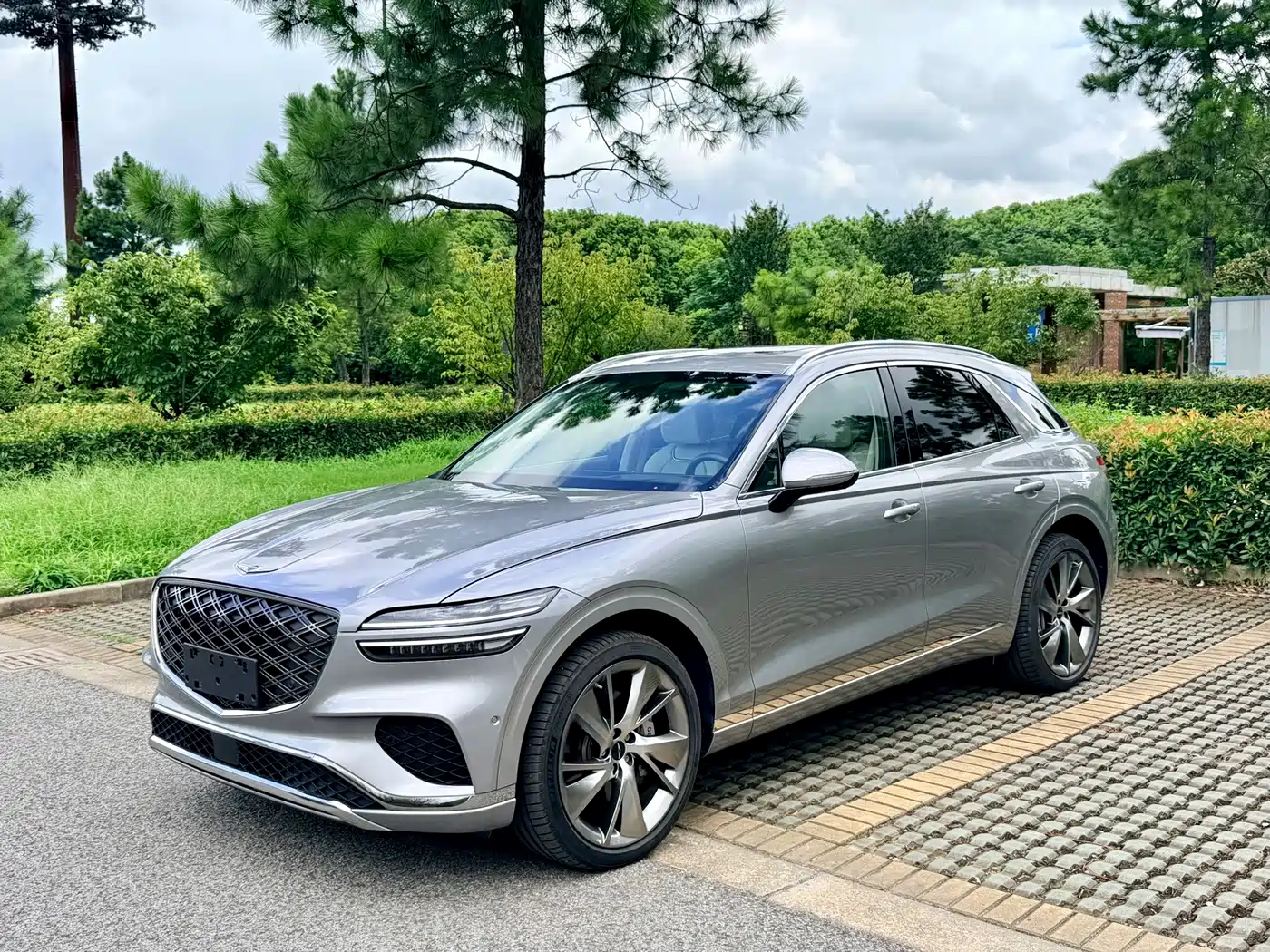
At a glance
- The GV70 combines a premium compact-SUV format with a 2.5T petrol powertrain.
- Export trims separate 2WD Luxury priorities from 4WD Flagship requirements.
- New and used vehicles require different document, inspection and warranty checks.
- Export price is driven by unit specification, condition, logistics, Incoterms and market charges.
- MOQ, RHD supply and homologation must be confirmed for the chosen destination.
Why the Genesis Gv70 matters for export markets
The Genesis GV70 sits in the compact luxury crossover segment, between ordinary family SUVs and larger premium models. Its export proposition combines a premium badge, a five-door SUV format and a 2.5-liter turbocharged petrol engine with the option of rear-wheel drive or four-wheel drive. That mix gives importers a vehicle for buyers who want upscale presence and everyday usability without moving into a full-size luxury SUV. It is relevant where compact luxury crossovers have an established dealer and resale ecosystem, and it offers trade buyers a premium product without a full-size luxury import.
Global demand for the GV70 is best understood segment by segment. Genesis is less universally established than Audi, BMW or Mercedes-Benz in many destination markets, so a Genesis GV70 for export may sell on design, equipment and ownership proposition rather than badge familiarity alone. Dealers can target customers moving up from a mainstream crossover, while company-car, executive and hospitality buyers may value its cabin presentation. The business case is local: clear target segment, credible aftersales support and serviceability must support the vehicle throughout ownership rather than relying on launch curiosity or short-term showroom traffic.
For a B2B buyer, the GV70 is not simply another unit to place on a forecourt. Steering, emissions equipment, axle loads, software, option content and service procedures may differ by source market, while the commercial case depends on how quickly the model can be registered and supported. The export-facing range—a 2WD Luxury Version and a 4WD Flagship Edition—offers a straightforward way to match drivetrain and equipment to the destination. Buyers should compare those versions in live inventory and build the case around landed compliance and ownership support, not appearance alone.
- Premium compact-SUV positioning.
- Trim choice sets drivetrain priorities.
- Service readiness drives resale.
Model range, trims and powertrain variants: how the lineup is structured and how to choose
The export-relevant lineup is organized around two clearly defined 2.5T versions. Both use a 2.5-liter turbocharged petrol engine, so this is a combustion-engine proposition rather than an EV package with battery and charging specifications. The Luxury Version pairs the engine with two-wheel drive, while the Flagship Edition adds four-wheel drive and a higher specification. This gives an importer a clean decision axis: drivetrain layout and equipment, not a long list of unrelated powertrain options. It also makes model identification easier when preparing RFQs, comparing landed cost and checking destination-market approvals.
For a 2WD Luxury buyer, the attraction is a less mechanically elaborate traction package and a specification aimed at efficient deployment on paved roads. That can make sense for urban company cars, hotel or executive transport, and dealers serving markets with lower demand for all-weather capability. A 4WD Flagship buyer is usually prioritizing added traction, a more luxurious specification or both. Because local taxation and road conditions can favor either approach, the correct choice depends on utilization and the destination market, not simply the highest equipment level. Tire and equipment needs should also be checked.
Before selecting a trim, ask the seller to reconcile the listing name with the VIN, model-year designation, engine label, axle code and factory option sheet. Equipment can vary by market even when the trim badge is similar, and photographs do not prove a vehicle’s origin or compliance status. Compare servicing provisions, wheel and tyre availability, diagnostic software and expected parts support for the destination. A buyer choosing from verified documents is better placed than one choosing only from exterior images. For wholesale programmes, standardization also simplifies training and parts planning.
- 2WD Luxury: paved-road deployment.
- 4WD Flagship: added traction.
- Verify VIN and factory options.
New vs used Genesis Gv70: how export inventory is structured and how buyers choose
Export inventory should be read at unit level. A marketplace listing represents a specific vehicle with its own model year, trim, production timing, condition, mileage where applicable, options and seller terms. New units may come through dealer or manufacturer channels, while used GV70 stock enters through trade-ins, leasing operations or private sellers; each route has different documentary depth. Consequently, there is no meaningful equivalent GV70 until the individual listing has been inspected and its paperwork reconciled. The same trim badge does not remove age, history or condition risk for the buyer.
A new Genesis GV70 generally offers the cleanest ownership start: low prior use, a known delivery history and the strongest basis for factory warranty claims, subject to the terms actually issued. For an overseas buyer, however, new does not automatically mean warranty coverage will transfer across borders. Check the warranty certificate, maintenance record, production date and any market-specific service assumptions. A dealer should also confirm how the vehicle will be inspected and registered before accepting final payment. Dealer preparation can add value, but it must be itemized on the invoice.
A used Genesis GV70 can be commercially sensible when the buyer wants an established premium product at a lower acquisition cost, particularly for a secondary-market strategy or an internally used vehicle. The discount is exchanged for uncertainty: high mileage, wear, accident repair, incomplete service history and model-age rules may affect value or import eligibility. Inspect the VIN, panels, underside, tyres, fluids, electronic functions and service invoices, and request a pre-purchase report from the country of origin. Never let a used unit bypass the same verification used for a new vehicle.
- Every listing represents one vehicle.
- Inspect documents and condition separately.
- Confirm warranty and age rules.
How export pricing works: the factors behind a live listing price, and how to read one
A Genesis GV70 export price guide must distinguish the vehicle’s live asking price from total landed cost. The first moves with model year, trim, drivetrain, factory options, mileage, condition, seller margin and the exchange rate used when the quote is issued. Freight, insurance, port charges, inland transport, customs duty, taxes, registration and compliance work are separate unless expressly included. Incoterms change the dividing line between seller and buyer responsibility, so two quoted figures may not represent the same obligation. Confirm the quote currency and validity date before comparing offers directly.
To buy a Genesis GV70 from China, read each live listing as a commercial document. Identify the unit, currency, condition, stated equipment, location, availability status and seller’s MOQ; then check what the price does and does not cover. Confirm whether it is FOB, CIF or another term, whether payment and performance guarantees are offered, and whether export documentation is included. ChinaCarDirect’s live GV70 listings are the place to verify the current binding price and per-unit terms, while a written RFQ should capture any quote that will be relied upon for approval.
A sound landed-cost worksheet begins with the live vehicle price, adds international and destination-side logistics, duty and tax where applicable, ports, insurance, inspection, registration, local transport and a contingency for currency or compliance changes. Model the calculation for both 2WD Luxury and 4WD Flagship candidates because the drivetrain and specification affect procurement cost. An example might compare a single vehicle with part of a consolidated shipment, but freight economics cannot be separated from Incoterms. Re-quote when exchange rates, sailing schedules, port charges or regulatory requirements change; a stale spreadsheet is not a purchase order.
- Listing price differs from landed cost.
- Confirm currency, Incoterm and validity.
- Re-quote when inputs change.
MOQ, ordering and payment: single units vs consolidating a container
MOQ must be checked on the selected listing and confirmed with the seller; it should not be assumed from the model name or copied from another vehicle. Some offers may be available without a multi-vehicle commitment, while customized builds may require consolidation. For an importer testing demand, a single-unit purchase can limit exposure and provide evidence on customer fit. For wholesale volume, a larger order may improve terms, but only if vehicles share a marketable specification. Use the live listing and RFQ response. Those written sources should control the commitment.
The ordering sequence should be explicit. Select a live listing, request an RFQ, obtain a written quotation and pro forma invoice, verify the seller and payment beneficiary, then agree a deposit and balance schedule linked to milestones. An inspection before final balance is sensible, as is a written release mechanism tied to documents and shipping evidence. Payment methods, refund conditions, warranty treatment and title-transfer steps vary by transaction, so no universal sequence or percentage should be assumed. Put every commercial term on the invoice, particularly if the vehicle will be financed or resold.
Consolidating a container can align several dealers or fleet buyers with one shipment, but it creates configuration risk. Different model years, trims, drivetrains, colours and option packages may complicate grading, insurance, spare-parts planning and destination registration. Grouping similar units reduces that friction and makes fleet handover more consistent. If a mixed load is unavoidable, confirm that every vehicle meets the same import rules and has equal commercial value. For a Genesis GV70 wholesale programme, standardizing on one trim can often be more valuable than maximizing the number of unrelated units in the container.
- Check MOQ per listing.
- Put milestones in writing.
- Standardize trims before consolidation.
Shipping, homologation and market compliance caveats: LHD/RHD and import rules by country
Shipping cost and time begin with the unit’s physical dimensions, gross weight, origin, destination and chosen mode. Sea transport is generally the economic route for a completed SUV, with full-container, less-than-container and specialist vehicle options evaluated against available loaders; air or roll-on/roll-off can be considered when urgency or consolidation constraints justify the added cost. The route, port congestion, documentation readiness, insurance, fuel surcharges and handling all affect the final quote. Verify securement and lashing requirements, and compare freight against the vehicle’s expected holding and carrying costs during its planned holding period in transit.
Steering configuration is an early sourcing filter. Vehicles sourced from China are commonly encountered in left-hand-drive form, while some destination markets require or strongly favour right-hand drive. Availability of a genuine RHD GV70 varies by source route and production market, so the requirement should be stated before selection rather than treated as a late conversion request. Converting steering, lighting or other systems can affect safety, certification, warranty and residual value. Never sign off on a vehicle described only as “convertible to RHD”; obtain the relevant market approval first in writing.
Import rules are country-specific and can include emissions standards, safety and type approval, VIN checks, customs classification, duty and VAT, emissions-zone restrictions, vehicle-age limits and local registration requirements. A Chinese-market GV70 may not carry the same approvals or equipment as a version sold locally, even where the trim name looks familiar. Engage a destination-market customs broker or homologation specialist early, compare the exact VIN against local rules, and budget any modification or inspection separately. Compliance advice must come from the relevant authority or qualified local professional, not from the export listing alone.
- Confirm steering configuration early.
- Check destination approval rules.
- Itemize compliance costs separately.
Who should buy the Gv70 — and who should pick a different vehicle
The GV70 best fits an importer or specialist dealer with a defined premium-SUV customer, the ability to explain the Genesis brand and support after delivery. Company-car, executive, hospitality and design-conscious buyers may respond to its upscale cabin and distinctive styling. The 2WD Luxury Version can suit paved-road fleet use where lower drivetrain complexity is desirable, while the 4WD Flagship Edition can fit buyers wanting additional traction or a higher equipment level. These use cases work only when the operator can manage fuel, servicing and residual-value risk; retail presentation alone is not enough.
It is a weaker choice for a highly cost-sensitive fleet whose priority is low operating cost, high utilization and easy service from an established local network. It may also be unsuitable where emissions rules, company policy or charging infrastructure make a combustion vehicle difficult to deploy, or where immediate RHD supply and established parts support cannot be secured. Buyers needing substantially more cargo or three-row capacity should move to a larger SUV. Choosing the GV70 because it looks distinctive, without a service plan and compliant specification, creates avoidable long-term cost.
The decision should follow a hierarchy of requirements: legal eligibility first, parts and workshop support second, total operating cost third, customer fit fourth and styling last. Buyers who place reliability, mature dealer coverage and established resale demand above visual distinction may favor a more mainstream rival. Buyers who value a distinctive premium product and can support its ownership should test the proposition with a conservative initial order. Treat the live vehicle, its documents and the destination-market checks as one package; no specification advantage can compensate for a vehicle that cannot be registered or maintained economically.
- Best for supported premium-dealer programmes.
- Reconsider for cost-led fleet use.
- Reject uneconomic registration outcomes.
Main rivals and how the Gv70 compares
The closest alternatives are the Audi Q5, BMW X3 and Volvo XC60, although each competes with different GV70 attributes and local market availability. All sit in the premium compact-SUV fight for dealer customers, but engine choices, standard equipment and homologated variants differ by country. The GV70 counters with a 2.5T petrol proposition, a direct choice between 2WD Luxury and 4WD Flagship versions, and a more assertive design identity. The counterargument is that its badge may be less familiar and its support network harder to justify in some destinations for first-time buyers.
Against the Audi Q5, the GV70 offers buyers a less conventional visual identity and the rear-drive option in the Luxury version, while the Q5 benefits from a more familiar premium-brand ecosystem in many markets. Against the BMW X3, the GV70 generally places more emphasis on comfort and visual drama, whereas the X3 carries a stronger driver-focused and performance-oriented reputation. These are market-dependent tendencies, not guarantees. Compare the exact destination-approved engines, drivetrains, warranties and service arrangements before deciding whether the GV70’s differentiation is commercially meaningful for that market. Price should be compared on a landed basis.
The Volvo XC60 is another credible family-oriented premium alternative, with a more restrained Scandinavian design identity and an established reputation for comfort-oriented ownership. A buyer choosing the GV70 may prioritize its distinctive cabin, turbocharged engine and direct two-drive or four-drive choice, but should also test parts lead times and local technician familiarity. The final selection is commercial: compare landed cost, compliance work, expected residual demand and aftersales support on an apples-to-apples basis. The best rival is not the model with the strongest badge; it is the one your customer and service network can support most profitably.
- Audi Q5: familiar premium support.
- BMW X3: driver-focused alternative.
- Volvo XC60: comfort-led alternative.
Live Genesis Gv70 export inventory
View all listings →Real units currently on ChinaCarDirect with per-unit asking prices and MOQ. Availability updates live from the catalogue.
How to buy a Genesis Gv70 from China
-
1
Define the destination requirements
Confirm steering configuration, local homologation, preferred drivetrain, usage profile and import-age rules before selecting a vehicle.
-
2
Review the live GV70 inventory
Open the Genesis GV70 listings and compare the exact unit, trim, model year, condition, equipment and seller information.
-
3
Request a written RFQ
Ask for the current per-unit price, MOQ, currency, Incoterm, documentation, payment milestones and expected production and shipping details.
-
4
Verify the vehicle and documents
Reconcile the VIN, axle code, factory options, production date, service history and condition with an independent inspection.
-
5
Validate compliance and landed cost
Use a local customs broker or homologation specialist to check eligibility, then calculate freight, duty, tax, port, registration and compliance costs.
-
6
Contract and pay
Review the pro forma invoice, payment beneficiary and remedies, then use staged payments tied to inspection and document delivery.
-
7
Ship and complete the handover
Approve pre-export inspection, secure the vehicle and documents, track the shipment, and complete arrival inspection, registration and parts planning.
Gv70 vs rivals
| Audi Q5 | The Q5 may be the safer commercial choice where its premium-badge familiarity, established parts network and local demand outweigh the GV70’s more distinctive design and 2WD Luxury option. Compare the exact homologated powertrain and landed cost, since Q5 configurations vary by market. |
|---|---|
| BMW X3 | The X3 is the more driver-oriented alternative, with a reputation for responsive handling and driver-focused branding. The GV70 may better suit buyers prioritizing comfort-led luxury and a less conventional visual identity; available drivetrains and equipment depend on the destination market. |
| Volvo XC60 | The XC60 is a credible family-oriented premium rival for buyers who prioritize restrained styling and a comfort-led proposition. The GV70 differentiates through its 2.5T range and direct 2WD/4WD trim choice, but the final decision should follow parts support and expected residual demand in the destination. |
Frequently asked questions
How is Genesis GV70 export pricing determined?
A live price is built from the unit’s model year, trim, drivetrain, options, condition, seller terms and the exchange rate. Freight, insurance, duty, taxes, port charges and compliance work may sit outside it according to the Incoterm. Check the current per-unit price and availability in the live Genesis GV70 listings, then request a written quote for the exact vehicle and destination.
What engine and powertrain options are available?
The export GV70 uses a 2.5-liter turbocharged petrol inline-four with an 8-speed automatic. The Luxury Version is two-wheel drive, while the Flagship Edition is four-wheel drive. As a combustion model, it has no battery-capacity or charging specification; confirm the engine, gearbox, axle and VIN details on the live listing.
Should an importer choose a new or used Genesis GV70?
A new unit generally offers the cleanest ownership history and the strongest warranty basis, but cross-border warranty transfer may be limited. A used GV70 can reduce acquisition cost while adding age, mileage, condition and inspection risks. Compare the unit’s documents, warranty terms, service history and destination eligibility before choosing.
How does MOQ work for wholesale purchases?
MOQ is set by the individual listing or seller and must be confirmed during the RFQ process. A buyer may source a single unit when the selected offer permits it, while some lots or customized builds require consolidation. The live listing shows the applicable per-unit requirement, and the written quotation should state it clearly.
What affects shipping time and cost for a Genesis GV70?
Shipping is driven by origin and destination, vehicle dimensions and weight, transport mode, route, port handling, documentation readiness, insurance and surcharges. Sea freight is generally considered for completed vehicles, while specialist or faster options may suit urgent or consolidated shipments. Obtain a freight quote using the actual VIN, vehicle location and confirmed Incoterm.
Can spare parts be ordered for an exported GV70?
Parts may be sourced from Genesis or specialist suppliers, but the correct part should be identified by VIN, production date and market specification. Chinese-market and destination-market parts are not always interchangeable, and lead times can affect repair planning. Confirm availability and catalogue coverage with the seller or local dealer before launching the vehicle programme.
Is a right-hand-drive Genesis GV70 available for export?
RHD availability varies by source route, production market and supplier, so it should be confirmed before a vehicle is selected. Do not assume a Chinese-market LHD vehicle can be converted economically or legally. Obtain the relevant destination approval in writing and verify the steering, lighting and safety configuration of the exact vehicle.
How do I order a Genesis GV70 from China?
Start with the live GV70 inventory, select the closest matching unit and submit an RFQ with the destination, trim, drivetrain and quantity. Compare the written quotation, MOQ, Incoterm, documents and payment milestones with your landed-cost model. Release funds only after the vehicle, seller and contractual safeguards have been verified.
Ready to source the Genesis Gv70?
Submit your destination, trim, drivetrain and quantity requirements through the RFQ form for a unit-specific Genesis GV70 export quotation.
Request a quote