
Great Wall Poer Export Buying Guide for Dealers
Buy Great Wall Poer from China with practical guidance on trims, used vehicles, export pricing, ordering, shipping, local compliance and rival pickups.
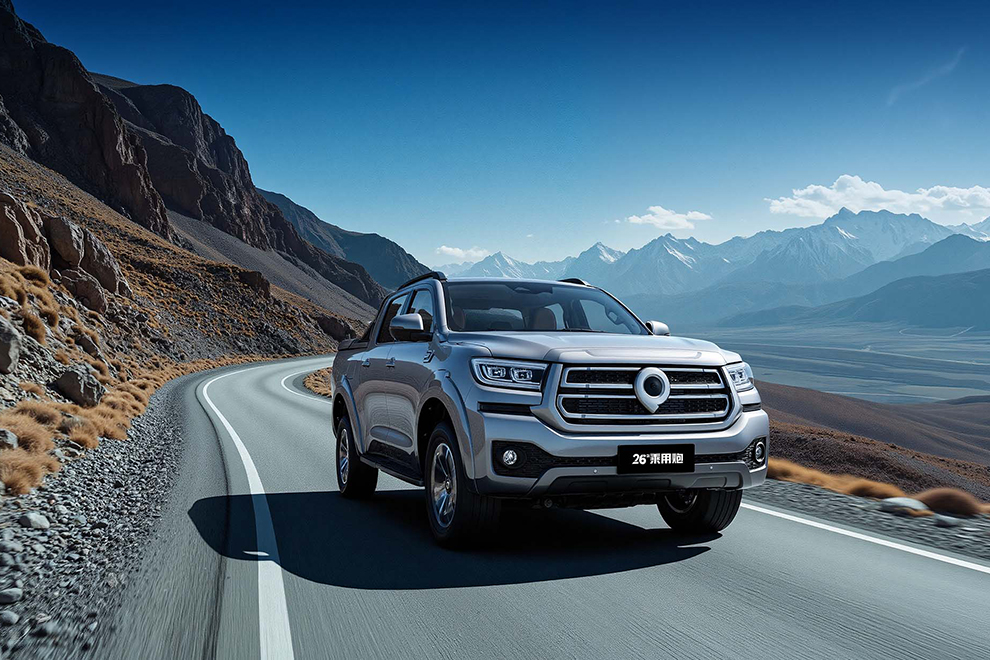
At a glance
- The Poer family spans 2.0T gasoline and diesel pickups, 2.4T diesel commercial variants and Hi4-T/new-energy derivatives.
- Buyers can choose manual or automatic transmissions, two- or four-wheel drive, and pickup, long-bed or flatbed bodies.
- Used vehicles require VIN-level inspection, document checks and a maintenance reserve, while nearly new units can offer a cleaner warranty hand-off.
- Export pricing depends on the exact vehicle, condition and commercial terms; current unit-level prices and availability appear in the live listings.
- Local emissions, age, steering, safety and commercial-body rules must be checked before ordering.
Why the Great Wall Poer matters for export markets
The Great Wall Poer sits in the practical middle ground between a work pickup and a lifestyle SUV. Its appeal for export buyers comes from a familiar pickup format combined with several commercial-oriented configurations, including long beds, flatbeds, two-wheel drive and four-wheel drive. Gasoline and diesel 2.0T versions give fleet customers different operating priorities, while Hi4-T and new-energy variants add a pathway for markets prioritising lower-emission transport. That breadth allows distributors to build a coherent pickup programme without mixing unrelated body types, and gives operators a clearer route from urban utility work to more demanding regional duty.
Across export markets, demand is strongest where pickups serve several jobs at once: agriculture, construction, utilities, transport, rental fleets and outdoor use. A single model can cover a standard cargo bed for everyday loads, a long-bed or flatbed for conversion, and four-wheel drive for unpaved access. For importers, this reduces the need to develop multiple nameplates, but it also makes careful variant matching essential because a passenger-oriented off-road trim and a flatbed diesel are not interchangeable fleet products. The commercial buyer should therefore start with load and duty-cycle requirements, not with the broadest model badge on the listing.
Export relevance also depends on how well a Poer can be supported after delivery. Buyers should look for accessible spare-parts matching, a parts list, technical documentation, and a local repair base familiar with the engine and gearbox combination. New-energy versions require a different service conversation because charging equipment, hybrid components and diagnostic capability become part of ownership. The model is therefore a strong candidate when the distributor can arrange aftersales support rather than treating the shipment as an isolated vehicle sale. That distinction is especially important when vehicles operate far from major service centres.
- Multiple bed and drivetrain formats.
- Work and lifestyle fleet fit.
- Serviceability shapes export value.
Model range, trims and powertrain variants: how the lineup is structured and how to choose
Listing names can include King Kong Poer or Shanhai Poer, but the underlying range is organised around 2.0T gasoline and 2.0T diesel derivatives. The gasoline variants use the GW4C20B designation in the names represented, while diesel commercial versions use GW4D20M. Buyers will also encounter manual and automatic transmissions, two- and four-wheel-drive layouts, long-bed and flatbed bodies, and several commercial trim labels. A 2.4T diesel commercial derivative broadens the range, so engine size should be matched to load, route and local fuel availability. Automatic 8AT applications appear on some diesel variants, while manuals remain relevant where simplicity, control and procurement economics dominate.
Four-wheel drive is not simply a cosmetic off-road package. On commercial long-box and flatbed versions it changes the intended operating environment, while two-wheel-drive versions may suit sealed roads and controlled private sites. Manual transmissions can lower acquisition complexity for disciplined fleet drivers, but automatics reduce repetitive workload and may suit mixed crews better. The correct choice depends on payload, gradient, road surface, towing requirements and driver familiarity. Confirm the final combination on the individual listing rather than assuming every 2.0T Poer shares the same equipment, including its exact bed format.
The Hi4-T Performance Edition and Poer New Energy long-box show that the model family also extends beyond conventional diesel and gasoline pickups. Listings may describe two-wheel-drive new-energy commercial vehicles as well as a Hi4-T performance derivative, but they do not establish a single battery, electric-range or charging specification across the family. Buyers should request the exact battery capacity, rated range, charging method and payload for the proposed unit. For fleet tenders, those figures should be compared against duty-cycle simulations, not against the headline range of a different selected Poer variant.
- Gasoline GW4C20B or diesel GW4D20M.
- Manual, automatic and some 8AT.
- Long beds and flatbeds differ.
New vs used Great Wall Poer: how export inventory is structured and how buyers choose
A used Poer can be a fleet purchase when the vehicle’s remaining service life comfortably exceeds the importer’s holding period. The relevant question is not simply whether it has prior registration, but whether its age, mileage and condition suit the planned duty. Inspect the chassis, suspension, steering, brakes, drivetrain, cabin, bed and electrical systems, and review service records. A commercial vehicle that has worked hard may still be viable if wear is documented and correctly managed. The inspection should establish whether repairs are cosmetic, deferred or likely to affect payload, safety and downtime.
Used inventory can offer lower entry cost and a clearer view of actual vehicle history, but buyers must price in maintenance reserve, replacement tyres, ageing cabin components and potential regulatory age limits. A well-maintained high-mileage work pickup may be more valuable than an attractive but poorly documented low-mileage example. Conversely, a nearly new demonstration vehicle can bridge the gap between a new purchase and a conventional used unit, although its warranty position and export classification must be confirmed. The correct comparison is total operating cost over the intended ownership horizon.
New or nearly new Poers suit buyers seeking predictable condition, current infotainment and an easier warranty hand-off, but availability, specification and price can differ from the used market. New-energy versions also require confirmation of charging compatibility and local incentives or restrictions. For any vehicle marketed as used, obtain the vehicle identification number, registration documents, import history and an inspection report, then reconcile them with the photos. Matching the physical unit to its paperwork reduces the risk of discovering an unresolved issue only after the vehicle has been paid for or shipped.
- Match life to holding period.
- Inspect wear against duty.
- Verify VIN and documents.
How export pricing works: the factors behind a live listing price, and how to read one
A live export price is the result of variables, beginning with model year, trim, engine or battery version, transmission, drivetrain and cargo body. For a used vehicle, mileage, service history, cosmetic condition, accident repair and remaining commercial usefulness also affect the ask. Commercial flatbeds and long-box diesel units are not directly comparable with lower-mileage four-wheel-drive or Hi4-T vehicles. Use the live listings to see the current price for each physical configuration, then build the landed-cost comparison around that figure rather than relying on a generic model-level estimate that could be misleading.
Export price is not automatically the landed cost. Depending on the agreed Incoterm, the buyer may still need to account for ocean freight, insurance, terminal and handling charges, inland transport, destination customs, taxes and duties. Exchange-rate movement can also alter the commercial comparison between quotations. Ask for a written quote that identifies the vehicle, price basis, currency, Incoterm, named destination or port, payment schedule and validity. The same listing can therefore look different to two buyers even when the vehicle itself is unchanged, because freight assumptions and insurance scope may differ.
To compare quotations fairly, align year, trim, fuel, gearbox, four-wheel-drive status, bed or flatbed format, mileage and condition, then compare the commercial terms separately. Review photographs for repairs, bed condition, interior wear and missing equipment, and ask for the identification number if committing. A discount or premium only has meaning against a like-for-like reference. When a buyer needs several units, request a consolidated quotation with the same specification standard for each vehicle; this reduces the risk of obtaining a mixed batch that is harder to support and resale efficiently locally.
- Trim and condition set price.
- Price differs from landed cost.
- Compare like-for-like vehicles.
MOQ, ordering and payment: single units vs consolidating a container
Minimum order quantity is not a universal property of the Poer; it depends on the seller, vehicle and shipping method. Some marketplace listings can be purchased individually for a trial vehicle or small fleet need, while container-based sellers may impose a batch requirement for certain configurations. Read the live listing and written quotation for the binding quantity, and do not infer terms from other Poer versions. A single-unit purchase can support market testing, but it usually offers less freight efficiency and may leave the importer carrying duplicated fixed costs alone.
For a trial or wholesale order, define acceptance criteria before payment: exact trim, condition standard, documentation, inspection method, payment milestones and expected shipping terms. Confirm whether the unit is reserved and how long the quotation remains valid. Before releasing the balance, reconcile the vehicle identification number with the listing, invoice and inspection report, and confirm that replacement or refund remedies are written into the contract. These steps matter even when only one truck is being purchased, because cross-border remedies can be more difficult than domestic returns once the vehicle has left the origin country.
Consolidating several Poers into one container or shipment can improve freight efficiency and simplify fleet onboarding, but it concentrates selection risk. Agree the specification standard first: powertrain, gearbox, drivetrain, bed format, trim and condition tolerance. Ensure each unit is inspected and photographed independently, and label its paperwork and physical identifiers consistently. Where mixed variants are unavoidable, disclose them in the contract and calculate carrying cost by body type and destination requirements. Less-than-container or shared loading may reduce the upfront volume, yet it can add handling complexity and make damage responsibility less straightforward.
- Each listing sets its MOQ.
- Define inspection criteria first.
- Consolidate against clear standards.
Shipping, homologation and market compliance caveats: LHD/RHD and import rules by country
Shipping method depends on order size, vehicle configuration, origin and destination. A full container suits consolidated fleet orders, while roll-on/roll-off vessels or shared vehicle cargo arrangements may suit other quantities; individual units may travel in general-purpose or enclosed cargo space under the forwarder’s plan. Transit time and cost vary with port pairs, sailing frequency, transshipment, seasonality, fuel surcharges, terminal handling, insurance and inland delivery. Provide accurate dimensions and weight information, especially for long-bed, flatbed and four-wheel-drive variants, and confirm how vehicles will be lashed and protected within the selected cargo arrangement.
Steering configuration is a critical sourcing check. The Poer family is associated with left-hand-drive vehicles, but the exact hand, and the availability of right-hand-drive production or conversion, must be established for each market and unit. Do not infer it from photographs alone if the view is unclear. A steering conversion may affect safety approval, warranty, insurance and parts compatibility, and it adds labour cost. For markets with a genuine right-hand-drive requirement, obtain the configuration in writing and request evidence before committing funds, and have the seller confirm whether it is factory-produced.
Import rules are market-specific and can depend on emissions standard, vehicle age, tax class, safety equipment, noise, VIN, customs procedure and whether the body is approved as a commercial goods vehicle. Diesel engines may face different treatment from gasoline or new-energy powertrains, while a used vehicle can be restricted even when a newer version is admissible. Obtain written confirmation from a customs broker or local authority before contracting. Also verify that the exact flatbed, long-bed or road-legal configuration will be accepted for registration and insurance in the destination country there.
- Confirm steering before payment.
- Check local age and emissions rules.
- Verify commercial registration.
Who should buy the Poer — and who should pick a different vehicle
The Poer is a strong fit for distributors serving agriculture, construction, utilities, equipment support, rental and mixed commercial fleets. It is also credible for outdoor or lifestyle buyers who need a usable bed and four-wheel-drive availability without moving to a full-size premium pickup. Two-wheel-drive commercial versions suit fleets with controlled routes; four-wheel-drive derivatives suit harsher access. Manual models can suit experienced drivers and simpler operating doctrine, while automatics improve ease of use. Diesel, gasoline and Hi4-T choices let the importer align the vehicle with fuel availability and local policy requirements.
It is a weaker fit for buyers whose requirement is long electric range, very low running cost in a well-developed charging network, or the lowest purchase price in a highly competitive segment. Buyers should pause if their market has no parts channel, if they require an emissions or safety approval that the available variant lacks, or if expected resale depends on an established brand franchise. A pickup also adds wind and load restrictions that a passenger SUV does not. The Poer should be chosen because its payload and operating configuration fit, not merely the badge is unfamiliar.
Before finalising a fleet specification, verify gross vehicle weight, payload after options, towing capability, bed dimensions, ground clearance, tyre rating, service intervals and the effect of four-wheel drive or a flatbed on carrying capacity. Compare those figures with the heaviest daily load, towing equipment and route conditions. In markets where the Poer is new, buyers may accept more learning at handover, but they should budget for technician training, parts stocking and residual-value uncertainty. A smaller planned fleet can make those establishment costs easier to absorb while preserving a larger fleet for later.
- Strong for mixed fleets.
- Cargo access drives fit.
- Check payload, towing and support.
Main rivals and how the Poer compares
The Toyota Hilux is the benchmark many buyers will compare against because of its broad pickup footprint, established global name recognition and mature support expectations. The Poer competes through a different combination of Chinese-brand value positioning and a wide selection of diesel, gasoline, manual, automatic, two-wheel-drive, four-wheel-drive and cargo-body configurations. For a distributor able to establish its own parts and technician support, that can be attractive. For a buyer prioritising effortless resale or a familiar global service network, the Hilux may carry less market-entry risk in the short term overall.
The Ford Ranger is another close alternative, particularly for buyers focused on four-wheel-drive capability, off-road presentation and a strong international pickup franchise. Ranger benefits from broad model familiarity and a similarly visible lifestyle market, whereas the Poer can offer different bed formats and commercial derivatives that may appeal to work-oriented importers. Neither should be selected by badge alone. Compare the exact drivetrain, payload and towing approvals, local emissions rules, parts lead time and total ownership plan. The winning choice is usually the variant that can be supported and registered where it will operate.
The Isuzu D-Max is a particularly relevant commercial rival because buyers often consider it alongside diesel two-wheel-drive and four-wheel-drive fleet trucks. The D-Max carries a strong diesel reputation, while the Poer offers additional transmission, body, fuel and new-energy choices that can broaden an importer’s offer. The trade-off is operational: a Poer launch may require more deliberate parts planning, technician preparation and residual-value management, especially where D-Max support is already established. Run a local total-cost comparison for the actual duty, including fuel, downtime, repairs and compliance, rather than assuming either model is universally cheaper.
- Hilux: global brand familiarity.
- Ranger: off-road benchmark.
- D-Max: commercial diesel rival.
Live Great Wall Poer export inventory
View all listings →Real units currently on ChinaCarDirect with per-unit asking prices and MOQ. Availability updates live from the catalogue.
Used Great Wall Poer 2026 Model 2.4T Commercial Cannon Automatic Diesel Four-Wheel Drive High-Cold Version
How to buy a Great Wall Poer from China
-
1
Set the operating requirement
Specify payload, route, fuel, body, drivetrain and local charging access before selecting a trim. This prevents cosmetic preferences from overriding load, compliance and cost requirements.
-
2
Review the live Poer listings
Use the Poer inventory to shortlist year, engine, transmission, drivetrain and body combinations. Treat each displayed listing as the starting point for the commercial offer, not proof of condition.
-
3
Request unit-level evidence
Ask for the VIN, photographs, service history, inspection report, equipment list and export documents. Reconcile every item with the physical vehicle and quoted trim.
-
4
Confirm market compliance
Have a local broker or authority check steering, emissions, age, safety, VIN and commercial-body registration requirements. Do not order a diesel or new-energy variant on the assumption that it is admissible.
-
5
Request a landed quotation
Ask for vehicle price, currency, Incoterm, named destination, freight, insurance, duties and payment milestones in writing. This separates the listing price from the buyer’s true landed cost.
-
6
Inspect before final payment
Use an agreed third-party inspection and make VIN reconciliation, document verification and remedies part of the payment condition. Retain signed records for shipment and customs.
-
7
Consolidate and ship
Group only compatible units, record each condition, and clarify loading, lashing, insurance and damage responsibility. Confirm export release, shipping documents, the spare-parts kit and delivery tracking.
Poer vs rivals
| Toyota Hilux | The Hilux offers stronger global brand familiarity, established support expectations and generally clearer resale positioning. The Poer provides wider Chinese-brand trim, powertrain and cargo-body choice, which can suit an importer capable of building its own aftersales network. |
|---|---|
| Ford Ranger | The Ranger is a recognised four-wheel-drive and off-road benchmark with broad international pickup familiarity. The Poer is a credible alternative for buyers prioritising commercial derivatives, transmission choice and configuration flexibility, subject to local approval and parts planning. |
| Isuzu D-Max | The D-Max is a strong commercial diesel alternative with a well-established fleet identity. The Poer competes with broader body, transmission, fuel and new-energy choices, but may require more deliberate technician training, parts stocking and residual-value planning. |
Frequently asked questions
How is the export price of a Great Wall Poer determined?
The live Poer inventory shows the current price and availability for each specific unit. The price reflects factors such as year, trim, powertrain, transmission, drivetrain, body, mileage, condition and repair history. A written quotation should then confirm currency, Incoterm, destination, freight assumptions and payment terms.
Which engines and new-energy specifications are available?
Combustion versions include 2.0T gasoline engines identified as GW4C20B, 2.0T diesel engines identified as GW4D20M, and a 2.4T diesel commercial derivative. Manual and automatic transmissions are offered, with selected diesel versions specified as 8AT. Hi4-T and Poer New Energy versions also exist, but battery capacity, electric range and charging specifications cannot be assumed from the model name; check the live listing and request the exact unit data.
Is a used Great Wall Poer better than a new or nearly new example?
A used Poer can reduce entry cost and suit a shorter ownership horizon, but buyers should reserve funds for ageing components and inspect wear against the planned duty. A new or nearly new vehicle may offer cleaner condition and simpler warranty transfer, although specifications, charging compatibility and export treatment must be confirmed for the selected unit.
What is the MOQ for Great Wall Poer exports?
MOQ depends on the seller, configuration and shipping plan, not on the Poer name alone. A listing may accept one vehicle for a trial order, while some batch or container arrangements require several. The live listing and written quotation state the binding requirement, so buyers should not assume one-unit purchasing is available for every trim.
What determines shipping time and cost?
Shipping time and cost depend on quantity, vessel or vehicle-carrier method, port and inland destinations, season, fuel surcharges, handling, insurance and cargo dimensions. Long-bed and flatbed configurations need accurate weight and size information. The freight forwarder should quote the route and Incoterm, while the buyer retains responsibility for destination charges unless expressly included.
How should Poer spare parts be ordered?
Confirm that the seller can support the exact engine, transmission and hybrid configuration with parts matched to the vehicle identification number. Request a parts list, recommended maintenance schedule, packaging details and a first-order stocking plan. Poer aftersales may require distributor-led support, so parts availability should be established before shipment rather than after a breakdown.
Is right-hand-drive Poer availability guaranteed?
Right-hand-drive availability must be checked for each source, trim and market because steering configuration is not uniform and a conversion may affect homologation, warranty and insurance. Do not infer it from a listing name or an unclear photograph. Ask for the configuration in writing and obtain local approval before paying.
How do I order a Great Wall Poer from China?
Start with the live Poer listings, select the closest vehicle and request a unit-level quotation with the destination and Incoterm. Review VIN-level photographs, inspection evidence and export documents, then agree payment milestones and remedies in writing. After compliance and shipping checks are complete, approve dispatch and follow the vehicle through export release and delivery.
Ready to source the Great Wall Poer?
Request a Great Wall Poer RFQ with your destination, powertrain, body, quantity and Incoterm for a unit-level quote.
Request a quote