
Haval F7 Export Guide for Overseas SUV Buyers
Plan a Haval F7 export purchase with practical guidance on trims, used vehicles, pricing, MOQ, shipping, homologation and rival alternatives.

At a glance
- The F7 is a compact gasoline SUV with 1.5T and 2.0T engine choices.
- Two-wheel-drive and four-wheel-drive variants serve different operating needs.
- Used vehicles can suit budget-led buyers after rigorous inspection.
- Live export quotes vary with trim, year, condition, freight and Incoterms.
- Right-hand drive, homologation and aftersales support require destination-specific confirmation.
Why the Haval F7 matters for export markets
The Haval F7 is a compact gasoline SUV positioned for overseas buyers who want a practical Chinese crossover without limiting themselves to a basic fleet specification. Its export-relevant lineup includes 1.5T and 2.0T engines, two-wheel-drive and four-wheel-drive configurations, and numerous named trims. That combination gives importers room to match fuel budgets, load expectations and equipment preferences rather than treating the F7 as one homogeneous model. For dealers, the advantage is the ability to source different F7 grades for customer groups while keeping one model family in the parts and sales discussion.
The F7 matters in export markets because it sits in the mainstream compact-SUV segment, where buyers commonly compare Chinese alternatives on space, equipment, drivetrain and purchase cost. A gasoline powertrain can suit markets where charging infrastructure is uneven or where operators prefer familiar refuelling arrangements. Yet regional demand is shaped by more than the badge: fuel prices, road conditions, taxation, safety expectations and the availability of compliant parts can determine whether the F7 becomes a strong fit. Assess the F7 against the local customer base, not an abstract global sales chart.
Buyers considering a Haval F7 for export gain the most by separating vehicle suitability from marketability. The model can serve private buyers, company fleets or dealer stock, but each route has different documentation and warranty expectations. A fleet buyer may prioritise uptime, serviceability and total operating cost, while a dealer needs trim-level choice and predictable resale options. The F7 is compelling when those priorities align with the engine, drive system and equipment selected for the destination market. Otherwise, a cheaper unit can still create unnecessary compliance, repair or remarketing costs.
- Mainstream compact-SUV export positioning.
- 1.5T and 2.0T powertrain breadth.
- Two-wheel-drive and four-wheel-drive choices.
Model range, trims and powertrain variants: how the lineup is structured and how to choose
The F7 range is structured around two turbocharged engine families and two drive layouts. Two-wheel-drive versions use either the 1.5T or 2.0T engine, while four-wheel-drive versions are associated principally with the 2.0T range in the export naming seen here. Trim names such as i-Trend, i-Type, i-Cool, iXuan, i-Van, i-Active and iJoy distinguish equipment and positioning, but naming can change across model years and Chinese-market editions. A buyer should therefore compare the actual specification sheet for each unit, including transmission, drivetrain, emission standard and equipment, instead of selecting on the trim badge alone.
Choice usually starts with the operating environment and the buyer’s cost priorities. A 1.5T two-wheel-drive F7 is the logical starting point for urban use, paved regional travel and fleets that want to avoid carrying the cost of a more powerful engine or four-wheel-drive hardware. The 2.0T option can suit buyers seeking additional performance reserve, while four-wheel drive may be relevant where wet roads, gradients or mixed surfaces are common. These are fit rules, not guarantees of towing or load capability. Confirm limits using manufacturer information for the exact vehicle before committing.
Emissions and equipment can be as important as mechanical choice when buying Haval F7 specs for export. The F7 catalogue includes China V and China VI designations, and these versions should not be treated as interchangeable across destinations. The correct comparison is the named trim, engine, drive system, transmission and emission version as recorded for the vehicle. Ask for photographs of the emissions label and a full option list, because cosmetic differences between trims can hide substantial equipment changes. Verify whether locally required safety or software functions were fitted before export.
- Trim names vary by market edition.
- China V and China VI versions.
- Verify transmission on each listing.
New vs used Haval F7: how export inventory is structured and how buyers choose
New and used Haval F7 vehicles should be treated as separate sourcing routes rather than interchangeable price tiers. New units offer a more controlled specification history and may carry factory warranty or newer-model technology, subject to seller terms. Used export vehicles can provide trim coverage and a different relationship between specification and acquisition cost. The correct category is the one that matches your approval policy, warranty expectations and target retail price, not the lowest displayed amount. Live availability changes; confirm condition and documentation for each shortlisted vehicle before reserving it.
A used F7 can make sense for a dealer testing demand, a budget-conscious fleet or a buyer comfortable with vehicle-history checks. Inspect paint and body panels, cabin wear, tyres, service evidence, accident indicators and the accuracy of the odometer, then review the engine, transmission, cooling system, electrical equipment and four-wheel-drive hardware where fitted. Ask for a pre-purchase inspection and repair history. An attractive used unit offers little value if unresolved defects will not be covered in the destination market. Import age rules and emissions treatment may also affect final usability.
A new F7 is the cleaner route for buyers who need known mileage, consistent presentation, current model-year technology or factory warranty. It can reduce uncertainty about previous ownership and undisclosed repair, although it does not remove the need to check the production date, specification and delivery condition. New does not automatically mean compliant or ready to register: the vehicle still has to satisfy the destination’s type-approval, safety, emissions and import requirements. Confirm all of those before treating a new unit as turnkey. Request a pre-delivery inspection and written warranty terms.
- Used units suit budget-led buyers.
- New units reduce ownership uncertainty.
- Inspect and document every vehicle.
How export pricing works: the factors behind a live listing price, and how to read one
A Haval F7 export price guide should be read as a decision framework, not as a permanent price list. The vehicle price will reflect model year, trim, engine, drive system, mileage, condition, service history, emissions version and the scarcity of a specification. Currency movements and seller strategy can alter the quoted amount. Because these variables change, use the live listing as the starting reference and request a written quotation for the exact unit before including freight, tax or duty in a budget. Ask exactly what costs are excluded from that quote.
The Incoterm is critical because it determines where responsibility and cost transfer between seller and buyer. Depending on the quotation, the vehicle price may exclude inland transport, export handling, terminal charges, ocean freight, insurance, destination customs, import duty, taxes and port or delivery fees. A low displayed vehicle price can produce a higher landed cost than a higher quote with more services included. Compare offers on the same delivery basis, and record the port, shipping method and coverage. Confirm whether the seller or buyer arranges customs clearance and final inland delivery.
To read a live listing properly, open the individual vehicle record rather than a category-level impression. Check the title, model year, trim, engine, drivetrain, emission designation, odometer, condition description, images, included documents and location. Then ask whether the displayed amount is a firm offer, how long it remains valid, which documents can be provided, and what payment method or deposit is required. Current per-unit price and availability are binding only when confirmed in the live ChinaCarDirect inventory and the final quotation. Treat any screenshot or old enquiry as indicative only.
- Compare like-for-like vehicle configurations.
- Confirm whether freight and duties are included.
- Request a written per-unit quotation.
MOQ, ordering and payment: single units vs consolidating a container
MOQ for a Haval F7 should be confirmed at the vehicle and seller level, because a retail purchase and a wholesale programme have different commercial mechanics. A buyer can enquire about one specific unit, particularly when a dealer is sourcing a demonstrator or completing a mixed fleet order, but the seller must accept that quantity and its payment conditions. Do not infer an MOQ from a catalogue page. Use the live listing’s order terms and a written pro forma invoice to establish the minimum, unit allocation and any booking conditions.
Consolidating several F7 units into one container can improve purchasing efficiency, but it should not be treated as a single homogeneous vehicle. Allocate units by trim, engine, drive system, emissions version, condition and documentation before instructing the shipper. Secure each vehicle with a VIN-level identity and inspection standard, and clarify responsibility for damage found at the port. Payment stages follow an order confirmation, deposit, inspection or production milestone, and final balance against shipping documents; the sequence should be negotiated rather than assumed. Use written terms for cancellation and title transfer.
Payment protection depends on matching the transaction to the risk being transferred. Before remitting funds, verify seller identity, title documents and the terms of refund or cancellation. Prefer a secure, traceable payment channel and reconcile payments with the pro forma invoice. For a larger wholesale order, consider staged releases tied to independent evidence rather than full prepayment without recourse. A Haval F7 wholesale buyer should also confirm whether export preparation, documentation and inland handling are included before vehicle loading. Build all of those services into the landed-cost comparison.
- Confirm MOQ on every vehicle.
- Allocate mixed fleet units individually.
- Use staged, documented payment releases.
Shipping, homologation and market compliance caveats: LHD/RHD and import rules by country
Left-hand-drive and right-hand-drive configuration is one of the earliest checks for a Haval F7 export order. Vehicles originating in China are commonly sold in left-hand-drive form, so a buyer needing right-hand drive should not assume that an F7 already has the correct steering position, instrument cluster, lighting, ventilation controls or radio arrangement. Request clear photographs and the VIN-level specification, then confirm the conversion or manufacturer-supported right-hand-drive route with the seller. Local registration may require more than simply changing the steering wheel. A physical pre-shipment inspection is the most reliable control.
Import requirements are country-specific, and China V or China VI labelling does not by itself establish approval elsewhere. The buyer’s compliance team should check applicable type approval, emissions rules, roadworthiness, safety equipment, customs classification, import permits, age restrictions, taxes, insurance and registration procedures. Local authorities may also ask about cybersecurity, connected services or software functions, particularly if the vehicle retains market-specific digital functions. Because rules can change, obtain current written guidance from a customs broker or qualified vehicle-homologation specialist before contracting. Factor any remediation into price, schedule and residual value.
Shipping method affects cost, transit planning and the vehicle’s condition at arrival. Vehicles are commonly moved by roll-on/roll-off service or enclosed container, with method and space confirmed for the VIN and destination port. Whichever route, agree the inspection standard, photograph the vehicle before loading, verify export and customs paperwork, insure the declared value and understand the claims process. Delivery is not complete until the buyer has inspected the vehicle after unloading and resolved any shipping damage with the responsible carrier. Keep signed vehicle condition records for each vehicle in the acceptance file.
- Confirm steering and equipment configuration.
- Validate local type approval.
- Inspect and insure before loading.
Who should buy the F7 — and who should pick a different vehicle
The F7 is a strong candidate for an overseas buyer who wants a mainstream compact SUV, a choice between 1.5T and 2.0T applications, and the option of two-wheel drive or four-wheel drive. It suits dealers building a value-oriented model range, importers covering mixed road conditions and fleet operators that can support Chinese-brand parts and servicing. Used examples can work for budget-led programmes, while newer units may suit customers who place more weight on presentation, warranty and model-year technology. The right version still depends on the target market and customer profile.
Different vehicles will be better choices in several situations. A battery-electric or plug-in hybrid model may suit a market with reliable charging and favourable operating-cost policy, whereas the F7 does not offer that proposition. Buyers needing a larger seven-seat cabin, a premium badge, a dedicated commercial van or a vehicle purpose-built for severe off-road work should look beyond the F7. The same applies when right-hand-drive availability, homologation support or local spare-parts coverage is stronger from another manufacturer. Choose the powertrain and body after mapping charging, cargo, duty-cycle and after-sales requirements.
A disciplined buyer should compare the F7 on total lifecycle suitability, not on appearance alone. Review fuel consumption expectations for the selected engine and route, service intervals, parts availability, technician familiarity, insurance, taxation and likely resale demand. Confirm that the model’s dimensions and equipment fit local parking, loading and fleet rules, and model compliance or conversion costs before purchase. The F7 makes more sense when its specification, documentation and aftersales case are stronger than the alternatives in the buyer’s destination. A lower acquisition ticket cannot compensate for an unsuitable specification.
- Best for mainstream SUV buyers.
- Check EV, seven-seat and premium alternatives.
- Compare lifecycle and compliance costs.
Main rivals and how the F7 compares
The closest alternatives to the Haval F7 in the mainstream Chinese compact-SUV export segment include the Chery Tiggo 7, Geely Coolray and Changan CS75 Plus. All are relevant because they compete for broadly similar dealer, fleet and private-buyer consideration, although exact sizes, engines and equipment vary by market. The F7’s principal distinction is its visible 1.5T and 2.0T range plus two-wheel- and four-wheel-drive choices. That makes direct comparison essential: a version-to-version match is more informative than a brand-level judgement. Compare documents, drive layout, equipment, safety, warranty and delivered cost.
Against the Chery Tiggo 7, an F7 buyer should focus on engine character, drive configuration and the exact equipment package, while checking which alternative has the stronger local service network. The Tiggo 7 may be the better fit where buyers recognise its model family or where a particular version is already homologated. Against the Geely Coolray, the F7 offers a broad F7-specific engine and drive matrix, while the Coolray may be easier to support where Geely aftersales coverage is stronger. Neither brand should win on assumption. Local evidence should decide.
The Changan CS75 Plus is another sensible Chinese-brand benchmark, particularly for buyers comparing mainstream comfort, equipment and ownership proposals in the same broad price and size class. The F7 may be preferable where its four-wheel-drive option, selected trim value or inspection package fits the brief better; the CS75 Plus may be preferable where its homologation, service access or resale profile is stronger locally. Evaluate the exact rival version and calculate the landed cost, including compliance work and likely parts consumption, rather than selecting on badges or brochure equipment in isolation.
- Chery Tiggo 7: strongest direct benchmark.
- Geely Coolray: compare local support.
- Changan CS75 Plus: compare ownership value.
Live Haval F7 export inventory
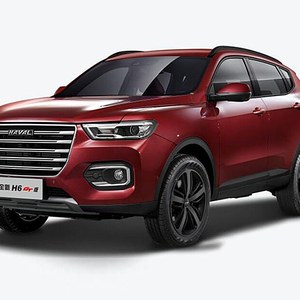
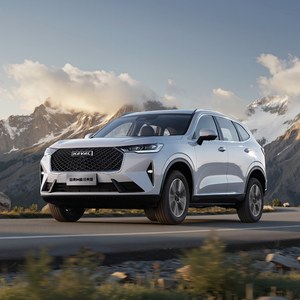
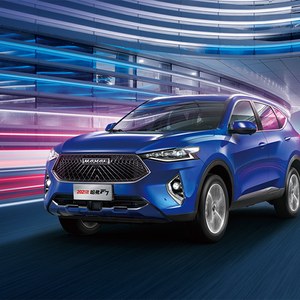
View all listings →Real units currently on ChinaCarDirect with per-unit asking prices and MOQ. Availability updates live from the catalogue.
How to buy a Haval F7 from China
-
1
Define the destination requirements
Record the destination country, import rules, required steering side, passenger and cargo needs, fuel budget and expected annual mileage. These factors determine whether the selected F7 configuration is commercially and legally suitable.
-
2
Shortlist the live inventory
Search the live Haval F7 inventory and open individual vehicle records rather than relying on category averages. Compare model year, trim, engine, drivetrain, emissions version, odometer, condition and available documents.
-
3
Request a written quotation
Send an RFQ with the vehicle identity, destination, required quantity and preferred Incoterm. Ask for the current per-unit price, MOQ, payment stages, documents, freight scope and delivery terms.
-
4
Verify the selected vehicle
Review ownership and service records, inspect the exterior and interior, and verify the engine, transmission, emissions label and VIN against the listing. Use an independent inspection for used vehicles or high-value fleet orders.
-
5
Confirm MOQ and payment terms
Put the minimum quantity, unit allocation, deposit, balance milestones, cancellation terms and title-transfer process in the pro forma invoice. Reconcile every remittance with the approved invoice and beneficiary details.
-
6
Arrange compliance and shipping
Obtain destination-specific advice on type approval, customs classification, taxes, insurance and right-hand-drive requirements. Confirm the shipping method, ports, Incoterm, condition-report standard and responsibility for cargo claims.
-
7
Complete delivery acceptance
Inspect the F7 after unloading and compare it with the pre-shipment condition record. Document any discrepancy, complete customs and registration steps, and retain the signed inspection, payment and shipping file.
F7 vs rivals
| Chery Tiggo 7 | The Tiggo 7 is a close Chinese-brand compact-SUV competitor, so buyers should compare the exact engine, drive layout, equipment, warranty and local parts support rather than assume a class-level advantage. It may suit buyers who already recognise the model family or can source a locally homologated version more easily. |
|---|---|
| Geely Coolray | The Coolray is a practical alternative for buyers who want a different design and may already have Geely aftersales support in their market. It can be the stronger choice where its local specification, emissions approval and parts network are more favourable than those available for the F7. |
| Changan CS75 Plus | The CS75 Plus competes in a similar mainstream compact-SUV bracket and is worth comparing for equipment, comfort and ownership considerations. Consider it when its exact powertrain, warranty, homologation package or local service access offers a better fit for the destination market. |
Frequently asked questions
How is the Haval F7 export price determined?
A live price reflects model year, trim, engine, two- or four-wheel drive, mileage, condition, service history, emissions version and market conditions. Currency movements, freight, insurance, port charges, duties, taxes and the selected Incoterm affect the landed cost. Exact current price, MOQ and availability are shown per unit in the live inventory; request a written quotation to confirm the binding figures.
What engine and powertrain options does the Haval F7 have?
The F7 range in export uses gasoline engines, with 1.5T two-wheel-drive versions and 2.0T versions offered with two-wheel drive or four-wheel drive. It is not a battery-electric or plug-in hybrid, so buyers should not assess it using battery range. Confirm the exact engine, transmission and drive system attached to each VIN in the live listing.
Should an overseas buyer choose a new or used Haval F7?
A used F7 can lower acquisition cost and provide access to particular trims, but it requires inspection of mileage, condition, service history, ownership and defects. A new unit can offer more consistent presentation, known mileage and clearer factory-warranty terms, but it still needs delivery inspection and destination-market compliance. Choose according to risk policy and target resale price, not a generic new-versus-used rule.
How does MOQ work when ordering a Haval F7?
MOQ is set by the seller and the specific order, so confirm it in each live listing and final pro forma invoice rather than relying on a general catalogue rule. A small vehicle purchase and a consolidated container order may have different minimums, allocation and booking terms. State the required quantity, mix of trims, destination and Incoterm when requesting a quotation.
What determines Haval F7 shipping time and cost?
Shipping time and cost depend on origin and destination ports, vessel schedules, congestion, customs clearance, handling, cargo method, insurance and inland delivery. A quote should identify the Incoterm, loading and destination ports, whether the rate covers insurance, and every charge excluded from the vehicle price. Ask the freight provider or forwarder for the current route and an all-in landed-cost comparison.
How should overseas buyers source F7 spare parts?
Order parts using the VIN and exact trim and engine, because Chinese-market F7 components may not match an overseas-market variant. Before buying the vehicle, confirm Chinese part numbers, local compatibility, supplier availability, lead time and freight method. A vehicle is easier to support when the seller can provide maintenance records and common service consumables.
Is right-hand-drive Haval F7 availability guaranteed?
Do not assume right-hand-drive availability from a standard China-origin F7 listing, because many Chinese-market vehicles are left-hand drive. Ask for the steering position, instrument and control arrangement, VIN and any manufacturer-supported RHD route; if unavailable, assess a compliant conversion or choose another model. Local registration rules may make a simple conversion unacceptable, so confirm with a homologation specialist.
How do I order a Haval F7 from China?
Start with the live F7 inventory, open the individual vehicle record, verify its trim, engine, drive system, condition and documents, then submit an RFQ stating the destination, quantity and Incoterm. The seller should return a written quotation showing the per-unit price, MOQ, payment stages, documents and shipping scope. Inspect and verify the vehicle as agreed, release payment only against the agreed milestones, and keep the signed inspection and shipping file.
Ready to source the Haval F7?
Request a current Haval F7 quotation for your destination, specification, quantity and preferred Incoterm.
Request a quote