
Haval H1 Export Buying Guide for Overseas Dealers
Buy a Haval H1 from China with guidance on trims, used vehicles, export pricing, MOQ, shipping, compliance and rival options for importers and fleet buyers.

At a glance
- The Haval H1 is positioned as a compact petrol crossover for affordable import and fleet use.
- The central range choice is 1.5-litre petrol power with a manual or AMT transmission, subject to the exact vehicle.
- Red Label and Blue Label treatments appear alongside Urban, Comfort and Luxury naming, so equipment must be verified per unit.
- A used Haval H1 can reduce the entry cost, but condition, history, repairs and local compliance remain decisive.
- Live listings provide the current per-unit price, MOQ and availability, while landed cost also depends on freight, taxes and Incoterms.
Why the Haval H1 matters for export markets
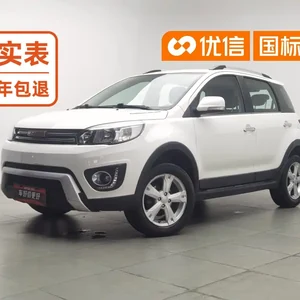
The Haval H1 is a compact crossover SUV that gives overseas buyers a familiar combination: petrol power, available manual and automated-manual (AMT) choices, and a higher seating position than a conventional sedan. Its export relevance comes from filling the affordable small-SUV segment rather than competing with premium, full-size 4x4s. For dealers, it can serve as an approachable first model in a new Chinese marque, while private importers and small fleet operators can evaluate it on practicality, fuel use, and purchase complexity instead of headline power, luxury levels, or premium brand prestige.
Demand for vehicles of this type is driven by practical rather than emotional priorities. Buyers in emerging and cost-sensitive markets often want a vehicle that feels robust, carries five occupants and luggage, remains manageable on city streets, and can be serviced by a reputable local workshop familiar with general Chinese mechanical systems. The H1’s AMT can reduce driver workload in dense traffic, while a manual may be easier to maintain and more familiar to commercial operators. Neither transmission choice, however, removes the need to confirm parts availability in the destination country.
Internationally, the model’s strongest argument is its balance of size and equipment. It is large enough to feel like a genuine crossover but remains more manageable for importers than a large off-road model, especially where parking, road width, and fuel budgets are constraints. The visible badge labels and higher trim names can also help buyers match a vehicle being offered to a clear price tier. Still, appearance and trim names do not prove condition or suitability: engine, gearbox, corrosion, accident history, emissions compliance, and serviceability must be assessed on the exact unit.
- Compact petrol crossover for import demand.
- Manual and AMT suit different uses.
- Verify condition and compliance.
Model range, trims and powertrain variants: how the lineup is structured and how to choose
The line-up is organized around 1.5-litre petrol versions, with Red Label and Blue Label treatments identifying broader editions. Within those families, listing names show Urban, Comfort, and Luxury grades, plus occasional Comfort Edition, Luxury Model, or revised-version wording. Those names are useful for organizing a quote, but they are not a substitute for a specification sheet. Ask the seller to carefully confirm the exact badge, transmission, equipment list, production period, and whether the vehicle is the Chinese-market version being exported before committing funds or arranging freight to the importing dealer.
The clearest buyer choice is manual versus AMT. A manual can be preferable where drivers are familiar with it, where torque delivery and repair simplicity matter, or where the buyer expects straightforward servicing. An AMT may suit fleets and markets with heavy stop-start traffic because it reduces repeated pedal work while retaining a conventional pedal layout. Do not choose on the label alone: test shift quality, clutch engagement, noise, dashboard behavior, and warning messages, and ask whether the unit has been repaired or modified before including it in a multi-unit purchase.
Trim choice should follow use case, not badge prestige. Urban versions may suit buyers prioritizing basic utility and running cost; Comfort and Luxury cars may add equipment or refinement, but the exact inclusions must be verified because equipment can differ between label, model year, and production batch. For fleet purchase, standardize one specification where possible so technicians, spares, and resale preparation are simpler. For mixed retail stock, hold a small matrix of manual and AMT units and grade them by condition rather than relying on trim names alone for consistent resale.
- Confirm exact label and trim.
- Test the selected transmission.
- Verify equipment on each unit.
New vs used Haval H1: how export inventory is structured and how buyers choose
Haval H1 export inventory is not a homogeneous pool. It can include near-new or unregistered vehicles, demonstrator cars, and used examples from earlier model years, sometimes with manual or AMT transmissions across different label editions. Availability therefore needs to be assessed vehicle by vehicle. Ask whether a car is new, used, or dealer-prepared; confirm its production date, odometer reading, number of owners, and history before treating it as a genuinely comparable unit within a larger purchase or planned container consolidation, because sourcing practices can differ substantially between importers and private buyers.
A used H1 can be attractive when the buyer values known history, an immediate delivery path, or a demonstrably lower entry outlay than a new equivalent. The relevant question is not age alone but whether wear is predictable and repairable. Inspect body structure, paint, glass, tires, brakes, suspension, cooling system, engine oil, and gearbox behavior; review records for major accidents, flood exposure, and service intervals. A lower asking price is useful only if repair, reconditioning, compliance, and transport costs remain within the commercial budget after the vehicle arrives in the destination market.
A new or effectively unused vehicle offers a different risk profile: less accumulated wear, clearer history, and potentially more consistent specification, but buyers pay for those benefits and may have less evidence of long-term durability. Near-new stock can be particularly relevant to fleet launchers because it supports a common preparation standard. Conversely, a properly documented used car can be the better commercial choice where depreciation and initial capital matter more. Base the decision on total operating risk, financing, resale assumptions, and the availability of parts, not on a blanket preference for new vehicles.
- Near-new stock still carries import risk.
- Used cars need inspection and repair estimates.
- Choose by ownership need, not age.
How export pricing works: the factors behind a live listing price, and how to read one
A live Haval H1 price is the outcome of several variables rather than one fixed wholesale figure. Model year, label and trim, manual or AMT, mileage, condition, service history, accident repair, paint condition, options, and market demand can all affect the vehicle’s asking position. Commercial factors also matter: exchange rates, freight, insurance, port handling, documentation, and the Incoterm can change the amount ultimately payable. When comparing listings, separate the seller’s vehicle price from landed cost and then compare only like with like rather than comparing a basic used car with a better-equipped example.
Read each listing as a commercial record, not merely a product description. Check whether the displayed amount includes domestic charges, export preparation, inland transport, sea freight, insurance, or only the vehicle at origin. Look for a clear model designation, transmission type, odometer disclosure, condition notes, images, and seller-provided documents. Ask for the final quotation basis and validity period. Current binding price, availability, and the MOQ shown for each unit must be confirmed in the live listing rather than inferred from an earlier quote or another seller’s terms or from general market commentary.
Price discipline begins with a written specification sheet and a vehicle-by-vehicle quote. Negotiate the condition adjustment rather than comparing unlike trims, and confirm whether any discount applies to a consolidated shipment. A buyer should also model the hidden variables: repainting, tires, tax, customs charges, port delay, and repairs can outweigh a small difference in the vehicle asking price. For repeated purchases, ask whether the seller supports a uniform condition standard and a consistent quotation method. That makes both the initial purchase and later replenishment easier to audit across different suppliers and shipments.
- Separate vehicle price from landed cost.
- Compare equivalent vehicles and condition.
- Use current live-listing terms.
MOQ, ordering and payment: single units vs consolidating a container
An MOQ is a supplier’s minimum quantity for a particular offer, not a universal rule for every Haval H1 transaction. Some live listings may support a single-unit purchase, while other offers are structured around multiple units or a shipment lot; the applicable requirement must be read on the listing and confirmed in the pro forma invoice. Before placing an order, establish whether the MOQ applies per model, per condition grade, or per color, and whether mixed units can share one order. Always rely on the current terms shown in the live listing.
Single-unit buying suits a test vehicle, a small retailer, or a buyer testing a new model before scaling. Consolidating several compatible vehicles can improve shipment economics and provide a more uniform fleet, but it concentrates risk in one booking. Wholesale buyers should check that every unit has been inspected against the same acceptance criteria, that color, trim, gearbox, and condition are clearly listed, and that funds and titles are ready for all vehicles. A mixed container may be cheaper per unit than individual shipping, yet the loading plan, documentation, and payment schedule must remain transparent.
Use a formal and disciplined purchase sequence: identify the vehicle, agree the specification and condition, receive a pro forma invoice, verify the seller and payment route, pay the agreed milestone, inspect or authorize final shipment, and release the balance only against the agreed documents. Payment terms should match risk; never treat a deposit or photo as final acceptance. For a container, link every unit to its inspection record and require a loading list before the vehicle leaves the origin port. This creates an audit trail if a unit differs from the agreed description or if the wrong badge or gearbox is loaded at the destination port.
- Read MOQ on each live offer.
- Apply one inspection standard.
- Tie final payment to documents.
Shipping, homologation and market compliance caveats: LHD/RHD and import rules by country
Finished Haval H1 vehicles can move by roll-on/roll-off service or in suitable shipping containers, depending on carrier, port, and consignment size. A single vehicle may travel through a specialist vehicle service or a consolidated shipment; several units can be grouped to make better use of capacity. Freight cost and transit time depend on origin and destination ports, sailing frequency, space, congestion, insurance, cargo handling, and documentation. Ask for the full routing, expected milestones, charge inclusions, and the party responsible if a vehicle is damaged or delayed before the booking is confirmed.
Steering configuration is a critical early check. Chinese-market Haval H1 examples are commonly left-hand-drive, so a right-hand-drive requirement cannot be treated as a routine conversion or assumed from the model name. Some destination supply may already be right-hand drive, but availability must be confirmed directly. For an LHD vehicle entering an RHD market, also check whether local rules permit the configuration or require alteration; even where conversion is possible, it affects safety, cost, warranty, and resale. State the required side before requesting a quote and before reserving shipping space for the vehicle.
Import and road legality are country-specific. Before shipment, check VIN and identity-document rules, emissions and noise requirements, customs classification, tariff and tax treatment, used-vehicle age limits, type approval, roadworthiness, insurance, and relevant local registration. A Chinese-market vehicle may need inspection, modification, or certification before registration, and a dealer should not promise that an imported H1 is immediately road legal. Confirm ownership documents and export clearance as well. These steps reduce the risk of a vehicle arriving without the papers or adaptations required for lawful sale in the destination jurisdiction for resale.
- Confirm LHD or RHD before freight.
- Check destination rules before shipping.
- Agree insurance and damage responsibility.
Who should buy the H1 — and who should pick a different vehicle
The H1 is a sensible fit for cost-conscious importers, small dealerships, and small fleet buyers that need a manageable petrol crossover rather than a premium SUV. It particularly suits markets where a manual option is valued, workshops understand conventional mechanical service, and urban use dominates. Drivers moving up from a sedan may appreciate the easier entry and raised view, while cargo-carrying operations gain a more versatile body. For these buyers, the decisive issues are total landed cost, fuel economy, parts access, and the ability to standardize vehicles for resale or fleet deployment.
It is a weaker choice for buyers who require a hybrid or battery-electric powertrain, very low operating costs, a particular advanced driver-assistance package, or a premium-brand resale proposition. The compact crossover is also not the right tool for serious towing, severe off-road work, or loads beyond its stated limits. A buyer expecting rugged body-on-frame construction should look elsewhere. Likewise, a market with strict emissions policy may make an internal-combustion vehicle a less attractive long-term investment even if the initial purchase looks economical or quieter at very low speeds.
Business fit also depends on the buyer’s route to market. A dealer can build a coherent H1 offer around a simple petrol range, common trims, and realistic preparation budgets, but it must disclose condition accurately and price the vehicle for total ownership rather than headline purchase cost. A fleet manager should test fuel use, ride comfort, braking, tire replacement intervals, and uptime before committing a large batch. If parts, inspections, or used-car paperwork are uncertain locally, choose a model with stronger dealer support—or budget for those constraints explicitly in advance.
Main rivals and how the H1 compares
The H1 competes in the affordable compact-SUV basket, so the closest alternatives depend on the destination’s engine rules, preferred gearbox, and service network. JAC Jiayue X3, Chery Tiggo 4x4, and BAIC BJ20 are more relevant comparisons than large seven-seat or premium models. However, model names alone do not establish equivalence: Chinese domestic versions, export versions, and later production batches can differ in emissions equipment, calibration, safety kit, and gearbox. Compare carefully the exact homologated vehicle rather than a brochure-level summary before placing a binding purchase order or final import approval timing.
Against the JAC Jiayue X3, the H1 should be shortlisted for its combination of manual and AMT choices within a recognizable SUV line, while the buyer should compare engine output, ride, equipment, parts support, and resale demand in the target country. The Chery Tiggo 4x4 may appeal where Chery’s service footprint is stronger or where a broader powertrain choice is useful; the H1 instead presents a simpler 1.5-litre petrol proposition. The BAIC BJ20 is another close alternative for buyers seeking a budget compact crossover, making body condition, gearbox reliability, and local parts pricing decisive.
No rival wins on every criterion, and the lowest purchase price can be offset by higher preparation, fuel, or parts costs. Use a like-for-like scorecard: engine and gearbox, fuel consumption, safety and visibility, cabin and cargo practicality, warranty, local technician familiarity, spare-part lead time, homologation effort, and expected resale. The H1 is most persuasive when those checks favor a simple, repairable petrol crossover and the importer can source the exact badge and transmission it wants. If they do not, a rival with better local support may be the overall lower-risk purchase.
Live Haval H1 export inventory
View all listings →Real units currently on ChinaCarDirect with per-unit asking prices and MOQ. Availability updates live from the catalogue.


How to buy a Haval H1 from China
-
1
Define the destination and use case
Identify the destination country, required steering side, import rules, expected annual volume, and whether the vehicles are for retail, fleet use or both. Include local fuel, road and parking conditions in the brief.
-
2
Set the required specification
Choose between manual and AMT, identify the preferred label and trim, and decide whether new, near-new or used vehicles are acceptable. State mandatory equipment and any items that may be omitted.
-
3
Compare live Haval H1 listings
Review the current live inventory for the current per-unit price, MOQ and availability. Compare equivalent model years, trims, transmissions, mileage, condition and seller information rather than relying on a general market estimate.
-
4
Request inspection and a vehicle-specific quote
Ask for photographs, odometer evidence, service and ownership records, known defects, repair estimates and a specification sheet. Request a landed-cost breakdown covering vehicle charges, inland transport, freight, insurance, customs and other applicable costs.
-
5
Confirm MOQ, payment and ownership
Read the MOQ on the live offer and confirm it in the pro forma invoice, including whether mixed units are permitted. Verify the seller, ownership documents, payment route, inspection requirements and the milestone linked to final payment.
-
6
Pre-clear compliance and shipping
Before shipment, check VIN requirements, emissions rules, type approval, used-vehicle restrictions, tax treatment, LHD/RHD suitability, insurance and local registration. Agree the route, freight inclusions, consignment milestones and responsibility for damage or delay.
-
7
Authorize loading and release payment
Compare every vehicle with the accepted inspection record and request a loading list and photographs. Release the balance only against the agreed documents, then arrange an arrival inspection before accepting delivery.
H1 vs rivals
| JAC Jiayue X3 | A close budget compact-SUV alternative, particularly where local JAC servicing is easier. The H1 should be shortlisted for its manual and AMT choices, but the final decision should follow a comparison of the homologated engine, gearbox, equipment, parts support and resale demand. |
|---|---|
| Chery Tiggo 4x4 | A relevant alternative where Chery has stronger brand familiarity or a broader powertrain selection. The H1’s simpler 1.5-litre petrol and manual-or-AMT approach may suit a straightforward fleet, provided fuel use, service access and actual vehicle condition are competitive. |
| BAIC BJ20 | Another closely comparable affordable compact crossover for buyers seeking a practical budget vehicle. There is no universal winner: compare the exact engine and gearbox, safety equipment, cabin usability, local parts pricing and the availability of inspection and homologation support. |
Frequently asked questions
How is the export price of a Haval H1 determined?
The live asking price reflects the vehicle’s year, label, trim, transmission, mileage, condition, history, options and commercial terms. Freight, insurance, customs charges, taxes, exchange rates and the selected Incoterm can further change the landed cost. Check the live Haval H1 listings for the current binding per-unit price rather than relying on a general price range.
What engine and transmission does the Haval H1 have?
The H1 range represented in the export market is centered on 1.5-litre petrol versions, offered with manual or AMT transmissions depending on the label and exact vehicle. Exact engine output, emissions equipment, gearbox details and drivetrain should be confirmed on the live listing because production batches and export versions can differ.
Should an overseas buyer choose a new or used Haval H1?
A new or near-new vehicle generally offers less wear and clearer history, while a used example can reduce the initial capital requirement and may suit buyers comfortable with inspection and maintenance. Compare repair exposure, vehicle history, specification consistency, financing and resale plans. The better choice is the one with the lowest acceptable total operating risk for the business.
What is the MOQ for a Haval H1 order?
There is no single MOQ that can be assumed for every Haval H1 offer; it depends on the seller, listing, condition grade and shipment structure. Read the current MOQ on the live listing and have it repeated in the pro forma invoice. A single unit, mixed selection or container consolidation should only be ordered after those terms are binding.
What affects Haval H1 shipping time and cost?
Origin and destination ports, vessel schedules, available space, congestion, cargo handling, insurance, documentation and inland transport all affect the movement of a finished vehicle. The route may use roll-on/roll-off service or container shipping. Request a written routing plan with charge inclusions, expected milestones and responsibility for delay or damage.
Can spare parts be sourced for an imported Haval H1?
Parts availability depends on the vehicle’s badge, production period, local dealer coverage and the destination’s import rules. Before purchase, request common service-item references and confirm whether Haval parts are available through local channels or must be ordered from China. This is especially important for a used vehicle with higher maintenance needs.
Is a right-hand-drive Haval H1 available for export?
Right-hand-drive availability must be confirmed for the exact vehicle because Chinese-market H1 examples are commonly LHD. Do not assume that a right-hand-drive conversion is available, permitted or warranted. State the required steering configuration before requesting a quotation or reserving freight, and confirm local conversion and registration rules.
How do I order a Haval H1 from China?
Select a suitable live listing, request the exact specification and supporting documents, agree the condition and landed-cost basis, and obtain a pro forma invoice. Confirm the MOQ, payment milestones, inspection requirements and ownership documents before paying. Authorize loading only after the vehicle matches the agreed description, with the balance linked to the required shipment and title documents.
Ready to source the Haval H1?
Request a current Haval H1 quotation with your destination, steering-side requirement, preferred transmission, quantity and condition budget.
Request a quote